
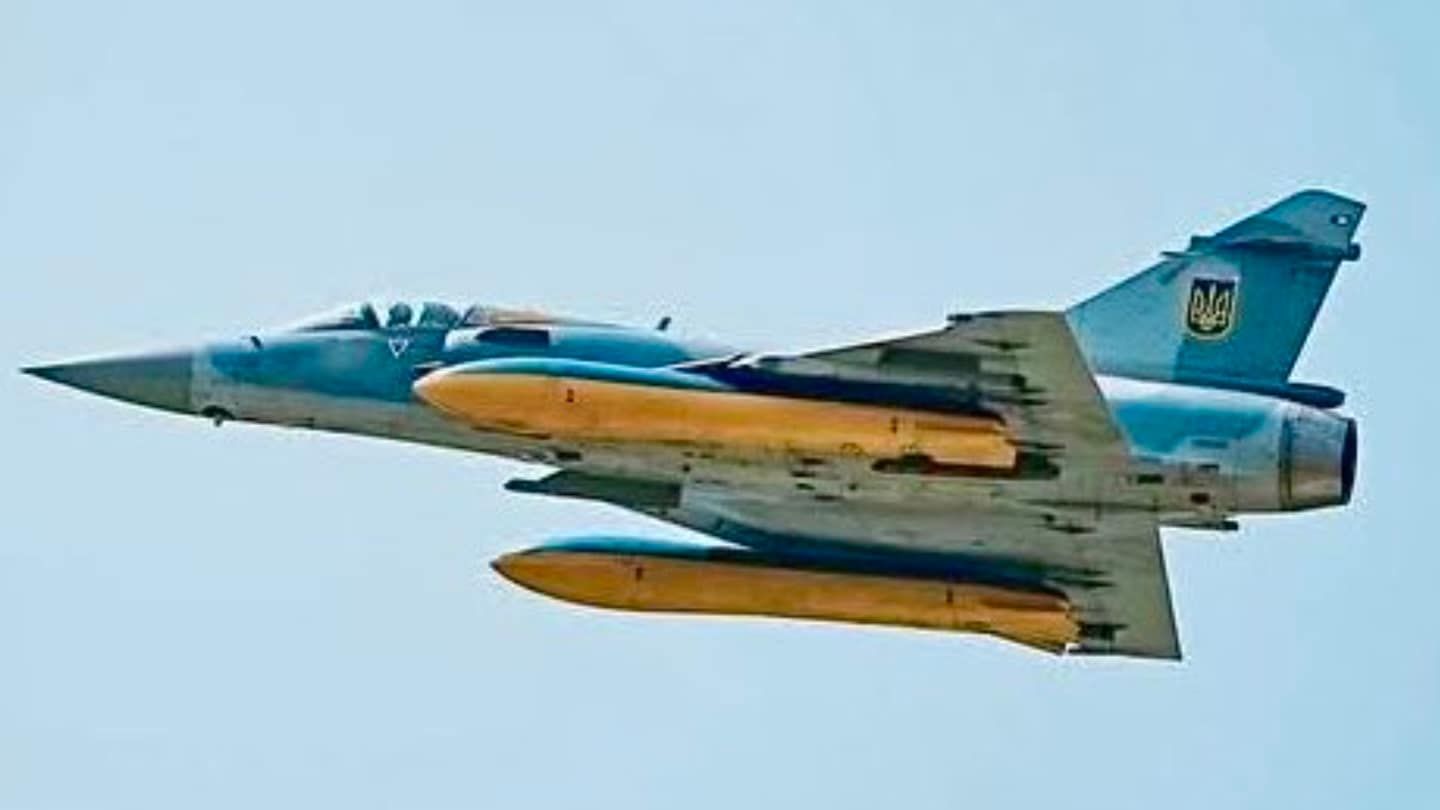
A delta wing flickers along a tree line in eastern Ukraine, so low it seems to brush the branches, then hauls up into a steep, sudden climb. The silhouette is unmistakable to anyone raised on French aviation: a Dassault Mirage 2000. And the manoeuvre is just as unmistakable to anyone who has watched this war — the classic toss-bombing profile used to lob precision-guided bombs across the front line.
The footage, which surfaced on 2 June and was amplified by the OSINT community, adds to the visual evidence that Ukraine’s French-supplied Mirage 2000-5Fs have moved beyond their original air-defence brief and are now flying air-to-ground strike missions, as first analysed by The War Zone.
If confirmed, it marks a quiet but significant promotion for a jet France designed as a pure interceptor — and a vindication of Paris’s decision to wire its donated Mirages for the AASM Hammer rocket-boosted bomb.
Quick Facts
- What: video shows a Ukrainian Mirage 2000-5F in a low-level run and pull-up consistent with toss bombing on the eastern front
- Likely weapon: French AASM-250 Hammer — a 250 kg rocket-boosted, GPS/INS-guided bomb
- Hammer reach: at least 15 km from low altitude, up to roughly 70 km from height (Safran figures)
- Until now: Ukrainian Mirages were seen only on air-to-air work — hunting cruise missiles and Shahed-type drones
- Fleet: France initially pledged six Mirage 2000-5Fs, later offering more; at least one has been lost
- Confirmed Hammer carriers in Ukraine so far: MiG-29 and Su-25
The Video That Started It
The clip was filmed from the ground, possibly close to the front. The Mirage races along at a few dozen feet, then pitches sharply upward. The moment of release is not visible, but the profile matches what Ukrainian MiG-29s have demonstrated repeatedly when lofting AASM Hammers: stay below the radar horizon, sprint in, pull up, let the bomb’s rocket motor and guidance kit do the rest.
The logic is brutal and simple. Russia’s layered surface-to-air missile umbrella reaches far beyond the front lines, so Ukrainian jets survive by staying low — terrain masking against radars limited by the curvature of the Earth — and releasing stand-off weapons without ever exposing themselves at altitude.
The Hammer was built for exactly this. Its solid-fuel rocket booster lets the 250-kilogram-class bomb hit targets at least 15 kilometres away even from a low-level toss, while its GPS-assisted inertial guidance keeps full accuracy when delivered indirectly. From high altitude the reach stretches to around 70 kilometres.
From Interceptor to Bomb Truck
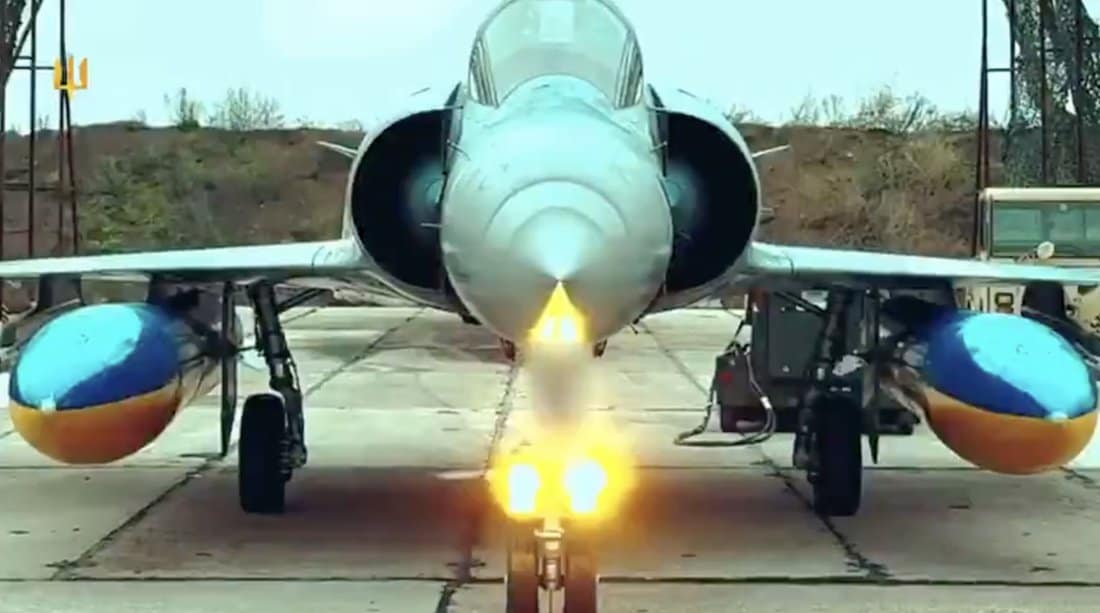
In French service, the Mirage 2000-5F was never cleared for the Hammer — it was the air-defence specialist of the fleet. But in March 2025, Paris confirmed that the jets bound for Ukraine would receive Hammer compatibility, and a French Mirage 2000-5F had previously been tested carrying a remarkable load of six AASM-250s.
Until this week, the donated Mirages had been seen exclusively in the air-to-air role — and by Ukrainian accounts they have excelled at it. In a Ukrainian Air Force video published earlier this year, a Mirage pilot who converted from the Su-27 described training in France for about six months and praised the jet’s performance against Russia’s nightly drone and cruise-missile barrages.
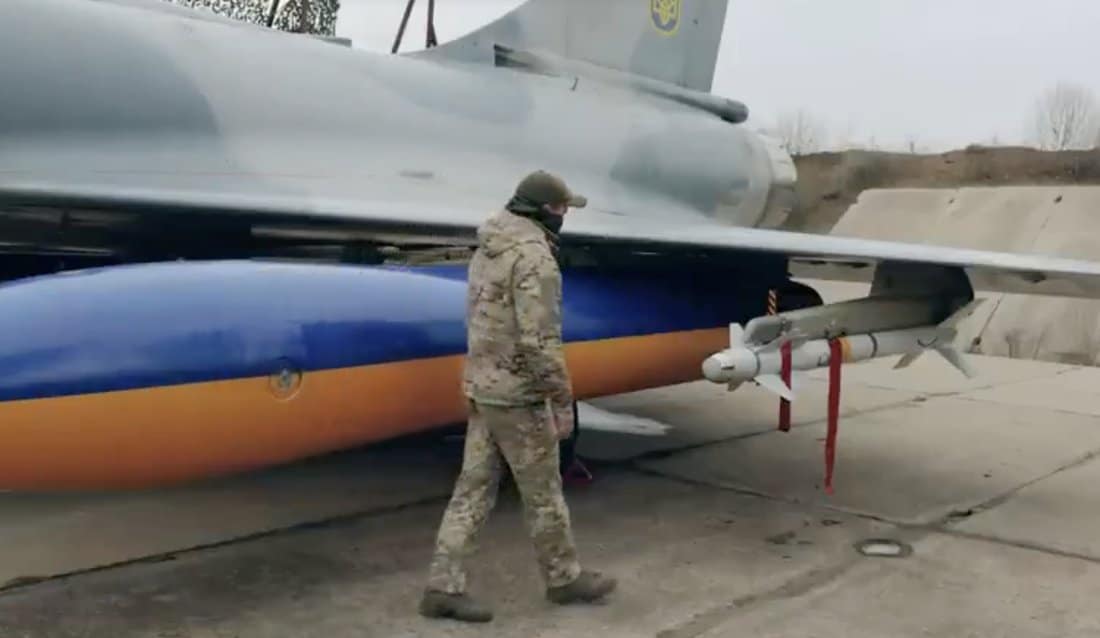
The same pilot put the Mirage’s kill probability against drones and cruise missiles at 98 percent, with ground crew crediting the Magic 2 infrared-guided missile — lately joined by the longer-range MICA. One airframe in the video wears six Kh-101 cruise-missile kill markings, with the crew admitting another six were waiting on stencils.
What It Means for Ukraine’s Air War
Numbers explain why Mirage sightings are rare: France initially pledged six jets, later offering more, and at least one has been lost. The fleet operates the same shell game as Ukraine’s F-16s — constantly relocating between forward airfields, one ground technician describing his third operating site in a single week.
But a Mirage that both kills cruise missiles at night and tosses Hammers by day is a genuine multi-role asset — and a bridge to what comes next. Kyiv has signed letters of intent covering up to 100 Rafale F4s from France and as many as 150 Gripen E/Fs from Sweden, with the first Gripens now expected in 2027. Asked what he would fly if he could choose, the Mirage pilot did not hesitate: the Rafale — same country, faster conversion, and the long-range Meteor missile under its wings.
For now, though, the delta wing over the tree line is doing something its designers in the 1980s never planned — and doing it in a war the Mirage was never supposed to fight.
The Ukrainian Air Force’s own look at its Mirage operations — pilot and ground crew interviews included — is worth watching in full:
Sources: The War Zone, United24 Media, Militarnyi, Safran, Ukrainian Air Force
 English
0 Comments