
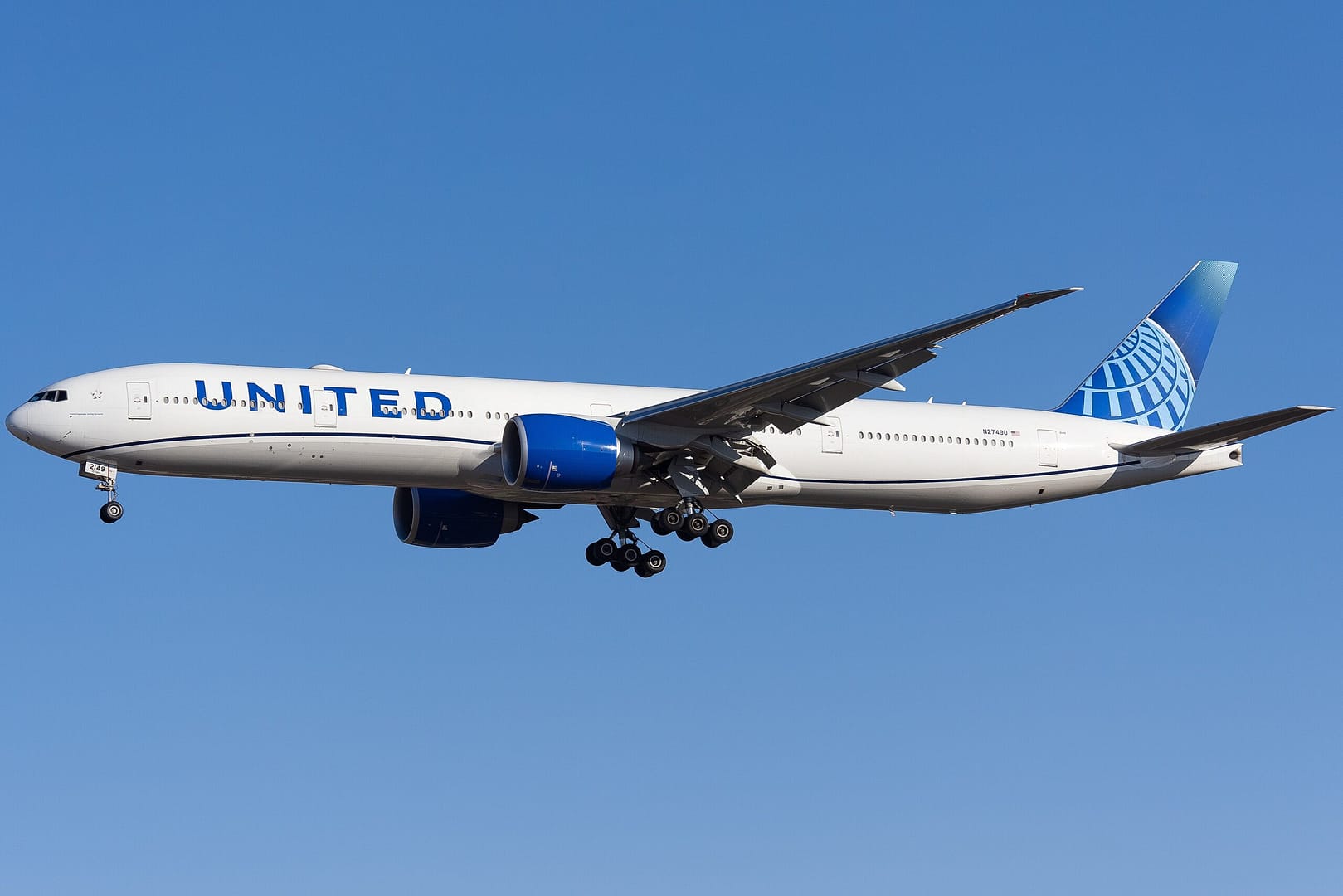
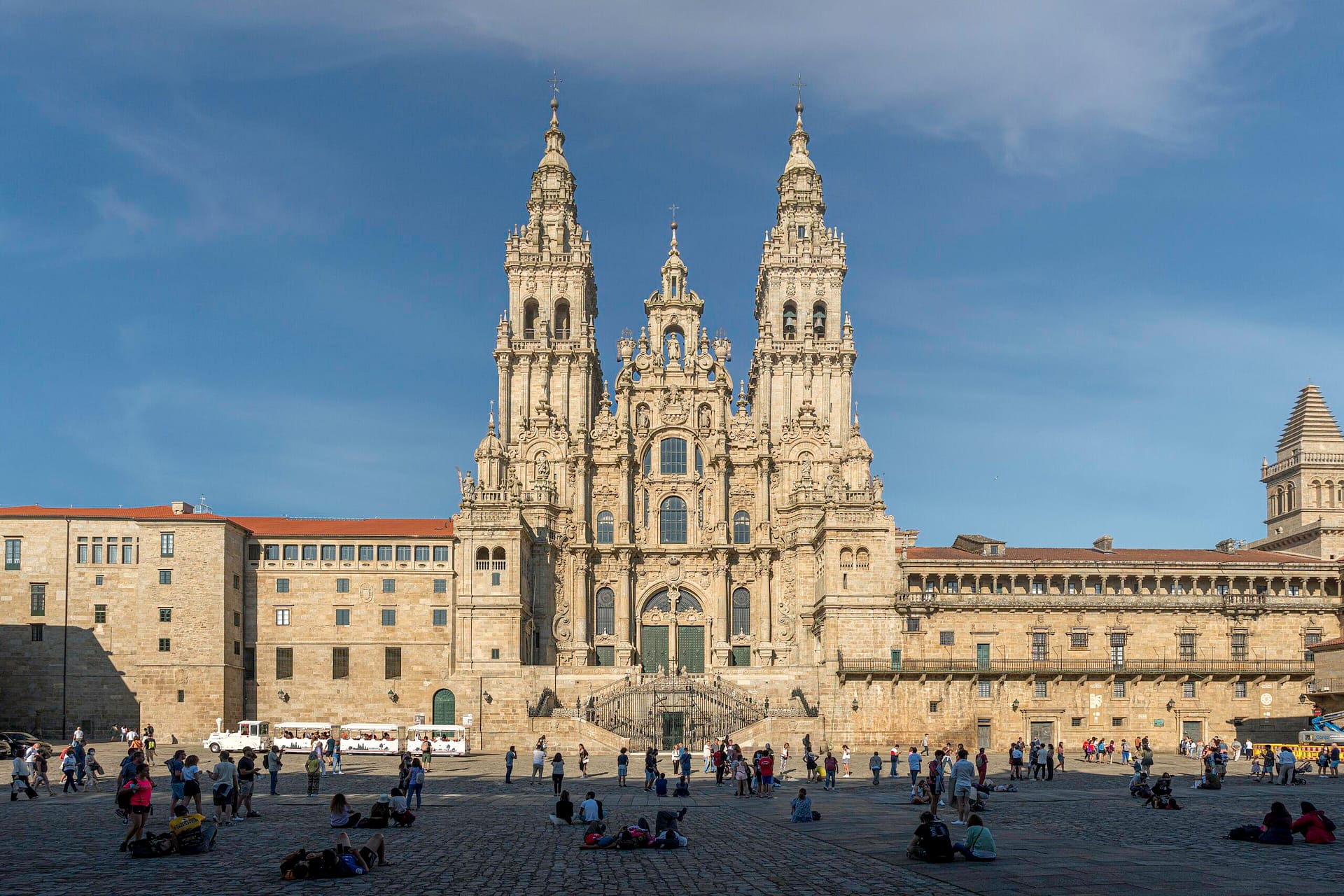
The pilgrims have been arriving in Santiago de Compostela on foot for 1,200 years. On 27 May 2026, the first ones started arriving by Boeing 737 MAX 8 — direct from Newark, in about seven hours, no European hub in between. United Airlines is now the first US carrier to fly nonstop to Galicia, the green Atlantic corner of Spain that has spent more than a millennium being a destination and never a hub.
For United it is a small win — three weekly flights — but a strategically rich one. For Santiago, it is the moment one of Europe’s most spiritual landscapes lost its excuse for being awkward to reach.
Quick Facts
Launch date: 27 May 2026
Route: Newark Liberty (EWR) ↔ Santiago de Compostela (SCQ)
Aircraft: Boeing 737 MAX 8
Frequency: 3 flights per week (seasonal)
Flight time: ~7h 00m eastbound, ~7h 50m westbound
First US carrier to fly to Galicia direct
Why Santiago, and why a 737 MAX
Santiago de Compostela has a tourism problem most cities would kill for: too many pilgrims, scattered across a calendar year, who fly in via Madrid or Barcelona, change to a regional Vueling or Iberia hop, and arrive at SCQ tired, late and committed only to the cathedral. United’s three-times-weekly direct from Newark cuts a day off that journey and — more importantly — opens the city to American leisure travel that previously chose Lisbon or Porto instead.
The route works on economics that did not exist five years ago. The Boeing 737 MAX 8 is the narrowbody that finally made the thinnest European destinations viable from the US East Coast. In United’s two-cabin layout it carries just 166 passengers — 16 in business and 150 in economy — small enough to fill on routes no widebody could sustain, and it reaches secondary destinations like Nuuk in Greenland and now Santiago with margin to spare. United’s transatlantic strategy under CEO Scott Kirby has been to push long-range narrowbodies into exactly these kinds of markets — small destinations with high yields and limited competition — and to leave Lufthansa, KLM and Air France to fight over Frankfurt and Amsterdam.
The Camino has gone global
The Camino de Santiago — the medieval pilgrimage network whose multiple routes all converge on the cathedral — has been having a quiet renaissance. The Cathedral’s Pilgrim’s Office certified over 499,000 official pilgrim arrivals in 2024, up from around 238,000 ten years earlier. American pilgrims are now the largest foreign group, making up roughly 8 percent of that figure, and are consistently among the Camino’s highest-spending arrivals. The economic case for an American airline to fly direct was, at some point, going to win.
What it tells us about transatlantic 2026
The summer 2026 schedule is one of the most aggressive transatlantic expansions in industry history. United alone is launching four new European destinations this season — Santiago de Compostela, Bari (Italy), Split (Croatia) and Glasgow (Scotland) — on top of last summer’s additions such as Faro, Nuuk, Palermo and Bilbao. Delta is adding Sardinia, Malta and Porto from New York-JFK.
It is a market shaped by three factors: the post-pandemic European leisure boom, the lingering aircraft-delivery delays that have constrained capacity on bigger routes, and the simple math of the long-range narrowbody. Santiago is one snapshot of a much bigger picture. American passengers who used to fly Madrid–rail–Santiago will now fly Newark–Santiago direct. The Camino just acquired an Atlantic feeder leg.
Sources: United Airlines, Aviation Week, AENA (Spanish airport authority).



 English
0 Comments