
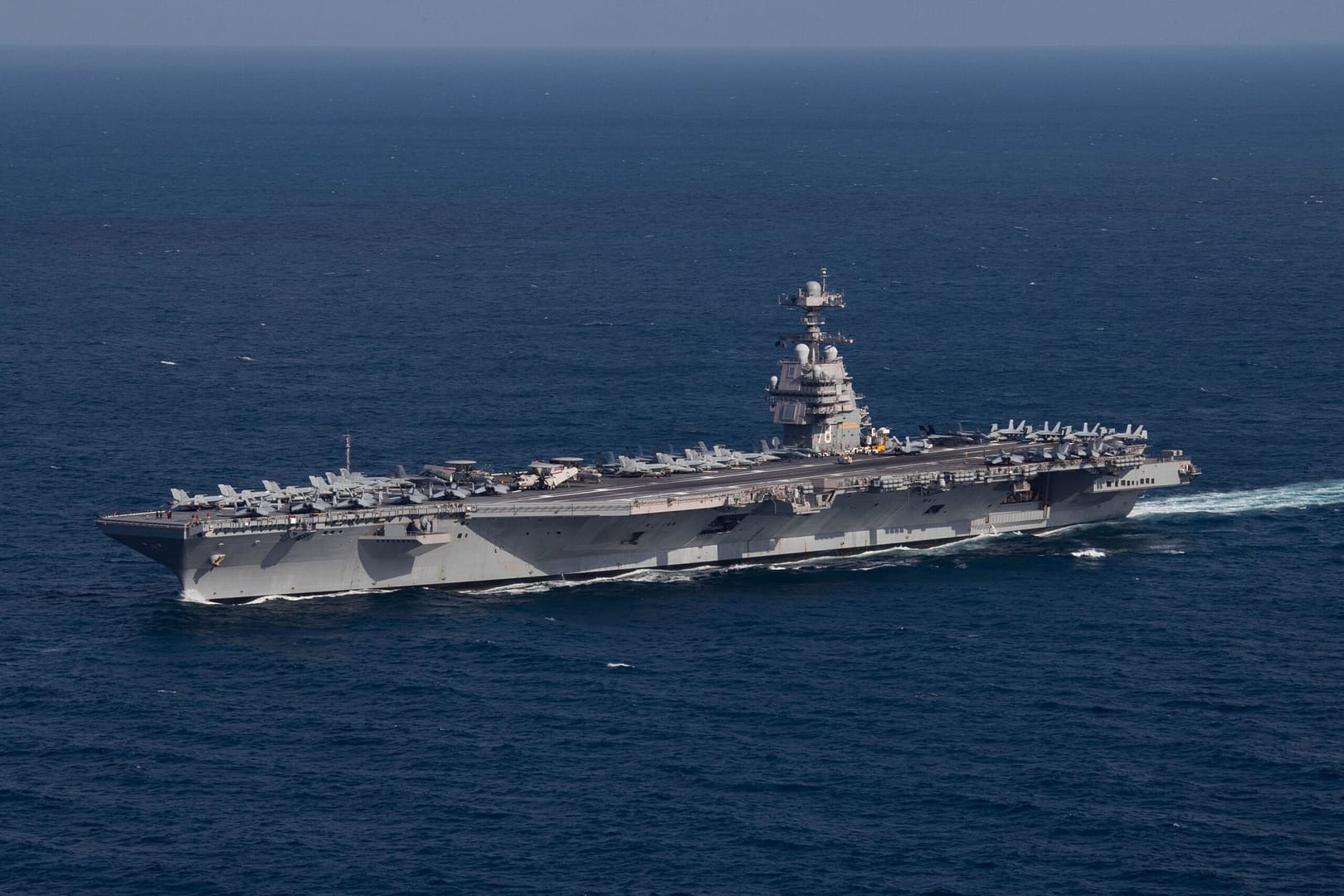
USS Gerald R. Ford carries two A1B nuclear reactors, generates an estimated 1,400 megawatts of thermal power, and routinely supplies more electricity than its own ship can spend. This summer the US Navy is going to plug that excess into the grid of an American shore base — literally — and use a supercarrier as a floating nuclear power station.
The demonstration, flagged by acting Navy Secretary Hung Cao in congressional testimony on 14 May and confirmed to The War Zone by the Navy, is the most provocative side project of the Ford-class programme since the ship first launched and recovered a Super Hornet at sea. And it could change how the Pentagon thinks about base power, disaster resilience, and the next war’s first 72 hours.
Quick Facts
Ship: USS Gerald R. Ford (CVN-78)
Power source: Two A1B pressurised-water reactors, ~700 MW thermal each
Output: classified; ~700 MW thermal per reactor (public estimates)
Demonstration: Summer 2026, Naval Station Norfolk, Virginia
Precedent: MH-1A reactor ship Sturgis powered the Panama Canal Zone, 1968–1975
The reactors that overshoot
The A1B reactor, designed by Bechtel for the Ford class, was sized for a future. It is said to produce around 25 percent more reactor power than the A4W reactors on the Nimitz class — enough headroom to run the Electromagnetic Aircraft Launch System, the Advanced Arresting Gear, three big phased-array radars and the future directed-energy weapons the Navy keeps hinting at. In peacetime cruise, the carrier never gets near the wall.
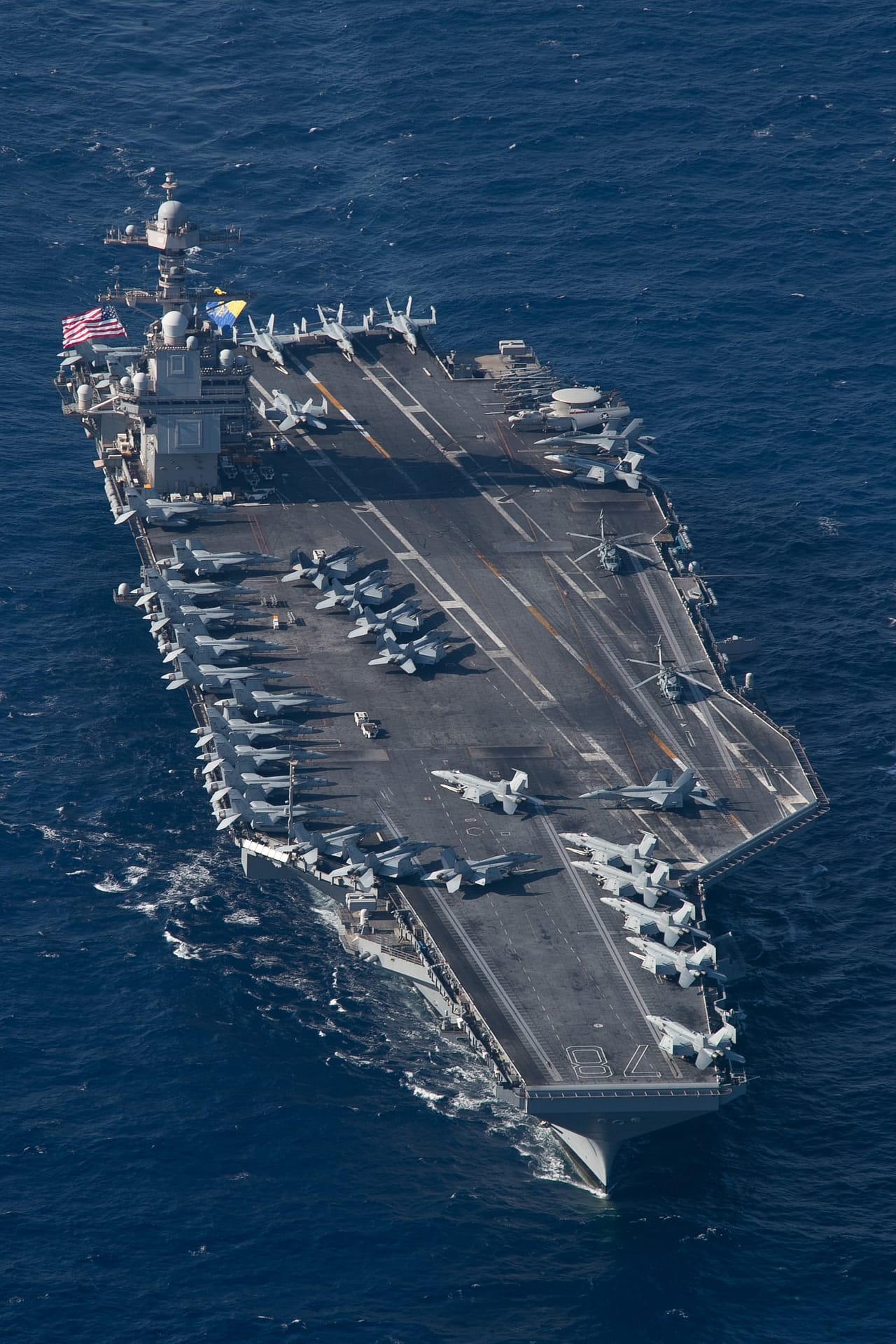
That spare capacity is what the Pentagon is now eyeing. A Ford-class carrier moored alongside a damaged American shore base could feed a large share of its electrical output — the exact figure is classified — into local infrastructure — enough to keep airfields, hospitals, water-treatment plants and command facilities running for the days or weeks it takes to repair grid damage from a hurricane, an EMP, a cyber-attack or the opening hours of a peer-state war.
There is precedent
The US military has done this before, at smaller scale. The Sturgis, a converted Liberty ship powered by a single 10-megawatt MH-1A reactor and run by the Army Corps of Engineers, supplied power to the Panama Canal Zone between 1968 and 1975. As far back as 1929, the carrier USS Lexington fed electricity into the grid of Tacoma, Washington, and in 1982 the Navy considered using a nuclear submarine to power part of Hawaii after Hurricane Iwa. What is new is the scale: a Ford-class carrier’s reactors are, by any public estimate, dozens of times the Sturgis’s output, and its reactors are designed to run for 50 years between refuellings.
Politics, not physics, is the limit
The engineering is the easy part. The Navy describes the test as one line of effort in a broader strategy to deliver firm, baseload power to its installations, and the Ford’s electrical system already includes the high-voltage taps needed to feed shore power either way. The harder question is whether American state regulators will allow a US Navy reactor to be tied into a civilian grid — even temporarily — and whether the Nuclear Regulatory Commission, which has no jurisdiction over naval reactors, would intervene if a problem occurred.
The Pentagon is treating this summer’s demonstration as proof-of-concept rather than operational doctrine. But the underlying argument — that the Navy’s nuclear fleet is, in addition to a strike force, the country’s largest mobile reservoir of clean electrical power — is one the next defence budget cycle will probably hear a lot more about. The Trump administration has already announced a new nuclear-powered surface combatant class. The Ford may be the first carrier that ends a deployment by powering the base instead of leaving it.
Sources: The War Zone, Naval Sea Systems Command, US Navy public affairs.


 English
0 Comments