

The alarm goes off at 5:30 AM, and for a moment you forget why you’re awake this early on a vacation day. Then it hits you — today is the day you fly a fighter jet. Suddenly, sleep is the furthest thing from your mind. Your heart is already racing before your feet touch the floor.
Every year, hundreds of people from all walks of life strap into the back seat of a military jet through MiGFlug. Business executives celebrating milestones, aviation enthusiasts fulfilling lifelong dreams, couples sharing the ultimate adventure — they all arrive at the airfield with the same mix of excitement and nervous energy. And they all leave transformed.
This is what that experience actually feels like, from the first handshake to the last adrenaline-fueled heartbeat.
Quick Facts
Experience duration: Full day (flight time 20-60 min)
Preparation: Briefing, medical check, gear fitting
G-forces experienced: Up to 7-9G
Altitude: Up to 20,000+ feet
Speed: Up to 750+ km/h
No pilot license required: Absolutely none
The Briefing Room: Where It Gets Real
You arrive at a military-style airfield, and the first thing you notice is the sound — or rather, the distant promise of sound. Somewhere beyond the hangars, jet engines are being warmed up, and that low whine carries across the tarmac like a preview of what’s coming.
The briefing room is functional, not fancy. Maps on the walls, a whiteboard with today’s flight plan, and your pilot — calm, professional, and clearly someone who has done this thousands of times. They walk you through the aircraft, the ejection seat procedures (yes, you’re sitting on a live ejection seat), the hand signals, and the maneuvers you’ll experience. They ask about your comfort level, whether you want the full aerobatic program or something gentler. Most people say full program. Almost everyone means it.
Then comes the gear. The flight suit zips up like armor, and the G-suit wraps around your legs and abdomen like a firm handshake from the aircraft itself. The helmet goes on, and suddenly you look like a fighter pilot. You catch your reflection in a window and can’t help but grin.
Walking to the Jet: The Longest 100 Meters
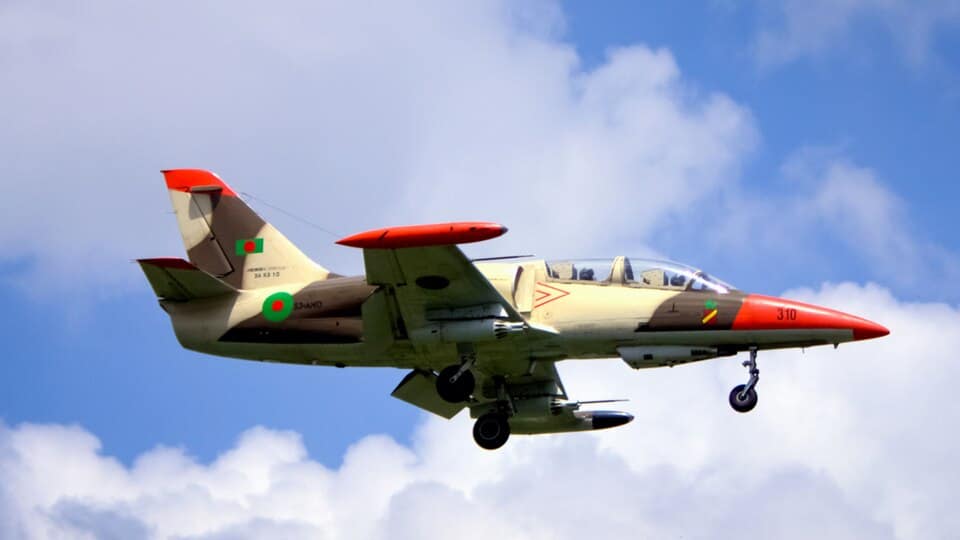
The walk from the briefing room to the aircraft is one of the most cinematic moments of your life. The jet sits on the apron, canopy open, catching the morning light. It looks simultaneously beautiful and menacing — all smooth lines and sharp edges, painted in colors that mean business.
You climb the ladder, step over the cockpit rail, and lower yourself into the rear seat. The crew chief helps you strap in — five-point harness, oxygen connection, communication cord. Each click and snap makes the experience more real. When the canopy closes over you with a hydraulic hiss, sealing you inside a bubble of plexiglass and possibility, your pulse jumps another ten beats per minute.
The engine start is visceral. You feel it before you hear it — a vibration that builds through the airframe and into your spine. Then the turbine spools up, and the world outside starts to shimmer in the jet exhaust. You’re not watching a YouTube video anymore. This is happening to you.

Takeoff: The Moment Everything Changes
Nothing in civilian life prepares you for a fighter jet takeoff. The pilot pushes the throttle forward, and the acceleration is immediate, relentless, and deeply physical. You’re pressed back into your seat with a force that makes commercial aviation feel like a gentle breeze. The runway markings blur into white streaks, the nose lifts, and suddenly the ground is falling away at an angle that would terrify you in any other context.
But you’re not terrified. You’re exhilarated. The climb rate is absurd — buildings shrink to dots, roads become ribbons, and within minutes you’re at altitudes where the horizon curves and the world below looks like a living map. The intercom crackles: your pilot asks if you’re ready for the first maneuver.
You say yes. You’ve never meant anything more.

Aerobatics: When Up Becomes Down and You Love It
The first loop is an out-of-body experience. The pilot pulls back on the stick, and the G-forces hit you like a warm, heavy blanket pressing down on every part of your body. Your vision narrows slightly as blood rushes from your head, and then — you’re inverted. The sky is below you, the earth is above you, and your brain is trying to reconcile what your eyes are seeing with what your inner ear is reporting. The G-suit inflates around your legs, squeezing blood back up to your brain. You grunt against the force, just like they taught you.
Then comes the roll — a full 360-degree rotation around the aircraft’s longitudinal axis. The horizon spins like a wheel, and for one perfect second at the top, you’re hanging in your harness, weightless, looking up at the ground through the canopy. It’s disorienting, thrilling, and beautiful all at once.
The maneuvers come in waves: barrel rolls, Immelmann turns, Split-S reversals, high-speed passes over the airfield that leave spectators on the ground covering their ears. Between each maneuver, there are moments of calm — cruising at altitude, taking in views that no commercial flight could ever offer, catching your breath before the next wave of adrenaline.

Taking the Controls: The Ultimate Thrill
In many MiGFlug flights, there comes a moment when the pilot says the words you’ve been waiting to hear: “You have the aircraft.” Your hands close around the control stick, and suddenly the jet responds to your inputs. You bank gently left, and the entire aircraft — several tons of metal, fuel, and thrust — follows your command. You pull back slightly, and the nose rises. You are flying a fighter jet.
It’s a feeling that stays with you forever. Not because of the speed or the altitude or the G-forces, but because of the profound sense of capability it gives you. For those few minutes, you are doing something that fewer than one in ten thousand people will ever experience. And it’s glorious.
Coming Down: The Afterglow
The landing is smooth — military pilots don’t show off on approach. The canopy opens, and the fresh air hits your face along with the sudden awareness that your cheeks are sore. You’ve been smiling for the entire flight without realizing it.
You climb out on slightly shaky legs, and the pilot meets you on the tarmac with a handshake and a certificate. Photos are taken, stories are already being composed in your head. How will you describe this to people who haven’t done it? You’re already realizing that words might not be enough.
But you try anyway. Because this experience — the sound, the force, the speed, the view, the pure distilled joy of flying a military jet — deserves to be shared. And if your story convinces even one person to take the leap, then the cycle of adrenaline continues.
Ready to write your own story? Browse MiGFlug’s fighter jet experiences and find out what it feels like for yourself.
Sources: MiGFlug customer experience reports, flight operations team interviews.
 English
0 Comments