
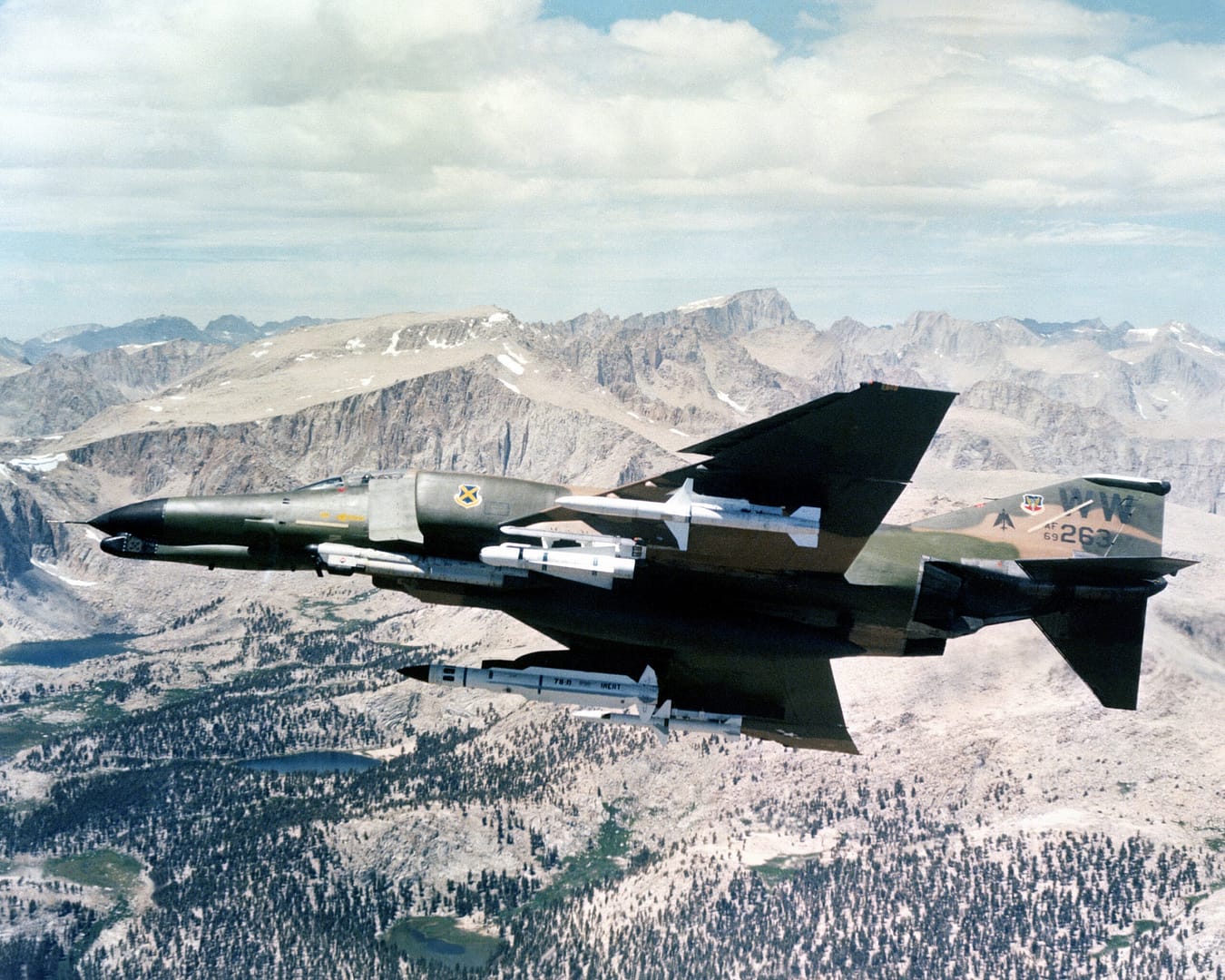
Fifteen seconds. That was the gap between Lt Col William “Skate” Parks and Maj Michael “Danger” Blea and an early end to their Wild Weasel sortie over Yemen. Their strike package had already hit its targets and the jets were turning for home when the Houthi air defences they had been hunting decided to hunt them. What followed is the best aviation-survival story of 2026 — and one of the most instructive case studies in modern air combat the US Air Force has produced in years.
Quick Facts
Mission: Wild Weasel SEAD (Suppression of Enemy Air Defences) over Yemen
Pilots: Lt Col William “Skate” Parks and Maj Michael “Danger” Blea
Aircraft: F-16CJ Fighting Falcon
Threat: Houthi-operated long-range surface-to-air missile
Reaction window: Approximately 15 seconds
The Mission
The Wild Weasel mission is one of the oldest and most dangerous in modern military aviation. Pilots fly specifically designed F-16CJ aircraft into hostile airspace, knowing the enemy’s surface-to-air missile systems will track and engage them. The job is to make those systems light up — and then to kill them with AGM-88 HARM anti-radiation missiles before they kill the pilots.
It is a job that requires extraordinary courage and a particular type of personality. Parks and Blea had it. Both were senior pilots with combat experience over Iraq and Syria. The Yemen mission was a SEAD sweep protecting a strike package — including B-2 bombers — targeting Houthi ballistic missile production facilities.
It did not stay routine.
“It was an ambush because we did not get much indication ahead of time. We only had about 15 to 20 seconds of indications ahead of time.”
— Lt Col William Parks, one of the 480th Fighter Squadron pilots who survived the March 27, 2025 SAMbush during Operation Rough Rider (Air & Space Forces Magazine)
The Launch
As the jets egressed toward the Red Sea after the strike, the F-16’s threat warning system began to chirp. Then it began to scream. A long-range SAM had launched. The Houthi system has never been publicly identified — the ambush relied heavily on passive visual and infrared tracking, with radars switched on only seconds before launch.
A bright white flash from the ground below — and the realisation hit: they had been tracked. They had been engaged. And the missile was already climbing. Fifteen to twenty seconds of warning, by Parks’s later estimation.
The Defeat
What Parks and Blea did over the next 15 seconds is the kind of textbook airmanship that justifies decades of training. They split. They each pulled hard into the missile, breaking lock by changing their radar cross-section profile dramatically. They dumped chaff. They engaged onboard electronic countermeasures. They climbed, then dove, then climbed again — making the missile’s terminal guidance solve a problem it could no longer keep up with.
The first missile passed directly beneath Parks’s left wing — close enough that he could hear its rumble. Another flew within roughly 30 feet of the nose of Blea’s jet. In all, six missiles were fired at the pair over roughly 15 minutes of hard manoeuvring. Neither aircraft was damaged.
They had already done the job they were sent to do: earlier in the mission, each had fired an AGM-88 HARM at Houthi air-defence emitters near Sanaa. Now, critically low on fuel after sustained afterburner, they recovered to a tanker crew that had pushed toward hostile territory to meet them.
“We have enough time to make essentially a hard turn into this missile. It goes past right underneath my left wing, close enough I can hear the rumble, and that’s something that’s stuck with me to this day.”
— Lt. Col. William “Skate” Parks, in Air & Space Forces Magazine, “Life or Death Over Yemen”. Both pilots were awarded the Silver Star for the mission.
What the Story Teaches
Parks’s published debrief, which appeared in Air & Space Forces Magazine in April 2026, is unflinching. He credits the F-16’s electronic warfare suite and the survival training the Wild Weasel community has refined over four decades. He also credits Blea’s discipline — staying separated, staying clear of his lead, executing the textbook split when every instinct says fly close.
What the article does not say, but every Wild Weasel pilot understands, is the deeper point. The 15-second window between detection and impact is not extraordinary. It is, in fact, typical for modern SAM engagements. Surviving that window depends on training, sensor fusion, and aircraft systems that work exactly as designed at the worst possible moment. Yemen in the spring of 2025 was a fight Parks and Blea had been preparing for since the first day they strapped into an F-16CJ. The preparation worked.
Sources: Air & Space Forces Magazine “Life or Death Over Yemen” feature, USAF Wild Weasel community.
 English
0 Comments