
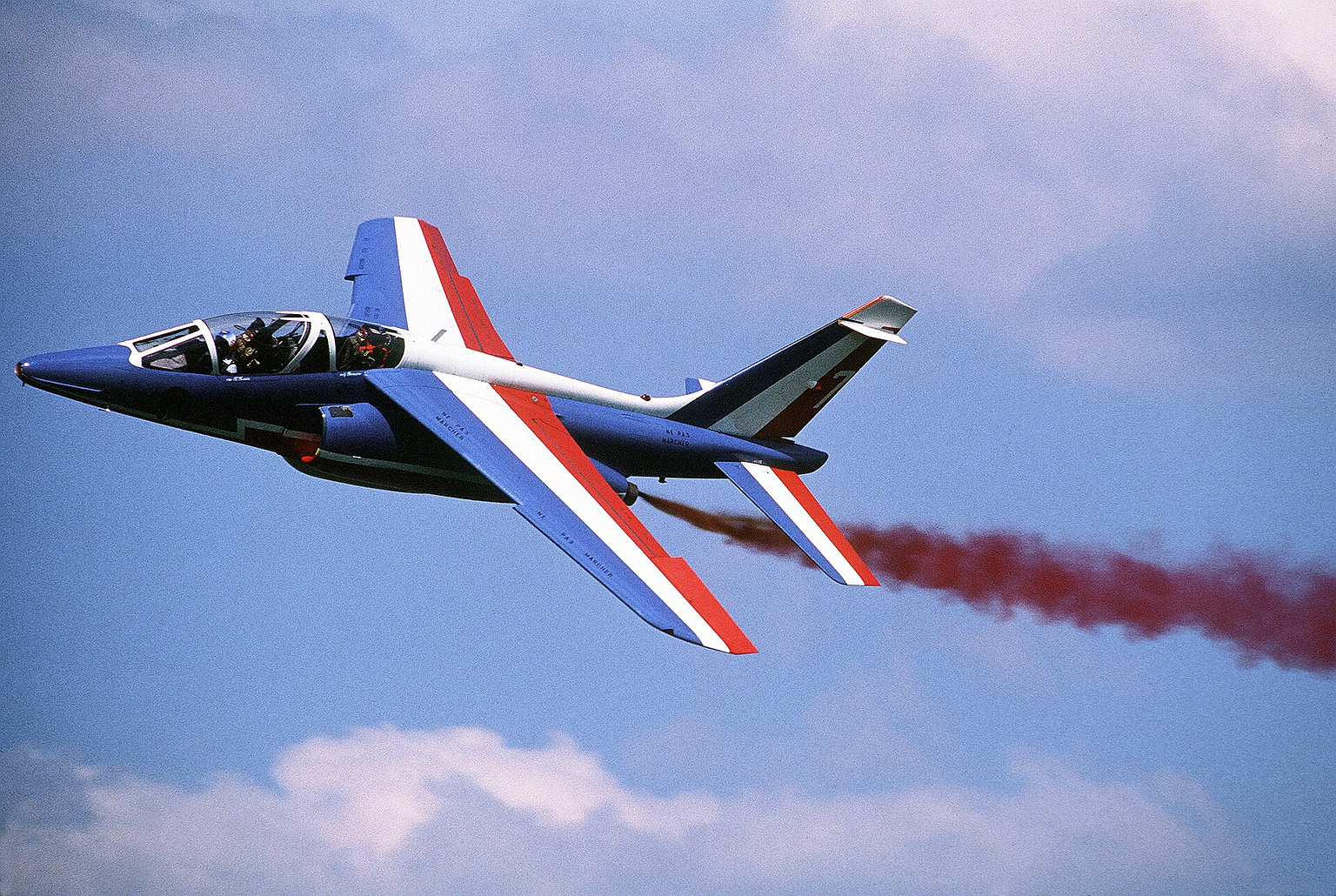
Dassault/Dornier Alpha Jet
The Franco-German workhorse
One airframe, two nations, two jobs — a nimble twin-engine jet built by France and West Germany to teach fighter pilots and, in German hands, to fly low and hit hard. Four decades on it still trains, tows targets and plays the aggressor from Africa to the airshow circuit.
One jet, two very different jobs
By the late 1960s France and West Germany both needed a modern jet to replace ageing trainers and light-strike types — and both wanted to build it at home rather than buy American. In 1969 they agreed to do it together. France’s Breguet (soon absorbed into Dassault) teamed with Germany’s Dornier, their joint design beat a competing proposal, and in 1970 the two governments signed off on a shared programme. The result flew for the first time on 26 October 1973.
What made the Alpha Jet unusual is that the same airframe was asked to do two quite different things. France wanted an advanced trainer to school its fast-jet pilots; West Germany wanted a light attack and close-air-support aircraft to replace the Fiat G.91 and fly low against Warsaw Pact armour. So the partners built two versions — the French Alpha Jet E with a rounded training nose, and the German Alpha Jet A with a pointed nose, attack avionics and a hard-hitting cannon — on one common design.
It worked. Roughly 480 were built, France’s Patrouille de France display team adopted it in 1981, and export orders followed across Africa, the Middle East and Asia. Germany later judged it surplus and sold its fleet abroad; today Alpha Jets still train pilots in Egypt and Morocco, fly light strikes in Nigeria, and turn up in civilian hands as target-tugs, aggressors and airshow stars — some owned by the world’s largest private air forces.
01How France and Germany built one Alpha Jet for two opposite missions
The programme was a genuine 50/50 collaboration. Dassault-Breguet built the forward fuselage, Dornier built the wings and rear fuselage, and Belgium’s SABCA joined in on components; final assembly lines ran in both France and Germany. The clever part was the split specification: rather than compromise on a single jet that suited neither air force, the partners agreed a common airframe and engine and then diverged on nose, avionics and armament.
France’s Alpha Jet E (“Ecole”, school) kept things light and forgiving for student pilots. West Germany’s Alpha Jet A (“Appui”, support) added a nav/attack system, a laser rangefinder option, a 27 mm Mauser cannon pod and the plumbing for bombs and rockets. It is one of the cleaner examples of a multinational defence project actually delivering two tailored aircraft from one shared design — and doing it on time.
What makes the Alpha Jet special
Two small turbofans — and a safety net
The Alpha Jet is powered by two SNECMA-Turbomeca Larzac 04 turbofans of roughly 13 kN (about 1,350 kgf) each. Modest thrust, but two engines meant a student could lose one and still fly home — a real advantage over single-engine trainers of the era. The efficient turbofans also gave long endurance and a low fuel bill, which is exactly what a training fleet flying thousands of hours a year wants.
One airframe, split into trainer and striker
The same wing, fuselage and engines carried two different mission fits. The French E model was a clean advanced trainer; the German A model was a light-attack jet with a nav/attack system and a centreline cannon pod. Later Egyptian MS1/MS2 variants and the enhanced Alpha Jet 2 pushed the attack side further with updated avionics and Magic air-to-air missiles.
Rugged, simple and cheap to run
The Alpha Jet was built to operate from rough or short strips, take a beating and keep flying with basic maintenance — qualities that made it a favourite of African and Middle-Eastern air forces on tight budgets. That same simplicity is why so many now fly as civilian warbirds and contractor jets: they are affordable to buy, easy to keep airworthy and cleared for demilitarised private use.
02The Larzac engines: why two small turbofans beat one big one for training
The Larzac 04 was developed jointly by France’s Turbomeca and SNECMA specifically for this class of aircraft. Each engine is a compact two-spool turbofan giving around 13 kN of thrust — not much on its own, but the pairing gives the Alpha Jet genuine twin-engine redundancy. For a trainer, that matters enormously: an engine failure on take-off or in the circuit is survivable, letting instructors push students harder than they safely could on a single-engine jet. The bypass design also sips fuel compared with the pure turbojets it replaced, keeping the cost-per-hour low across fleets that fly constantly.
03Alpha Jet E vs Alpha Jet A: the trainer and the tank-buster
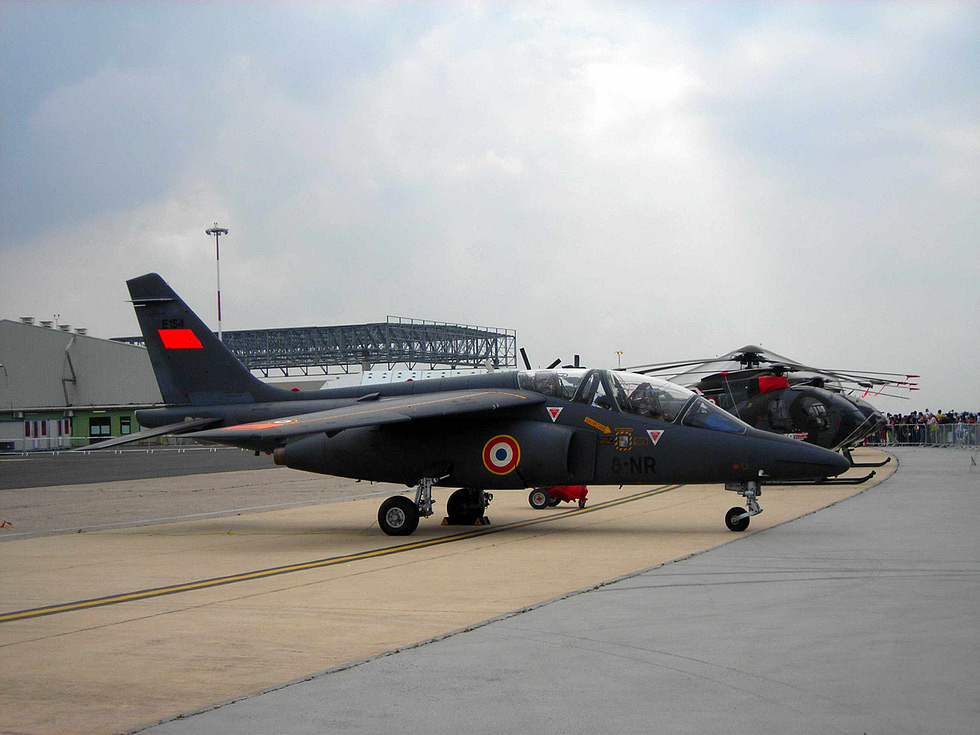
Look closely and you can tell the two apart by the nose. The French Alpha Jet E has a rounded, deeper nose optimised for docile training handling. The German Alpha Jet A has a sharper, more pointed nose housing attack-oriented kit, and it carried a serious punch: a 27 mm Mauser BK-27 cannon in a centreline pod, plus bombs, rockets and Magic missiles on underwing pylons. West Germany bought 175 of the A model to fly low-level close air support against a feared Warsaw Pact armoured thrust — a role it held until the Cold War ended and the fleet was declared surplus.
Full specifications
Airframe & Performance
- Экипаж
- 2 (tandem, dual controls)
- Длина
- ~13.2 m
- Размах крыльев
- ~9.1 m
- Высота
- ~4.2 m
- Пустой вес
- ~3,500 kg
- Max takeoff weight
- ~7,500–8,000 kg (mission-dependent)
- Max speed
- ~1,000 km/h · Mach 0.86
- Служебный потолок
- ~14,600 m (48,000 ft)
- Боевой радиус
- ~400–580 km (lo-lo, with load)
- Ferry range
- ~2,900 km with external tanks
Propulsion, Armament & Programme
- Engines
- 2 × SNECMA-Turbomeca Larzac 04
- Thrust (each)
- ~13 kN (~1,350 kgf)
- Gun
- Podded 27 mm Mauser (German A) or 30 mm DEFA
- Точки крепления
- Up to 5 · bombs, rockets, Magic/Sidewinder AAM
- External load
- ~2,500 kg
- First flight
- 26 October 1973
- Entered service
- 1979 (France) · 1980 (Germany)
- Built
- ~480 (Dassault cites 512 incl. prototypes)
- Unit cost
- No firm public figure (est. low single-digit $ millions)
04What an Alpha Jet costs to buy and fly today
As a Cold-War government programme, the Alpha Jet never had a clean open-market list price; period estimates put the flyaway cost in the low single-digit millions of dollars, but treat that as an order-of-magnitude figure. What is better documented is the second-hand and civilian market: surplus ex-military Alpha Jets have changed hands for a few hundred thousand to a couple of million dollars depending on condition and hours, which is part of why they are so popular with private warbird owners and adversary-air contractors. Operating costs are far lower than a frontline fighter — one reason the type has found a long second life outside the military. Any precise dollar figure attached to a specific airframe should be read as an estimate.
From Cold-War compromise to civilian warbird
France and Germany team up
The two nations agree to jointly develop a common trainer / light-attack jet; Breguet-Dassault and Dornier win with their design.
First flight
Prototype 01 flies at Istres on 26 October, piloted by Jean-Marie Saget.
Production standard flies
The first production-configuration Alpha Jet takes to the air, clearing the way for deliveries.
French service entry
The Alpha Jet E enters service with the French Air Force as its advanced trainer on 30 January.
Germany and the Patrouille de France
Luftwaffe Alpha Jet A close-support jets arrive; in 1981 the Patrouille de France adopts the type for its displays.
Combat in Africa, surplus in Europe
Nigeria flies Alpha Jets on ECOMOG operations in Liberia; a reunified Germany declares its fleet surplus and begins selling it abroad.
European operators bow out
Portugal and Britain’s QinetiQ test fleet retire their Alpha Jets, ending the type’s front-line European career.
A long second life
Egypt, Morocco, Nigeria and others still fly it; civilian operators run demilitarised Alpha Jets as aggressors, target-tugs and airshow jets.
From the flight line: twelve Alpha Jet stories
A jet born of compromise
France wanted a trainer, Germany wanted a striker — so they built both from one design.
Read the full story
Backbone of the Patrouille de France
Since 1981 the Alpha Jet has been the mount of France’s national aerobatic team.
Read the full story
The Cold War tank-buster
West Germany’s 175 Alpha Jet A strikers were built to fly low against Warsaw Pact armour.
Read the full story
Three thousand sorties over Liberia
Nigerian Alpha Jets flew intensive combat missions supporting ECOMOG peacekeepers in the 1990s.
Read the full story
Strikes over the Western Sahara
Moroccan Alpha Jets hit Polisario forces during the long Western Sahara conflict.
Read the full story
Two engines, one confident student
Twin turbofans gave instructors the confidence to push trainees harder.
Read the full story
The first demilitarised fighter jets
The Flying Bulls’ Alpha Jets were the first ex-military jets licensed for civilian flight.
Read the full story
Playing the enemy for hire
Private contractors fly Alpha Jets as “red air” to train front-line pilots.
Read the full story
The RAF’s pace-setter
Britain’s QinetiQ flew Alpha Jets as fast target and support jets until 2018.
Read the full story
Building them under licence
Egypt assembled its own Alpha Jets and developed upgraded MS variants.
Read the full story
From Doha to Bangkok
Export Alpha Jets served across the Middle East and Asia as well as Africa.
Read the full story
Still working after fifty years
A 1970s design that never stopped finding new roles.
Read the full story
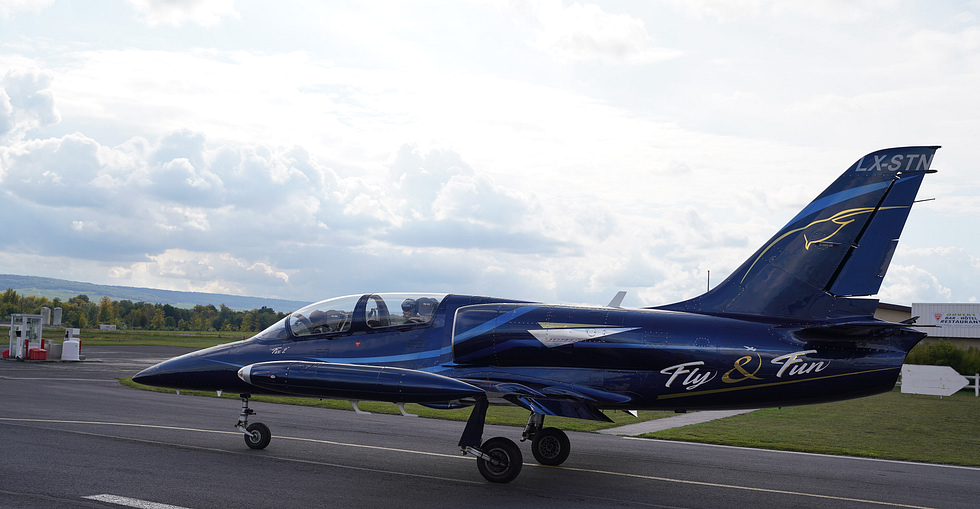
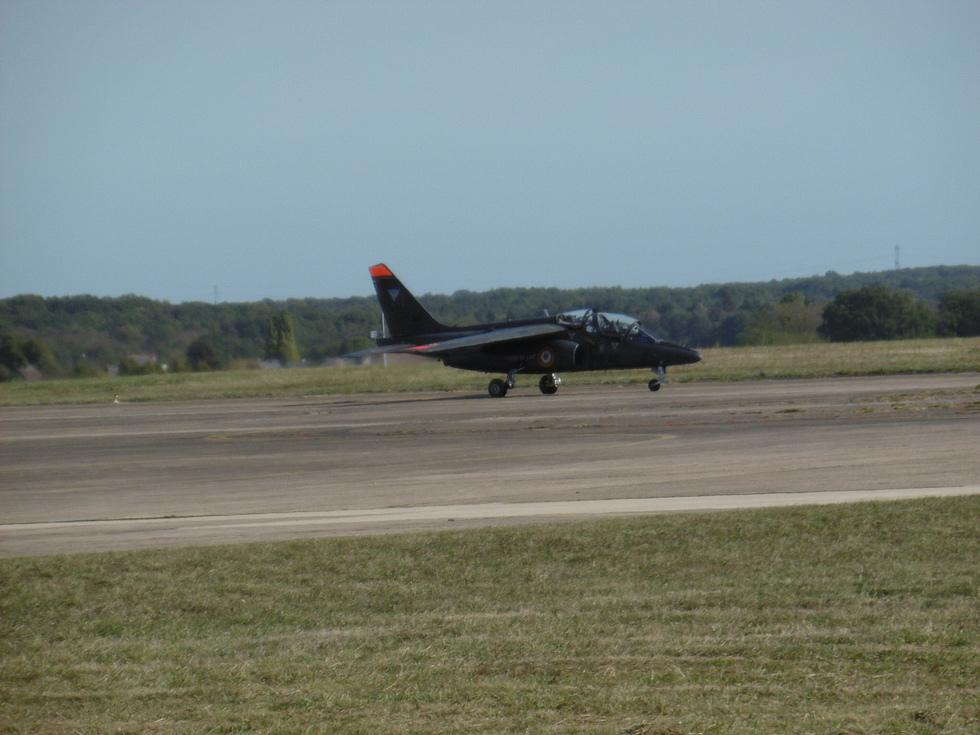
The Alpha Jet in pictures
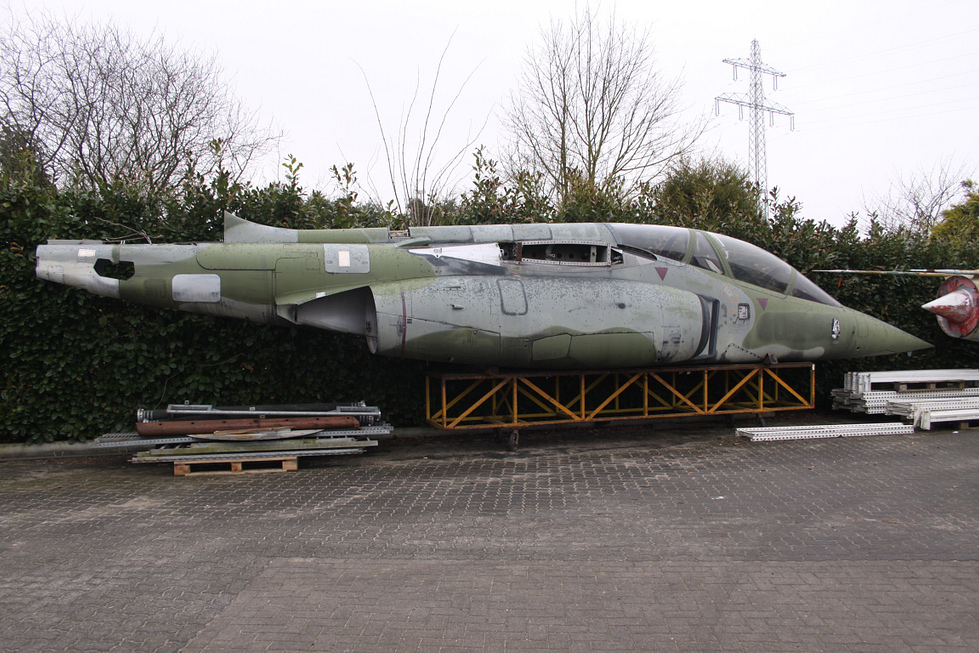
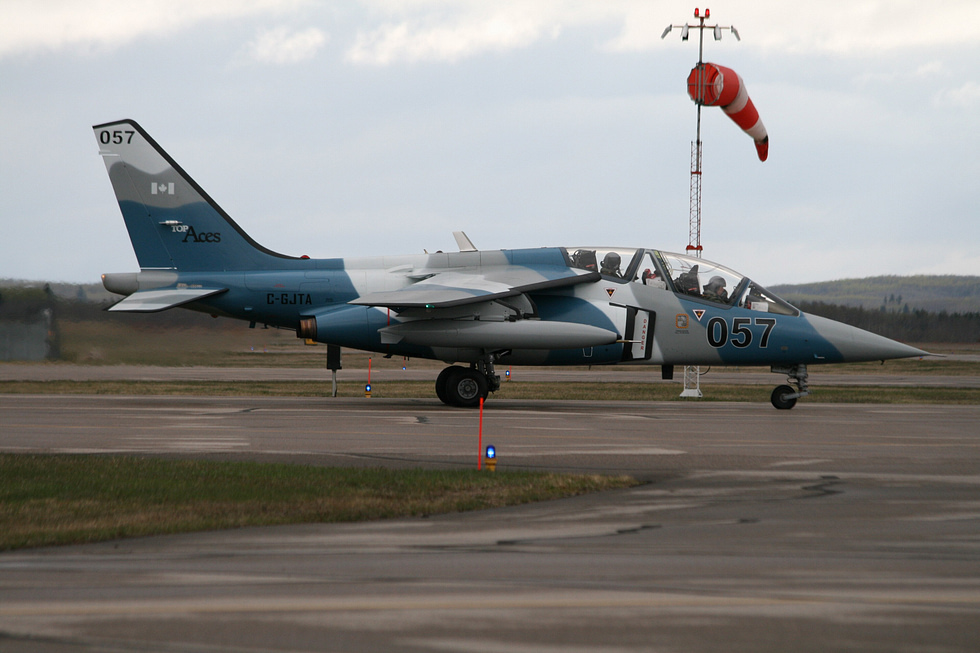
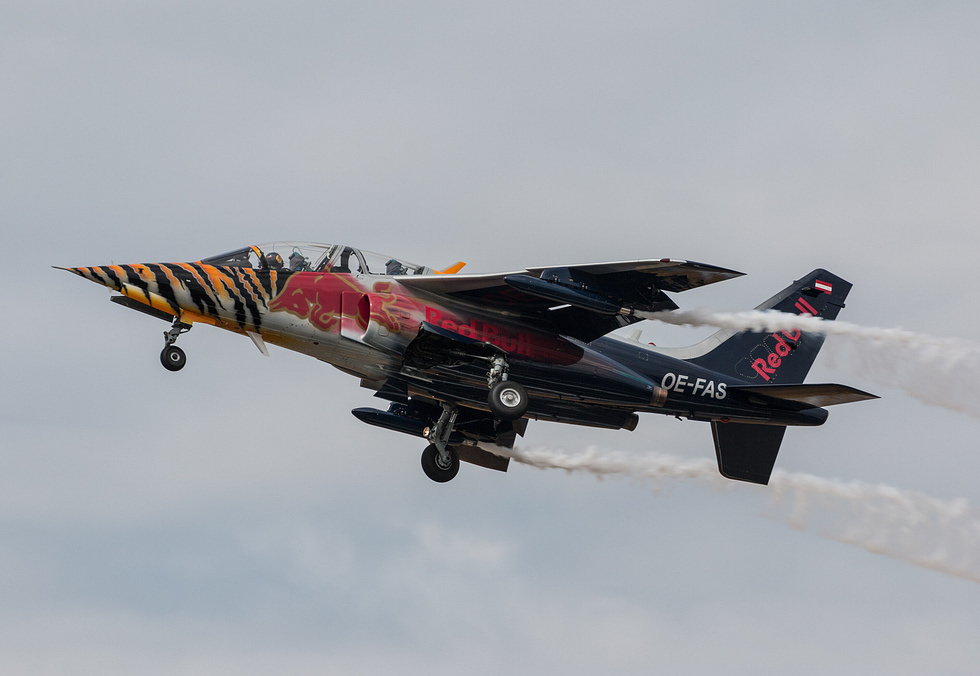
The Alpha Jet in motion
A dedicated video feature for the Alpha Jet is coming soon. In the meantime, look for Patrouille de France display footage and Flying Bulls demonstrations to see the type in its element.
The Alpha Jet in motion
WELT — one of the most-watched Alpha Jet films on YouTube.
Where the Alpha Jet flies
Where it actually fought
The Alpha Jet was designed as a trainer and a close-support jet, not an air-superiority fighter, and its combat record reflects that. Its fighting has been done in the light-attack role — above all in Africa, where Nigerian, Moroccan and other operators flew it in real wars. Precise sortie and loss figures are hard to verify and should be treated as approximate.
Compare the combat record of every military aircraft. Figures as of July 2026 and, for the Alpha Jet, necessarily approximate.
Everything people ask about the Alpha Jet
Can I fly in an Alpha Jet?
Who built the Alpha Jet?
What is the Alpha Jet used for?
How fast is the Alpha Jet?
How many Alpha Jets were built?
Is the Alpha Jet still in service?
Why does it have two engines?
You can’t fly the Alpha Jet.
These, you can.
Some legends only live in museums — others are fuelled and waiting. MiGFlug has put civilians in real military jet cockpits since 2004.
 Fly the L-39 AlbatrosThe world’s most-flown jet trainer — aerobatics included
 Fly the F-104 Starfighter“The missile with a man in it”
 Fly the MiG-21The Cold War’s most-produced jet
 Управляйте самолетом T-33 Shooting Star.America’s first jet trainer
 Fly the DH VampireA piece of early jet history
 Fly the S.211Agile Italian jet trainer
 Fly the MB-326The classic Aermacchi jet
 Fly the MiG-15The Soviet legend of the Korean War
Continue the tour
Every fact, checked
- Dassault Aviation — Alpha JetManufacturer history: joint programme, first flight, production numbers and operators.
- Military Factory — Alpha JetTechnical specifications, dimensions, engines and armament.
- Global Military — Alphajet operatorsCurrent and former operators, fleet numbers and combat use.
- Simple Flying — Alpha Jet guideDevelopment, variants and modern civilian operators including the Flying Bulls and Top Aces.
- Bolt Flight — Franco-German powerhouseNigerian ECOMOG operations, Patrouille de France use and post-military export.
- Key Military — Boscombe Down Alpha Jets retiredQinetiQ’s UK test fleet and its 2018 retirement.
- Aviation Report — Portuguese Alpha Jet final flightPortugal’s retirement of the type in 2018.
- Military Africa — Nigeria’s Alpha JetsContinued Nigerian combat use and fleet reactivation.