

Short Stirling
The first four-engine heavy bomber to enter RAF service — a huge, handsome, low-flying aircraft hobbled by a short wing, and remembered as much for towing gliders and dropping agents as for bombing Germany.
At a Glance
Short Stirling: key facts
История
The Short Stirling: Bomber Command’s forgotten first heavy
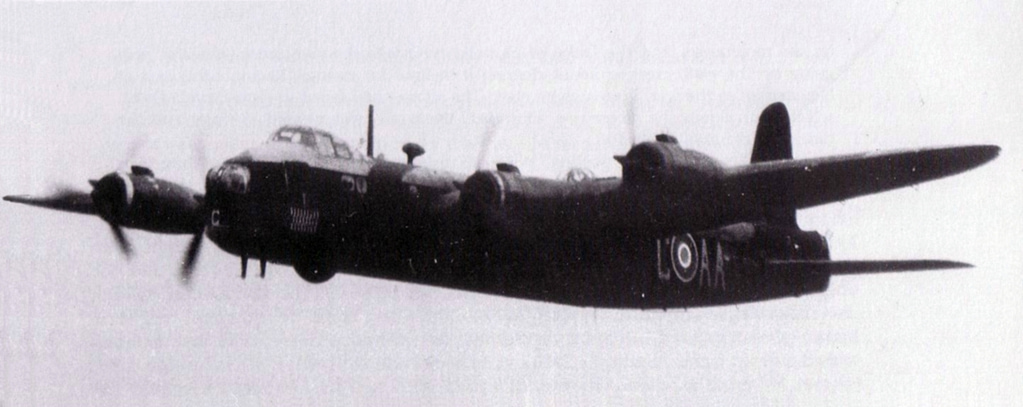
When the Royal Air Force went to war in 1939 its bomber force was built around twin-engine medium types. The aircraft that changed that — the first four-engine heavy bomber to reach an RAF squadron — was the Short Stirling. Big, tall and unmistakable, it entered service in August 1940, months ahead of the Handley Page Halifax and more than a year before the Avro Lancaster. For a brief period the Stirling was Bomber Command’s only heavy, and it carried the four-engine offensive into Germany while the other two were still working up.
The Stirling was designed by Short Brothers of Rochester to Air Ministry Specification B.12/36, which called for a long-range heavy bomber able to lift a substantial load. Uniquely among the RAF’s three wartime heavies, it was conceived from the outset as a four-engine aircraft — the Halifax and the Lancaster both began life as twin-engine designs and were re-engined only when the Rolls-Royce Vulture failed. Short Brothers, a firm famous for its big flying boats, drew on that experience to produce a genuinely large landplane powered by four Bristol Hercules radials.
One decision shaped the whole aircraft and its reputation. The specification limited the wingspan to about 100 feet, and the Stirling emerged with a span of only around 99 feet — short for so large a bomber. It is often claimed that this limit was imposed so the aircraft would fit through the standard RAF hangar door of the day, but that story is disputed: aviation historians point out that the 100-foot figure was a general design ceiling in the specification and that the neat hangar-door explanation is more likely a persistent myth than documented fact. Whatever its origin, the short span had very real consequences.
A short wing on a heavy aircraft meant a low service ceiling — only around 16,500 feet fully loaded, far below the altitudes the Halifax and especially the Lancaster could reach. That kept the Stirling down in the thick of the flak and within easy reach of German night fighters, and its loss rate over Germany was correspondingly high. The wing also drove the design of a deep, divided bomb bay that, awkwardly, could not take the large 4,000 lb and heavier blast bombs the other heavies carried — a serious limitation once big weapons became central to Bomber Command’s tactics.
On the ground the Stirling was equally distinctive, standing on an extraordinarily tall, complex undercarriage that lifted its nose high into the air to give the wing enough angle for take-off. The long legs were fragile and the aircraft could swing viciously on take-off and landing; accidents were common. Yet once airborne the Stirling was, by many accounts, a delight to fly — light on the controls, strong, and surprisingly manoeuvrable for its size. Crews told of Stirlings out-turning the night fighters sent to kill them, and pilots who flew all three British heavies often spoke most warmly of the Short.
The Stirling flew its first bombing operation on the night of 10–11 February 1941, against oil-storage tanks at Rotterdam, and through 1941 and 1942 it was a front-line part of the bomber offensive, raiding German cities and targets as far away as northern Italy. But its shortcomings against the improving German defences told, and by late 1943 the Stirling had been withdrawn from the main bombing campaign against Germany, its place taken by the more capable Lancaster and Halifax.
Withdrawal from bombing was not the end. The Stirling’s size, strength and docile handling made it ideal for other work, and from 1943–44 it found a busy second career: towing the Horsa and Hamilcar gliders that carried airborne troops to Normandy on D-Day and to Arnhem during Operation Market Garden; laying sea mines in enemy waters; flying clandestine Special Operations Executive missions to drop agents and arms into occupied Europe; and, as the purpose-built Mk V, serving as an unarmed transport. In these roles the Stirling flew on to the end of the war and a little beyond.
The Stirling force was, like the whole of Bomber Command, a Commonwealth undertaking. No. 7 Squadron pioneered the type; No. 75 (New Zealand) Squadron became one of its best-known operators; and Australian, Canadian and other Allied airmen flew it alongside their British comrades. For many of these young men from the far side of the world, the Short — not the more celebrated Lancaster — was the aircraft in which they first went into action, and the type is remembered in the aviation histories of several nations even though so little of it survives.
Around 2,371 Stirlings were built before production ended, and after 1945 the type vanished with startling speed — scrapped almost to the last airframe. Today not one complete Stirling survives anywhere in the world. A handful of recovered relics and parts exist in collections, and a dedicated volunteer project is working to build a reproduction, but of the first RAF heavy bomber — an aircraft once numbered in thousands — there is no whole example left to stand beside the surviving Lancasters and the restored Halifaxes. It is, in every sense, the forgotten member of Bomber Command’s heavy trio.
01The Short Stirling’s origins: Specification B.12/36 and the flying-boat firm that built it+
Specification B.12/36 asked for something the RAF had never operated: a true four-engine heavy bomber, able to carry a heavy load over long range, to operate from existing airfields, and even to be catapult-launched and to double as a troop carrier. Several firms tendered; Short Brothers and Supermarine were chosen, and the Supermarine design was destroyed in a bombing raid before it flew, leaving the Short S.29 to become the Stirling.
Short Brothers was best known for large flying boats such as the Empire and Sunderland, and it brought that experience in big airframes to the Stirling. To test the layout the company first flew a half-scale wooden prototype, the S.31, before the full-size aircraft. The result was the first of the RAF’s three four-engine heavies to fly in near-operational form and, in 1940, the first to enter service — a genuine pioneer, even if the aircraft that followed it would prove more capable.
02The Short Stirling’s short wing: the hangar-door myth and the ceiling that doomed it as a bomber+
No feature of the Stirling is more talked about than its wingspan of roughly 99 feet, unusually short for so large an aircraft. The popular explanation — that the Air Ministry capped the span at 100 feet so the bomber would fit through standard RAF hangar doors — is repeated everywhere, but it is disputed by historians, who note that the 100-foot figure appears as a general limit in the specification and that the tidy hangar-door story is most likely a later myth rather than documented design history. It should be treated as a widely repeated claim, not established fact.
What is not in doubt is the effect. A short wing meant high wing loading and a low ceiling: fully laden, the Stirling struggled to reach much above 16,500 feet, where the Halifax and Lancaster cruised thousands of feet higher. That left the Stirling wallowing in the most dangerous airspace over a target, and its loss rate showed it. The same wing structure dictated a compartmented bomb bay that could not house the big 4,000 lb “cookie” blast bombs, so the Stirling could carry a large number of smaller bombs but not the heaviest single weapons — a growing handicap as the war went on.
Design & Engineering
How the Short Stirling was built to fight
A vast, strongly built airframe from a flying-boat maker — four radial engines, a towering undercarriage, and a wing so short it defined both the aircraft’s handling and its fate.
Four Bristol Hercules radials
Unlike the Merlin-then-Hercules story of its rivals, the Stirling was built around four Bristol Hercules air-cooled radials from the start. Successive marks fitted more powerful Hercules versions, but the short wing capped the aircraft’s altitude no matter how much power was added — the engines were never the Stirling’s real problem.
A short wing and a divided bomb bay
Held to roughly a 99 ft span, the wing gave high wing loading, a low ceiling and a bomb bay split into cells that could not take bombs larger than 2,000 lb. The Stirling could carry up to about 14,000 lb of smaller weapons over short range, but never the heavy blast bombs that became central to the offensive.
The tallest undercarriage in the RAF
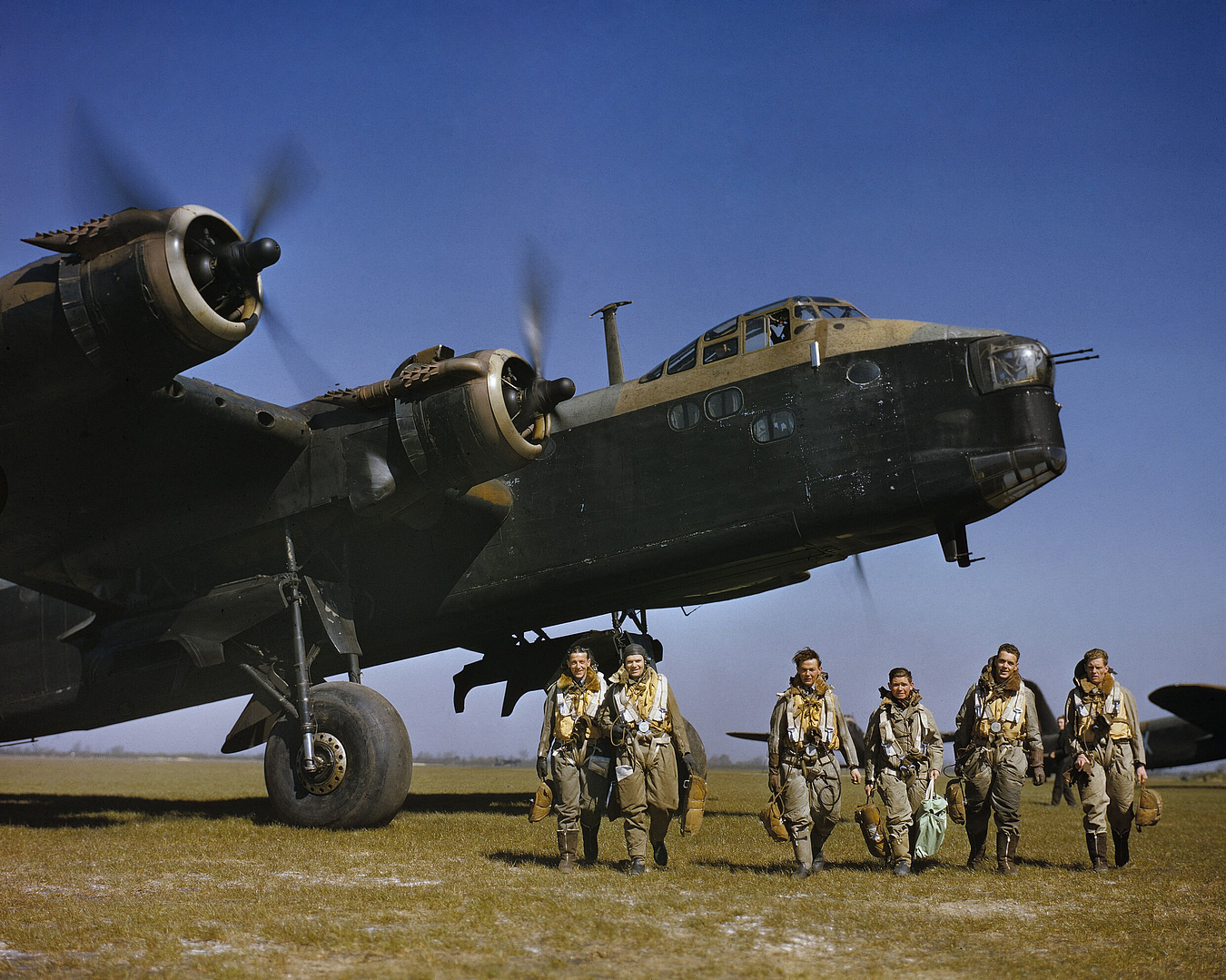
To give the short wing enough angle of attack for take-off, the Stirling sat on an immensely tall, complex main undercarriage — the nose towering some 22 ft above the ground. It was fragile and troublesome, prone to collapse, and the aircraft could swing badly on the runway, making the Stirling notoriously demanding to get safely on and off the ground.
03Beyond bombing: the Short Stirling as glider tug, mine-layer and secret-operations aircraft+
Once the Stirling was withdrawn from raids on Germany, its roomy fuselage, strength and gentle handling made it ideal for a range of secondary duties that kept it busy to the end of the war. Airborne-forces squadrons used it to tow the Airspeed Horsa and the huge General Aircraft Hamilcar gliders, delivering troops and equipment on D-Day and at Arnhem, and to drop paratroops.
Other Stirlings laid sea mines — the work crews called “gardening” — in German, Danish and Norwegian coastal waters, and special-duties aircraft flew low over occupied Europe on Special Operations Executive missions, parachuting agents, weapons and radios to the resistance. The dedicated Mk V, stripped of turrets, served purely as a transport. It is this breadth of second-career work, as much as the early bombing, that defines the Stirling’s wartime record.
Full Specifications
Short Stirling Mk III — specifications
Figures are for the Bristol Hercules-powered B Mk III, the most-produced variant. Values vary between marks and sources; approximate, contested and disputed figures are flagged. The Stirling’s performance figures — especially its ceiling — differ noticeably between references and should be read as representative rather than exact.
| Экипаж | 7–8 (pilot, second pilot/flight engineer, navigator, bomb aimer, wireless operator, gunners) |
|---|---|
| Длина | 26.59 m (87 ft 3 in) |
| Размах крыльев | ~30.20 m (99 ft 1 in) — short for a heavy bomber |
| Высота | 6.93 m (22 ft 9 in) — very tall on its undercarriage |
| Зона крыла | ~135.6 m² (1,460 sq ft) |
| Пустой вес | ~21,270 kg (46,900 lb) |
| Max takeoff weight | ~31,750 kg (70,000 lb) |
| Электростанция | 4 × Bristol Hercules XVI 14-cylinder radial, ~1,635 hp each |
| First flight | 14 May 1939 (prototype) |
| Максимальная скорость | ~435 km/h (270 mph) at altitude (est., varies by source) |
|---|---|
| Крейсерская скорость | ~320 km/h (200 mph) |
| Диапазон | ~950 km (590 mi) with maximum bomb load; ~3,750 km ferry |
| Служебный потолок | ~5,030 m (16,500 ft) (low; some sources ~17,000 ft) |
| Max bomb load | ~6,350 kg (14,000 lb); limited to bombs of 2,000 lb or less |
| Defensive armament | 8 × 0.303 in Browning MG (nose, dorsal & tail turrets) |
| Number built | ~2,371 (all marks) (some sources ~2,383) |
| Unit cost | Not reliably recorded (wartime figures inconsistent) |
| Cost per flight hour | Not applicable — no airworthy Stirling exists (no complete airframe survives) |
04The Short Stirling’s variants: from B Mk I to the turretless Mk V transport+
B Mk I: the first production bomber, powered by early Bristol Hercules engines; the version that opened the Stirling’s operational career in 1941.
B Mk III: the definitive bomber, with more powerful Hercules XVI engines and a revised dorsal turret; improved performance but still limited by the short wing.
Mk IV: a glider-tug and paratroop version with the nose and dorsal turrets removed, used by airborne-forces squadrons for Normandy, Arnhem and SOE work.
Mk V: an unarmed transport with a lengthened, faired nose and a large freight door, built for carrying troops and cargo; some served briefly after the war and a batch went to Egypt.
Figures for exact production totals of each mark vary between sources; the commonly cited grand total is around 2,371 aircraft.
05The Short Stirling’s operating costs: what a wartime heavy actually cost+
Reliable unit-cost figures for the Stirling are hard to pin down. Wartime aircraft costs were quoted inconsistently — sometimes airframe-only, sometimes with engines and equipment, in shifting 1940s pounds — and no single authoritative figure is widely accepted, so we mark it not reliably recorded rather than repeat a dubious number.
A cost-per-flight-hour figure — a standard field on these pages — simply does not apply to the Stirling today. Not one airframe is airworthy anywhere in the world; indeed, unlike the Lancaster and Halifax, no complete Stirling survives at all. Any “per hour” figure would be pure invention. The real modern cost of a Stirling is measured instead in the decades of volunteer effort now going into building a single reproduction from drawings and salvaged parts.
Reference Data
Short Stirling: dimensions, structure and systems
A fuller technical reference for the Stirling, drawn largely from the Hercules-engined B Mk III. Figures vary by mark and source and are approximate; readers comparing marks should treat them as representative rather than exact.
| Зона крыла | ~135.6 m² (1,460 sq ft) |
|---|---|
| Wing span | ~30.20 m (99 ft 1 in) — capped near 100 ft in the specification |
| Fuselage | Deep, slab-sided structure with a long, compartmented bomb bay |
| Undercarriage | Exceptionally tall retractable main gear with a two-stage retraction mechanism |
| Powerplant (Mk III) | 4 × Bristol Hercules XVI 14-cyl sleeve-valve radial, ~1,635 hp each |
| Powerplant (Mk I) | 4 × Bristol Hercules XI, ~1,590 hp each |
| Propellers | Three-blade constant-speed |
| Bomb bay | Divided into cells; maximum bomb 2,000 lb — could not carry the 4,000 lb blast bomb |
| Max bomb load | ~6,350 kg (14,000 lb) over short range |
| Typical range with load | ~950 km (590 mi) heavy; ~3,750 km (2,330 mi) ferry |
| Служебный потолок | ~5,030 m (16,500 ft) (low; sources differ) |
| Defensive guns | 8 × 0.303 in Browning in nose (2), dorsal (2) and tail (4) turrets |
Powerplant & Heritage
Engines, and the Stirling’s place in history
06The Short Stirling’s engines: four Bristol Hercules radials+
Where the Halifax and Lancaster began with the liquid-cooled Rolls-Royce Merlin, the Stirling was built from the start around the Bristol Hercules — a big 14-cylinder air-cooled sleeve-valve radial. Four of them gave the Stirling ample power, and successive marks fitted more potent Hercules versions as they became available.
The engines were rarely the aircraft’s weak point. The Stirling’s ceiling was limited by its short, highly loaded wing, not by a lack of horsepower, and no amount of extra engine power could lift the fully laden bomber to the altitudes its rivals reached. In that sense the Stirling is a reminder that an aircraft is a system: a sound engine cannot rescue an airframe hemmed in by a design constraint set years earlier on the drawing board.
07The Short Stirling in the Short Brothers story: from flying boats to a heavy bomber+
Short Brothers, founded in 1908, was one of the oldest names in British aviation and by the 1930s was famous above all for large flying boats — the elegant Empire boats of Imperial Airways and the military Sunderland that would hunt U-boats throughout the war. Building a huge four-engine landplane was a natural extension of that expertise in big airframes.
The Stirling was the company’s major contribution to the bomber offensive, built at Rochester and Belfast and by a wider production group. Short Brothers went on building flying boats and, after the war, moved into Northern Ireland as Short Brothers & Harland, eventually becoming a maker of airliners, missiles and components that survives today as part of a larger group. The Stirling remains the firm’s most significant wartime landplane.
Variants
Every major Short Stirling mark
From the half-scale wooden prototype to the turretless transport, the Stirling was developed through a handful of major versions spanning bomber, airborne-support and transport duties.
| Mark | Engines | Primary role | Примечания |
|---|---|---|---|
| S.31 | 2 × (half-scale) | Test aircraft | A half-scale wooden flying prototype built to prove the layout before the full-size bomber flew. |
| Prototype (S.29) | 4 × Hercules | Prototype | First flew 14 May 1939; wrecked when the undercarriage collapsed on the landing run. |
| B Mk I | 4 × Hercules XI | Bomber | The first production bomber; entered service in 1940 and opened the Stirling’s operational career. |
| B Mk III | 4 × Hercules XVI | Bomber | The definitive bomber, with more powerful engines and a revised dorsal turret. |
| Mk IV | 4 × Hercules | Glider tug / paratroop | Turrets removed; towed gliders and dropped paratroops and agents from 1944. |
| Mk V | 4 × Hercules | Transport | Unarmed transport with a faired nose and freight door; a batch was later sold to Egypt. |
Notable Operations
The Short Stirling in action
First operation
The Stirling’s combat debut, a raid on oil storage at Rotterdam by No. 7 Squadron.
Ruhr & Germany
Front-line raids on German cities as Bomber Command’s first four-engine heavy.
Turin & Italy
Long-range night raids over the Alps against northern Italian industrial cities.
Mine-laying
“Gardening” sorties sowing sea mines in German, Danish and Norwegian waters.
Withdrawn from Germany
Heavy losses and a low ceiling end the Stirling’s main bombing role over the Reich.
D-Day
Stirlings tow gliders and drop paratroops onto the flanks of the Normandy landings.
Arnhem
Airborne squadrons haul gliders and fly resupply during Operation Market Garden.
Secret war
Special-duties Stirlings drop SOE agents and supplies across occupied Europe.
In Context
The Short Stirling among the Allied heavies
How the Stirling compared with its British stablemates and the American heavy bombers. Figures are typical/approximate and vary by mark, load and source.
| Самолёт | Engines | Max bomb load | Ceiling | Экипаж |
|---|---|---|---|---|
| Short Stirling B III | 4 × Bristol Hercules | ~14,000 lb (max 2,000 lb bombs) | ~16,500 ft | 7–8 |
| Handley Page Halifax B III | 4 × Bristol Hercules | ~13,000 lb | ~24,000 ft | 7 |
| Avro Lancaster B I | 4 × Rolls-Royce Merlin | ~14,000 lb (up to 22,000 lb special) | ~21,400 ft | 7 |
| Boeing B-17 Flying Fortress | 4 × Wright Cyclone | ~4,500–8,000 lb typical | ~35,000 ft | 10 |
| Consolidated B-24 Liberator | 4 × Pratt & Whitney | ~8,000 lb typical | ~28,000 ft | 10 |
The Stirling entered service first but sat at the bottom of the British heavy trio in altitude and bomb flexibility: its low ceiling and 2,000 lb bomb limit told against it, and it was withdrawn from raids on Germany while the Lancaster and Halifax fought on. Where the Stirling excelled was in the airborne-support, mine-laying and clandestine roles it took up from 1943–44 — and in the affection of the crews who found it, for all its faults, a fine aircraft to fly.
Timeline
The Short Stirling: a wartime service record
Stories & Eyewitnesses
The Short Stirling in eighteen stories
First of the RAF’s big four
The Stirling was the first four-engine heavy bomber to enter RAF service, in 1940 — ahead of both the Halifax and the Lancaster.
Читать далее
For a short period it was Bomber Command’s only heavy, carrying the four-engine offensive into Germany while the other two types were still working up to operations.
The hangar-door legend
Almost every account of the Stirling repeats the story that its short wing was dictated by the width of RAF hangar doors.
Читать далее
Historians treat this as a persistent myth rather than fact: the 100 ft span limit came from the specification, and the tidy hangar-door explanation is disputed. The consequences of the short wing, however, were entirely real.
A ceiling that killed
The short wing gave the Stirling a service ceiling of only around 16,500 ft — thousands of feet below its rivals.
Читать далее
That kept the bomber down among the flak and the night fighters, and its loss rate over Germany was high enough that it was pulled from the main campaign by late 1943.
No room for the cookie
The Stirling’s divided bomb bay could not house bombs larger than 2,000 lb.
Читать далее
As Bomber Command turned to the 4,000 lb “cookie” and heavier blast weapons, the Stirling was left unable to carry the war’s most destructive bombs — a growing handicap that the Lancaster, in particular, did not share.
Standing on stilts
To give the short wing its take-off angle, the Stirling stood on an extraordinarily tall, complex undercarriage.
Читать далее
The long legs were fragile and prone to collapse, and the aircraft could swing viciously on take-off and landing. Many Stirlings were lost or damaged in accidents that never involved the enemy at all.
A joy in the air
For all its ground-handling troubles, pilots loved the way the Stirling flew.
Читать далее
It was light on the controls and unusually manoeuvrable for so large an aircraft; crews told of Stirlings out-turning the night fighters sent to attack them. Airmen who flew all three British heavies often rated the Short the nicest to handle.
Rotterdam, February 1941
The Stirling flew its first bombing operation on the night of 10–11 February 1941.
Читать далее
Aircraft of No. 7 Squadron attacked oil-storage tanks at Rotterdam, opening the four-engine bomber offensive that would grow into the great campaign of 1943–45.
Towing the gliders
When the Stirling left the bombing campaign it became a first-rate glider tug.
Читать далее
Stirlings hauled Horsa and Hamilcar gliders to Normandy on D-Day and to Arnhem during Market Garden, and dropped paratroops — the muscle behind Britain’s airborne assaults of 1944.
Agents into the dark
Special-duties Stirlings flew low, moonlit missions over occupied Europe.
Читать далее
They parachuted SOE agents, weapons and radios to resistance networks in France, the Low Countries, Norway and Denmark — among the most dangerous and least publicised flying of the war.
Sowing the sea with mines
Stirlings spent many nights “gardening” — laying sea mines in enemy waters.
Читать далее
Mines dropped in German, Danish and Norwegian coastal channels sank shipping and tied down minesweepers, a quiet but valuable campaign far from the glare of the city raids.
New Zealanders and others
Like the rest of Bomber Command, the Stirling force drew on the whole Commonwealth.
Читать далее
No. 75 (New Zealand) Squadron flew Stirlings, as did Australian, Canadian and other Allied crews — for many of them the Short, not the Lancaster, was the aircraft they went to war in.
“MacRobert’s Reply”
One of the most famous Stirlings was N6086, “MacRobert’s Reply”.
Читать далее
Lady MacRobert paid for the aircraft in memory of her three sons, all killed flying, and it carried the family crest and name into action — a story that came to stand for private sacrifice in the air war.
The turretless Mk V
The final Stirling variant, the Mk V, was an unarmed transport with a faired nose and a freight door.
Читать далее
It carried troops and cargo in the last months of the war and after it; a batch was sold to the Royal Egyptian Air Force, giving the Stirling a brief post-war afterlife abroad.
Scrapped almost to the last
After 1945 the Stirling vanished with astonishing speed.
Читать далее
Of around 2,371 built, virtually every airframe was broken up within a few years. Unlike the Lancaster and Halifax, not one complete Stirling was preserved — the type simply disappeared.
No whole aircraft left
Today there is no complete Short Stirling anywhere in the world.
Читать далее
Only recovered relics — sections, undercarriage legs, instruments and salvaged parts — survive in museums and private hands, making the Stirling the great absence among preserved RAF heavies.
Building one from scratch
A dedicated volunteer project is working to build a reproduction Stirling.
Читать далее
Using original drawings and salvaged components, enthusiasts hope one day to let visitors stand beside a whole Stirling again — a long labour to recover an aircraft that history very nearly erased.
Bombed on the production line
The Stirling’s birthplace was itself in the front line of the air war.
Читать далее
During the Battle of Britain in 1940, German raiders struck the Short Brothers works at Rochester, destroying finished aircraft on the line and setting back early production of the RAF’s first four-engine heavy.
A wooden Stirling that flew first
Before the giant flew, Short Brothers tested a half-scale wooden replica, the S.31.
Читать далее
The little aircraft let the company prove the layout and handling in the air and shape the design of the troublesome undercarriage — an imaginative way to de-risk an enormous and costly bomber.
The Stirling in Depth
The Short Stirling, mission by mission
Deeper dives into the aircraft’s campaigns, crews, controversies and disappearance. Together they tell the fuller story of a bomber that was always more than the sum of its bomb load — expand any topic to read more.
08The Short Stirling over Germany: Bomber Command’s first four-engine offensive+
For roughly two years the Stirling was in the front line of the strategic air offensive against Germany. Through 1941 and 1942 it raided the industrial cities of the Ruhr, the ports of the North Sea coast and targets deeper inside the Reich, part of a growing four-engine force that would eventually pour hundreds of aircraft over a target in a single night.
But the Stirling always fought at a disadvantage. Its low ceiling meant it flew beneath the Halifaxes and Lancasters in the bomber stream, squarely in the zone where flak was heaviest and where night fighters could most easily find it. Loss rates were correspondingly severe, and the aircraft’s inability to carry the heaviest blast bombs limited what it could contribute as the campaign’s weapons grew larger.
By the second half of 1943 the arithmetic was inescapable, and Bomber Command began withdrawing the Stirling from raids on Germany. It had, however, done real and dangerous work in the hardest years, when the four-engine force was still small and every heavy bomber counted.
09The Short Stirling’s undercarriage: the tallest and most troublesome legs in the RAF+
The Stirling’s most visually striking feature was the immensely tall undercarriage that held its nose high in the air. The short wing needed a large angle of incidence on the ground to generate enough lift for take-off, and the only way to achieve it was to perch the whole aircraft on very long legs, with the cockpit standing more than twenty feet above the tarmac.
That height came at a price. The undercarriage was mechanically complex, with a two-stage retraction system, and it was structurally fragile. Heavy or mishandled landings could collapse the legs, and the aircraft’s tendency to swing on take-off and landing — a handful for any pilot on a dark, wet runway — led to a steady toll of accidents entirely separate from enemy action.
For all that, crews learned to manage the Stirling on the ground, and its handling in the air more than made up for the anxiety of getting it down. But the undercarriage remains emblematic of the whole design: an ingenious answer to a problem created by the short wing, and one that brought new problems of its own.
10Flying the Short Stirling: why crews loved an aircraft the planners disliked+
There is a paradox at the heart of the Stirling’s reputation. On paper it was the weakest of the RAF’s three heavies, and the planners were glad to see it leave the bombing campaign. Yet the men who actually flew it frequently remembered it with real affection, and pilots who had flown all three types often said the Stirling was the most pleasant to handle of the lot.
The reason was its behaviour in the air. Despite its size the Stirling was light and responsive on the controls and unusually agile, able to be thrown around in the violent “corkscrew” evasive manoeuvre far more readily than its bulk suggested. Crews told of Stirlings turning inside attacking night fighters, using sheer manoeuvrability to survive where a heavier-handling aircraft might not.
It is a reminder that the qualities that matter to a designer or a statistician are not always the ones that matter to the crew in the dark over Germany. The Stirling’s ceiling and bomb load could be measured and found wanting; its handling could only be felt, and those who felt it rarely forgot it.
11The Short Stirling on D-Day and at Arnhem: the airborne workhorse+
When the Allies returned to occupied Europe, the Stirling went with them — not as a bomber but as a tug and troop-carrier for the airborne forces. Squadrons equipped with the turretless Mk IV towed the large gliders that delivered jeeps, guns and men, and dropped paratroops onto the battlefield.
On the night before D-Day, 6 June 1944, Stirlings were over Normandy towing gliders and dropping paratroops onto the flanks of the invasion. Three months later, during Operation Market Garden, they were back over the Netherlands hauling gliders to the airborne landings around Arnhem and flying dangerous resupply missions through intense ground fire.
This airborne work gave the Stirling a central place in some of the war’s most famous operations, long after it had ceased to be a front-line bomber. Few aircraft could claim to have opened the four-engine bombing of Germany and then carried the airborne army into occupied Europe.
12The Short Stirling and the SOE: the secret war by moonlight+
Among the most secret uses of the Stirling was its service with the special-duties squadrons that worked for the Special Operations Executive and the resistance movements of occupied Europe. Flying alone, low and slow on moonlit nights, these aircraft parachuted agents, weapons, radios and supplies to underground networks.
The missions demanded extraordinary navigation — finding a single field marked by a few torches, deep inside enemy territory, with no radio aids — and extraordinary nerve, for a special-duties aircraft caught by a night fighter had little chance. The Stirling’s roomy fuselage and honest handling made it well suited to the task, and it ranged across France, the Low Countries, Norway and Denmark on this clandestine work.
This quiet, dangerous flying rarely features in the popular image of the heavy bomber, but it was some of the most demanding of the whole war, and the Stirling carried more than its share of it.
13Gardening: the Short Stirling and the sea-mining campaign+
One of Bomber Command’s most persistent and least celebrated campaigns was the laying of sea mines in enemy waters — work the crews codenamed “gardening”, each stretch of sea a “garden” and each mine a “vegetable”. The Stirling, with its capacity and range, was a natural mine-layer.
Flying low over German, Danish and Norwegian coastal channels, Stirlings sowed mines that sank merchant ships and warships, blocked harbours and forced the enemy to divert huge effort into minesweeping. It was precise, dangerous flying, often at low level and at night, and it made a real contribution to the war at sea that is easily overlooked beside the drama of the city raids.
More on the Stirling
The Short Stirling: crews, cost and the vanished fleet
14The Short Stirling’s defensive armament: turrets, the corkscrew and the night-fighter threat+
The Stirling defended itself with power-operated turrets mounting rifle-calibre 0.303 in Browning machine guns — typically two in the nose, two in a dorsal turret and four in the tail. Like all the RAF heavies, it was under-gunned against the cannon-armed German night fighters, and the guns’ real value lay as much in spotting and warning as in shooting attackers down.
The bomber’s standard defence was the “corkscrew”: on the gunner’s call, the pilot flung the aircraft into a violent diving, weaving descent to spoil the fighter’s aim. Here the Stirling’s much-praised agility was a genuine asset, letting it corkscrew harder than its rivals. Later in the war the Germans fielded upward-firing cannon that let a fighter attack unseen from below, a threat the bombers only slowly came to understand.
15MacRobert’s Reply: the most famous Short Stirling of all+
Perhaps the best-known individual Stirling was N6086, named “MacRobert’s Reply”. It was paid for by Lady Rachel MacRobert, a Scottish aristocrat who lost all three of her sons to flying — two killed in the RAF and one in a pre-war accident — and who donated the money for a bomber as her “reply” to the enemy.
The aircraft carried the MacRobert family crest and name into action, and the story caught the public imagination as an emblem of private grief turned to defiance. The name has been carried by RAF aircraft ever since, a small thread of continuity linking the Stirling to the modern Royal Air Force and keeping alive one family’s extraordinary sacrifice.
16The Commonwealth crews of the Short Stirling: New Zealand and beyond+
Like the rest of Bomber Command, the Stirling force was a Commonwealth enterprise. No. 75 (New Zealand) Squadron flew Stirlings and became one of the type’s best-known units, and Australian, Canadian and other Allied airmen served on Stirling squadrons throughout the aircraft’s front-line career.
For many of these young men from the far side of the world, the Stirling — not the more famous Lancaster — was the aircraft in which they first went to war. The international character of the crews reflected the vast training and manpower effort behind the bombing campaign, and it is part of why the Stirling is remembered in aviation histories across the Commonwealth even though so few relics survive.
17The odds of a tour: losses and survival in the Short Stirling+
For much of the war, completing a tour of operations — usually thirty sorties — was a statistical long shot for any Bomber Command crew, and for Stirling crews the odds were worse than most. Its low ceiling put it where the defences were fiercest, and the type’s loss rate during its bombing career was among the highest of the heavies.
Behind those figures were seven- and eight-man crews, many of them very young, flying repeatedly into the most dangerous airspace of the war. The Stirling’s eventual withdrawal from the German campaign was, in part, a recognition that it was costing lives out of proportion to the damage it could do — though the airborne, mining and special-duties work it turned to was itself far from safe.
18Building the Short Stirling: Rochester, Belfast and the production group+
The Stirling was built by Short Brothers at Rochester in Kent and at Belfast in Northern Ireland, together with a wider production group that drew in other firms as the demand for heavy bombers grew. Rochester was bombed during the Battle of Britain, destroying aircraft on the line and disrupting early production — a reminder that the factories were themselves in the front line.
Assembling so large an aircraft in quantity was a major industrial undertaking, and the roughly 2,371 Stirlings completed represent a substantial share of Britain’s wartime heavy-bomber effort. That the type was then scrapped so completely after 1945 makes the scale of that production effort easy to forget today.
19From bomber to transport: the Short Stirling Mk V and the type’s final service+
The last version of the Stirling abandoned the bomber role entirely. The Mk V was an unarmed transport, its turrets removed and its nose lengthened and faired over, with a large freight door for loading cargo and troops. It served in the final months of the war and briefly afterwards, carrying men and materiel rather than bombs.
A batch of Stirling transports was sold to the Royal Egyptian Air Force after the war, giving the type a short second life abroad, and a Belgian operator flew a few on charter and freight work. But these were brief afterlives. Within a few years of the war’s end the Stirling had all but vanished from the world’s airfields.
20Why no Short Stirling survives: the great absence among preserved RAF heavies+
The most poignant fact about the Stirling is a negative one: unlike the Lancaster, of which examples still fly, and the Halifax, of which complete airframes survive in museums, not one whole Short Stirling exists anywhere in the world. The type that pioneered the RAF’s four-engine bomber force was preserved by nobody.
The reasons are partly timing and partly reputation. The Stirling left front-line service before the war ended and was seen as obsolete; when the great wave of post-war scrapping came, there was little sentiment to save an aircraft already regarded as a failure, and the airframes were melted down in their thousands. By the time aircraft preservation became a serious movement, it was too late.
What survives is fragments — a nose section here, undercarriage legs and instruments there, parts recovered from crash sites — and the determined work of a reconstruction project trying to build a complete example from drawings and salvage. Until that succeeds, the Stirling remains the ghost of Bomber Command’s heavy trio: everywhere in the history books, nowhere in the flesh.
Equipment & Operations
The Short Stirling: load, life and the vanishing fleet
21The Short Stirling’s bomb bay: many small bombs, but never the big one+
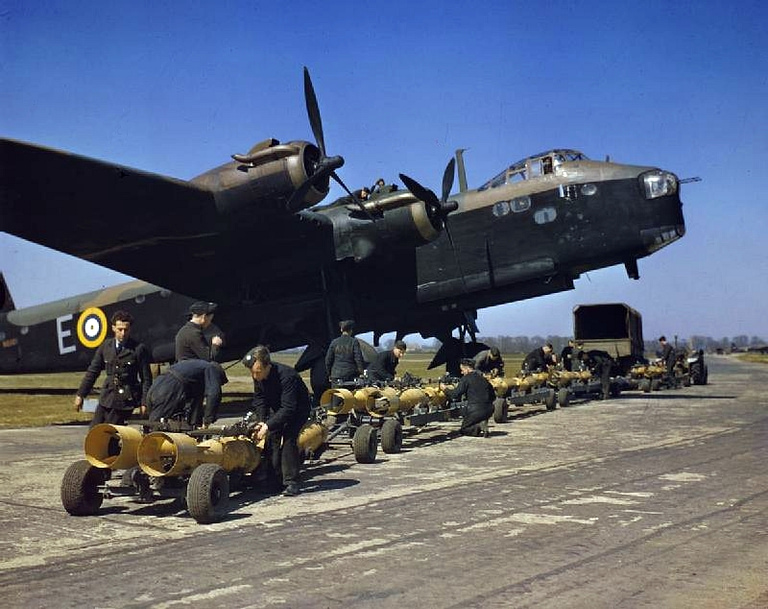
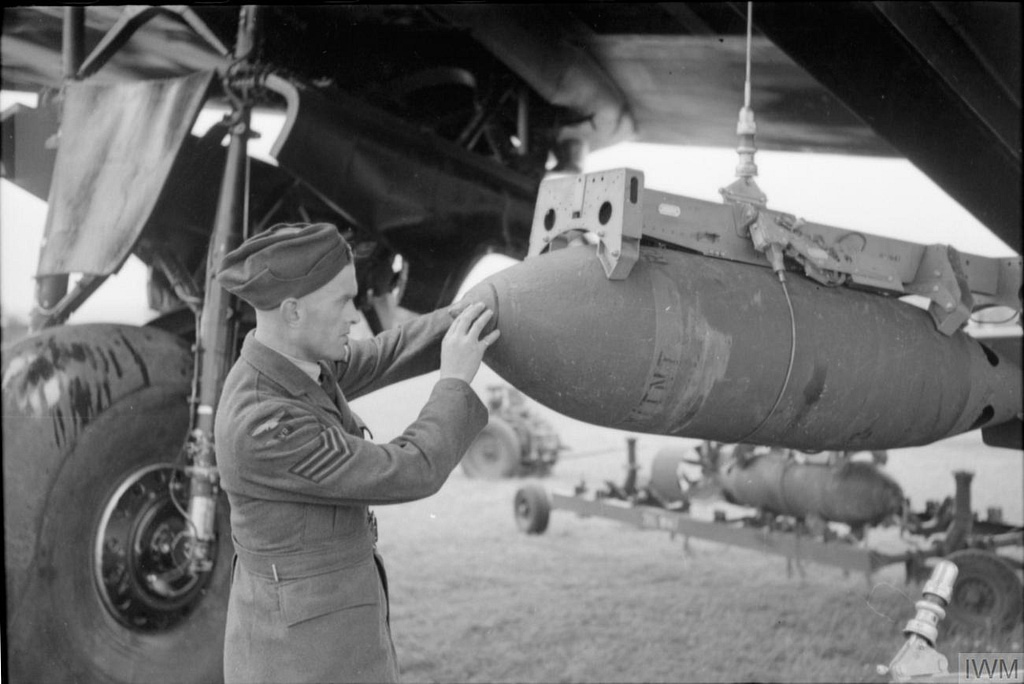
The Stirling could carry an impressive weight of bombs — up to about 14,000 lb over a short range — but the way that load was carried became one of the aircraft’s defining limitations. The wing structure dictated a bomb bay divided into narrow cells running down the fuselage and into the wing roots, ideal for a large number of smaller bombs but physically unable to house a single large one.
As Bomber Command’s tactics evolved toward the 4,000 lb “cookie” blast bomb and heavier weapons designed to flatten and burn whole districts, the Stirling was left behind. It could rain down clusters of smaller bombs and incendiaries, but it could not deliver the war-winning heavy weapons that the Lancaster, with its long unobstructed bomb bay, carried with ease. In a campaign increasingly built around big bombs, that was a decisive disadvantage.
22Life on a Short Stirling squadron: the airfield and the ground crew+
Every sortie flown by a Stirling’s seven- or eight-man crew rested on the work of far more people on the ground. Fitters, riggers, armourers, electricians and instrument specialists worked in all weathers to keep the big bombers serviceable, bombing-up, refuelling and repairing battle damage between operations — and the Stirling, with its complex undercarriage and four large radials, demanded plenty of attention.
The airfields themselves, scattered across eastern England, were small towns of Nissen huts, dispersals and runways carved out of farmland. Life there swung between long stretches of waiting and the concentrated tension of an operational night: the briefing, the ritual of dressing and drawing kit, the take-off at dusk on those towering wheels, and the anxious wait for the ragged return at dawn, when the gaps in the dispersals told their own story.
23The Short Stirling and the electronic war: navigation, radar and countermeasures+
Hitting a blacked-out target at night was one of the hardest problems of the air war, and the Stirling flew through the whole evolution of the electronic aids designed to solve it. Early raids often missed by miles; the answer was a growing suite of navigation aids — Gee, and later ground-mapping radar — and the creation of the Pathfinder Force to find and mark the aiming point.
As the German night-fighter defences grew more sophisticated, so did the bombers’ countermeasures, from “Window” foil strips that swamped enemy radar to electronic jamming. The Stirling’s roomy fuselage made it a reasonable platform for the bulky equipment this invisible battle required, and even after it left the main bombing force some Stirlings continued in support and special roles that drew on that electronic war.
24The half-scale Short Stirling: the S.31 and the making of a giant+
Before the full-size Stirling flew, Short Brothers built something unusual: a half-scale flying replica. The little S.31, powered by four small engines and built largely of wood, let the company test the layout, handling and aerodynamics of the design in the air before committing to the enormous full-size aircraft.
The half-scale programme revealed handling issues — including a tendency to swing and problems that fed into the design of the undercarriage and controls — and gave Short Brothers confidence in the basic configuration. It was an imaginative approach to de-risking a large and expensive aircraft, and a reminder that the Stirling, for all the criticism its short wing later attracted, was the product of careful and pioneering engineering.
25Short Stirling versus Avro Lancaster: the comparison the Stirling always loses+
As with the Halifax, no account of the Stirling escapes the shadow of the Lancaster — and here the comparison is unkind. The Lancaster could carry a far heavier and more flexible bomb load, including the biggest blast bombs, thousands of feet higher, and it did so with lower losses. By almost every measure that mattered to Bomber Command, the Lancaster was the superior bomber, and the Stirling was withdrawn from the German campaign while the Avro design went on to define it.
But the comparison is not the whole story. The Stirling came first, when there was no Lancaster to fly, and it did the pioneering work of the four-engine force. Its handling was widely thought superior, and in its second career as a tug, mine-layer and special-duties aircraft it did valuable work the Lancaster was rarely asked to do. The honest verdict is that the Stirling was the weakest of the three British heavies as a bomber — and still an aircraft that earned its place in the history of the air war.
26After the last raid: the Short Stirling’s rapid disappearance+
When the war ended, the Stirling had already been out of front-line bombing for well over a year and was widely regarded as obsolete. There was no enthusiasm to preserve it. The bomber and airborne-support airframes were flown to storage and scrapyards and broken up with extraordinary speed, their aluminium fed back into a peacetime economy hungry for metal.
A handful of Mk V transports lingered in service and were sold abroad — a batch to Egypt, a few to a Belgian charter operator — but these too were soon gone. Within a few years of 1945 the Short Stirling, an aircraft once built in its thousands, had all but vanished from the world. That total disappearance, more than any single failing, is what makes the type so poignant today, and why the slow work of recovering relics and building a reproduction matters so much.
27The Short Stirling’s place in the story of Bomber Command+
It is tempting, knowing how the Stirling’s career ended, to write it off as a failure. But that judgement flattens a more interesting story. When the Stirling entered service in 1940 the RAF had never operated a four-engine heavy bomber; the doctrine, the tactics, the ground organisation and the crews all had to be built from nothing, and the Stirling was the aircraft on which much of that learning was done. The four-engine force that devastated Germany in 1944–45 stood on foundations the Stirling helped to lay.
Its later work matters too. Withdrawn from a bombing role it could no longer perform, the Stirling did not simply retire — it took up glider-towing, mine-laying and clandestine flying that were themselves central to the Allied victory, from the airborne landings of 1944 to the secret supply of the resistance. Judged over its whole career, rather than by the ceiling figure alone, the Stirling was a hard-working and consequential aircraft, and its near-total erasure from the physical record is a loss to the memory of the air war.
Photo Gallery
The Short Stirling in photographs
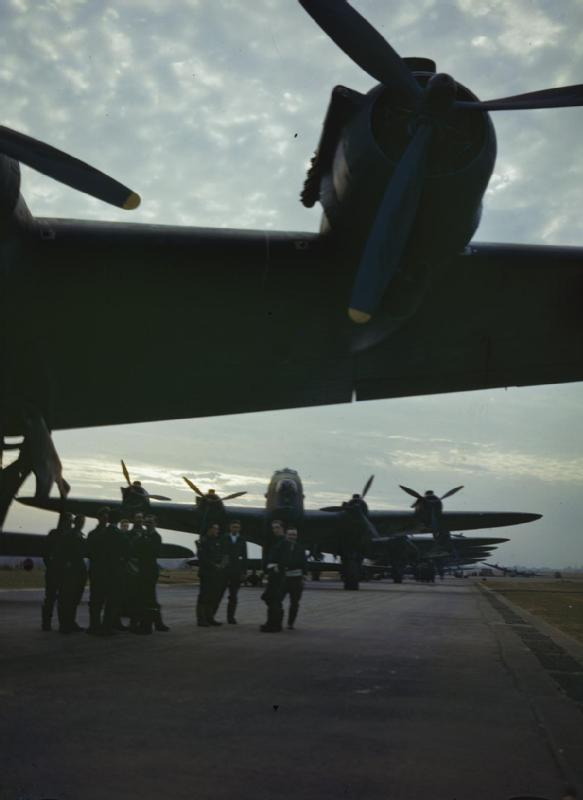
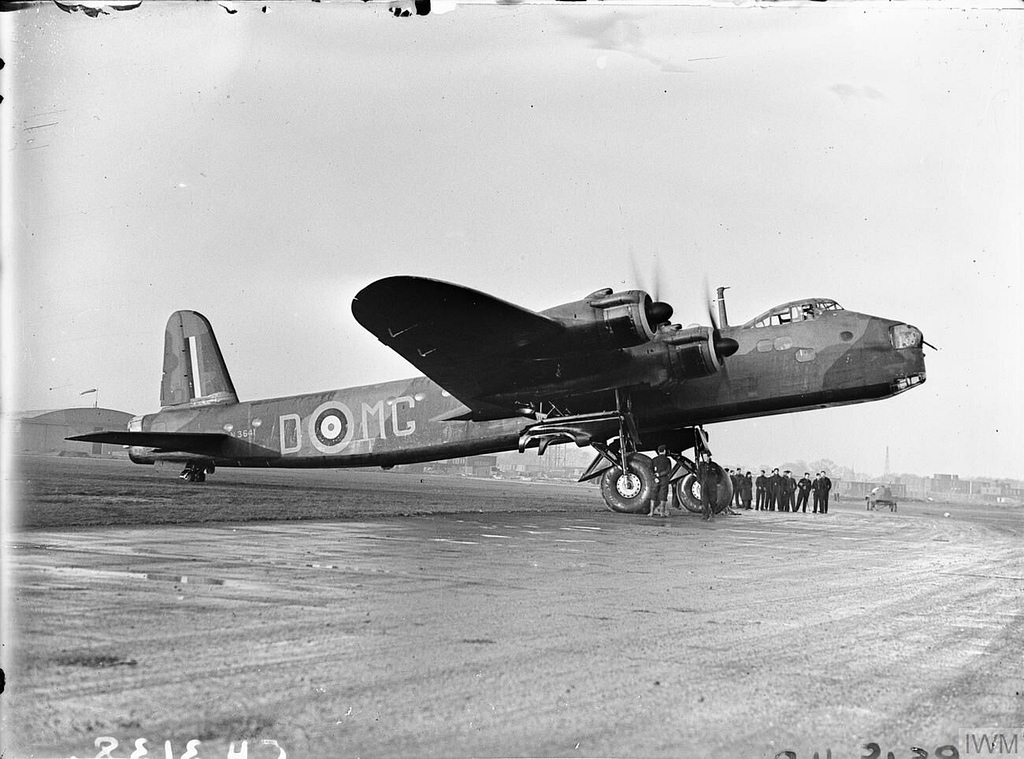
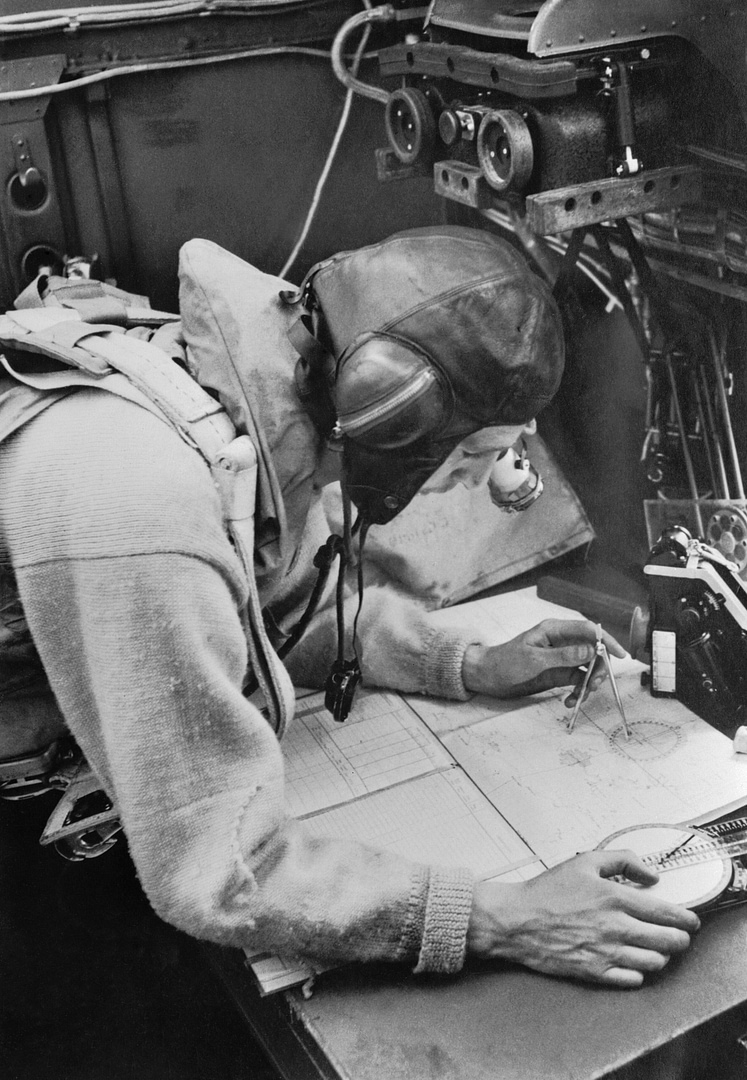
All images sourced from Wikimedia Commons. Public-domain wartime photographs, credited individually above.
On Film
The story of the Short Stirling
A detailed history of the Stirling — its origins, its short-wing handicap and its varied wartime career — from a well-regarded military-aviation channel.
“The Short Stirling; First of the British Big Boys” — Ed Nash’s Military Matters, an established military-aviation history channel (approx. 166,000 views at time of writing).
Operations Map
Where the Short Stirling served
An overview of the Stirling’s world: its home in RAF service, the theatres it fought and worked over, the post-war operators that briefly flew it, and where its few relics and a reconstruction project stand today. The Stirling was overwhelmingly a Royal Air Force aircraft, flown by British and Commonwealth crews across the European theatre. Tap or hover a country for detail.
Combat Record
The Short Stirling by the numbers
Commonly cited figures for the Stirling’s bomber career, before it was withdrawn from raids on Germany in late 1943. Totals vary between sources and are approximate; the Stirling’s heaviest work came in the difficult early years of the four-engine offensive.
Where to See One
Short Stirling relics and the reconstruction project
No complete Short Stirling survives anywhere in the world — the type was scrapped almost to the last airframe after 1945. What remains is recovered relics and an ongoing effort to build a whole aircraft from scratch. These are the places connected with the Stirling today.
The Stirling reconstruction project
Великобритания
Volunteer enthusiasts are working to build a reproduction Short Stirling from original drawings and salvaged components — the only realistic prospect of a complete aircraft existing again. Progress is slow and depends on research, fundraising and recovered parts.
Museum relics and sections
Various UK collections
Several museums and private collections hold Stirling fragments — nose sections, undercarriage legs, instruments, turrets and parts recovered from crash sites. No single museum holds a whole airframe; the pieces are scattered.
Memorials and squadron sites
England & the Commonwealth
Former Stirling stations and squadron associations — including memorials to units such as No. 7 and No. 75 (NZ) Squadrons — keep the type’s memory alive where no aircraft can.
Because the Stirling survives only as relics, locations and holdings change as parts are recovered, restored or moved. Please check individual museums’ and the reconstruction project’s own websites for the current state and location of Stirling material.
Legacy
Remembering the Short Stirling
For decades the Short Stirling has been the forgotten member of Bomber Command’s heavy trio. It entered service first, opened the four-engine offensive and flew some of its most dangerous early operations, yet it is remembered — when it is remembered at all — chiefly for its faults: the short wing, the low ceiling, the limited bomb bay, the towering undercarriage. The Lancaster took the glory and the Halifax the versatility; the Stirling took the blame.
That reputation is not wholly unfair, but it is incomplete. The Stirling did real work in the hardest years, when every heavy bomber counted, and it went on to a busy and valuable second career towing gliders, laying mines and flying the secret war after it left the bombing campaign. The crews who flew it, for all its shortcomings, often loved it — and their affection is part of the record too.
The cruelest part of the Stirling’s story is its disappearance. Scrapped so completely that not one whole example survives, it is the great absence among preserved RAF heavies — a pioneer erased. The relics in museums and the slow, determined work of the reconstruction project are attempts to repair that erasure, so that one day visitors might stand beside a complete Short Stirling again and see, in the flesh, the first four-engine heavy bomber the Royal Air Force ever flew.
Questions & Answers
Short Stirling: your questions answered
Can I fly in a Short Stirling?
No. There is no airworthy Short Stirling anywhere in the world — and, unlike the Lancaster and Halifax, not one complete Stirling survives at all. Of roughly 2,371 built, the type was scrapped almost to the last airframe after 1945. What remains today is recovered relics — nose sections, undercarriage legs, instruments and salvaged parts in museums and private collections — and a volunteer project working to build a reproduction from original drawings. You cannot fly in one, or even stand beside a whole one.
If it is the experience of flying in a genuine piece of military aviation history you are after, that is still very much possible. MiGFlug arranges flights in real, airworthy ex-military jets — see migflug.com/flights-prices for what you can actually fly today.
Do any Short Stirlings survive today?
No complete Short Stirling survives anywhere in the world — it is the only one of the RAF’s three four-engine heavies of which no whole example is preserved. A number of relics do exist: recovered nose sections, undercarriage components, turrets, instruments and parts salvaged from crash sites, held in museums and private collections. A dedicated reconstruction project is attempting to build a complete reproduction from drawings and salvage, but as yet there is no entire airframe.
Was the Short Stirling’s short wingspan really caused by hangar doors?
This is the most repeated story about the Stirling, and it is disputed. The claim is that the Air Ministry limited the wingspan to about 100 feet so the bomber would fit through standard RAF hangar doors. Historians point out that the 100-foot figure appears as a general limit in Specification B.12/36 and that the neat hangar-door explanation is most likely a persistent myth rather than documented fact. What is not in doubt is the effect: the short wing gave the Stirling a low ceiling and a compartmented bomb bay, both of which hampered it as a bomber.
Why was the Short Stirling withdrawn from bombing Germany?
Its short wing gave it a service ceiling of only around 16,500 feet — far below the Halifax and Lancaster — which kept it down in the heaviest flak and within easy reach of night fighters, producing high loss rates. The same wing dictated a divided bomb bay that could not carry bombs larger than 2,000 lb, so the Stirling could not lift the heavy blast bombs that became central to Bomber Command’s tactics. By late 1943 it had been withdrawn from raids on Germany and switched to glider-towing, mine-laying, special-duties and transport work.
What was the Short Stirling used for after it stopped bombing?
A great deal. From 1943–44 the Stirling became a glider tug, hauling Horsa and Hamilcar gliders and dropping paratroops for the airborne landings at Normandy on D-Day and at Arnhem during Operation Market Garden. It laid sea mines in enemy waters (“gardening”), flew clandestine Special Operations Executive missions dropping agents and supplies into occupied Europe, and, as the turretless Mk V, served as an unarmed transport. In these roles it flew on to the end of the war and briefly beyond.
How many Short Stirlings were built, and was it the first RAF four-engine heavy?
About 2,371 Stirlings were built (some sources cite around 2,383), by Short Brothers at Rochester and Belfast with a wider production group, before production ended in 1945–46. And yes — the Stirling was the first four-engine heavy bomber to enter RAF service, in 1940, ahead of both the Handley Page Halifax and the Avro Lancaster. Uniquely among the three, it was designed as a four-engine aircraft from the start rather than being converted from a twin-engine design.
You can’t fly the Short Stirling. These, you can.
No Stirling will ever fly again — not one complete airframe even survives. But you can still strap into a genuine, airworthy ex-military jet and feel what it is to fly a real piece of military aviation. MiGFlug makes it real.
Fighter Jet Flights
Take the controls of a real ex-military jet with an experienced fighter pilot.
Л-39 Альбатрос
The classic jet trainer — aerobatics and low-level fun, in several countries.
МиГ-29 Фалкрам
Ride a genuine air-superiority fighter toward the edge of space.
Related Aircraft
More from the Aircraft Museum
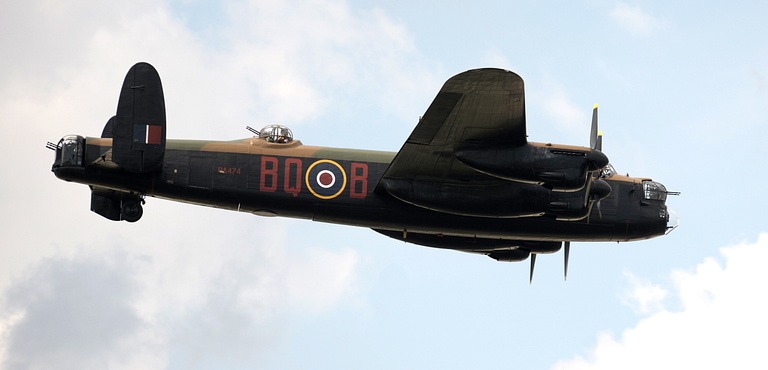 Avro LancasterThe RAF’s iconic four-engine heavy — the bomber that outclassed the Stirling.
 Handley Page HalifaxThe versatile radial-engined heavy that shared — and outlasted — the Stirling’s work.
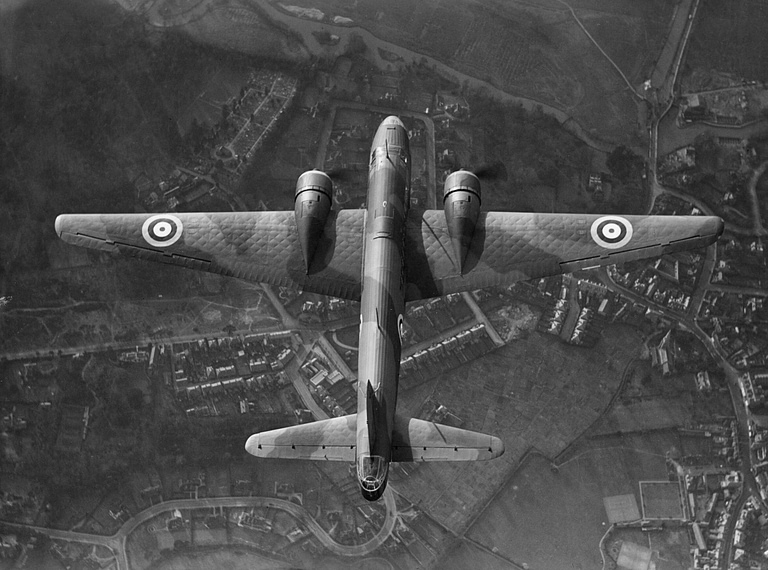 Vickers WellingtonThe geodetic-built twin that carried Bomber Command before the four-engine heavies arrived.
Sources & Further Reading
Where this page’s facts come from
Figures for speed, range, weights, ceiling, sorties and losses are drawn from the museum and reference sources above; where sources differ, values are given as approximate and marked as estimates, and disputed claims (such as the hangar-door origin of the wingspan) are flagged as such. Images are from Wikimedia Commons and credited individually in the gallery.