
Short Stirling
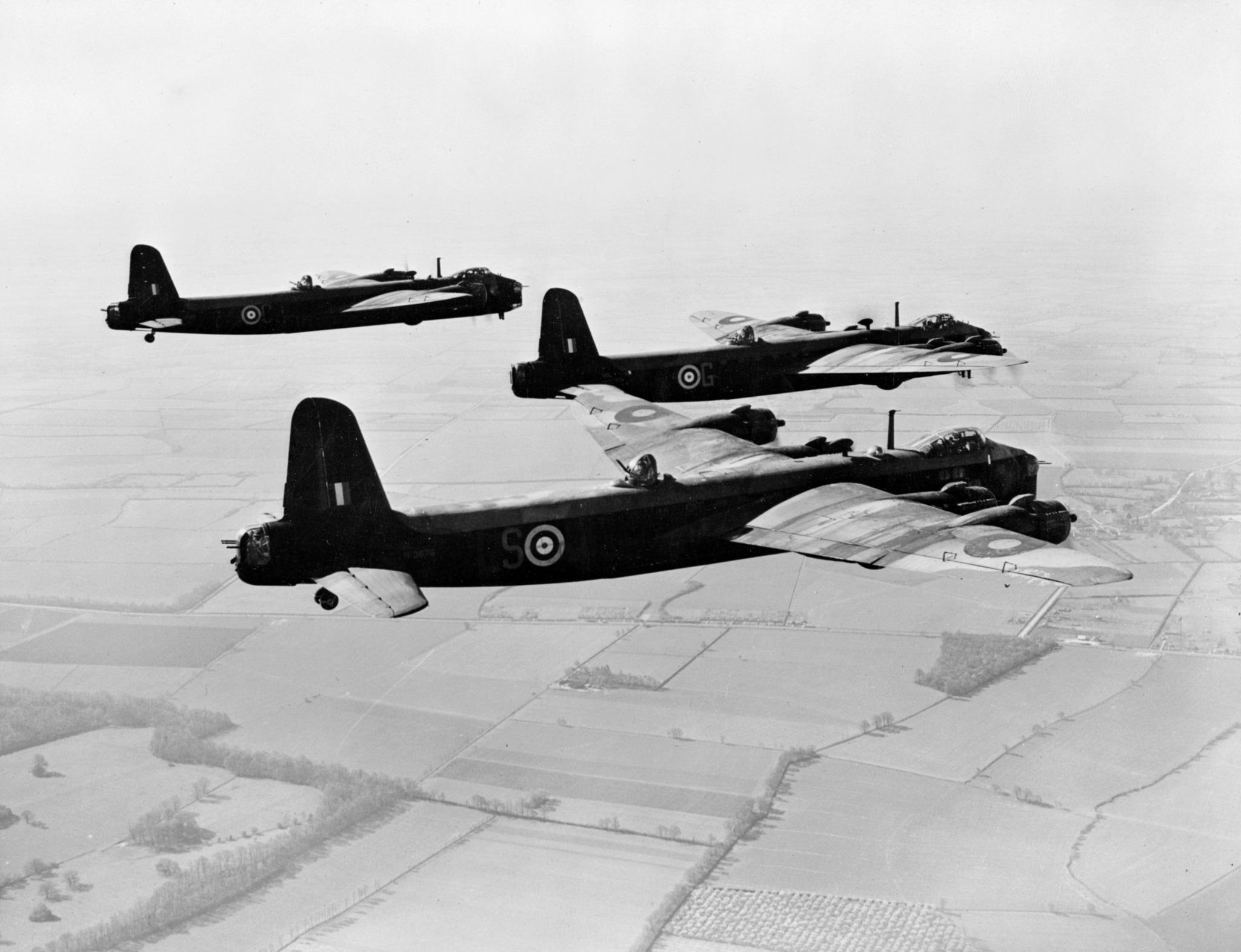
The first four-engine heavy bomber to enter RAF service — a huge, handsome, low-flying aircraft hobbled by a short wing, and remembered as much for towing gliders and dropping agents as for bombing Germany.
At a Glance
Short Stirling: key facts
The Story
The Short Stirling: Bomber Command’s forgotten first heavy
When the Royal Air Force went to war in 1939 its bomber force was built around twin-engine medium types. The aircraft that changed that — the first four-engine heavy bomber to reach an RAF squadron — was the Short Stirling. Big, tall and unmistakable, it entered service in August 1940, months ahead of the Handley Page Halifax and more than a year before the Avro Lancaster. For a brief period the Stirling was Bomber Command's only heavy, and it carried the four-engine offensive into Germany while the other two were still working up.
The Stirling was designed by Short Brothers of Rochester to Air Ministry Specification B.12/36, which called for a long-range heavy bomber able to lift a substantial load. Uniquely among the RAF's three wartime heavies, it was conceived from the outset as a four-engine aircraft — the Halifax and the Lancaster both began life as twin-engine designs and were re-engined only when the Rolls-Royce Vulture failed. Short Brothers, a firm famous for its big flying boats, drew on that experience to produce a genuinely large landplane powered by four Bristol Hercules radials.
One decision shaped the whole aircraft and its reputation. The specification limited the wingspan to about 100 feet, and the Stirling emerged with a span of only around 99 feet — short for so large a bomber. It is often claimed that this limit was imposed so the aircraft would fit through the standard RAF hangar door of the day, but that story is disputed: aviation historians point out that the 100-foot figure was a general design ceiling in the specification and that the neat hangar-door explanation is more likely a persistent myth than documented fact. Whatever its origin, the short span had very real consequences.
A short wing on a heavy aircraft meant a low service ceiling — only around 16,500 feet fully loaded, far below the altitudes the Halifax and especially the Lancaster could reach. That kept the Stirling down in the thick of the flak and within easy reach of German night fighters, and its loss rate over Germany was correspondingly high. The wing also drove the design of a deep, divided bomb bay that, awkwardly, could not take the large 4,000 lb and heavier blast bombs the other heavies carried — a serious limitation once big weapons became central to Bomber Command's tactics.
On the ground the Stirling was equally distinctive, standing on an extraordinarily tall, complex undercarriage that lifted its nose high into the air to give the wing enough angle for take-off. The long legs were fragile and the aircraft could swing viciously on take-off and landing; accidents were common. Yet once airborne the Stirling was, by many accounts, a delight to fly — light on the controls, strong, and surprisingly manoeuvrable for its size. Crews told of Stirlings out-turning the night fighters sent to kill them, and pilots who flew all three British heavies often spoke most warmly of the Short.
The Stirling flew its first bombing operation on the night of 10–11 February 1941, against oil-storage tanks at Rotterdam, and through 1941 and 1942 it was a front-line part of the bomber offensive, raiding German cities and targets as far away as northern Italy. But its shortcomings against the improving German defences told, and by late 1943 the Stirling had been withdrawn from the main bombing campaign against Germany, its place taken by the more capable Lancaster and Halifax.
Withdrawal from bombing was not the end. The Stirling's size, strength and docile handling made it ideal for other work, and from 1943–44 it found a busy second career: towing the Horsa and Hamilcar gliders that carried airborne troops to Normandy on D-Day and to Arnhem during Operation Market Garden; laying sea mines in enemy waters; flying clandestine Special Operations Executive missions to drop agents and arms into occupied Europe; and, as the purpose-built Mk V, serving as an unarmed transport. In these roles the Stirling flew on to the end of the war and a little beyond.
The Stirling force was, like the whole of Bomber Command, a Commonwealth undertaking. No. 7 Squadron pioneered the type; No. 75 (New Zealand) Squadron became one of its best-known operators; and Australian, Canadian and other Allied airmen flew it alongside their British comrades. For many of these young men from the far side of the world, the Short — not the more celebrated Lancaster — was the aircraft in which they first went into action, and the type is remembered in the aviation histories of several nations even though so little of it survives.
Around 2,371 Stirlings were built before production ended, and after 1945 the type vanished with startling speed — scrapped almost to the last airframe. Today not one complete Stirling survives anywhere in the world. A handful of recovered relics and parts exist in collections, and a dedicated volunteer project is working to build a reproduction, but of the first RAF heavy bomber — an aircraft once numbered in thousands — there is no whole example left to stand beside the surviving Lancasters and the restored Halifaxes. It is, in every sense, the forgotten member of Bomber Command's heavy trio.
01The Short Stirling’s origins: Specification B.12/36 and the flying-boat firm that built it+
Specification B.12/36 asked for something the RAF had never operated: a true four-engine heavy bomber, able to carry a heavy load over long range, to operate from existing airfields, and even to be catapult-launched and to double as a troop carrier. Several firms tendered; Short Brothers and Supermarine were chosen, and the Supermarine design was destroyed in a bombing raid before it flew, leaving the Short S.29 to become the Stirling.
Short Brothers was best known for large flying boats such as the Empire and Sunderland, and it brought that experience in big airframes to the Stirling. To test the layout the company first flew a half-scale wooden prototype, the S.31, before the full-size aircraft. The result was the first of the RAF’s three four-engine heavies to fly in near-operational form and, in 1940, the first to enter service — a genuine pioneer, even if the aircraft that followed it would prove more capable.
02The Short Stirling’s short wing: the hangar-door myth and the ceiling that doomed it as a bomber+
No feature of the Stirling is more talked about than its wingspan of roughly 99 feet, unusually short for so large an aircraft. The popular explanation — that the Air Ministry capped the span at 100 feet so the bomber would fit through standard RAF hangar doors — is repeated everywhere, but it is disputed by historians, who note that the 100-foot figure appears as a general limit in the specification and that the tidy hangar-door story is most likely a later myth rather than documented design history. It should be treated as a widely repeated claim, not established fact.
What is not in doubt is the effect. A short wing meant high wing loading and a low ceiling: fully laden, the Stirling struggled to reach much above 16,500 feet, where the Halifax and Lancaster cruised thousands of feet higher. That left the Stirling wallowing in the most dangerous airspace over a target, and its loss rate showed it. The same wing structure dictated a compartmented bomb bay that could not house the big 4,000 lb “cookie” blast bombs, so the Stirling could carry a large number of smaller bombs but not the heaviest single weapons — a growing handicap as the war went on.
Design & Engineering
How the Short Stirling was built to fight
A vast, strongly built airframe from a flying-boat maker — four radial engines, a towering undercarriage, and a wing so short it defined both the aircraft’s handling and its fate.
Four Bristol Hercules radials
Unlike the Merlin-then-Hercules story of its rivals, the Stirling was built around four Bristol Hercules air-cooled radials from the start. Successive marks fitted more powerful Hercules versions, but the short wing capped the aircraft’s altitude no matter how much power was added — the engines were never the Stirling’s real problem.
A short wing and a divided bomb bay
Held to roughly a 99 ft span, the wing gave high wing loading, a low ceiling and a bomb bay split into cells that could not take bombs larger than 2,000 lb. The Stirling could carry up to about 14,000 lb of smaller weapons over short range, but never the heavy blast bombs that became central to the offensive.
The tallest undercarriage in the RAF
To give the short wing enough angle of attack for take-off, the Stirling sat on an immensely tall, complex main undercarriage — the nose towering some 22 ft above the ground. It was fragile and troublesome, prone to collapse, and the aircraft could swing badly on the runway, making the Stirling notoriously demanding to get safely on and off the ground.
03Beyond bombing: the Short Stirling as glider tug, mine-layer and secret-operations aircraft+
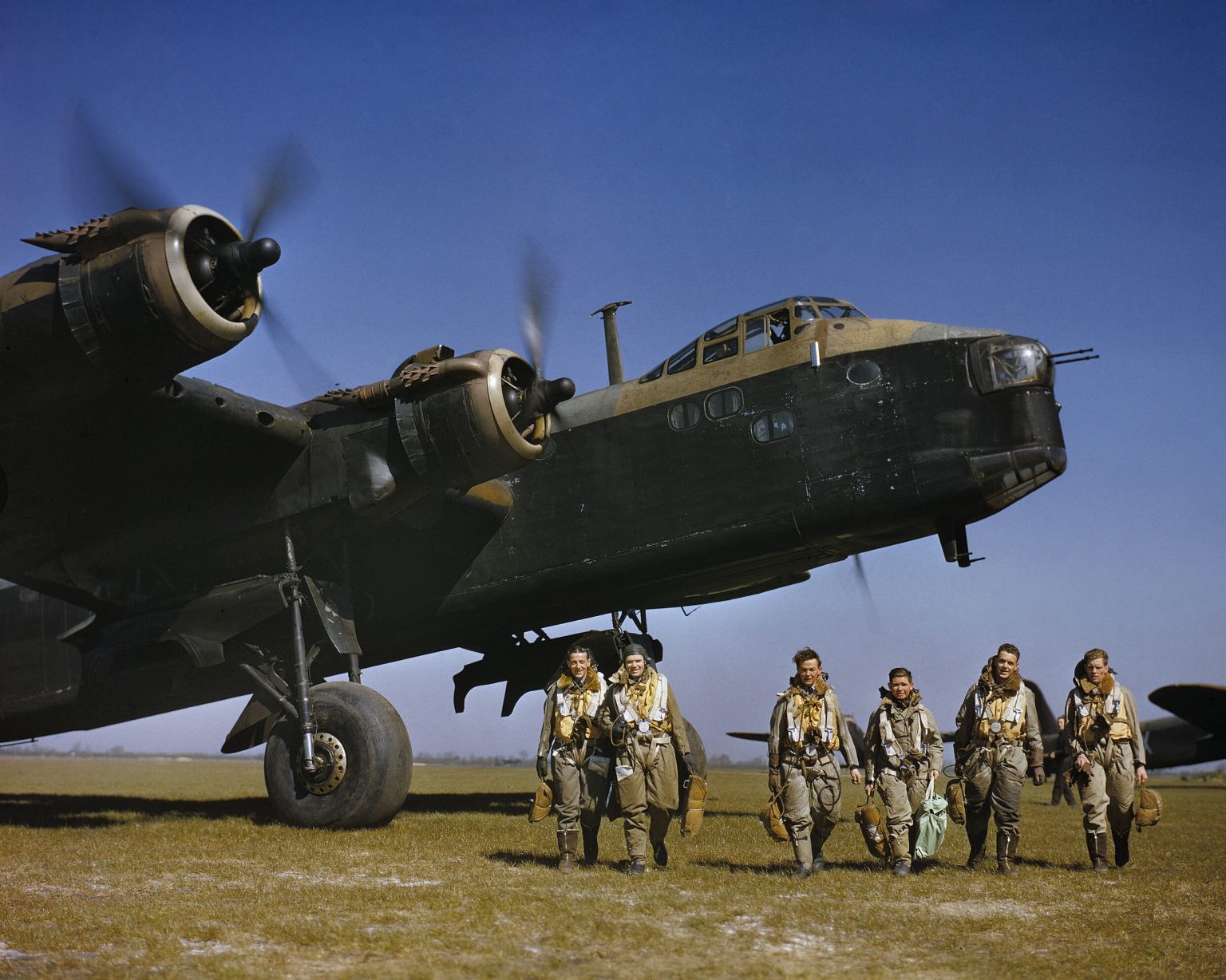
Once the Stirling was withdrawn from raids on Germany, its roomy fuselage, strength and gentle handling made it ideal for a range of secondary duties that kept it busy to the end of the war. Airborne-forces squadrons used it to tow the Airspeed Horsa and the huge General Aircraft Hamilcar gliders, delivering troops and equipment on D-Day and at Arnhem, and to drop paratroops.
Other Stirlings laid sea mines — the work crews called “gardening” — in German, Danish and Norwegian coastal waters, and special-duties aircraft flew low over occupied Europe on Special Operations Executive missions, parachuting agents, weapons and radios to the resistance. The dedicated Mk V, stripped of turrets, served purely as a transport. It is this breadth of second-career work, as much as the early bombing, that defines the Stirling’s wartime record.
Full Specifications
Short Stirling Mk III — specifications
Figures are for the Bristol Hercules-powered B Mk III, the most-produced variant. Values vary between marks and sources; approximate, contested and disputed figures are flagged. The Stirling’s performance figures — especially its ceiling — differ noticeably between references and should be read as representative rather than exact.
Baseline: the Short Stirling Mk I with four Bristol Hercules XI radials — the aeroplane that opened the RAF's four-engined bomber war in February 1941 and carried it until the Mk III arrived — because the fullest and most consistently reproduced data table for the type describes that mark. Deltas for the Mk II, the Mk III, the Mk IV glider tug and the Mk V freighter are in grey. Three warnings before the figures. First, published Stirling performance is unusually contradictory even by the standards of wartime British types: the same reference work will give the Mk I a maximum speed of 282 mph in its data table and 255 mph in its text, and service ceiling appears as 16,500, 17,000 and 18,500 ft depending on which mark, which load and which optimism is being quoted. Second, almost every quoted figure is a clean-aircraft number. A Stirling with a war load, four gun turrets, full tanks and the drag of an H2S radome was slower and very much lower than its data card, and the gap between the card and the cockpit is the whole argument about this aeroplane. Third, weight rose steadily — armour, radar, extra guns, jamming sets — while the wing stayed exactly the size the Air Ministry had permitted in 1936. Nothing about the Stirling can be understood without holding that last sentence in mind.
Dimensions & weights
- Crew
- 7 — pilot, second pilot, navigator, bomb-aimer doubling as front gunner, wireless operator, dorsal gunner, rear gunner Some sources give eight, and early crews often flew with a flight engineer in addition to a second pilot. From 1942 Bomber Command deleted the second pilot across the heavy force and made the flight engineer the pilot's standby, which is the fit most Mk III crews flew. The Mk IV and Mk V transports carried five, the turrets and their gunners having gone.
- Length
- 26.59 m (87 ft 3 in) The Mk V, with its hinged freight nose, is usually given at about 27.6 m (90 ft 6 in). The Mk IV, which simply had its nose and dorsal turrets faired over, was fractionally shorter than a bomber Stirling rather than longer.
- Wingspan
- 30.20 m (99 ft 1 in) This is the number that defines the aeroplane. Specification B.12/36 set a limit of 100 ft, and Short Brothers, whose S.29 had begun life around a wing derived from the Sunderland flying boat of roughly 112 ft, cut it to fit. The story every enthusiast repeats — that the limit came from the width of standard RAF hangar doors — does not survive contact with the evidence, since the hangars of the day would take about 112 ft; the limit reads far more like an Air Ministry device for stopping aircraft growing beyond what airfields, tooling and transport could handle. Either way the effect was the same. The Lancaster spanned 102 ft and the Halifax about 99 ft, so span alone did not damn the Stirling; what damned it was that Shorts had to recover the lost lift with area and thickness rather than with span.
- Height
- 6.93 m (22 ft 9 in) tail down A Stirling stood taller than a two-storey house. The pilot's seat was roughly 22 ft above the grass and the aircraft needed its own tall ladders and trestles. This was not styling; it was the consequence of a fix described in the undercarriage row below, and it is the single most photographed thing about the type.
- Wing area
- 135.6 m² (1,460 sq ft) Larger than the Lancaster's 1,300 sq ft and the Halifax's 1,275 sq ft, on less span than either. That is the compromise stated numerically: a short, broad, deep, high-lift wing.
- Aspect ratio
- 6.5 Against roughly 8.0 for the Lancaster and 7.7 for the Halifax. Low aspect ratio means high induced drag, and induced drag is worst where the air is thin and the aeroplane is heavy — that is, at exactly the altitude and weight at which a night bomber wants to cruise. The Stirling's ceiling problem is written into this one dimensionless number, and no engine change could have repaired it.
- Empty weight
- 22,498 kg (49,600 lb) 21,273 kg (46,900 lb) is also widely printed for the Mk I. The difference is equipment: armour, self-sealing tanks, the ventral turret fitted and then removed, and later radar and jamming gear. Both numbers are defensible; neither describes an aircraft as it left dispersal on an operational night.
- Normal loaded weight
- 26,943 kg (59,400 lb)
- Maximum take-off weight
- 31,751 kg (70,000 lb) Heavier than either of its stablemates — the Lancaster was cleared to about 68,000 lb and the Halifax to about 65,000 lb — and yet it carried less bomb load further than either. The Stirling was the heaviest of the three British heavies and the least productive, which is the whole indictment in one comparison.
- Internal fuel
- ~10,250 litres (2,254 imp gal; 2,707 US gal) in self-sealing tanks carried in the wing spar structure Up to six auxiliary ferry tanks adding about another 220 imp gal could be shipped for delivery flights. Fuel was never the Stirling's limitation; lift was.
- Bomb bay
- ~12.2 m (40 ft) long, but divided along its length by two structural members into three narrow parallel cells; a further three cells in each inner wing The largest weapon the bay would take was a 2,000 lb bomb. This is the defect that ended the Stirling's bombing career. When Bomber Command standardised on the 4,000 lb HC "cookie" from 1941, and then on the 8,000 lb and 12,000 lb blockbusters, the Stirling simply could not be loaded with the weapon that did the damage. A Lancaster on a Ruhr city carried a cookie and a load of incendiaries; a Stirling flying beside it carried small bombs into the same flak for a fraction of the effect. There was no way to modify the bay without redesigning the aeroplane around it.
- Maximum bomb load
- ~6,350 kg (14,000 lb) Achievable only over roughly 590 miles, which puts nothing worth bombing inside reach. On a target in central Germany the load was about 3,500 lb — seven 500 lb bombs, comparable to the twin-engined Wellington it was supposed to replace, carried by an aircraft of twice the weight and four times the engines.
- Undercarriage
- very tall two-piece main legs folding rearwards into the inner engine nacelles, plus a retractable tailwheel The origin is precise and it is the type's original sin. Trials with the half-scale S.31 showed the take-off run was too long, and the cure was more wing incidence on the ground. Changing the wing's setting on the fuselage would have meant redesigning the fuselage for level cruise, and the production tooling was already too far advanced, so Shorts lengthened the undercarriage instead and tilted the whole aeroplane nose-up. It worked aerodynamically and it created a spindly, heavily loaded, complicated structure that broke. A heavy or off-centre landing collapsed it; a swing on take-off collapsed it; and a Stirling that dropped its gear with bombs and fuel aboard usually burned.
- Structure and protection
- all-metal stressed-skin light alloy, built in separately jigged sections for dispersed manufacture; armour for the pilot and self-sealing tanks from the start The sectional build was genuinely advanced and let Short & Harland at Belfast, Shorts at Rochester and South Marston, and Austin Motors at Longbridge turn out sub-assemblies with semi-skilled labour. It is also why the Stirling could be repaired: crews reported the airframe absorbing damage that should have been fatal, and that reputation for toughness is one of the few things nobody disputes about it.
Performance
- Maximum speed
- 454 km/h at 3,810 m (282 mph at 12,500 ft) Mk I Treat this figure with care. It is the data-table number and it describes a light aircraft; the narrative literature routinely gives the Mk I at about 255 mph and printed reference works cluster around 255–260 mph for an operational machine. Where authorities disagree this sharply the honest answer is a range, not a decimal point.
- Maximum speed, Mk III
- ~435 km/h (270 mph) The Hercules VI and XVI of the Mk III bought about 15 mph and a little height over the Mk I. It was the largest single improvement the Stirling ever received and it was not remotely enough: a Lancaster was some 40 mph faster and 4,000 ft higher on the same night over the same target.
- Cruising speed
- 320 km/h (200 mph) Operational cruise on a long haul was lower still. Stirlings routed with Lancasters and Halifaxes found themselves at the back of the bomber stream and below it, which is precisely where a night fighter looks first.
- Rate of climb
- 4.1 m/s (800 ft/min) at normal loaded weight At maximum weight on a warm night the figure was a good deal worse, and the climb to operational height consumed fuel that then had to come off the bomb load.
- Service ceiling
- 5,030 m (16,500 ft) Mk I Mk III about 5,180 m (17,000 ft). Figures up to 18,500 ft appear for light aircraft. Against this: the Halifax reached about 20,000 ft and the Lancaster 20,000 to 24,500 ft depending on load. The Stirling was flying the same routes, to the same targets, on the same nights, roughly a mile lower than everything around it.
- Operational altitude in practice
- typically 3,650–4,300 m (12,000–14,000 ft) with a war load This is the number that killed Stirling crews, and it does not appear on any data card. Heavy flak was laid for the main stream; the Stirlings were beneath it, in the band the light and medium batteries owned, and beneath the bombs of their own force as well. Crews of other types recorded the sight of Stirlings below them and understood exactly what it meant.
- Range
- 3,750 km (2,330 miles) at reduced bomb load
- Range at maximum bomb load
- ~950 km (590 miles) with 14,000 lb The B.12/36 specification had demanded 14,000 lb over 2,000 miles, or 8,000 lb over 3,000 miles. The Stirling met neither. It is worth saying plainly that no aircraft of the 1936 generation met them either, but the Lancaster of 1942 came far closer on two-thirds of the take-off weight.
- Typical operational load
- ~1,590 kg (3,500 lb) of bombs on a deep target Seven 500 lb general-purpose bombs. Four Hercules, seven crew, thirty tons of aeroplane, and the offensive load of a medium bomber.
- Wing loading
- 199 kg/m² (40.7 lb/sq ft) at normal loaded weight Low for a heavy bomber, and the source of everything good about the Stirling in the air. A lightly loaded, thick, high-lift wing turns.
- Power loading
- ~4.5 kg/kW (9.9 lb/hp) at normal loaded weight, Mk I
- Manoeuvrability
- exceptional for its size; the type would out-turn a Junkers Ju 88 or a Messerschmitt Bf 110 in the corkscrew This is not folklore. It is in the tactical reports and in the memoirs, and it is the direct consequence of the low wing loading forced on Shorts by the span limit. Flight Lieutenant Murray Peden of No. 214 Squadron, who flew both, called the Stirling one of the finest aircraft ever built and rated its handling above the Halifax's. The tragedy is exact: the design change that made the Stirling delightful to fly is the same one that made it fatal to fly operationally.
- Take-off and landing behaviour
- a pronounced swing to starboard on opening the throttles, and a tendency to stall onto the runway from the approach Pilots were taught to feed in the starboard throttles progressively over the first twenty seconds until the rudder bit, rather than opening all four together; doing the latter produced an uncontrollable swing and a collapsed undercarriage. On landing the aircraft would run out of lift abruptly and drop, and a heavy drop wrote off airframes for salvage. The Stirling required a dedicated conversion and certification course for every pilot — the RAF did not do that lightly.
Propulsion & systems
- Powerplant, Mk I
- 4 × Bristol Hercules XI 14-cylinder air-cooled radials, 1,500 hp (1,100 kW) each The earliest production aircraft flew on the Hercules II of about 1,375 hp, which left the Stirling badly underpowered even by the standards of 1940.
- Powerplant, Mk III
- 4 × Bristol Hercules VI or XVI, 1,635 hp (1,219 kW) each The definitive bomber fit from 1943. More power, marginally more speed and height, and a fully glazed dorsal turret of the Lancaster pattern. It was an improvement to an aeroplane whose problem was not power.
- Powerplant, Mk IV and Mk V
- 4 × Bristol Hercules XVI The transports kept the Mk III engine. Relieved of turrets, guns, ammunition and armour, and flying low, they had power in hand for the first time in the type's life — which is exactly why the Stirling was a first-class glider tug and a mediocre bomber.
- Engine type
- Bristol Hercules: two-row 14-cylinder sleeve-valve radial of 38.7 litres (2,360 cu in) Bristol's sleeve-valve work was a genuine British engineering achievement and the Hercules was smooth, reliable and quiet by radial standards. No serious criticism of the Stirling is a criticism of its engines.
- Powerplant, Mk II
- 4 × Wright GR-2600-A5B Twin Cyclone, 1,600 hp (1,190 kW) each — prototypes only Intended for Canadian production against a contract for 140 aircraft. The contract was cancelled and no production Mk II was ever completed; the only Mk IIs were converted Mk I airframes flown as trials aircraft. Anyone who lists the Mk II as a service variant is listing a paper aeroplane.
- Propellers
- three-blade constant-speed metal propellers, one per engine
- Fuel system
- self-sealing tanks in the wing between the spars, ~2,254 imp gal, with provision for six auxiliary ferry tanks Self-sealing tanks and pilot armour were fitted from the outset rather than retrofitted after first contact, which puts the Stirling ahead of most British types of its generation on crew protection.
- Defensive turrets
- Frazer-Nash hydraulically powered: FN.5 nose with two .303 in Brownings, FN.7 (Mk I) or FN.50 (Mk III) dorsal with two, FN.20 tail with four An FN.25A retractable ventral turret was fitted to early Mk Is and taken out again as more trouble than it was worth, which left the classic blind spot beneath the aircraft. Some Mk IIIs received a remotely controlled FN.64 ventral turret or a single hand-held .50 in Browning in the rear escape hatch as a partial answer to the German upward-firing cannon fit Schräge Musik. Eight rifle-calibre guns on a thirty-ton aeroplane was the RAF night-bomber norm and it was inadequate on all of them.
- Navigation and radar
- Gee from 1942; H2S ground-mapping radar in a ventral radome on later Mk IIIs; Pathfinder aircraft also carried target-marking equipment The Stirling was in at the beginning of scientific night bombing: No. 7 Squadron, the first Stirling squadron, was one of the four founding squadrons of the Pathfinder Force on 15 August 1942.
- Electronic warfare
- Window chutes; Mandrel radar jamming transmitters on the Stirling IIIs of No. 199 Squadron in No. 100 Group This became the type's last combat role in Bomber Command. From May 1944 No. 199 Squadron flew Stirlings in the Mandrel screen — a curtain of jamming laid across the German early-warning radar chain ahead of each night's raid. It is a fitting late career: an aeroplane that could not survive over the target protecting the ones that could.
- Glider towing installation
- tow hook and intercom cable attachment at the tail, fitted to Mk IV and Mk V Rated to tow the Airspeed Horsa and the far heavier General Aircraft Hamilcar. The Stirling and the Halifax were the only British aircraft that could handle a loaded Hamilcar at all.
- Transport and paratroop fit
- Mk IV: nose and dorsal turrets deleted and faired, floor aperture for parachutists, container carriage in the bomb cells. Mk V: all turrets deleted, hinged nose for freight loading and a large loading door in the rear fuselage The Mk V could take a jeep and trailer or a light gun through the nose, or around 40 troops, or 20 parachutists, or stretcher cases. Removing the guns from the Stirling turned a bad bomber into a genuinely useful aeroplane, which says most of what needs saying about the original specification.
04The Short Stirling’s variants: from B Mk I to the turretless Mk V transport+
B Mk I: the first production bomber, powered by early Bristol Hercules engines; the version that opened the Stirling’s operational career in 1941.
B Mk III: the definitive bomber, with more powerful Hercules XVI engines and a revised dorsal turret; improved performance but still limited by the short wing.
Mk IV: a glider-tug and paratroop version with the nose and dorsal turrets removed, used by airborne-forces squadrons for Normandy, Arnhem and SOE work.
Mk V: an unarmed transport with a lengthened, faired nose and a large freight door, built for carrying troops and cargo; some served briefly after the war and a batch went to Egypt.
Figures for exact production totals of each mark vary between sources; the commonly cited grand total is around 2,371 aircraft.
05The Short Stirling’s operating costs: what a wartime heavy actually cost+
Reliable unit-cost figures for the Stirling are hard to pin down. Wartime aircraft costs were quoted inconsistently — sometimes airframe-only, sometimes with engines and equipment, in shifting 1940s pounds — and no single authoritative figure is widely accepted, so we mark it not reliably recorded rather than repeat a dubious number.
A cost-per-flight-hour figure — a standard field on these pages — simply does not apply to the Stirling today. Not one airframe is airworthy anywhere in the world; indeed, unlike the Lancaster and Halifax, no complete Stirling survives at all. Any “per hour” figure would be pure invention. The real modern cost of a Stirling is measured instead in the decades of volunteer effort now going into building a single reproduction from drawings and salvaged parts.
Armament & payload
The Stirling could lift more than any British bomber and could not carry the one bomb that mattered
The Stirling's armament story is not about its guns, which were the standard eight rifle-calibre Brownings of every RAF night bomber and no better or worse for it. It is about a bomb bay 40 ft long that was divided down its length by two structural members into three narrow cells, so that nothing wider than a 2,000 lb bomb would go in. In 1939 that looked sufficient. From 1941 Bomber Command built its entire city-attack method around the 4,000 lb HC "cookie", a thin-cased blast weapon that blew roofs off so that the incendiaries following it could reach the interiors, and then around 8,000 lb and 12,000 lb developments of the same idea. The Stirling could take none of them. On paper it could lift 14,000 lb, more than a Lancaster's nominal load; in practice it carried about 3,500 lb to Germany because the bay would only accept small bombs and the aircraft could only reach a distant target with fuel that displaced them. Everything else about the Stirling — the low ceiling, the losses, the withdrawal — compounded a defect that was structural and unfixable.
What the Stirling did carry, superbly, was everything that was not a bomb. Sea mines for the Gardening campaign. Supply containers for the Special Operations Executive and the resistance armies of occupied Europe. Parachutists. Gliders on a rope. Jamming transmitters. The moment the Air Ministry stopped asking the aeroplane to be a strategic bomber and started asking it to deliver things, it became one of the most useful aircraft in the RAF. Fits varied enormously by mark, role, squadron and month: a 1941 Mk I with a ventral turret, a 1943 Mk III with H2S and a .50 in hatch gun, a 1944 Mk IV with its turrets faired over and eighteen containers in the cells, and a 1945 Mk V with no guns at all were four different aeroplanes wearing one name.
Gun
- Nose: Frazer-Nash FN.5 powered turret, two 0.303 in Browning machine guns, aimed by the bomb-aimer
- Dorsal: FN.7 turret on the Mk I, two 0.303 in Brownings; replaced on the Mk III by the fully glazed FN.50 of the Lancaster pattern
- Tail: FN.20 powered turret, four 0.303 in Brownings — the heaviest single battery on the aircraft and the one that did nearly all the fighting
- Ventral: an FN.25A retractable "dustbin" turret on early Mk Is, soon deleted; some Mk IIIs later received a remotely controlled FN.64 ventral turret, and others a single hand-held 0.50 in Browning firing down through the rear escape hatch
- Eight .303 in guns, total, on an aircraft of thirty tons. This was RAF doctrine rather than a Short Brothers failing — the Lancaster and Halifax carried the same calibre — but it meant the Stirling could not reach a German night fighter standing off at 600 yards with 20 mm cannon. The under-fuselage blind spot left by deleting the ventral turret was exactly where the upward-firing cannon fit known as Schräge Musik attacked from, and the RAF took an unconscionably long time to work that out.
Air-to-air
- No guided air-to-air weapon existed anywhere during the Stirling's operational life, and none was carried or proposed. This card belongs to how the Stirling actually fought other aircraft, which was by turning
- The standard defence was the corkscrew: a violent descending and climbing spiral flown on the rear gunner's call. With its low wing loading and thick, broad wing, a Stirling could out-turn a Junkers Ju 88 or a Messerschmitt Bf 110 inside that manoeuvre, and crews who survived attacks generally survived them this way
- Daylight was a different matter. Stirlings flew escorted daylight "Circus" operations over northern France in 1941 as bait to bring the Luftwaffe up, a role for which their size and toughness suited them and for which no gun fit could have compensated had the escort failed
- The Stirling was never adapted as a fighter or a fighter destroyer, and no serious proposal to do so was made
- The turn was real but it was a last resort. A bomber that has been seen has already lost most of the engagement, and the Stirling was seen more often than the others because it flew a mile lower, silhouetted against the target fires beneath the stream.
Air-to-surface guided
- None. No guided air-to-surface weapon was carried, trialled or proposed for any Stirling of any mark
- Nor did the Stirling ever carry the RAF's specialist heavy weapons. Barnes Wallis's Upkeep mine, Tallboy and Grand Slam all went to the Lancaster, and the reason is the same structural divider that excluded the cookie
- The Stirling's only precision-delivery role was the opposite of a guided weapon: low-level visual dropping to a lit ground signal on an SOE reception field, at 500 to 800 ft, at night, navigating by map and moon
- It is worth stating what this exclusion cost. Between 1943 and 1945 the RAF's heavy-bomber effort increasingly turned on very large single weapons against very hard targets. The Stirling was locked out of that entire class of operation by a decision taken about internal structure before the war began.
Bombs
- Maximum load 14,000 lb (6,350 kg) over about 590 miles — a figure of ferry-range irrelevance against real targets
- Typical load on a deep German target: about 3,500 lb (1,590 kg), commonly seven 500 lb general-purpose bombs, distributed between the three bomb-bay cells and the six inner-wing cells
- Also carried: 1,000 lb GP bombs, 250 lb GP, and Small Bomb Containers filled with 4 lb and 30 lb incendiaries for the fire-raising phase of a city attack
- Largest single weapon: 2,000 lb. The Stirling could not carry the 4,000 lb HC cookie, nor the 8,000 lb or 12,000 lb blockbusters that followed it, because the bay's longitudinal dividers were structure and not fairing
- In its whole Bomber Command career the type flew 18,440 sorties and dropped 27,821 tons of bombs — an average of about 3,020 lb per sortie, which is the arithmetic of the paragraph above rather than a statistic that needed looking up.
Rockets
- None. The Stirling never carried air-to-ground rocket projectiles of any kind, and no rocket installation was developed for it
- RAF rocket work of the period went to Coastal Command Beaufighters, Mosquitoes, Swordfish and Typhoons — small aircraft attacking point targets in daylight from a shallow dive, which is the exact opposite of everything a Stirling did
- The nearest thing to a rocket in the Stirling's story is a defensive one: the type carried Window chutes and jamming transmitters rather than any offensive unguided ordnance beyond free-fall bombs
- Retaining this heading honestly matters. Encyclopaedia entries that pad a wartime heavy bomber with speculative rocket fits are inventing capability the aircraft never had.
Pods & other stores
- Sea mines. From late 1943 the Stirling force was largely turned over to Gardening — laying parachute mines in the Frisian approaches, the German Bight, the Baltic exits and the Biscay ports. Mines fitted the bay cells where the cookie would not, and mining was flown low and at moderate range, which suited the aeroplane exactly
- SOE supply containers. Up to 18 standard C-type containers, loaded and released like bombs from the bomb and wing cells, plus panniers pushed by hand through the floor aperture by a despatcher in the roomy rear fuselage. No. 138 (Special Duties) Squadron took 22 Stirlings from May 1944 to supply the resistance armies of France, Belgium, the Netherlands, Norway and beyond
- Parachutists and airborne troops. The Mk IV carried a stick of paratroops exiting through a floor aperture; the Mk V could take around 40 troops, or 20 parachutists, or stretcher cases, or a jeep and trailer loaded through its hinged nose
- Gliders. Tow gear for the Airspeed Horsa and the 36,000 lb General Aircraft Hamilcar. The Stirling was one of only two British aircraft that could tow a loaded Hamilcar, and it was the better tug of the two on short strips
- Electronic stores. Window chutes; Mandrel jamming transmitters in the Stirling IIIs of No. 199 Squadron, No. 100 Group, from May 1944; H2S ground-mapping radar in a ventral radome on later Mk IIIs
Three typical loadouts
- Deep penetration, Germany, 1943 (Mk III)
- About 3,500 lb of bombs — commonly seven 500 lb GP, or a mix of 1,000 lb GP and Small Bomb Containers of incendiaries — with full internal fuel, eight .303 in Brownings in three turrets, Gee and, on later aircraft, H2S. Cruise at roughly 12,000 to 14,000 ft, a mile below the Lancasters on the same track. This is the loadout that produced the loss returns.
- Gardening, the German Bight, winter 1943–44 (Mk III)
- Parachute sea mines in the bomb-bay cells, full defensive fit, a low run-in over water to a timed release on a Gee fix. Shorter range, lower altitude and a target that could not shoot back, and the work at which the Stirling did real and under-recorded damage to German coastal traffic and U-boat training areas.
- Airborne assault and resupply, 1944–45 (Mk IV)
- Nose and dorsal turrets faired over, tail turret usually retained, one Airspeed Horsa on the tow rope with its glider pilots on intercom, or a stick of parachutists over a floor aperture with up to 18 C-type containers in the cells for the follow-up supply run. Flown at 500 to 2,000 ft in daylight or moonlight, straight and level over a defended drop zone. Nothing about this was safe, and the Stirling was good at it.
Sourcing caveat: turret marks, the presence or absence of the ventral fit, the .50 in hatch gun and the exact container count varied between squadrons and between months within the same squadron, and much of it was done at unit level rather than on the production line. Bomb loads quoted here are representative rather than authorised maxima; the operational load on any given night was set by the target, the fuel state and the Group commander, not by the aircraft's data card. Where a figure could not be corroborated it has been left out rather than rounded into place.
Variants
Short Brothers built a bomber to a bad specification, and then built the best transport aircraft the RAF had by taking the guns out of it
Specification B.12/36 of 1936 asked for a four-engined heavy bomber that would carry 14,000 lb for 2,000 miles or 8,000 lb for 3,000 miles at over 230 mph, operate from grass, be capable of catapult launch, double as a troop carrier for 24 men, and span no more than 100 ft. It was an ambitious document written by people who had never operated a four-engined bomber. Supermarine's Type 317 was preferred and Short Brothers' S.29 accepted as an alternative; then Reginald Mitchell died in 1937, Supermarine's bomber faltered, and the prototypes were destroyed in the Luftwaffe raids on Woolston in September 1940. The S.29 was left holding the requirement, and it had been drawn around a wing derived from the Sunderland flying boat of about 112 ft that had to be cut to under 100 to comply.
Shorts recovered the lost lift with area and thickness, and then discovered through the half-scale S.31 — a wooden quarter-weight aeroplane on four 90 hp Pobjoy Niagara engines, first flown on 19 September 1938 — that the take-off run was still too long. The fix was to increase the wing's angle of attack on the ground. Changing the wing's setting on the fuselage would have meant redesigning the fuselage for cruise, and the production jigs were too far advanced, so the undercarriage was lengthened instead. That is why the Stirling stands 22 ft 9 in tall on legs that look borrowed from a larger aeroplane, and it is why so many of them were written off on the runways of Suffolk and Cambridgeshire. The first prototype, L7600, flew from Rochester on 14 May 1939 and was destroyed on that same first landing when a brake locked, the aircraft slewed and the undercarriage collapsed. The type had announced itself accurately.
The operational record divides cleanly in two. As a bomber the Stirling entered service with No. 7 Squadron from August 1940, flew its first operation against oil storage at Vlaardingen near Rotterdam on the night of 10/11 February 1941, and for about eighteen months was the most capable bomber the RAF had. It took part in the first 1,000-bomber raid on Cologne on 30/31 May 1942 and helped found the Pathfinder Force on 15 August 1942. It also died in numbers no other British heavy approached: within five months of introduction, 67 of 84 aircraft had been lost to enemy action or written off after accidents, and across its Bomber Command career 641 were lost in action and a further 128 written off from 18,440 sorties. The reason was always the same mile of missing altitude. Over Berlin in the winter of 1943 the Stirling loss rate reached figures no force can sustain, and after the Berlin raid of 22/23 November 1943 Air Chief Marshal Harris withdrew the type from main-force operations over Germany. Two Stirling captains won posthumous Victoria Crosses, both on raids to Turin: Flight Sergeant Rawdon Middleton RAAF of No. 149 Squadron on 28/29 November 1942, and Acting Flight Sergeant Arthur Aaron of No. 218 Squadron on 12/13 August 1943, who flew a shattered aircraft to Bone in Algeria and died after it landed safely.
The second career was the good one. Freed of turrets and bombs, the Stirling had power, span-loading and a fuselage of unusual internal volume, and it became the backbone of No. 38 Group and of British airborne warfare. On the night of 5/6 June 1944 Stirlings of Nos. 190, 196, 299 and 620 Squadrons dropped the 3rd and 5th Parachute Brigades into Normandy in Operation Tonga and towed Horsas in for the follow-up, while Stirlings of No. 218 Squadron flew Operation Glimmer, laying a precisely timed carpet of Window off Boulogne to conjure an invasion fleet on German radar that did not exist. At Arnhem in September 1944 the Stirling squadrons towed the gliders in and then flew the resupply sorties into a drop zone that was already in German hands, losing ten aircraft on each of two successive days and putting a fraction of the containers where the 1st Airborne Division could reach them. For the Rhine crossing on 24 March 1945, No. 620 Squadron alone towed 30 gliders carrying anti-tank guns and artillery. From May 1944 the Stirling also flew for the Special Operations Executive with No. 138 Squadron at Tempsford, delivering weapons, radios and agents to the resistance by moonlight. It is a career of enormous consequence conducted by an aircraft that had been publicly judged a failure eighteen months earlier.
- Short S.31 (1938–44, 1 built)
- Half-scale wooden aerodynamic testbed, also known internally as the M4, on four Pobjoy Niagara engines with retractable undercarriage and working bomb-bay doors. First flight 19 September 1938. Its finding that the take-off run was excessive produced the tall undercarriage of the full-size aircraft. Scrapped after a take-off accident at RAF Stradishall in February 1944.
- S.29 prototypes (1939, 2 built)
- L7600 first flew at Rochester on 14 May 1939 and was written off on landing that day when a brake locked and the undercarriage collapsed. L7605, with the strengthened and lengthened gear, flew on 3 December 1939. The first production aircraft followed on 7 May 1940.
- Stirling Mk I (1940–42, 702 built)
- Hercules II and then Hercules XI engines, FN.5 nose, FN.7 dorsal and FN.20 tail turrets, and on early aircraft the retractable FN.25A ventral turret that was deleted in service. Built by Short & Harland at Belfast (261), Shorts at Rochester and the South Marston shadow factory (260) and Austin Motors at Longbridge (181). In service with No. 7 Squadron from August 1940 and operational from February 1941.
- Stirling Mk II (1941, prototypes only from a 140-aircraft contract)
- Wright GR-2600-A5B Twin Cyclone engines, intended for licence production in Canada. The contract was cancelled and no production Mk II was ever completed; the only aircraft flown as Mk IIs were converted Mk I airframes. It is the Stirling's one licence-production and export-designation story, and it came to nothing.
- Stirling Mk III (1943–44, 1,047 built)
- The definitive bomber: Hercules VI or XVI of 1,635 hp, the fully glazed FN.50 dorsal turret, and provision for H2S radar, the FN.64 ventral turret or a .50 in hatch gun, Window chutes and Mandrel jammers. Built at Belfast (342), Rochester and South Marston (276) and Austin Motors at Longbridge (429, the largest single contribution by any plant to any Stirling mark). Withdrawn from bombing Germany from late 1943 and turned to mining, Special Duties and electronic warfare.
- Stirling Mk IV (1943–45, 143 converted plus ~461 newly built)
- Glider tug and assault transport. Nose and dorsal turrets removed and faired over, tail turret usually retained, floor aperture for parachutists, tow gear for the Horsa and Hamilcar, and container carriage in the bomb cells. The aircraft of Normandy, Arnhem, the Rhine crossing and the SOE campaign, and by a wide margin the most useful thing the Stirling ever was.
- Stirling Mk V (1944–46, ~160 built)
- Unarmed strategic transport built at Belfast from late 1944. All turrets deleted, a hinged nose for straight-in freight loading, a large loading door in the rear fuselage, and accommodation for around 40 troops, 20 parachutists, stretcher cases, or a jeep and trailer. Served Transport Command on the trunk routes into 1946, most of the production being completed after VE Day, and was displaced by the Avro York — the Lancaster derivative that had already displaced the Stirling from bombing.
- Short S.37 civil conversions and the Belgian transports (1947–49, 12 sold)
- Twelve surplus Stirling Vs were converted to civil S.37 standard and sold in May 1947 to the Belgian charter operator Trans-Air, entering commercial service on freight and passenger charters. Of ten aircraft whose fates are documented, nine passed on to the Egyptian Air Force and one, OO-XAC (ex-PK172), was lost in operations at Kunming in China. These Belgian machines were the only Stirlings ever to wear civil registrations and the only ones to serve a foreign state.
- Heavy Conversion Unit and second-line aircraft (1943–45, several hundred)
- Not a variant so much as a fate. As they left the front line, Stirlings went to the Heavy Conversion Units that taught crews to fly four-engined aircraft, and to radar and countermeasures training. It was a demanding aeroplane for a novice crew on a wet night, and the training accident record reflects that. Many aircraft counted in the production totals ended their lives here rather than over Germany.
Two notes on numbers and one on what is left. On production: 2,371 is the standard total and it reconciles exactly — 1,759 bombers plus 610 aircraft built new as Mk IV and Mk V transports, plus the two S.29 prototypes. The internal arithmetic is less tidy than the total. The factory-by-factory bomber figures give 702 Mk I and 1,047 Mk III, which is 1,749 rather than 1,759, the remainder being prototypes, Mk II conversions and pre-production aircraft counted differently by different authorities; and the frequently quoted 461 new-build Mk IVs plus about 160 Mk Vs comes to 621 rather than 610. Anyone quoting a single clean set of Stirling numbers is quoting one source rather than reconciling several. On survivors, the position must be stated without softening: no complete original Short Stirling survives anywhere in the world. Not one airframe, not one restored example, not one static display aircraft. Of 2,371 built, every single one was scrapped, crashed, or broken up, and the type was gone from the world within a few years of the war it was built for. What exists is fragments. The Royal Air Force Museum holds a tail section and a fuselage section from LK488, which crashed on Mickle Fell in the Pennines on 19 October 1944 and was recovered in September 1977; these went on public display in 2023, having spent decades in store. The Museum Vliegbasis Deelen in the Netherlands has a fuselage section from LK545 of No. 299 Squadron, lost near Nijmegen on 23 September 1944 during the Arnhem resupply, which served for years as a pig sty on a Dutch farm before being transferred to the museum in 2003. The Musée du terrain d'aviation militaire at Vraux in France holds rear fuselage sections from LK142 of No. 196 Squadron, lost near Spincourt on 24 September 1944. The Rheinisches Landesmuseum in Bonn received seventeen boxes of parts from EF427, shot down on 31 July 1943 on a raid to Remscheid and recovered from the Hambach opencast mine in August 2025. Recovery work continues: BK716 was lifted from the Markermeer in the Netherlands between August and October 2020, and excavation of W7630 near Echt, lost on 10 September 1942 and lying about three metres down, began in September 2019. The one attempt at a substantial aeroplane is the Stirling Aircraft Project, a registered charity (No. 1077113) working since the late 1990s to recreate the forward fuselage of Mk III EE944, "HA-H" of No. 218 Squadron, which crashed at RAF Tempsford on 5 March 1944 returning from a Special Duties sortie, complete with the pilot's, navigator's, wireless operator's, flight engineer's and bomb-aimer's stations. It should be described accurately: this is a new-build reconstruction of one section of one aeroplane, incorporating original components where recoverable examples can be found, and it is not a restoration of a surviving airframe because there is no surviving airframe to restore. It will never fly and it does not claim it will. When it is finished it will be the closest thing to a Short Stirling that anyone alive has been able to stand inside, and given that the type flew 18,440 bombing sorties, carried the airborne divisions to Normandy and Arnhem and the Rhine, and armed the resistance of half of Europe, that is a remarkably thin memorial.
Reference Data
Short Stirling: dimensions, structure and systems
A fuller technical reference for the Stirling, drawn largely from the Hercules-engined B Mk III. Figures vary by mark and source and are approximate; readers comparing marks should treat them as representative rather than exact.
| Wing area | ~135.6 m² (1,460 sq ft) |
|---|---|
| Wing span | ~30.20 m (99 ft 1 in) — capped near 100 ft in the specification |
| Fuselage | Deep, slab-sided structure with a long, compartmented bomb bay |
| Undercarriage | Exceptionally tall retractable main gear with a two-stage retraction mechanism |
| Powerplant (Mk III) | 4 × Bristol Hercules XVI 14-cyl sleeve-valve radial, ~1,635 hp each |
| Powerplant (Mk I) | 4 × Bristol Hercules XI, ~1,590 hp each |
| Propellers | Three-blade constant-speed |
| Bomb bay | Divided into cells; maximum bomb 2,000 lb — could not carry the 4,000 lb blast bomb |
| Max bomb load | ~6,350 kg (14,000 lb) over short range |
| Typical range with load | ~950 km (590 mi) heavy; ~3,750 km (2,330 mi) ferry |
| Service ceiling | ~5,030 m (16,500 ft) (low; sources differ) |
| Defensive guns | 8 × 0.303 in Browning in nose (2), dorsal (2) and tail (4) turrets |
Powerplant & Heritage
Engines, and the Stirling’s place in history
06The Short Stirling’s engines: four Bristol Hercules radials+
Where the Halifax and Lancaster began with the liquid-cooled Rolls-Royce Merlin, the Stirling was built from the start around the Bristol Hercules — a big 14-cylinder air-cooled sleeve-valve radial. Four of them gave the Stirling ample power, and successive marks fitted more potent Hercules versions as they became available.
The engines were rarely the aircraft’s weak point. The Stirling’s ceiling was limited by its short, highly loaded wing, not by a lack of horsepower, and no amount of extra engine power could lift the fully laden bomber to the altitudes its rivals reached. In that sense the Stirling is a reminder that an aircraft is a system: a sound engine cannot rescue an airframe hemmed in by a design constraint set years earlier on the drawing board.
07The Short Stirling in the Short Brothers story: from flying boats to a heavy bomber+
Short Brothers, founded in 1908, was one of the oldest names in British aviation and by the 1930s was famous above all for large flying boats — the elegant Empire boats of Imperial Airways and the military Sunderland that would hunt U-boats throughout the war. Building a huge four-engine landplane was a natural extension of that expertise in big airframes.
The Stirling was the company’s major contribution to the bomber offensive, built at Rochester and Belfast and by a wider production group. Short Brothers went on building flying boats and, after the war, moved into Northern Ireland as Short Brothers & Harland, eventually becoming a maker of airliners, missiles and components that survives today as part of a larger group. The Stirling remains the firm’s most significant wartime landplane.
Variants
Every major Short Stirling mark
From the half-scale wooden prototype to the turretless transport, the Stirling was developed through a handful of major versions spanning bomber, airborne-support and transport duties.
| Mark | Engines | Primary role | Notes |
|---|---|---|---|
| S.31 | 2 × (half-scale) | Test aircraft | A half-scale wooden flying prototype built to prove the layout before the full-size bomber flew. |
| Prototype (S.29) | 4 × Hercules | Prototype | First flew 14 May 1939; wrecked when the undercarriage collapsed on the landing run. |
| B Mk I | 4 × Hercules XI | Bomber | The first production bomber; entered service in 1940 and opened the Stirling’s operational career. |
| B Mk III | 4 × Hercules XVI | Bomber | The definitive bomber, with more powerful engines and a revised dorsal turret. |
| Mk IV | 4 × Hercules | Glider tug / paratroop | Turrets removed; towed gliders and dropped paratroops and agents from 1944. |
| Mk V | 4 × Hercules | Transport | Unarmed transport with a faired nose and freight door; a batch was later sold to Egypt. |
Notable Operations
The Short Stirling in action
First operation
The Stirling’s combat debut, a raid on oil storage at Rotterdam by No. 7 Squadron.
Ruhr & Germany
Front-line raids on German cities as Bomber Command’s first four-engine heavy.
Turin & Italy
Long-range night raids over the Alps against northern Italian industrial cities.
Mine-laying
“Gardening” sorties sowing sea mines in German, Danish and Norwegian waters.
Withdrawn from Germany
Heavy losses and a low ceiling end the Stirling’s main bombing role over the Reich.
D-Day
Stirlings tow gliders and drop paratroops onto the flanks of the Normandy landings.
Arnhem
Airborne squadrons haul gliders and fly resupply during Operation Market Garden.
Secret war
Special-duties Stirlings drop SOE agents and supplies across occupied Europe.
In Context
The Short Stirling among the Allied heavies
How the Stirling compared with its British stablemates and the American heavy bombers. Figures are typical/approximate and vary by mark, load and source.
| Aircraft | Engines | Max bomb load | Ceiling | Crew |
|---|---|---|---|---|
| Short Stirling B III | 4 × Bristol Hercules | ~14,000 lb (max 2,000 lb bombs) | ~16,500 ft | 7–8 |
| Handley Page Halifax B III | 4 × Bristol Hercules | ~13,000 lb | ~24,000 ft | 7 |
| Avro Lancaster B I | 4 × Rolls-Royce Merlin | ~14,000 lb (up to 22,000 lb special) | ~21,400 ft | 7 |
| Boeing B-17 Flying Fortress | 4 × Wright Cyclone | ~4,500–8,000 lb typical | ~35,000 ft | 10 |
| Consolidated B-24 Liberator | 4 × Pratt & Whitney | ~8,000 lb typical | ~28,000 ft | 10 |
The Stirling entered service first but sat at the bottom of the British heavy trio in altitude and bomb flexibility: its low ceiling and 2,000 lb bomb limit told against it, and it was withdrawn from raids on Germany while the Lancaster and Halifax fought on. Where the Stirling excelled was in the airborne-support, mine-laying and clandestine roles it took up from 1943–44 — and in the affection of the crews who found it, for all its faults, a fine aircraft to fly.
Timeline
The Short Stirling: a wartime service record
Stories & Eyewitnesses
The Short Stirling in eighteen stories
First of the RAF’s big four
The Stirling was the first four-engine heavy bomber to enter RAF service, in 1940 — ahead of both the Halifax and the Lancaster.
Read more
For a short period it was Bomber Command’s only heavy, carrying the four-engine offensive into Germany while the other two types were still working up to operations.
The hangar-door legend
Almost every account of the Stirling repeats the story that its short wing was dictated by the width of RAF hangar doors.
Read more
Historians treat this as a persistent myth rather than fact: the 100 ft span limit came from the specification, and the tidy hangar-door explanation is disputed. The consequences of the short wing, however, were entirely real.
A ceiling that killed
The short wing gave the Stirling a service ceiling of only around 16,500 ft — thousands of feet below its rivals.
Read more
That kept the bomber down among the flak and the night fighters, and its loss rate over Germany was high enough that it was pulled from the main campaign by late 1943.
No room for the cookie
The Stirling’s divided bomb bay could not house bombs larger than 2,000 lb.
Read more
As Bomber Command turned to the 4,000 lb “cookie” and heavier blast weapons, the Stirling was left unable to carry the war’s most destructive bombs — a growing handicap that the Lancaster, in particular, did not share.
Standing on stilts
To give the short wing its take-off angle, the Stirling stood on an extraordinarily tall, complex undercarriage.
Read more
The long legs were fragile and prone to collapse, and the aircraft could swing viciously on take-off and landing. Many Stirlings were lost or damaged in accidents that never involved the enemy at all.
A joy in the air
For all its ground-handling troubles, pilots loved the way the Stirling flew.
Read more
It was light on the controls and unusually manoeuvrable for so large an aircraft; crews told of Stirlings out-turning the night fighters sent to attack them. Airmen who flew all three British heavies often rated the Short the nicest to handle.
Rotterdam, February 1941
The Stirling flew its first bombing operation on the night of 10–11 February 1941.
Read more
Aircraft of No. 7 Squadron attacked oil-storage tanks at Rotterdam, opening the four-engine bomber offensive that would grow into the great campaign of 1943–45.
Towing the gliders
When the Stirling left the bombing campaign it became a first-rate glider tug.
Read more
Stirlings hauled Horsa and Hamilcar gliders to Normandy on D-Day and to Arnhem during Market Garden, and dropped paratroops — the muscle behind Britain’s airborne assaults of 1944.
Agents into the dark
Special-duties Stirlings flew low, moonlit missions over occupied Europe.
Read more
They parachuted SOE agents, weapons and radios to resistance networks in France, the Low Countries, Norway and Denmark — among the most dangerous and least publicised flying of the war.
Sowing the sea with mines
Stirlings spent many nights “gardening” — laying sea mines in enemy waters.
Read more
Mines dropped in German, Danish and Norwegian coastal channels sank shipping and tied down minesweepers, a quiet but valuable campaign far from the glare of the city raids.
New Zealanders and others
Like the rest of Bomber Command, the Stirling force drew on the whole Commonwealth.
Read more
No. 75 (New Zealand) Squadron flew Stirlings, as did Australian, Canadian and other Allied crews — for many of them the Short, not the Lancaster, was the aircraft they went to war in.
“MacRobert’s Reply”
One of the most famous Stirlings was N6086, “MacRobert’s Reply”.
Read more
Lady MacRobert paid for the aircraft in memory of her three sons, all killed flying, and it carried the family crest and name into action — a story that came to stand for private sacrifice in the air war.
The turretless Mk V
The final Stirling variant, the Mk V, was an unarmed transport with a faired nose and a freight door.
Read more
It carried troops and cargo in the last months of the war and after it; a batch was sold to the Royal Egyptian Air Force, giving the Stirling a brief post-war afterlife abroad.
Scrapped almost to the last
After 1945 the Stirling vanished with astonishing speed.
Read more
Of around 2,371 built, virtually every airframe was broken up within a few years. Unlike the Lancaster and Halifax, not one complete Stirling was preserved — the type simply disappeared.
No whole aircraft left
Today there is no complete Short Stirling anywhere in the world.
Read more
Only recovered relics — sections, undercarriage legs, instruments and salvaged parts — survive in museums and private hands, making the Stirling the great absence among preserved RAF heavies.
Building one from scratch
A dedicated volunteer project is working to build a reproduction Stirling.
Read more
Using original drawings and salvaged components, enthusiasts hope one day to let visitors stand beside a whole Stirling again — a long labour to recover an aircraft that history very nearly erased.
Bombed on the production line
The Stirling’s birthplace was itself in the front line of the air war.
Read more
During the Battle of Britain in 1940, German raiders struck the Short Brothers works at Rochester, destroying finished aircraft on the line and setting back early production of the RAF’s first four-engine heavy.
A wooden Stirling that flew first
Before the giant flew, Short Brothers tested a half-scale wooden replica, the S.31.
Read more
The little aircraft let the company prove the layout and handling in the air and shape the design of the troublesome undercarriage — an imaginative way to de-risk an enormous and costly bomber.
The Stirling in Depth
The Short Stirling, mission by mission
Deeper dives into the aircraft’s campaigns, crews, controversies and disappearance. Together they tell the fuller story of a bomber that was always more than the sum of its bomb load — expand any topic to read more.
08The Short Stirling over Germany: Bomber Command’s first four-engine offensive+
For roughly two years the Stirling was in the front line of the strategic air offensive against Germany. Through 1941 and 1942 it raided the industrial cities of the Ruhr, the ports of the North Sea coast and targets deeper inside the Reich, part of a growing four-engine force that would eventually pour hundreds of aircraft over a target in a single night.
But the Stirling always fought at a disadvantage. Its low ceiling meant it flew beneath the Halifaxes and Lancasters in the bomber stream, squarely in the zone where flak was heaviest and where night fighters could most easily find it. Loss rates were correspondingly severe, and the aircraft’s inability to carry the heaviest blast bombs limited what it could contribute as the campaign’s weapons grew larger.
By the second half of 1943 the arithmetic was inescapable, and Bomber Command began withdrawing the Stirling from raids on Germany. It had, however, done real and dangerous work in the hardest years, when the four-engine force was still small and every heavy bomber counted.
09The Short Stirling’s undercarriage: the tallest and most troublesome legs in the RAF+
The Stirling’s most visually striking feature was the immensely tall undercarriage that held its nose high in the air. The short wing needed a large angle of incidence on the ground to generate enough lift for take-off, and the only way to achieve it was to perch the whole aircraft on very long legs, with the cockpit standing more than twenty feet above the tarmac.
That height came at a price. The undercarriage was mechanically complex, with a two-stage retraction system, and it was structurally fragile. Heavy or mishandled landings could collapse the legs, and the aircraft’s tendency to swing on take-off and landing — a handful for any pilot on a dark, wet runway — led to a steady toll of accidents entirely separate from enemy action.
For all that, crews learned to manage the Stirling on the ground, and its handling in the air more than made up for the anxiety of getting it down. But the undercarriage remains emblematic of the whole design: an ingenious answer to a problem created by the short wing, and one that brought new problems of its own.
10Flying the Short Stirling: why crews loved an aircraft the planners disliked+
There is a paradox at the heart of the Stirling’s reputation. On paper it was the weakest of the RAF’s three heavies, and the planners were glad to see it leave the bombing campaign. Yet the men who actually flew it frequently remembered it with real affection, and pilots who had flown all three types often said the Stirling was the most pleasant to handle of the lot.
The reason was its behaviour in the air. Despite its size the Stirling was light and responsive on the controls and unusually agile, able to be thrown around in the violent “corkscrew” evasive manoeuvre far more readily than its bulk suggested. Crews told of Stirlings turning inside attacking night fighters, using sheer manoeuvrability to survive where a heavier-handling aircraft might not.
It is a reminder that the qualities that matter to a designer or a statistician are not always the ones that matter to the crew in the dark over Germany. The Stirling’s ceiling and bomb load could be measured and found wanting; its handling could only be felt, and those who felt it rarely forgot it.
11The Short Stirling on D-Day and at Arnhem: the airborne workhorse+
When the Allies returned to occupied Europe, the Stirling went with them — not as a bomber but as a tug and troop-carrier for the airborne forces. Squadrons equipped with the turretless Mk IV towed the large gliders that delivered jeeps, guns and men, and dropped paratroops onto the battlefield.
On the night before D-Day, 6 June 1944, Stirlings were over Normandy towing gliders and dropping paratroops onto the flanks of the invasion. Three months later, during Operation Market Garden, they were back over the Netherlands hauling gliders to the airborne landings around Arnhem and flying dangerous resupply missions through intense ground fire.
This airborne work gave the Stirling a central place in some of the war’s most famous operations, long after it had ceased to be a front-line bomber. Few aircraft could claim to have opened the four-engine bombing of Germany and then carried the airborne army into occupied Europe.
12The Short Stirling and the SOE: the secret war by moonlight+
Among the most secret uses of the Stirling was its service with the special-duties squadrons that worked for the Special Operations Executive and the resistance movements of occupied Europe. Flying alone, low and slow on moonlit nights, these aircraft parachuted agents, weapons, radios and supplies to underground networks.
The missions demanded extraordinary navigation — finding a single field marked by a few torches, deep inside enemy territory, with no radio aids — and extraordinary nerve, for a special-duties aircraft caught by a night fighter had little chance. The Stirling’s roomy fuselage and honest handling made it well suited to the task, and it ranged across France, the Low Countries, Norway and Denmark on this clandestine work.
This quiet, dangerous flying rarely features in the popular image of the heavy bomber, but it was some of the most demanding of the whole war, and the Stirling carried more than its share of it.
13Gardening: the Short Stirling and the sea-mining campaign+
One of Bomber Command’s most persistent and least celebrated campaigns was the laying of sea mines in enemy waters — work the crews codenamed “gardening”, each stretch of sea a “garden” and each mine a “vegetable”. The Stirling, with its capacity and range, was a natural mine-layer.
Flying low over German, Danish and Norwegian coastal channels, Stirlings sowed mines that sank merchant ships and warships, blocked harbours and forced the enemy to divert huge effort into minesweeping. It was precise, dangerous flying, often at low level and at night, and it made a real contribution to the war at sea that is easily overlooked beside the drama of the city raids.
More on the Stirling
The Short Stirling: crews, cost and the vanished fleet
14The Short Stirling’s defensive armament: turrets, the corkscrew and the night-fighter threat+
The Stirling defended itself with power-operated turrets mounting rifle-calibre 0.303 in Browning machine guns — typically two in the nose, two in a dorsal turret and four in the tail. Like all the RAF heavies, it was under-gunned against the cannon-armed German night fighters, and the guns’ real value lay as much in spotting and warning as in shooting attackers down.
The bomber’s standard defence was the “corkscrew”: on the gunner’s call, the pilot flung the aircraft into a violent diving, weaving descent to spoil the fighter’s aim. Here the Stirling’s much-praised agility was a genuine asset, letting it corkscrew harder than its rivals. Later in the war the Germans fielded upward-firing cannon that let a fighter attack unseen from below, a threat the bombers only slowly came to understand.
15MacRobert’s Reply: the most famous Short Stirling of all+
Perhaps the best-known individual Stirling was N6086, named “MacRobert’s Reply”. It was paid for by Lady Rachel MacRobert, a Scottish aristocrat who lost all three of her sons to flying — two killed in the RAF and one in a pre-war accident — and who donated the money for a bomber as her “reply” to the enemy.
The aircraft carried the MacRobert family crest and name into action, and the story caught the public imagination as an emblem of private grief turned to defiance. The name has been carried by RAF aircraft ever since, a small thread of continuity linking the Stirling to the modern Royal Air Force and keeping alive one family’s extraordinary sacrifice.
16The Commonwealth crews of the Short Stirling: New Zealand and beyond+
Like the rest of Bomber Command, the Stirling force was a Commonwealth enterprise. No. 75 (New Zealand) Squadron flew Stirlings and became one of the type’s best-known units, and Australian, Canadian and other Allied airmen served on Stirling squadrons throughout the aircraft’s front-line career.
For many of these young men from the far side of the world, the Stirling — not the more famous Lancaster — was the aircraft in which they first went to war. The international character of the crews reflected the vast training and manpower effort behind the bombing campaign, and it is part of why the Stirling is remembered in aviation histories across the Commonwealth even though so few relics survive.
17The odds of a tour: losses and survival in the Short Stirling+
For much of the war, completing a tour of operations — usually thirty sorties — was a statistical long shot for any Bomber Command crew, and for Stirling crews the odds were worse than most. Its low ceiling put it where the defences were fiercest, and the type’s loss rate during its bombing career was among the highest of the heavies.
Behind those figures were seven- and eight-man crews, many of them very young, flying repeatedly into the most dangerous airspace of the war. The Stirling’s eventual withdrawal from the German campaign was, in part, a recognition that it was costing lives out of proportion to the damage it could do — though the airborne, mining and special-duties work it turned to was itself far from safe.
18Building the Short Stirling: Rochester, Belfast and the production group+
The Stirling was built by Short Brothers at Rochester in Kent and at Belfast in Northern Ireland, together with a wider production group that drew in other firms as the demand for heavy bombers grew. Rochester was bombed during the Battle of Britain, destroying aircraft on the line and disrupting early production — a reminder that the factories were themselves in the front line.
Assembling so large an aircraft in quantity was a major industrial undertaking, and the roughly 2,371 Stirlings completed represent a substantial share of Britain’s wartime heavy-bomber effort. That the type was then scrapped so completely after 1945 makes the scale of that production effort easy to forget today.
19From bomber to transport: the Short Stirling Mk V and the type’s final service+
The last version of the Stirling abandoned the bomber role entirely. The Mk V was an unarmed transport, its turrets removed and its nose lengthened and faired over, with a large freight door for loading cargo and troops. It served in the final months of the war and briefly afterwards, carrying men and materiel rather than bombs.
A batch of Stirling transports was sold to the Royal Egyptian Air Force after the war, giving the type a short second life abroad, and a Belgian operator flew a few on charter and freight work. But these were brief afterlives. Within a few years of the war’s end the Stirling had all but vanished from the world’s airfields.
20Why no Short Stirling survives: the great absence among preserved RAF heavies+
The most poignant fact about the Stirling is a negative one: unlike the Lancaster, of which examples still fly, and the Halifax, of which complete airframes survive in museums, not one whole Short Stirling exists anywhere in the world. The type that pioneered the RAF’s four-engine bomber force was preserved by nobody.
The reasons are partly timing and partly reputation. The Stirling left front-line service before the war ended and was seen as obsolete; when the great wave of post-war scrapping came, there was little sentiment to save an aircraft already regarded as a failure, and the airframes were melted down in their thousands. By the time aircraft preservation became a serious movement, it was too late.
What survives is fragments — a nose section here, undercarriage legs and instruments there, parts recovered from crash sites — and the determined work of a reconstruction project trying to build a complete example from drawings and salvage. Until that succeeds, the Stirling remains the ghost of Bomber Command’s heavy trio: everywhere in the history books, nowhere in the flesh.
Equipment & Operations
The Short Stirling: load, life and the vanishing fleet
21The Short Stirling’s bomb bay: many small bombs, but never the big one+
The Stirling could carry an impressive weight of bombs — up to about 14,000 lb over a short range — but the way that load was carried became one of the aircraft’s defining limitations. The wing structure dictated a bomb bay divided into narrow cells running down the fuselage and into the wing roots, ideal for a large number of smaller bombs but physically unable to house a single large one.
As Bomber Command’s tactics evolved toward the 4,000 lb “cookie” blast bomb and heavier weapons designed to flatten and burn whole districts, the Stirling was left behind. It could rain down clusters of smaller bombs and incendiaries, but it could not deliver the war-winning heavy weapons that the Lancaster, with its long unobstructed bomb bay, carried with ease. In a campaign increasingly built around big bombs, that was a decisive disadvantage.
22Life on a Short Stirling squadron: the airfield and the ground crew+
Every sortie flown by a Stirling’s seven- or eight-man crew rested on the work of far more people on the ground. Fitters, riggers, armourers, electricians and instrument specialists worked in all weathers to keep the big bombers serviceable, bombing-up, refuelling and repairing battle damage between operations — and the Stirling, with its complex undercarriage and four large radials, demanded plenty of attention.
The airfields themselves, scattered across eastern England, were small towns of Nissen huts, dispersals and runways carved out of farmland. Life there swung between long stretches of waiting and the concentrated tension of an operational night: the briefing, the ritual of dressing and drawing kit, the take-off at dusk on those towering wheels, and the anxious wait for the ragged return at dawn, when the gaps in the dispersals told their own story.
23The Short Stirling and the electronic war: navigation, radar and countermeasures+
Hitting a blacked-out target at night was one of the hardest problems of the air war, and the Stirling flew through the whole evolution of the electronic aids designed to solve it. Early raids often missed by miles; the answer was a growing suite of navigation aids — Gee, and later ground-mapping radar — and the creation of the Pathfinder Force to find and mark the aiming point.
As the German night-fighter defences grew more sophisticated, so did the bombers’ countermeasures, from “Window” foil strips that swamped enemy radar to electronic jamming. The Stirling’s roomy fuselage made it a reasonable platform for the bulky equipment this invisible battle required, and even after it left the main bombing force some Stirlings continued in support and special roles that drew on that electronic war.
24The half-scale Short Stirling: the S.31 and the making of a giant+
Before the full-size Stirling flew, Short Brothers built something unusual: a half-scale flying replica. The little S.31, powered by four small engines and built largely of wood, let the company test the layout, handling and aerodynamics of the design in the air before committing to the enormous full-size aircraft.
The half-scale programme revealed handling issues — including a tendency to swing and problems that fed into the design of the undercarriage and controls — and gave Short Brothers confidence in the basic configuration. It was an imaginative approach to de-risking a large and expensive aircraft, and a reminder that the Stirling, for all the criticism its short wing later attracted, was the product of careful and pioneering engineering.
25Short Stirling versus Avro Lancaster: the comparison the Stirling always loses+
As with the Halifax, no account of the Stirling escapes the shadow of the Lancaster — and here the comparison is unkind. The Lancaster could carry a far heavier and more flexible bomb load, including the biggest blast bombs, thousands of feet higher, and it did so with lower losses. By almost every measure that mattered to Bomber Command, the Lancaster was the superior bomber, and the Stirling was withdrawn from the German campaign while the Avro design went on to define it.
But the comparison is not the whole story. The Stirling came first, when there was no Lancaster to fly, and it did the pioneering work of the four-engine force. Its handling was widely thought superior, and in its second career as a tug, mine-layer and special-duties aircraft it did valuable work the Lancaster was rarely asked to do. The honest verdict is that the Stirling was the weakest of the three British heavies as a bomber — and still an aircraft that earned its place in the history of the air war.
26After the last raid: the Short Stirling’s rapid disappearance+
When the war ended, the Stirling had already been out of front-line bombing for well over a year and was widely regarded as obsolete. There was no enthusiasm to preserve it. The bomber and airborne-support airframes were flown to storage and scrapyards and broken up with extraordinary speed, their aluminium fed back into a peacetime economy hungry for metal.
A handful of Mk V transports lingered in service and were sold abroad — a batch to Egypt, a few to a Belgian charter operator — but these too were soon gone. Within a few years of 1945 the Short Stirling, an aircraft once built in its thousands, had all but vanished from the world. That total disappearance, more than any single failing, is what makes the type so poignant today, and why the slow work of recovering relics and building a reproduction matters so much.
27The Short Stirling’s place in the story of Bomber Command+
It is tempting, knowing how the Stirling’s career ended, to write it off as a failure. But that judgement flattens a more interesting story. When the Stirling entered service in 1940 the RAF had never operated a four-engine heavy bomber; the doctrine, the tactics, the ground organisation and the crews all had to be built from nothing, and the Stirling was the aircraft on which much of that learning was done. The four-engine force that devastated Germany in 1944–45 stood on foundations the Stirling helped to lay.
Its later work matters too. Withdrawn from a bombing role it could no longer perform, the Stirling did not simply retire — it took up glider-towing, mine-laying and clandestine flying that were themselves central to the Allied victory, from the airborne landings of 1944 to the secret supply of the resistance. Judged over its whole career, rather than by the ceiling figure alone, the Stirling was a hard-working and consequential aircraft, and its near-total erasure from the physical record is a loss to the memory of the air war.
Photo Gallery
The Short Stirling in photographs
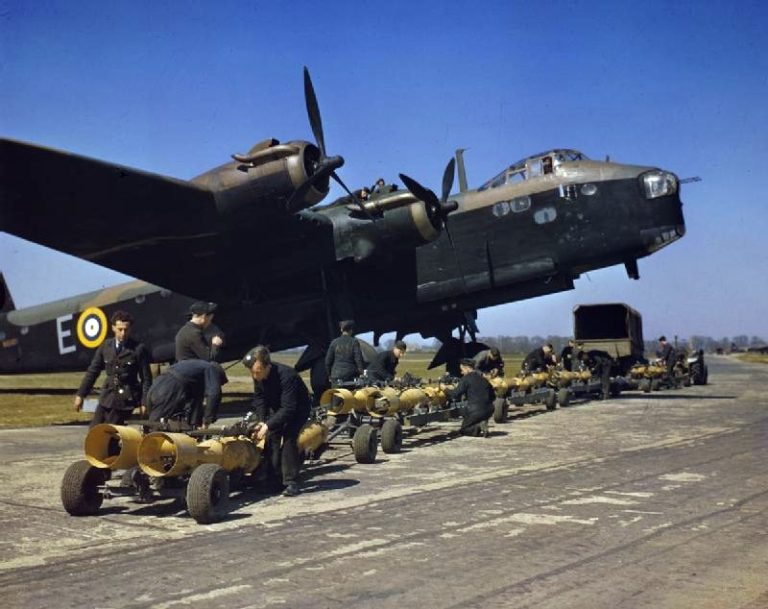
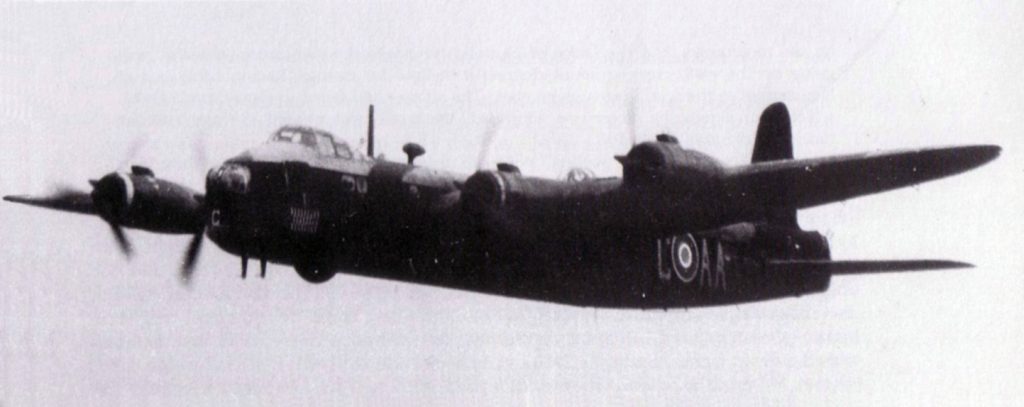
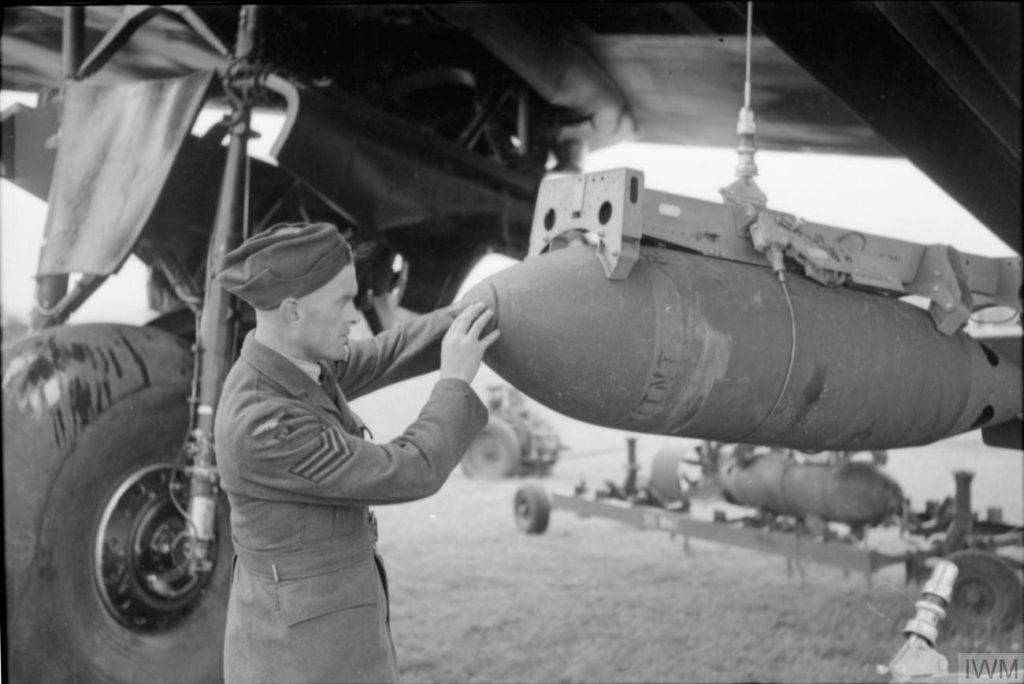
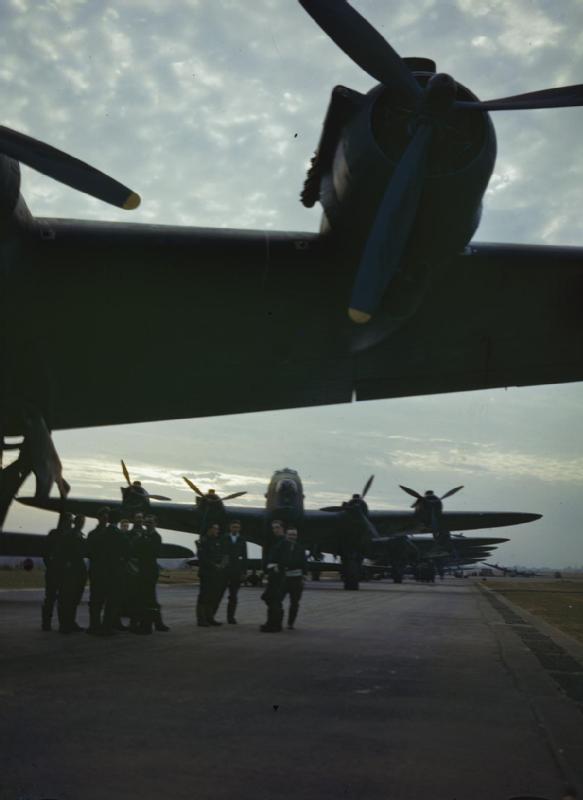
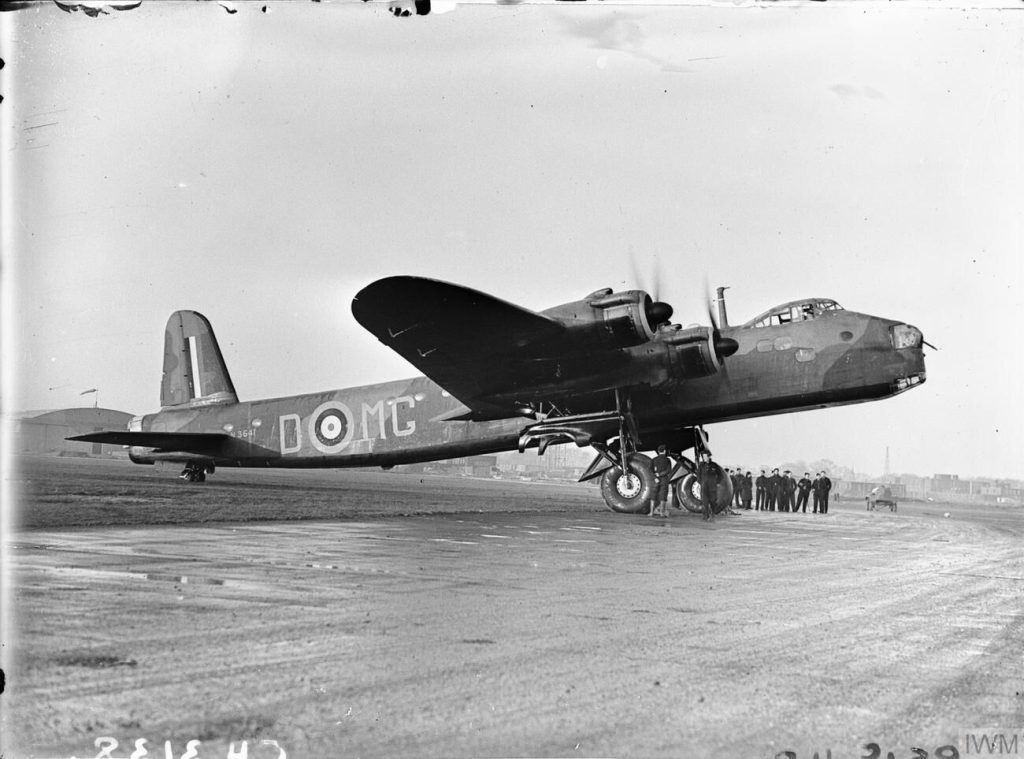
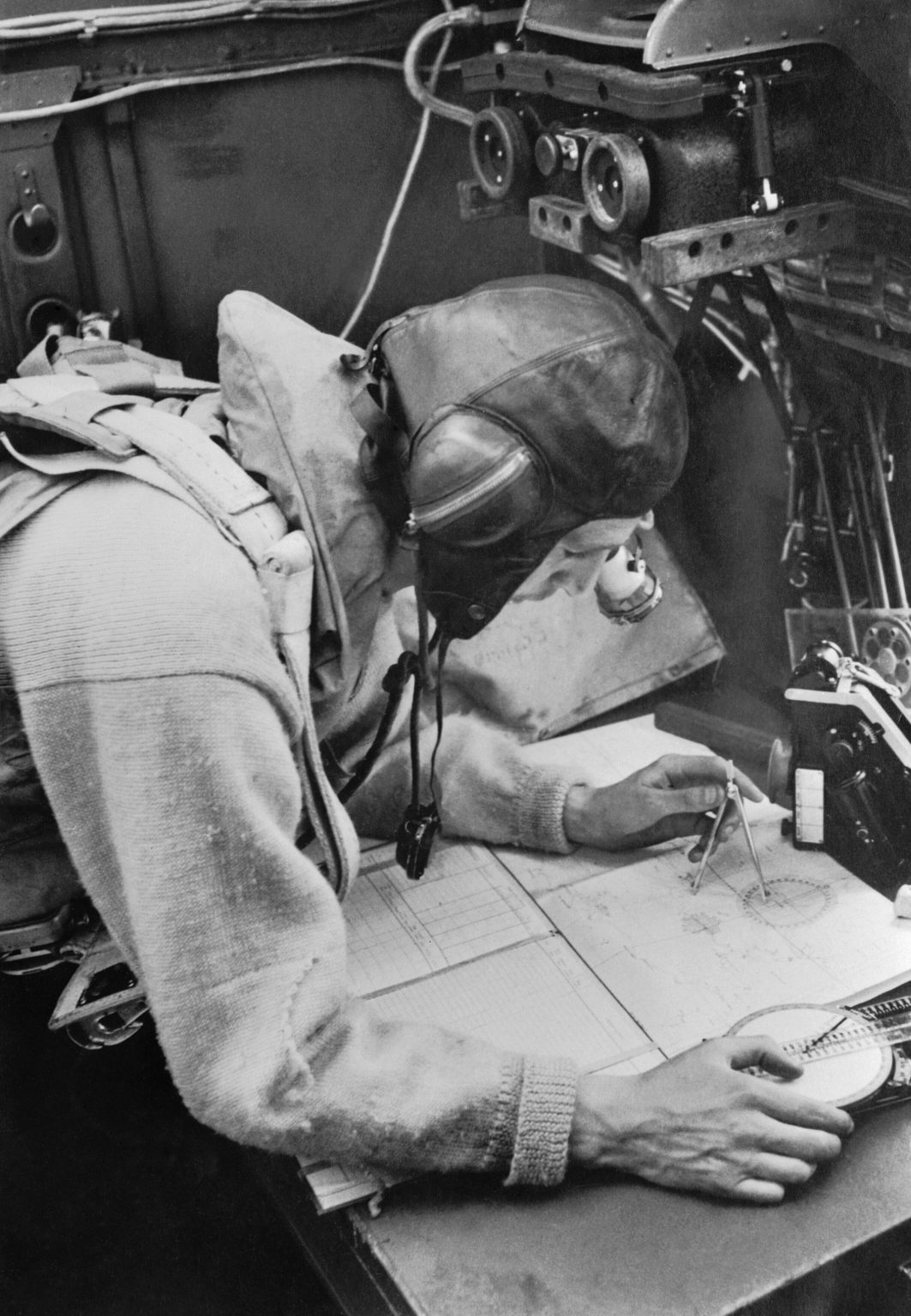
All images sourced from Wikimedia Commons. Public-domain wartime photographs, credited individually above.
On Film
The story of the Short Stirling
A detailed history of the Stirling — its origins, its short-wing handicap and its varied wartime career — from a well-regarded military-aviation channel.
“The Short Stirling; First of the British Big Boys” — Ed Nash’s Military Matters, an established military-aviation history channel (approx. 166,000 views at time of writing).
Operations Map
Where the Short Stirling served
An overview of the Stirling’s world: its home in RAF service, the theatres it fought and worked over, the post-war operators that briefly flew it, and where its few relics and a reconstruction project stand today. The Stirling was overwhelmingly a Royal Air Force aircraft, flown by British and Commonwealth crews across the European theatre. Tap or hover a country for detail.
Combat Record
The Short Stirling by the numbers
Commonly cited figures for the Stirling’s bomber career, before it was withdrawn from raids on Germany in late 1943. Totals vary between sources and are approximate; the Stirling’s heaviest work came in the difficult early years of the four-engine offensive.
Where to See One
Short Stirling relics and the reconstruction project
No complete Short Stirling survives anywhere in the world — the type was scrapped almost to the last airframe after 1945. What remains is recovered relics and an ongoing effort to build a whole aircraft from scratch. These are the places connected with the Stirling today.
The Stirling reconstruction project
United Kingdom
Volunteer enthusiasts are working to build a reproduction Short Stirling from original drawings and salvaged components — the only realistic prospect of a complete aircraft existing again. Progress is slow and depends on research, fundraising and recovered parts.
Museum relics and sections
Various UK collections
Several museums and private collections hold Stirling fragments — nose sections, undercarriage legs, instruments, turrets and parts recovered from crash sites. No single museum holds a whole airframe; the pieces are scattered.
Memorials and squadron sites
England & the Commonwealth
Former Stirling stations and squadron associations — including memorials to units such as No. 7 and No. 75 (NZ) Squadrons — keep the type’s memory alive where no aircraft can.
Because the Stirling survives only as relics, locations and holdings change as parts are recovered, restored or moved. Please check individual museums’ and the reconstruction project’s own websites for the current state and location of Stirling material.
Legacy
Remembering the Short Stirling
For decades the Short Stirling has been the forgotten member of Bomber Command’s heavy trio. It entered service first, opened the four-engine offensive and flew some of its most dangerous early operations, yet it is remembered — when it is remembered at all — chiefly for its faults: the short wing, the low ceiling, the limited bomb bay, the towering undercarriage. The Lancaster took the glory and the Halifax the versatility; the Stirling took the blame.
That reputation is not wholly unfair, but it is incomplete. The Stirling did real work in the hardest years, when every heavy bomber counted, and it went on to a busy and valuable second career towing gliders, laying mines and flying the secret war after it left the bombing campaign. The crews who flew it, for all its shortcomings, often loved it — and their affection is part of the record too.
The cruelest part of the Stirling’s story is its disappearance. Scrapped so completely that not one whole example survives, it is the great absence among preserved RAF heavies — a pioneer erased. The relics in museums and the slow, determined work of the reconstruction project are attempts to repair that erasure, so that one day visitors might stand beside a complete Short Stirling again and see, in the flesh, the first four-engine heavy bomber the Royal Air Force ever flew.
Questions & Answers
Short Stirling: your questions answered
Can I fly in a Short Stirling?
No. There is no airworthy Short Stirling anywhere in the world — and, unlike the Lancaster and Halifax, not one complete Stirling survives at all. Of roughly 2,371 built, the type was scrapped almost to the last airframe after 1945. What remains today is recovered relics — nose sections, undercarriage legs, instruments and salvaged parts in museums and private collections — and a volunteer project working to build a reproduction from original drawings. You cannot fly in one, or even stand beside a whole one.
If it is the experience of flying in a genuine piece of military aviation history you are after, that is still very much possible. MiGFlug arranges flights in real, airworthy ex-military jets — see migflug.com/flights-prices for what you can actually fly today.
Do any Short Stirlings survive today?
No complete Short Stirling survives anywhere in the world — it is the only one of the RAF’s three four-engine heavies of which no whole example is preserved. A number of relics do exist: recovered nose sections, undercarriage components, turrets, instruments and parts salvaged from crash sites, held in museums and private collections. A dedicated reconstruction project is attempting to build a complete reproduction from drawings and salvage, but as yet there is no entire airframe.
Was the Short Stirling’s short wingspan really caused by hangar doors?
This is the most repeated story about the Stirling, and it is disputed. The claim is that the Air Ministry limited the wingspan to about 100 feet so the bomber would fit through standard RAF hangar doors. Historians point out that the 100-foot figure appears as a general limit in Specification B.12/36 and that the neat hangar-door explanation is most likely a persistent myth rather than documented fact. What is not in doubt is the effect: the short wing gave the Stirling a low ceiling and a compartmented bomb bay, both of which hampered it as a bomber.
Why was the Short Stirling withdrawn from bombing Germany?
Its short wing gave it a service ceiling of only around 16,500 feet — far below the Halifax and Lancaster — which kept it down in the heaviest flak and within easy reach of night fighters, producing high loss rates. The same wing dictated a divided bomb bay that could not carry bombs larger than 2,000 lb, so the Stirling could not lift the heavy blast bombs that became central to Bomber Command’s tactics. By late 1943 it had been withdrawn from raids on Germany and switched to glider-towing, mine-laying, special-duties and transport work.
What was the Short Stirling used for after it stopped bombing?
A great deal. From 1943–44 the Stirling became a glider tug, hauling Horsa and Hamilcar gliders and dropping paratroops for the airborne landings at Normandy on D-Day and at Arnhem during Operation Market Garden. It laid sea mines in enemy waters (“gardening”), flew clandestine Special Operations Executive missions dropping agents and supplies into occupied Europe, and, as the turretless Mk V, served as an unarmed transport. In these roles it flew on to the end of the war and briefly beyond.
How many Short Stirlings were built, and was it the first RAF four-engine heavy?
About 2,371 Stirlings were built (some sources cite around 2,383), by Short Brothers at Rochester and Belfast with a wider production group, before production ended in 1945–46. And yes — the Stirling was the first four-engine heavy bomber to enter RAF service, in 1940, ahead of both the Handley Page Halifax and the Avro Lancaster. Uniquely among the three, it was designed as a four-engine aircraft from the start rather than being converted from a twin-engine design.
You can’t fly the Short Stirling. These, you can.
No Stirling will ever fly again — not one complete airframe even survives. But you can still strap into a genuine, airworthy ex-military jet and feel what it is to fly a real piece of military aviation. MiGFlug makes it real.
Fighter Jet Flights
Take the controls of a real ex-military jet with an experienced fighter pilot.
See flights & pricesL-39 Albatros
The classic jet trainer — aerobatics and low-level fun, in several countries.
See flights & pricesRelated Aircraft
More from the Aircraft Museum
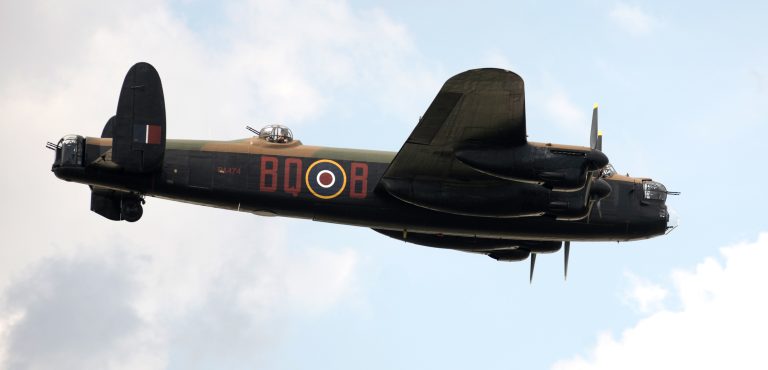 Avro LancasterThe RAF’s iconic four-engine heavy — the bomber that outclassed the Stirling.
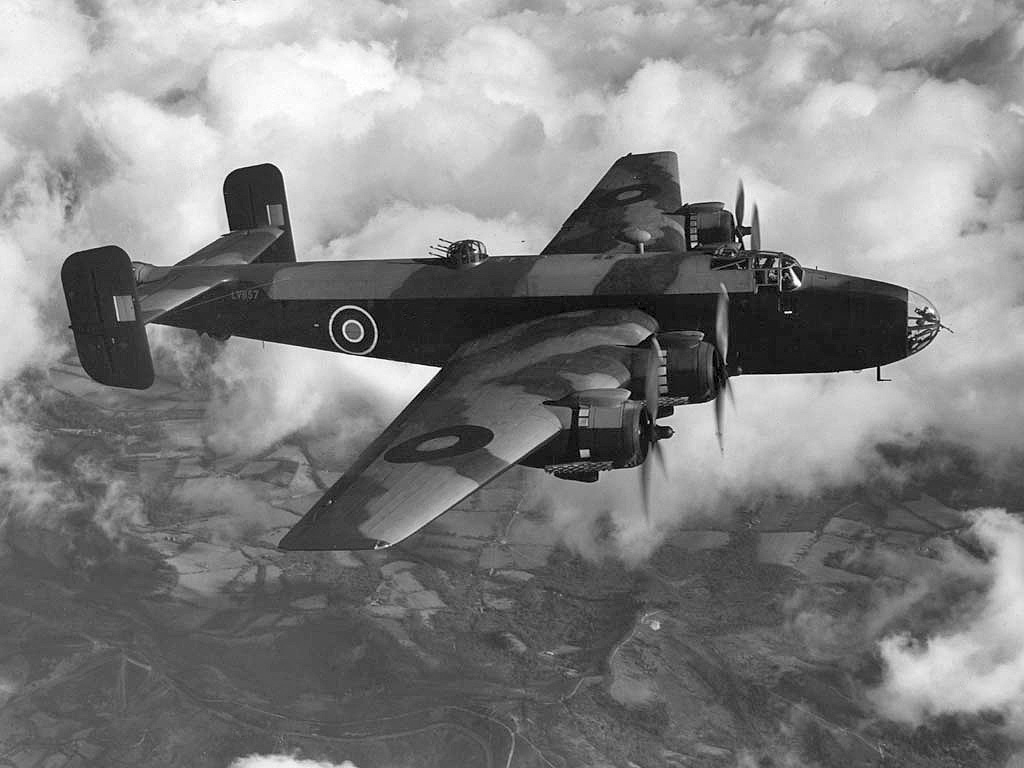 Handley Page HalifaxThe versatile radial-engined heavy that shared — and outlasted — the Stirling’s work.
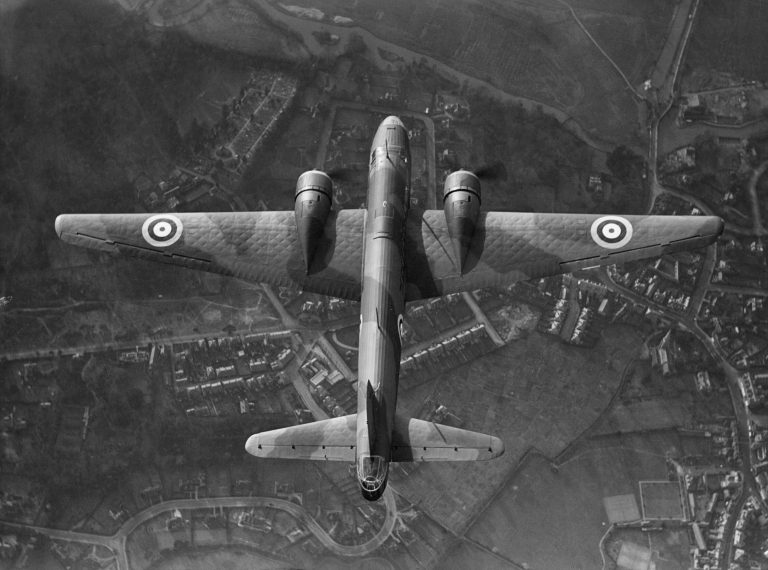 Vickers WellingtonThe geodetic-built twin that carried Bomber Command before the four-engine heavies arrived.
Sources & Further Reading
Where this page’s facts come from
Figures for speed, range, weights, ceiling, sorties and losses are drawn from the museum and reference sources above; where sources differ, values are given as approximate and marked as estimates, and disputed claims (such as the hangar-door origin of the wingspan) are flagged as such. Images are from Wikimedia Commons and credited individually in the gallery.