
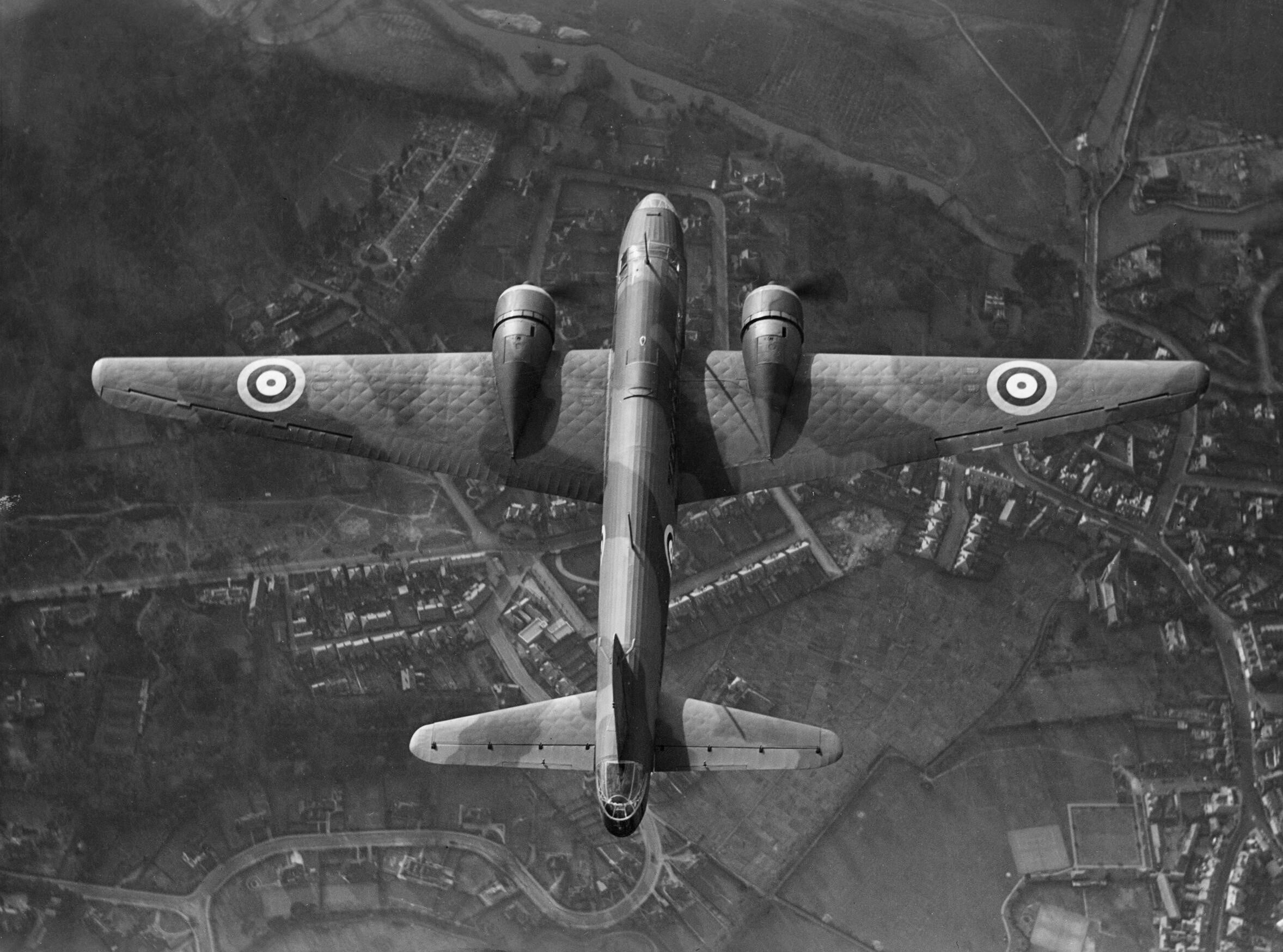
Vickers Wellington
“Wimpy”
The geodetic bomber that carried RAF Bomber Command through the first years of the war. Barnes Wallis’s basket-weave airframe could soak up battle damage that would have torn a conventional bomber apart — and, as the most-produced British multi-engine aircraft of the war, the “Wimpy” bombed Germany by night, hunted U-boats over the Atlantic and trained a generation of aircrew.
The Vickers Wellington: the geodetic bomber that carried Britain’s early war
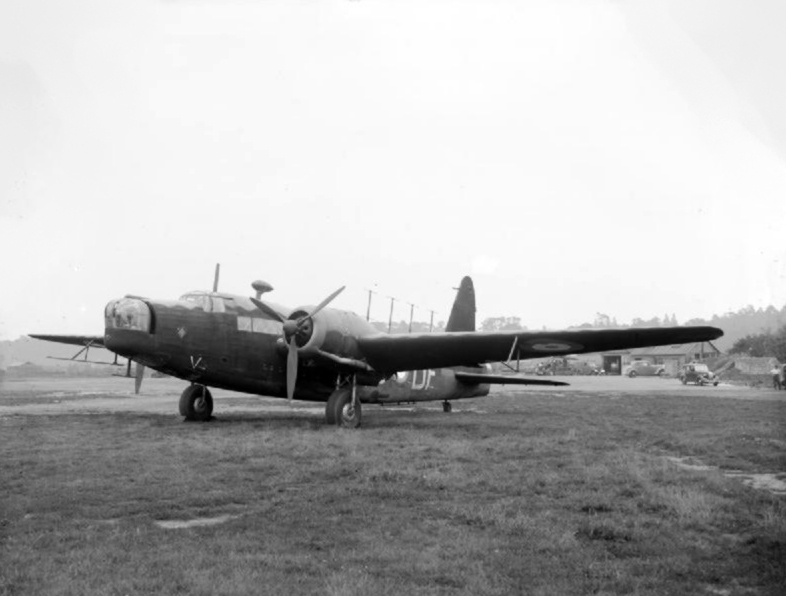
The Vickers Wellington was the aircraft that carried RAF Bomber Command into the Second World War. Designed to Air Ministry Specification B.9/32 by a Vickers team under Rex Pierson, with structural engineer Barnes Wallis, it first flew as a prototype on 15 June 1936 and entered squadron service in 1938. What made it extraordinary was hidden beneath its fabric skin: a geodetic airframe of interlocking metal lattice — a basket-weave structure Wallis had first used on airships. The geodetic frame spread loads so effectively that a Wellington could lose whole panels, or come home with great holes torn in fuselage and wing, and still fly.
For its crew of six that meant a machine that was famously hard to kill. Gunners and pilots returned from raids in Wellingtons whose fabric had burned away to bare the metal lattice, the airframe still holding its shape. That reputation for absorbing punishment — together with docile handling and an airframe that could be built quickly in dispersed factories — is why the Wellington stayed in front-line and second-line service long after newer designs arrived.
By the outbreak of war in September 1939 the Wellington was Bomber Command’s most capable heavy bomber, and it flew some of the RAF’s first raids of the war against German warships. Early daylight operations over the Heligoland Bight proved catastrophically costly against fighters, and the lesson — that unescorted bombers could not survive by day — pushed the Wellington, and Bomber Command, into the night campaign that would define the air war over Europe. Through 1940 and 1941 the “Wimpy” was the backbone of that night offensive, and in May 1942 Wellingtons made up the largest part of the first 1,000-bomber raid, against Cologne.
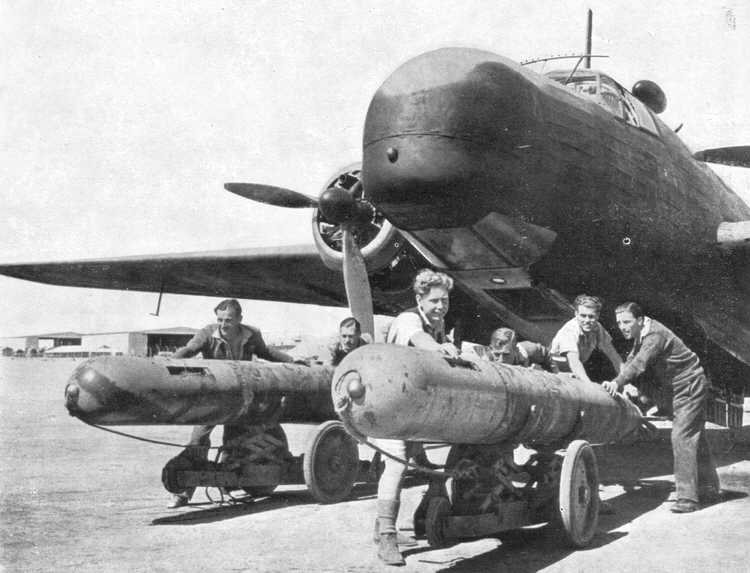
As the four-engine “heavies” — the Lancaster, Halifax and Stirling — came into service from 1942, the Wellington was steadily withdrawn from the main bomber force over Germany. But it was far from finished. It found a vital second career with Coastal Command, hunting U-boats over the Atlantic and the Bay of Biscay; specially equipped aircraft carried the Leigh Light searchlight to catch surfaced submarines at night, and the DWI variant flew with a huge magnetic ring beneath it to detonate German magnetic mines from the air. Torpedo-armed Wellingtons struck Axis shipping in the Mediterranean, and the type served across North Africa, the Middle East and the Far East.
Built at Weybridge (Brooklands), Chester and Blackpool, the Wellington became the most-produced British multi-engine aircraft of the war — around 11,461 of all marks by the time production ended in 1945. It served on after the war as a navigation and aircrew trainer until the RAF retired the last examples in 1953. Its nickname, “Wimpy”, came not from any official source but from J. Wellington Wimpy, the hamburger-loving character in the Popeye cartoons — an affectionate name for an aircraft crews trusted to bring them home.
01Why the Vickers Wellington could survive so much damage: Barnes Wallis and geodetic construction
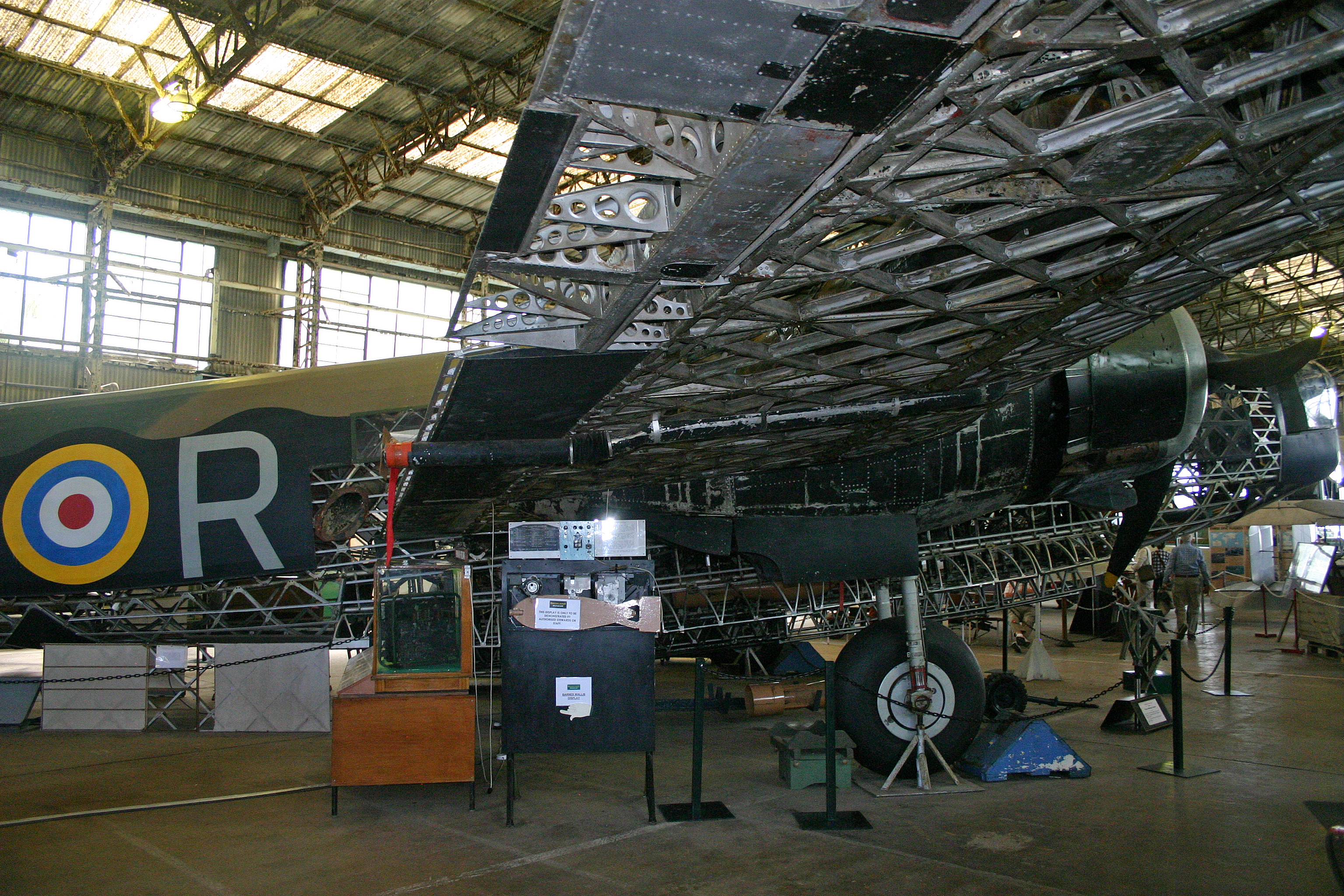
Barnes Wallis designed the Wellington’s airframe as a geodetic lattice — light metal members woven in a criss-cross basket weave, a technique he had refined on the R100 airship. Loads travelled around the whole structure rather than through a few heavy frames, so the removal or destruction of any one part did not collapse the rest.
The practical result was exceptional damage tolerance. Wellingtons repeatedly returned from operations with large areas of skin and structure shot away, the exposed geodetic framework still carrying the aircraft. The trade-off was a structure that was labour-intensive to build and awkward to pressurise or cut large openings into, but for a wartime bomber the survivability was worth it.
02The Vickers Wellington’s nickname: how the bomber became the “Wimpy”
Crews named the Wellington the “Wimpy” after J. Wellington Wimpy, the round, hamburger-eating character from the Popeye comics and cartoons. The link was simply the shared name “Wellington”. It was never official, but it was used everywhere — in logbooks, letters and squadron slang — and it captured the affection crews felt for a plain, reliable aircraft.
How the Vickers Wellington works: geodetic structure, fabric skin and radial engines
A geodetic lattice airframe
The Wellington’s fuselage and wings are built as a geodetic basket-weave of light alloy members, designed by Barnes Wallis. Loads are spread around the whole structure, so the airframe is light for its strength and remarkably damage-tolerant — the single feature for which the Wellington is best remembered.
A doped-fabric skin
Over the metal lattice the Wellington was covered in doped fabric rather than stressed metal. It kept weight down and was easy to repair, and because the fabric carried no structural load, holes in it did little to weaken the aircraft — part of why battle-damaged Wellingtons kept flying.
Two radial engines
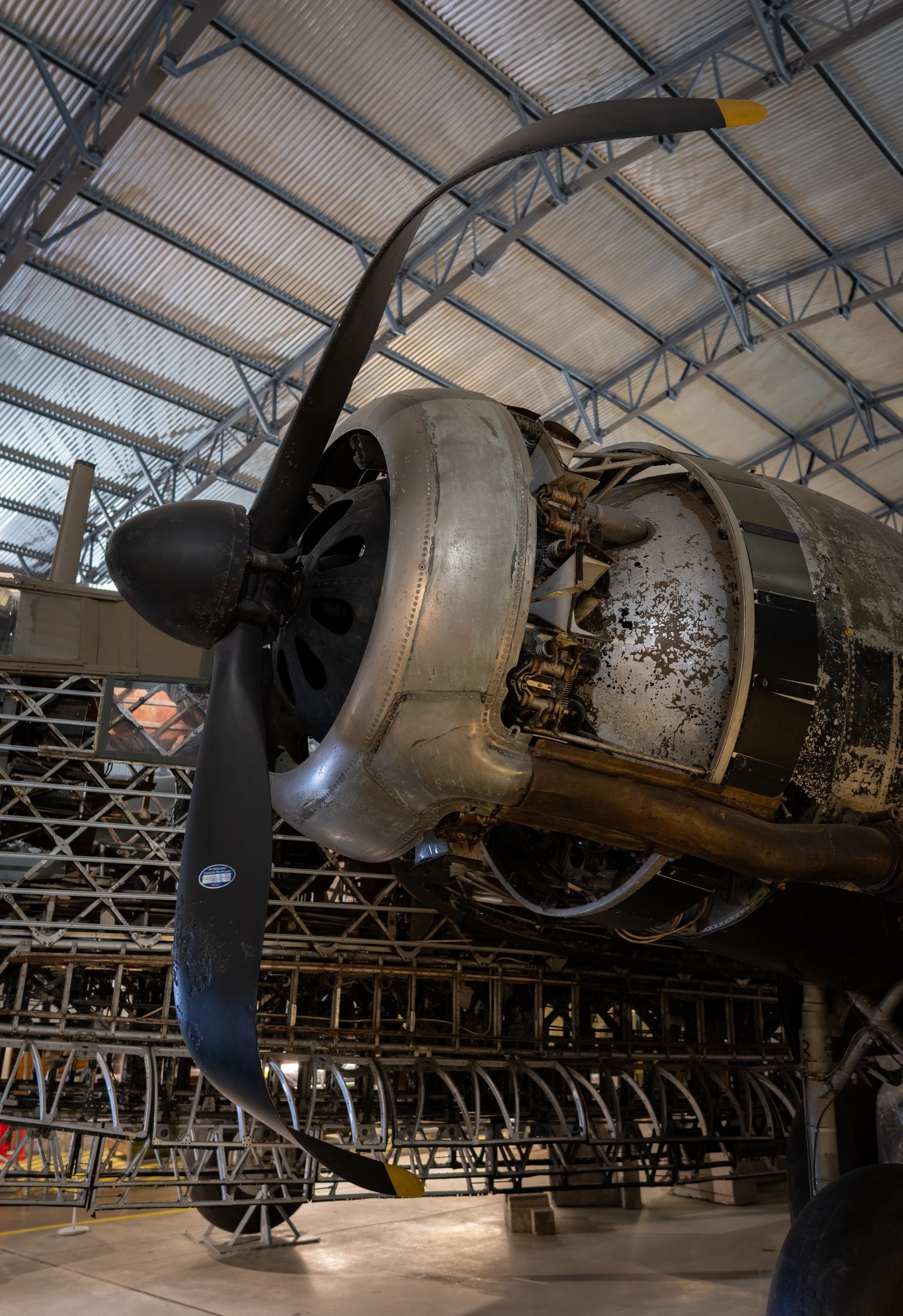
The classic bomber marks are powered by two Bristol Pegasus radial engines of about 1,000 hp each (Mk IC). Other marks used Rolls-Royce Merlin V12s or the more powerful Bristol Hercules radials, giving the family a wide spread of performance across the war.
03The Vickers Wellington’s engines: Pegasus, Merlin, Hercules and Twin Wasp across the marks
The early bomber Wellingtons (Mk I, IA, IC) used two Bristol Pegasus radials of roughly 1,000 hp. The Mk II switched to Rolls-Royce Merlin V12s; the Mk IV used American Pratt & Whitney Twin Wasp radials; and the major later marks — the Mk III, the much-produced Mk X and the Coastal Command versions — used the more powerful Bristol Hercules sleeve-valve radials.
This flexibility — a sound airframe that could take whatever engines were available — helped keep the Wellington in production and in service throughout the war.
04Vickers Wellington variants: from night bomber to Leigh Light, DWI and torpedo aircraft
The Wellington was produced in many marks. Bomber versions ran from the Mk I through the Hercules-powered Mk III and the mass-produced Mk X. Coastal Command flew GR (general reconnaissance) versions for anti-submarine and torpedo work, some fitted with the Leigh Light searchlight and air-to-surface radar. The extraordinary DWI aircraft carried a large magnetic ring to detonate magnetic mines. Later, dedicated T (trainer) marks such as the T.10 served for years after the war.
05Who built the Vickers Wellington: Vickers-Armstrongs and dispersed wartime production
The Wellington was designed and built by Vickers-Armstrongs. Production was spread across factories at Weybridge (Brooklands) in Surrey, Chester (Broughton) and Blackpool to guard against bombing and to reach the enormous output required. Between 1936 and 1945 the plants together delivered around 11,461 aircraft — more than any other British multi-engine type.
Vickers Wellington specifications: dimensions, performance and cost
Baseline note: the figures below describe the Wellington Mk IC — the Pegasus-engined mark that carried Bomber Command through 1940 and 1941, and at 2,685 aircraft the second most numerous of all. The Mk III (1,519 built) substituted 1,500 hp Bristol Hercules XI sleeve-valve radials and a four-gun tail turret, adding about 20 mph and a thousand feet of ceiling; the B Mk X (3,804 built, the most numerous mark) was the Mk III with 1,675 hp Hercules XVI and a stronger light-alloy structure. The Coastal Command GR Mk XI to XIV were maritime conversions of the Mk X carrying air-to-surface-vessel radar, depth charges, torpedoes and the Leigh Light. Deltas are in grey. Wellington figures are unusually consistent between sources, but per-mark production splits vary by a few dozen aircraft and the accepted grand total of 11,461 is itself an approximation.
Dimensions & weights
- Crew
- 5 or 6 — pilot, second pilot or navigator, bomb aimer, wireless operator, front and rear gunners (Coastal Command marks flew with six, the second pilot replaced by a radar operator)
- Wingspan
- 26.26 m (86 ft 2 in)
- Length
- 19.69 m (64 ft 7 in)
- Height
- 5.31 m (17 ft 5 in)
- Wing area
- 78.04 m² (840 sq ft)
- Aspect ratio
- 8.8 — a long, deep, unhurried wing, and one reason the type is so tolerant of a shot-up airframe
- Structure
- Geodetic duralumin lattice, roughly 1,650 separate W-section beam elements in the fuselage alone, with wooden battens screwed to the frames and a skin of doped Irish linen. No stressed skin anywhere
- Empty weight
- 8,417 kg (18,556 lb)
- Maximum take-off weight
- 12,927 kg (28,500 lb)
- Maximum bomb load
- 2,041 kg (4,500 lb) — more than a B-17 Flying Fortress carried on a deep penetration, from an aircraft with two engines and half the weight
- Bomb bay
- Three longitudinal cells with nine stations, sized around 500 lb bombs. Widening it for the 4,000 lb high-capacity "cookie" on the Mk II, III and X required cutting into the geodetic structure, which the airframe resented and which was never entirely satisfactory
- Fuel
- ~3,410 L (750 imp gal, 900 US gal) in three tanks per wing, carried in the open box the geodetic structure left between the spars outboard of the engines — a genuine and rarely credited advantage of the construction
Performance
- Maximum speed
- 378 km/h (235 mph, 204 kt) at 4,725 m (15,500 ft) — the Mk III and Mk X reached about 410 km/h (255 mph)
- Cruising speed
- 290 km/h (180 mph, 156 kt)
- Rate of climb
- 5.7 m/s (1,120 ft/min)
- Service ceiling
- 5,490 m (18,000 ft) — about 5,790 m (19,000 ft) on the Hercules-engined marks. Low, and it stayed low, because the fabric-covered lattice could not be pressurised without building a separate cabin inside it
- Maximum range
- 4,100 km (2,550 mi, 2,215 nmi) with a reduced load of about 454 kg (1,000 lb) of bombs
- Bomb load at maximum range
- 454 kg (1,000 lb) — the usual bomber trade, and the reason Ruhr sorties were flown at far less than the maximum figure
- Typical bomber sortie
- 5–7 h from East Anglia to the Ruhr or the Rhineland and back
- Coastal Command patrol
- Routinely over 10 h on Bay of Biscay anti-submarine work, which is where the wing and the fuel volume earned their keep
- Wing loading
- 165.6 kg/m² (33.9 lb/sq ft) at maximum weight
- Power loading
- 8.3 kg/kW (13.6 lb/hp) — marginal, and the reason a Wellington on three-quarters of an engine came home very slowly indeed
Propulsion & systems
- Engines
- 2 × Bristol Pegasus XVIII nine-cylinder air-cooled radials
- Power
- 783 kW (1,050 hp) each at take-off
- Other marks’ engines
- Rolls-Royce Merlin X of 854 kW (1,145 hp) on the Mk II; Bristol Hercules XI of 1,119 kW (1,500 hp) on the Mk III; Hercules VI or XVI of 1,249 kW (1,675 hp) on the Mk X; Pratt & Whitney Twin Wasp on the Mk IV, flown chiefly by the Polish squadrons
- Propellers
- de Havilland three-blade, two-pitch on early aircraft and constant-speed later
- Turrets
- Frazer-Nash FN-5 nose and FN-10 tail turrets, two .303 in Browning Mk II each, on the Mk IA and IC; the Mk I had Vickers-designed turrets and a retractable ventral "dustbin". From the Mk III the tail turret became the four-gun FN-20A, which roughly doubled the rearward weight of fire
- Bomb sight
- Course Setting Bomb Sight on early aircraft — a 1917 design, and a large part of why Bomber Command could not hit what it aimed at in 1940. The stabilised Mk XIV sight arrived from 1942
- Radar
- Metric ASV Mk II on the GR Mk VIII, XI and XIII, with a dorsal "stickleback" aerial array and side masts; centimetric ASV Mk III in a chin radome on the GR Mk XII and XIV, which restored the advantage after German Metox receivers had detected the metric sets at range
- Leigh Light
- 610 mm (24 in) carbon-arc searchlight of about 20 million candelas, weighing 500 kg (1,100 lb) with its generator, in a retractable ventral turret. Conceived by Wing Commander Humphrey de Verd Leigh and first proved on a Wellington DWI, which already had the generator aboard
- Navigation aids
- Gee from 1942 on Bomber Command aircraft; radio altimeter and Rebecca on Coastal Command marks
- First flight
- 15 June 1936, prototype K4049 from Brooklands, flown by Mutt Summers
- Service entry
- October 1938, with No. 99 Squadron; withdrawn from RAF service in March 1953
- Number built
- 11,461 (some tallies give 11,462) — more than any other British bomber, and the only British bomber in production for the whole of the war. Together with the 846 Vickers Warwicks, which shared about 85 per cent of their structure, that is over three-quarters of everything Vickers-Armstrongs built
06Vickers Wellington numbers: how many were built, and how many survive
Around 11,461 Wellingtons of all marks were built between 1936 and 1945, the most of any British multi-engine aircraft of the war. Sources differ by a few dozen and the total should be treated as the commonly cited estimate.
Only two substantially complete aircraft survive: N2980 at Brooklands Museum and MF628 at the Royal Air Force Museum. Both are static. Various relics, wrecks and recovered fragments exist elsewhere, but none is airworthy.
07The Vickers Wellington’s cost: what a wartime bomber was worth, then and now
There is no reliable single modern figure for the Wellington’s unit cost, and wartime accounting for aircraft prices was inconsistent; any specific number should be treated as an estimate. As a mass-produced medium bomber it was, by design, far cheaper and quicker to build than the four-engine heavies that followed.
Because no Wellington is airworthy today, there is likewise no current cost per flight hour. The real modern cost is conservation — the specialised work of preserving irreplaceable survivors such as N2980 and MF628 — rather than operation. Treat any operating-cost figure you see as an unverified estimate.
Armament & payload
Four thousand five hundred pounds of bombs and six rifle-calibre machine guns — a combination that worked at night and was slaughtered by day
The Wellington carried a genuinely useful bomb load for a twin: 4,500 lb, more than an early B-17 took to Berlin, from an aeroplane weighing under thirteen tonnes. Its defensive armament was the problem. Six .303 in Brownings in power turrets looked formidable in 1937 and were obsolete by 1939, because a rifle-calibre bullet will not reliably stop a Bf 109 and because the nose and tail turrets left the beam and the belly almost undefended once the ventral "dustbin" was deleted.
The Luftwaffe found that gap on 18 December 1939 over the Heligoland Bight and took twelve of twenty-two Wellingtons out of the sky in a single afternoon. The RAF drew the correct conclusion and abandoned unescorted daylight bombing for the rest of the war. What the Wellington did keep was a bomb bay adaptable enough to take depth charges, torpedoes, a searchlight or a fifteen-metre magnetic hoop, and that flexibility is why the type outlasted its own obsolescence as a bomber by two full years. Fits varied enormously by mark and command: a 1940 Mk IC over Hamburg and a 1944 GR Mk XIV over the Bay of Biscay share a designation and a structure and very little else.
Gun
- Frazer-Nash FN-5 nose turret, two .303 in Browning Mk II machine guns — standard from the Mk IA onward.
- Frazer-Nash FN-10 tail turret, two .303 in Brownings; replaced from the Mk III by the FN-20A with four guns, the single most useful defensive change the type received.
- Two beam guns, one .303 in Browning or Vickers K in each waist window, hand-held. Fitted on the Mk IC in place of the retractable FN-25 ventral turret, which was heavy, draggy and hated by crews. Deleted again from the Mk III.
- Experimental only: a 40 mm Vickers S gun with a predictor sight, trialled in a dorsal mounting on a Mk II from October 1940 and in the nose of another, for a proposed heavy fighter that was never built.
Air-to-air
- Defensive only. The Wellington was never intended to hunt aircraft and had no forward-firing armament in service.
- The .303 in Browning was chosen for rate of fire over hitting power, on the pre-war assumption that a formation of bombers could defend itself. Heligoland Bight demonstrated in one engagement that it could not, against cannon-armed Bf 109s and Bf 110s attacking from the beam.
- Kills were nevertheless recorded. On 23 December 1944 a Wellington rear gunner, Sergeant Gerry Elsyon, shot down a Messerschmitt Me 163 Komet rocket fighter and was awarded the Distinguished Flying Medal — one of the more improbable claims of the war.
- No air-to-air missile, gun pack or interception radar in operational service; the Mk XVII fitted SCR-720 radar purely to train night-fighter crews.
Air-to-surface guided
- None carried. The Wellington entered service two years before any air-launched guided weapon existed, and left it before Britain fielded one.
- What it had instead was the closest 1942 equivalent: ASV radar to find a surfaced U-boat in the dark, and the Leigh Light to illuminate it inside the radar’s one-kilometre minimum range so the bomb aimer could see what he was attacking.
- That pairing was decisive. From June 1942 U-boats crossing the Bay of Biscay were forced to charge batteries by day, when they could at least see an aircraft coming.
- The first Leigh Light contact was the Italian submarine Luigi Torelli on the night of 3 June 1942; the first confirmed kill was U-502, sunk on 5 July 1942 by a Wellington of No. 172 Squadron.
Bombs
- Up to 2,041 kg (4,500 lb) in three longitudinal cells with nine stations — typically nine 500 lb general-purpose bombs, or 250 lb bombs and Small Bomb Containers of 4 lb incendiaries.
- The 4,000 lb high-capacity "cookie" blast bomb on modified Mk II, III and X aircraft, which needed the bomb bay opened out and the geodetic structure locally reworked.
- Torpex-filled Mk VIII and Mk XI 250 lb depth charges on Coastal Command marks, fused shallow — the anti-submarine weapon that actually did the killing.
- Sea mines on Bomber Command "gardening" sorties, a role the Wellington flew heavily and one that repaid the effort far better than most contemporary night bombing did.
Rockets
- RP-3 60 lb rocket projectiles on rails under the wings of the GR Mk XIV — the only rocket fit to see operational service on the type.
- Used against surfaced submarines and small shipping, where a solid-shot or hollow-charge head could hole a pressure hull below the waterline without the fusing difficulties of a shallow-set depth charge.
- Fitting rails to a geodetic wing was not trivial: the load had to be spread across the lattice rather than picked up at a spar, which is exactly the kind of modification the structure made awkward.
- No air-to-air or unguided ground-attack rocket fit on bomber marks.
Pods & other stores
- Two 18 in torpedoes under the wings of the GR Mk XII — the Mediterranean anti-shipping fit that crews christened the "Fishington", guided onto targets at night by radar-equipped Wellingtons nicknamed "Snoopingtons".
- The Leigh Light in its retractable ventral turret, at a cost of 500 kg (1,100 lb) and most of the bomb bay.
- The DWI degaussing hoop: an aluminium coil 14.6 m (48 ft) in diameter in a balsa fairing, slung under the fuselage and wings, energised by a Ford V8 petrol engine driving a Mawdsley generator and later a de Havilland Gipsy Six. Flying at 60 m, it detonated German magnetic mines beneath it. Turrets were faired over, the aircraft was unarmed, and Blenheims escorted it. Fifteen were converted; they swept the Thames Estuary, then the Suez Canal and the North African ports.
- Long-range fuel tanks in the bomb bay, tropical filters, glider-towing gear (cleared for Hotspur, Hadrian and Horsa, but observed to strain the geodetic structure) and a Turbinlite searchlight installation trialled on one Mk IC.
Three typical loadouts
- Night area bombing, Mk IC, 1941
- Nine 500 lb general-purpose bombs or a mix of 250 lb bombs and Small Bomb Containers of incendiaries, full fuel for a five-hour Ruhr sortie, six crew, nose and tail turrets manned and the beam guns stowed until something appeared. Aimed with a Course Setting Bomb Sight, which in practice meant aimed at a city.
- Bay of Biscay anti-submarine patrol, GR Mk XIV
- ASV Mk III centimetric radar in the chin radome, Leigh Light in the ventral turret, six Torpex depth charges, RP-3 rockets on the wing rails, ten hours of fuel. The bomb bay is almost entirely given over to the searchlight and the depth charges, and the aircraft is a submarine killer rather than a bomber.
- Magnetic mine sweeping, DWI Mk II
- All armament and turrets removed and faired over, a 48-foot energised hoop slung beneath the airframe, an auxiliary petrol engine and generator in the fuselage, flown at 60 m over an estuary or a canal at whatever speed kept the hoop stable. Escorted, because the aircraft could not defend itself at all.
Sourcing caveat: bomb loads quoted are maxima at reduced fuel, and squadron practice in 1940 and 1941 was frequently well below them. Turret and gun fits changed within marks as well as between them, and Coastal Command conversions were carried out at unit level as often as on the production line, so individual aircraft frequently do not match their nominal mark. Leigh Light candlepower figures vary between sources because the turret installation was quoted both with and without its spreading lens.
Variants
Barnes Wallis’s lattice made the Wellington almost unkillable and almost unimprovable, and both halves of that shaped every mark
The geodetic airframe is the whole story of this aeroplane. Wallis built the fuselage from about 1,650 duralumin W-section beams curving in opposing helices, each one carrying load in a way that let its neighbours pick up the slack when it was cut. Wooden battens and doped Irish linen went over the top. The consequence in combat was extraordinary: Wellingtons came home with metres of covering burnt away and whole sections of lattice shot out, flying on a skeleton, and the crews knew it. No stressed-skin bomber of the period tolerated that kind of damage.
The bill came in three parts. It was slow and labour-intensive to build, and Vickers had to train a semi-skilled workforce from scratch to hit a target of one aircraft a day. It was hard to modify, because you cannot simply cut a hole in a load-bearing lattice — widening the bomb bay for the 4,000 lb cookie required real surgery, and the high-altitude Mk V and Mk VI needed a separate cylindrical pressure cabin built inside the fuselage because a fabric-covered structure cannot be pressurised at all. And the fabric itself capped the aeroplane: it limited speed, it limited altitude, and it meant that when the four-engined heavies arrived in 1942 the Wellington had nowhere left to grow. Bomber Command flew its last Wellington operation over Germany in October 1943; Coastal Command flew them until the end of the war.
- Type 271 prototype (1936, 1)
- K4049, flown from Brooklands by Mutt Summers on 15 June 1936 to Specification B.9/32. Lost in a test dive the following year, after which the design was substantially revised.
- Mk I / Mk IA (1938–39, 183 and 187)
- Pegasus XVIII engines. The Mk I had Vickers turrets; the Mk IA substituted Nash & Thompson turrets and moved the main landing gear forward. These are the aircraft that flew the Heligoland Bight raid.
- Mk IC (1940–42, ~2,685)
- The baseline here and the workhorse of the early night offensive: ventral turret deleted for beam guns, a 24-volt electrical system and a strengthened bomb bay. 602 Wellingtons went to Cologne on the first thousand-bomber raid of 30/31 May 1942 — more than half the force, and 303 of them flown by operational training units with pupil crews.
- Mk II (1940–41, ~401)
- Rolls-Royce Merlin X in place of the Pegasus, with an enlarged tailplane to cure the stability problems that followed. Faster and higher-flying than the Mk IC, and the aircraft whose demand for more power pushed Rolls-Royce towards the two-stage Merlin 60 series.
- Mk III (1941–43, ~1,519)
- Bristol Hercules XI sleeve-valve radials and the four-gun FN-20A tail turret. The definitive bomber Wellington, and the mark most often photographed.
- Mk IV (1941–42, ~220)
- Pratt & Whitney Twin Wasp engines, adopted to spread the engine supply risk. Flown chiefly by the Polish squadrons of No. 300 and No. 301, and noisier than anything else in Bomber Command.
- Mk V and Mk VI (1941–42, ~66)
- The high-altitude experiment: turbocharged Hercules VIII, then Merlin 60s, with the crew sealed in a cylindrical pressure cabin inserted inside the geodetic fuselage because the structure itself could not hold pressure. A neat demonstration of what the lattice cost.
- B Mk X (1942–45, 3,804)
- The most-produced mark: Hercules VI or XVI of 1,675 hp and a stronger light-alloy structure. Basis for every late Coastal Command conversion and for the post-war trainers.
- GR Mk VIII, XI, XII, XIII and XIV (1942–45, ~2,230)
- The Coastal Command family, and arguably the type’s finest hour. The Mk VIII was a Mk IC conversion, 58 of the 307 with the first operational Leigh Lights. The Mk XI and XIII carried metric ASV Mk II with mast aerials; the Mk XII and XIV carried centimetric ASV Mk III in a chin radome, with the Mk XII also taking two 18 in torpedoes and the Mk XIV adding rocket rails.
- DWI Mk I and Mk II (1939–40, ~15 converted)
- The magnetic-mine sweepers, carrying a 48-foot energised hoop and an internal petrol generator. "DWI" officially stood for Directional Wireless Installation, a cover story; unofficially, Detonation Without Impact. They cleared the Thames Estuary, then the Suez Canal, and one of them was the aircraft on which the Leigh Light was first proved.
- C Mk XV / XVI and T Mk X, XVII, XVIII, XIX (1942–53)
- Transport conversions carrying 18 troops, and the post-war training family — navigation, wireless and night-fighter trainers rebuilt by Boulton Paul, which kept the type in RAF service until March 1953.
Closing caveat and survivors: per-mark production figures above are the commonly cited splits and vary by a few dozen aircraft between authorities; they sum to slightly under the accepted grand total of 11,461. Not one Wellington remains airworthy, and only two complete airframes survive. Mk IA N2980 "R for Robert" flew on the Heligoland Bight raid of 18 December 1939 with No. 149 Squadron, was passed to No. 20 Operational Training Unit at Lossiemouth, and ditched in Loch Ness on 31 December 1940 after an engine failure; located by sonar in the 1970s, identified in 1978 and raised on 21 September 1985, it is displayed at Brooklands Museum in Weybridge — the site of the Vickers factory where it was built in 1939. Mk X MF628, first flown on 9 May 1944 and later converted to T Mk X, was the last Wellington ever to fly, on 24 January 1955, and appeared in the filming of The Dam Busters; after a decade-long restoration at the Michael Beetham Conservation Centre it went on display at the RAF Museum Midlands at Cosford in 2023. Substantial recovered sections of other aircraft survive elsewhere.
The Vickers Wellington: a timeline from B.9/32 to the last trainers
A specification for a new bomber
The Air Ministry issues Specification B.9/32 for a twin-engine medium bomber; Vickers responds with a geodetic design led by Rex Pierson and Barnes Wallis.
The prototype flies
The prototype Type 271 makes its first flight at Brooklands (Weybridge) in the hands of Vickers chief test pilot “Mutt” Summers.
Into RAF service
The Wellington enters squadron service, first with No. 9 Squadron, as Bomber Command’s most capable heavy bomber.
War and the first raids
Wellingtons fly among the RAF’s first bombing operations of the war; costly daylight raids over the Heligoland Bight push the type towards night operations.
The night offensive
The Wellington becomes the backbone of Bomber Command’s night bombing of Germany and Italy.
The first 1,000-bomber raid
Wellingtons form the largest part of the force in Operation Millennium, the first 1,000-bomber raid, against Cologne.
Coastal Command and new roles
As four-engine heavies take over the German night war, Wellingtons move to Coastal Command for anti-submarine work, carrying the Leigh Light and the DWI magnetic-mine ring.
Every front
Torpedo, transport and bomber Wellingtons serve across the Mediterranean, the Middle East and the Far East.
Production ends
Wellington production finishes after around 11,461 aircraft — the most of any British multi-engine type.
Retirement
The RAF withdraws its last Wellingtons, by then serving as aircrew trainers such as the T.10.
The Vickers Wellington in service: night bomber, U-boat hunter and survivor
Barnes Wallis and the geodetic idea
How an airship engineer built a bomber that would not fall apart.
Read the full account
Why crews called it “Wimpy”
A hamburger-loving cartoon character gave the bomber its nickname.
Read the full account
1939: the RAF’s first raids
The Wellington went to war on the first day and paid a hard price.
Read the full account
Backbone of Bomber Command
For the first years of the war, the night sky belonged to the Wimpy.
Read the full account
The first 1,000-bomber raid
In May 1942, Wellingtons made up the bulk of a record force.
Read the full account
Making way for the heavies
The four-engine bombers took over the German night war.
Read the full account
Hunting U-boats over the Atlantic
A second career against the submarine menace.
Read the full account
The flying mine-sweeper
A giant magnetic hoop that blew up mines from the air.
Read the full account
Wellingtons against Axis shipping
In the Mediterranean, the Wimpy carried torpedoes.
Read the full account
The Wimpy in the desert and the jungle
The Wellington served on every major front.
Read the full account
Teaching a generation of aircrew
After the front line, the Wellington trained those who followed.
Read the full account
N2980 and the Loch Ness Wellington
Two aircraft survive — and one came back from the deep.
Read the full account
Vickers Wellington photos: bomber, Coastal Command and preserved survivors
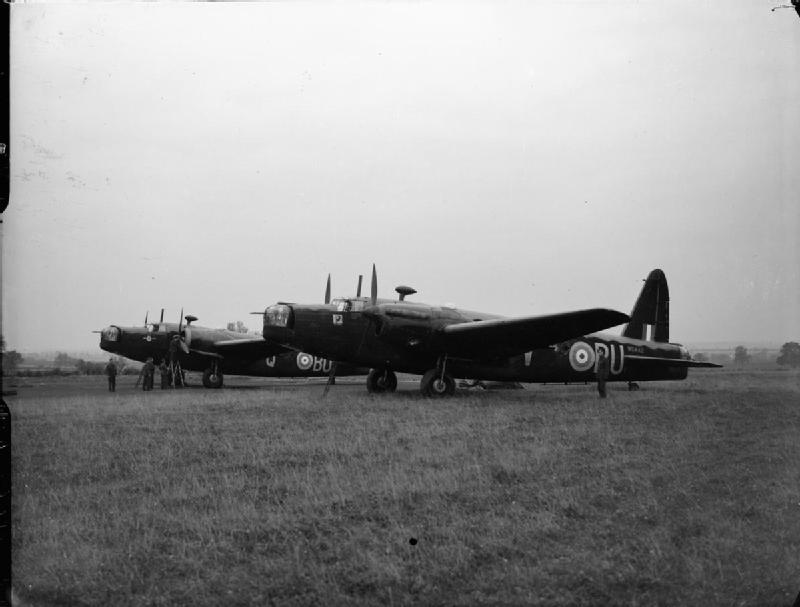
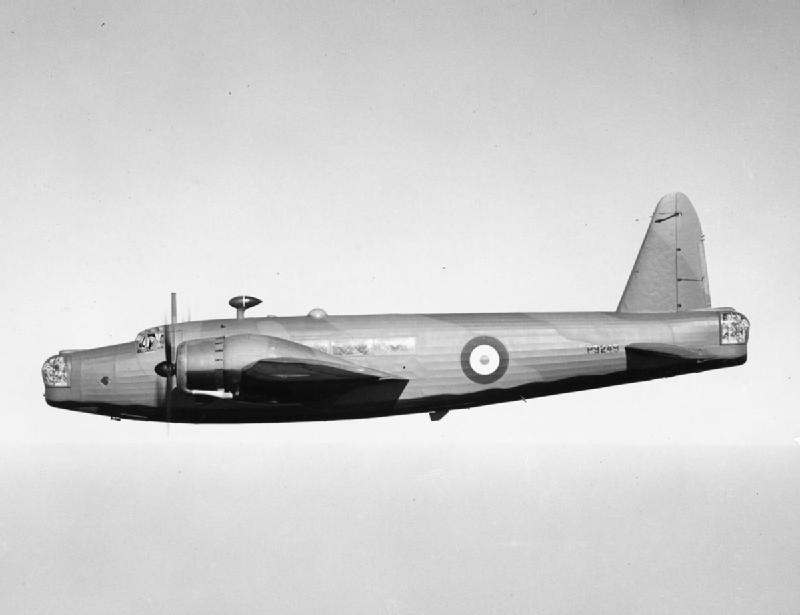
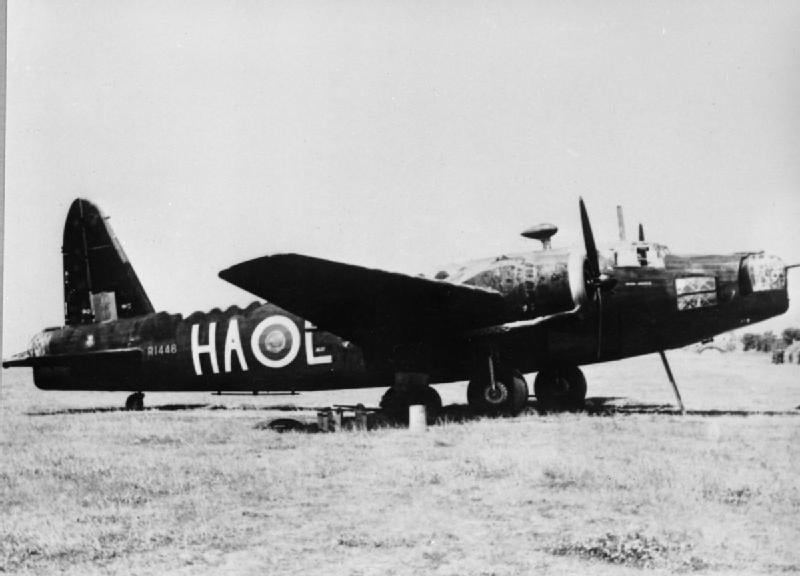
The Vickers Wellington on screen: Britain’s most-produced bomber
“Britain’s Most Mass-Produced Bomber | Vickers Wellington” by the aviation-history channel Rex’s Hangar (~764,000 views) — a detailed, well-sourced account of the Wellington’s design and wartime career.
Where the Vickers Wellington flew: RAF, Allied operators and combat theatres
The Vickers Wellington at war: first raids, the night offensive and the U-boat war
The Wellington flew from the first days of the war to the last, first as Bomber Command’s principal night bomber over Germany and Italy, then as a Coastal Command submarine-hunter and torpedo aircraft. It bombed by night, mined enemy waters, sank U-boats with the Leigh Light, swept magnetic mines with the DWI ring and trained the crews who came after. Loss and sortie figures vary between sources and should be treated as estimates.
Explore the combat record of every military aircraft. Data as of August 2026.
Vickers Wellington: frequently asked questions
Can I fly in a Vickers Wellington?
What is the Vickers Wellington?
Why is the Wellington nicknamed “Wimpy”?
What is a geodetic airframe, and who designed the Wellington?
What engines did the Vickers Wellington use?
How many Vickers Wellingtons were built?
What did the Wellington do in the Second World War?
What was the Wellington’s DWI magnetic-mine ring?
Are any Vickers Wellingtons still flying?
Where can I see a Vickers Wellington?
You can’t fly the Vickers Wellington.
These, you can.
Some legends only live in museums — others are fuelled and waiting. MiGFlug has put civilians in real military jet cockpits since 2004.
 Fly the L-39 AlbatrosThe world’s most-flown jet trainer — aerobatics included
 Fly the F-104 Starfighter“The missile with a man in it”
 Fly the MiG-21The Cold War’s most-produced jet
 Fly the T-33 Shooting StarAmerica’s first jet trainer
 Fly the DH VampireA piece of early jet history
 Fly the S.211Agile Italian jet trainer
 Fly the MB-326The classic Aermacchi jet
 Fly the MiG-15The Soviet legend of the Korean War
More from the Military Aircraft Encyclopedia
Vickers Wellington: sources & further reading
- Royal Air Force MuseumRoyal Air Force Museum — Vickers Wellington history and the preserved MF628.
- Imperial War MuseumsImperial War Museums — the Wellington in Bomber Command and Coastal Command service.
- Brooklands MuseumBrooklands Museum — home of Wellington N2980, the “Loch Ness Wellington”, on the site where Wellingtons were built.
- Smithsonian National Air and Space MuseumSmithsonian National Air and Space Museum — reference on the Wellington and geodetic construction.
- RAF Museum MidlandsRAF Museum Midlands (Cosford) — RAF bomber and aircrew history.
- Royal Air Forces Association / RAF Benevolent FundBackground on RAF Bomber Command crews and the early-war air offensive.
- flugzeuginfo.netflugzeuginfo.net — Vickers Wellington technical data and variants.
- MiGFlugMiGFlug — genuine historic and military aircraft flights available to book today.
Hero and gallery photography: Imperial War Museums / RAF (public domain) and credited Wikimedia Commons contributors. Figures for production, performance and cost vary between sources and are given as commonly cited estimates. Spotted an error? Every page in the Aircraft Museum is fact-checked before publication — write to us and we’ll correct it.