
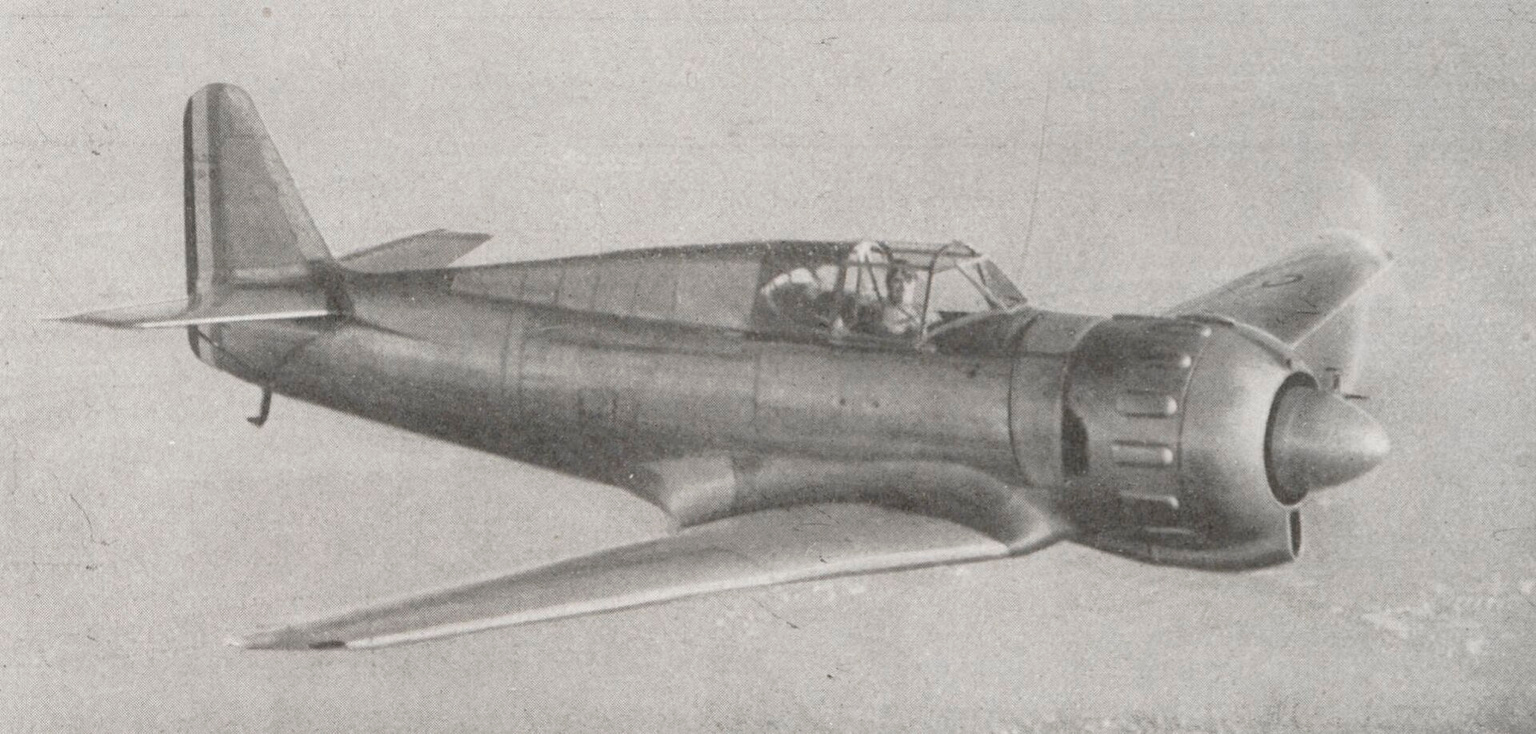
Bloch MB.152
One of the three fighters France sent up in 1940: tough, hard-hitting and steady on the guns — but short-legged, slow to mature and delayed by its own engine. The MB.152 still fought, and still scored.
Key facts
Bloch MB.152: the numbers at a glance
The story
The Bloch MB.152: the honest, unglamorous fighter that still made the Luftwaffe pay
The Bloch MB.152 is the least romantic of France’s 1940 fighters. It was not the fastest, it was not the prettiest, and it could not turn with a Messerschmitt. But when the German offensive broke over France in May 1940, the MB.152 was one of only three modern fighters the Armée de l’Air had in real numbers — alongside the Morane-Saulnier MS.406 and the excellent Dewoitine D.520 — and it did the one thing a defensive fighter has to do: it went up, it took punishment, and it shot the enemy down.
The aircraft came from the Société des Avions Marcel Bloch, the firm of a designer whose name would later become one of the most famous in aviation. After the war Marcel Bloch — an Auschwitz-era deportee who survived Buchenwald — rebuilt his company under a new name taken from his brother’s Resistance codename: Dassault. The MB.152 is, in a very direct sense, an ancestor of the Mirage and the Rafale.
Its origins were troubled. The original MB.150 of 1936 was so unpromising that the first prototype could not even leave the ground as built. Redesigned with a stronger, larger wing and a more powerful Gnome-Rhône radial, it finally flew, and the improved MB.151 and MB.152 followed it into squadron service. But the programme was chased the whole way by delays — an engine that ran hot, propellers and gunsights that arrived late, and a French aircraft industry only half-recovered from a chaotic nationalisation.
The result was a fighter that reached the front faster than it reached readiness. By the outbreak of war in September 1939 around 120 Bloch fighters had been delivered — but many stood on their airfields without propellers or working gunsights, unable to fight. When the storm finally broke in May 1940, the MB.152 was still working up.
And yet the men who flew it liked what it could do. It was rugged, built of stressed metal, and it could absorb a startling amount of damage and bring its pilot home. It was stable — a steady gun platform — and its armament of two 20 mm Hispano-Suiza cannon and two machine guns hit far harder than the rifle-calibre batteries of the early British fighters. Pilots reported diving into a formation of nine enemy aircraft and coming back with two or three shot down.
That combination — toughness plus firepower — is exactly what a defensive interceptor needs, and it is why the MB.152 punched above its reputation. A fighter that can survive being hit and then destroy its target with a single short burst is a dangerous opponent even when it is slower. The MB.152 could not choose its fights the way a faster aircraft could, but when a fight came to it, it was well equipped to win the exchange.
The tragedy is one of arithmetic and timing rather than of the aircraft itself. France needed hundreds of ready, fully-armed MB.152s dispersed across a well-run air-defence system in the spring of 1940. What it had was a smaller number of aircraft, many still being sorted out, flown by an air arm that was outnumbered and out-thought. Put the same aircraft into a better-organised defensive battle — the Battle of Britain, say — and its record might read very differently.
The MB.152’s great flaw was not courage or firepower but reach. Its combat range was only around 600 kilometres — barely enough to patrol, intercept and return. In the fluid, collapsing battle of 1940, where airfields were abandoned and the front moved daily, short legs were a genuine operational handicap. It was also slower and less agile than the Bf 109E, and could not dictate a fight the way a Spitfire or a D.520 could.
Across the six weeks of the campaign, MB.152 pilots claimed at least 188 enemy aircraft for the loss of about 86 of their own machines — a respectable exchange for a fighter that was never quite finished. Nine Groupes de Chasse flew the MB.151 and MB.152, and in the south the type also traded blows with the Italian Regia Aeronautica when Italy joined the war on 10 June.
Then it was over. After the armistice of 22 June 1940 the MB.152 soldiered on in the air force of Vichy France, where six groups still flew it. A batch of MB.151s ordered by Greece — nine of twenty-five — reached Athens before France fell and fought the Italians at Elefsina. Later, some airframes were passed to Romania by the Germans, and a handful ended up in Luftwaffe hands as trainers. Almost none survived the war intact.
To understand the MB.152 you have to understand the France that built it. In the mid-1930s the French aircraft industry had been hastily nationalised, its famous private firms folded into regional state combines. The upheaval scattered engineering teams, disrupted tooling and slowed everything down at exactly the moment Germany was rearming at speed. The MB.152 was designed and built inside that chaos, and it shows: a sound aircraft dragged to the front more slowly than its rivals across the Rhine.
There is also a numbers problem that colours the whole story. In May 1940 the Armée de l’Air did not lack aircraft on paper — it had thousands — but a large share were obsolete, unserviceable, or, in the MB.152’s case, complete but not yet fitted with the propellers, gunsights and instruments needed to fight. The gap between “delivered” and “operational” was enormous, and the MB.152 sat squarely in it.
None of this is a defence of French strategy in 1940, which failed comprehensively on the ground. But it reframes the aircraft. The MB.152 was not a bad design that let France down; it was a decent design that France’s industry and planning could not deliver in time or in a finished state. When it was ready and in the air, it fought.
It is easy to file the MB.152 under “French failure of 1940.” That is unfair. It was a robust, heavily-armed interceptor delivered late and in the wrong quantities, fighting a battle already being lost on the ground. Judged by what it actually did in the air — not by the catastrophe around it — it earned its place among the defenders.
01The Bloch MB.152’s origins: from a fighter that would not fly to a front-line interceptor+
The story begins with a 1934 French air-ministry programme for a modern single-seat fighter (the “C1” requirement). Marcel Bloch’s team responded with the MB.150, an all-metal, stressed-skin, low-wing monoplane with a retractable undercarriage — thoroughly modern on paper. In practice the first MB.150 of 1936 was overweight and underpowered, and famously failed to fly as originally built.
Rather than abandon it, Bloch’s engineers rebuilt the design around a larger, stronger wing and a more powerful Gnome-Rhône 14N radial. The reworked aircraft flew in 1937, and from it grew two near-identical production fighters: the MB.151, armed mostly with machine guns, and the MB.152, with the heavier cannon armament. The MB.152.01 prototype made its maiden flight on 15 December 1938.
The naming convention within the family is worth untangling, because it causes endless confusion. The base design was the MB.150. The MB.151 and MB.152 were the two production fighters developed in parallel from it — externally almost identical, differing mainly in armament and detail. The MB.153, MB.155 and MB.157 were later developments. When a source says simply “the Bloch 152,” it sometimes means the specific MB.152 and sometimes the whole family; the distinction matters for production figures and combat claims alike.
Development ran in parallel with the MB.151. The first pre-production examples appeared in 1938, and refinement of armament, cooling and equipment continued right up to — and past — the outbreak of war. This is the classic signature of a rushed programme: the aircraft entered service while it was still being sorted out, so early units effectively completed development on the squadron.
That long gestation matters. The MB.152 that fought in 1940 was a second attempt built on the bones of a failure — which is exactly why it was rugged and honest to fly, and also why it arrived later and less polished than an aircraft designed cleanly from the start.
02Marcel Bloch becomes Dassault: the MB.152’s remarkable legacy+
The most extraordinary thing about the Bloch MB.152 is not the aircraft itself but the man whose initials it carries. Marcel Bloch was one of France’s pioneering aircraft designers. During the German occupation he was arrested and deported, and he survived the Buchenwald concentration camp. His brother, General Paul Bloch, had used the Resistance codename “Chardasson,” later shortened; after the war Marcel adopted the name Dassault.
Under the name Dassault, the same design house that produced the MB.151 and MB.152 went on to build the Ouragan, the Mystère, the Mirage III, the Mirage 2000 and the Rafale — the backbone of French air power for the rest of the century. Every one of those jets traces its corporate lineage straight back through the modest Bloch fighters of 1940.
The human story behind the name is sobering. Marcel Bloch was Jewish, and after the fall of France he refused to collaborate. He was arrested, held, and eventually deported to Buchenwald, which he survived. That a man could endure that and then return to build the aircraft that would carry French sovereignty into the jet and supersonic age is one of the great personal arcs in aviation history — and it starts, in industrial terms, with fighters like the MB.152.
It also changes how the MB.152 should be remembered. It is tempting to see it only as an also-ran of 1940. But it was the product of a design house that clearly knew what it was doing — the same instincts for rugged, well-armed, purposeful aircraft would reappear, refined, in the delta-winged Mirages. The MB.152 is the humble first draft of a very long and very successful story.
So the MB.152 sits at a hinge point: the last generation of a firm called Bloch, and the direct ancestor of everything called Dassault. It is worth remembering that when you look at a Rafale.
Design & engineering
How the Bloch MB.152 was built to fight
The MB.152 was a study in trade-offs: a heavy, robust airframe and a punishing gun battery bought at the cost of range and agility. Three features defined it.
None of these were exotic for 1940. What set the MB.152 apart was how it balanced them — durability and firepower first, performance second.
The airframe was thoroughly of its generation: an all-metal, stressed-skin, low cantilever monoplane with a retractable undercarriage — the same modern formula as the Bf 109, the Spitfire and the D.520. Where earlier French fighters like the D.500 series had been fixed-gear and open-cockpit, the MB.152 was a clean break into the era of the fast monoplane interceptor. Its designers prioritised structural strength and a broad, load-bearing wing over the last few km/h of speed, and that choice defined the aircraft’s whole character.
Stressed-skin construction was the key modern feature. Instead of a fabric-covered frame, the metal skin itself carried a large share of the structural loads, producing a stiff, strong and reasonably light airframe. It is a technique that demanded good tooling and skilled labour — precisely the things a disrupted, recently-nationalised French aircraft industry struggled to supply in quantity. The MB.152 was, in that sense, a modern aircraft asking more of its industry than that industry could easily give in 1939–40.
The wing did double duty: it carried the fuel, the retractable main gear, and the entire gun battery of two cannon and two machine guns. Concentrating the armament in the wings kept the fuselage clean and the nose free for the big radial, but it also meant the guns had to be harmonised for a chosen convergence range and serviced out in the wing — a set of trade-offs common to wing-gun fighters of the era. It was a conventional, sensible layout executed to a robust standard.
A cannon-and-machine-gun battery that actually hurt
The typical MB.152 carried two 20 mm Hispano-Suiza HS.404 cannon and two 7.5 mm MAC 1934 machine guns in the wings. Those 20 mm shells were explosive and could tear structure apart — a decisive advantage over the eight rifle-calibre guns of an early Hurricane or Spitfire, which had to hit a lot to kill. The MB.152 could kill with a short, well-aimed burst.
A tough, all-metal airframe
Stressed-skin, all-metal construction with a broad, strong wing made the MB.152 genuinely hard to shoot down. Pilots and post-war historians alike singled out its ability to absorb damage and keep flying — the quality a defensive fighter needs most when it is outnumbered and on the back foot.
The Gnome-Rhône 14N radial — strength and a stubborn weakness
Power came from a Gnome-Rhône 14N two-row radial of roughly 1,000–1,100 hp (the MB.152 mostly used the ~1,050 hp 14N-25). The radial was robust and simple, but it ran hot; chronic overheating forced a long series of oil-cooler and cowling changes that delayed production and never fully went away.
03The MB.152’s engine troubles: why overheating shaped the whole aircraft+
The Gnome-Rhône 14N gave the MB.152 its muscle, but it also gave the programme its worst headaches. The engine tended to overheat, and fixing it drove a cascade of changes: different oil-cooler installations were tried, and to avoid yet more delay a large, deep cowling was ultimately adopted to get air through the aircraft. That cowling is one of the type’s most recognisable features — and it exists partly because the cooling was never elegant.
The Gnome-Rhône 14N itself was a sound and widely-used engine — versions powered French bombers and other types, and it was rugged and maintainable in the field. The problem was specific to fitting it cleanly into a compact single-seat fighter airframe and getting enough cooling air to it without wrecking aerodynamics. That is a genuinely hard engineering problem, and the MB.152’s slightly bulbous nose is the visible compromise the designers settled on.
Later production and the MB.155 used uprated 14N variants pushing toward 1,100 hp, which improved performance at altitude. But engines were also a national bottleneck: French aero-engine output could not keep pace with airframe production, so even a perfectly-cooled installation would have run into supply limits. The engine story of the MB.152 is, in miniature, the story of the whole French rearmament — good components arriving too slowly, in too few numbers.
Overheating was not just an engineering nuisance; it was an operational one. It slowed mass production at exactly the moment France needed fighters most, and it contributed to the situation in which, by mid-1940, a large fraction of delivered Bloch fighters were not fully combat-ready. A better-cooled engine would have meant more MB.152s at the front, sooner.
04The MB.152’s short range: the flaw that mattered most+
If the MB.152 had one decisive weakness, it was range. Its combat radius was built on an internal fuel load that gave it a range of only around 600 km — enough for point defence but little more. In the collapsing battle of May–June 1940, when airfields were being overrun and the front shifted by the hour, short endurance meant the MB.152 could not loiter, could not escort deep, and could not easily follow a retreating army.
Range shapes everything a fighter can do. A long-legged aircraft like the Dewoitine D.520 (around 1,500 km) could be based flexibly, could patrol a wide area, and could pursue. The MB.152, with roughly 600 km, was tethered to its target: it was a point-defence interceptor whether its commanders wanted one or not. In the mobile, collapsing battle of 1940, where the ideal fighter would have covered a fast-moving front, that limitation bit hard.
It is a useful corrective to the usual “speed obsession” of fighter comparisons. On top speed the MB.152 was only modestly behind the pack; on range it was in a different, worse category entirely. If you remember one weakness of the MB.152, remember the fuel — not the airspeed.
The improved MB.155 was developed specifically to address this, with more fuel and greater range, but it came far too late — only about ten were completed by the fall of France. Range was the MB.152’s Achilles’ heel, and it is the single specification most worth remembering about the type.
05The MB.152 versus the Bf 109E: an honest comparison+
Against the Messerschmitt Bf 109E, the MB.152 was outmatched on paper. The 109E was faster (around 560 km/h to the Bloch’s ~509), climbed better, and was more nimble in a fight. A well-flown 109 could choose when to engage and when to leave. The MB.152 could not dictate a fight the same way.
The tactical lesson French pilots learned mirrors what the RAF learned against the same enemy: do not try to dogfight a 109 on its terms. Use height when you can get it, make a firing pass, and use the aircraft’s strengths rather than chasing a turning fight you will lose. The MB.152’s strengths — a stable gun platform and heavy cannon — suited exactly that hit-and-recover style.
It is also fair to note what the MB.152 was never asked to do. It did not fly long-range bomber escort, it did not sweep deep into enemy territory, and it did not fight a prolonged campaign like the Battle of Britain. Its war was six intense weeks of home defence. Within that narrow, defensive brief, the performance gap to the 109E mattered less than it would have in any other role.
But the gap was not hopeless. The MB.152’s twin 20 mm cannon gave it a hitting power comparable to the 109E’s own cannon-and-machine-gun mix, and its toughness let it survive hits that would have downed a lighter aircraft. In a defensive battle over home ground, where interception — not deep escort — was the job, the MB.152 could trade blows respectably. Its combat record in 1940 bears that out.
06The MB.150 family: MB.151, MB.152, MB.155 and beyond+
The MB.152 was one member of a family. The MB.151 was the earlier, lighter-armed version (usually four machine guns) and shared the same airframe almost exactly — which is why period photographs of the two are nearly interchangeable. The MB.152 added the heavier cannon armament and became the main combat version.
The MB.155 deserves a closer look, because it is the fighter the MB.152 should have been. It kept the airframe but added fuel for meaningfully greater range and used an uprated engine for better altitude performance. Had it arrived in 1939 in quantity, the “short-legged Bloch” criticism would largely evaporate. Instead only about ten were completed before the fall of France — a perfect, painful example of the right fix arriving far too late.
The MB.157 is the tantalising might-have-been. Completed during the Vichy period with a far more powerful engine, it reportedly demonstrated excellent performance — genuinely competitive figures — but the war and the occupation meant it never entered production. In it you can glimpse what the Bloch line could have become had France not fallen; it is the bridge between the modest 1940 fighters and the post-war Dassault jets.
The MB.155 was the logical improvement: a more powerful engine and, crucially, greater range — but it arrived only in 1940 and barely reached production. Experimental offshoots explored other engines (the MB.153 tested an American Pratt & Whitney Twin Wasp), and the ultimate MB.157, completed under Vichy, showed excellent performance but never entered production. Total family output is commonly put in the region of 600-plus aircraft, of which 482 were MB.152s — though figures vary between sources and should be treated as approximate.
07The Bloch MB.152’s operating costs: what a 1940 state fighter actually cost+
Honest answer: the per-aircraft and per-flight-hour costs of the MB.152 are not reliably recorded. It was built under wartime state direction by a recently-nationalised French industry, in francs whose value was collapsing, and the surviving production records were never kept as clean unit-cost figures the way post-war programmes are. Any single euro or dollar figure you see quoted for a 1940 MB.152 should be treated with deep suspicion.
There is a deeper point here about how we compare aircraft across eras. Modern encyclopedia entries love a tidy “cost per flight hour” figure because it lets you rank aircraft on a spreadsheet. For a 1940 state-built fighter that figure is essentially meaningless: there was no commercial market, no standardised accounting, and no post-war programme office to reconstruct the numbers. Presenting a false precision would be worse than admitting the gap, so this page marks both the unit cost and the cost per flight hour as not reliably recorded.
If a comparison is wanted, it has to be structural, not financial. The MB.152 was a single-engine, single-seat, all-metal fighter of conventional layout — in the same broad build-effort class as the MS.406 or an early Bf 109, and far cheaper in materials and man-hours than a twin-engine bomber. Its scarcity in 1940 was never about money; it was about a disrupted industry that could not turn delivered airframes into finished, armed, flyable fighters fast enough.
What can be said is qualitative: the MB.152 was a mass-production interceptor, cheaper and simpler to build than a large multi-engined aircraft, and its Gnome-Rhône radial was a widely-produced, maintainable engine. Its real “cost” in 1940 was measured less in money than in industrial capacity and time — the very things France did not have enough of.
Технические характеристики
Bloch MB.152 — full specifications
Figures are for a representative production MB.152 and vary between sub-variants and sources; approximate values are marked.
| Тип | Single-seat monoplane fighter-interceptor |
|---|---|
| Экипаж | 1 |
| Производитель | Société des Avions Marcel Bloch (later Dassault) |
| First flight | 15 December 1938 (MB.152.01 prototype) |
| Service entry | 1939; operational in numbers by spring 1940 |
| Электростанция | 1 × Gnome-Rhône 14N two-row radial (mostly 14N-25) |
| Power | ~1,050 hp (range ~1,000–1,100 hp, variant-dependent) |
| Propeller | 3-blade variable-pitch |
| Размах крыльев | ~10.54 m (approx.) |
| Длина | ~9.10 m (approx.) |
| Number built | 482 MB.152 (MB.151/152/155 family ~600+; sources vary) |
| Unit cost | Not reliably recorded (WWII state production) |
| Cost per flight hour | Not reliably recorded (WWII-era) |
| Максимальная скорость | ~509 km/h (316 mph); sources ~500–515 km/h |
|---|---|
| Крейсерская скорость | ~450 km/h (280 mph) |
| Диапазон | ~600 km (370 mi) — short; a key weakness |
| Служебный потолок | ~10,000 m (33,000 ft) |
| Climb | 2,000 m in ~3 min 24 s |
| Пустой вес | ~2,150 kg (approx.) |
| Loaded weight | ~2,800 kg (approx.) |
| Armament (MB.152) | 2 × 20 mm Hispano-Suiza HS.404 cannon + 2 × 7.5 mm MAC 1934 MGs |
| Armament (MB.151) | Typically 4 × 7.5 mm MAC 1934 machine guns |
08The MB.152’s armament in detail: two cannon and two machine guns+
The combat-standard MB.152 carried a mixed battery in the wings: two 20 mm Hispano-Suiza HS.404 cannon — the same excellent gun France would use across many types — plus two 7.5 mm MAC 1934 machine guns. The 20 mm rounds were explosive and destructive; two of them firing together delivered a heavy blow in the fraction of a second a fighter pilot actually has a target in his sights.
The engine-mounted cannon (moteur-canon) was a French speciality of the era, used on the D.520 and MS.406, where a single cannon fired through the propeller hub. The MB.152 took a different route with its cannon in the wings, which avoided the hub installation’s complications but introduced the usual wing-gun trade-off: the guns had to be harmonised to converge at a set distance, so the pilot’s best shooting came at a particular range rather than everywhere along the centreline. In practice, for a steady aircraft against bomber-sized targets, this worked well.
The 7.5 mm MAC 1934 machine guns rounded out the battery. They added a useful volume of fire for damaging lighter targets and for “walking” fire onto a target before the cannon did the killing work. The combination — two heavy cannon plus two machine guns — was a thoroughly modern armament fit for 1940, and one of the clearest areas where the MB.152 was ahead of, not behind, its British contemporaries.
This is where the MB.152 genuinely outclassed some of its contemporaries. The early Spitfire and Hurricane relied on eight rifle-calibre machine guns — accurate and reliable, but requiring many hits to bring an aircraft down. The MB.152’s cannon meant it needed far fewer. Firepower, not speed, was the type’s strongest card.
09Variants and production numbers: reading the MB.152 figures honestly+
Production figures for the Bloch fighters are quoted inconsistently, so treat them as approximate. A commonly cited figure is 482 MB.152s built, with the wider MB.151/152/155 family reaching somewhere north of 600 aircraft. By the outbreak of war around 120 had been delivered, but a large share were not combat-ready for want of propellers, gunsights or other equipment.
Delivery timing matters as much as the totals. The commonly-cited figure of around 120 Bloch fighters delivered by the outbreak of war in September 1939 sounds respectable until you learn how many were non-operational. Through the “phoney war” of late 1939 and early 1940, French industry worked to close that gap, but the type was still catching up when the German offensive began — which is why only a portion of the delivered fleet could actually be thrown into the battle.
The MB.155 — the longer-ranged improvement — saw only about ten completed before the fall of France. Where you see a precise-looking total for “the Bloch 152,” check whether it means the MB.152 alone or the whole family; the two are often conflated. This page uses 482 for the MB.152 and ~600+ for the family, and flags both as estimates.
In the cockpit
Flying the Bloch MB.152: steady, strong and honest at the controls
Pilots did not describe the MB.152 as a thoroughbred. They described it as dependable — a machine that did what you asked and forgave a lot.
A stable gun platform
The MB.152 was steady in the air and tracked smoothly onto a target — exactly what its heavy cannon armament needed. Where a twitchy fighter throws off a gunnery pass, the Bloch held its aim, letting an average pilot make his two 20 mm cannon count.
Rugged and forgiving
The type’s toughness was not just structural marketing — pilots trusted it to bring them home after taking hits, and its handling gave clear warnings rather than vicious surprises. For a hastily-trained wartime pilot, that forgiveness saved lives.
Outpaced, not outclassed
Against the Bf 109E it was slower and less agile, and no amount of pilot skill fully closed that gap. The MB.152’s answer was to fight defensively, use its firepower, and rely on its durability — not to try to out-turn or out-run an opponent it could not beat on performance.
The radial engine shaped the flying experience in ways a liquid-cooled fighter did not. Up front sat a big, air-cooled two-row radial in its deep cowling, giving the MB.152 a blunt, purposeful nose and a characteristic sound and vibration. Radials brought real advantages — they were less vulnerable to a single hit in a coolant line than the inline engines of the Bf 109 or Spitfire, which could be crippled by one well-placed round. For a fighter whose job was to wade into enemy fire, that robustness was another quiet point in its favour.
Take-off and landing demanded the usual discipline of a powerful 1940 taildragger: watch the swing on the runway, respect the torque, and keep the speed up on the approach. None of this was unusual, but it mattered for the hastily-trained pilots of 1940, and the MB.152’s forgiving nature at the edges of the envelope helped compensate for their inexperience. It was, in the best sense, an aircraft that met an average pilot halfway.
Cockpit accounts emphasise workmanlike ergonomics rather than elegance. Visibility over that deep radial cowling was adequate rather than excellent, and the aircraft demanded respect on take-off and landing as most powerful taildraggers of the era did. But once airborne it settled into a reassuring solidity.
The recurring theme in pilot recollection is confidence. The MB.152 would not win a pure performance contest, but it would let you attack, take the return fire, and get back — and in the desperate arithmetic of 1940, that mattered.
It is telling that despite its short range and modest speed, MB.152 units did not collapse in the campaign. They flew, they intercepted, and they claimed nearly 188 aircraft. That is not the record of an aircraft its pilots distrusted.
Handling near the stall was another point in the aircraft’s favour. Like its stablemates, the MB.152 tended to give a pilot warning before it let go, and it remained controllable when pushed — qualities that matter enormously for a young pilot dragged into combat with only a few dozen hours on type. A fighter that bites without warning kills its own side; the MB.152 largely did not.
Ground handling and serviceability drew more mixed comment. The deep cowling and the temperamental cooling meant engine management demanded attention, and the disrupted French supply system meant spares and armourers’ equipment were not always where they should be. Much of the frustration pilots expressed about the MB.152 was really frustration with the system around it — the missing propellers and gunsights of the “phoney war” months especially.
If the D.520 was the fighter France wished it had built sooner, the MB.152 was the fighter France actually had in numbers — and it fought like one that knew it.
In context
The Bloch MB.152 among its 1940 contemporaries
Set beside the fighters it flew with and against, the MB.152 was mid-pack on speed, strong on firepower and durability, and weak on range and agility.
| Bloch MB.152 | ~509 km/h; 2 × 20 mm + 2 × 7.5 mm MGs; ~1,050 hp; range ~600 km |
|---|---|
| Dewoitine D.520 | ~535 km/h; 1 × 20 mm + 4 × 7.5 mm MGs; ~910 hp; range ~1,500 km |
| Morane-Saulnier MS.406 | ~486 km/h; 1 × 20 mm + 2 × 7.5 mm MGs; ~860 hp |
| Messerschmitt Bf 109E | ~560 km/h; 2 × 20 mm + 2 × 7.9 mm (typical); ~1,100 hp |
| Supermarine Spitfire Mk I | ~580 km/h; 8 × 7.7 mm MGs; ~1,030 hp |
| Hawker Hurricane Mk I | ~520 km/h; 8 × 7.7 mm MGs; ~1,030 hp |
| Firepower | Among the best of the group: two explosive 20 mm cannon |
|---|---|
| Скорость | Mid-pack — faster than the MS.406, slower than the D.520 and the Germans |
| Диапазон | Worst of the group — the MB.152’s defining weakness |
| Toughness | Excellent — a genuine strong point |
The comparison makes the MB.152’s character plain. It was not a bad fighter; it was an unbalanced one. Give it the D.520’s range and it would be remembered very differently.
It is also fairer to the MS.406 and MB.152 to remember that both were asked to hold the line while the far better D.520 was still reaching squadrons in tiny numbers. In May 1940 the D.520 fully equipped only about one groupe; the MS.406 and MB.152 carried most of the load.
Against the Regia Aeronautica in the south — flying older biplanes and the Fiat G.50 and Macchi C.200 — the MB.152’s cannon and toughness told even more clearly than against the Luftwaffe.
The comparison with the German fighters needs one more piece of honesty. The Bf 109E was not merely a bit faster — it was flown by an air force with better tactics, better radio coordination and, crucially, the initiative. The MB.152’s performance gap was real, but it was compounded by a strategic and doctrinal gap that no single aircraft could close. Blaming the airframe alone for the outcome mistakes a symptom for the disease.
Set the MB.152 beside the Hawker Hurricane, though, and the picture flatters the French fighter more than popular memory allows: similar top speeds, heavier cannon armament, and comparable toughness. The Hurricane is remembered as a war-winner and the MB.152 as a footnote — but much of that difference is the story of the two nations’ wars, not the two aircraft’s merits.
The armament column is where the MB.152 quietly shines. Two 20 mm cannon put it among the hardest-hitting fighters of the whole 1940 generation — heavier in a single burst than the eight-gun British fighters and comparable to the German cannon armament. For a defensive interceptor whose job was to knock down bombers quickly, that mattered more than a few km/h of top speed.
The one row that damns it is range. At roughly 600 km it is the worst in the table by a wide margin — less than half the reach of the D.520. Every other shortcoming of the MB.152 can be argued around; this one is simply a fact of the design, and it is the honest reason the type could never have been France’s decisive fighter no matter how many were built.
Judged in its own weight class and its own moment, the MB.152 was a credible interceptor let down by strategy and time, not by design cowardice.
Timeline
The Bloch MB.152: a service record in dates
Stories & eyewitnesses
The Bloch MB.152 in twelve stories
From Buchenwald to the Mirage
The initials on the MB.152 belong to a man who survived a concentration camp and rebuilt as Dassault.
Read the story
Marcel Bloch designed the MB.150 family, was arrested and deported during the occupation, and survived Buchenwald. After the war he took the name Dassault — from his brother’s Resistance codename — and rebuilt his firm. The Ouragan, Mystère, Mirage and Rafale all descend from the company that built the modest Bloch fighters. Few combat aircraft carry a stranger, more consequential legacy in their maker’s name.
188 claims for 86 losses
Across six weeks of catastrophe, MB.152 pilots still shot down far more than they lost.
Read the story
In the Battle of France, pilots flying the MB.152 claimed at least 188 enemy aircraft for the loss of about 86 of their own fighters. For an aircraft that was slower and less agile than the Bf 109E, delivered late and often only half-equipped, that is a genuinely respectable exchange rate — and a direct rebuttal to the idea that the MB.152 was simply a bad fighter. It was an unfinished one that still fought well.
Six hundred kilometres
The MB.152’s worst enemy was not the Luftwaffe. It was its own fuel tank.
Read the story
With a range of only around 600 km, the MB.152 could intercept and return — and little else. In a battle where the front moved daily and airfields were abandoned in hours, that short reach meant the type could not loiter, escort or pursue. Pilots who wanted to press an advantage often had to break off simply to get home. It is the single specification that most shaped the MB.152’s war.
Two cannon that hit like a hammer
While the RAF sprayed rifle-calibre bullets, the MB.152 fired explosive shells.
Read the story
The MB.152’s two 20 mm Hispano-Suiza HS.404 cannon put it in a different league of hitting power from the eight-machine-gun Spitfires and Hurricanes. Where the British fighters needed to land many hits, a pair of well-aimed 20 mm bursts could shred an enemy in the brief instant a target sat in the sights. Firepower was the MB.152’s great equaliser against faster foes.
The radial that ran too hot
The Gnome-Rhône 14N gave the MB.152 its punch — and its production nightmares.
Read the story
Chronic overheating of the Gnome-Rhône 14N forced repeated redesigns of the oil cooling and, eventually, the adoption of a large, deep cowling to force enough air through. Each change cost time — and time was the one thing France did not have. The cooling struggle is a major reason so many delivered MB.152s were not combat-ready when the Germans attacked.
Fighters without propellers
On the day war began, dozens of Bloch fighters sat on their fields unable to fly.
Read the story
By September 1939 around 120 Bloch fighters had been delivered — but a large share lacked propellers, gunsights or other essential equipment and could not be considered operational. It is one of the starkest images of France’s 1940 unpreparedness: modern metal fighters lined up on airfields, complete except for the parts that would let them fight.
Turning on the Italians
When Italy declared war, MB.152s in the south had a new enemy — and did well against it.
Read the story
After Italy entered the war on 10 June 1940, MB.152 units in southern France engaged the Regia Aeronautica. Against Italian biplanes and the lightly-armed Fiat G.50 and Macchi C.200, the Bloch’s two 20 mm cannon and rugged airframe were even more telling than against the Luftwaffe. The southern front is where the MB.152’s strengths showed most clearly.
Soldiering on after defeat
The armistice did not retire the MB.152 — it just changed whose roundels it wore.
Read the story
After 22 June 1940, six groups continued to fly the MB.152 in the air force of Vichy France, mostly in metropolitan France and later in reduced numbers. It was a strange afterlife: a fighter that had fought the Germans now flew under an armistice regime constrained by them — a small mirror of France’s own divided, uncomfortable years between 1940 and 1942.
Nine fighters that arrived too late
A Greek order for Bloch fighters became a casualty of France’s own collapse.
Read the story
Greece ordered 25 MB.151s, but only nine reached the country before France fell in June 1940 — and those arrived still needing to be worked up, some short of armament and equipment. Pressed into service at Elefsina, the Greek Blochs fought the Italians and then the Germans, with the last reportedly shot down on 19 April 1941. It is a small, poignant footnote to the type’s scattered career.
Passed east by the Germans
Some Bloch fighters ended their days in Romanian, not French, markings.
Read the story
As Vichy forces in parts of the empire stood down, the Germans arranged for Bloch fighters to be passed to the Royal Romanian Air Force from 1942 onward. It was part of a wider standardisation of what remained of France’s fighter stocks. For an aircraft designed to defend France, ending up on the Eastern-facing air arm of a German ally is a fittingly bitter twist of the 1940 defeat.
Enemy fighters in German hands
A handful of MB.152s served the very air force they were built to stop.
Read the story
After 1942 some surviving MB.152 airframes made their way into Luftwaffe hands, generally in secondary roles such as training rather than front-line combat. Capturing and reusing defeated nations’ aircraft was routine for Germany, but there is a particular irony in the MB.152 — a fighter that had claimed nearly two hundred aircraft in 1940 — finishing its life as a German trainer.
Almost nothing left
Unlike the D.520, the MB.152 all but vanished. Finding one today is nearly impossible.
Read the story
Very few MB.152s survived the war, and no complete, original example is widely recognised as preserved intact today. French collections — the Musée de l’Air et de l’Espace among them — are associated with surviving components and partial or reconstructed material, but accounts vary and should be treated cautiously. The near-total disappearance of the type is itself part of its story: a fighter used up and thrown away by a war it could not win.
The fighter that would not fly
Before it was a front-line interceptor, the MB.150 could not even leave the ground.
Read the story
The very first MB.150 of 1936 was a genuine flop. Overweight and underpowered, it reportedly could not take off as originally built. Most designs that start that badly are quietly abandoned. Instead, Bloch’s team persisted — rebuilding around a bigger wing and a stronger engine — and turned a failure into the MB.151 and MB.152. The MB.152’s rugged, no-nonsense character is partly a legacy of that hard, iterative birth.
Thousands of aircraft, too few ready
France did not lack aircraft in 1940. It lacked finished, operational ones.
Read the story
On paper the Armée de l’Air had a large fighter force in May 1940. In reality much of it was obsolete or unserviceable, and many modern fighters — the MB.152 included — stood complete but non-operational for want of propellers, gunsights or instruments. The gulf between “delivered” and “ready to fight” is one of the central, sobering facts of the French defeat, and the MB.152 is its emblem.
MB.151, MB.152, MB.155 — which is which?
The Bloch family is a minefield of near-identical designations. Here is the map.
Read the story
The base design was the MB.150. From it came the MB.151 (mostly machine-gun armed) and the MB.152 (with two 20 mm cannon) — externally almost indistinguishable. The MB.155 added range and power; the experimental MB.153 tried an American engine; the MB.157 was a much-improved final development completed under Vichy. When a book says simply “Bloch 152,” always check whether it means the specific mark or the whole clan.
Cannon versus rifle bullets
The RAF won the Battle of Britain with eight machine guns. The MB.152 already had cannon.
Read the story
It is a quirk of history that in 1940 the French MB.152 carried heavier main armament than the Spitfire and Hurricane that would fight the Battle of Britain a few weeks later. The British fighters used eight rifle-calibre machine guns; the RAF only widely adopted 20 mm cannon later. The MB.152’s two explosive cannon meant it could destroy an enemy with a far shorter, more decisive burst — a real, if underappreciated, technical edge.
Look at a Rafale and see the MB.152
The line from this obscure 1940 fighter to France’s frontline jet is unbroken.
Read the story
The same design house — renamed Dassault after the war — produced the Ouragan, the Mystère, the Mirage series and today’s Rafale. There is a direct, unbroken corporate thread from the MB.151 and MB.152 to the delta-winged jets that still guard French skies. Of all the reasons to remember the modest MB.152, the fact that it stands at the root of the Mirage and Rafale family tree may be the most surprising.
Campaign
The Bloch MB.152, campaign by campaign
The MB.152’s combat life was short and concentrated. It is best understood in three overlapping chapters: the Battle of France against the Luftwaffe, the brief southern war against Italy, and the long, diminished afterlife under Vichy and its successors.
The Battle of France (May–June 1940). This was the MB.152’s real war. Nine Groupes de Chasse flew the MB.151 and MB.152, intercepting German bombers and their fighter escorts as the Wehrmacht drove across the Low Countries and into France. Outnumbered, often operating from fields under threat, and hampered by short range, MB.152 pilots nonetheless claimed roughly 188 aircraft while losing about 86 of their own. The type’s toughness and cannon armament were decisive in making that exchange possible.
The interception mission suited the MB.152 better than any other. German bomber formations — He 111s, Do 17s, Ju 88s and the Ju 87 Stukas — were exactly the targets a stable, cannon-armed fighter was built to destroy, and the MB.152 could bore in, absorb defensive fire, and knock them down. The problem was rarely killing the enemy once engaged; it was getting enough ready fighters into the right piece of sky, and then getting them home again before their fuel ran out. Those were failures of quantity and range, not of the aircraft in the fight.
The war against Italy (June 1940). When Italy declared war on 10 June, MB.152 units in the south faced the Regia Aeronautica. Against older Italian biplanes and the lightly-armed Fiat G.50 and Macchi C.200, the MB.152’s heavy armament and durability were even more effective. This front lasted only days before the armistice, but it added to the type’s tally.
The intensity of the Battle of France chapter is easy to underestimate. In six weeks the type flew a punishing tempo of interception sorties against a numerically superior and technically strong enemy, from bases that were increasingly under threat. Losses of about 86 aircraft were spread across those weeks — a heavy attrition rate that speaks to how hard the units were worked, not to any fragility in the airframe, which pilots consistently praised for toughness.
It is worth stressing that the MB.152 was fighting a battle whose outcome was decided largely on the ground. No fighter, in any number, could have reversed the collapse of the French army in May–June 1940. The air war the MB.152 fought was therefore a rearguard action from the start — which makes its positive claim-to-loss record all the more creditable, and its ultimate futility all the more poignant.
The Greek episode (1940–41). The MB.150 family had one small foreign combat career worth telling. Greece ordered 25 MB.151s, but France fell before the order could be filled; only nine reached Greece, and those arrived still being worked up and, by some accounts, short of armament and equipment. Pressed into service at Elefsina, the Greek Blochs fought the Italians during the Greco-Italian War and then the Germans, with the last reportedly shot down on 19 April 1941. It is a footnote, but a genuine combat chapter beyond France’s borders.
The Romanian and German coda (1942 onward). As Vichy units were disbanded, the German Armistice Commission arranged for surviving Bloch fighters to be passed to the Royal Romanian Air Force, and a small number ended up in Luftwaffe hands in secondary roles such as training. By this point the MB.152 was thoroughly obsolescent, and these transfers were about using up remaining stock rather than fielding a front-line fighter. The type’s combat life, in any meaningful sense, had ended with the armistice of June 1940.
Vichy and after (1940–42+). After the armistice, six groups kept flying the MB.152 under Vichy France. As Vichy’s forces were progressively stood down, surviving airframes were dispersed — some to Romania via the Germans, a few into Luftwaffe training use. By the mid-war years the MB.152 had effectively left front-line service everywhere.
The pilots
The men who flew the Bloch MB.152
The MB.152 was flown by ordinary Armée de l’Air fighter pilots thrown into an extraordinary crisis. Many were young, hastily trained, and handed a fighter that was itself not fully ready. What comes through their accounts is not despair but grim professionalism.
Pilots consistently praised two things: the aircraft’s toughness and its guns. Stories of diving into a superior enemy formation, firing, absorbing return hits, and still flying home recur across unit histories. The MB.152’s ability to take damage — a quality easy to overlook next to speed charts — was, for the man in the cockpit, the difference between a hard day and a fatal one.
They were equally clear about the frustrations: the short range that forced them to break off, the performance gap against the Bf 109E, and the maddening early period when their own aircraft sat unarmed or unpropellered. That the same pilots still produced a positive claim-to-loss record says a great deal about them — and about the fighter they trusted to bring them back.
The experience of flying the MB.152 in May 1940 was also, inescapably, the experience of a losing campaign. Squadrons moved from field to field as the front collapsed, sometimes flying multiple sorties a day, sometimes abandoning aircraft that could not be evacuated. The tempo was punishing and the strategic picture bleak. In that context the discipline of the MB.152 units — continuing to intercept, continuing to score — is a story of professionalism under enormous strain, not of a demoralised force flying a hopeless machine.
Some names did emerge. A number of French aces scored victories on the Bloch fighters, and pilots who flew the MB.151/152 in 1940 went on to fly with Vichy, with the Free French, or with the reconstituted French air arm later in the war. The scattering of the type across so many fates after June 1940 also scattered its human record, which is part of why a coherent “MB.152 pilot legend” never crystallised the way the Spitfire’s did.
Ground crews deserve a mention too. Keeping the temperamental, hot-running Gnome-Rhône turning through six weeks of intensive operations, often while relocating between threatened airfields, was a feat of improvisation under pressure. The MB.152’s reputation for getting back home rested as much on the mechanics who patched it overnight as on the airframe’s inherent toughness.
Because the MB.152’s war was so short and so overshadowed by the national defeat, few of its pilots became household names the way aces of the Battle of Britain did. That obscurity is part of why the type is under-remembered today — not because the flying was unremarkable, but because the story around it was catastrophic.
Divided service
Vichy France and the Bloch MB.152’s awkward afterlife
The armistice of June 1940 split France, and split the fate of its fighters with it. The MB.152 became a Vichy aircraft: six groups continued to operate it under the collaborationist government’s air arm, constrained by the terms Germany imposed and largely kept out of serious combat.
This is an uncomfortable chapter, and worth stating plainly. The same MB.152 that had fought the Luftwaffe in May 1940 spent its final active years under a regime that had made peace with Germany. A few examples reached the Free French forces that fought on, but the type’s main post-armistice home was Vichy — a reminder that the aircraft of 1940 did not simply retire, but were caught up in France’s divided, painful war.
The Vichy air force operated under tight constraints. Fuel was limited, flying was restricted, and the aircraft were kept largely for the defence of Vichy-controlled territory rather than for offensive operations. In that half-life the MB.152 flew little and fought less; it became a garrison fighter for a rump air arm, its guns rarely fired in anger. The contrast with the frantic, high-tempo weeks of May–June 1940 could hardly be sharper.
It is a measure of how completely the war swallowed the type that its designer’s own fate ran in parallel. While the MB.152 idled under Vichy, Marcel Bloch — the man whose initials it bore — was moving toward arrest and deportation. Aircraft and maker alike were caught in the machinery of occupied and divided France. That both, in a sense, survived to see 1945, and that the maker went on to greatness, is the redemptive turn in an otherwise bleak middle chapter.
The transfers themselves tell the story of a defeated air arm being picked over. By 1941 the German Armistice Commission was pushing to standardise and rationalise what Vichy was allowed to keep, and as units were disbanded their aircraft became a resource for Germany to allocate. Passing Bloch fighters to the Royal Romanian Air Force — an Axis co-belligerent fighting in the east — was simply an efficient use of captured stock. Aircraft built to defend France ended their service in the markings of a German ally.
A few MB.152s reached the other France — the Free French forces that fought on from the empire and from Britain — but the numbers were small, and the type was already obsolescent. For the most part, the MB.152’s post-armistice life was a slow fade under Vichy rather than a fresh combat career. It is a quietly unhappy coda, and an honest history has to include it rather than airbrush the Vichy years out.
As the war turned and Vichy’s forces were disarmed or absorbed, the surviving MB.152s were handed on: to Romania through German arrangement, and in small numbers into Luftwaffe training units. It was an unglamorous, fragmented end for a fighter that, only a couple of years earlier, had been one of the pillars of France’s air defence.
Reputation
The Bloch MB.152: tactics, reputation and a fair verdict
How should the MB.152 be judged? For decades the easy answer was to lump it in with the general story of French collapse in 1940 — a symbol of an air force that was outdated and overwhelmed. That verdict is too harsh, and it confuses the aircraft with its circumstances.
Tactically, the MB.152 was a defensive interceptor, and it was flown as one. It could not fight the Bf 109E on the German’s terms, so its pilots used its strengths: firepower, durability, and steadiness on the guns. They intercepted, hit hard, and survived hits. That is a coherent way to fight a faster enemy, and the claim-to-loss record shows it worked more often than not.
Strategically, the type was a victim of timing and industry. Delivered late, delayed by engine troubles, produced by a disrupted aircraft industry, and burdened with short range, it never reached the front in the strength or readiness it needed. Those are failures of planning and production more than of the airframe.
The fair verdict: the MB.152 was a tough, well-armed, honest fighter with one crippling limitation (range) and one insurmountable rival (the 109E). It was not France’s best fighter of 1940 — that was the D.520 — but it was one of the three the country actually had in numbers, and it did real damage. It deserves to be remembered as a competent defender let down by the war around it, not as a punchline.
The comparison the MB.152 always loses in the popular mind is with the Battle of Britain’s Spitfire and Hurricane. But that is an unfair frame. Those aircraft fought a defensive battle their side had prepared for, with radar, ground control and secure bases behind them, and they are remembered through the lens of victory. The MB.152 fought a defensive battle its side had catastrophically failed to prepare, from crumbling bases, and it is remembered through the lens of defeat. Change the surrounding war, not the aircraft, and the memory flips.
There is a lesson here about how aircraft get their reputations. Hardware is judged by outcomes, and outcomes are dominated by strategy, numbers, training and luck — not just by the merits of the machine. The MB.152 is a case study in a decent aircraft inheriting the reputation of the disaster it happened to be present for. Pulling the two apart is exactly the job of a fair encyclopedia entry.
Historians have gradually revised the type upward. The old caricature — an obsolete French fighter swept aside in 1940 — has given way to a more careful reading that credits the MB.152’s firepower, durability and genuine combat results while being clear-eyed about its range, its performance deficit and its troubled production. That is roughly where this page lands: not a great fighter, not a bad one, but a solid and under-appreciated one, badly served by circumstance.
Perhaps the fairest single sentence is this: the MB.152 did its job better than France did hers. It went up when ordered, it hit hard, it brought many of its pilots home, and it accounted for far more of the enemy than it lost. In a campaign defined by failure, that is a record worth rescuing from the footnotes.
The Marcel Bloch-to-Dassault legacy only sharpens the point: the firm that built this under-appreciated fighter would go on to define modern French air power. The MB.152 was not the end of a dead line, but the modest beginning of a great one.
Gallery
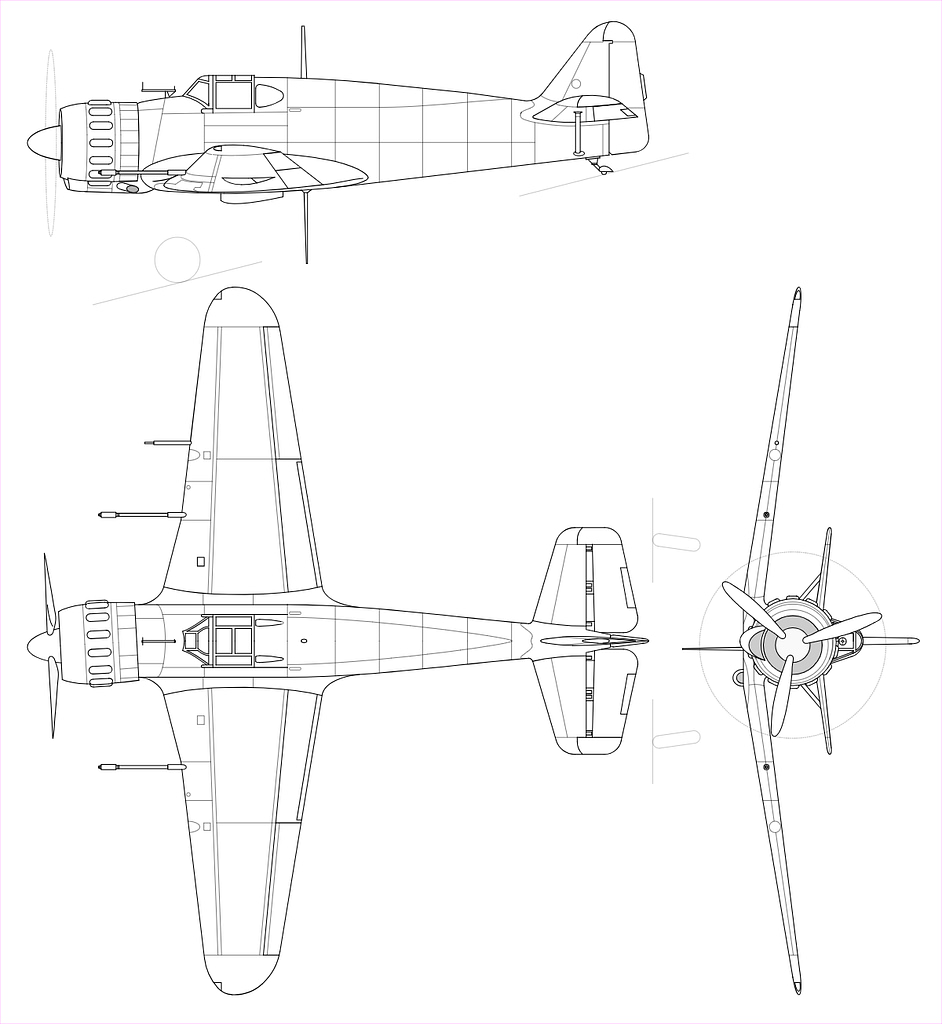
The Bloch MB.152 in photographs
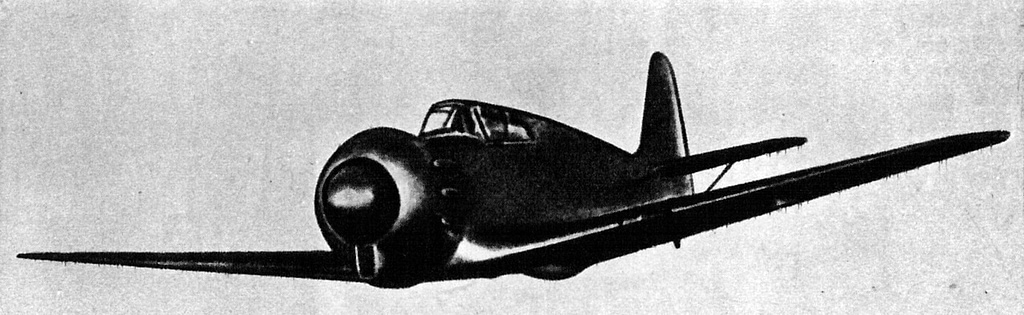
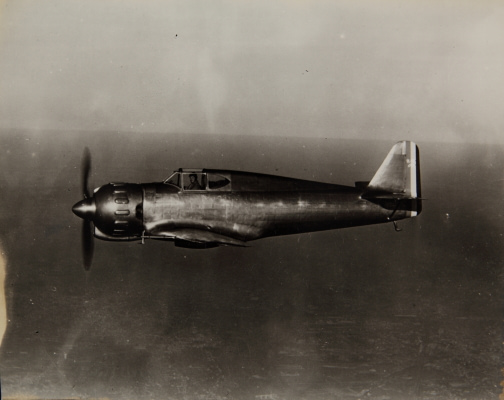
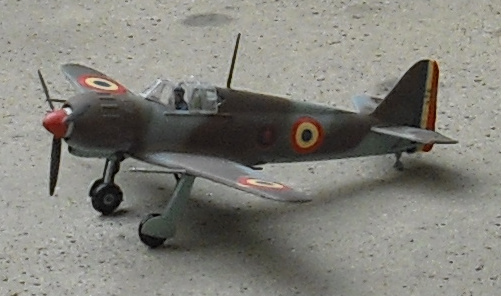
The Bloch MB.152 is one of the least-photographed major fighters of 1940, and no complete original survives; several images here show the near-identical MB.151, clearly noted in each caption. Photographs via Wikimedia Commons under the licences stated — period images are in the public domain; the technical drawing and model photograph are used under Creative Commons with attribution to their authors.
On film
The Bloch MB.152 on film
Genuine footage of the MB.152 is rare. This archival clip shows the actual Bloch MB.151/152 in production — a glimpse of the aircraft as it was built in 1939–40.
“Bloch MB.151 and MB.152 production” — archival footage via the Aviation videos archives channel (period primary-source film; a modest audience of roughly 9,000+ views, reflecting how obscure the type is today). We chose genuine period footage of the actual aircraft over higher-view modern retrospectives.
Operations map
Where the Bloch MB.152 flew — and where it fought
The MB.152’s war was overwhelmingly French. This map colours the aircraft’s home nation and manufacturer, the 1940 Battle of France theatre, the small group of other operators that received or captured airframes, and where survivors are associated today. Toggle the categories and hover a country for detail.
Combat record
The Bloch MB.152 by the numbers
Claim figures for 1940 are inherently uncertain — wartime victory claims routinely exceeded confirmed kills on all sides — and should be read as approximate. Sources vary; the ~188 claimed / ~86 lost figures are those commonly cited for the MB.152.
Survivors
Surviving Bloch MB.152s: why there is almost nothing to see
Of France’s three main 1940 fighters, the MB.152 is by far the hardest to find today. Unlike the D.520, no complete, airworthy or widely-recognised intact original is known to survive.
The reasons are simple and grim. The type was used up in a lost campaign, then scattered across Vichy, Romanian and German hands, and finally scrapped as obsolete. Aircraft that end a war as a defeated nation’s cast-offs rarely get preserved.
French national collections — the Musée de l’Air et de l’Espace at Le Bourget among them — are associated with surviving Bloch material, which may include components, a partial or reconstructed airframe, or family-related items. Published accounts differ on exactly what exists and its completeness, so any claim of a “surviving MB.152” should be treated with caution and checked against the museum’s own current information.
This uncertainty is itself worth being honest about. Aviation reference works and enthusiast sites sometimes state confidently that “one MB.152 survives” or that “no MB.152 survives,” and both are simplifications of a murkier reality involving components, rebuilds and shifting museum holdings over the decades. Rather than pick a side, this page reports the safe, verifiable position: no complete, original, intact MB.152 is widely and reliably recognised today, and anyone wanting a definitive answer should consult the Musée de l’Air directly.
What is not in doubt is the contrast: where you can stand next to a preserved D.520, the MB.152 has essentially vanished. That absence is a quiet measure of just how completely the events of 1940–45 consumed it.
There is a broader pattern here. The aircraft that survive into museums tend to be the winners, the record-breakers, the long-serving types, and the machines of nations that ended the war intact and proud. Fighters that served a defeated power for a few weeks in 1940, were scattered among enemies and allies, and were then scrapped as obsolete were about as unlucky as an airframe can be. The MB.152’s near-total disappearance is not a comment on its quality; it is a comment on its history.
That is part of why a page like this one matters. When almost no physical examples remain, the written and photographic record has to carry the memory. The MB.152 deserves to be remembered accurately — as a tough, well-armed, honest interceptor with a crippling range limitation and a great corporate legacy — rather than lazily filed away as just another casualty of 1940.
The contrast with its siblings is instructive. Around a handful of Dewoitine D.520s survive, including at least one that was returned to flight; several Morane-Saulnier MS.406-family aircraft (including the Swiss D-3801 derivative) also endure. The MB.152 falls off the bottom of that list. Why? Partly chance, partly the type’s scattering across Vichy, Romanian and German hands, and partly the simple fact that obsolete fighters of a defeated nation were near the top of every scrap queue.
If you want to get close to the MB.152 today, the Musée de l’Air et de l’Espace at Le Bourget is the place to start any enquiry, both for its holdings of French 1940 aviation and as the authority on what Bloch material actually survives. Beyond that, the type is best encountered through archival photographs, the technical literature, and the excellent scale-model subjects that keep its distinctive shape alive.
For the modern enthusiast, the MB.152 lives mainly in photographs of its near-twin the MB.151, in technical drawings, in scale models, and in the written record of the men who flew it.
Q&A
Bloch MB.152: your questions answered
Can I fly in a Bloch MB.152?
No. No complete, airworthy Bloch MB.152 is known to exist — the type all but vanished after 1945, and at most a partial or reconstructed airframe and components survive in museum collections. There is no bookable flight in an MB.152 anywhere, and MiGFlug does not offer one.
The good news is that flying in a genuine military aircraft is not a fantasy. MiGFlug puts civilians in the cockpit of real, flying fighter and trainer jets — from Cold War classics to supersonic interceptors. If the idea of the MB.152 stirs something in you, that same thrill is very much available today: see migflug.com/flights-prices.
Was the Bloch MB.152 a good fighter?
It was a mixed but genuinely capable one. Its strengths were real: heavy armament (two 20 mm cannon plus two machine guns), a tough airframe that absorbed damage, and stability that made it a good gun platform. Its weaknesses were also real: short range (~600 km), speed and agility inferior to the Bf 109E, and a development plagued by engine and production delays. It was not France’s best 1940 fighter — that was the Dewoitine D.520 — but it was a competent interceptor that fought well.
How does the MB.152 compare to the Dewoitine D.520 and MS.406?
These were the three fighters the Armée de l’Air had in numbers in 1940. The D.520 was clearly the best — faster, more agile, longer-ranged — but reached squadrons in tiny numbers by May 1940. The MS.406 was the most numerous but the weakest performer. The MB.152 sat in between: faster and better-armed than the MS.406, but slower and shorter-legged than the D.520.
Why did the MB.152 have such a bad reputation?
Mostly by association with France’s defeat, and because of its genuine flaws — short range, delayed and often unready deliveries, and inferiority to the Bf 109E. But its actual air combat record (roughly 188 claims for about 86 losses) is far better than its reputation suggests. It was an unfinished fighter fighting a battle already being lost on the ground, not a fundamentally bad aircraft.
What engine and weapons did the MB.152 use?
It was powered by a Gnome-Rhône 14N two-row radial of roughly 1,000–1,100 hp (most MB.152s used the ~1,050 hp 14N-25). The standard combat armament was two 20 mm Hispano-Suiza HS.404 cannon plus two 7.5 mm MAC 1934 machine guns in the wings. The related MB.151 was usually armed with four machine guns instead.
How many Bloch MB.152s were built?
A commonly cited figure is 482 MB.152s, with the wider MB.151/152/155 family reaching somewhere above 600 aircraft. Figures vary between sources and should be treated as approximate. By the outbreak of war in September 1939 around 120 Bloch fighters had been delivered, but many were not yet combat-ready.
Who flew the MB.152 besides France?
After France’s main use in 1940, the MB.152 served the Vichy French air force (six groups) and, in small numbers, the Free French. Greece received nine of 25 ordered MB.151s before France fell and used them against Italy. Later, the Germans passed some Bloch fighters to the Royal Romanian Air Force, and a few ended up in Luftwaffe hands as trainers.
What is the connection between Bloch and Dassault?
They are the same company. Marcel Bloch designed the MB.150 family, survived deportation and the Buchenwald concentration camp during the war, and afterwards rebuilt his firm under the name Dassault (from his brother’s Resistance codename). The MB.152 is therefore a direct ancestor of the Ouragan, Mystère, Mirage and Rafale.
Are there any surviving Bloch MB.152s?
No complete, original MB.152 is widely recognised as preserved intact. French collections such as the Musée de l’Air et de l’Espace are associated with surviving Bloch components or partial material, but published accounts differ on exactly what exists. Treat any claim of a fully intact surviving MB.152 with caution.
How fast was the Bloch MB.152 and how far could it fly?
Its maximum speed was around 509 km/h (316 mph), with sources ranging roughly 500–515 km/h depending on variant. Its range was only about 600 km (370 mi) — the type’s defining weakness. Service ceiling was around 10,000 m, and it climbed to 2,000 m in a little over three minutes. The short range is the figure most worth remembering.
Did the Bloch MB.152 fight the Italians as well as the Germans?
Yes. When Italy entered the war on 10 June 1940, MB.152 units in southern France engaged the Regia Aeronautica during the brief Italian campaign before the armistice. Against older Italian biplanes and lightly-armed monoplanes, the MB.152’s two 20 mm cannon and tough airframe were particularly effective. Greek-operated MB.151s also fought the Italians (and later the Germans) in the Balkans.
Why is the MB.152 so much rarer today than the D.520?
It was used up in a lost campaign, then scattered across Vichy, Romanian and German hands, and finally scrapped as an obsolete fighter of a defeated power — the worst possible combination for long-term survival. Where several D.520s and MS.406-family aircraft endure, no intact original MB.152 is widely recognised today. Its rarity is a direct consequence of how completely the 1940–45 years consumed it.
You can’t fly the Bloch MB.152. These, you can.
The MB.152 survives only in fragments and photographs — but a genuine fighter flight is not a fantasy. MiGFlug puts you in the cockpit of real, flying military jets, from Cold War trainers to supersonic interceptors.
Fighter Jet Flights
Take the controls of a real ex-military jet with an experienced fighter pilot.
Л-39 Альбатрос
The classic jet trainer — aerobatics and low-level flying you actually fly yourself.
МиГ-29 Фалкрам
Ride a genuine air-superiority fighter to the edge of space at over Mach 2.
Supersonic experiences
Break the sound barrier in a real fighter jet — the ultimate bucket-list flight.
Keep exploring
More WWII fighters to explore
Go deeper
Bloch MB.152: sources & further reading