
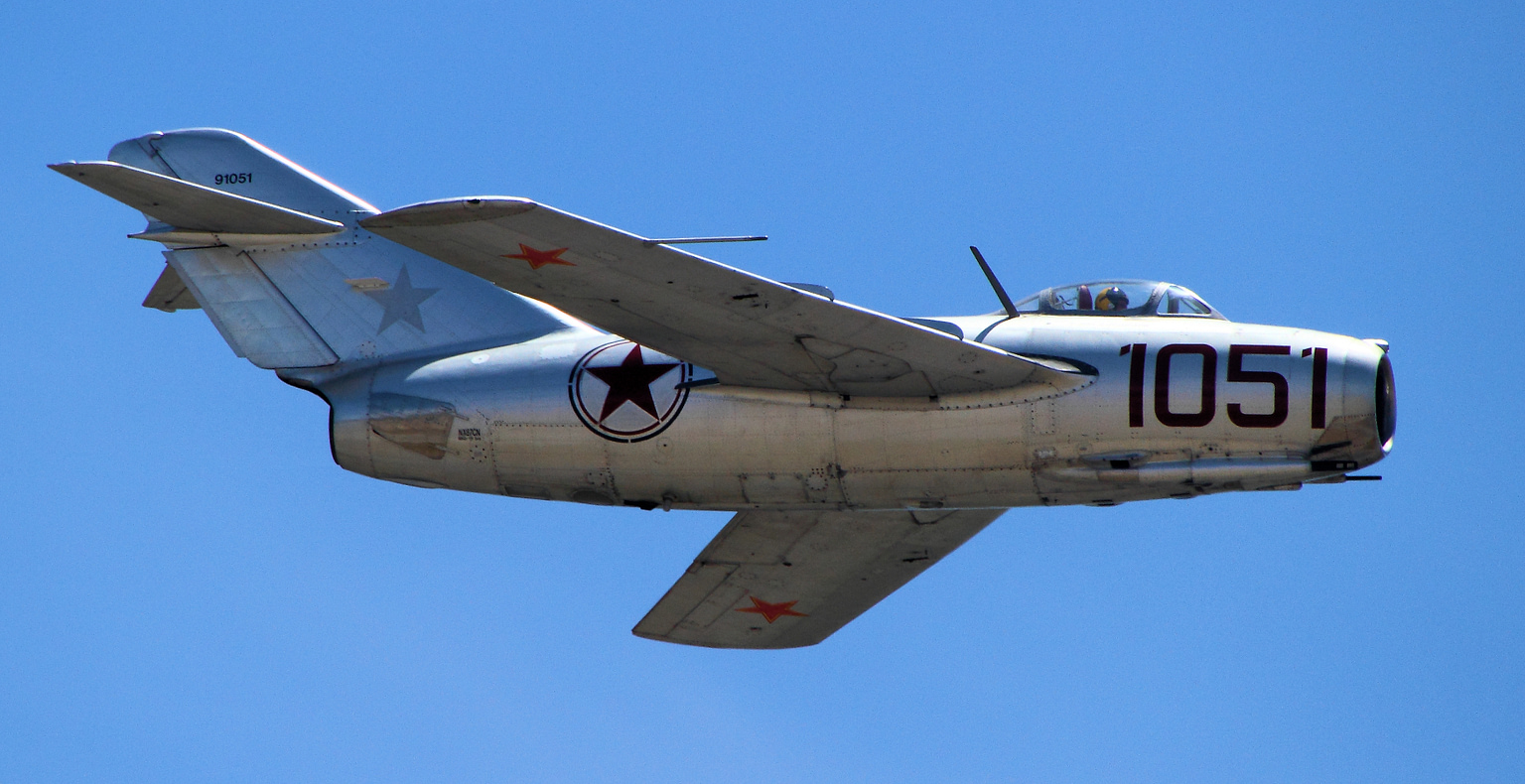
МиГ-15 Микояна-Гуревича
“Fagot”
The first successful Soviet swept-wing jet fighter — the silver shock of “MiG Alley” that made the B-29 abandon daylight bombing, forced the F-86 Sabre into the fight, and today is a genuine Korean-War jet you can actually ride with MiGFlug.
The jet that shocked the West
The MiG-15 was the first successful Soviet swept-wing jet fighter and one of the defining aircraft of the early jet age. It grew from a 1946 Mikoyan-Gurevich requirement for a high-altitude day interceptor, backed personally by Stalin. The decisive break came from Britain: in a 1946–47 trade gesture the UK sold the USSR the advanced Rolls-Royce Nene turbojet, which the Klimov bureau reverse-engineered into the RD-45 and later the more powerful VK-1. Married to a 35-degree swept wing, a pressurized cockpit and an ejection seat, the prototype S-1 flew on 30 December 1947 and the type entered service in 1949.
When silver, swept-wing MiG-15s knifed into the skies over the Yalu River in November 1950, they stunned the United Nations air forces. Overnight the straight-wing jets and propeller fighters over Korea were obsolete: the MiG could out-climb, out-turn at altitude and outrun almost everything, and its heavy cannon shredded the B-29 Superfortress so badly the Americans abandoned daylight bombing. The region became legend as “MiG Alley.” The shock forced Washington to rush its best fighter — the swept-wing F-86 Sabre — into theatre, igniting the first great jet-versus-jet duel in history.
The MiG kept its deepest secret for decades: many were flown by combat-hardened Soviet pilots masquerading as Koreans and Chinese. It became one of the most-produced jet aircraft in history — totals commonly cited between ~13,000 and ~18,000 airframes — and served worldwide. And uniquely, you can still climb into a genuine two-seat Fagot today and fly.
01The MiG-15’s numbers: how a British engine and a swept wing built one of history’s most-produced jets
Production totals for the MiG-15 are enormous and hard to pin down — Soviet plus licensed foreign output is commonly cited between about 13,000 and 18,000 airframes, with some sources giving Soviet-only figures nearer 11,000–13,000. The exact global total is genuinely uncertain; treat any single number as approximate.
Key variants tell the story of its spread: the definitive MiG-15bis with the VK-1 engine; the two-seat UTI trainer (“Midget”); the Chinese-built J-2 / JJ-2; the Polish Lim-1 / Lim-2; and the Czechoslovak S-102 / S-103. A rugged, simple, mass-producible design could be sold and sustained almost anywhere — which is why roughly 40 nations flew it.
Что делает МиГ-15 особенным?
The 35-degree swept wing
The MiG-15 carried the first swept wing on a production Soviet aircraft, informed by captured German aerodynamic research. The sweep gave a dramatic edge in high-subsonic speed and high-altitude performance, while distinctive twin boundary-layer wing fences controlled airflow across the span — the signature detail of the Fagot’s planform.
The Klimov VK-1 — a British engine’s Soviet life
At its heart sat the Klimov VK-1, a robust, easily maintained development of the licensed Rolls-Royce Nene. Its simplicity made the MiG-15 rugged and mass-producible — though the centrifugal-flow architecture ultimately capped growth versus the axial engines the West was adopting.
A heavy anti-bomber battery
The nose carried two NR-23 23 mm cannon plus one N-37 37 mm cannon on a lowerable tray. This slow-firing, hard-hitting battery was optimized to destroy bombers — devastating against the B-29 — if less ideal for fast fighter-versus-fighter gunnery.
02The MiG-15’s wing: the German research and British engine behind a Soviet fighter
Two foreign ingredients shaped the MiG-15. Captured German high-speed aerodynamic data pointed Mikoyan-Gurevich toward a 35-degree swept wing at a time when most fighters were still straight-winged. And Britain’s 1946–47 sale of the Rolls-Royce Nene handed the Klimov bureau a world-class centrifugal turbojet to copy into the RD-45 and VK-1. Together they produced a fighter that briefly out-classed everything the West could put over Korea — arguably the most consequential technology transfer of the early Cold War.
03The MiG-15’s guns: built to kill bombers, not fighters
The MiG-15’s cannon fit — one 37 mm and two 23 mm guns — threw a heavy, slow-firing punch designed to bring down large bombers in a single pass. Against the B-29 Superfortress it worked so well the USAF pulled the bomber out of daylight raids by late 1951. Against nimble jets like the F-86, however, the low muzzle velocity and slow rate of fire made hits harder to score — a weapon optimized for the wrong opponent in the dogfight.
Full MiG-15 specifications
Airframe & Performance
- Экипаж
- 1 (two-seat UTI trainer)
- Длина
- ~10.1 m (33 ft 2 in)
- Размах крыльев
- ~10.1 m (33 ft 1 in)
- Wing sweep
- 35°
- Max speed
- ~1,075 km/h · Mach ~0.9
- Служебный потолок
- ~15,500 m (~50,800 ft)
- Number built
- ~13,000–18,000 (approx.)
- First flight
- 30 Dec 1947 (prototype S-1)
Propulsion & Systems
- Двигатель
- 1 × Klimov VK-1 centrifugal turbojet
- Толкать
- ~26.5 kN (~5,950 lbf)
- Cannon
- 2 × NR-23 (23 mm) + 1 × N-37 (37 mm)
- Точки крепления
- Underwing bombs / rockets / drop tanks
- Entered service
- 1949
- Origin
- Soviet Union / Russia
- Unit cost
- No reliable public figure
- Cost per flight hour
- No reliable public figure
04The MiG-15’s cost: why no reliable price exists
Firm dollar figures for the MiG-15 do not reliably exist in open sources. It was a Soviet state product built and exported across a planned economy, so per-unit costs were not calculated or published the way Western programmes were. Export prices varied enormously by variant, buyer and year, and no credible cost-per-flight-hour figure survives either. What is certain is the design intent: rugged, simple and cheap enough to build in the many thousands and hand to some 40 air forces.
The MiG-15 through the years
Design begins
The MiG bureau starts its swept-wing interceptor; the USSR acquires Rolls-Royce Nene engines from Britain.
First flight
The prototype S-1 flies with test pilot Viktor Yuganov at the controls.
Production authorized
Series production is approved just months after the first flight.
Enters service
The MiG-15 joins the Soviet Air Force as a high-altitude day interceptor.
Combat debut over Korea
Among the first jet-versus-jet engagements in history — the birth of “MiG Alley.”
The MiG-15bis & the Sabre
The improved VK-1-powered bis is introduced; the F-86 Sabre is rushed to Korea in response.
“Year of the Honcho”
Soviet-flown MiG pressure ends untenable daylight B-29 raids.
The defection
North Korean Lt. No Kum-sok lands an intact MiG-15 at Kimpo — the prize the West had chased for years.
Licensed worldwide
China (J-2), Poland (Lim-1/2) and Czechoslovakia (S-102/103) build the type; today it flies as a warbird.
From MiG Alley to the warbird circuit: twelve MiG-15 stories
The shock of MiG Alley
The jet that made UN commanders panic.
Read the full story
No Kum-sok and the $100,000 he didn’t know existed
A 21-year-old lieutenant flew to freedom by accident of history.
Read the full story
The Honcho pilots
The MiG’s best-kept secret wore a disguise.
Read the full story
The B-29 killer
Cannon that ended daylight bombing.
Read the full story
MiG-15 vs F-86 Sabre
The first great jet duel — and a disputed scoreboard.
Read the full story
A British engine’s Soviet second life
The heart of the MiG came from Rolls-Royce.
Read the full story
The Chinese J-2
The Fagot goes east.
Read the full story
The two-seat UTI “Midget”
How a generation learned to fly jets.
Read the full story
Fly a Fagot today
A genuine Korean-War jet you can ride.
Read the full story
One of the most-produced jets ever
Built by the thousands.
Read the full story
Operation Moolah
The plot to buy a MiG.
Read the full story
The prize at Wright-Patterson
No Kum-sok’s MiG still stands guard.
Read the full story
The MiG-15 in pictures
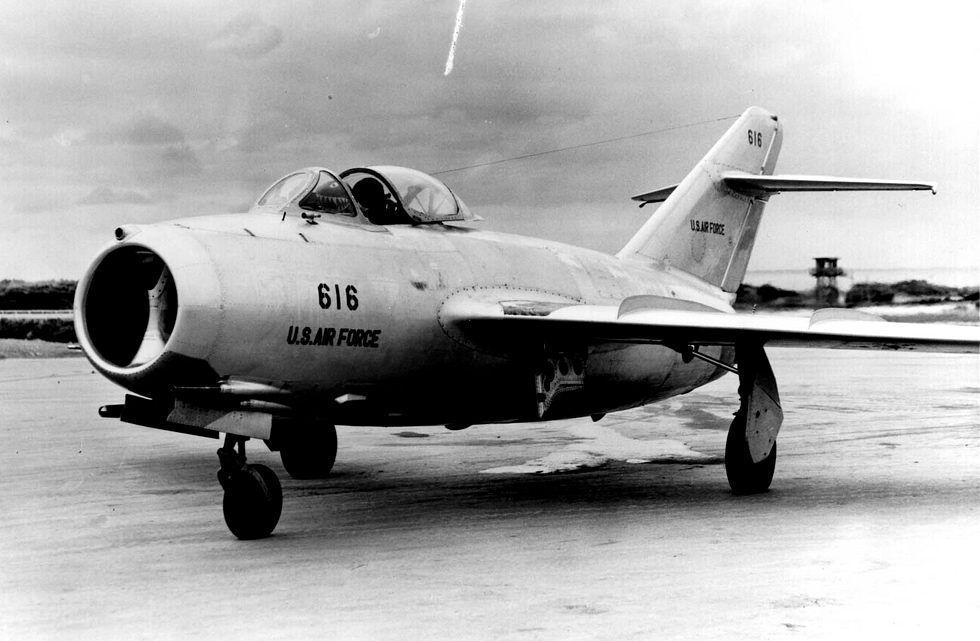
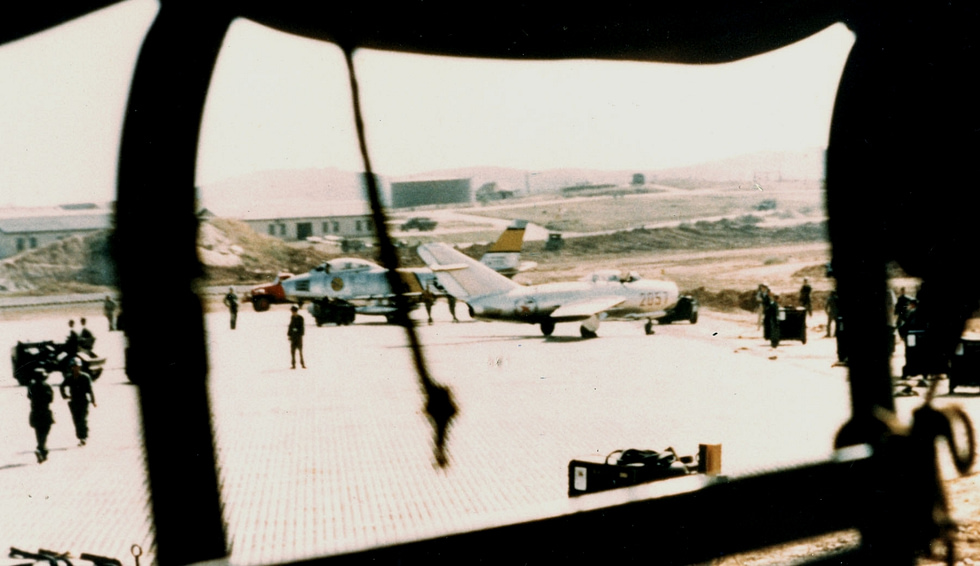
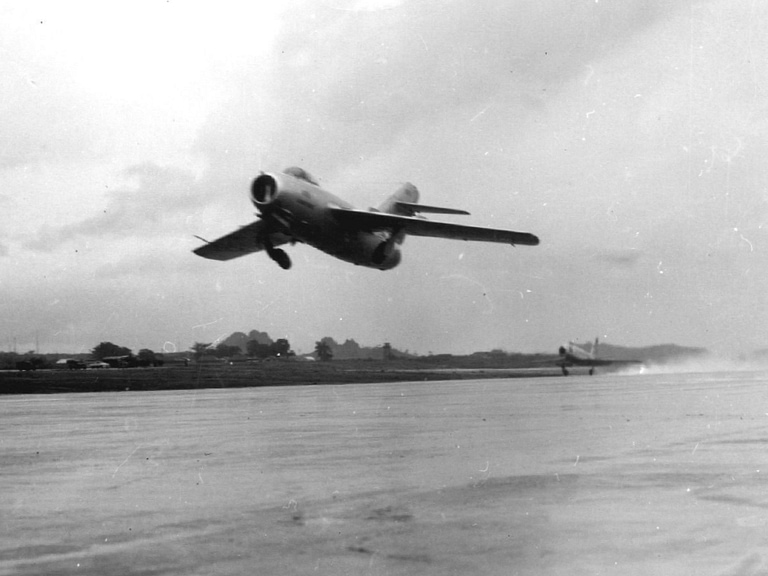
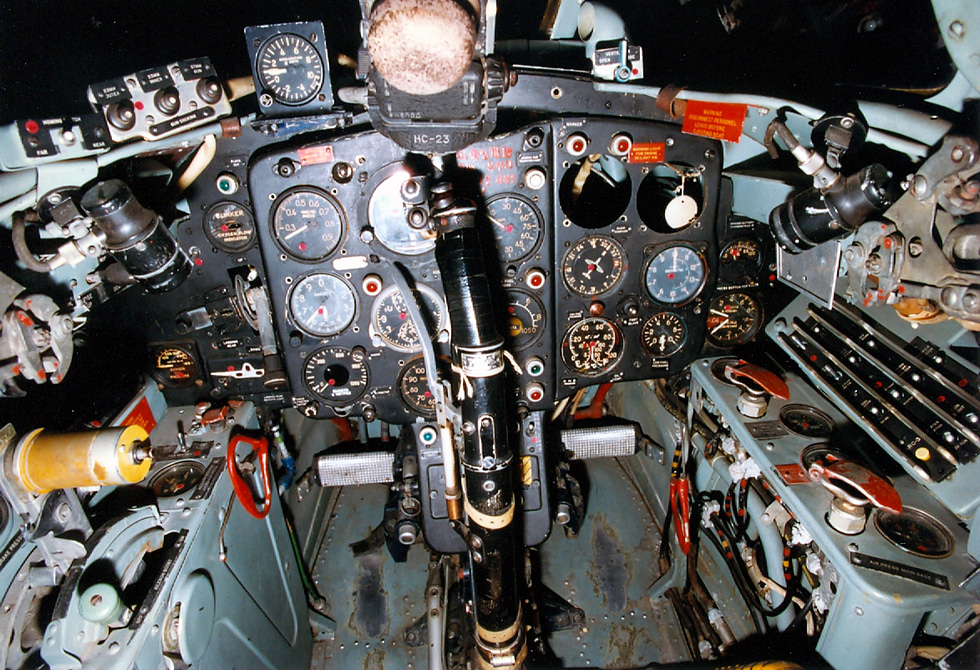
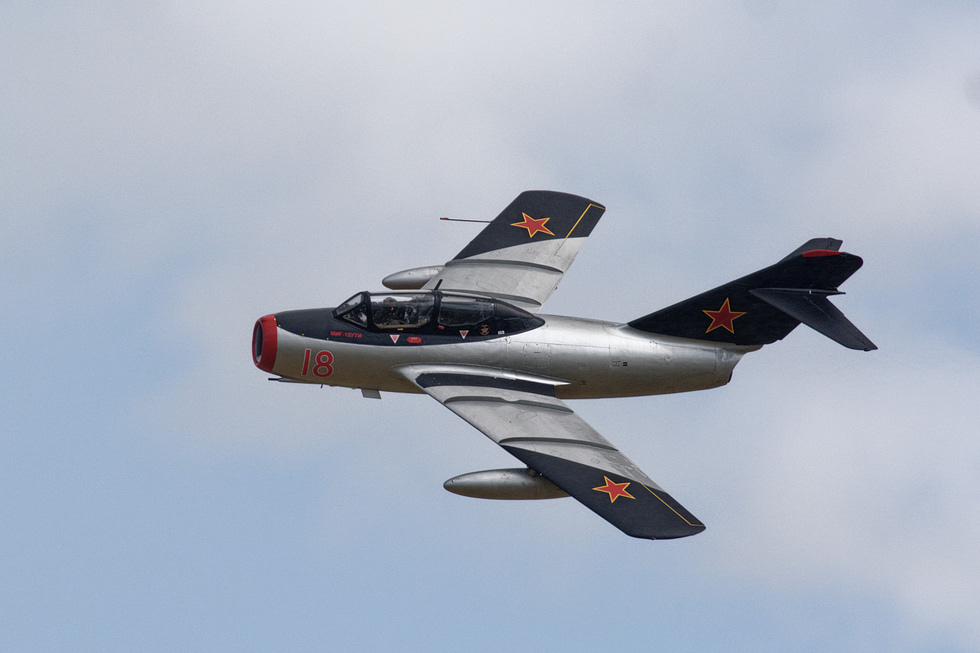
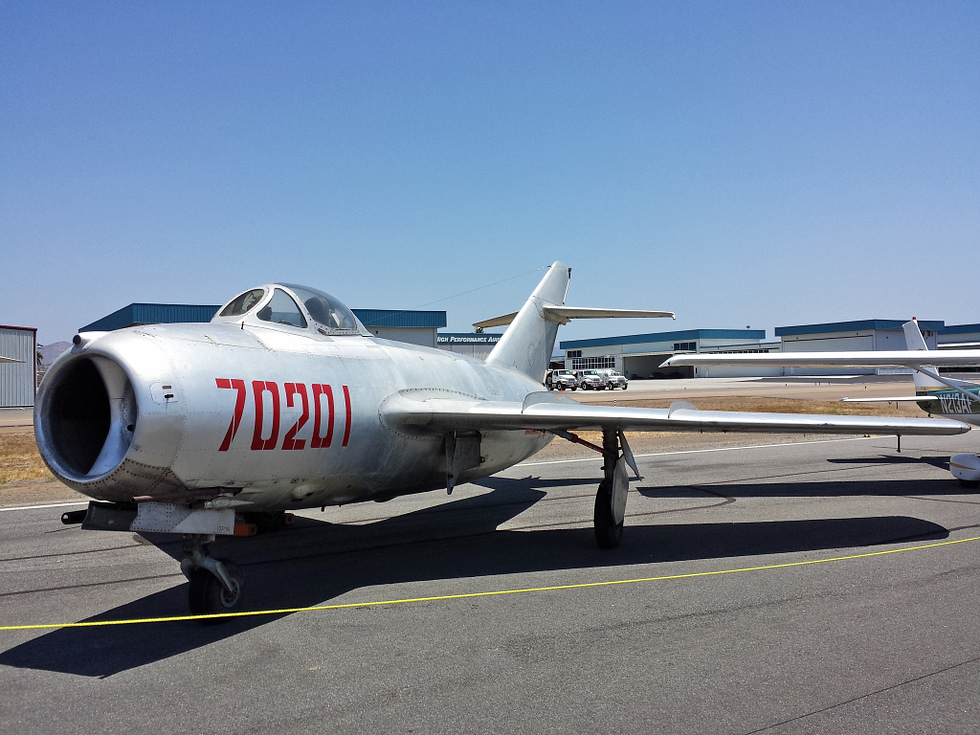
The MiG-15 in motion
A documentary feature on the MiG-15 is coming soon.
Where the MiG-15 flew
The defining jet of the Korean War
The MiG-15’s defining war was Korea, where it drove piston-engined types and straight-wing jets from contested airspace and forced the deployment of the F-86 Sabre. The two swept-wing fighters were closely matched: the MiG had a higher ceiling and heavier guns, the Sabre better handling, gunsight and gun-platform stability. Its guns also made daylight B-29 raids untenable by late 1951, and it later saw action across the Middle East, China and the Warsaw Pact.
The kill-ratio dispute: The USAF long claimed a roughly 10:1 Sabre-to-MiG victory ratio over Korea. Post-Cold-War access to Soviet records and later analysis (e.g. historian Walter Boyne) put the real figure far lower — closer to parity in some periods such as 1951, the “Year of the Honcho.” The true ratio remains genuinely contested; the honest answer is a disputed range somewhere between near-parity and the old 10:1 claim, not a settled number.
Compare the combat record of every military aircraft. Figures as of July 2026.
Everything people ask about the MiG-15
Can I fly a MiG-15?
How fast is the MiG-15?
Could the MiG-15 break the sound barrier?
MiG-15 vs F-86 Sabre — who won?
How many MiG-15s were built?
How do I fly one?
What is the MiG-15UTI?
Ты can actually fly the MiG-15.
Pick your cockpit.
Some legends only live in museums — others are fuelled and waiting. MiGFlug has put civilians in real military jet cockpits since 2004.
 Fly the L-39 AlbatrosThe world’s most-flown jet trainer — aerobatics included
 Fly the F-104 Starfighter“The missile with a man in it”
 Fly the MiG-21The Cold War’s most-produced jet
 Управляйте самолетом T-33 Shooting Star.America’s first jet trainer
 Fly the DH VampireA piece of early jet history
 Fly the S.211Agile Italian jet trainer
 Fly the MB-326The classic Aermacchi jet
 Fly the MiG-15The Soviet legend of the Korean War
Continue the tour
Every fact, checked
- Smithsonian National Air and Space MuseumMiG-15 collection object — provenance and specifications.
- Military.comThe years-long effort to capture a MiG-15 — and No Kum-sok’s delivery of one.
- Vintage Aviation NewsFirst flight of the Mikoyan-Gurevich MiG-15.
- The Aviation Geek ClubWalter J. Boyne on the disputed 10:1 F-86/MiG-15 ratio.
- MilitaryFactoryMikoyan-Gurevich MiG-15 (Fagot) specifications and history.
- Southern Museum of FlightThe MiG-15, the Korean War and No Kum-sok’s flight to freedom.
- PsyWarriorOperation Moolah — the plot to steal a MiG-15.
- МиГФлугThe MiG-15 Fagot flight experience in the Czech Republic.