
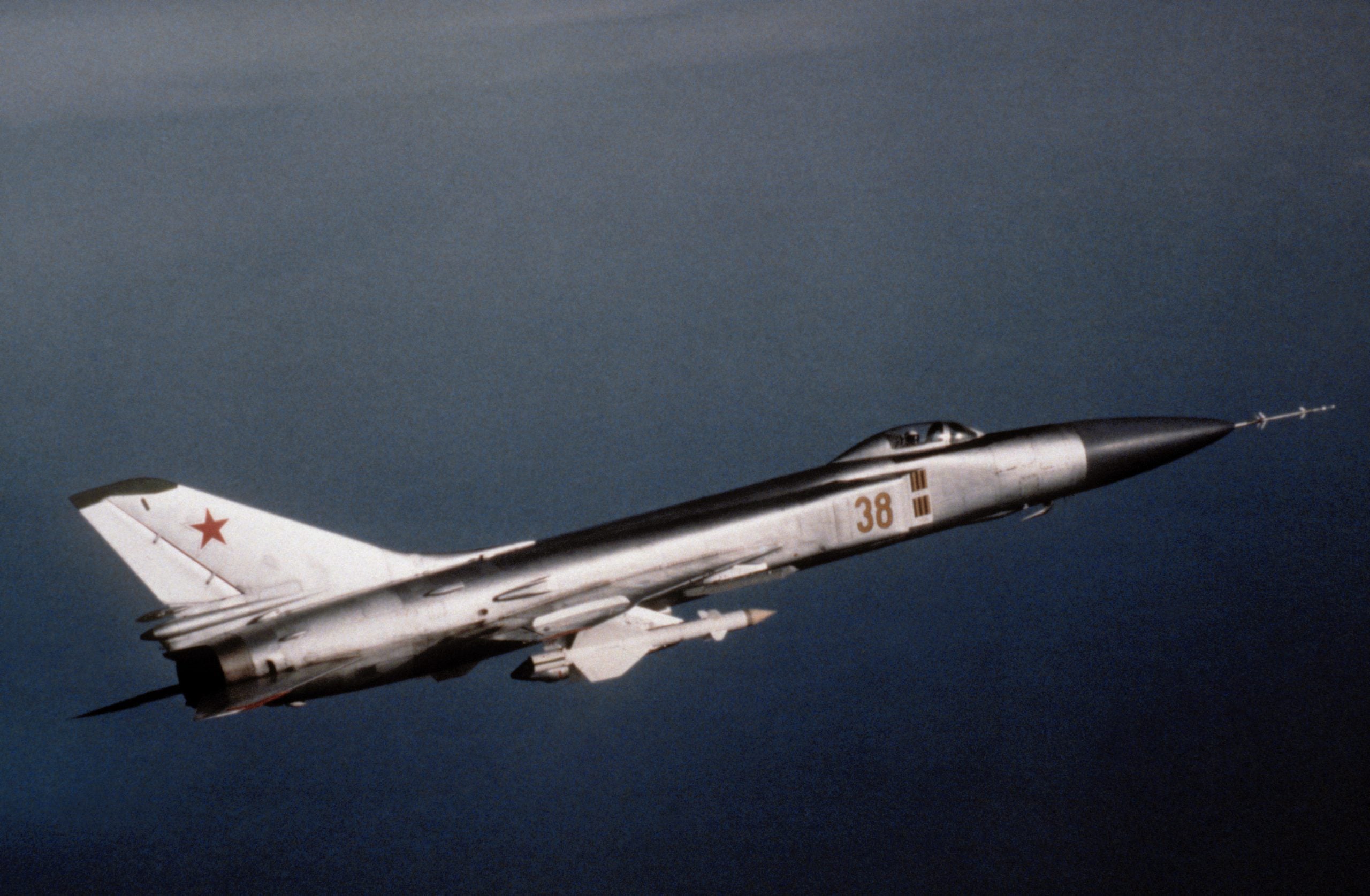
Sukhoi Su-15
“Flagon”
A Mach-2 twin-engine delta interceptor built to guard the vast Soviet frontier — and the aircraft whose name is bound, above all, to two civil airliners it should never have met.
The Sukhoi Su-15: guardian of Soviet skies
By the end of the 1950s the Soviet Air Defence Forces — the PVO — had a problem of geography. The country was enormous, its borders long, and the threats it feared came fast and high: American reconnaissance aircraft and, potentially, supersonic bombers. Sukhoi’s existing single-engine interceptors, the delta-winged Su-9 and Su-11, were quick but short-legged, lightly armed and reliant on a single engine over some of the emptiest terrain on Earth. The design bureau set out to build something better.
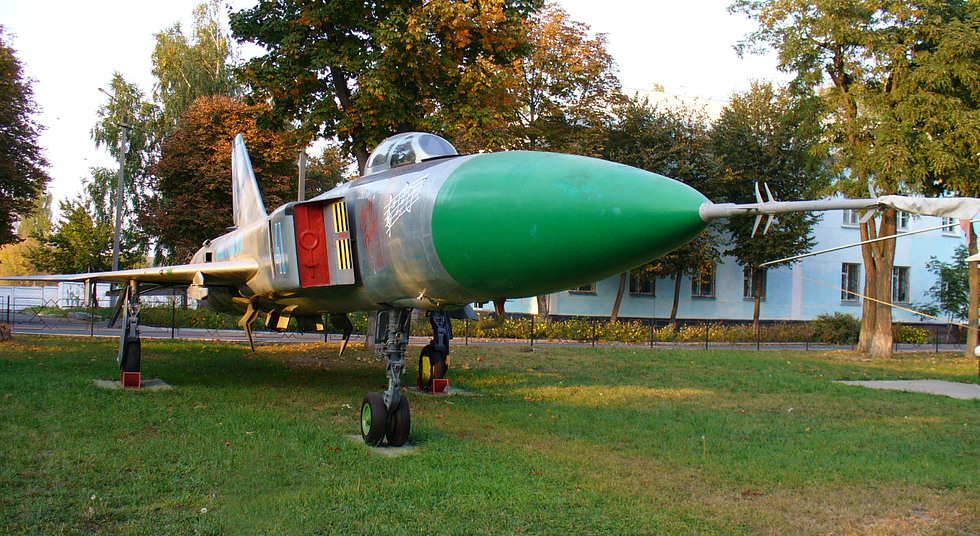
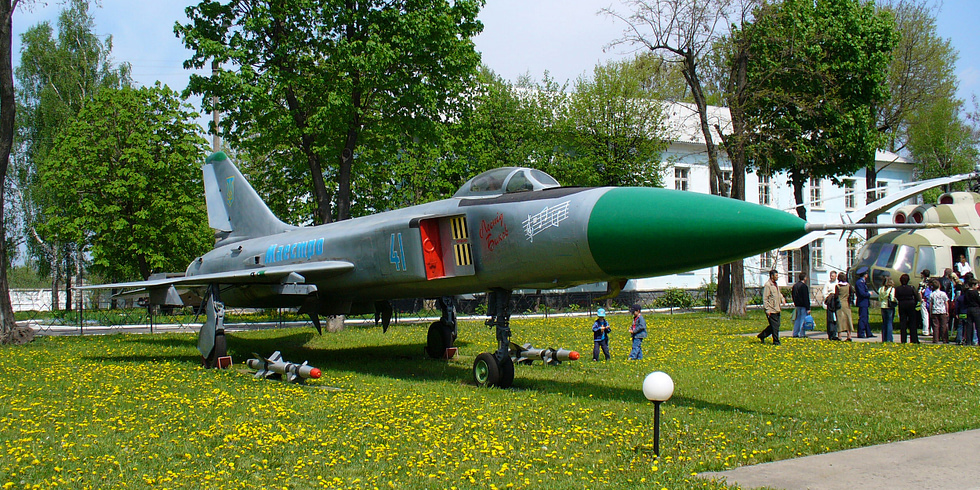
The answer was the Su-15. Where the Su-11 had one engine, the new aircraft had two — mounted side by side in the rear fuselage and fed by plain lateral intakes, a layout chosen for reliability and thrust rather than elegance. It kept the tailed-delta wing family of its predecessors but grew larger, heavier and considerably more capable. The prototype, designated T-58, first flew on 30 May 1962 in the hands of test pilot Vladimir Ilyushin, and the type entered PVO service in 1965. NATO gave it the reporting name “Flagon.”
The Su-15 was never a dogfighter and was never meant to be. It was a ground-controlled interceptor: scrambled and vectored onto its target by radar operators on the ground, it would close at high speed, acquire the intruder on its own Taifun radar, and destroy it with a pair of large air-to-air missiles — typically one radar-guided and one heat-seeking. The definitive version, the Su-15TM “Flagon-F,” introduced a compound “ogival” wing and an improved radar in the early 1970s, and became the backbone of Soviet point defence for two decades.
Uniquely among major Soviet fighters of its era, the Su-15 was never exported. It was considered too sensitive — too closely tied to the secrets of the Soviet air-defence network — to sell even to Warsaw Pact allies. Around 1,290 were built, and every one served the USSR and, briefly after 1991, its successor states.
For all that, the Su-15 is remembered by the wider world for something other than its engineering. Twice, Soviet Su-15 pilots were vectored against civilian airliners that had strayed into prohibited airspace. In April 1978 a Su-15 forced down Korean Air Lines Flight 902 over the far north-west of the USSR; two passengers were killed. And on the night of 1 September 1983 a Su-15TM shot down Korean Air Lines Flight 007 near Sakhalin, killing all 269 people aboard — one of the defining tragedies of the late Cold War. These events, examined soberly further down this page, are the reason most people have heard the aircraft’s name at all.
The Flagon was retired through the 1990s as the MiG-31 and Su-27 took over the air-defence mission. It had done the job it was designed for — watch, wait, and intercept — for thirty years.
01The Su-15’s origins: from the Su-9 and Su-11 to a twin-engine interceptor
The Su-15 did not appear from nowhere. Sukhoi had spent the late 1950s building a family of tailed-delta interceptors around a single afterburning engine: the Su-9 (“Fishpot”) and the improved Su-11. Both were fast climbers designed to catch high-flying intruders, but both were limited — modest range, a single engine, and a nose intake whose central shock cone left little room for a powerful radar.
The Su-15 kept the wing philosophy but solved those limits. Moving to two engines in the rear fuselage freed the nose for a large radar dish and added the redundancy prized for long patrols over empty territory. Side intakes replaced the nose inlet. The result was a heavier but far more effective area-defence interceptor — and the most numerous of Sukhoi’s Cold-War interceptors.
What makes the Su-15 special
Two engines instead of one
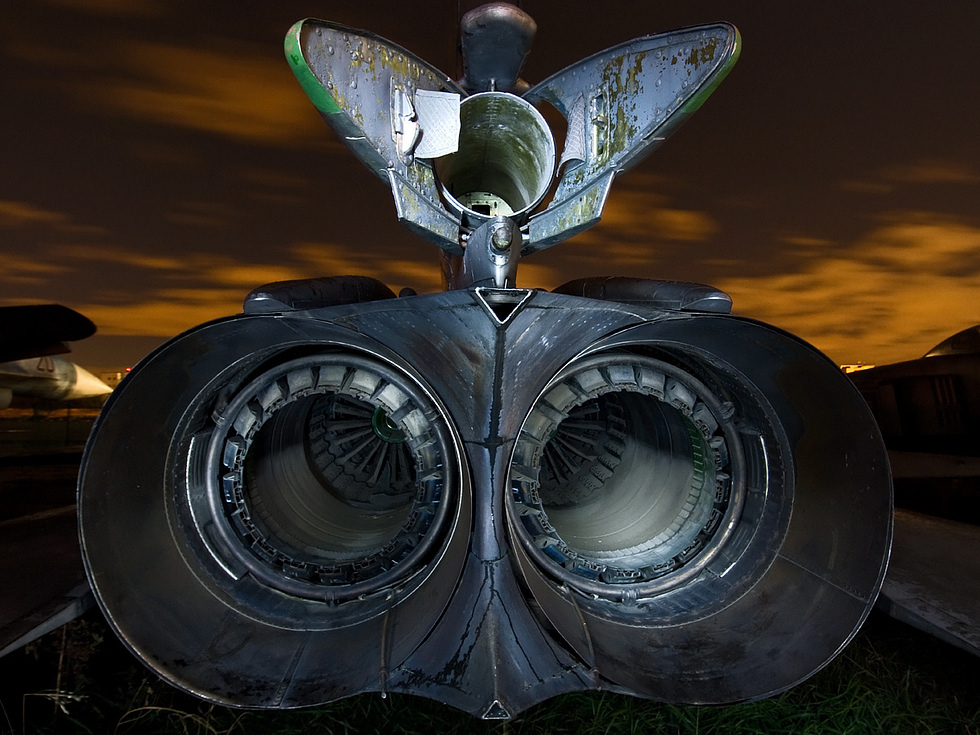
The defining choice was twin Tumansky turbojets — the R-11 on early aircraft, the more powerful R-13-300 (~65 kN each in afterburner) on the Su-15TM. Two engines gave the thrust to reach Mach 2 and the redundancy to fly long air-defence patrols over Siberia and the Arctic, where a single engine failure could mean the loss of both jet and pilot.
From pure delta to the ‘ogival’ wing
Early Flagons flew a simple triangular delta. The definitive Su-15TM adopted a compound cranked-delta wing with a kinked, less-swept outer leading edge. It improved handling and lift at the low speeds of takeoff and landing — a real weakness of pure deltas — at a modest cost in top speed, which settled at about Mach 2.1.
Radar and a mixed missile pair
The interceptor carried the Taifun-M radar (developed from the earlier Oryol) in its long dielectric nose. Its standard load was two large R-98 (AA-3 “Anab”) missiles — one radar-guided, one infrared — fired as a pair to maximise the chance of a kill. Later aircraft added short-range R-60 missiles or gun pods.
02The Su-15’s ground-controlled interception: fighting by radar and radio
The Su-15 was one arm of a system, not a free-roaming hunter. Soviet air defence was built around dense networks of ground radars and controllers who tracked intruders and vectored interceptors onto them by radio — a doctrine called ground-controlled interception (GCI). The pilot often did not search for his target so much as arrive where the controllers sent him, switch on his own radar for the final approach, and fire.
The design reflected this. The Su-15 had a powerful radar and long-reach missiles but limited endurance and no need for the agility of a dogfighter. It was optimised to be guided quickly to a single high-value target and to kill it on the first pass. That doctrine explains both its strengths and the tragedies: the same system that made it a formidable border guard also placed the final decision in a chain of ground commanders under intense time pressure.
03The Su-15 family: from Flagon-A to the definitive Flagon-F
The Flagon evolved steadily. Early Su-15 (“Flagon-A”) aircraft had the pure delta wing and the Oryol radar. Interim versions tested the compound wing. The definitive Su-15TM “Flagon-F” combined the cranked wing, the improved Taifun-M radar and updated missiles. A two-seat operational trainer, the Su-15UM, kept the interceptor’s handling while adding a second cockpit. All told, roughly 1,290 aircraft were built at Novosibirsk between the mid-1960s and the late 1970s.
Full Su-15TM specifications
Airframe & Performance
- Экипаж
- 1 (two-seat UM trainer seats 2)
- Длина
- ~22.0 m
- Размах крыльев
- ~9.34 m
- Высота
- ~4.84 m
- Max takeoff weight
- ~17,900 kg
- Max speed
- Mach 2.1 · ~2,230 km/h at altitude
- Служебный потолок
- ~18,100 m
- Боевой радиус
- ~725 km
- Ferry range
- ~1,380 km
- Скорость подъема
- ~228 m/s
Propulsion & Systems
- Engines
- 2 × Tumansky R-13-300
- Thrust (each)
- ~65 kN with afterburner
- Radar
- Taifun-M (RP-15M)
- Вооружение
- 2 × R-98 (AA-3 Anab) + 2 × R-60 or gun pods
- First flight
- 30 May 1962 (T-58)
- Introduced
- 1965
- Built
- ~1,290 (1966–1979)
- Unit cost
- No reliable public figure
- Cost per flight hour
- No reliable public figure
04The Su-15’s operating costs: why no reliable price exists
The Su-15 was a Soviet state product, built for the PVO and never sold on any open market — not even to Warsaw Pact allies. As a result there is no meaningful flyaway unit price и no credible cost-per-flight-hour figure for the type in the public record; the Soviet planned economy did not price military aircraft the way Western procurement did. Any precise dollar figure attached to a Su-15 online is, in practice, an invention. What can be said is that as a twin-engine, radar-equipped interceptor it was more expensive to buy and operate than the single-engine Su-9 and Su-11 it replaced.
From drawing board to Cold-War sentinel
Programme begins
Sukhoi starts work on the T-58, a twin-engine successor to the single-engine Su-9 and Su-11 interceptors.
First flight
The T-58 prototype flies on 30 May with test pilot Vladimir Ilyushin at the controls.
Enters PVO service
The Su-15 joins the Soviet Air Defence Forces as a dedicated area-defence interceptor; NATO names it “Flagon.”
The definitive Flagon-F
The Su-15TM enters service with a compound cranked wing and the improved Taifun-M radar — the version built in the greatest numbers.
Korean Air Lines Flight 902
On 20 April a Su-15 fires on a Boeing 707 that strayed over Soviet territory, forcing it down on a frozen lake; two passengers are killed.
The Kulyapin ramming
On 18 July, out of missiles, Captain Valentin Kulyapin rams an Argentine-registered CL-44 transport intruding from Iran; he ejects safely, the transport is lost.
Korean Air Lines Flight 007
On the night of 1 September a Su-15TM shoots down a Boeing 747 near Sakhalin after it strayed into Soviet airspace; all 269 aboard are killed.
Retirement
Russia withdraws the Su-15 in the mid-1990s as the MiG-31 and Su-27 take over; Ukraine, which briefly inherited a fleet, retires its aircraft by 1996.
Twelve Flagon stories
The interceptor Sukhoi built twice over
The Su-15 grew out of the single-engine Su-9 and Su-11 — same delta family, twice the engines.
Read the full story
A fighter flown from the ground
The Su-15 was one piece of a vast radar-and-radio air-defence machine, not a lone hunter.
Read the full story
Two Tumansky turbojets
The move to twin engines gave the Flagon its Mach-2 speed and its long-range reliability.
Read the full story
The wing that got a kink
The Su-15TM traded a little top speed for a wing that behaved better where it mattered.
Read the full story
One radar shot, one heat-seeker
The Flagon typically fired its missiles in pairs — guided two different ways for insurance.
Read the full story
Korean Air Lines Flight 902
On 20 April 1978 a Su-15 forced a stray Boeing 707 down onto a frozen lake; two people died.
Read the full story
The Kulyapin ramming
Out of missiles, a Su-15 pilot deliberately rammed an intruding transport — and survived.
Read the full story
Korean Air Lines Flight 007
On 1 September 1983 a Su-15TM shot down a Boeing 747 near Sakhalin; all 269 aboard were killed.
Read the full story
The night that changed navigation
The loss of Flight 007 pushed the United States to open GPS to the whole world.
Read the full story
The fighter that was never sold
Alone among major Soviet fighters of its day, the Su-15 was kept strictly at home.
Read the full story
Flagon-A to Flagon-F
The Su-15 evolved through a decade of refinement into the definitive TM.
Read the full story
Handing over the watch
As the Flagon aged, the MiG-31 and Su-27 inherited the job of guarding Soviet skies.
Read the full story
The Flagon in pictures
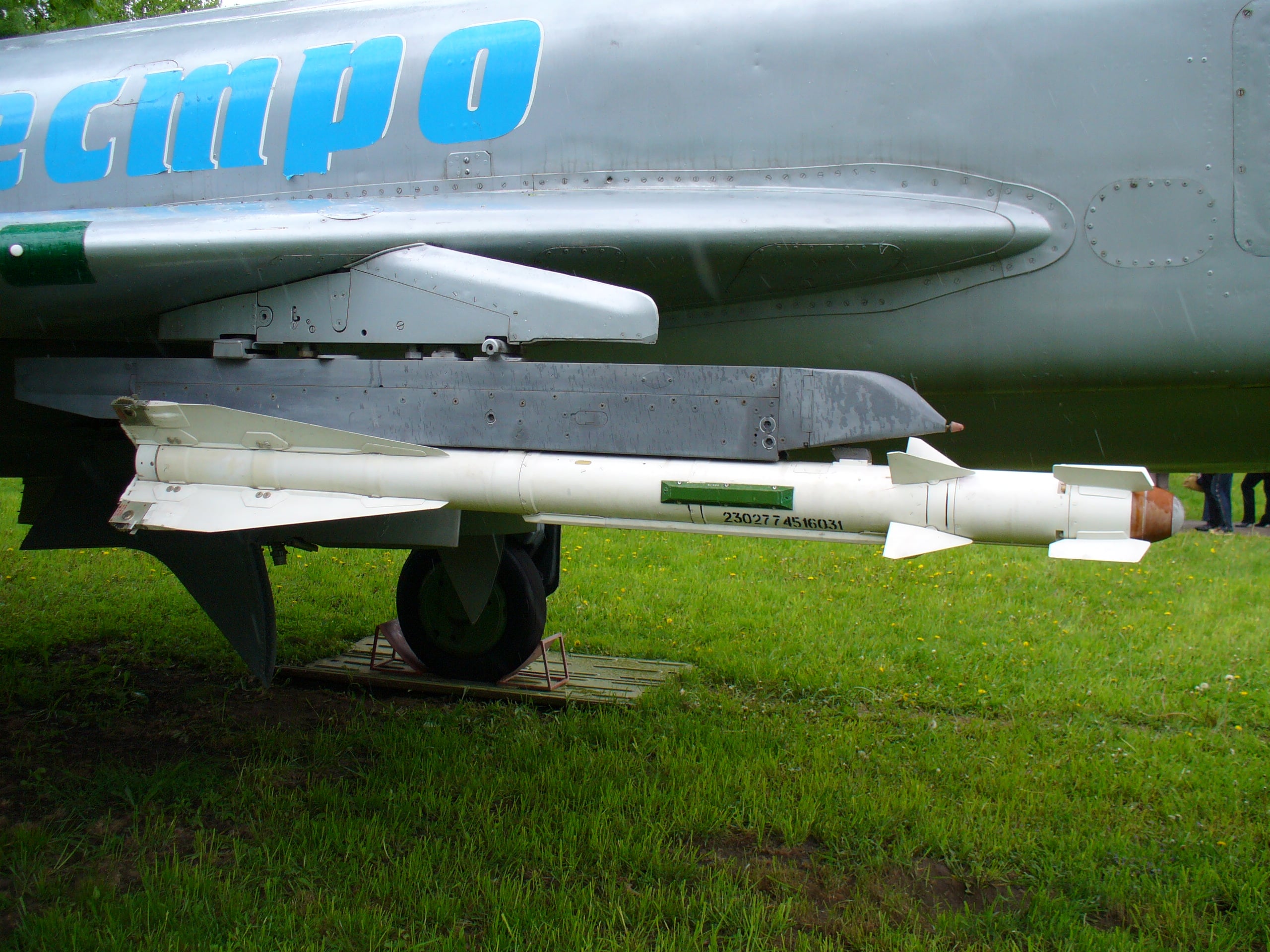
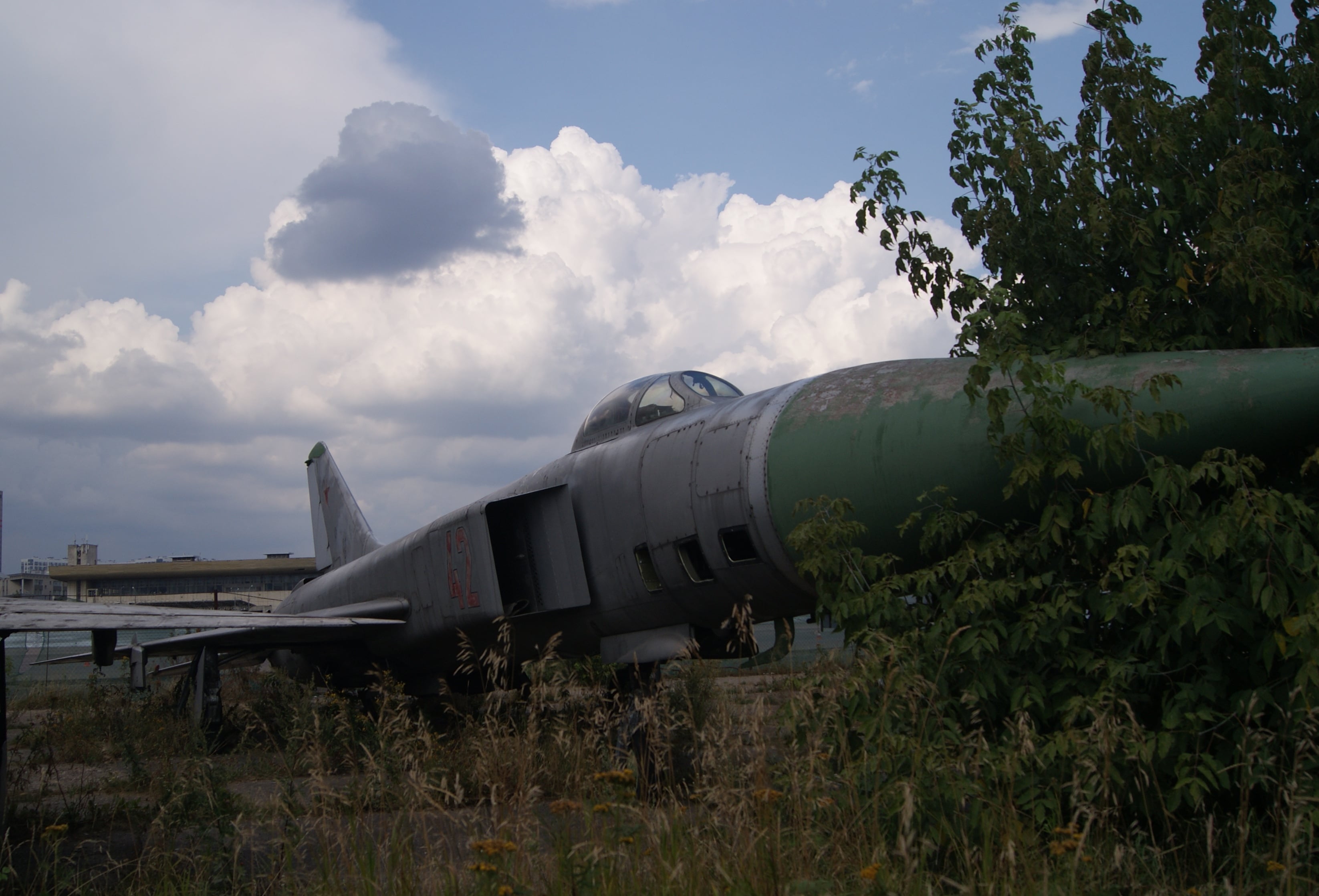
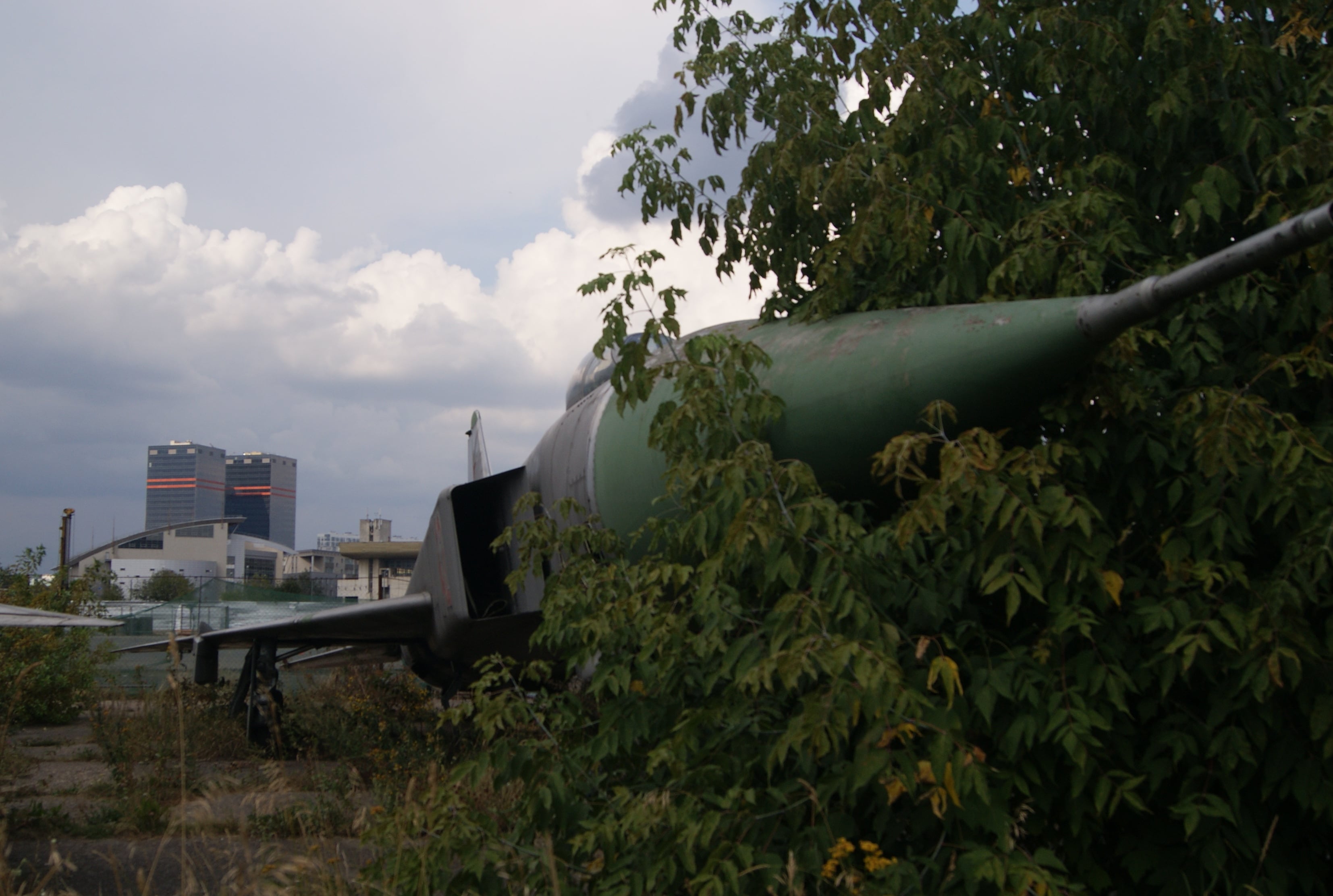
Where the Flagon flew
An interceptor that rarely fired in anger
The Su-15 never fought an enemy fighter and scored no air-to-air victories in war. For thirty years its record was one of vigilance — scrambles, interceptions and shadowing of aircraft near Soviet borders that ended without a shot. The exceptions were not victories in any ordinary sense: on three occasions Flagon pilots fired on, rammed or destroyed civil and transport aircraft that had entered prohibited airspace, twice with the loss of civilian lives. Those incidents, not any dogfight, are how the world came to know the type.
See the wider combat record of every military aircraft. The two airliner incidents are described factually in the stories and Q&A above and below.
Everything people ask about the Su-15
Can I fly in a Su-15?
How fast was the Su-15?
Was the Su-15 ever exported?
Did a Su-15 shoot down Korean Air Lines Flight 007?
What happened to Korean Air Lines Flight 902?
What weapons did the Su-15 carry?
Is the Su-15 still in service?
You can’t fly the Su-15.
These, you can.
Some legends only live in museums — others are fuelled and waiting. MiGFlug has put civilians in real military jet cockpits since 2004.
 Fly the L-39 AlbatrosThe world’s most-flown jet trainer — aerobatics included
 Fly the F-104 Starfighter“The missile with a man in it”
 Fly the MiG-21The Cold War’s most-produced jet
 Управляйте самолетом T-33 Shooting Star.America’s first jet trainer
 Fly the DH VampireA piece of early jet history
 Fly the S.211Agile Italian jet trainer
 Fly the MB-326The classic Aermacchi jet
 Fly the MiG-15The Soviet legend of the Korean War
Continue the tour
Every fact, checked
- GlobalSecurity.org — Su-15 FlagonDevelopment history, service dates, production totals and the shootdown record.
- Encyclopaedia Britannica — Korean Air Lines flight 007Reference account of the 1 September 1983 shootdown and its aftermath.
- The Aviation Geek Club — KAL 007The interception, Major Osipovich and the sequence over Sakhalin.
- Assoc. for Diplomatic Studies & TrainingDiplomatic fallout of the Flight 007 tragedy and the Cold-War context.
- Sierra Hotel Aeronautics — KAL 902The 1978 interception, the missile strike and the landing on the ice.
- Air Mobility Command Museum — KAL 007Museum retrospective on the flight and the navigation legacy.
- The National Interest — Su-15 FlagonOverview of the type, its role and its association with the KAL incidents.
- MiGFlug Afterburner — The night Flight 007 never came homeMiGFlug’s own long-form account of the 1983 shootdown.