
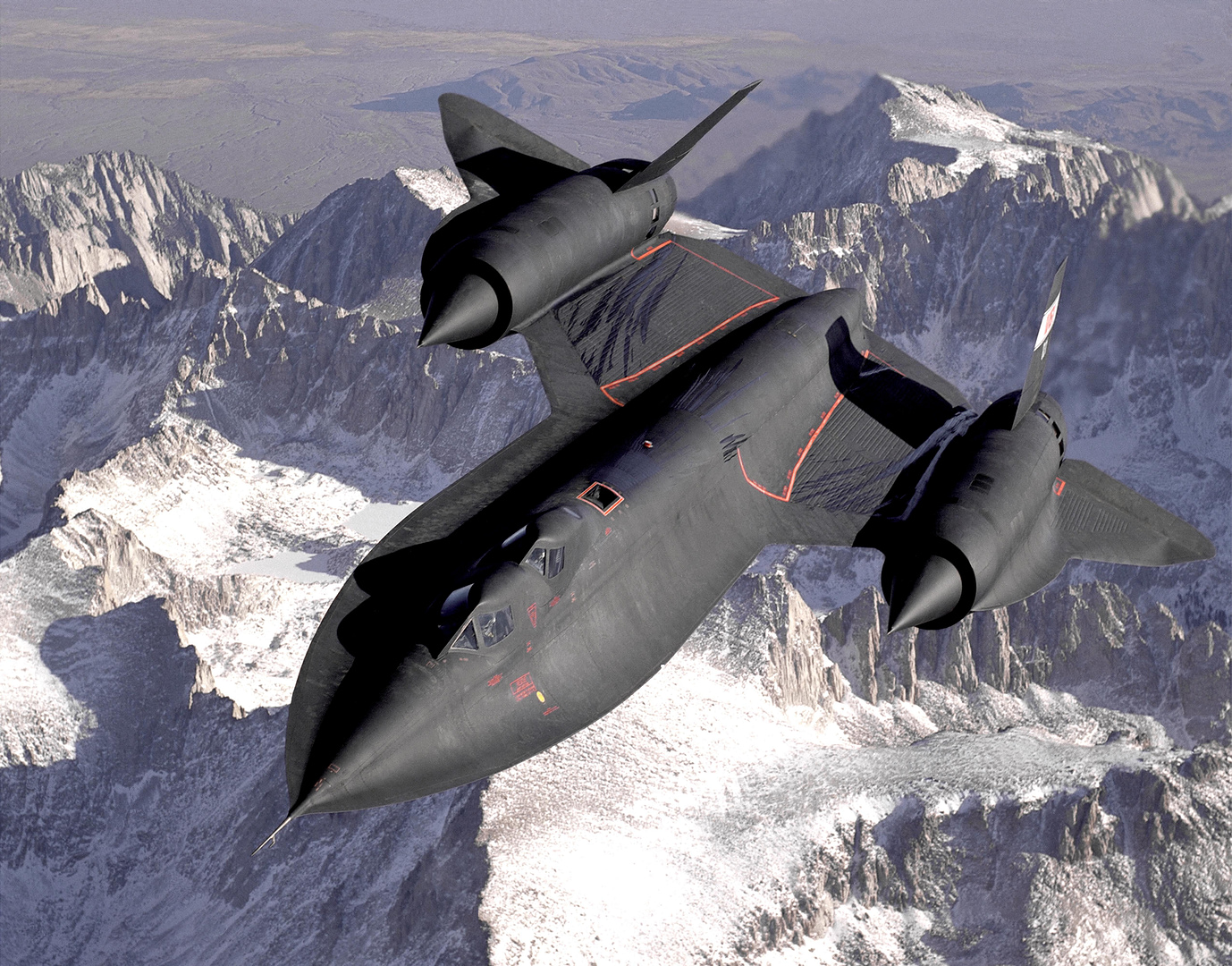
Lockheed SR-71
“Blackbird”
The fastest air-breathing manned aircraft ever built. Designed in secret, made of titanium bought from the country it spied on, and never once shot down.
Built because a U-2 fell out of the sky
On 1 May 1960, a Soviet SA-2 missile brought down Francis Gary Powers’ U-2 over Sverdlovsk — and with it, America’s assumption that altitude alone could keep a spy plane safe. The answer, already taking shape behind the fences of Lockheed’s Skunk Works under Clarence “Kelly” Johnson, was not to fly a little higher or a little faster. It was to fly so high and so fast that no missile, no interceptor, and no radar operator could do anything but watch.
The design brief was without precedent: sustain Mach 3+ for hours, at the edge of space, over the most heavily defended territory on Earth. At those speeds, airframe surfaces heat past 300 °C — aluminium gives up. So the Blackbird became the first aircraft built almost entirely of titanium, painted in radar-absorbing deep blue-black that also radiated heat away, giving the aircraft its name.
From 1966 to 1998 the SR-71 flew reconnaissance missions over Vietnam, North Korea, the Middle East and along the borders of the Soviet Union. Its standard evasive manoeuvre when a missile launch was detected remains the most quoted line in its story: simply accelerate.
01The SR-71 Blackbird’s lineage: from the A-12 Oxcart to the fastest jet ever
The Blackbird most people know is actually the third act of the story. It evolved directly from the Lockheed A-12 Oxcart, a single-seat CIA aircraft that was lighter, marginally faster, and so secret its existence wasn’t acknowledged for decades. Between them came the YF-12, an experimental interceptor version armed with missiles — the only Blackbird ever meant to shoot rather than photograph.
The Air Force variant was originally designated RS-71, for “Reconnaissance Strike.” When President Lyndon B. Johnson publicly revealed the programme in July 1964, he announced it as the SR-71 — “Strategic Reconnaissance.” The popular legend says Johnson misread his script and the Air Force quietly renamed the aircraft rather than correct a president; historians lean toward a deliberate change made before the speech. Either way, thousands of blueprints had to be revised.
Everything about the programme ran on that kind of secrecy. Crews were recruited by invitation only, families couldn’t be told what the aircraft did, and the jet’s radar-evading shape and special fuel were decades ahead of the public state of the art — the SR-71 was practising low observability before the word “stealth” existed.
What makes it special
Titanium — bought from the enemy
Over 85% of the airframe is titanium alloy, the only metal that could take sustained Mach 3 heat. The USSR was the world’s main supplier — so the CIA quietly sourced the ore through third-party shell companies. The Blackbird that spied on the Soviet Union was, in part, made of Soviet titanium.
An engine that transforms in flight
The Pratt & Whitney J58 is a hybrid: a turbojet at low speed that progressively behaves like a ramjet as the moving inlet spikes channel air around the core. Above Mach 3, most of the thrust comes from the inlets and afterburner — the faster it flew, the more efficient it got.
It leaked fuel by design
Panels were fitted loosely on the ground because the airframe stretches several centimetres and seals itself as friction heats it in flight. A Blackbird dripped JP-7 on the ramp, took off with light tanks, and refuelled from a tanker once airborne — then outran everything.
02The SR-71’s titanium: how the CIA secretly bought it from the Soviet Union
Roughly 85% of the airframe needed titanium — the only metal light enough and heat-tolerant enough for sustained Mach 3. The problem: the United States lacked an adequate domestic supply of the necessary rutile ore, and the world’s dominant source was the Soviet Union itself.
So the CIA built a procurement network of third-country shell corporations and bogus front companies — reportedly including operations posing as manufacturers of pizza ovens — to quietly buy Soviet titanium and route it to Burbank. The aircraft built to spy on the USSR was, in a very real sense, made of the USSR.
Even with the metal in hand, nobody had ever manufactured with titanium at this scale. Early on, Lockheed was scrapping the majority of machined parts: the alloy cracked if it touched chlorine (the plant’s tap water was banned from contact with it) and drill bits that cut steel all day were ruined in moments. The Skunk Works essentially had to invent titanium manufacturing for the entire aerospace industry.
03The SR-71’s J58 engine: how it turns into a ramjet in flight
At takeoff, the J58 works like a conventional afterburning turbojet. As speed builds, the story changes completely — and the key is the pointed inlet spike ahead of each engine, which translates rearward up to 66 cm to position the supersonic shock wave precisely, slowing and compressing incoming air before it ever reaches the compressor.
Above roughly Mach 2, six bypass tubes open and duct air from the fourth compressor stage around the engine core, straight to the afterburner — effectively converting the engine into a ramjet with a turbojet idling at its centre. At Mach 3.2 cruise, the majority of thrust is generated by the inlet and afterburner. The consequence pilots loved: the faster it flew, the more efficient it became — range figures were actually better at Mach 3 than at Mach 2.8.

J58 airflow at different speeds — how the same engine breathes three different ways.
04Why touching the SR-71 Blackbird can cut you
Museum docents warn visitors for good reason — this aircraft is physically hostile to human hands, in at least three ways.
Intentional panel gaps
The airframe was engineered with loose, unsealed titanium panels to absorb massive thermal expansion at Mach 3. Cold on the ground, those panels contract, leaving exposed, razor-sharp edges and gaps across the fuselage.
Knife-edge chines
The long lateral extensions running from the nose along the fuselage — the chines — are remarkably thin and sharp. They generate lift, improve stability, and scatter radar, and they will slice an unwary finger.
Corrugated wing skin
Large sections of the wing use corrugated titanium so the skin can flex instead of warping under heat. Sliding a bare hand quickly across those rigid ridges can cut skin like a serrated edge.
And don’t touch it after landing
Aerodynamic friction heats the skin to around 316 °C and the windshield to 260 °C — crews waited for the airframe to cool before ground handling. Add the film of leaked JP-7 on the skin and the toxic triethylborane (TEB) used to ignite the engines, and the world’s fastest aircraft is also one you approach with respect on the ground.
05The SR-71’s fuel: JP-7 and TEB explained
JP-7 was created specifically for this aircraft: a fuel with a flashpoint so high you could reportedly drop a lit match into a bucket of it and watch the match go out. That safety at 300 °C skin temperatures came with a catch — it’s so reluctant to ignite that a conventional igniter can’t light it at all.
The answer was triethylborane (TEB), a chemical that bursts into flame on contact with air. Each engine carried a small sealed tank with enough TEB for 16 injections — one for every engine start and every afterburner light. Crews counted them like ammunition: run out of TEB shots, and no amount of fuel on board will relight your engine. The fuel also doubled as coolant and hydraulic fluid, circulating heat away from the crew and systems before being burned.
Feeding all this was its own operation: a dedicated fleet of KC-135Q tankers, the only aircraft plumbed for JP-7, choreographed along every mission route.
Full specifications
Airframe & Performance
- Mürettebat
- 2 — Pilot + Reconnaissance Systems Officer
- Uzunluk
- 32.74 m
- Kanat açıklığı
- 16.94 m
- Yükseklik
- 5.64 m
- Max takeoff weight
- ~78,000 kg
- Max speed
- Mach 3.3 · 3,529.6 km/h
- Servis tavanı
- 25,900 m (85,000 ft)
- Menzil
- ~5,400 km unrefuelled
Propulsion & Systems
- Engines
- 2 × Pratt & Whitney J58
- Thrust (each)
- 145 kN with afterburner
- Fuel
- JP-7 (high flashpoint, custom)
- Silahlanma
- None — speed was the defence
- Sensors
- Cameras, side-looking radar, ELINT
- First flight
- 22 December 1964
- Built
- 32 (12 lost, all in accidents)
- Unit cost
- ~$34 million (1960s USD)
- Cost per flight hour
- ~$85,000 (1990s estimate)
06Every Blackbird variant: A-12 Oxcart, YF-12 and SR-71A/B/C — including the “Bastard”
The family tree: the CIA’s single-seat A-12 Oxcart (13 built, lighter and marginally faster), the missile-armed YF-12 interceptor prototype (3 built), the mainline SR-71A (29 built), the twin-cockpit SR-71B trainer with its raised instructor station (2 built), and the one-off SR-71C — assembled from the front half of a static test airframe and the back half of a crashed YF-12, flying slightly crooked its whole life and known to crews as “the Bastard.”
07The SR-71 Blackbird’s operating costs: what Mach 3 actually cost
Each SR-71 cost about $34 million in 1960s dollars — several hundred million per airframe in today’s money. But buying the jet was the cheap part.
Operating it is commonly estimated at around $85,000 per flight hour in then-year dollars, and analyses that include the dedicated KC-135Q tanker fleet, the special JP-7 fuel chain and the pressure-suit crew infrastructure put the true figure at up to $200,000 per hour — among the most expensive aircraft ever operated.
Across 34 years the fleet logged 53,490 total flight hours, of which 11,675 were flown above Mach 3. Set against a development and production programme on the order of a billion 1960s dollars, every single flight hour carried roughly $20,000 of programme cost before a drop of fuel was burned. That arithmetic — more than any missile — is what finally retired the Blackbird: reconnaissance satellites don’t bill by the hour.
The thirst behind those numbers: at cruise the Blackbird burned 36,000–44,000 lbs of JP-7 per hour — about 5,500–6,700 US gallons, or 3–4 gallons every second, roughly 20 lbs of fuel per mile. Its six tanks held up to 80,000 lbs (~12,200 gallons), yet it typically took off with a partial load, met a KC-135Q tanker minutes after takeoff, and refuelled roughly every 90 minutes for the rest of the mission.
Thirty-five years at Mach 3
First flight
22 December — the SR-71 flies from Palmdale, California, exceeding Mach 1 on its maiden flight.
First operational missions
Blackbirds begin overflights of Vietnam and North Korea from Kadena Air Base, Okinawa.
The records that still stand
28 July — 3,529.6 km/h absolute speed and 25,929 m sustained altitude, both still unbeaten by any air-breathing manned aircraft.
A retirement flight for the ages
On its delivery flight to the Smithsonian, an SR-71 crosses the USA — Los Angeles to Washington D.C. — in 64 minutes 20 seconds.
Final flight
After a brief mid-90s reactivation and final service with NASA as a research platform, the last Blackbird flight closes the programme.
From the cockpit: twelve Blackbird stories
The Los Angeles speed check
A Cessna, a Beechcraft and a Navy F/A-18 ask ATC for ground-speed readouts. Far above them, Brian Shul and Walter Watson key the radio.
Read the full story
Coast to coast in about an hour
On 6 March 1990, Ed Yeilding and Joseph Vida flew SR-71 #972’s last Air Force flight — its delivery to the Smithsonian.
Read the full story
The man who survived Mach 3.18
Bill Weaver’s SR-71 broke apart around him at 24,000 metres. He never ejected — the aircraft simply disintegrated.
Read the full story
Three days over Libya
After the April 1986 airstrikes, Brian Shul and Walter Watson flew three consecutive daily reconnaissance missions over the strike zones.
Read the full story
The Hanoi sonic boom
In May 1972, three SR-71s overflew North Vietnam in coordination — and their overlapping sonic booms became a weapon of their own.
Read the full story
To the Yom Kippur War — from New York
When war erupted in October 1973, Blackbirds mapped the battlefield for Washington, flying round trips of over ten hours from the continental USA.
Read the full story
New York to London in under two hours
On 1 September 1974, an SR-71 crossed the Atlantic in 1 hour 54 minutes — a record that still stands.
Read the full story
The day the Swedes escorted a wounded Blackbird
An engine failed at Mach 3 over the Baltic. What happened next stayed classified for 30 years.
Read the full story
The “bow-tie” missions and the phantom city
On moonless nights over the Korean DMZ, crews flew looping double-circuit patterns — and once photographed a city that didn’t exist.
Read the full story
Finding the Silkworms
Flying from Kadena, Blackbird crews patrolled the Persian Gulf during the Tanker War — and found the missiles threatening the world’s oil shipping.
Read the full story
The Blackbird’s own drone
Before satellites took over, the Blackbird family briefly carried its own Mach 3 drone on its back. It ended in tragedy.
Read the full story
The Habu
Why crews at Kadena wore a snake patch: locals thought the black jet resembled the habu pit viper — and the name stuck.
Read the full story
The Blackbird in pictures
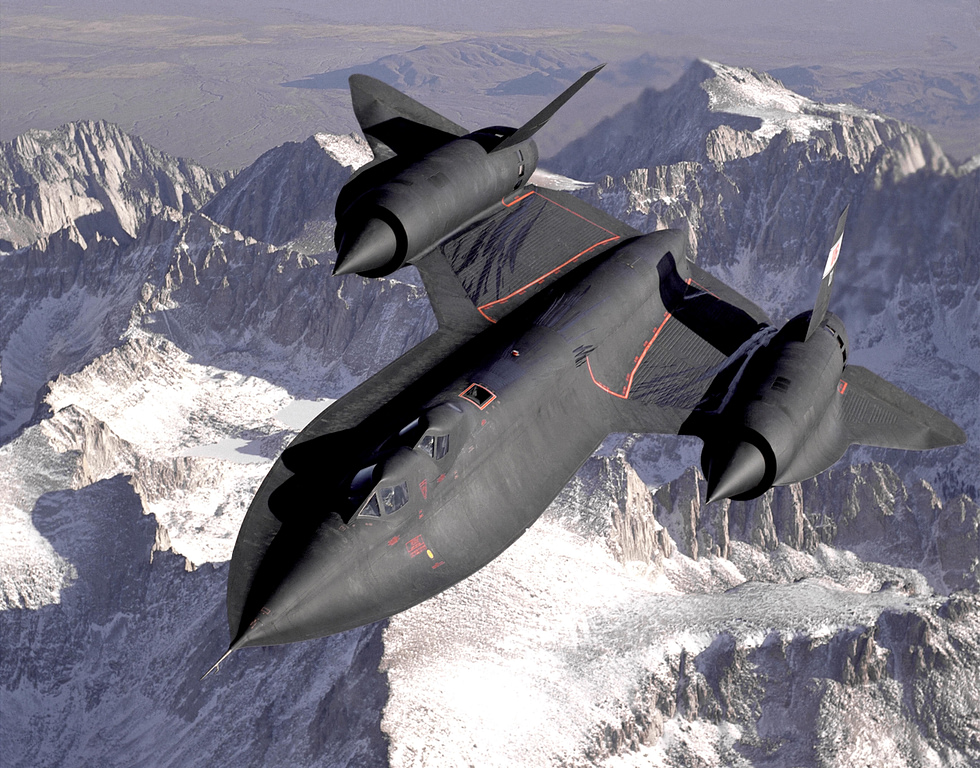
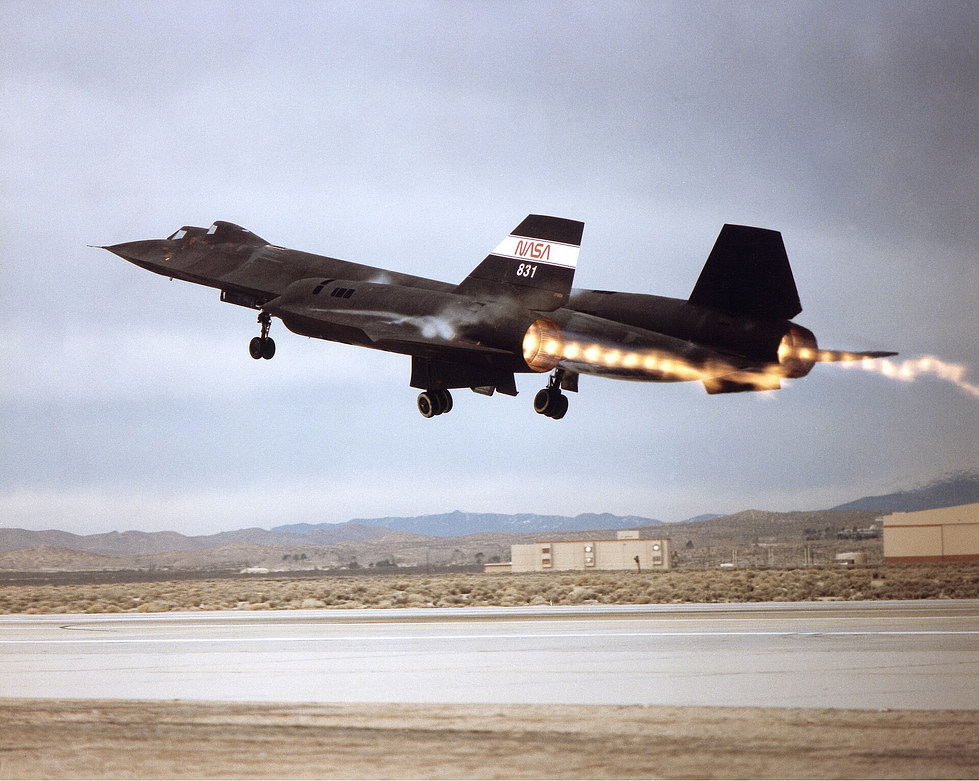
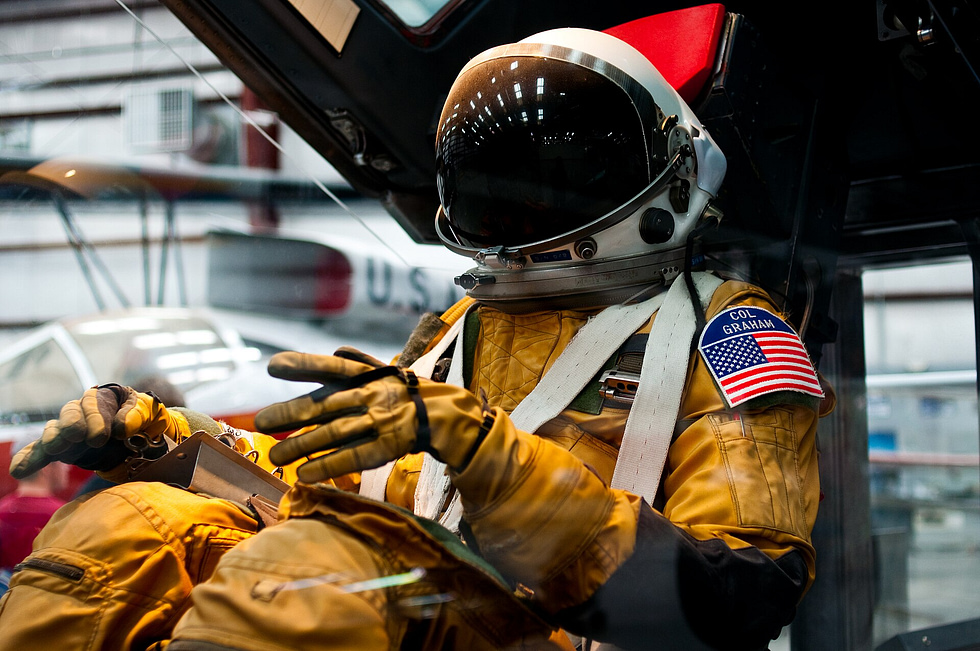
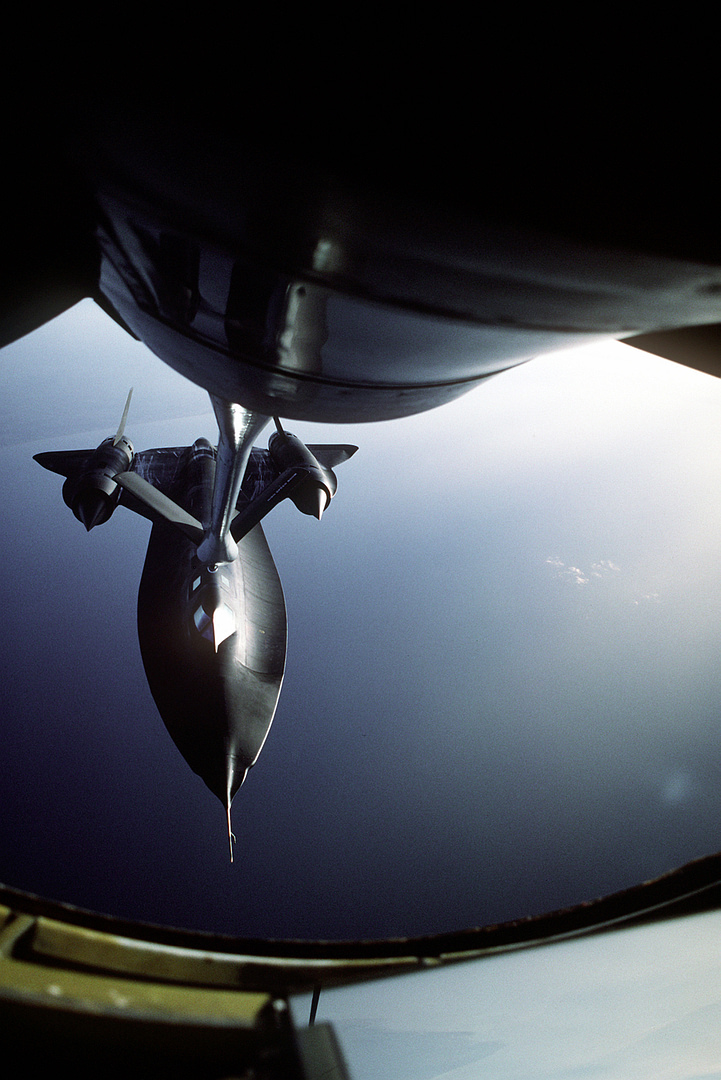
The Blackbird in motion
Real Engineering: The Insane Engineering of the SR-71 Blackbird — 10 million views, the definitive technical breakdown.
Where the Blackbird flew
The score that defines it
Over more than two decades of missions into defended airspace, interceptors scrambled and surface-to-air missiles rose to meet the Blackbird again and again. The outcome never changed.
Compare the combat record of every military aircraft. Data as of July 2026.
Everything people ask about the SR-71
Can I fly in an SR-71 Blackbird?
What is the fastest aircraft in the world?
How fast was the SR-71 really?
Why did the SR-71 leak fuel on the ground?
How much fuel did the SR-71 burn per hour?
Was the SR-71 ever shot down?
Why did SR-71 crews wear spacesuits?
What replaced the SR-71?
Where can I see an SR-71 today?
You can’t fly the Blackbird.
These, you can.
Some legends only live in museums — others are fuelled and waiting. MiGFlug has put civilians in real military jet cockpits since 2004.
 Fly the L-39 AlbatrosThe world’s most-flown jet trainer — aerobatics included
 Fly the F-104 Starfighter“The missile with a man in it”
 Fly the MiG-21The Cold War’s most-produced jet
 T-33 Shooting Star'ı uçurunAmerica’s first jet trainer
 Fly the DH VampireA piece of early jet history
 Fly the S.211Agile Italian jet trainer
 Fly the MB-326The classic Aermacchi jet
 Fly the MiG-15The Soviet legend of the Korean War
Continue the tour
Every fact, checked
- Smithsonian National Air and Space Museum — Lockheed SR-71 BlackbirdMuseum record of airframe #972, including the 1990 coast-to-coast record
- Smithsonian NASM — 10 cool things about the SR-71Panel gaps, skin temperatures and museum handling
- Smithsonian Magazine — Cold War spycraftProgramme history and the RS-71/SR-71 designation
- NASA Armstrong — SR-71 fact sheetTechnical data and NASA research flights
- Imperial War Museums — SR-71 BlackbirdOperational history including Persian Gulf missions
- Evergreen Aviation & Space MuseumTitanium procurement and construction
- Hush-Kit — “I flew the SR-71 in the Cold War”First-hand pilot interview, incl. Yom Kippur missions
- theSR71blackbird.com — crew stories archiveMission accounts collected from programme veterans
- The National Interest — the strangest SR-71 missionsThe Korean DMZ “bow-tie” sorties
- Brian Shul — Sled Driver: Flying the World’s Fastest JetPilot memoir; source of the LA speed check and Libya accounts
- MiGFlug Afterburner — why the SR-71 leaked fuelJP-7 fuel system deep-dive
Hero and gallery photography: U.S. Air Force / NASA, public domain. Combat statistics as of July 2026. Spotted an error? Every page in the Aircraft Museum is fact-checked before publication — write to us and we’ll correct it.