
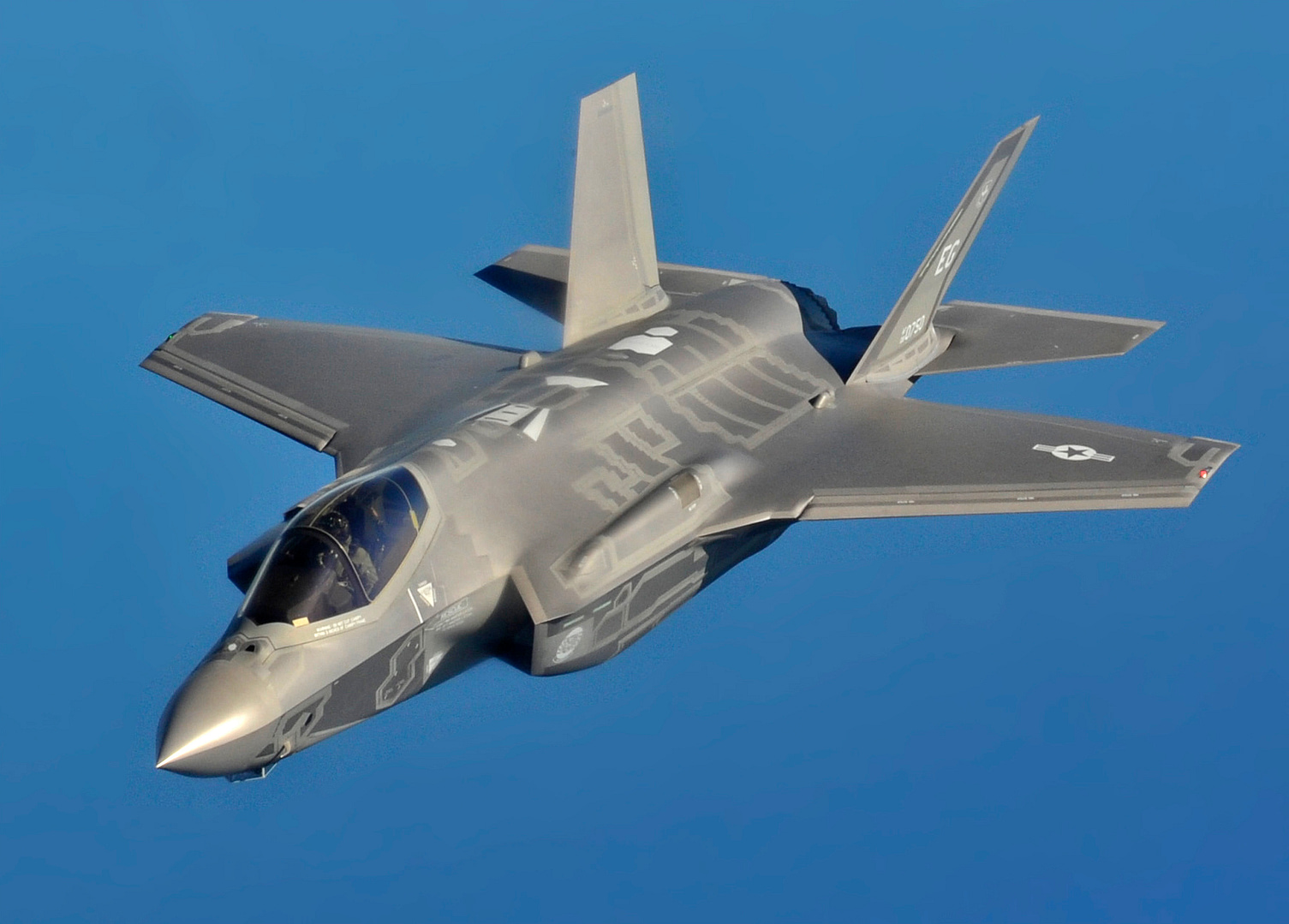
Lockheed Martin F-35
Lightning II
The West’s global stealth multirole fighter — a single stealthy airframe built in three flavours, flown by roughly 20 nations, and armed less with missiles than with information. The most-produced fifth-generation fighter in the world, and by lifetime cost the most expensive weapons programme in history.
The F-35: one airframe, three shapes, twenty air forces
The F-35 grew out of the U.S. Joint Strike Fighter programme of the 1990s — an attempt to build a single, affordable stealth fighter family for the Air Force, Navy and Marine Corps plus allies. In a competitive fly-off, Lockheed Martin’s X-35 beat Boeing’s X-32; its shaft-driven lift fan impressed evaluators, and in October 2001 the aircraft became the F-35. The first F-35 flew in December 2006, and after a long, troubled and hugely expensive development the type entered service across three services and many nations.
What makes the F-35 unusual is that it is three variants on one design language: the land-based F-35A, the vertical-landing F-35B, and the big-winged carrier F-35C. Cockpit, sensors and stealth are common; only about a fifth of each airframe differs. That compromise is what made a shared, multinational programme possible — and it is why the F-35 has become the standard-issue stealth fighter for NATO and key Pacific partners.
But the F-35’s real weapon is not a missile — it is information. Radar, infrared, electronic-warfare and off-board sensors are fused into one clear picture and handed to a single pilot who acts as the “quarterback of the sky.” Fiercely criticised for delays and a lifetime cost running into the trillions, the F-35 has nonetheless become the backbone of American and allied air power, with more than a thousand built and orders still climbing.
01The F-35’s origins: how the Joint Strike Fighter became one jet for three services
The Joint Strike Fighter programme set out to do something the U.S. had never quite managed: replace a whole generation of legacy jets — F-16s, A-10s, F/A-18s, AV-8B Harriers — with one affordable stealth family. In a 1996–2001 fly-off, Boeing’s X-32 met Lockheed Martin’s X-35. The X-35 first flew on 24 October 2000, and its clever shaft-driven lift fan let it take off short, go supersonic and land vertically in a single demonstration. On 26 October 2001 Lockheed Martin won the contract, and the X-35 became the F-35.
The result was the costliest weapons programme in history — U.S. GAO estimates the lifetime cost above $2 trillion — but also the most-produced fifth-generation fighter in the world. Lockheed Martin delivered the 1,000th F-35 in 2024, and the planned fleet runs well past 3,000 aircraft across the U.S. services and around 20 partner and export nations.
What makes the F-35 special
Stealth with internal weapons
The F-35’s shaping, radar-absorbent materials and internal carriage give it a very low radar signature. In “clean” stealth configuration every weapon rides in internal bays — air-to-air missiles and precision bombs — so nothing hangs outside to reflect radar. When stealth isn’t needed, external pylons let it haul heavy loads in “Beast Mode.”
The lift system that hovers a stealth jet
The F-35B hovers using the Rolls-Royce LiftSystem: a driveshaft off the main engine spins a counter-rotating LiftFan behind the cockpit, while a Three-Bearing Swivel Module rotates the rear nozzle roughly 95° downward and roll posts in the wings balance the jet. Together they push some 40,000 lbf straight down — letting a supersonic stealth fighter land vertically on a ship deck.
Sensor fusion, DAS and the helmet
An AESA radar, an electro-optical targeting system and the Distributed Aperture System — six cameras giving 360° coverage — are fused into one battlespace picture. The Gen III Helmet-Mounted Display projects that data, plus a see-through-the-airframe view, onto the pilot’s visor. Data links let a whole flight of F-35s share a single fused track picture.
02The F-35B’s lift fan: how a supersonic stealth fighter lands like a helicopter
Behind the F-35B’s cockpit sits a counter-rotating LiftFan, driven by a driveshaft off the main engine and producing roughly 20,000 lbf of cool vertical thrust. At the tail, a Three-Bearing Swivel Module rotates the exhaust nozzle about 95° downward in around 2.5 seconds, while small roll posts in the wings keep the jet level. The combination lets the F-35B settle vertically onto a flight deck or an austere strip — a feat no other production stealth jet can match, and the single hardest engineering problem the whole programme had to solve.
03The F-35’s $400,000 helmet: a flight helmet that lets pilots see through the jet
The F-35’s Gen III Helmet-Mounted Display is custom-fitted to each pilot’s head and reportedly costs around $400,000. It streams flight data, targeting cues and night vision directly onto the visor, and — fed by the Distributed Aperture System’s six cameras — lets a pilot literally look through the floor and walls of the aircraft. There is no traditional head-up display; the helmet is the display, and it is central to how the F-35 turns raw sensor data into a picture a single pilot can act on.
Full F-35A specifications
Airframe & Performance
- Mürettebat
- 1
- Uzunluk
- ~15.7 m (51 ft)
- Kanat açıklığı
- ~10.7 m (35 ft)
- Yükseklik
- ~4.4 m (14 ft)
- Max takeoff weight
- ~31,800 kg (70,000 lb class)
- Max speed
- Mach 1.6 · ~1,200 mph
- Servis tavanı
- Above ~15,000 m (50,000 ft)
- Combat range
- 1,200+ nmi internal; unlimited with refuelling
Propulsion & Systems
- Motor
- 1 × Pratt & Whitney F135-PW-100
- Thrust
- ~125 kN dry / ~191 kN afterburner
- Gun
- Internal GAU-22/A 25 mm (F-35A); podded on B/C
- Weapons
- AIM-120 AMRAAM, AIM-9X, JDAM, SDB (internal); external “Beast Mode”
- First flight
- 15 December 2006 (F-35A)
- Built
- >1,000 (all variants, by 2026)
- Unit cost
- ~US$80M flyaway (F-35A baseline)
- Programme cost
- ~US$2 trillion+ lifetime (U.S. GAO)
04The F-35’s cost: the trillion-dollar fighter, explained
Three very different numbers get quoted for the F-35, and they mean different things. The flyaway unit cost of an F-35A has fallen toward roughly US$80 million in recent baseline lots — comparable to older fourth-generation jets — though recent production lots (Lot 18) have been reported above ~US$100M per aircraft. The figure critics cite, however, is the lifetime programme cost: the U.S. Government Accountability Office estimates it will exceed US$2 trillion across decades of development, procurement and sustainment for a fleet of thousands. When you read that the F-35 is “the most expensive weapon in history,” that is the programme-lifetime figure — not the price of one jet.
Three decades of the F-35 Lightning II
The JSF programme forms
Earlier JAST/CALF efforts merge into the Joint Strike Fighter: one affordable stealth fighter sought for three U.S. services plus allies.
X-35 first flight
Lockheed Martin’s X-35 demonstrator flies, competing against Boeing’s X-32 in the JSF fly-off.
Lockheed wins
The X-35 wins the JSF competition and becomes the F-35; the X-32 becomes aviation’s most famous runner-up.
First flight of the F-35A
The first F-35 — a conventional A-model — takes to the air.
The B and C fly
First flights of the STOVL F-35B and the carrier F-35C; ship trials begin.
First F-35 combat-ready
The U.S. Marine Corps declares the F-35B operational (IOC) — the first F-35 variant ready for combat.
USAF and Navy IOC
The USAF F-35A reaches IOC in August 2016; the U.S. Navy’s F-35C follows in 2019.
Combat debut, twice
Israel’s F-35I Adir makes the type’s first-ever combat use in May; a USMC F-35B flies the first American F-35 strike in Afghanistan in September.
1,000th delivered
Lockheed delivers the 1,000th F-35 in 2024; the fleet passes 1,000+ flying as Poland, Germany, Canada and Finland join.
From the flight line: twelve F-35 stories
X-35 vs X-32 — the fly-off that shaped a generation
Two very different stealth fighters battled for the biggest fighter contract ever.
Read the full story
One jet, three shapes
How do you build a stealth fighter for runways, ships and vertical landings at once?
Read the full story
The lift fan that hovers a stealth jet
A supersonic fighter that lands like a helicopter.
Read the full story
The $400,000 helmet
A flight helmet that costs more than a house — and is worth it.
Read the full story
The quarterback of the sky
The F-35’s deadliest weapon is information.
Read the full story
Israel’s “Adir” draws first blood
The F-35’s combat debut came not over America, but the Middle East.
Read the full story
The trillion-dollar fighter
Is it the most expensive mistake — or the best deal — in military history?
Read the full story
The West’s standard-issue stealth
Buy an F-35 and you join a club of allies.
Read the full story
First combat, twice over
1918? No — 2018.
Read the full story
Stealth on the deck
The F-35B put fifth-gen airpower on small carriers.
Read the full story
Most-produced fifth-gen ever
Built faster than any other stealth fighter.
Read the full story
A vs C — same family, different job
Why the Navy’s F-35 looks “fatter.”
Read the full story
The F-35 Lightning II in pictures
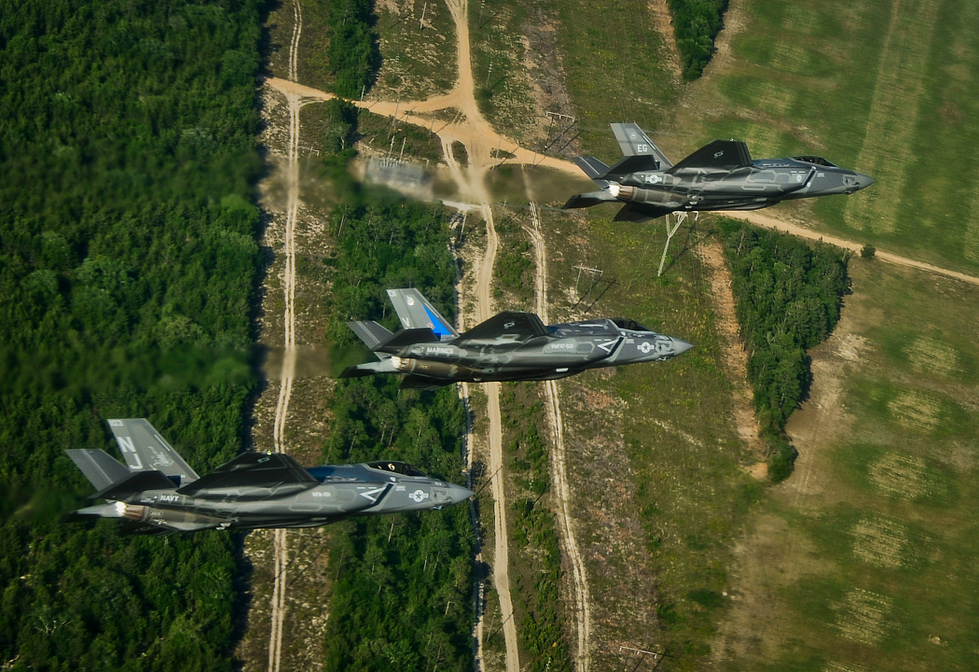
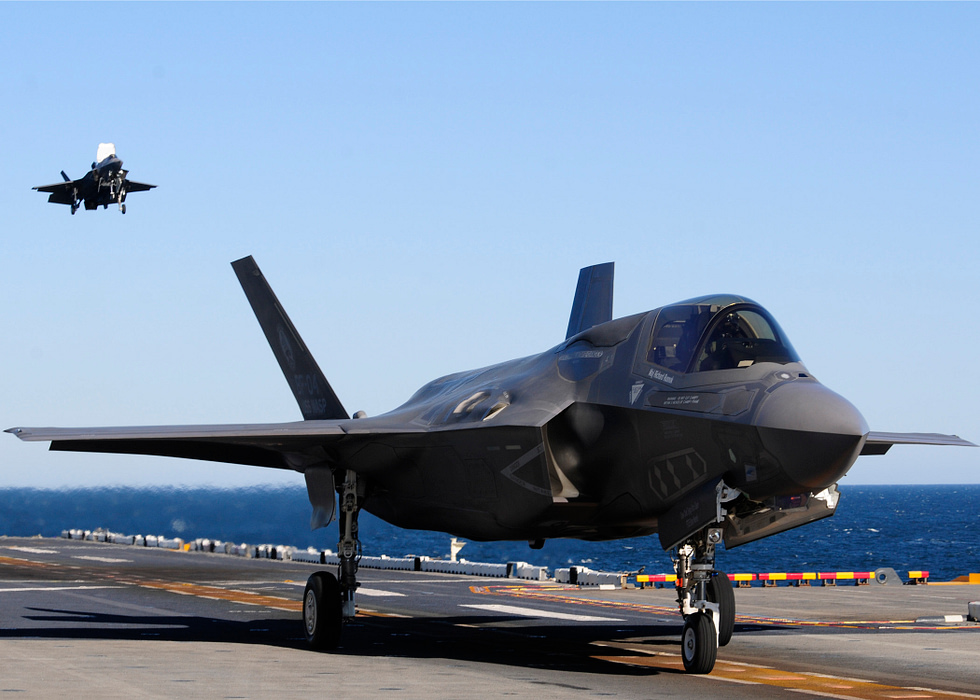
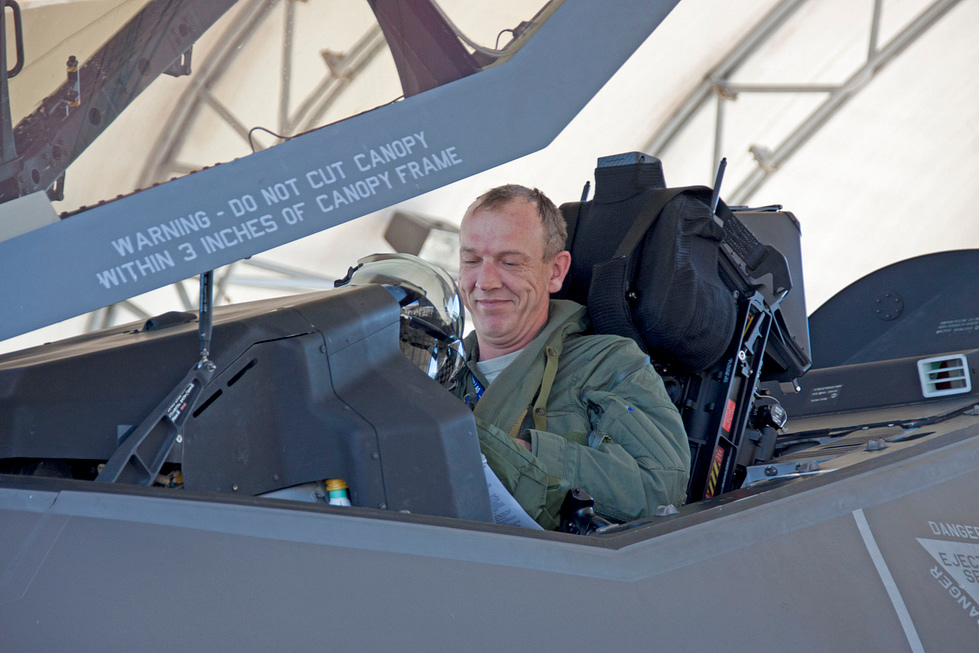
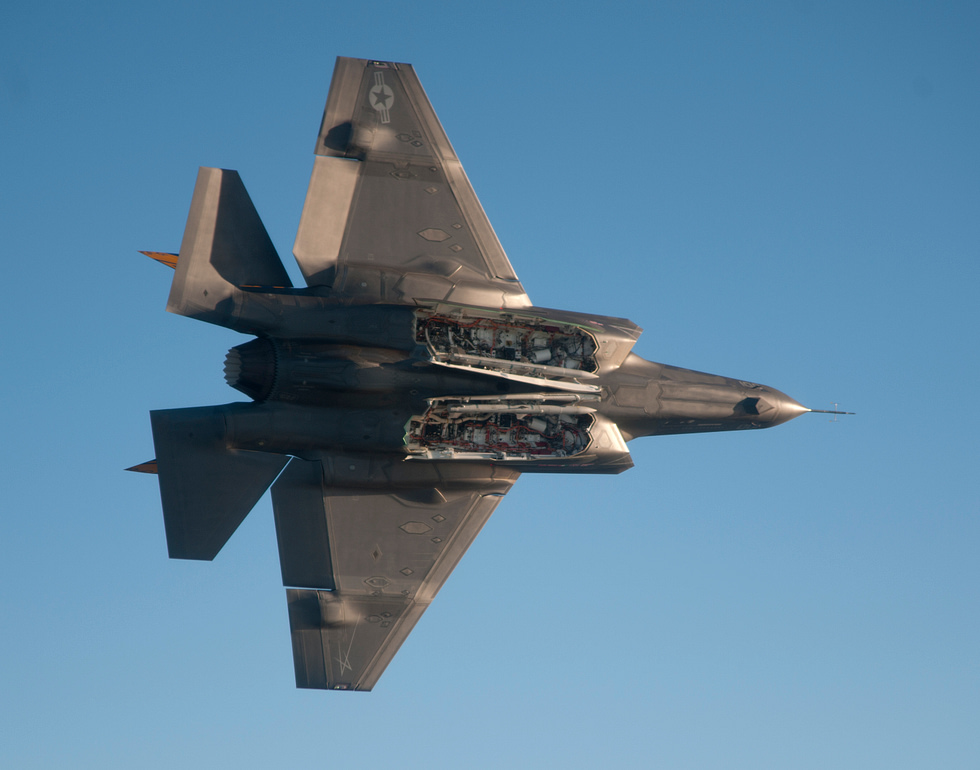
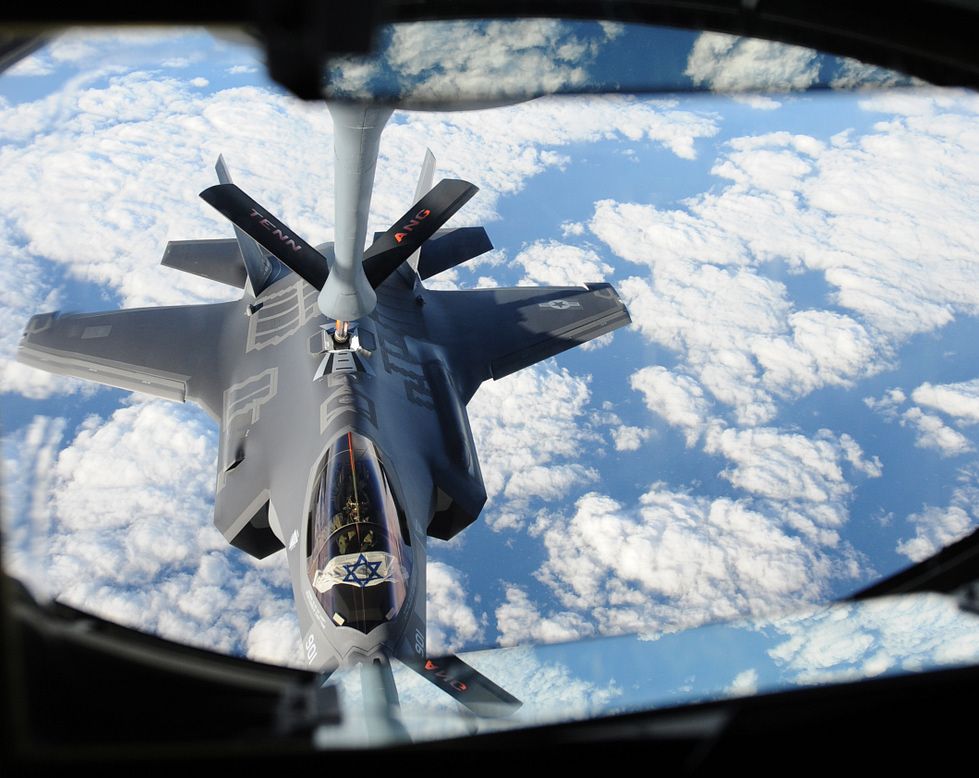
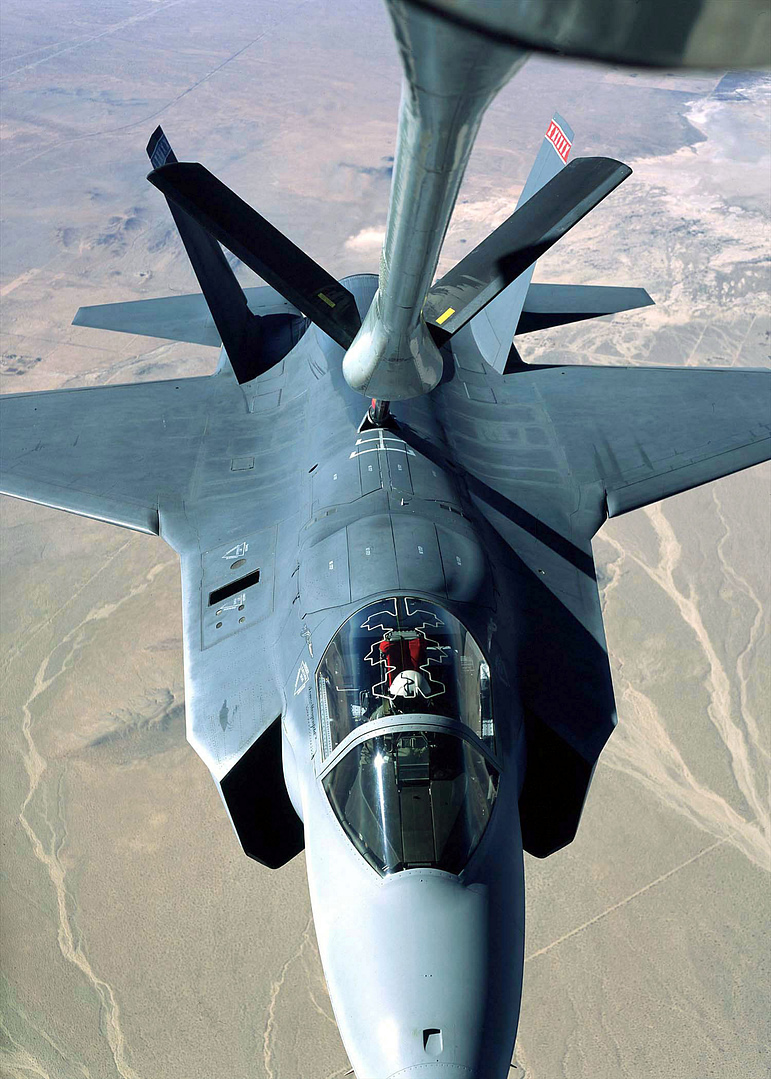
The F-35 Lightning II in motion
A dedicated F-35 Lightning II video is coming soon.
Where the F-35 Lightning II flies
The F-35 in combat
The F-35’s combat career began in 2018 and has grown quickly, though many of its most recent operations are announced by the operators themselves and remain hard to verify independently — treat the newest figures as provisional. What is clear is the breadth of its use across the Middle East and Europe.
The USAF F-35A conducted its first strikes against ISIS in Iraq in April 2019, and the Navy’s F-35C made its combat debut in the Middle East in 2024–25. Israeli F-35Is were reported central to strikes on Iranian targets in 2024–25, with Israeli sources also claiming the first air-to-air kill by an F-35 — claims that are contested and largely single-source. Compare the combat record of every military aircraft. Figures as of July 2026.
Everything people ask about the F-35 Lightning II
Can I fly in an F-35?
How fast is the F-35?
What are the three F-35 variants?
Is the F-35 still in production?
How many nations fly the F-35?
How many F-35s have been built?
How is the F-35 different from the F-22 Raptor?
Why is the F-35 so expensive?
You can’t fly the F-35.
These, you can.
Some legends only live in museums — others are fuelled and waiting. MiGFlug has put civilians in real military jet cockpits since 2004.
 Fly the L-39 AlbatrosThe world’s most-flown jet trainer — aerobatics included
 Fly the F-104 Starfighter“The missile with a man in it”
 Fly the MiG-21The Cold War’s most-produced jet
 T-33 Shooting Star'ı uçurunAmerica’s first jet trainer
 Fly the DH VampireA piece of early jet history
 Fly the S.211Agile Italian jet trainer
 Fly the MB-326The classic Aermacchi jet
 Fly the MiG-15The Soviet legend of the Korean War
Continue the tour
Every fact, checked
- U.S. Air Force — F-35A fact sheetOfficial specifications and role description for the F-35A.
- Air & Space Forces Magazine — F-35 profileProgramme overview, variants and service history.
- Rolls-Royce — LiftSystemHow the F-35B’s vertical-lift LiftFan and swivel nozzle work.
- New Atlas — the Gen III $400k helmetThe helmet-mounted display and Distributed Aperture System.
- U.S. GAO — F-35 lifetime costThe programme cost now estimated to exceed $2 trillion.
- USNI News — first USMC F-35B combat strikeThe first American F-35 combat use, Afghanistan 2018.
- Air & Space Forces Magazine — Lots 18/19 contractRecent production-lot unit costs.
- Wikimedia Commons — F-35 photographsPublic-domain U.S. service imagery used in the gallery above.