
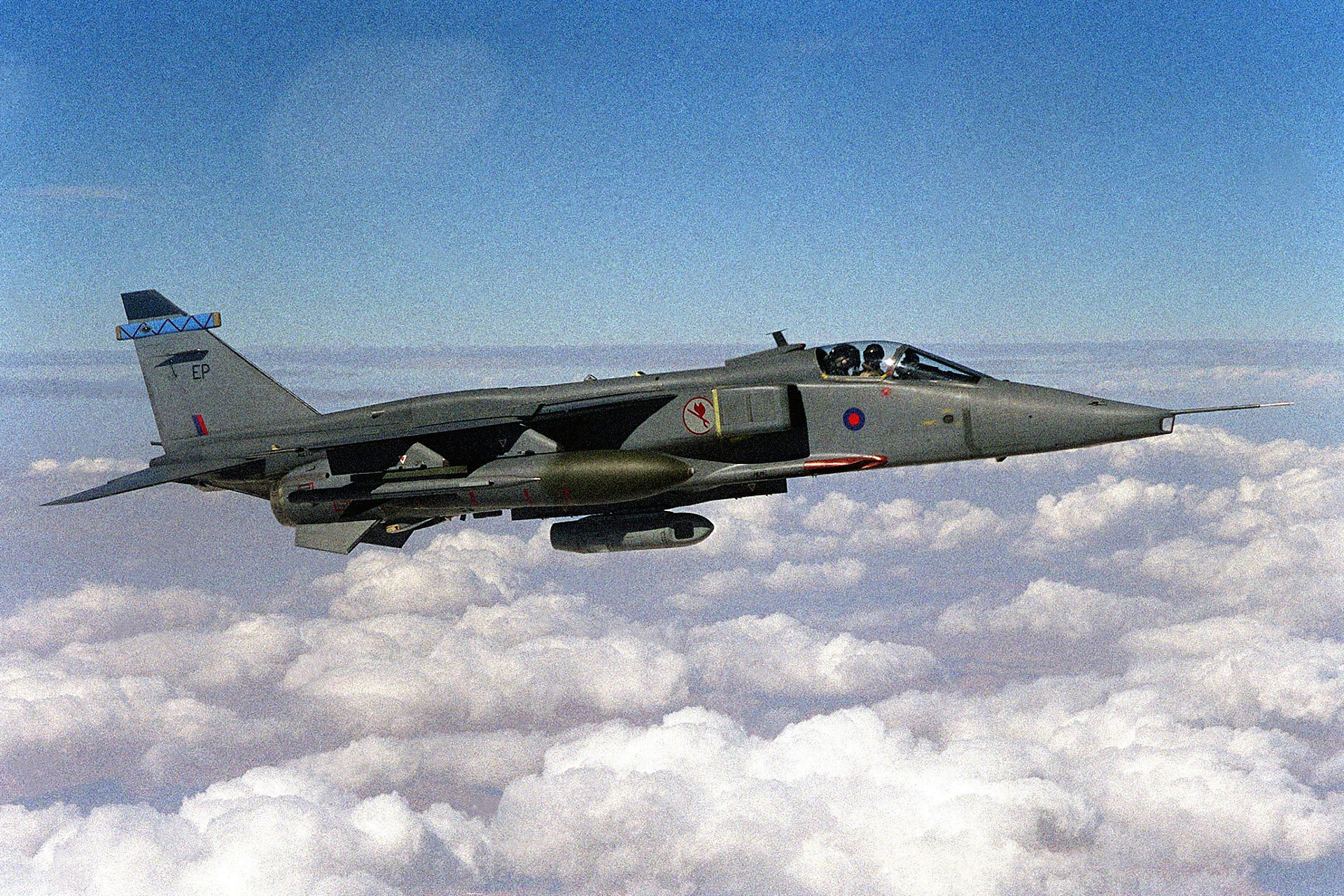
SEPECAT Jaguar
“Shamsher”
The Anglo-French strike jet built to sprint under the radar at treetop height with a nuclear or conventional load — a tough, no-nonsense workhorse still flying frontline missions in India half a century after its first flight.
How the Jaguar became an Anglo-French workhorse
The Jaguar was born of a compromise. In the mid-1960s Britain wanted a supersonic advanced trainer to replace the Gnat and Hunter, while France needed a cheap tactical strike aircraft after the exotic Mirage IIIV vertical-takeoff project collapsed. Rather than each pay for its own jet, the two governments merged their requirements and, in May 1966, created a joint company: SEPECAT — the Société Européenne de Production de l’Avion d’École de Combat et d’Appui Tactique — owned equally by Britain’s BAC and France’s Breguet.
What started as a trainer grew teeth. The requirement swelled to include supersonic performance, reconnaissance and even tactical nuclear strike, and the finished aircraft first flew on 8 September 1968. Breguet built the nose, centre fuselage and landing gear; BAC built the wings, tail and rear fuselage; and Rolls-Royce and Turbomeca jointly developed a brand-new engine, the Adour, for it. Both nations put it into squadron service in 1973.
The RAF and the French Air Force flew the Jaguar hard for three decades — over the Sahara, in the 1991 Gulf War and the Balkans — before retiring it in 2005 and 2007. But the type’s longest and largest career belongs to India, where Hindustan Aeronautics licence-built roughly 120 of them as the Shamsher (“Sword of Justice”). Repeatedly upgraded, India’s Jaguars remain a frontline deep-strike force well into the 2020s — the last of the breed still on active duty anywhere in the world.
01Why the Jaguar was an Anglo-French jet — and how the workshare actually worked
The 1965 Anglo-French memorandum that launched the Jaguar was one of the first serious European defence collaborations, and it set the template for later joint projects like the Tornado and Eurofighter. The industrial split was genuinely shared: Breguet (soon absorbed into Dassault) was responsible for the nose, centre fuselage and undercarriage, while BAC handled the intakes, wings, tail and rear fuselage. Two identical assembly lines ran in parallel — one in France, one at Warton in England — and the engine was itself a joint venture between Rolls-Royce and Turbomeca.
It was not a smooth marriage. The RAF’s demand for supersonic performance forced a heavy redesign of Breguet’s original subsonic baseline, engine development ran late, and early prototypes were lost to fires and undercarriage failures. But the collaboration held together, and the result was an aircraft neither country would have built as cheaply alone.
What makes the Jaguar special
Twin Adours for low-level penetration
The Jaguar was built to do one thing brilliantly: fly fast and very low, under enemy radar, to deliver ordnance on a target and get out. Its two Rolls-Royce/Turbomeca Adour afterburning turbofans gave it the punch for a high-subsonic dash on the deck, while a stable airframe and a moving-map nav-attack system let a single pilot navigate and bomb at 100 metres and 900 km/h. Early RAF jets were criticised as underpowered, and successive Adour marks (Mk.104, Mk.106) steadily added thrust.
Rugged gear for rough, short fields
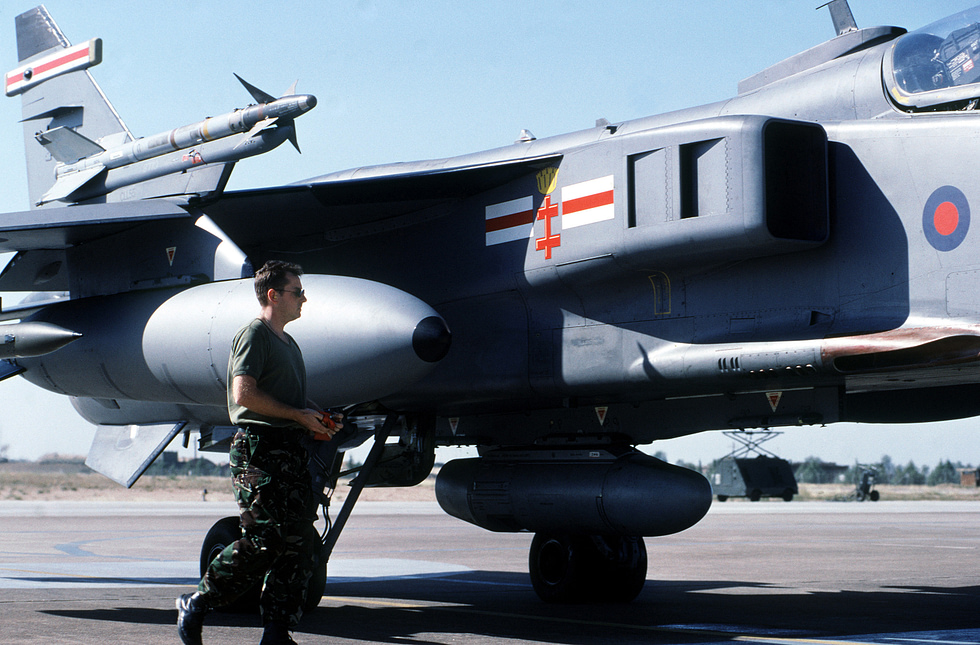
Because NATO expected its runways to be cratered in a war, the Jaguar was engineered to operate from damaged strips and improvised sites. It rides on tough, high-flotation tandem-wheel main landing gear with big low-pressure tyres, and the airframe was stressed for short, hard landings. The point was famously proved in 1975 when an RAF Jaguar landed on the unfinished M55 motorway, was armed with four bombs, and took off again.
India’s DARIN upgrades and nuclear role
India kept the Jaguar relevant far longer than anyone expected by rebuilding its brain. HAL developed the indigenous DARIN (Display Attack and Ranging Inertial Navigation) suite, evolving through DARIN III with a modern multi-mode radar, new cockpit displays and precision weapons. Cleared for a tactical nuclear-strike role and later fitted with Israeli AESA radar and ASRAAM missiles, the Shamsher became a genuinely modern deep-strike platform on a 1960s airframe.
02The Jaguar’s rough-field promise — and how rarely it was used
Dispersed, austere operations were central to the Jaguar’s design brief: in a European war, front-line airfields were expected to be among the first targets, so a strike jet that could work from a stretch of motorway or a semi-prepared strip was hugely valuable. The famous M55 motorway landing of 1975 demonstrated the concept perfectly — land, rearm, relaunch from a public road. In practice, though, the RAF and other operators almost always flew the Jaguar from conventional bases, and the rough-field capability was rarely exercised operationally. It remained an insurance policy more than a routine, but it shaped the aircraft’s tough gear and simple systems.
03From NAVWASS to DARIN III: fifty years of upgrading the Jaguar
The Jaguar entered RAF service with an ambitious but unreliable NAVWASS nav-attack computer that was quickly replaced by inertial navigation. That set the pattern for the whole type: a sound airframe endlessly re-equipped. RAF jets gained laser designators and thermal imaging for the Balkans and Iraq; French Jaguars added laser and Atlis pods. India went furthest, with HAL’s DARIN family taking the aircraft from analogue to a glass cockpit, GPS-aided attack, a multi-mode radar in the DARIN III standard, the Israeli EL/M-2052 AESA radar on a portion of the fleet, and modern air-to-air missiles — keeping a Cold-War strike jet combat-credible into the 2020s.
Full Jaguar specifications
Airframe & Performance
- Mürettebat
- 1 (two-seat trainers seat 2)
- Uzunluk
- 16.83 m
- Kanat açıklığı
- 8.69 m
- Yükseklik
- 4.89 m
- Boş ağırlık
- ~7,000 kg
- Max takeoff weight
- ~15,700 kg
- Max speed
- Mach 1.6 (~1,700 km/h) at altitude
- Savaş yarıçapı
- ~850 km (lo-lo-lo strike)
- Servis tavanı
- ~14,000 m
Propulsion & Armament
- Engines
- 2 × Rolls-Royce/Turbomeca Adour
- Thrust (each, reheat)
- ~32–37 kN depending on mark
- Guns
- 2 × 30 mm (ADEN in RAF, DEFA in French)
- Sert noktalar
- 5 (plus 2 overwing rails on some)
- External ordnance
- ~4,500 kg (bombs, rockets, ASMs, AAMs)
- First flight
- 8 September 1968
- Entered service
- 1973
- Built
- ~573 (1968–1981)
- Unit cost
- No single figure — see note
04What did a Jaguar cost — and what does it cost India to keep flying?
Because the Jaguar was procured through several very different routes — direct Anglo-French government buys in the 1970s, export sales to Oman, Ecuador and Nigeria, and licence production in India — there is no single meaningful flyaway price for the type. Period figures put the 1970s unit cost in the low millions of pounds, but that is not directly comparable across decades and currencies. India’s continued operation of the fleet is driven less by purchase price than by sustainment: spares for a long-out-of-production aircraft are scarce, which is why India has bought retired Jaguars from Oman, Nigeria and elsewhere purely to cannibalise them for parts. Any precise dollar cost-per-flight-hour you see for the Jaguar should be treated as an estimate.
From joint trainer to last strike jet standing
Anglo-French deal
Britain and France sign a memorandum to jointly develop a combined trainer and tactical strike aircraft.
SEPECAT formed
BAC and Breguet create the joint company SEPECAT in May to build the aircraft, splitting the workshare.
First flight
The prototype E.01 flies on 8 September; the British single-seat prototype goes supersonic on its first flight in 1969.
Enters service
The Jaguar joins both the French Air Force and, from May, the RAF as a low-level strike and reconnaissance aircraft.
First shots & first exports
French Jaguars see combat over Mauritania; Ecuador and Oman receive their first export aircraft.
India’s Shamsher
India begins operating loaned RAF Jaguars, then licence-builds them at HAL as the Shamsher deep-strike fighter.
Gulf War
RAF and French Jaguars fly hundreds of strike sorties in Desert Storm, praised for reliability and taking no combat losses.
Kargil
Indian Jaguars fly deep-penetration reconnaissance and strike missions over the Kargil heights against Pakistani positions.
Europe bows out
France retires the Jaguar in 2005 and the RAF follows in April 2007, ending 34 years of European service.
India flies on
Upgraded to DARIN III with AESA radar and new missiles, India’s Jaguars remain frontline, with phased retirement planned from around 2027–2031.
Twelve stories from the Jaguar’s career
A trainer that grew teeth
Britain wanted a trainer, France wanted a striker — the compromise became a nuclear-capable attack jet.
Read the full story
The M55 motorway landing
In 1975 an RAF Jaguar landed on an unfinished motorway, was bombed up, and took off again.
Read the full story
Two countries, one aeroplane
Breguet built the front, BAC built the back, and Rolls-Royce and Turbomeca jointly built the engine.
Read the full story
Debut over the Sahara
French Jaguars first fired in anger against Polisario columns in Mauritania.
Read the full story
Gulf War workhorse
RAF and French Jaguars flew hundreds of Desert Storm sorties without a single combat loss.
Read the full story
Enter the Shamsher
India licence-built the Jaguar as the “Sword of Justice” — and never let it go.
Read the full story
Eyes over Kargil
Indian Jaguars flew deep reconnaissance and precision strikes during the 1999 Kargil War.
Read the full story
The bomb the Jaguar almost carried
Both France and India cleared the Jaguar for a tactical nuclear-strike role.
Read the full story
Jaguars in the desert and the Andes
Oman, Ecuador and Nigeria all flew the Jaguar — and Ecuador took it to war.
Read the full story
Why it flew so low so well
A stable airframe and a moving-map attack system made the Jaguar a superb low-level bomber.
Read the full story
The last Jaguars flying
Every operator retired the Jaguar except India, which is still upgrading it.
Read the full story
The collaboration that led to Tornado
The Jaguar proved multinational fighter programmes could work.
Read the full story
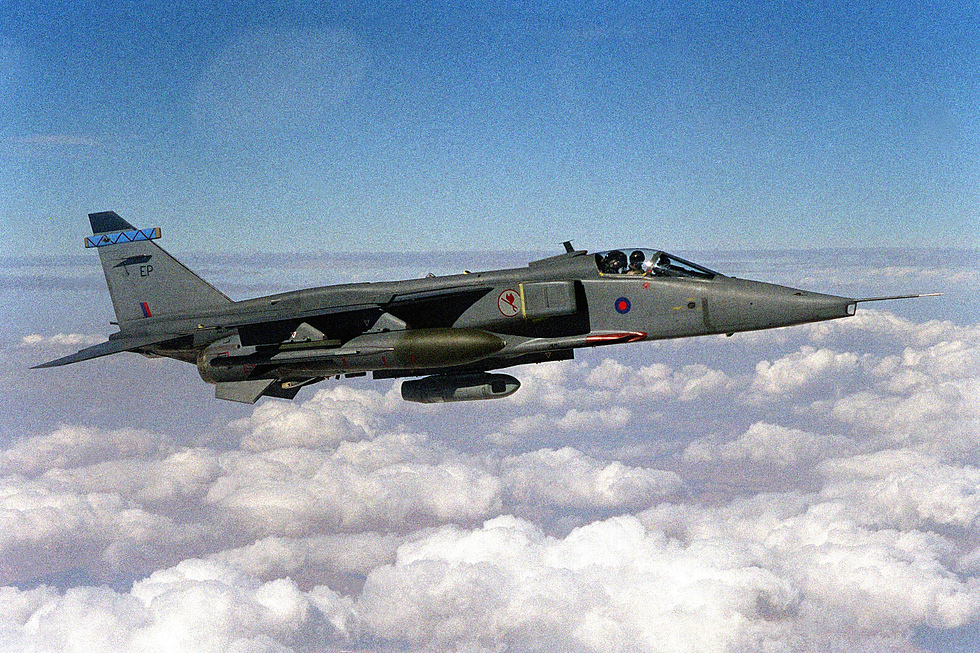
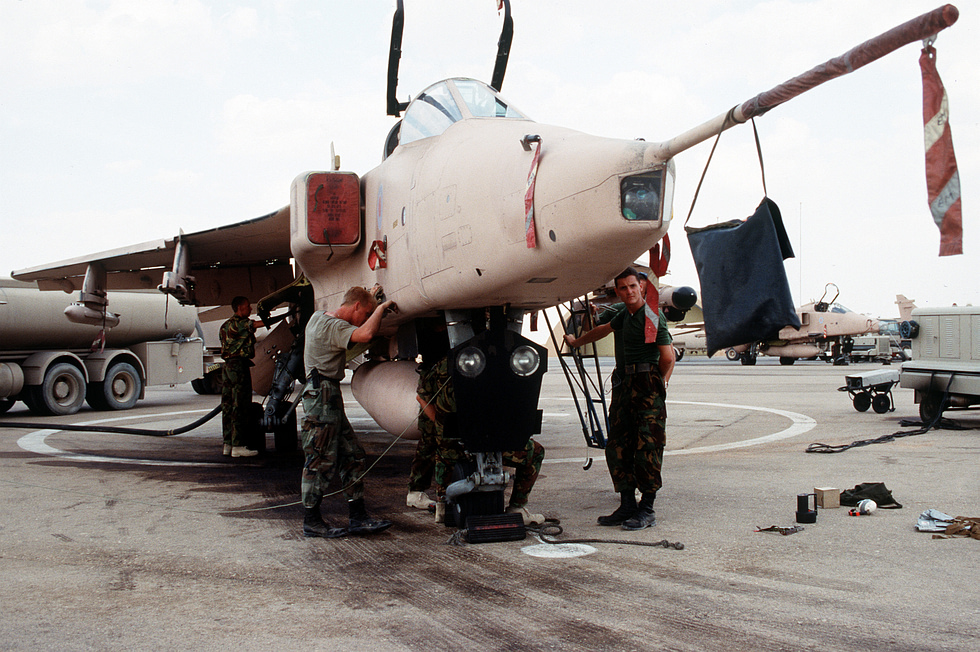
The Jaguar in pictures
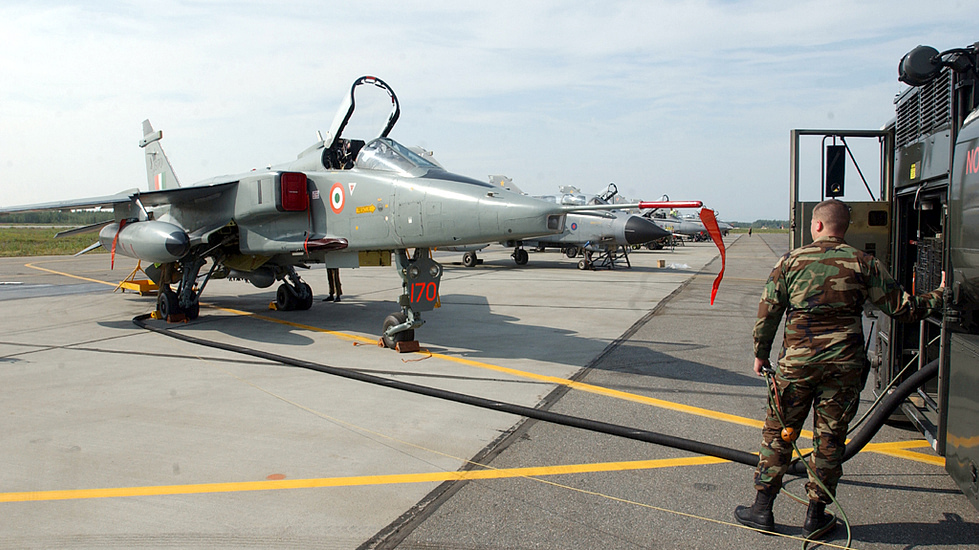
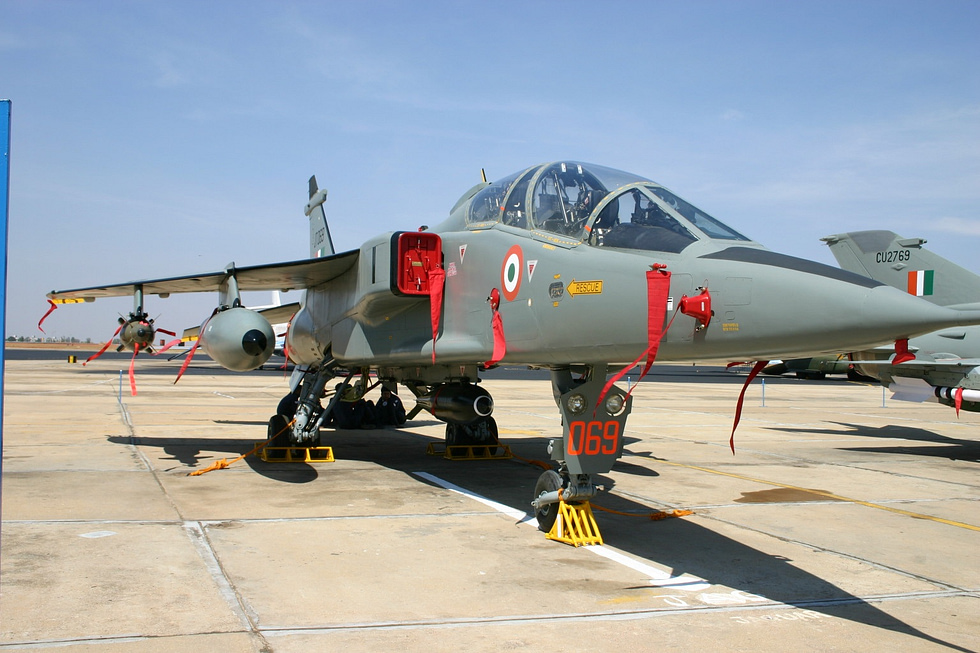
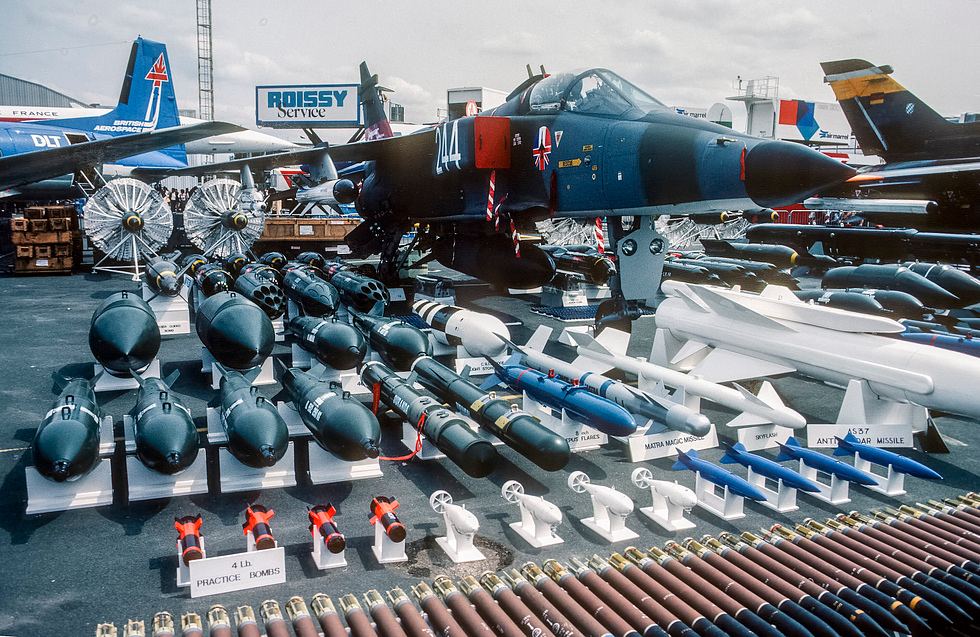
The Jaguar in motion
DroneScapes — one of the most-watched Jaguar films on YouTube.
Where the Jaguar served
The Jaguar in action
The Jaguar was never an air-superiority fighter and has no meaningful air-to-air tally — its job was to hit ground targets and come home. Judged on that mission it delivered for decades, from the Sahara to the Himalayas, and its most striking statistic is how little it lost.
Compare the combat record of every military aircraft. Figures as of July 2026.
Everything people ask about the SEPECAT Jaguar
Can I fly in a Jaguar?
Why is it called an Anglo-French aircraft?
How fast is the Jaguar?
Is the Jaguar still in service?
What does “Shamsher” mean?
Could the Jaguar carry nuclear weapons?
Did the Jaguar ever see combat?
What replaced the Jaguar in the RAF?
You can’t fly the Jaguar.
These, you can.
Some legends only live in museums — others are fuelled and waiting. MiGFlug has put civilians in real military jet cockpits since 2004.
 Fly the L-39 AlbatrosThe world’s most-flown jet trainer — aerobatics included
 Fly the F-104 Starfighter“The missile with a man in it”
 Fly the MiG-21The Cold War’s most-produced jet
 T-33 Shooting Star'ı uçurunAmerica’s first jet trainer
 Fly the DH VampireA piece of early jet history
 Fly the S.211Agile Italian jet trainer
 Fly the MB-326The classic Aermacchi jet
 Fly the MiG-15The Soviet legend of the Korean War
Continue the tour
Every fact, checked
- Thunder & Lightnings — SEPECAT Jaguar historyDetailed British-service history, development troubles and the M55 motorway landing.
- Dassault Aviation — JaguarThe manufacturer’s account of the Anglo-French programme, origins and performance.
- GlobalSecurity.org — Shamsher (Jaguar)Indian Air Force service, HAL production and the DARIN upgrade family.
- The EurAsian Times — 45 Years of the JaguarIndian Jaguar operations, Kargil and Siachen support, and modernisation.
- Simple Flying — SEPECAT Jaguar factsOverview of the type’s design, operators and enduring service.
- Military Factory — SEPECAT JaguarSpecifications, variants and production reference.
- Pima Air & Space MuseumReference on the preserved Jaguar and its development background.
- Indian Defence NewsRecent reporting on the IAF Jaguar’s deep-strike role and spares sourcing.