
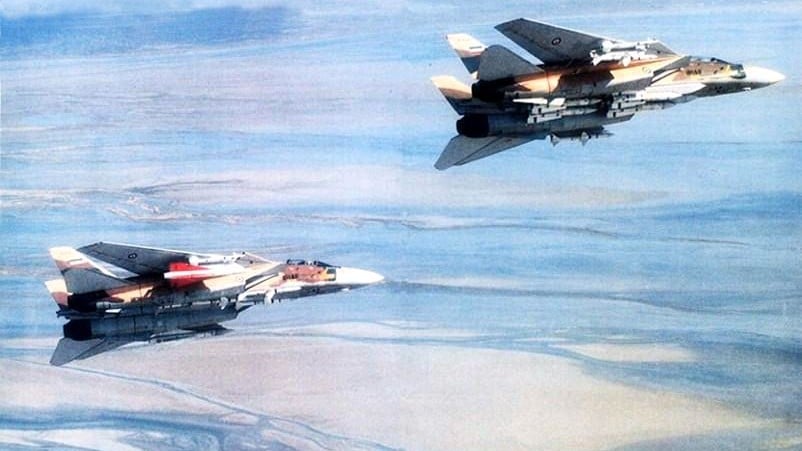
The most successful pilot ever to fly the F-14 Tomcat never went to TOPGUN, never landed on a carrier and never fought for the U.S. Navy. He flew for Iran, against Iraq, in a war most Western readers barely remember.
Jalil Zandi is credited with 11 Iraqi aircraft shot down during the Iran-Iraq War of 1980 to 1988: eight confirmed and three probable, according to the research of historians Tom Cooper and Farzad Bishop, who checked the confirmed claims against U.S. intelligence documents later released under the Freedom of Information Act. No American Tomcat pilot came close; the U.S. Navy’s F-14s scored five air-to-air kills in their entire service life.
Quick Facts
Name: Jalil Zandi
Born: 2 May 1951, Garmsar, Iran
Died: 1 April 2001, near Tehran, in a car accident
Service: 1970 to 2001, Imperial Iranian Air Force, then Islamic Republic of Iran Air Force
Aircraft: Grumman F-14A Tomcat
Credited victories: 11 (8 confirmed, 3 probable)
Victims: 4 MiG-23s, 2 Su-22s, 2 MiG-21s, 3 Mirage F1s
Final rank: Second brigadier general
From the Shah’s air force to the Islamic Republic’s
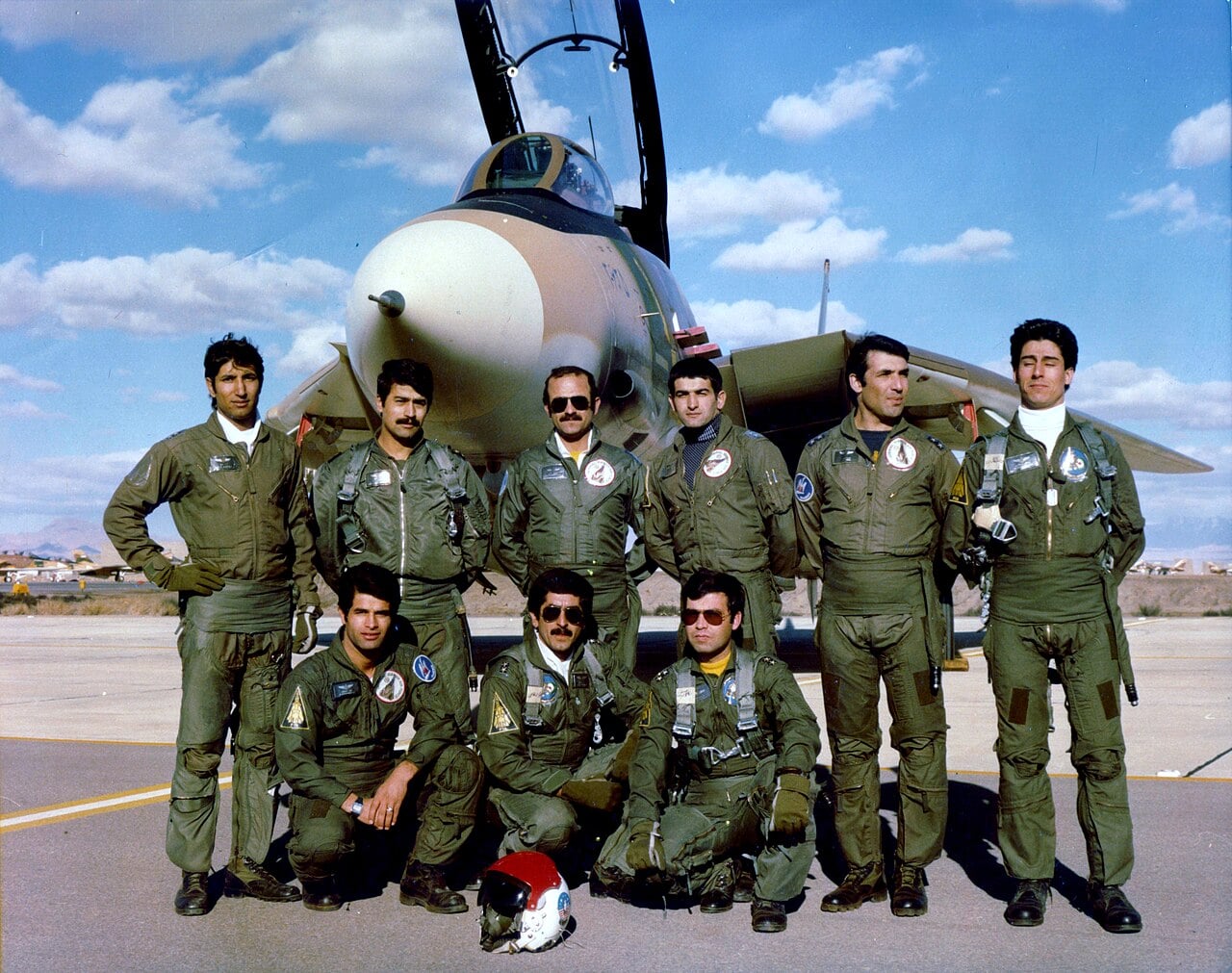
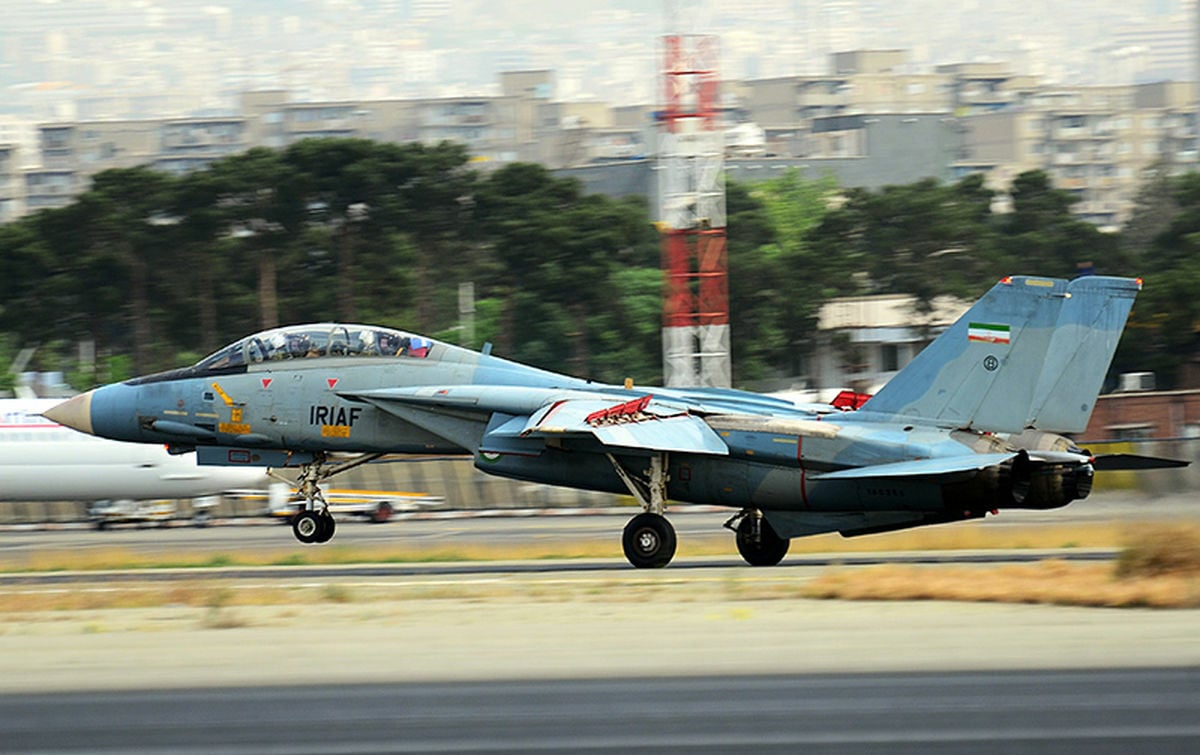
Zandi was born in Garmsar, south-east of Tehran, in 1951 and joined the Imperial Iranian Air Force in 1970. Iran was then America’s closest military partner in the Gulf, and in the mid-1970s the Shah bought 79 F-14As with the long-range AIM-54 Phoenix missile, the only country other than the United States ever to fly the Tomcat.
The 1979 revolution turned the pilot corps upside down. Many officers were purged, imprisoned or fled, and American spare parts and support vanished. When Iraq invaded in September 1980, the surviving Tomcat crews of the Islamic Republic of Iran Air Force went to war with jets they had to keep flying on their own.
The Real Top Guns: the Iranian F-14 aces of the Iran-Iraq War (Australian Military Aviation History).
Eleven kills against four different types
Zandi’s victims read like a catalogue of Iraq’s air force: four MiG-23 Floggers, two Su-22 Fitters, two MiG-21s and three French-built Mirage F1s, the most dangerous opponent Iraq fielded. Iranian Tomcats often worked as airborne radar stations as well as fighters, using the powerful AWG-9 radar to watch the front and guide other jets.
Pilots who flew the F-14 in that war describe a heavy fighter that surprised its opponents up close.
The Tomcat’s range was just as important. In one of the best-known engagements of the war, on 7 January 1981, an Iranian F-14 crew of pilot Asadullah Adeli and radar intercept officer Mohammed Masbough fired a single Phoenix at three MiG-23s approaching Kharg Island at night and destroyed all three, according to an account published by We Are The Mighty.
Jailed in the middle of the war
Zandi’s greatest danger did not always come from Iraq. While a major, he clashed with his superior, Lieutenant Colonel Abbas Babaei, a senior officer described in Zandi’s biography as notorious for his harsh treatment of pilots. Zandi was sentenced to ten years in prison and threatened with execution. He was released after six months, following demands from the air force commander and fellow pilots, and returned to the cockpit.
An Iranian F-14 ace explains how Tomcat crews fought Iraq’s MiGs, interviewed by Ward Carroll.
The ace who died on a road
After the war Zandi rose through the ranks, finishing as a second brigadier general and the air force’s deputy for planning and organisation. He was awarded the Fath Medal. On 1 April 2001, at the age of 49, he and his wife were killed in a car accident near Tehran. He is buried at Behesht-e Zahra cemetery in the south of the city.
His record still stands: in the jet made famous by Hollywood’s American naval aviators, the most successful pilot of all was an Iranian.
Who was Jalil Zandi? A short profile of the top-scoring F-14 pilot.
Sources: Tom Cooper and Farzad Bishop, Iranian F-14 Tomcat Units in Combat (Osprey, 2004), via Wikipedia; The National Interest; We Are The Mighty; Air Force Magazine (Air Power Classics, January 2015)


0 Comments