
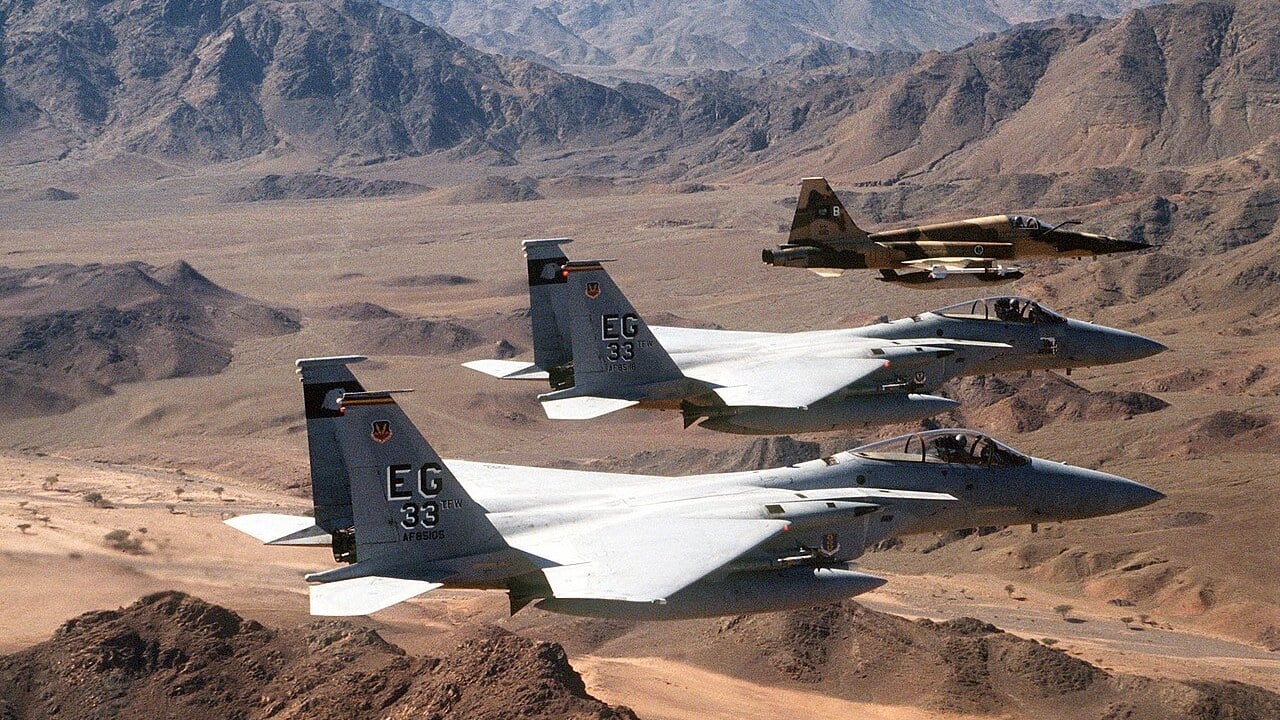
In the last week of January 1991, American AWACS crews over the Gulf watched something nobody had predicted. Iraqi jets were taking off, staying low and running hard, not towards the coalition and not towards friendly Jordan, but east, towards Iran.
Iran. The country Iraq had fought for eight years, in a war that had ended barely two years earlier. By the time the flights stopped, well over a hundred of Saddam Hussein’s best combat aircraft were parked on Iranian airfields. Most of them never came home.
It was one of the strangest episodes of Operation Desert Storm. Even Saddam’s own intelligence chief could not make sense of it.
Quick Facts
- Event: Flight of Iraqi military and civil aircraft to Iran during Operation Desert Storm
- When: From about 25–26 January 1991 into February 1991
- How many: Estimates range from about 115 to 148 aircraft; the USAF Historical Research Agency counts 121
- Main types: Mirage F1, Su-24, Su-20/22, Su-25, MiG-23, MiG-29, Il-76 transports and the Adnan AEW aircraft
- Coalition response: F-15C, F-14 and F-16 barrier patrols on the Iranian border
- Iran’s position: Aircraft seized “until the war is over”, then kept as reparations
- Returns: Some Su-25s reached Iraq from Iran in 2014
An air force being destroyed in its shelters
When the coalition air campaign opened on 17 January 1991, the Iraqi Air Force was the largest in the region. Iraqi pilots who went up to fight were shot down in numbers, and within days most stopped trying.
Staying on the ground was no safer. Iraq had invested heavily in hardened aircraft shelters, and its commanders expected them to hold. Instead, coalition 2,000-pound penetrating bombs punched through the concrete and destroyed the jets inside. An Iraqi Ministry of Defence document signed by Saddam on 26 January said the next move was meant “to secure their safety against the hostile air raids that aimed at destroying the aircraft inside the shelters.”
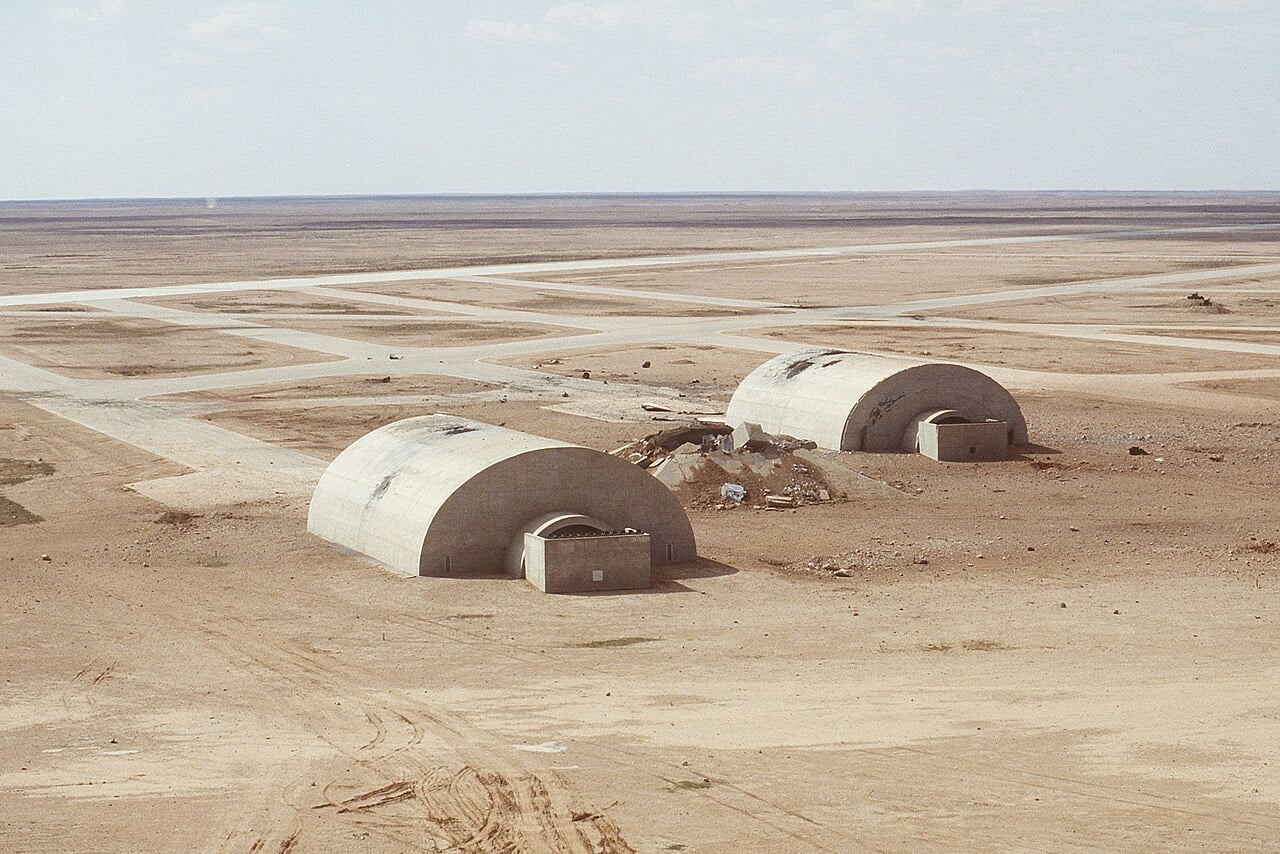
According to the Wilson Center’s study of captured Iraqi records, a delegation led by Saddam’s deputy Izzat Ibrahim al-Duri visited Tehran shortly before the air war. Iranian President Akbar Hashemi Rafsanjani later wrote that Iran’s Supreme National Security Council agreed on 12 January to accept Iraqi passenger planes. Iraqi civil airliners and transports began arriving soon after. Saddam then gambled that he could stretch the deal to cover his warplanes.
The run for the border
The first combat jets went across around 25 and 26 January. Some were too short-ranged to reach Iran in one hop and first had to reposition to bases closer to the border. Iranian accounts say several arrived without permission, asked for emergency landings, and at least one damaged aircraft caught fire on touchdown.
The coalition was caught off guard. It had expected any Iraqi escape to head west to Jordan and had placed its fighter patrols accordingly. By the time it shifted F-15C Eagles, F-14 Tomcats and F-16s into a barrier along the Iranian border, many Iraqi jets were already gone.
A news summary for 28 January 1991, day 12 of the air war, reporting that 80 Iraqi aircraft had crossed into Iran.
On 28 January, General Norman Schwarzkopf told reporters the count in Iran had reached 39, and that the quality was rising.
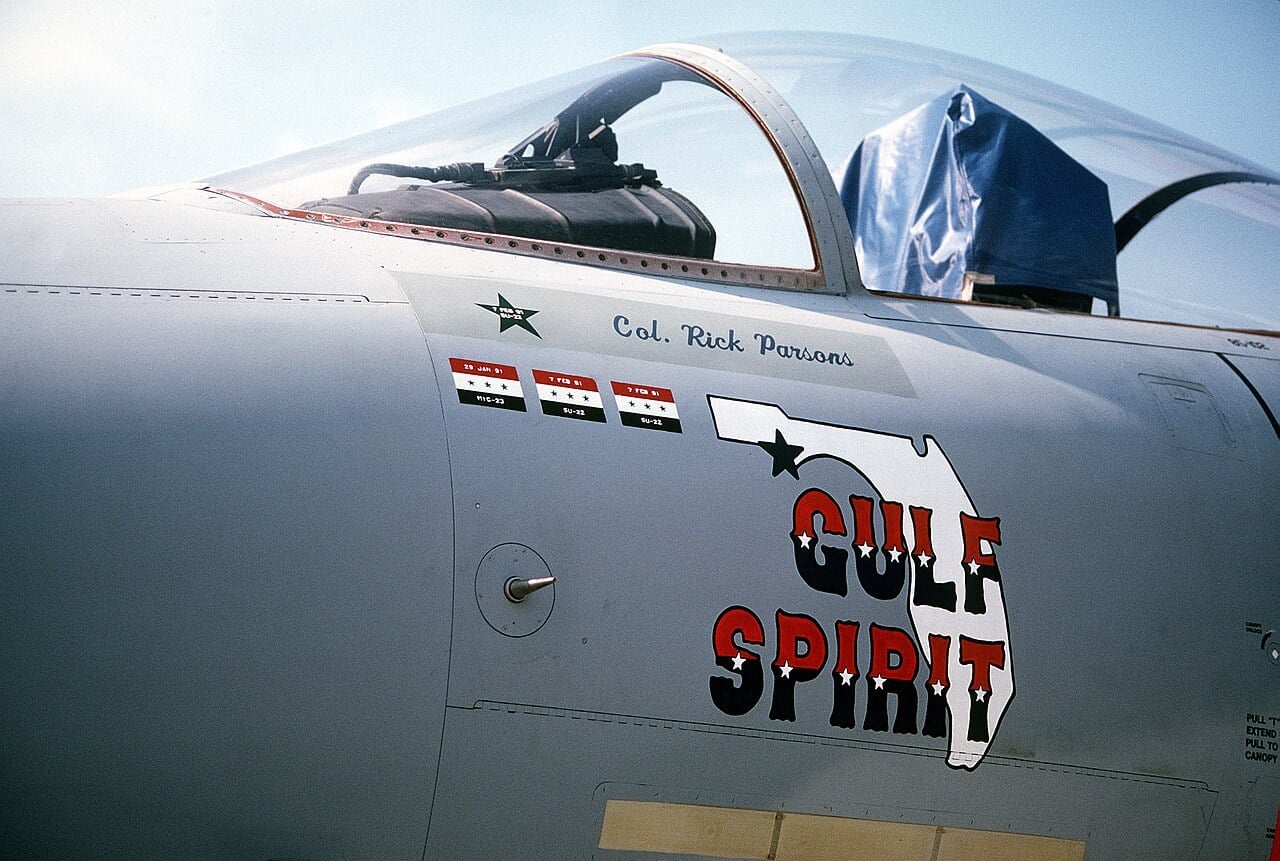
The Eagles did catch some. On 27 January, two F-15C pilots of the United States Air Force shot down three MiG-23s and a Mirage F1 heading for al-Bakr air base, apparently staging for the run east. On 6 February, Capt. Thomas Dietz and Lt. Bob Hehemann caught four aircraft running low for the border and downed them all with Sidewinders in seconds, Dietz two MiG-21s and Hehemann two Su-25s. The next day, F-15Cs shot down two Su-22s and an Su-7 as they tried to flee.
How many got through?
Nobody has ever produced a single agreed number. Pentagon officials spoke of at least 80, possibly 100, by 29 January. Iraq later said 115 warplanes and 148 aircraft in total had gone to Iran. US officials put the total at 137. The US Air Force Historical Research Agency counts 121 Iraqi aircraft that reached Iran safely. Wikipedia gives a range of 115 to 140.
The Wilson Center’s tally of the warplanes lists 24 Mirage F1s, 24 Su-24 strike jets, 40 Su-22s, four Su-20s, seven Su-25s, 12 MiG-23s and four MiG-29s, which adds up to 115. On top of those came transports and airliners, including Il-76s. Among them, by most accounts, was at least one Adnan, an Il-76 that Iraq had converted into an airborne early warning aircraft with a French radar; sources differ on whether one or two reached Iran.
The following day’s news coverage as Iraqi aircraft continued to flee across the border to Iran.
Tehran insisted it was neutral. On 30 January, with the count already past 90, Iran’s ambassador to the United Nations, Kamal Kharrazi, made the position public.
Saddam’s strangest decision
Captured Iraqi records leave no doubt that Saddam ordered the evacuation himself, approving each wave in turn. In a memo to his air force commanders he explained that the planes had been sent to Iran for safekeeping, until the time came to use them against the enemy. Iraqi paperwork from February even shows Su-25 pilots being issued passports so they could follow their aircraft.
Wafiq al-Sammara’i, then head of Iraqi military intelligence and later a defector, called it “the strangest decision out of all of his strange decisions” in his memoirs. The aircrews who flew the jets across were reportedly held in Iran and not released until years later.
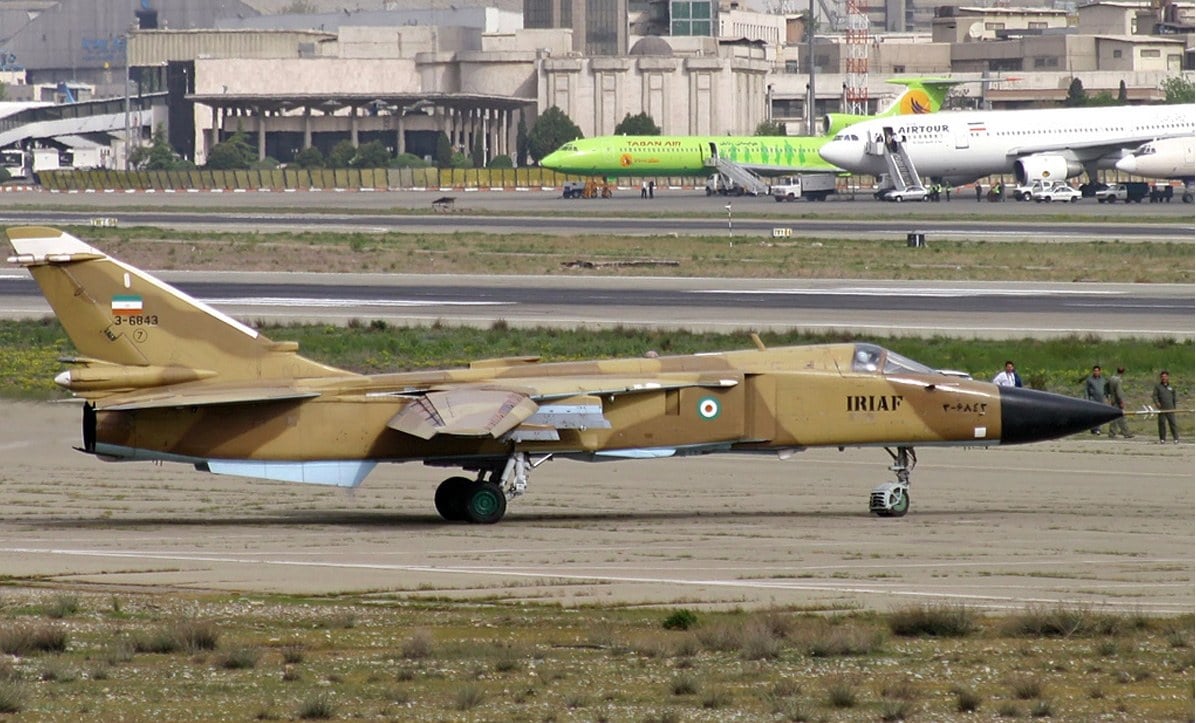
The war ended on 28 February. The jets stayed. By April, Iranian crews were painting their own air force insignia on some of them. Iran pointed to the enormous damage of the Iran–Iraq War and treated the aircraft as a down payment on reparations, while also telling Baghdad that UN sanctions on Iraq tied its hands.
A windfall for Tehran
For the Islamic Republic of Iran Air Force, starved of spare parts by Western sanctions, the windfall was real. The Su-24s gave Iran a modern long-range strike jet it could never have bought from the West, and the MiG-29s joined a fleet Iran was building with Russian help. Former Iraqi Mirage F1s were still flying in Iranian colours decades later.
Not everything flew again. Some types were judged not worth the cost of maintaining and went into storage. One former Iraqi Il-76 AEW aircraft, given the name Simorgh, was lost in 2009 after a reported mid-air collision with a fighter during a military parade near Tehran.
The story has an epilogue. In 2007, Iraq asked for its aircraft back. In the summer of 2014, as the Islamic State swept across northern Iraq, Su-25s began appearing in Iraqi service; analysts at the International Institute for Strategic Studies concluded that a batch delivered on 1 July had come from Iran, and many were believed to be ex-Iraqi jets from 1991.
Euronews, December 2014: reports of Iranian air strikes in eastern Iraq, and of Iran supplying Iraq with Su-25 attack jets.
Twenty-three years after they fled across the border to escape American bombs, a few of Saddam’s Frogfoots came home, sent by the country he had tried to use as a hangar. Iran kept the rest. As wartime gambles go, few have backfired so completely.
Sources: Wikipedia (Gulf War air campaign; Air engagements of the Gulf War; Iraqi Air Force; Islamic Republic of Iran Air Force), Wilson Center (Michael Brill, Odyssey of Iraq’s Air Force), US Air Force Historical Research Agency (Daniel L. Haulman), Aerospaceweb.org, Robins AFB, AFP
0 Comments