
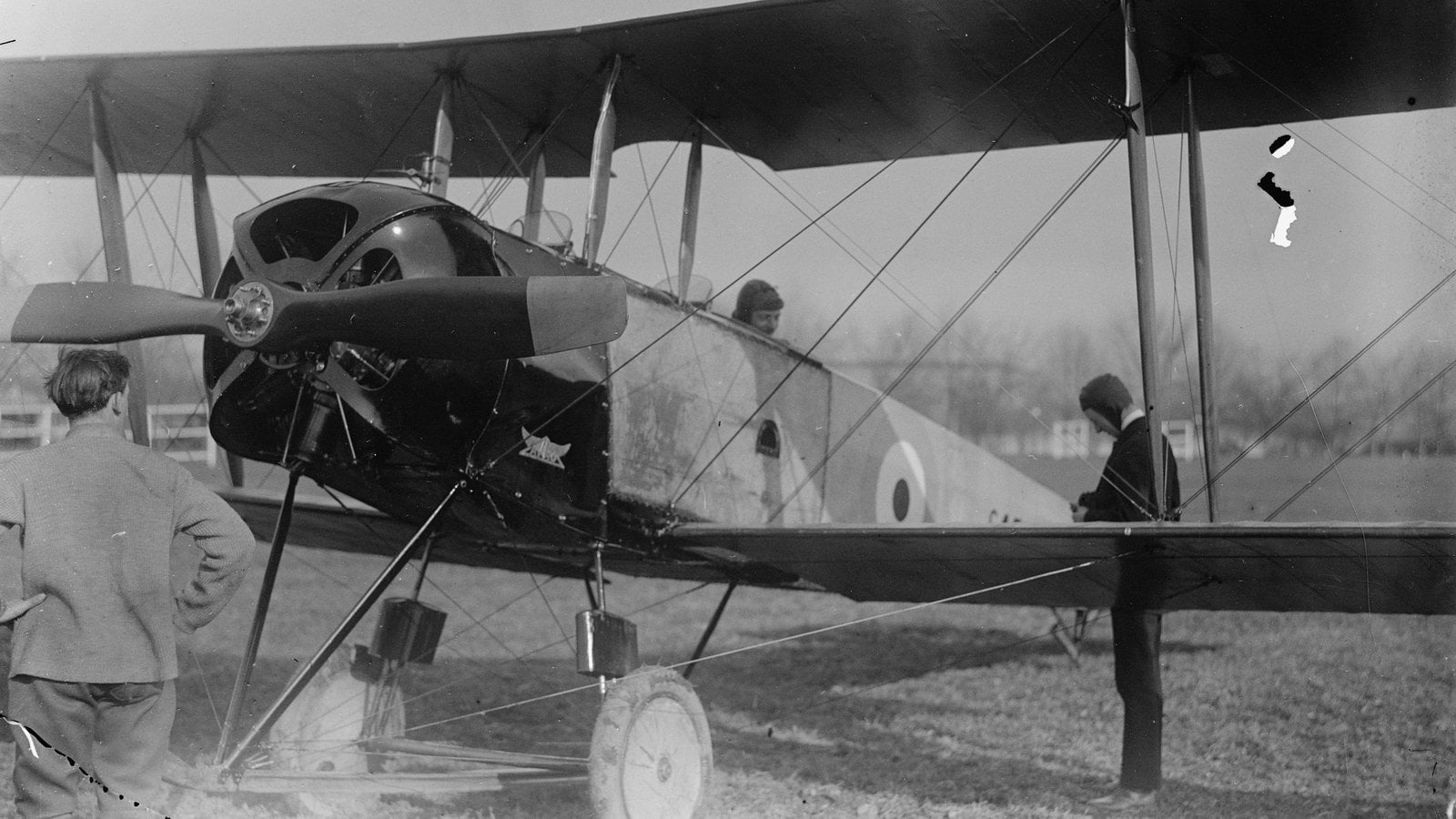
Picture a field outside a British seaside town in the summer of 1919. A queue of people in their Sunday best shuffles towards a canvas-and-wire biplane that, a few months earlier, was teaching young men to fight a war. They pay for a ticket, climb in, the rotary engine clatters into life, and they become the first people in their family ever to leave the ground.
The aeroplane was almost certainly an Avro 504. It had already bombed a Zeppelin factory, been one of the first British aircraft lost in the First World War and, most importantly, trained a large share of the pilots who flew for Britain in that war. Now it was selling the idea of flight to everybody else.
Few aircraft have had a career quite this long or this varied. This is the story of the Avro 504 trainer, the dependable two-seater that taught a generation to fly and then took their families for a spin.
Quick Facts
- Type: Two-seat biplane built by A.V. Roe & Co (Avro) of Manchester; first flew at Brooklands in 1913, with most accounts giving 18 September
- First raid: On 21 November 1914 three RNAS Avro 504s flew from Belfort to bomb the Zeppelin works at Friedrichshafen; one was brought down and its pilot captured
- Trainer: Became the core aircraft of Robert Smith-Barry’s “Gosport system” from 1917; the 504K went on to be the standard RAF trainer
- Production: Accounts give roughly 8,340 to 8,970 built during the First World War, and more than 10,000 in all by the time production ended in 1932, counting licence-built aircraft
- Civil career: Hundreds of surplus 504Ks were sold to civilians; Avro alone reportedly took up an estimated 30,000-plus joy-riders in summer 1919
- Licence production: Built under licence in countries including Canada, Japan, Belgium, Australia and Denmark
- Retirement: The RAF replaced its last 504Ns with the Avro Tutor in 1933; a few civil machines were pressed back into service in 1940 for glider towing
A Modest Biplane From Manchester
Alliott Verdon Roe’s company built the 504 at its works in Manchester as a development of the earlier Avro 500. The design team included a young Roy Chadwick, who would one day draw the Lancaster. Powered by an 80 hp Gnome rotary engine, the prototype took to the air at Brooklands in 1913. Most accounts date the first flight to 18 September, with Fred Raynham at the controls.
It made an impression almost at once. Two days later Raynham flew it to fourth place in the Aerial Derby at Hendon, and after trials at Farnborough the government placed its first orders that November. Nobody yet thought of it primarily as a school aeroplane. In 1913 most people did not think of aeroplanes as anything much at all.
When war came in August 1914, a handful of 504s went to France with the Royal Flying Corps. On 22 August one of them, from No. 5 Squadron, was brought down by German ground fire, and it is generally recorded as the first British aircraft lost to the enemy. It was an early hint that the 504 was a better aeroplane than it was a warplane.
The Raid on the Zeppelin Works
The Royal Naval Air Service had bigger plans. In autumn 1914 the Zeppelin, not the bomber, was the weapon Britain feared most, and Count Zeppelin’s factory and sheds sat on the shore of Lake Constance at Friedrichshafen. The Admiralty decided to visit them first. Four 504s were fitted with extra fuel and racks for four 20 lb bombs apiece, and shipped to Belfort in eastern France.
On the morning of 21 November 1914 the aircraft set off at intervals. One broke its tail skid on take-off and stayed behind, leaving Squadron Commander Edward Featherstone Briggs, Flight Commander John Babington and Flight Lieutenant Sidney Sippe to fly a round trip of roughly 250 miles, over hills, in an open cockpit, in November. Reaching the target around midday, they bombed the sheds and works from low level.
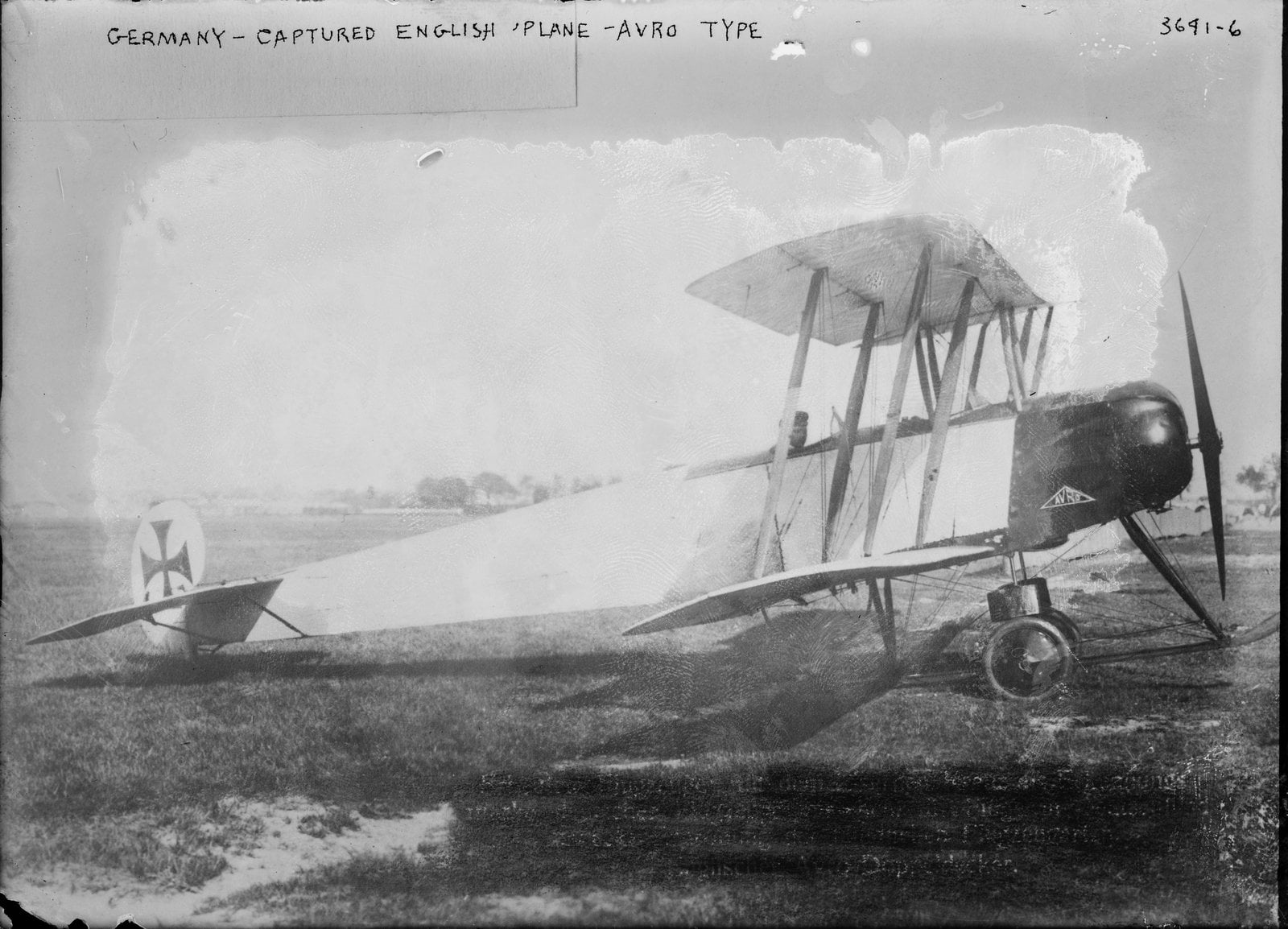
Accounts of the damage vary, but several agree that a gas plant was hit and blew up. Briggs was not so lucky. Ground fire punctured his fuel tank, he came down by the sheds and was taken prisoner, wounded. Contemporary reports had him holding off an angry crowd with his revolver until an officer arrived. Babington and Sippe made it back to Belfort, where the French honoured them with the Légion d’honneur.
No Zeppelin was destroyed, but the raid was a huge propaganda success and one of the first long-range bombing attacks on Germany. It also raised an awkward diplomatic question, because the raiders’ route had taken them close to neutral Switzerland. Asked in the House of Commons whether the airmen had been told to avoid neutral territory, the First Lord of the Admiralty gave an answer that will be familiar to anyone who has ever tried to explain a detour.
Historian Ian Castle’s talk for the Western Front Association tells the full story of the Royal Naval Air Service’s 1914 raids on the Zeppelin bases, including Friedrichshafen.
A Crash Every Day, a Funeral Every Week
Those raids were the 504’s front-line high point. By 1915 faster, better-armed aircraft were taking over at the front, and the Avro found its true calling in the training schools, where Britain had a problem of its own making. Early in the war, learning to fly was largely trial and error. Instructors were often just pilots who happened to be at home, there was no proper syllabus, and teaching in the air meant shouting over the engine or throttling back to be heard.
The results were grim. Figures often quoted claim that more than half of the airmen the Royal Flying Corps lost died in training rather than in combat. Modern historians treat those numbers with caution, but nobody disputes that the schools were killing far too many young men. Pupils were simply told that certain manoeuvres, especially spins, were deadly and should never be attempted. When a novice blundered into one, he usually had no idea how to get out.
Major Robert Smith-Barry thought this was exactly backwards. One of the Royal Flying Corps’ earliest pilots, who had gone to France in August 1914, he had seen the standard of the new pilots arriving at the front, and he had been lobbying his superiors for a better way. Around the turn of 1917 he was given command of No. 1 Reserve Squadron at Gosport in Hampshire, and the chance to try it.
Smith-Barry and the Gosport System
His idea was simple and radical: instead of hiding danger from pupils, show it to them. Students would spend as much time as possible on the controls, with an instructor sitting behind them, and would be deliberately taken into stalls, spins and engine failures so they learned to recover from them. Smith-Barry set it down in a 1917 paper for instructors, General Methods of Teaching Scout Pilots.
The aircraft he built the system around was the Avro. It was gentle and forgiving by the standards of the day, unlike front-line types such as the Sopwith Camel, which was notoriously unforgiving of beginners, yet it was responsive enough to teach real flying. Under his orders every pupil went through the Avro flight first, with the instructor in the other seat. To end the shouting, Smith-Barry also introduced a speaking tube that let the instructor talk to his pupil in flight. It became known as the Gosport tube.
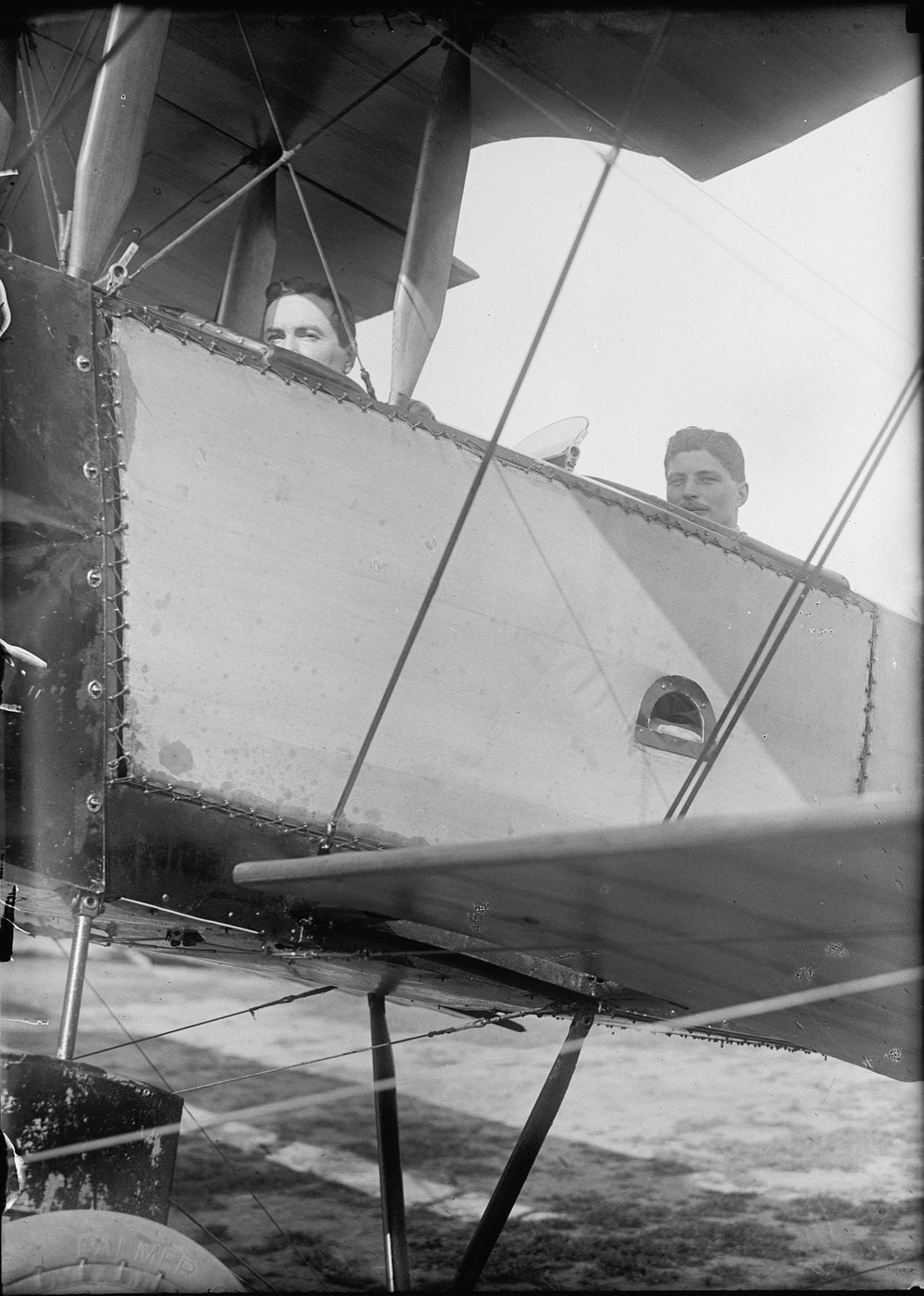
It worked. In 1917 Gosport became the School of Special Flying, instructors from other schools were sent there to learn the method, and the system spread across the service. The 504J that Smith-Barry adopted soon gave way to the 504K, whose universal engine mount accepted whichever rotary engine was in stock, and the 504K became the standard trainer of the new Royal Air Force. A popular British aviation series looked back on the change two decades later.
Smith-Barry was later hailed as the man who taught the world’s air forces to fly. Gosport-style instruction spread well beyond Britain, and the idea of the qualified flying instructor who teaches recovery rather than avoidance still sits at the heart of pilot training today.
How Many Avro 504s Were Built?
Lots. Exactly how many depends on whose numbers you trust. A detailed history of the type published in Flight in 1954 put production at 8,340 by the end of 1918, other references give 8,970 for the war years, and BAE Systems’ heritage pages settle for “nearly 9,000”. Add the post-war 504N and the foreign-built aircraft and most counts go past 10,000 before production finally ended in 1932.
Avro could never have built them all itself. During the war a long list of subcontractors, including the Sunbeam and Humber motor companies, Harland and Wolff in Belfast and Brush in Loughborough, turned out 504s. Abroad, the type was built under licence by Canadian Aeroplanes Ltd in Toronto, Nakajima and the Yokosuka Naval Arsenal in Japan, SABCA in Belgium and Australian Aircraft & Engineering in Sydney, with further licence production in Denmark and Argentina.
After the war Avro also sold 504s to air arms around the world, from Belgium and Greece to Chile and Siam. For the RAF, the radial-engined 504N took over from the 504K in the mid-1920s and stayed in service until the Avro Tutor replaced it in 1933. By then the type had been teaching British pilots for the best part of two decades, and the role passed to newer trainers such as the Tiger Moth.
Up for a Spin: The Joy-Riding Years
When the war ended in November 1918, Britain found itself with thousands of surplus aircraft and thousands of pilots who wanted to keep flying. The 504K was plentiful, sturdy and familiar to a whole generation of ex-service pilots, and it did not need a large aerodrome. Some were modified with an enlarged rear cockpit that squeezed in two or three paying passengers at a time.
Hundreds of 504Ks found their way onto the British civil register, and the joy-ride was born. According to a 1982 tribute to the type in Motor Sport, Avro’s own joy-riding operation took up an estimated 30,000-plus passengers in the summer of 1919 alone, mostly from seaside resorts. The same account lists operators such as the Cornwall Aviation Company, Surrey Flying Services and the Berkshire Aviation company, which was linked to Alan Cobham, a former RAF flying instructor later famous for his long-distance flights and his touring air displays.
For many Britons in the 1920s, a short hop in a 504 was their first taste of flight. Like the Jenny-flying American barnstormers across the Atlantic, the pilots who flew them sold flying to ordinary people one five-minute circuit at a time. British Pathé’s compilation of 1920s air thrills gives a flavour of the period.
Civil 504s also towed advertising banners, raced and taught at flying clubs, and many flew well into the 1930s.
From Glider Tug to Airshow Star
Even then the 504 was not quite finished. In 1940 a handful of civil machines were impressed back into RAF service for target and glider towing.
Abroad, the type had an afterlife of its own, as exported and licence-built 504s carried on training pilots in air arms from Belgium to Japan.
A few 504s survive in museums from Canberra to Ottawa, and a handful still fly. The Shuttleworth Collection’s 504K was built in 1918, converted to a 504N, sold to a civil owner, impressed for glider-towing trials in 1940, and returned to K standard by Avro apprentices for the 1956 film Reach for the Sky. Here it is in company at Old Warden, still doing what it has always done best: showing people how flying looked when it was new.
Fighters get the films and the posters, but the Avro 504 may have done more than any of them to put Britain in the air. It taught the pilots, then it took up their parents, their sweethearts and their children. Quite a career for a modest biplane from Manchester.
Sources: Hansard (House of Commons, 26 November 1914), The Spectator (28 November 1914), Taranaki Daily News and The Dominion (28 November 1914), via Papers Past, Avro Heritage Museum, BAE Systems Heritage, History of War, Historic Croydon Airport Trust, RAF Museum, Air & Space Forces Magazine, Gosport Heritage Open Days, David Learmount, Wonders of World Aviation (1938), Motor Sport (October 1982), Grace’s Guide, Shuttleworth Collection, Australian War Memorial, A.J. Jackson, Avro Aircraft since 1908, J.M. Bruce, Flight (1954).
Header photo: Harris & Ewing Collection, Library of Congress (no known restrictions on publication)

0 Comments