
Sopwith Camel
“The hump-backed ace-maker”
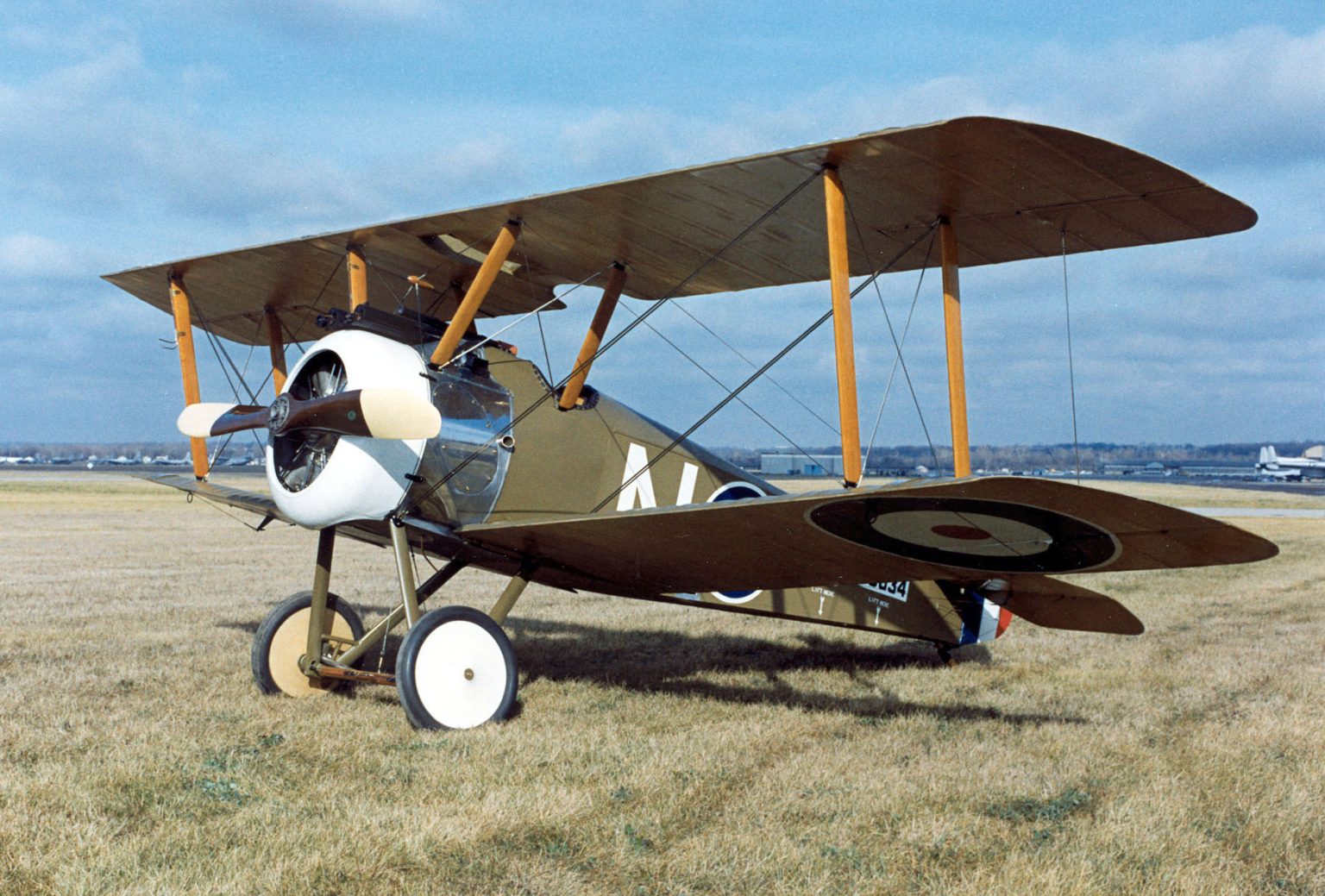
The iconic British First World War fighter: a short, twitchy, rotary-engined biplane named for the “hump” over its twin Vickers guns. Vicious to the unwary and supremely agile in the right hands, it is commonly credited with shooting down more enemy aircraft than any other Allied fighter of the war — roughly 1,290 or more.
The Sopwith Camel: how a hump-backed biplane became the war’s deadliest fighter
By 1917 the Sopwith Aviation Company of Kingston upon Thames already had a hit on its hands with the gentle, well-mannered Sopwith Pup. Its chief designer, Herbert Smith, was asked for something harder-hitting. The answer, which first flew in December 1916 and reached squadrons from mid-1917, was officially the Sopwith F.1 — but everyone called it the Camel, after the metal “hump” fairing over the breeches of its twin machine guns.
The Camel packed a great deal into a tiny, tail-heavy airframe. Engine, guns, pilot and fuel were all crammed into the front seven feet, and up front spun a rotary engine — a Clerget, Bentley or Le Rhône of roughly 110 to 150 horsepower whose entire cylinder mass rotated with the propeller. That spinning mass produced a fierce gyroscopic torque: the Camel turned right almost viciously fast and climbed in a right turn, while a mishandled left turn could flick a novice into a fatal spin. Pilots said it offered a choice between “a Camel, a Red Cross, or a coffin.” Mastered, though, it was the most agile dogfighter of its day.
Armed with two synchronised .303 in Vickers guns firing through the propeller, the Camel arrived just as the air war grew brutal. It is commonly credited with downing around 1,290 or more enemy aircraft — more than any other Allied fighter of the war, though such wartime totals are contested and should be read as estimates. It flew with the RFC, the RNAS and, from 1 April 1918, the Royal Air Force, as well as American, Belgian and other units. A navalised 2F.1 “Ship Camel” flew from platforms on warships and from towed lighters, and specialised night-fighter and ground-attack versions appeared late in the war. Roughly 5,490 were built before the type was retired in 1920 — a machine so embedded in memory that, decades later, a cartoon beagle would fly one against the Red Baron.
01Why the Sopwith Camel exists: from the gentle Pup to a harder-hitting fighter
The Camel was Herbert Smith’s successor to the Sopwith Pup and Triplane. Where the Pup was forgiving and lightly armed, the Camel doubled the firepower to two Vickers guns and concentrated its masses tightly around the centre of gravity for maximum manoeuvrability. The result was less a refinement than a different animal: harder to fly, but far more dangerous to the enemy.
The name was never official. The metal fairing humped over the gun breeches to protect them from freezing gave the aircraft its nickname, and “Camel” stuck so firmly that it eclipsed the formal “Sopwith F.1” designation entirely.
02The Sopwith Camel and the Red Baron: what really happened on 21 April 1918
On 21 April 1918 the German ace Manfred von Richthofen — the “Red Baron” — was killed while pursuing a Camel low over the Somme. The Canadian Camel pilot Captain Arthur Roy Brown was officially credited with the victory, but most historians now conclude that the single fatal bullet came from Australian ground fire rather than from Brown’s guns. It remains one of aviation’s most debated moments — and a reminder that Camel claims, like all air-war figures of 1914–1918, carry genuine uncertainty.
How the Sopwith Camel works: rotary engine, twin guns and knife-edge agility
A rotary engine and its gyroscopic torque
The Camel’s rotary engine — a Clerget, Bentley BR1 or Le Rhône of roughly 110–150 hp — spun its whole cylinder block around a fixed crankshaft. That heavy spinning mass created strong gyroscopic precession: the aircraft snapped into right-hand turns and resisted left ones. Deadly to the untrained, it gave skilled pilots an unmatched ability to reverse direction in a dogfight.
Twin Vickers guns under the “hump”
Two fixed .303 in (7.7 mm) Vickers machine guns sat directly in front of the pilot, synchronised to fire through the propeller arc. The metal fairing humped over their breeches — partly to shield them from the freezing slipstream — gave the Camel its name and its distinctive silhouette.
Everything packed into seven feet
Engine, guns, fuel tank and pilot were concentrated in the forward seven feet of the fuselage, close to the centre of gravity. This made the Camel tail-heavy and twitchy in pitch, but exceptionally quick to manoeuvre — the design trade that defined how it flew and fought.
03The Sopwith Camel’s flying character: agility bought with danger
The same concentrated mass and rotary torque that made the Camel agile also made it unforgiving. A botched turn on take-off or a stall in a left bank could drop a low-hour pilot into a fatal spin, and training losses were heavy. Contemporary accounts held that the Camel killed a significant number of its own pilots in accidents — a figure often quoted but hard to verify precisely.
In experienced hands the picture reversed. The Camel could out-turn almost anything it met, and its right-hand turn became a signature combat move. Its ideal fighting altitude was low to medium; higher up, where the thin air sapped its rotary engine, it was outclimbed by newer designs.
04Sopwith Camel variants: the F.1, the naval 2F.1 Ship Camel and the night-fighter “Comic”
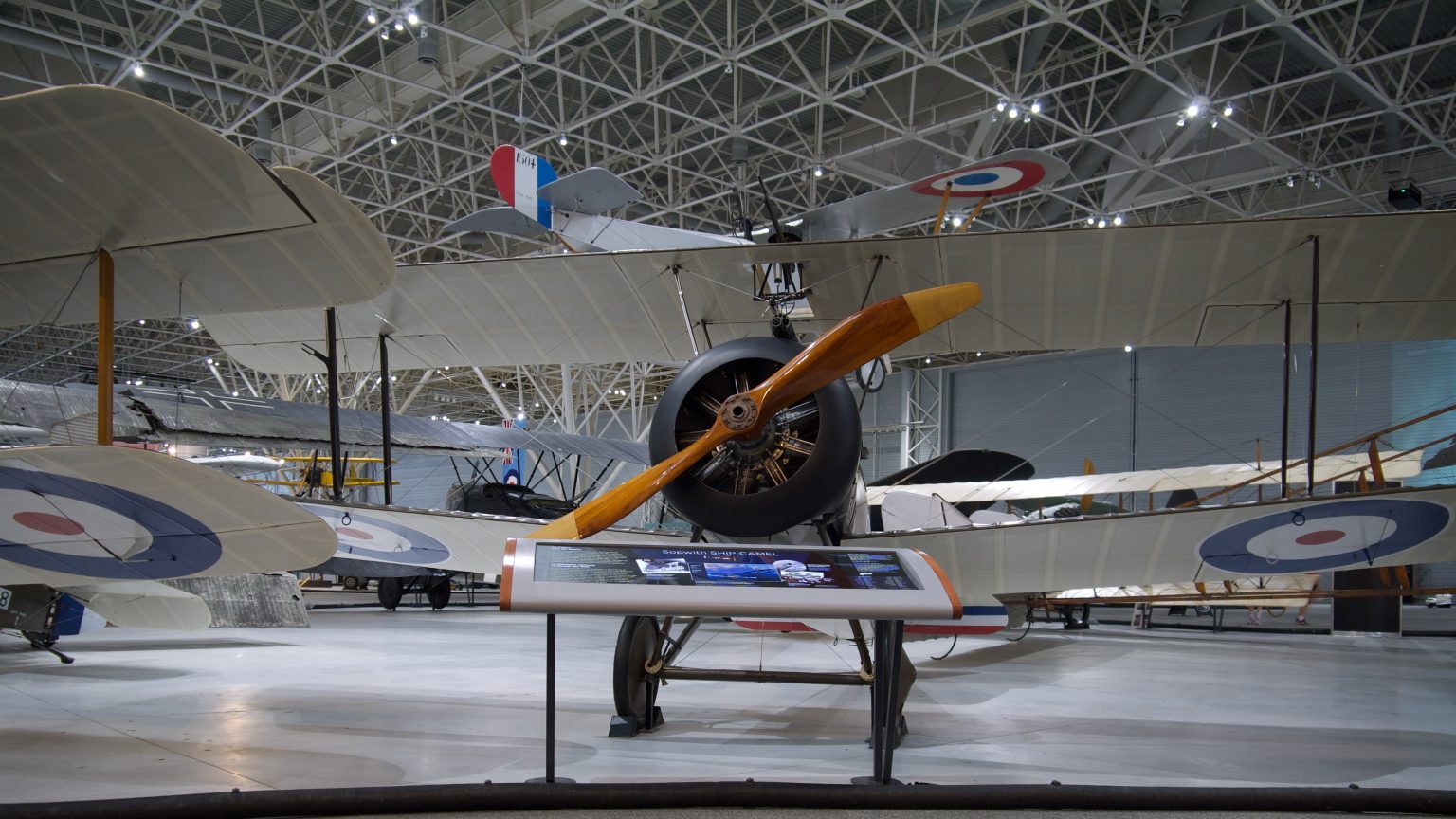
The standard land fighter was the F.1. The 2F.1 “Ship Camel” had a slightly shorter span, a detachable rear fuselage for shipboard stowage and revised armament, and operated from platforms on warships and from towed lighters. A night-fighter conversion nicknamed the “Comic” moved the guns to the upper wing to keep muzzle flash out of the pilot’s eyes, while dedicated ground-attack Camels carried small bombs for trench-strafing.
05Who built the Sopwith Camel: Sopwith Aviation and its wartime sub-contractors
The Camel was designed by the Sopwith Aviation Company, but wartime demand meant most airframes were built by sub-contractors — firms such as Boulton & Paul, Ruston Proctor, Clayton & Shuttleworth, Hooper and others — while Sopwith itself concentrated on design and development. Around 5,490 Camels of all versions were completed.
Sopwith Camel specifications: dimensions, performance and cost
Baseline note: the figures below describe the Sopwith F.1 Camel with the 130 hp Clerget 9B — the commonest airframe-and-engine combination, the one most surviving RAF test reports cover, and the machine the Western Front squadrons actually flew through the second half of 1917. Deltas for the Bentley BR1 (150 hp, standard for former RNAS units and for the shipboard 2F.1), the 110 hp Le Rhône 9J (less power on paper, better performance above 3,000 m because it held its revolutions where the Clerget did not) and the 2F.1 Ship’s Camel are in grey. First World War performance figures are not comparable across sources the way later ones are: individual airframes varied by several miles an hour, engines were hand-built and wore quickly, and most published speeds omit the altitude at which they were measured.
Dimensions & weights
- Crew
- 1
- Wingspan
- 8.53 m (28 ft 0 in) — 2F.1: 8.20 m (26 ft 11 in), clipped to fit warship turret platforms and hangar lifts
- Length
- 5.72 m (18 ft 9 in)
- Height
- 2.59 m (8 ft 6 in)
- Wing area
- 21.46 m² (231 sq ft)
- Aspect ratio
- 4.11 — short, stubby and deliberately so; the Camel was built to change direction, not to glide
- Aerofoil
- RAF 16, on both wings, with equal span and chord above and below
- Dihedral
- None on the upper wing, 5° on the lower — a Sopwith signature that simplified the centre section and did nothing whatever for lateral stability
- Structure
- Wire-braced wooden box-girder fuselage, aluminium engine cowling, plywood panels around the cockpit, doped linen over everything else. Repairable by a squadron carpenter with a saw and a glue pot, which mattered more in 1917 than any refinement
- Empty weight
- 421 kg (929 lb)
- Loaded weight
- 659 kg (1,453 lb) — 2F.1: 667 kg (1,471 lb)
- Wing loading
- 30.7 kg/m² (6.3 lb/sq ft) — absurdly light by any later standard, and the reason a Camel could be pulled round inside almost anything it met
- Concentration of mass
- Roughly 90 per cent of the all-up weight — engine, guns, ammunition, fuel and pilot — packed into the forward 2.1 m (7 ft) of the aeroplane. This single number explains both the Camel’s combat record and its accident record
Performance
- Maximum speed, low level
- 182 km/h (113 mph) — the figure most often quoted, and almost always quoted without the altitude at which it was obtained
- Maximum speed at 3,050 m
- 168 km/h (104.5 mph at 10,000 ft) — Bentley BR1: 179 km/h (111 mph); Le Rhône 9J: 191 km/h (118.5 mph), the lightest engine giving the best figure
- Maximum speed at 4,570 m
- 157 km/h (97.5 mph at 15,000 ft) — Le Rhône 9J: 179 km/h (111.5 mph)
- Climb to 3,050 m
- 11 min 45 sec (10,000 ft) — Bentley BR1: 9 min 50 sec; Le Rhône 9J: 9 min 10 sec
- Climb to 4,570 m
- 23 min 15 sec (15,000 ft) — Bentley BR1: 20 min 0 sec; Le Rhône 9J: 16 min 50 sec
- Service ceiling
- 5,485 m (18,000 ft) on the Clerget trial; 5,790 m (19,000 ft) is the figure usually printed. Le Rhône and 170 hp machines reached about 6,550 m (21,500 ft)
- Endurance
- 2 hr 30 min — the correct measure for a 1917 fighter, which flew patrols over a fixed sector rather than journeys. Nominal range figures of 300 km (185 miles) are arithmetic, not operational
- Stalling speed
- 77 km/h (48 mph) — and a stall went straight into a spin, without the warning burble a modern trainer gives
- Best fighting height
- Below 3,650 m (12,000 ft). Above that the Clerget lost power quickly and by mid-1918 a Fokker D.VII could climb away from a Camel at will
- Turning
- Gyroscopic precession dropped the nose in a right turn and raised it in a left one. The right turn was therefore markedly faster; experienced pilots changed heading 90° to the left by turning 270° to the right, and arrived pointing the correct way sooner
- Claimed victories
- 1,294 enemy aircraft — more than any other Allied fighter of the war. Wartime claims were generously assessed on all sides and should be read as claims, not confirmed kills
Propulsion & systems
- Engine
- One Clerget 9B nine-cylinder air-cooled rotary, 97 kW (130 hp) at 1,250 rpm. The whole engine, cylinders and crankcase together, spun with the propeller around a fixed crankshaft
- Alternative engines
- Bentley BR1, 112 kW (150 hp); Clerget 9Bf, 104 kW (140 hp); Le Rhône 9J, 82 kW (110 hp); Gnome Monosoupape 9B-2, 75 kW (100 hp); Gnome Monosoupape 9N, 119 kW (160 hp). The variety was deliberate insurance against any one engine factory becoming a bottleneck
- Propeller
- Two-blade fixed-pitch laminated wood, bolted directly to the rotating crankcase
- Lubrication
- Total-loss castor oil, flung out through the cowling and back over the aeroplane and its pilot. Castor oil is a purgative; the effect on aircrew who breathed and swallowed it for two hours at a stretch was exactly what it sounds like
- Engine control
- No throttle in the modern sense. Power was managed on a fuel fine-adjustment lever and an air lever, and for landing by a blip switch that cut the ignition in bursts — hence the stuttering note of a rotary on the approach
- Synchronisation gear
- Sopwith-Kauper Mk II and Mk III mechanical gear on early production aircraft; the hydraulic Constantinesco-Colley C.C. gear from late 1917, made standard for all British aircraft in November 1917. Camel squadrons had been reporting shot-through propellers because the Kauper gear tended to run away as it wore
- Sights
- Aldis non-magnifying telescopic tube mounted between the gun breeches, backed by a ring-and-bead. Some home-defence machines carried the Neame illuminated ring sight for night work
- Instruments
- Tachometer, altimeter, air-speed indicator, compass, fuel pressure gauge, watch. No artificial horizon, no electrical system, no lighting on day fighters. There was no radio of any kind: formations were led by hand signals and by watching the leader
- Pilot protection
- None. No armour, no fireproofing, no parachute — the RFC and RAF withheld parachutes from single-seat pilots for the whole war, on reasoning that has never survived examination
- First flight
- 22 December 1916, flown by Harry Hawker at Brooklands with a 110 hp Clerget 9Z
- Service entry
- June 1917; first combat sortie and first claim on 4 July 1917
- Number built
- ~5,490 of all types — 1,325 during 1917 alone. Production totals for 1914–18 British types are reconstructed from contract records and vary by a few dozen between authorities
- Withdrawn
- January 1920 from RAF service, after post-war use in south Russia, the Baltic and the Middle East
06Sopwith Camel variants: F.1, 2F.1 Ship Camel, night-fighter and trench-fighter
F.1 — the standard single-seat land fighter, built in the thousands.
2F.1 Ship Camel — the naval version, with a shorter span and a detachable rear fuselage, flown from warship platforms and towed lighters.
Night-fighter (“Comic”) — guns relocated to the upper wing to spare the pilot’s night vision from muzzle flash, used against night bombers over Britain.
Ground-attack (T.F.1 trench-fighter and bomb-armed F.1) — Camels carrying small bombs for low-level attacks on trenches and troops late in the war.
07The Sopwith Camel’s costs: what it cost then, and why there is no flight-hour figure now
Contemporary First World War procurement figures for the Camel are not consistently recorded, but an airframe plus engine ran to several hundred pounds sterling in 1917–18 — treat any single number as an estimate.
There is no meaningful modern cost-per-flight-hour figure for a Sopwith Camel: no original example is airworthy today, and the handful of museum-grade reproductions that do fly are private or institutional aircraft whose running costs are not publicly standardised. Any quoted hourly rate would be speculation.
Armament & payload
Two Vickers guns under a plywood hump gave the Camel its name and its whole reason for existing
The Camel was the first Sopwith fighter built from the outset around two synchronised guns rather than one, and everything difficult about it follows from that decision. Putting a second Vickers, its ammunition and the synchronisation gear immediately in front of the pilot pushed the centre of gravity forward and up, and the fairing that covered the two breeches — the hump — gave the aeroplane its unofficial name, which stuck so completely that Sopwith eventually used it themselves.
Two rifle-calibre guns firing about 250 rounds each does not sound like much, and by 1940 it would have been nothing. In 1917 it was double what an Albatros pilot could bring to bear in a snapshot and it was concentrated on the aircraft’s axis, where a deflection shot could be judged. The Camel’s combat record rests on the combination of that pair of guns and a turning circle nothing German could follow; when it lost the second half of that combination in mid-1918 it stopped being a first-class fighter almost overnight and became a ground-attack aeroplane instead. Fits varied by unit and by role: a Western Front day fighter, a Home Defence night fighter and a shipboard 2F.1 carried three quite different gun arrangements under the same designation.
Gun
- Two fixed 7.7 mm (0.303 in) Vickers Mk I* machine guns, mounted side by side on the upper decking directly ahead of the cockpit, firing through the propeller arc.
- Both guns lay within the pilot’s reach, which mattered because the Vickers jammed regularly and clearing a stoppage in the air was a routine part of a Camel pilot’s job.
- Cyclic rate about 450 rounds per minute unsynchronised, materially lower once the gear was interrupting the sear — a synchronised gun always fires more slowly than a free one.
- 2F.1 Ship’s Camel: one Vickers deleted and replaced by a Lewis gun on the Admiralty upper-plane mounting, firing over the propeller. The Lewis, not the Vickers, was the anti-Zeppelin weapon.
- "Comic" night fighter: both Vickers removed and replaced by two Lewis guns on Foster mountings above the wing, because Vickers muzzle flash blinded a pilot at night and destroyed what dark adaptation he had.
Ammunition & sights
- About 250 rounds per gun in fabric belts — roughly thirty seconds of continuous fire, and no Camel pilot ever fired continuously.
- Standard belt was a mix of ball and armour-piercing, with tracer for aiming correction; the tracer was as much a sighting aid as the sight itself.
- Aldis tube sight mounted between the two breeches, a straight non-magnifying telescope with a graticule that held its aim point regardless of eye position — the single most useful piece of gunnery equipment on the aeroplane. A ring-and-bead was retained as a backup.
- RTS incendiary and explosive rounds, filled with phosphorus and nitroglycerin, were used against airships and balloons. They were initially barred from synchronised Vickers guns for fear of a round cooking off in a hot closed-bolt chamber, which is why airship work went to the open-bolt Lewis.
Synchronisation gear
- Early F.1 Camels used the Sopwith-Kauper Mk II or Mk III mechanical gear, designed by Sopwith’s foreman of works Harry Kauper and a genuine improvement on everything British that preceded it — the firing impulse pulled rather than pushed the rod, letting it be lighter and quicker.
- It was still a mechanical gear, and mechanical gears wore. By November 1917 Camel squadrons in particular were reporting propellers repeatedly shot through as the gears "ran away", the wear compounded by higher engine speeds and the Vickers’ increased rate of fire.
- The replacement was the hydraulic Constantinesco-Colley C.C. gear, invented by the Romanian engineer George Constantinescu, which transmitted the firing impulse as a pressure wave down an oil-filled pipe. It had no long rods to bend and it did not care where the gun sat.
- The C.C. gear was made standard for all British aircraft in November 1917 and is the main reason twin-gun British fighters worked at all. Its early production was so tightly rationed that S.E.5a squadrons never received the twin-Vickers installation they wanted.
Bombs
- Four 20 lb Cooper bombs (9 kg each, 24 lb all-up with casing and fins) on a rack beneath the fuselage. The Cooper was a cast-iron fragmentation bomb with about 1.8 kg (4 lb) of amatol in it.
- Frequently mislabelled as a 25 lb bomb in reference works, including some modern ones; the service designation was 20 lb.
- This became the Camel’s main offensive load from March 1918, when the type was already outclassed as a day fighter and was thrown instead at German infantry, transport and gun lines during the Kaiserschlacht offensive.
- Tondern raid fit: two 50 lb bombs per aircraft on the 2F.1, the heaviest load a Camel is known to have carried operationally, at the cost of most of the fuel margin.
Shipboard & anti-airship fit
- The 2F.1 flew from flying-off platforms on the turrets of battleships and cruisers, from towed lighters, and from the forward deck of HMS Furious. Its rear fuselage was made detachable at a bolted joint so it could be stowed below.
- Overwing Lewis gun with 97-round drums and incendiary ammunition, aimed upward into the gasbag of a Zeppelin — a job the synchronised Vickers could not safely do.
- Flight Sub-Lieutenant Stuart Culley flew 2F.1 N6812 off a lighter towed behind the destroyer HMS Redoubt on 11 August 1918, climbed for well over an hour and destroyed Zeppelin L 53 with the overwing Lewis. That aircraft survives in the Imperial War Museum.
- Recovery was not provided for. Pilots were expected to ditch alongside a destroyer and be fished out; Furious’s aft landing deck existed but landing on it was described as roughly as dangerous as ditching.
Not carried
- No cannon, no rockets, no guided weapon of any kind — none existed.
- No radio. A Camel pilot who lost his formation was alone until he landed.
- No oxygen, which is one practical reason the Camel’s fighting was done below 4,000 m even when the aeroplane could technically climb higher.
- No parachute, no armour and no self-sealing tank. The T.F.1 trench-fighter prototype added armour plate and downward-angled guns, but it was a development aircraft for the Sopwith Salamander and never equipped a squadron.
Three typical loadouts
- Offensive patrol, Western Front, autumn 1917
- Two Vickers with 250 rounds a gun, full fuel for a two-and-a-half hour patrol, no bombs. Flown in flights of five or six at 3,000–3,600 m, the standard job of a Camel squadron and the one it did best.
- Low-level ground attack, March 1918
- Two Vickers plus four 20 lb Cooper bombs, flown at a few hundred feet and sometimes down to 150 m (500 ft) for surprise strafing runs against advancing German columns. Effective, terrifying to the troops beneath, and expensive — Camel losses to ground fire in this role were severe.
- Tondern raid, 19 July 1918
- 2F.1 with one Vickers, one overwing Lewis and two 50 lb bombs, flown off HMS Furious at first light. Seven aircraft launched, the Toska shed was hit and Zeppelins L 54 and L 60 burned inside it; three pilots landed in Denmark and were interned, three ditched, one drowned.
Sourcing caveat: First World War performance and armament figures should be treated as indicative rather than exact. Contemporary trial reports covered individual airframes with individual hand-built engines, and a worn Clerget could be ten miles an hour slower than a new one; published speeds frequently omit the test altitude entirely, which is why the same aeroplane appears at 113, 115 and 118 mph in three reputable books. The figures used here are drawn from RAF trial data as reproduced by J. M. Bruce, cross-checked against the Imperial War Museum, the Royal Air Force Museum and the National Air and Space Museum. Victory claims are claims.
Variants
One airframe, six engines and four quite different weapon fits
Sopwith deliberately designed the Camel so that it did not depend on a single engine, and the result is that "Camel" describes a family whose members differ by more than the designation suggests. A 110 hp Le Rhône machine at a training school and a 150 hp Bentley 2F.1 on a battlecruiser’s turret platform shared a fuselage jig and very little else.
The variant history also records the Camel’s decline honestly. The specialised marks — the night fighter, the armoured trench fighter, the two-seat trainer — all date from the period when the standard F.1 was being outflown by the Fokker D.VII and the type was looking for work it could still do.
- F.1 (1917–18, the great majority of ~5,490 built)
- The standard land-based fighter: twin synchronised Vickers, Clerget 9B, Bentley BR1, Le Rhône 9J or Gnome Monosoupape depending on what was available that month.
- F.1 with Bentley BR1 (from 1917)
- The 150 hp British rotary, standard on former Royal Naval Air Service machines. Better climb and speed than the Clerget at every height, and the engine the 2F.1 was built around.
- F.1 with Le Rhône 9J (110 hp)
- Twenty horsepower down on the Clerget and faster above 3,000 m, because the Le Rhône kept its revolutions where the Clerget faded. Widely used for Home Defence and training; the Gnome Monosoupape 9B-2 machines, by contrast, were disliked everywhere they went.
- 2F.1 Ship’s Camel (from early 1918, ~250 built)
- A smaller upper-wing centre section cut the span by 13 in, the rear fuselage was made detachable for shipboard stowage, the engine was the Bentley BR1, and the armament became one Vickers on the port side of the fuselage plus one Lewis on the Admiralty top-plane mounting. Flown from turret platforms, towed lighters and HMS Furious; the aircraft of the Tondern raid and of Culley’s Zeppelin.
- F.1 "Comic" night fighter (1918, converted in the field and at depots)
- Vickers guns deleted for two Foster-mounted Lewis guns above the wing to keep muzzle flash out of the pilot’s eyes; cockpit moved about 12 in aft and the fuel tank forward to compensate. Home Defence squadrons flew it against Gotha and Zeppelin-Staaken raiders.
- T.F.1 (1918, prototypes only)
- "Trench Fighter": armour plate around the cockpit and two Lewis guns angled downward through the floor for strafing. It did not enter production but it produced the Sopwith Salamander, which did.
- F.1/1 (1917, one aircraft)
- Experimental tapered wings of increased span. No production; the standard wing was good enough and far easier to build.
- Two-seat trainer (1918–19, conversions)
- A second cockpit behind the pilot’s, guns removed, the hump often retained. Introduced late — too late to have prevented most of the accidents that made the type’s reputation.
- Foreign and post-war users (1918–26)
- Belgium, the United States Army Air Service and Navy, the Australian Flying Corps, Canada, Greece, Latvia, Estonia, Poland, the Netherlands and both sides in the Russian Civil War. No. 47 Squadron flew Camels around Tsaritsyn in 1919.
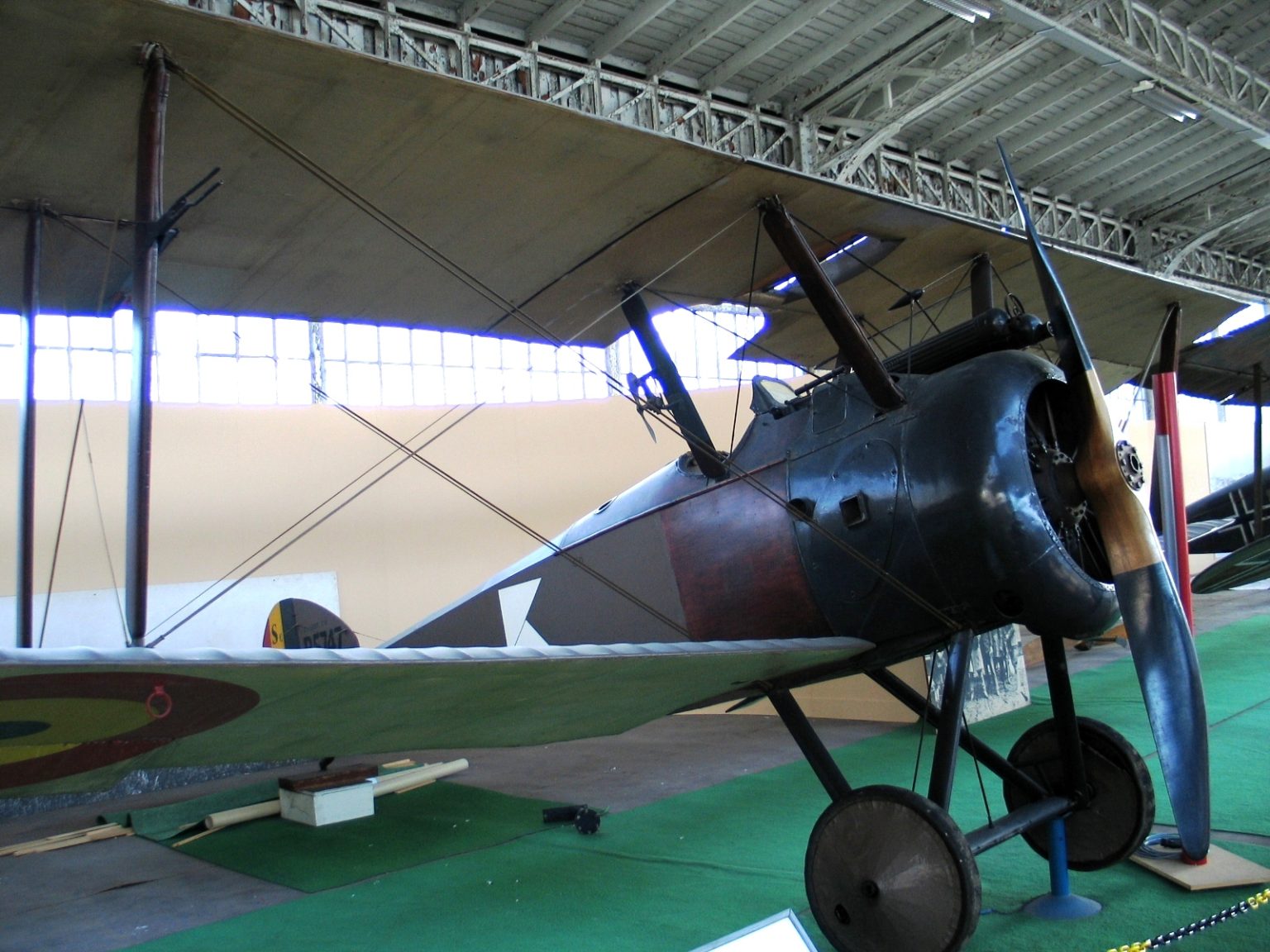
Survivors, and what is actually original: eight original Camel airframes are known. Static originals are B5747 at the Royal Museum of the Armed Forces in Brussels, B6291 at the National Air and Space Museum, B7280 at the Polish Aviation Museum in Kraków, C8228 at the National Naval Aviation Museum in Pensacola, F6314 at the Royal Air Force Museum London, the 2F.1 N6812 in which Stuart Culley destroyed Zeppelin L 53 at the Imperial War Museum London, and the 2F.1 N8156 at the Canada Aviation and Space Museum in Ottawa. One original, ZK-SDL, is airworthy in New Zealand with The Vintage Aviator Ltd. Everything else that flies is a reproduction — and there are many, at the Shuttleworth Collection, Old Rhinebeck Aerodrome, Brooklands and elsewhere — most of them powered by a Warner Scarab or Gnome Monosoupape rather than the Clerget, because serviceable Clergets barely exist. On the training-loss story: RAF casualty records are usually summarised as about 413 Camel pilots killed by enemy action against about 385 killed in non-combat flying accidents. Those accident deaths include operational crashes at the front, not only training crashes, and the widely repeated claim that more Camel pilots died in training than in combat inverts the ratio. The honest statement is the harder one: accidents killed very nearly as many Camel pilots as the Germans did.
The Sopwith Camel: a timeline from first flight to museum piece
A new Sopwith fighter flies
Herbert Smith’s new Sopwith F.1 fighter, successor to the Pup, makes its first flight in December.
The Camel goes to war
The Camel enters service with the RFC and RNAS from mid-1917 and quickly proves a formidable dogfighter on the Western Front.
The naval Ship Camel
The navalised 2F.1 “Ship Camel” is developed to fly from platforms on warships and from towed lighters.
The Royal Air Force is born
On 1 April the RFC and RNAS merge into the Royal Air Force; Camels serve in air combat, night defence and ground attack.
A Camel downs a Zeppelin
In August a lighter-launched 2F.1 flown by Lt Stuart Culley climbs to intercept and destroy the Zeppelin L 53 over the North Sea.
Most victories of any Allied fighter
By the Armistice the Camel is commonly credited with more aerial victories than any other Allied fighter of the war.
The Snipe takes over
With the war over, the Camel is rapidly withdrawn as newer fighters such as the Sopwith Snipe take over.
Out of frontline service
The Camel leaves RAF frontline service; a few examples soldier on briefly with other nations.
Museums and reproductions
Original Camels survive in museums, and airworthy reproductions fly at airshows — but none is bookable as a passenger flight.
The Sopwith Camel in action: notable missions, variants and legends
Why it is called the “Camel”
A metal hump over the guns gave the fighter its nickname.
Read the full account
The turn that made the Camel deadly
Rotary torque let a skilled pilot reverse direction in an instant.
Read the full account
“A Camel, a Red Cross, or a coffin”
The fighter was as dangerous to novices as to the enemy.
Read the full account
The Camel and the death of Richthofen
A Camel drew the Red Baron into his last, fatal pursuit.
Read the full account
Flying fighters off warships and lighters
The naval 2F.1 took the Camel to sea.
Read the full account
The Camel that shot down an airship
A lighter-launched Camel destroyed the Zeppelin L 53.
Read the full account
Trench-strafing in the last year of the war
Camels carried bombs low over the battlefield.
Read the full account
A night-fighter with guns on the wing
The Camel defended Britain against night raiders.
Read the full account
The pilots who scored on the Camel
Many top Allied aces built their tallies in Camels.
Read the full account
The beagle who flew a Camel
The Camel became one of aviation’s most famous names.
Read the full account
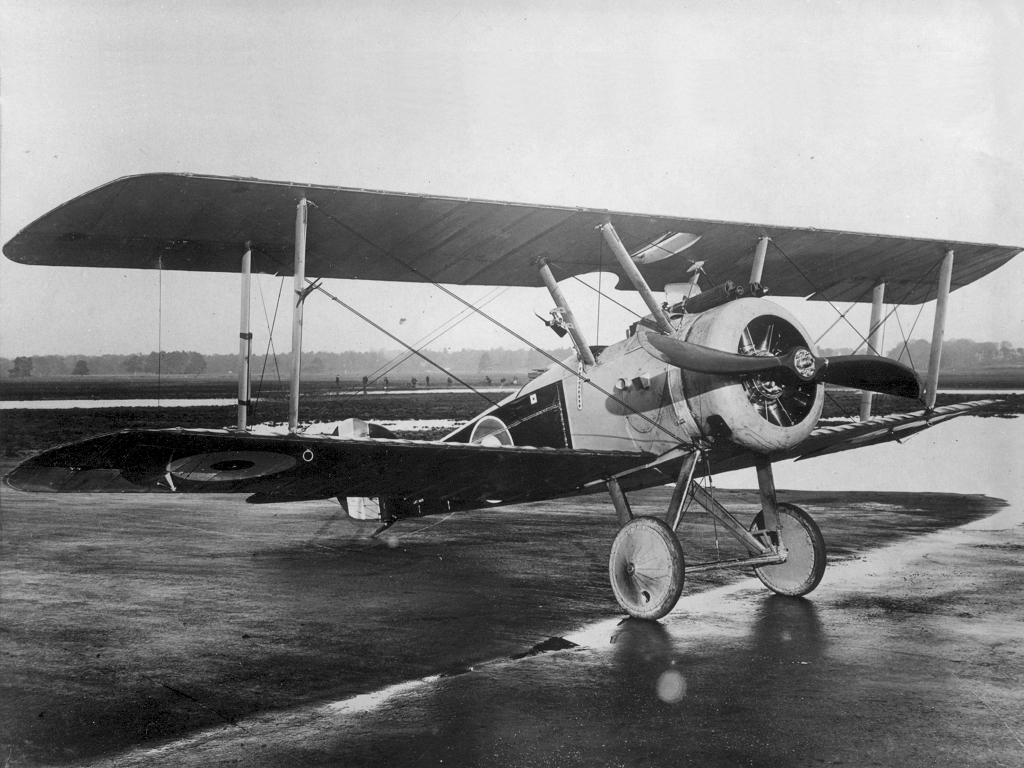
Sopwith Camel photos: the WWI fighter up close
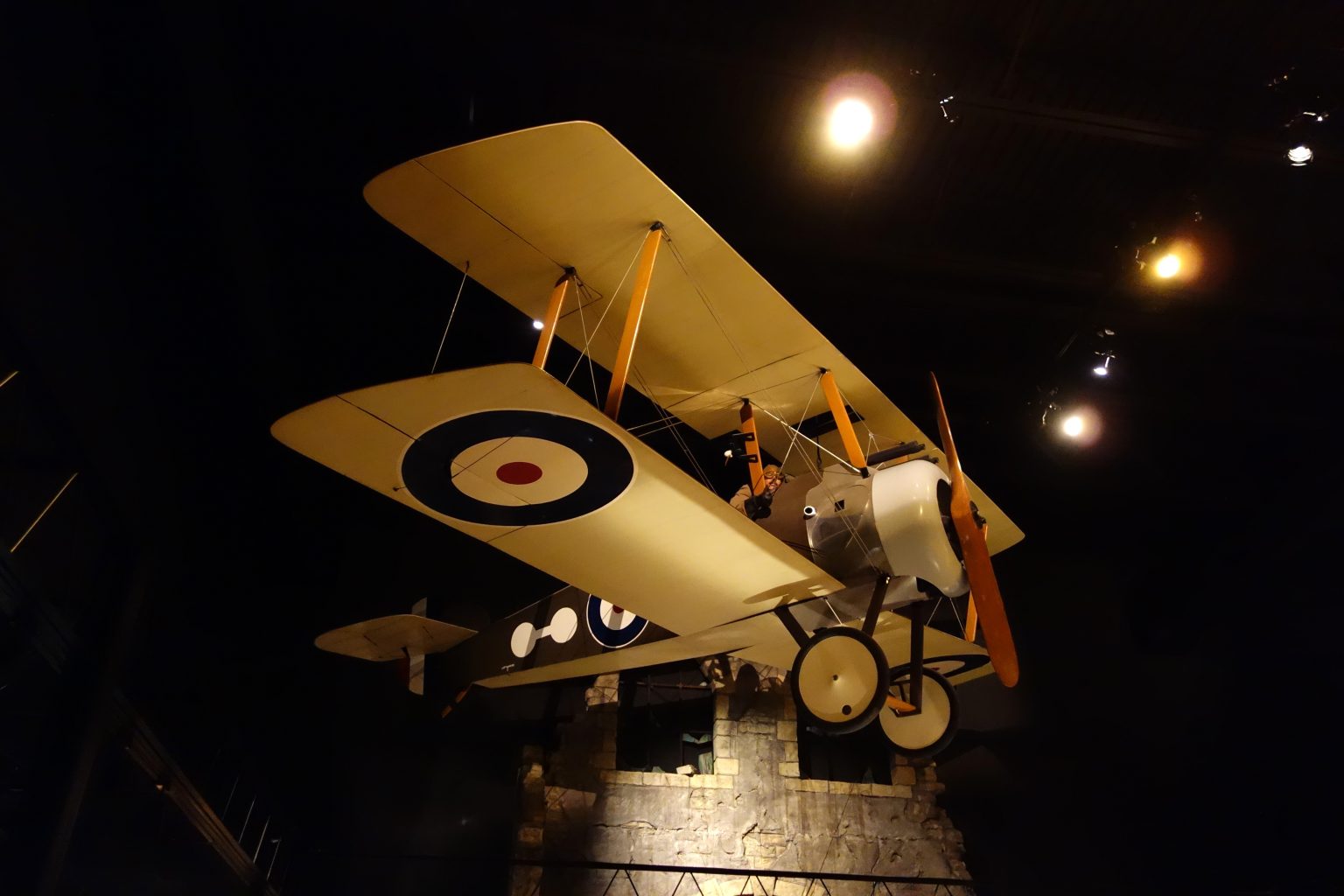
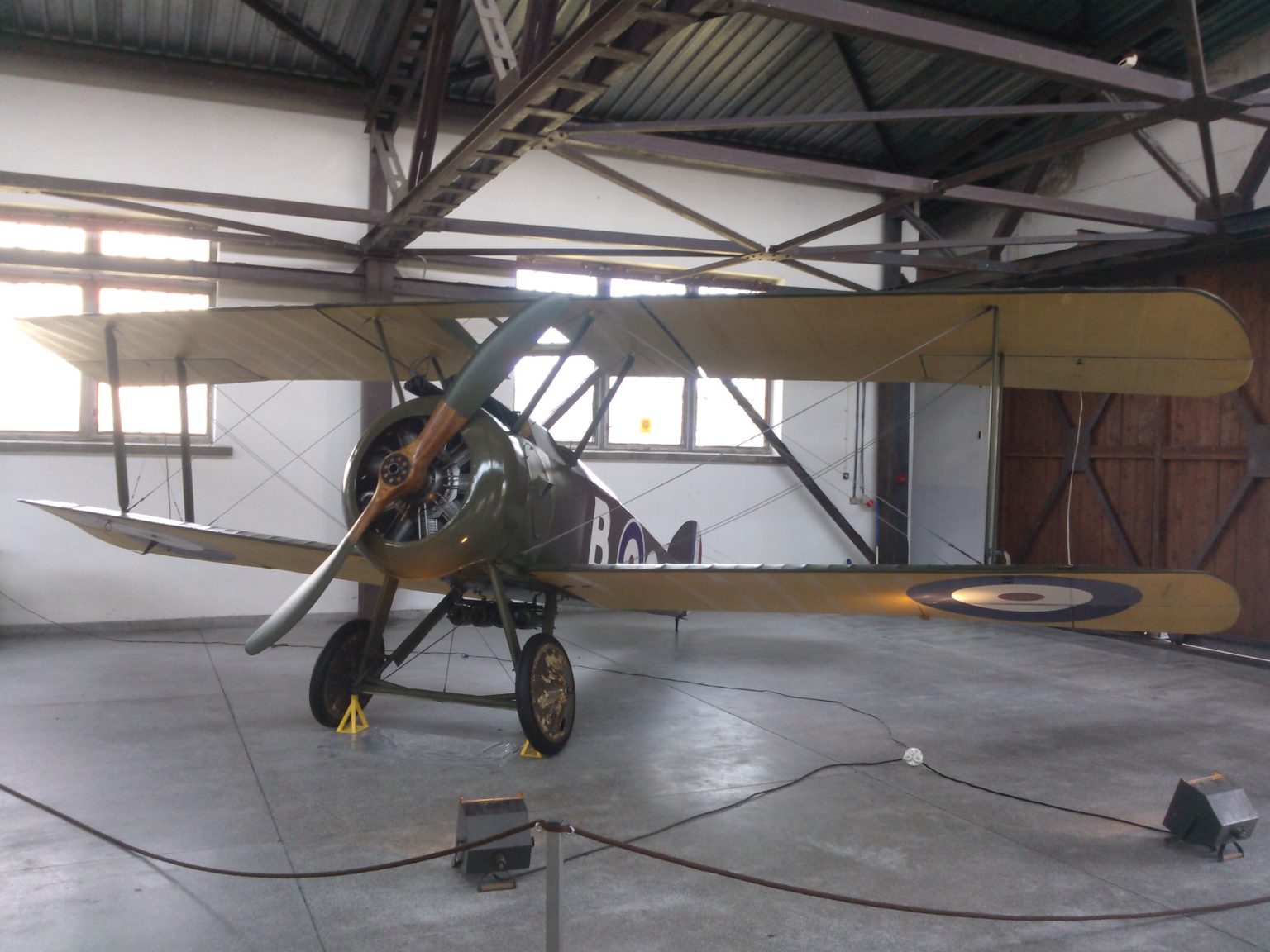
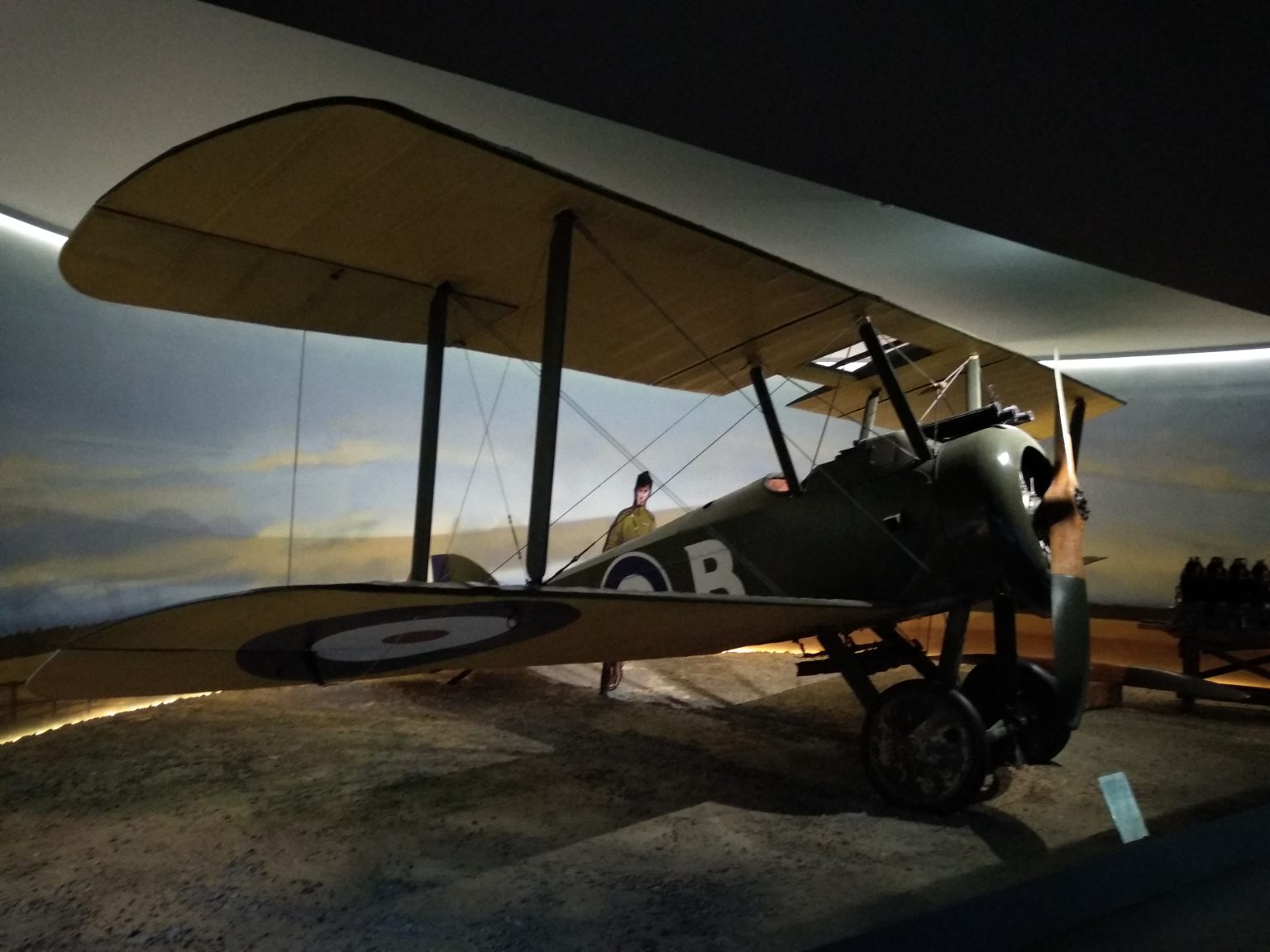
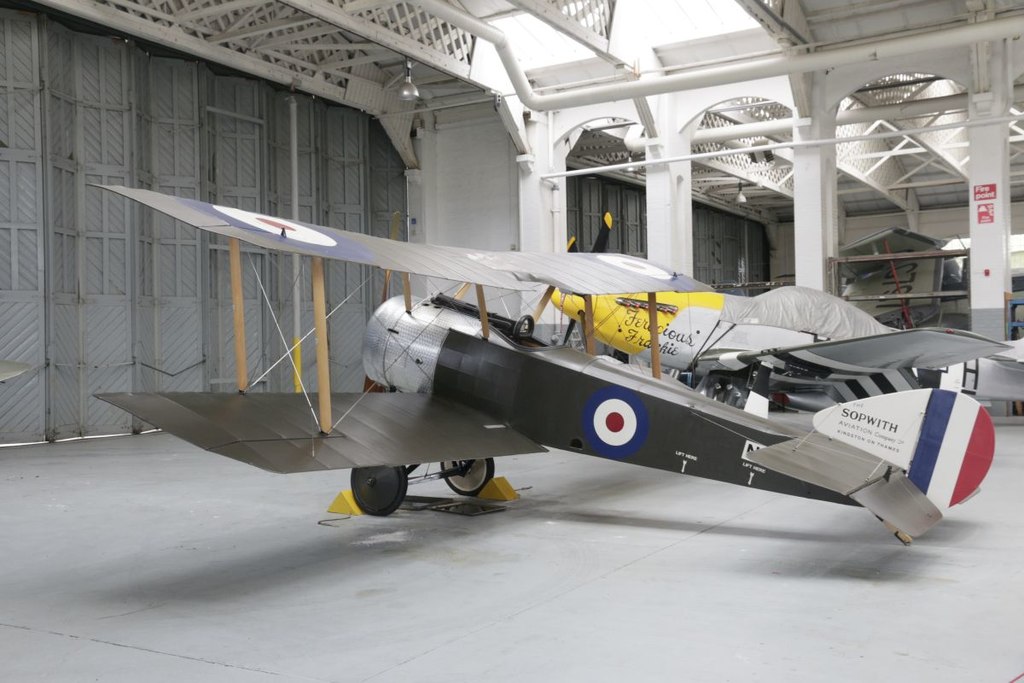
The Sopwith Camel on screen: a genuine rotary engine runs again
Historical Aviation Film Unit — “WW1 Sopwith Camel With Original Rotary Engine” (over 1.2 million views): a surviving Sopwith Camel started and run on its original rotary engine, capturing the sound and vibration that defined how the type flew and fought.
Where the Sopwith Camel flew: origin, combat use and surviving airframes
The Sopwith Camel in combat: the war’s most successful Allied fighter
From mid-1917 to the Armistice, the Sopwith Camel was at the centre of the air war over the Western Front — dogfighting, escorting, defending Britain by night and strafing trenches by day. It is commonly credited with downing more enemy aircraft than any other Allied fighter of the First World War, though wartime victory totals are contested and should be treated as estimates.
Compare the Explore the combat record of every military aircraft. Data as of July 2026.
Sopwith Camel: frequently asked questions
Can I fly in a Sopwith Camel?
What is the Sopwith Camel?
Why is it called the Camel?
Why was the Sopwith Camel so hard to fly?
How many enemy aircraft did the Sopwith Camel shoot down?
Did a Sopwith Camel shoot down the Red Baron?
What engine did the Sopwith Camel use?
What was the naval Sopwith 2F.1 Ship Camel?
How many Sopwith Camels were built?
Are there any Sopwith Camels left?
You can’t fly the Sopwith Camel.
These, you can.
Some legends only live in museums — others are fuelled and waiting. MiGFlug has put civilians in real military jet cockpits since 2004.
 Fly the L-39 AlbatrosThe world’s most-flown jet trainer — aerobatics included
 Fly the F-104 Starfighter“The missile with a man in it”
 Fly the MiG-21The Cold War’s most-produced jet
 Fly the T-33 Shooting StarAmerica’s first jet trainer
 Fly the DH VampireA piece of early jet history
 Fly the S.211Agile Italian jet trainer
 Fly the MB-326The classic Aermacchi jet
 Fly the MiG-15The Soviet legend of the Korean War
More from the Military Aircraft Encyclopedia
Sopwith Camel: sources & further reading
- Royal Air Force MuseumRoyal Air Force Museum — Sopwith Camel history, surviving airframes and RFC/RAF context.
- Imperial War MuseumsImperial War Museums — First World War aircraft, the air war and the Camel in service.
- Smithsonian National Air and Space MuseumSmithsonian National Air and Space Museum — Sopwith Camel and early fighter aviation.
- Canada Aviation and Space MuseumCanada Aviation and Space Museum — the original naval Sopwith 2F.1 Ship Camel N8156.
- The Shuttleworth CollectionThe Shuttleworth Collection — airworthy First World War aircraft and Camel reproductions.
- Old Rhinebeck AerodromeOld Rhinebeck Aerodrome — flying First World War reproductions in the United States.
- Royal Museum of the Armed Forces, BrusselsRoyal Museum of the Armed Forces, Brussels — a preserved Sopwith Camel in Belgium.
- MiGFlug AfterburnerMiGFlug Afterburner — the magazine behind this encyclopedia, on military aviation and flying real fighters.
Hero and gallery photography: U.S. Air Force / NASA, public domain. Combat statistics as of July 2026. Spotted an error? Every page in the Aircraft Museum is fact-checked before publication — write to us and we'll correct it.