
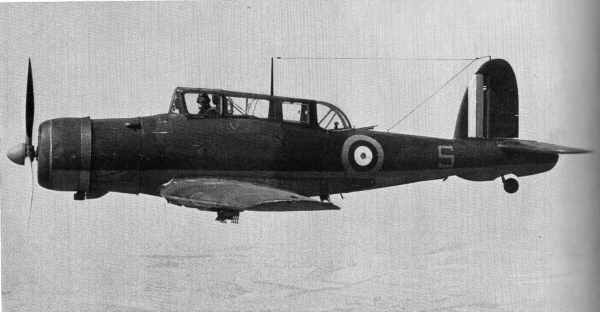
The Blackburn Skua was slow, awkward and asked to do two jobs it could not both do well. It has been mocked ever since as one of the Fleet Air Arm's worst fighters. And yet in the first months of the Second World War this unloved machine scored Britain's first aerial kill of the war and sank a German cruiser — the first major warship in history sent to the bottom by dive-bombers. For an aircraft with such a poor reputation, that is quite a opening act.
Kurzinfo
- Typ: Blackburn B-24 Skua, carrier dive bomber and fighter
- First in the FAA: its first all-metal monoplane and first dive bomber
- Gebaut: 192
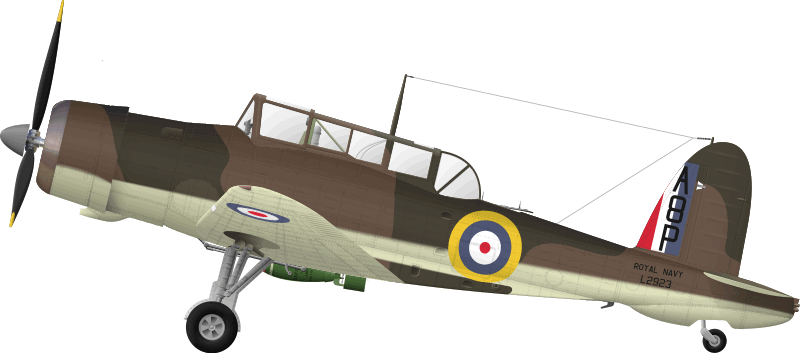
- Rüstung: four wing machine guns, a rear gun, and one 500 lb bomb on a swinging crutch
- First kill: Britain's first aerial victory of WWII, September 1939
- Finest hour: sank the cruiser Konigsberg, 10 April 1940
One aircraft, two jobs, neither easy
When the Skua entered service in late 1938 it was genuinely modern for the Fleet Air Arm — an all-metal, low-wing monoplane at a time when the FAA still flew biplanes. But its design tried to be both a fighter and a dive bomber, and that compromise cost it dearly. It was too slow and climbed too poorly to fight enemy fighters on equal terms.
Where the Skua came into its own was pointing its nose straight down. As a dive bomber it was steady and accurate, and in 1939 and 1940 — before better aircraft arrived — it was what the Royal Navy had. It made the most of a short window.
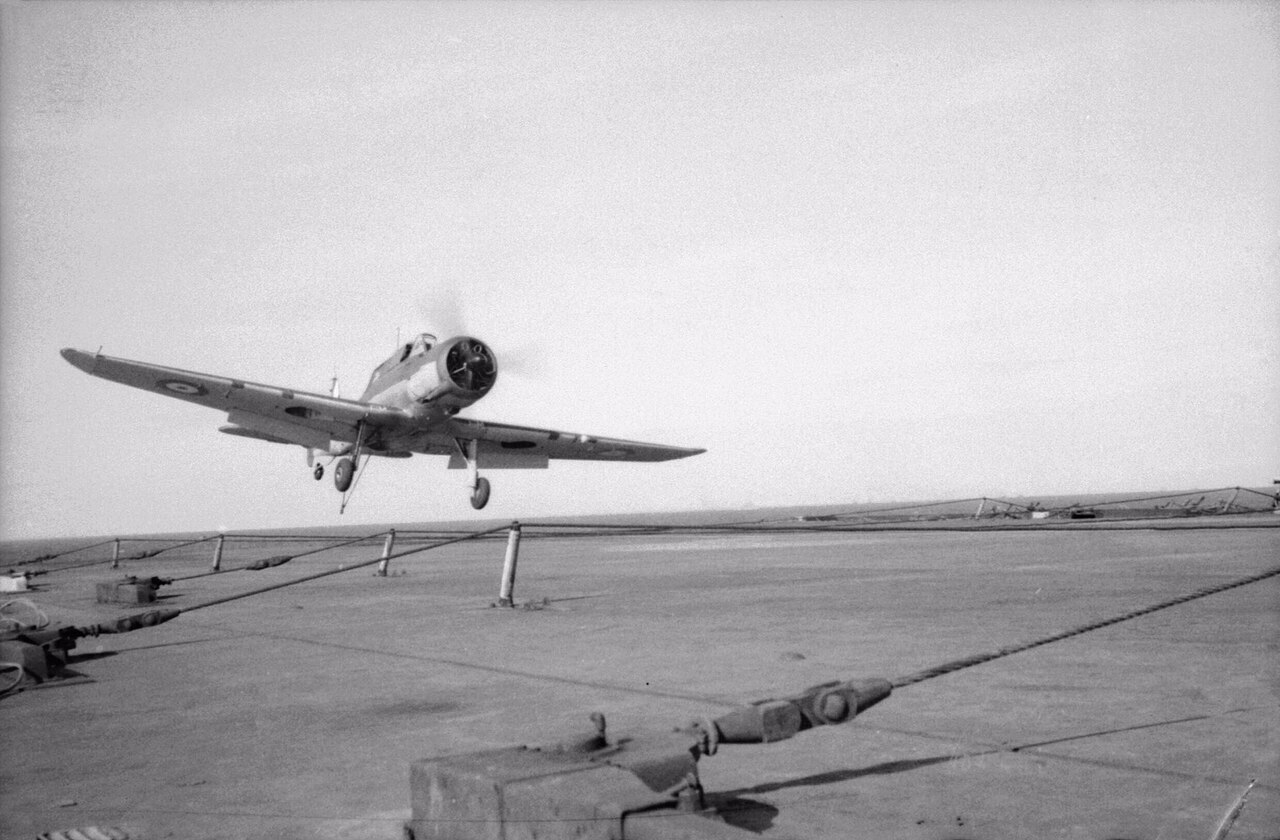
Fighting dive-bomber or dive-bombing fighter? The Skua's awkward identity.
The first kill of the war
On 25/26 September 1939, less than a month into the war, Skuas from the carrier HMS Ark Royal caught a German Dornier Do 18 flying boat shadowing the fleet and shot it down. It was the first enemy aircraft destroyed by British forces in the Second World War — and it was the derided Skua that did it.
Sinking the Konigsberg
The Skua's greatest day came on 10 April 1940. The German light cruiser Konigsberg lay damaged and moored at Bergen in newly-invaded Norway. Sixteen Skuas took off from the Orkneys, flew to the very edge of their range, and dived on the cruiser out of the morning sky. Several 500 lb bombs struck home; the Konigsberg blew up and sank.
It was a milestone in the history of air power: proof that aircraft alone could destroy a major warship. That the aircraft in question was the plodding Skua only makes it more remarkable.
Why the Konigsberg could not survive the Skuas that caught her in harbour.
Overtaken, but not disgraced
The Skua's luck did not hold. In June 1940 fifteen Skuas attacked the battleship Scharnhorst at Trondheim and eight were shot down — a slaughter that laid bare how obsolete the type had become against modern fighters. By 1941 the Skua was pulled from the front line and sent to tow targets and train crews, soldiering on quietly until 1945.
History has been unkind to it, lumping it in with its truly hopeless turret-fighter sibling, the Blackburn Roc. But the Skua deserves a fairer hearing. In the desperate opening rounds of the war it scored the first British kill and sank the first warship lost to air attack. Plenty of prettier, faster aircraft never achieved half as much.
Britain's ugly but surprisingly effective fighter-bomber.
Sources: Wikipedia (Blackburn Skua); Naval Encyclopedia; BAE Systems Heritage; historyofwar.org.


0 Comments