
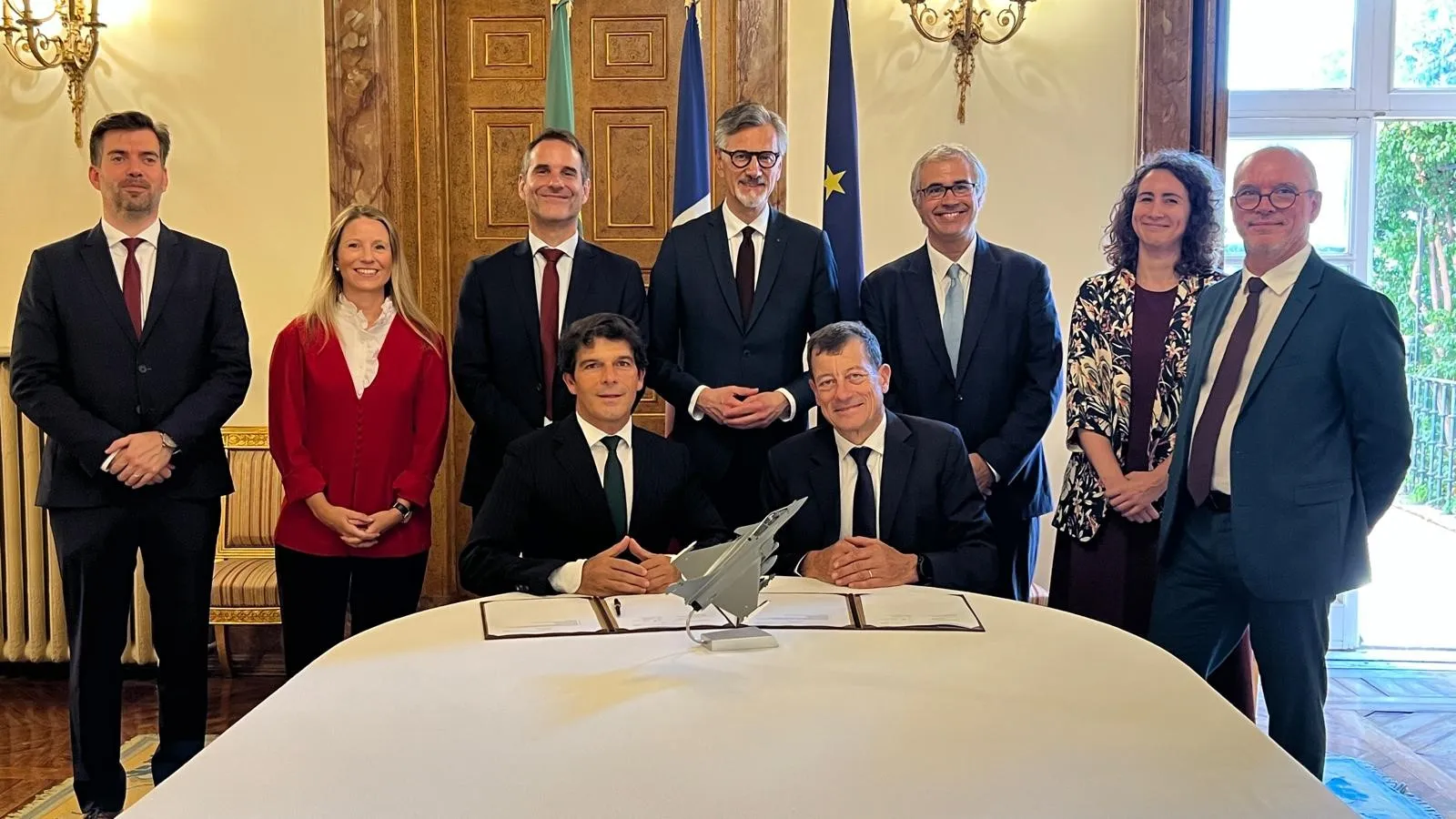
There is a scale model of a Rafale on the table between the two men signing. It is a small detail and it is the entire point: the document being signed is not a contract for aircraft. It is a promise about Portuguese factories.
On 23 September 2026, at the French Embassy in Lisbon, Dassault Aviation signed a Memorandum of Understanding with AED Cluster Portugal, the country’s association for the aeronautics, space and defence industries. Dassault signed on behalf of its Rafale partners, Thales and Safran. The French Ambassador to Portugal, Jean-Pierre Asvazadourian, was in the room.
Airbus is running a comparable campaign for the Eurofighter Typhoon, and has signed its own memorandum of understanding with Portuguese manufacturers. Portugal has not yet issued a tender, and already four manufacturers are competing for it.
Kurzinfo
Unterzeichnet: 23 September 2026, French Embassy, Lisbon
Parties: Dassault Aviation, on behalf of Rafale partners Thales and Safran, and AED Cluster Portugal
What it is: A Memorandum of Understanding to explore industrial cooperation, not an aircraft contract
Kontext: Dassault submitted its formal Rafale bid to the Portuguese government and air force in July 2026
Der Bedarf: Replacing 24 Portuguese F-16A/B Block 15 aircraft upgraded under a Mid-Life Update
Wettbewerber: Dassault Rafale, Airbus Eurofighter Typhoon, Lockheed Martin F-35A, Saab Gripen E
Tender status: No formal competition has been launched
What the MoU Actually Promises
Very little, in binding terms. A memorandum of understanding commits nobody to buy anything. What it does is put a marker down with a specific constituency: the Portuguese companies that would build parts, maintain aircraft and employ people if the Rafale won.
The release goes on to say that the agreement builds on relationships the Rafale partners already have in Portugal, and is intended to boost the Portuguese economy and strengthen the country’s sovereignty. That last word is doing a great deal of work, and it is aimed squarely at the reason this competition exists at all.
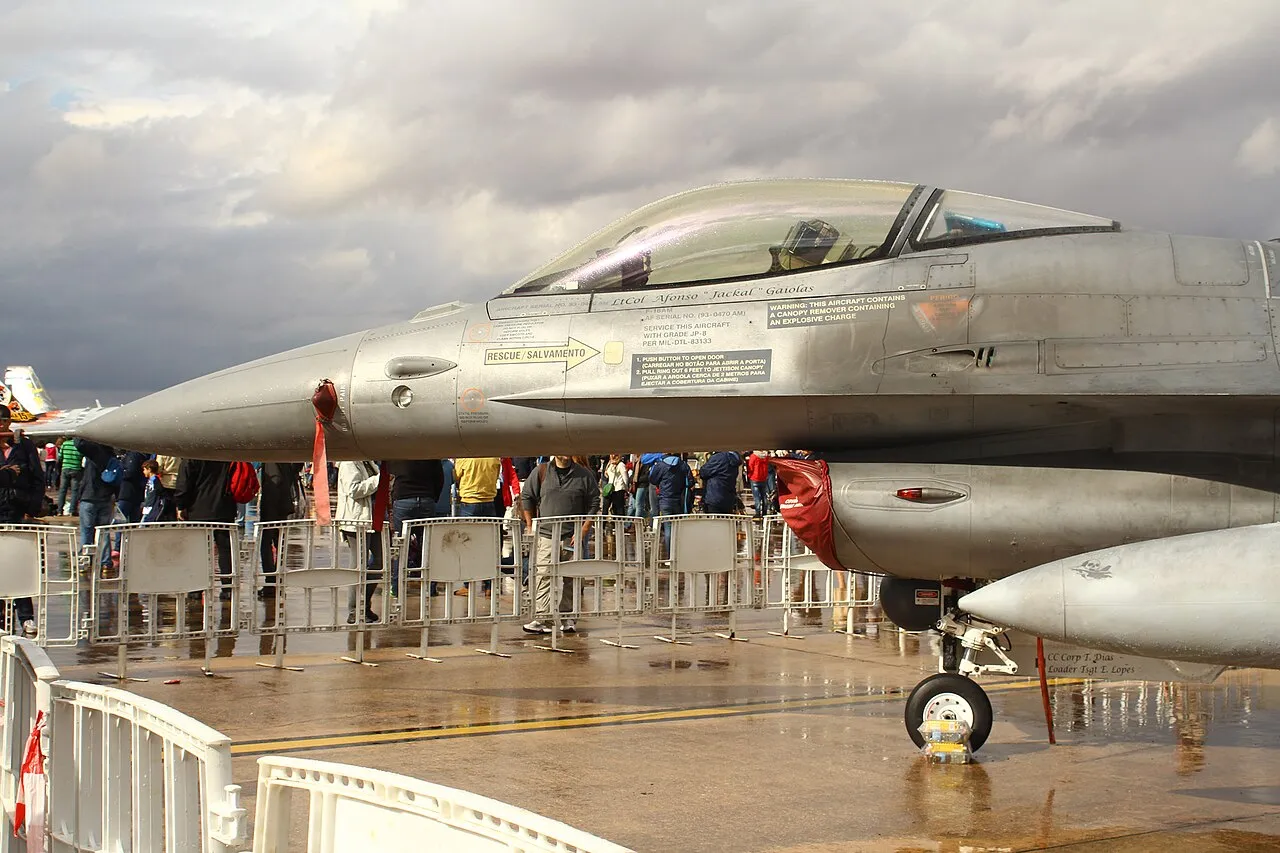
Why Portugal Is Even Shopping
For years the answer to what replaces Portugal’s F-16s was assumed to be the F-35, because Portugal flies F-16s, sits inside NATO, and had no obvious reason to do anything else.
That assumption broke in March 2025, when Portuguese ministers publicly questioned buying American, citing uncertainty about the political posture of the United States. The position has since softened. But the door, once opened, did not close, and every European manufacturer walked through it.

The Shape of a European Sales Campaign
Nobody sells a fighter on the fighter any more. The aircraft is assumed to work; what is being negotiated is everything around it. Offsets. Local assembly. Maintenance contracts that run for thirty years. Whether your engineers get access to the software or wait for somebody else’s release cycle.
Dassault’s move is the classic French version of that campaign: sign with the industry association first, hold it at the embassy, put the ambassador in the photograph, and let the message land with the people who will lobby their own government. Airbus is running the same play with a different accent.
Was geschieht als Nächstes?
Nothing, formally, until Lisbon decides to run a competition. When it does, the four contenders will already have spent two years building relationships that the tender document itself cannot capture.
Whether any of that decides the outcome is another matter. Portugal is a small air force with 24 aircraft to replace, a constrained budget, and an alliance to stay interoperable with. A model on a table in an embassy is a long way from a signature on a contract.
Sources: Dassault Aviation press release and press kit, 23 September 2026; GlobeNewswire; Aviation Week; Air Data News; The Aviationist.


0 Comments