

A head-up display is supposed to be the most trustworthy piece of glass in the cockpit. It puts speed, altitude and the flight path vector right in the pilot’s line of sight, exactly when the eyes need to be outside. So when the software behind it might fail to catch its own memory faults, regulators take notice.
On Friday 27 November 2026, the US Federal Aviation Administration published a proposed airworthiness directive in the Federal Register for certain Bombardier BD-700-1A10 and BD-700-1A11 business jets, the type certificates behind the long-range Global family. The agency estimates the rule would affect 734 US-registered aircraft.
Kurzinfo
- Aktion: FAA notice of proposed rulemaking (proposed airworthiness directive)
- Veröffentlicht: Federal Register, Friday 27 November 2026, docket FAA-2026-15286
- Flugzeug: Certain Bombardier BD-700-1A10 and BD-700-1A11 with avionics software 5.8 (Global 5000 GVFD, 5500, 6000, 6500)
- Flotte: 734 US-registered aircraft (FAA estimate)
- Issue: HUD application may not read GE5 memory errors at power-up, so a faulty HUD may not blank
- Fix: Install avionics software 5.9 or a later approved version
- Kosten: $35,618 per aircraft, $26,143,612 in total (FAA estimate); may be covered by warranty
- Comments: Due by 11 January 2027
A memory check that never happens
A HUD projects flight symbology onto a transparent combiner glass between the pilot and the windscreen, so the numbers appear laid over the real world. Pilots use it most in the busiest moments of a flight, on take-off and on approach, which is precisely why a display that looks right but is wrong is so dangerous.
The problem sits in the head-up display application, or HDA, in avionics software version 5.8. According to the FAA, the software could leave the HDA unable to read errors in the local and frame buffer memory of the graphical engine chip, known as GE5, during power-up.
That matters because the HDA is meant to blank the head-up display if the GE5 memory is faulty. A blank HUD is a nuisance; a HUD that keeps showing bad numbers is a hazard. If the fault went undetected, the FAA says, the display could show misleading primary flight information, including altitude, the flight path vector on approach, airspeed on take-off, radio altitude, and lateral and vertical guidance.
Transport Canada, which certifies Bombardier’s aircraft as the state of design, spelled out what is not affected. Information on the enhanced vision and synthetic vision systems, and the primary flight display on the head-down screens, are unaffected by the issue.
Which Global jets are covered
The proposed rule copies Transport Canada AD CF-2026-15, issued on 25 March 2026 and effective from 8 April 2026. It applies to BD-700-1A10 and BD-700-1A11 aircraft of all serial numbers fitted with avionics software 5.8, integrated modular avionic applications part number 810-0311-1B0016.
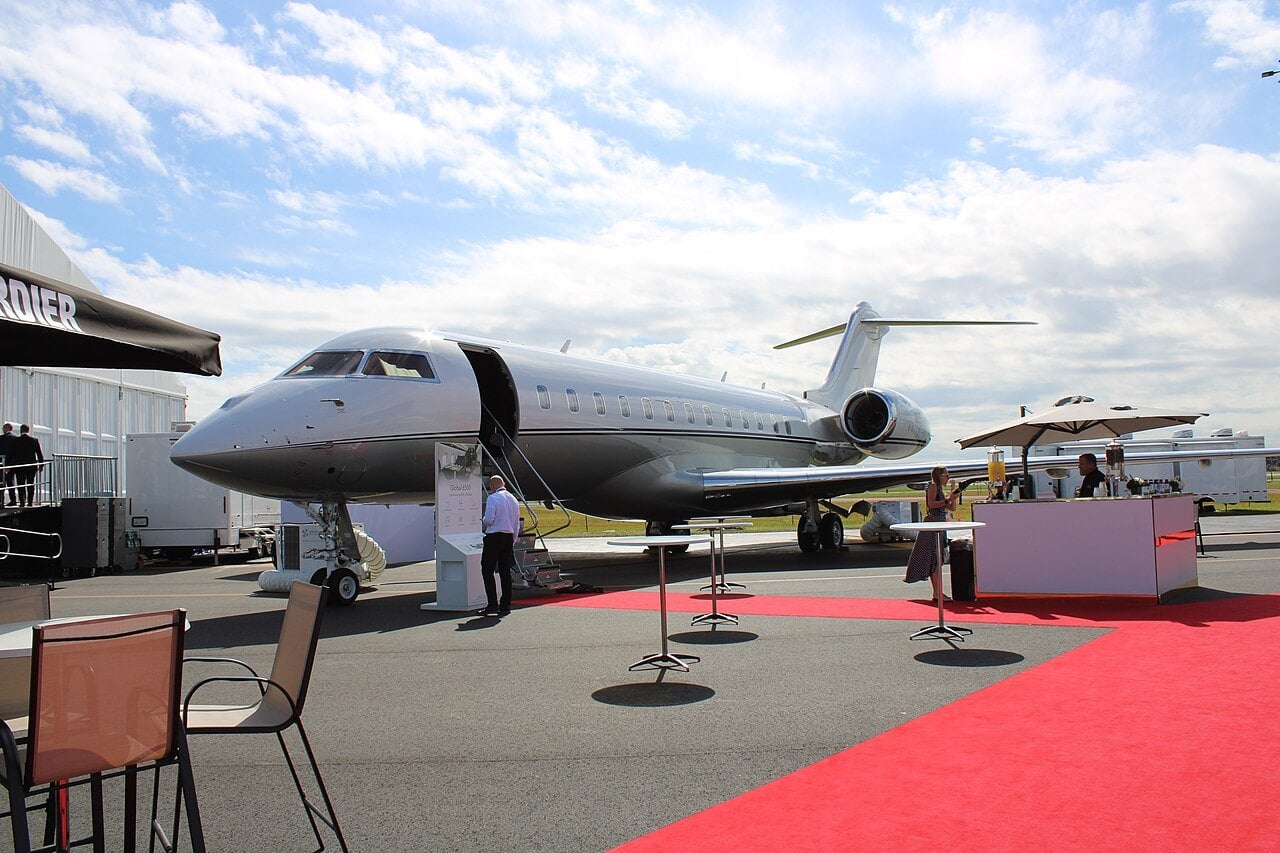
The Bombardier service bulletins listed in the Canadian directive name the marketing models: the Global 5000 GVFD and Global 5500 under BD-700-1A11, and the Global 6000 and Global 6500 under BD-700-1A10. Bombardier issued those bulletins on 15 December 2025.
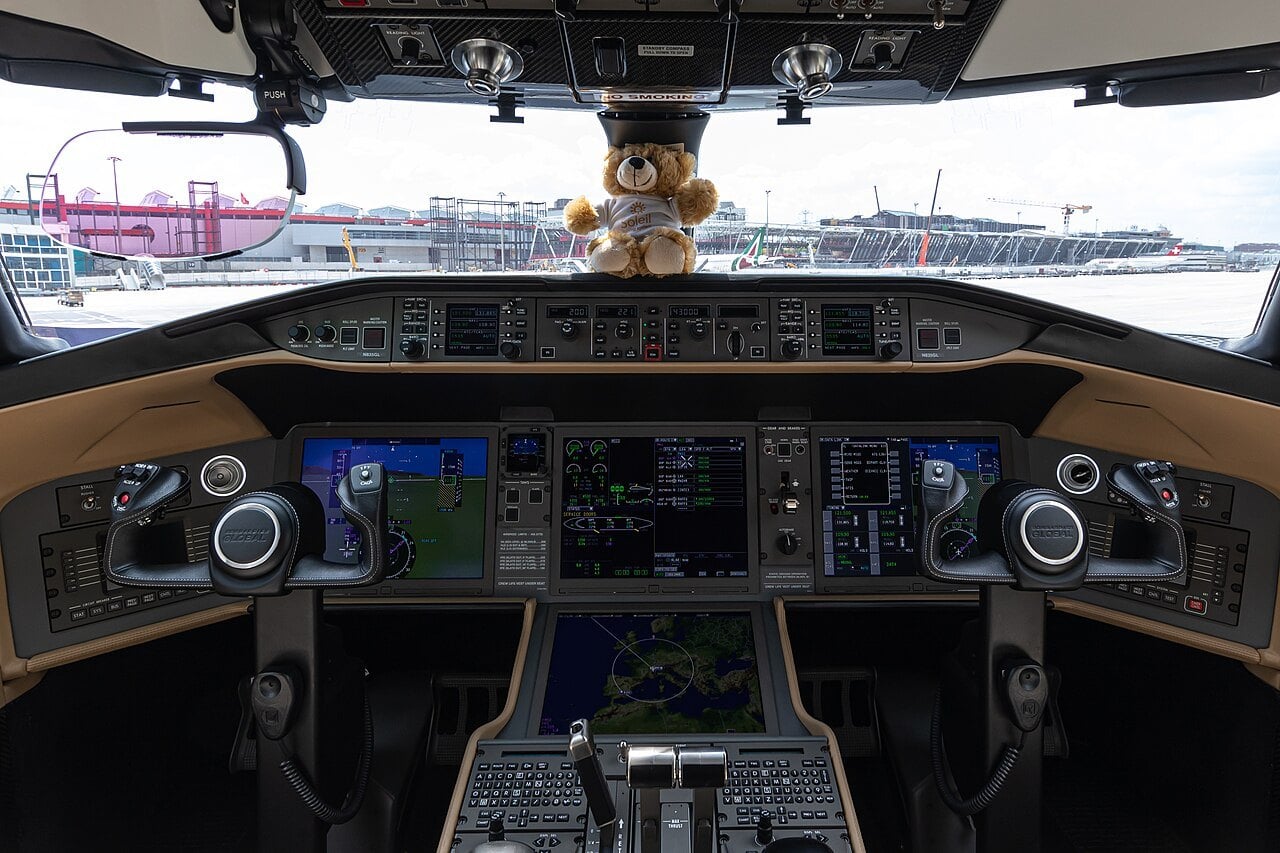
A look through the head-up display of a Bombardier Global 6000, the kind of display the proposed AD is about.
The fix is pure software. Operators must install avionics software version 5.9, part number 810-0311-1B0020, or a later approved version. Transport Canada gave operators 60 months to comply, and the FAA proposal follows the same approach, counted from the effective date of its own final rule.
A software update with a $26 million price tag
Software is rarely free in aviation. The FAA estimates 16 work-hours per aircraft at $85 an hour, or $1,360 in labour, plus $34,258 in parts, for a total of $35,618 per aircraft. Across 734 US-registered jets, that adds up to $26,143,612.
Operators may not see the full bill. According to the manufacturer, the FAA notes, some or all of the costs may be covered under warranty.
The NPRM, docket FAA-2026-15286, is open for comments until 11 January 2027. After that the FAA can adopt a final rule, possibly with changes. It is the standard path for a foreign directive: the state of design acts first, and the FAA follows with its own rule once it agrees the unsafe condition is likely to exist or develop in other aircraft of the same type design.
For Global crews, nothing changes in the cockpit today. For their maintenance planners, the countdown to software 5.9 has effectively begun, and the HUD will soon be a little better at knowing when to go dark.
Sources: Federal Register (FAA NPRM, docket FAA-2026-15286), Transport Canada AD CF-2026-15, Flying, AVI-GO


0 Comments