
The US Navy wants 216 new jet trainers. It wrote a requirement, ran years of market research, issued a request for proposals in September and set a bid deadline of 30 October 2026. Five manufacturers had circled the programme at one point or another.
When the deadline passed, one was left.
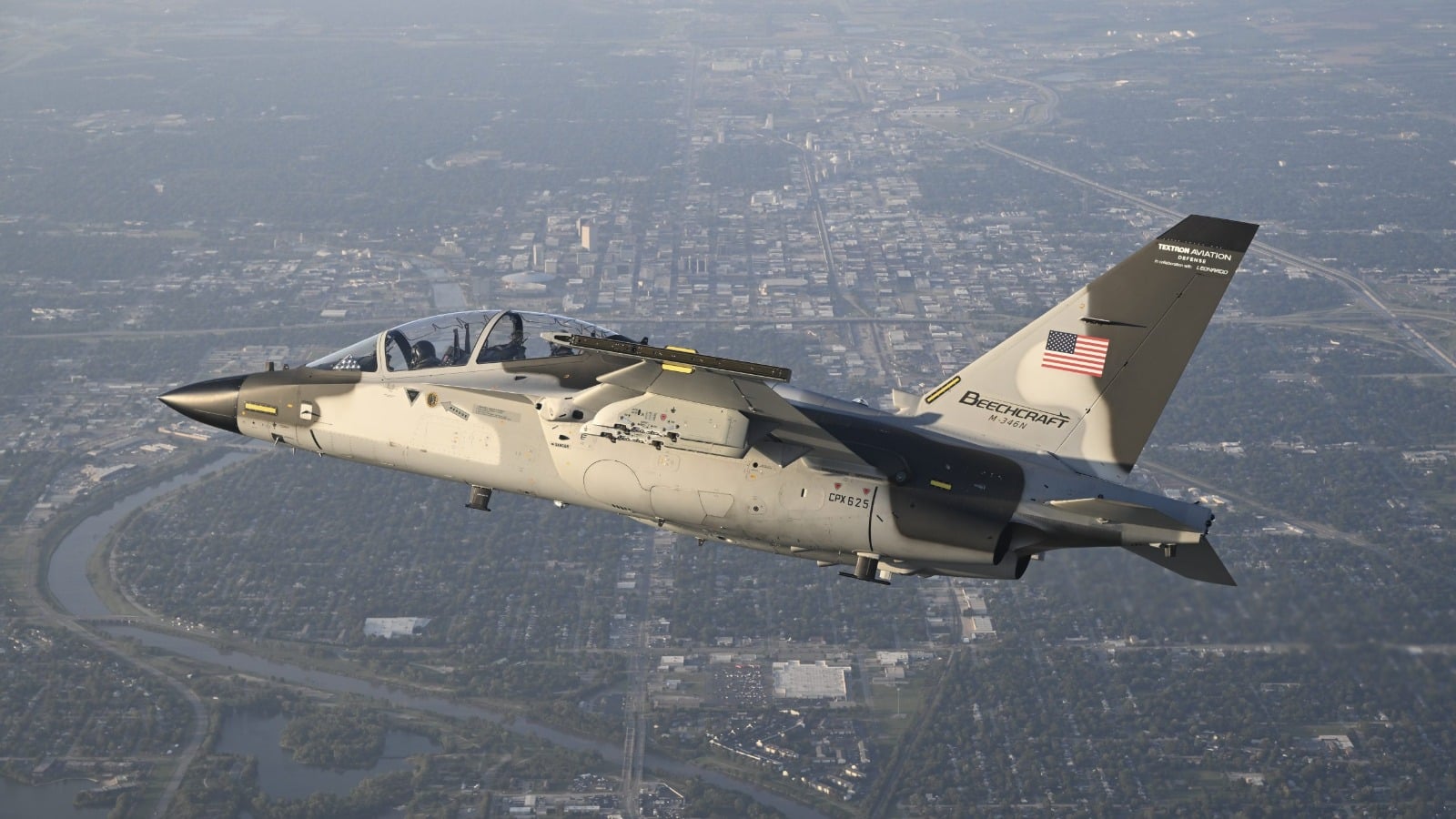
Sierra Nevada Corporation, the last serious challenger, did not submit. Verteidigung durchbrechen broke the story on 3 November; SNC said it could not responsibly bid under the contract structure the Navy had written. That leaves Textron Aviation Defense, teamed with Leonardo and offering the Beechcraft M-346N, as the only established aircraft manufacturer known to have filed a proposal for the Undergraduate Jet Training System.
A competition with one bidder is not a competition. It is a negotiation, and the Navy is the party without leverage.
Kurzinfo
Programm: Undergraduate Jet Training System (UJTS), US Navy
Ersetzt: the McDonnell Douglas T-45 Goshawk, in Navy training service since the early 1990s
Quantity sought: 216 aircraft
Proposal deadline: 30 October 2026
Bidders remaining: Textron Aviation Defense with Leonardo, offering the Beechcraft M-346N. Stavatti Aerospace says it also bid; the Navy has not published a bidder list.
Withdrawn: Lockheed Martin (April 2026), Boeing (June 2026), Northrop Grumman (September 2026, from SNC’s team), Sierra Nevada Corporation (reported 3 November 2026)
Award expected: fourth quarter of Fiscal Year 2027, i.e. July to September 2027
First production deliveries: currently expected 2032
One Bidder, 216 Aeroplanes
UJTS is not a side programme. It is the machine that turns student naval aviators into people who can land a fast jet on a boat, and it has been running on the same airframe for more than three decades. Training Air Wing 2 at NAS Kingsville alone passed one million T-45 flight hours in July 2024. The fleet is tired, the syllabus has moved on, and the replacement is overdue.
So the Navy did the sensible thing and asked industry to compete. Industry, one company at a time, declined.
SNC’s exit is the one that matters, because SNC was the only bidder offering something designed from scratch for this job. Its Freedom trainer, shown publicly at Tailhook in 2025, was built around carrier work: Martin-Baker Mk18 seats, a 16,000-hour airframe life, and the structure to take field carrier landing practice all the way to touchdown. Every other contender was an existing trainer adapted to a naval requirement.
Read that twice. SNC is not saying the aeroplane was wrong, or that it lost on merit, or that it ran out of money. It is saying the terms were unbiddable. That is a complaint about how the Navy structured the contract, and it is the fourth company in seven months to walk away from this programme for reasons that have nothing to do with being beaten.
How a Five-Horse Race Emptied Out
The departures came in order of how much each company had to lose.
Lockheed Martin went first, in April 2026. It had been offering the TF-50N, a navalised derivative of the T-50 Golden Eagle it builds with Korea Aerospace Industries, and it cited the level of US content the solicitation demanded. A Korean-built airframe was always going to struggle against a domestic-content rule.
Boeing followed in June, and we covered that at the time. Its T-7A Red Hawk would have needed further development to meet the Navy’s requirements, including qualifying its GE Aerospace F404 engine for the naval mission. Boeing, which has lost a great deal of money on the Air Force T-7A already, decided not to spend more.
Northrop Grumman left SNC’s industrial team in September, which thinned the Freedom bid considerably two months before SNC itself gave up.
What is left is Textron and Leonardo, plus Stavatti Aerospace, which says it submitted a proposal. The Navy has published no bidder list and will not discuss one while source selection is running.
The Requirement That Reshaped the Field
There is a technical reason the field looks like this, and it was set long before the bids were due.
In early 2026 the Navy confirmed that its next trainer will not have to perform field carrier landing practice all the way to touchdown. Students will fly the pattern to a wave-off instead. NAVAIR put it plainly: FCLP to touchdown "will be trained via other means in the UJTS system of systems". Carrier qualification itself had already moved downstream for tactical-jet students, who now do it at their Fleet Replacement Squadron after winning their wings.
That single decision changed the economics of the whole programme. An aircraft that never has to slam onto a deck does not need deck-landing structure, and a land-based trainer can be adapted far more cheaply than a carrier-capable one can be designed. It opened the competition to the M-346 and the T-50 family.
It also removed the one thing that made SNC’s Freedom distinctive. Build the only genuinely carrier-capable entrant into a competition that no longer requires carrier capability, and you are carrying weight nobody is paying you for.
The published performance bar is still a real one. Reporting on the requirement describes Mach 0.9 or 450 to 500 KIAS, sustained angle of attack above 20 degrees, a sustained 6 g load factor, a 41,000-foot ceiling and a 12-degree-per-second turn rate. That is a long way beyond what a turboprop can do and comfortably inside what a modern advanced jet trainer delivers.
The War Zone’s Jamie Hunter went to Wichita and flew the aircraft; the walk-around above is the closest thing to a public technical tour of the jet that is now the Navy’s only realistic option.
What Textron Is Actually Offering
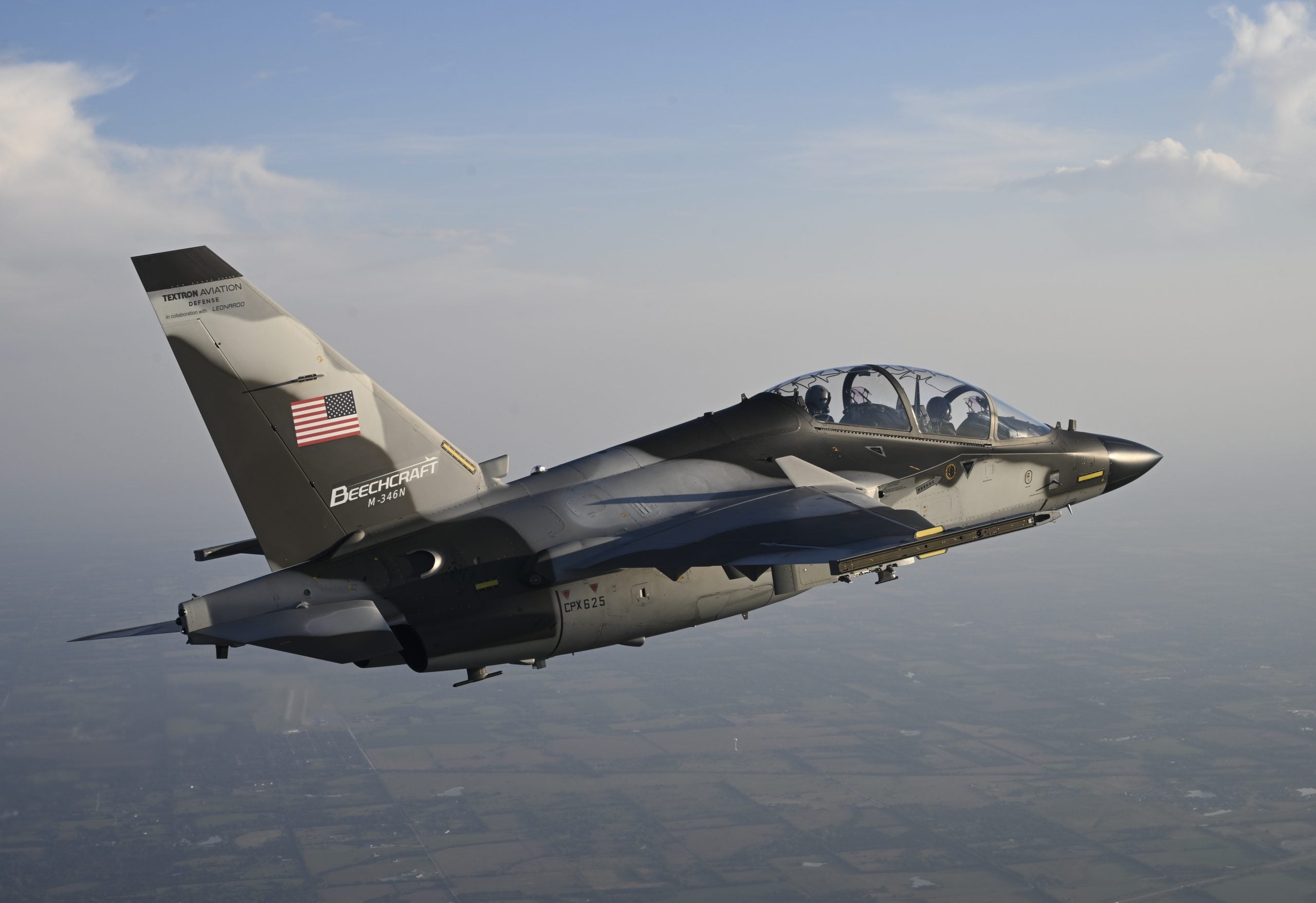
The Beechcraft M-346N is a navalised variant of Leonardo’s M-346 Master, the twin-engine advanced trainer already flying with the Italian, Israeli, Polish, Singaporean and other air arms. Leonardo has built more than 100 of them. Textron’s pitch has been consistent from the start: this is the low-risk, flying-now answer, not a development programme.
In October 2025 Textron Aviation Defense said that if it wins UJTS it will assemble the aircraft at its east campus in Wichita, Kansas, spending more than $38 million to upgrade over 50,000 square feet of existing manufacturing space and creating around 100 direct manufacturing jobs.
Textron said at the time that it anticipated a contract award in January 2027. That date has since moved twice.
The Award Keeps Sliding, and the Goshawks Keep Flying
The Navy originally meant to award UJTS in March 2027. The September request for proposals pushed that to the middle of 2027. The programme office now says the award will come in the fourth quarter of Fiscal Year 2027, which is July to September 2027.
Its only public comment on the state of the competition is a single sentence: the government is in source selection, with the intent to award in 4QFY27. That is what a programme office says when it is not going to tell you anything.
One figure explains a lot of the industry’s behaviour. After pushback from bidders, the cost ceiling for the engineering and manufacturing development phase was raised from roughly $1.75 billion to about $2.7 billion. Companies do not win a billion-dollar ceiling increase by being relaxed about the terms, and three of them walked anyway.
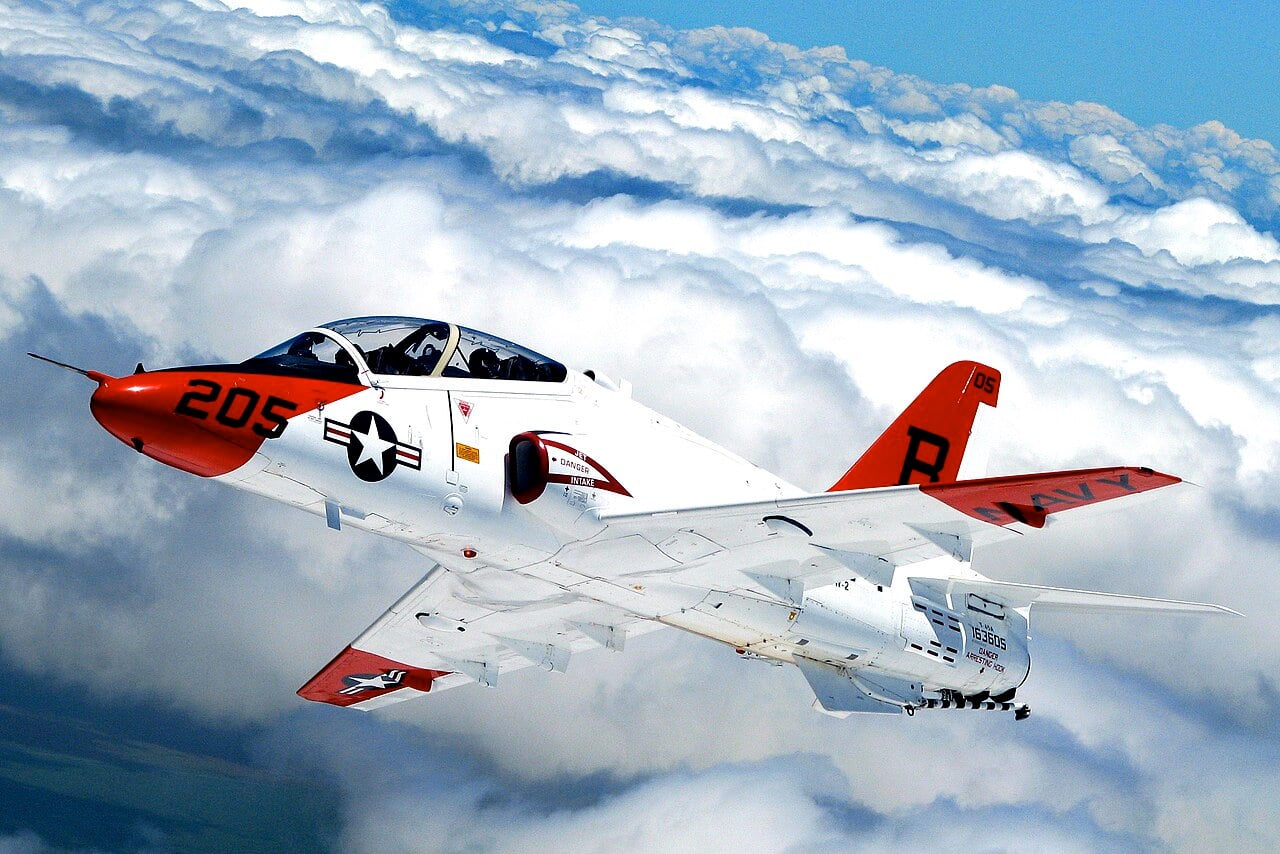
First production deliveries are currently expected in 2032. The T-45 will by then have been in the training command for four decades. Whatever the Navy signs next year, a student naval aviator starting flight school today will almost certainly earn their wings in a Goshawk.
And the Navy will sign something. With one credible bid on the table and an ageing fleet behind it, the question stopped being which aircraft wins. It is now what the single remaining bidder can charge for it.
Sources: Breaking Defense; The Aviationist; Air Data News; The War Zone; Aviation Week; Textron Aviation Defense media release, 27 October 2025; Naval Air Systems Command.

0 Comments