
Here is a question that sounds simple. You own an airport with a perfectly good 8,000-foot runway, a terminal and a car park. An airline wants to start a scheduled service with a 50-seat regional jet. What is stopping it from landing on Monday?
The answer, in the United States, is a piece of federal regulation called 14 CFR Part 139. Unless your airport holds an Airport Operating Certificate issued under it, that airliner cannot start the service, however long the runway is. Part 139 is the reason America’s airline airports keep fire trucks beside the runway, someone driving the airfield at dawn every day, and an FAA inspector arriving each year with a clipboard.
Kurzinfo
- Regulation: 14 CFR Part 139, Certification of Airports
- Who needs it: US airports serving scheduled passenger flights in aircraft with more than 9 seats, or unscheduled passenger flights with at least 31 seats
- Not covered: Alternate-only airports, US government airports, heliports, some Alaskan airports
- Certificated airports: Approximately 520, according to the FAA
- Classes: I, II, III and IV, by type of air carrier service
- Core document: Airport Certification Manual, approved by the FAA
- ARFF: Index A to E, by aircraft length and daily departures
- Oversight: Certification inspections typically yearly; unannounced inspections allowed
Who needs a certificate, and who does not
Part 139 is triggered by passengers, not by runways. It applies to airports in the United States and its territories that serve scheduled passenger flights by an air carrier in aircraft configured for more than nine passenger seats, or unscheduled passenger flights in aircraft with at least 31 seats.
That leaves some interesting gaps. An airport used by scheduled airliners only as a designated alternate does not need a certificate. Neither do airports operated by the United States government, such as military bases, nor heliports, nor certain Alaskan airports that only see small air carrier aircraft. The trigger in the rule is passenger-carrying service, which is why an airport served only by all-cargo flights falls outside it.
According to the FAA, it currently certificates approximately 520 US airports. The agency keeps a public list of them, updated monthly, so airlines can check the status of every field they plan to serve.
Four classes of airport
Not every certificated airport has to do everything. The rule sorts them into four classes based on the flights they serve. A Class I airport handles scheduled flights by large air carrier aircraft, meaning those designed for at least 31 passenger seats, and can take everything else too. Every major hub is Class I, and its operator must comply with all of Part 139.
A Class II airport serves scheduled small air carrier aircraft, between ten and 30 seats, plus unscheduled large aircraft, but cannot host scheduled large aircraft. Class III airports serve only scheduled small air carrier aircraft. Class IV airports serve only unscheduled passenger flights by large aircraft, typically charters, and cannot take scheduled service at all.
The class matters because the obligations scale with it. A Class III airport, for example, may meet the firefighting requirement with an FAA-approved arrangement that gives a level of safety comparable to the lowest index, using pre-arranged agreements with outside fire and medical services, rather than keeping its own crash trucks on the field.
The Airport Certification Manual
At the heart of every certificate is a document. The Airport Certification Manual, or ACM, describes exactly how that particular airport will meet each requirement of Part 139: who does what, with which equipment, under which procedures. An applicant submits two copies of it with its application to the FAA’s regional airports office, along with a Safety Management System manual where one is required.
The rule is fussy about the manual itself. It must be approved by the FAA, printed and signed by the certificate holder, organised so it is easy to revise, and kept current at all times, with at least one complete copy on the airport ready for inspection. Each page carries the date of its approval. Operating in violation of the approved manual is itself a breach of Part 139.
To get the certificate, an airport must also show in writing that air carrier service will begin on a date certain, and the FAA must find, after investigation, that the operator is properly equipped to provide a safe operating environment. That is what happened at McKinney National in Texas this autumn, which Afterburner covered in McKinney National Cleared for Airline Flights From November. Once issued, a certificate has no expiry date. It stays in force until the airport surrenders it or the FAA suspends or revokes it.
What the airport actually has to do
The operating rules, Subpart D, read like the job description of an airport operations department. They cover paved and unpaved areas, runway and taxiway safety areas, markings, signs and lighting, snow and ice control, rescue and firefighting, handling of fuel and hazardous materials, wind indicators, an airport emergency plan, ground vehicles and pedestrians, obstructions, protection of navigation aids, protection of the public, airport condition reporting and the marking of construction areas.
Birds get their own section, §139.337, which requires wildlife hazard assessments and management plans. Afterburner explained that rulebook in Airport Wildlife Hazard Management: The Part 139 Rulebook for Birds.
Pittsburgh International Airport’s own look at a day in the life of its airport operations team.
Then there is the self-inspection. Unless the manual says otherwise, every certificated airport must inspect itself daily, after any unusual condition such as construction or bad weather, and immediately after an accident or incident. The inspectors must be trained, with recurrent instruction every 12 months covering signs, markings and lighting, the emergency plan, NOTAM procedures, vehicle rules and discrepancy reporting. Each inspection is recorded, and the records are kept for at least 12 months.
If something cannot be fixed straight away, §139.343 has a blunt answer: the airport must limit air carrier operations to the parts of the field that are not unsafe. A closed taxiway can be Part 139 doing its job.
Fire trucks sized by fuselage length
The most visible part of Part 139 is the rescue and firefighting, or ARFF, requirement, and it has a neat logic. Every certificated airport is assigned an Index from A to E, based on the length of the air carrier aircraft it serves and how often they depart.
Index A covers aircraft under 90 feet long, B from 90 to under 126 feet, C from 126 to under 159 feet, D from 159 to under 200 feet, and E anything of 200 feet or more. The longest aircraft with an average of five or more scheduled departures a day sets the airport’s Index. A Boeing 737-800, at 129 feet 6 inches, falls into Index C. A Boeing 777-9, at 251 feet 9 inches, is firmly Index E.
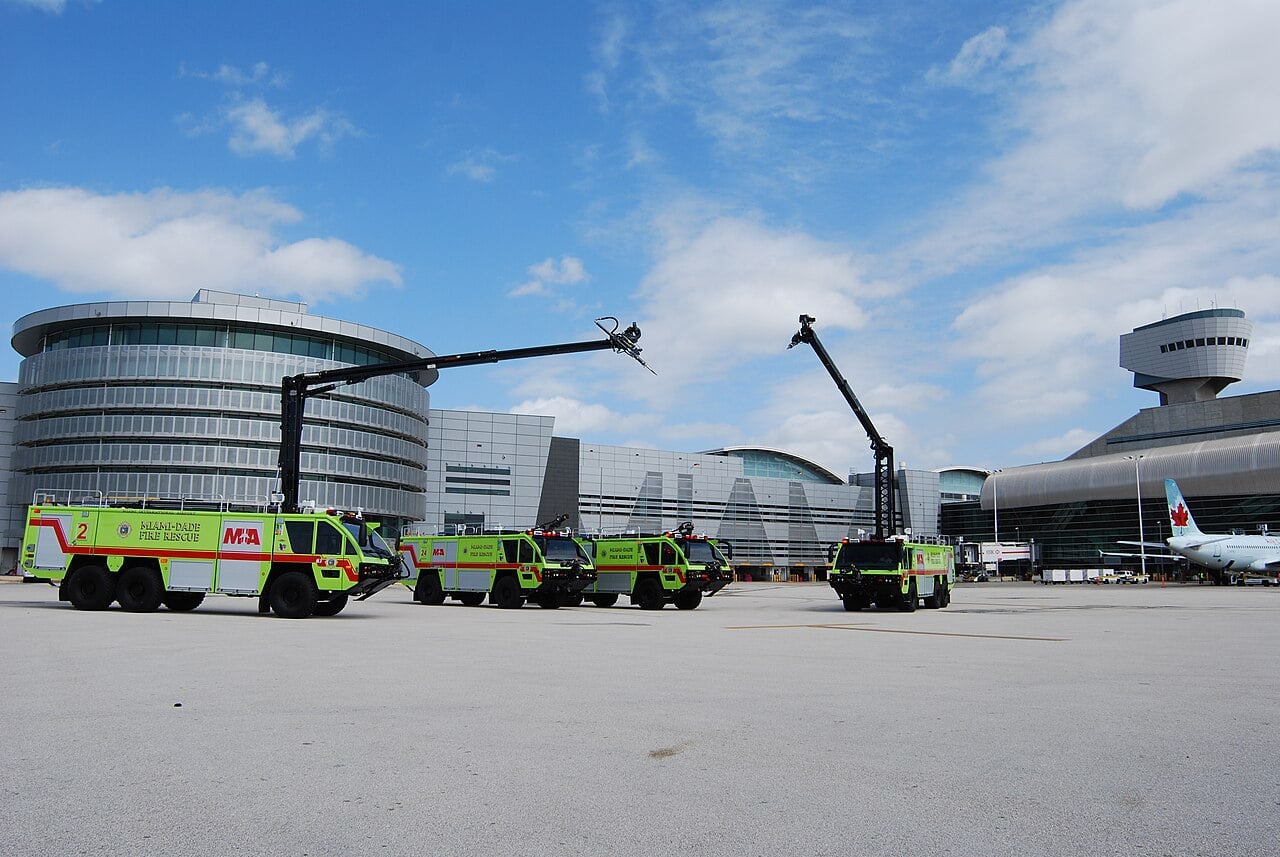
There is a subtle twist. If the longest aircraft averages fewer than five daily departures, the airport drops to the next lower index group. One daily widebody does not automatically make a regional airport an Index E operation. The Index then decides how many vehicles and how much firefighting agent the airport must keep ready.
The Port Authority of New York and New Jersey on aircraft rescue and firefighting at its airports.
Safety Management Systems: the 2023 addition
In February 2023, the FAA added a new layer, Subpart E, requiring some certificated airports to run a formal Safety Management System. It applies to airports classified as large, medium or small hubs, to airports averaging 100,000 or more total annual operations over the previous three years, and to ports of entry, designated international airports, landing rights airports and user fee airports.
An SMS is about finding hazards before they cause accidents: a written safety policy, risk analysis and mitigation, and checks that the fixes work. Each airport names an accountable executive, the person with control of its people and money who answers to the FAA for safety performance.
The annual visit
Somebody has to check all of this. According to the FAA, nearly 35 Airport Certification Safety Inspectors carry out certification inspections, typically once a year, and the FAA can also turn up unannounced. The rule obliges every certificate holder to allow it.
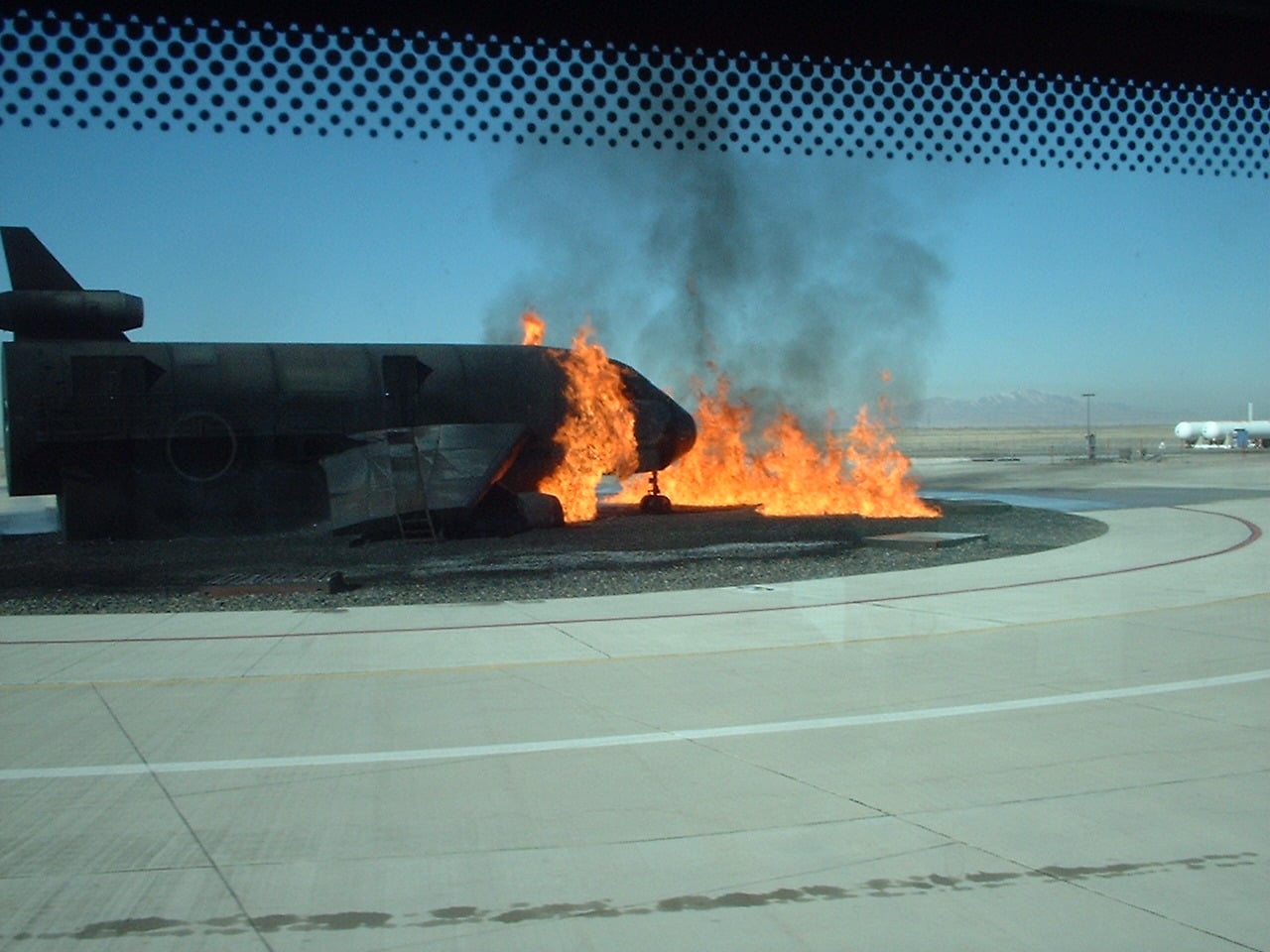
An inspection starts with a review of the airport’s files and its certification manual, then moves to the airfield. Inspectors check the approach slopes of each runway end, pavement, markings, lights, signs and safety areas, watch ground vehicles and look for wildlife. The firefighters run a timed-response drill, and their training records, including the annual live-fire drill, are reviewed. Fuel farms and fuel trucks are inspected. If the airport has night air carrier operations or an instrument approach, there is a night inspection of the lighting and signage too.
It ends with a briefing. If the inspectors find problems, the airport receives a Letter of Correction listing the violations or discrepancies, and both sides agree a reasonable date for fixing them.
What happens when an airport fails
Part 139 has teeth, though the FAA usually starts gently. The agency says it often imposes an administrative action on an airport that is not meeting its obligations, but it can also impose a financial penalty for each day the violation continues. In extreme cases, it can revoke the certificate or restrict the parts of the airport where air carriers may take off and land.
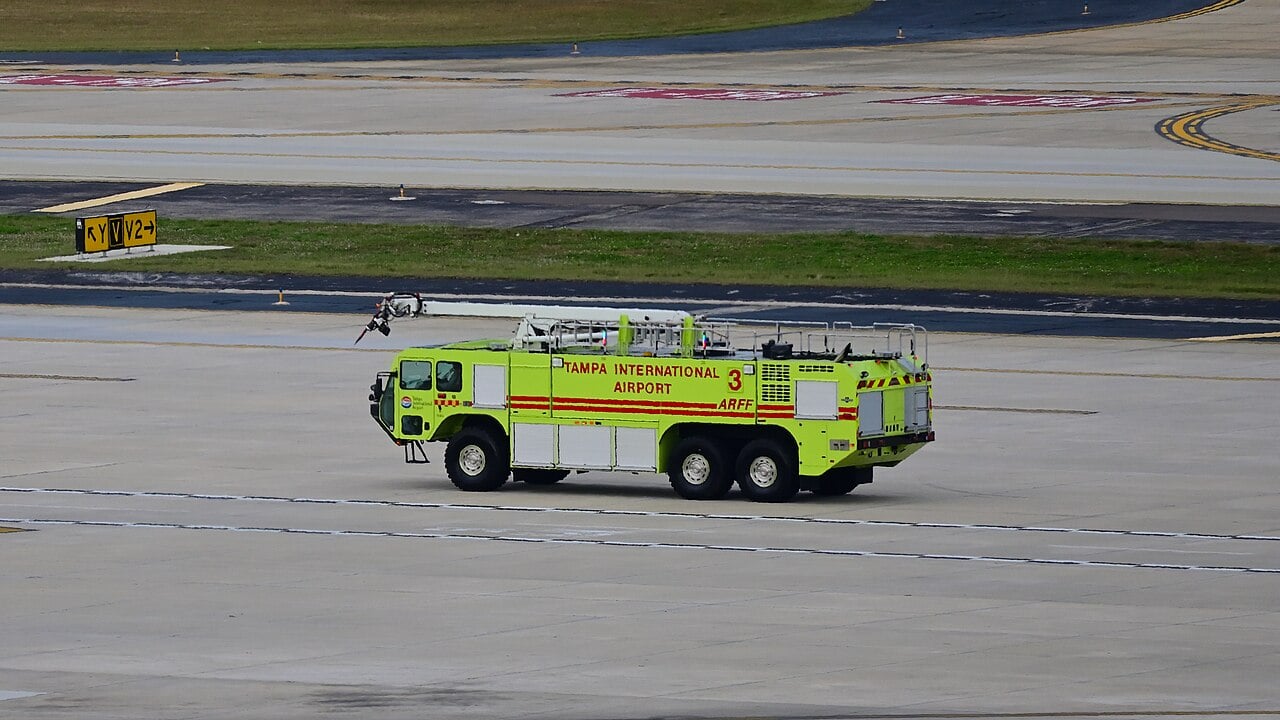
So the next time you taxi past a lime-green crash truck or a pick-up truck driving slowly along the runway edge, you are looking at the visible end of Part 139. Behind it is a signed manual, a daily logbook and an inspector who will be back next year.
Sources: eCFR (14 CFR Part 139), Federal Aviation Administration (Part 139 Airport Certification pages)
Header photo: Andrew Heneen / Wikimedia Commons, CC BY 4.0



0 Comments