
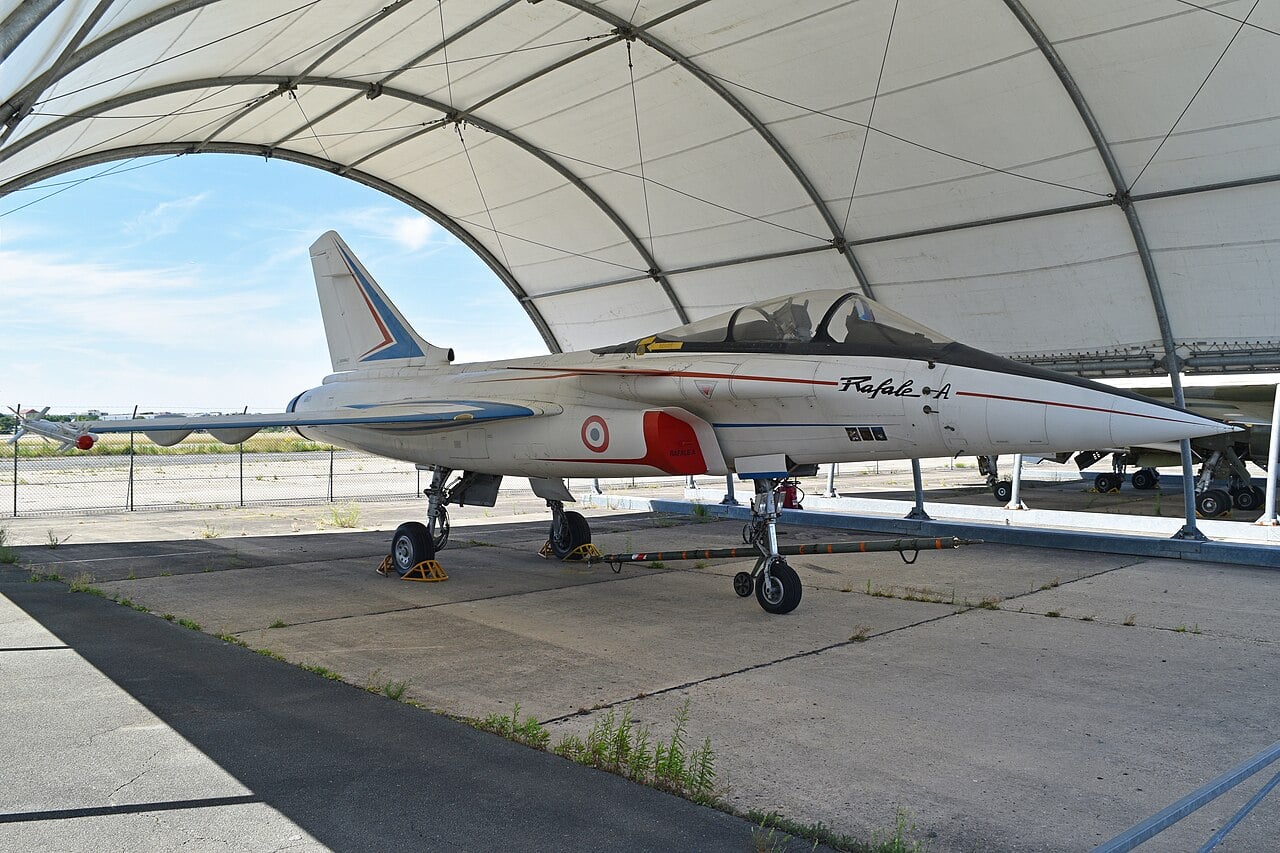
On 4 July 1986, a white delta-winged jet with canards and two American engines lifted off from Istres in the south of France. Test pilot Guy Mitaux-Maurouard climbed to 11,000 metres and pushed it to Mach 1.3 on its very first flight, which lasted about an hour. The aircraft was the Rafale A, and it was France’s answer to a question that had split Europe the year before.
In 1985, France had walked out of the five-nation project that would become the Eurofighter Typhoon. Rather than share a fighter on someone else’s terms, it decided to build its own. In October 2026, after the collapse of the FCAS programme, France made exactly the same choice again. The story of the Rafale A shows how the first time turned out.
Kurzinfo
- Flugzeug: Dassault Rafale A, technology demonstrator (c/n A01)
- Herkunft: Avion de Combat Expérimental (ACX) studies, late 1970s
- Demonstrator contract: 13 April 1983
- Programme named Rafale: April 1985
- France leaves FEFA: July 1985
- Rolled out: December 1985, Saint-Cloud
- Erster Flug: 4 July 1986, Istres, pilot Guy Mitaux-Maurouard; Mach 1.3 and 11,000 m
- Motoren: Two General Electric F404s at first; one replaced by a Snecma M88 in 1990
- Im Ruhestand: January 1994, after 867 sorties
Five Nations, Two Very Different Fighters
In 1983 France, West Germany, Britain, Italy and Spain launched the Future European Fighter Aircraft programme. On paper it made sense: five countries, one shared jet, one shared bill. In practice the partners wanted different aircraft. According to the Wikipedia history of the programme, France wanted a lighter multirole fighter and a leading role, while Britain was after a heavier, long-range interceptor. France also insisted on a version that could operate from aircraft carriers.
An earlier attempt, the European Collaborative Fighter, had already collapsed in 1981 over the same kind of disagreements, including Dassault’s demand for design leadership. This time the break came in July 1985, when France withdrew from the talks to protect the technological independence of its fighter industry.
Things then moved quickly. On 2 August 1985, in Turin, West Germany, Britain and Italy agreed to go ahead with the European Fighter Aircraft. Spain had also stepped back at first, but rejoined the other three in early September 1985 despite French pressure.
French television archive: Dassault presents its new “Rafale” demonstrator (Archive INA, in French).
ACX Becomes Rafale
Dassault-Breguet had not waited for Europe. Its Avion de Combat Expérimental (ACX) studies began in the late 1970s, and on 13 April 1983 the French government ordered technology demonstrators, later cut to a single aircraft. Government and industry split the development costs equally. In April 1985 the programme got its new name: Rafale, the French word for a gust of wind, or a burst of fire.
Construction of the demonstrator had begun in 1984. It was rolled out at Saint-Cloud in December 1985, only months after France’s exit from the European project. Because the new Snecma M88 engine was not ready, the Rafale A flew on two General Electric F404s, each rated at 68.8 kN, the same engine family used in the US Navy’s F/A-18 Hornet.
A Race of Demonstrators
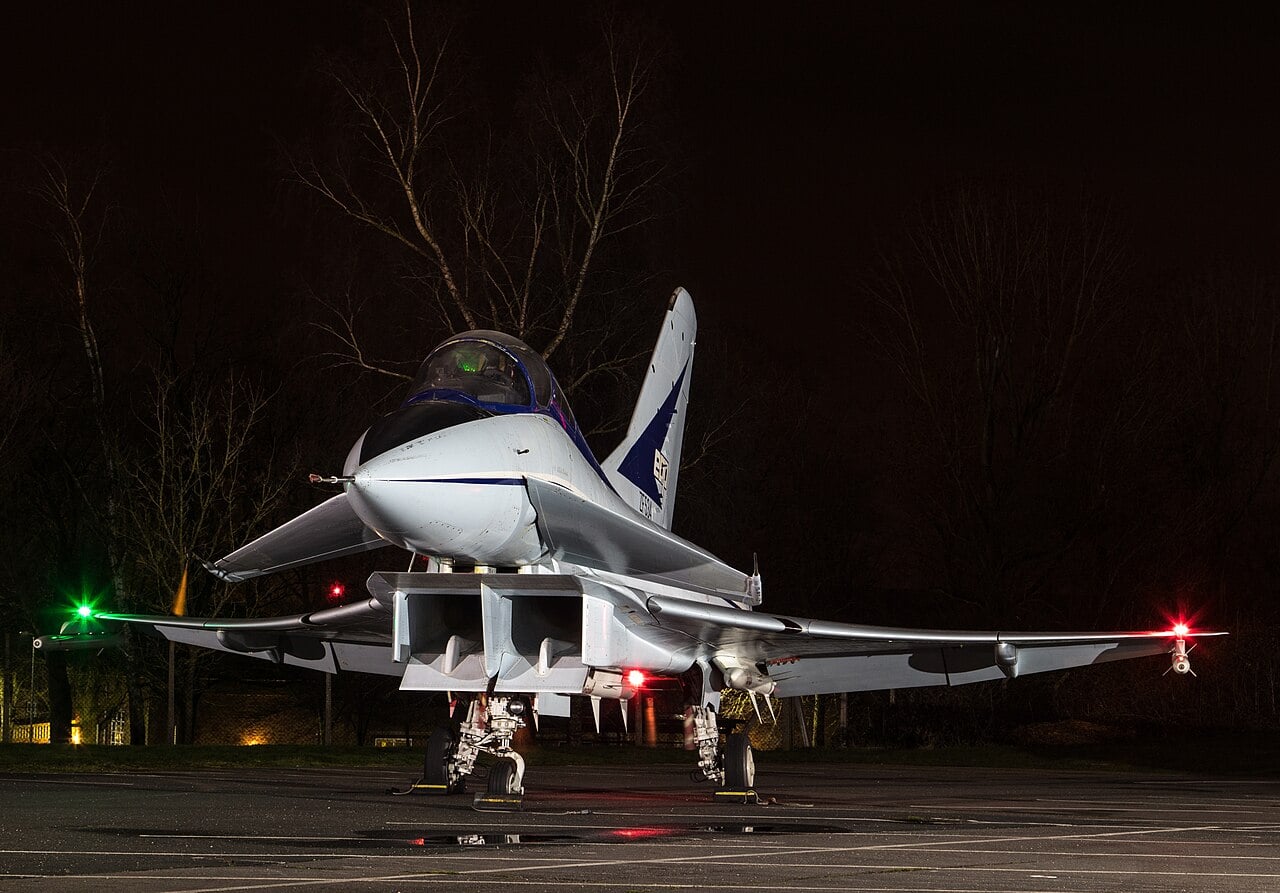
Britain was building its own demonstrator at the same time. The British Aerospace EAP, the Experimental Aircraft Programme, first flew on 6 August 1986. The Rafale A beat it into the air by just over a month. Both jets were deltas with forward control surfaces, but they led to two different aircraft and two different industrial camps.
The Rafale A’s first flight on 4 July 1986 was a statement. Mitaux-Maurouard took it to 11,000 m and Mach 1.3 in about an hour. French television was there to film it:
The first flight of the Rafale A from Istres, 4 July 1986 (Archive INA, in French).
In early 1990 the port F404 was replaced with the first Snecma M88. Flying with one American and one French engine in May 1990, the demonstrator reached Mach 1.4 without afterburner, showing that the design could supercruise. When it was retired in January 1994, it had flown 867 sorties. According to its photographer’s notes on Wikimedia Commons, it was later donated to the national collection and delivered to the Musée de l’Air et de l’Espace at Le Bourget by road in April 2009.
From Demonstrator to Front Line
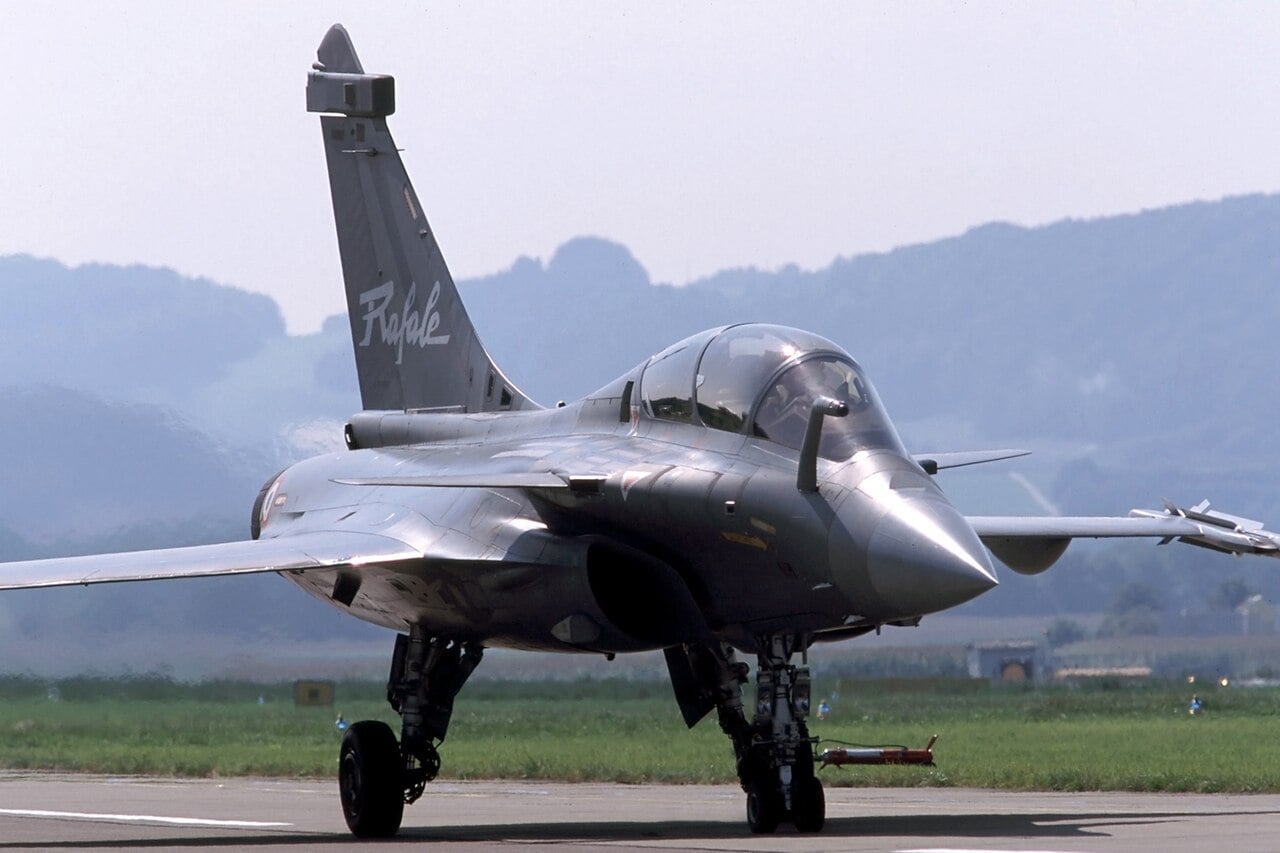
The demonstrator was followed by real prototypes: the single-seat Rafale C first flew on 19 May 1991, the carrier-based Rafale M on 12 December 1991, and the two-seat Rafale B on 30 April 1993. The French Navy received its first Rafale Ms in December 2000 and declared the type operational in June 2004. The first air force Rafale Bs arrived at Mont-de-Marsan in April 2005.
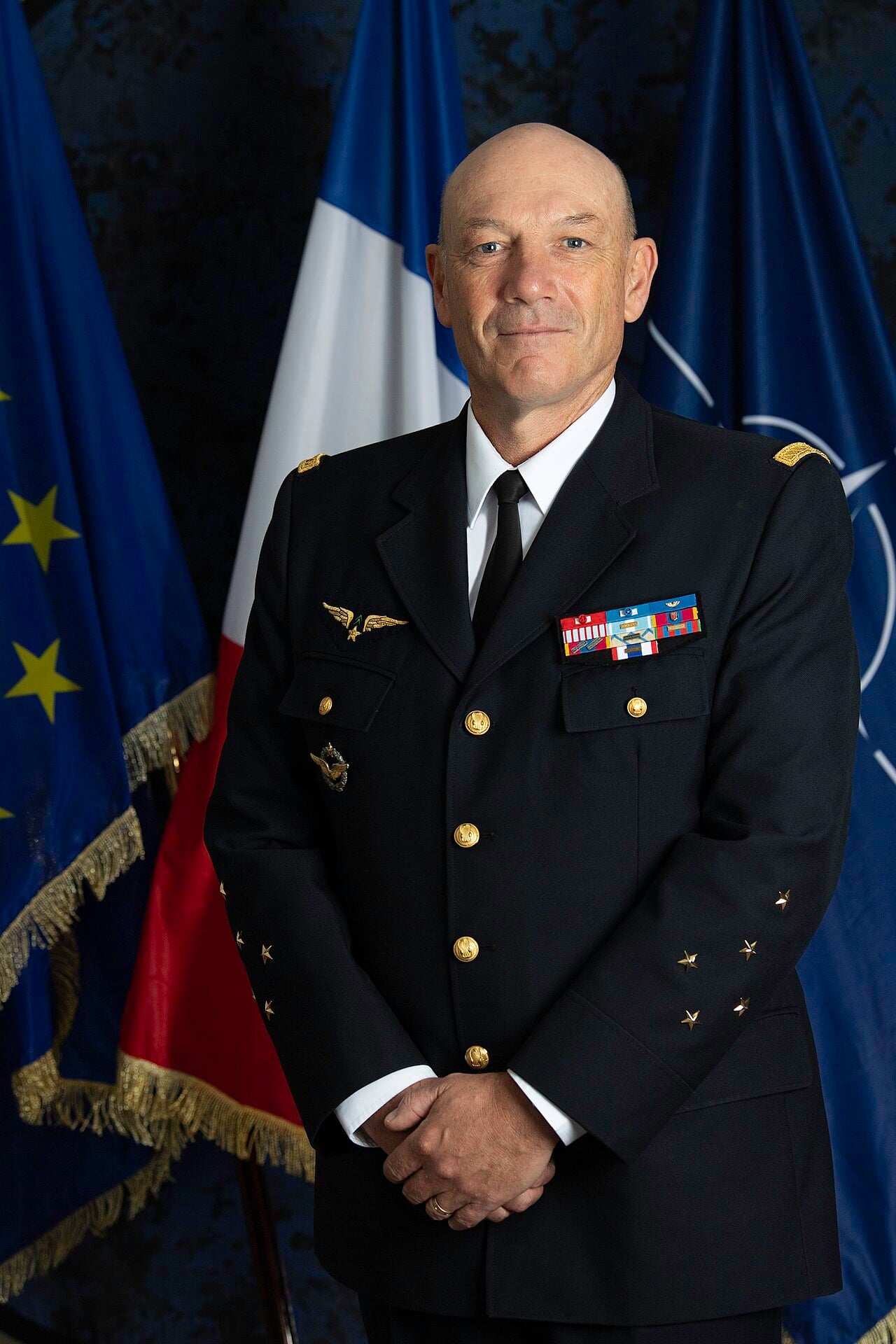
Going it alone took time. But it gave France full control over its fighter, including the carrier version and the nuclear role that its partners never needed. Today the Rafale is one of Europe’s most exported fighters. In October 2026, General Jérôme Bellanger described its planned successor in words that could have come from 1985:
A special briefing on the first flight of the ACX demonstrator on 4 July 1986, by the AAMA Le Bourget (in French).
Sources: Wikipedia (Dassault Rafale; Eurofighter Typhoon); Archive INA; AAMA Le Bourget; Wikimedia Commons; Defense News
0 Comments