
Imagine strapping into a fighter, climbing to altitude, and then flying straight at a bomber whose gunners have been ordered to open fire on you. Not blanks. Not a camera. Real bullets, aimed at your aircraft, on purpose. Now imagine doing it two or three times a day and coming down grinning.
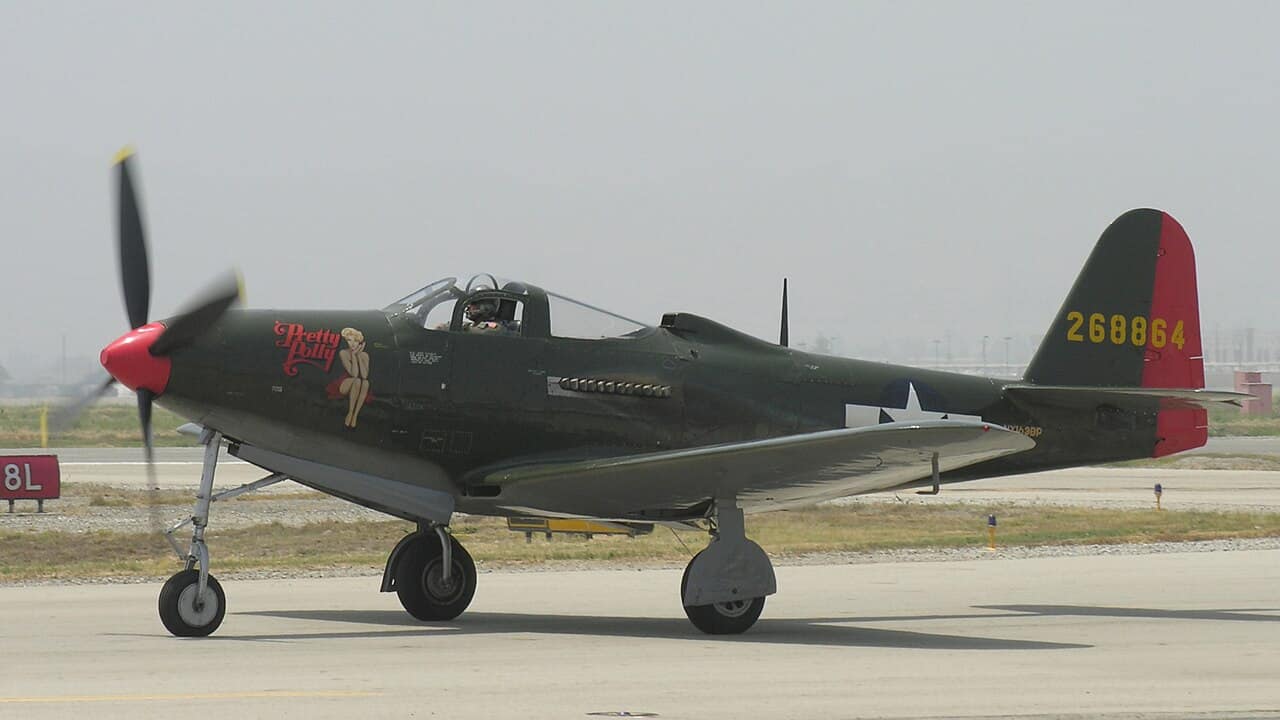
That was the job of the Bell P-63 Kingcobra in one of the strangest training programs of the Second World War. Stripped of its guns, wrapped in armour, and painted a lurid orange, the P-63 became a flying target — a machine designed, from the propeller back, to be shot at. The airmen called it the Flying Pinball Machine. The idea was almost insane. It also worked.
A very expensive problem
In 1943, American heavy bombers were dying over Europe. On 14 October 1943 — a day the crews called Black Thursday — sixty B-17s went down on a single raid against the ball-bearing plants at Schweinfurt. Deep raids into Germany were suspended until long-range escort fighters could arrive.
Part of the problem was the gunners. Defending a bomber meant hitting a fighter that was closing at a combined speed of several hundred miles an hour, from a bucking, freezing turret, while being shot at yourself. The training for it was feeble: gunners fired shotguns at clay pigeons, blazed away at targets on wheels, and hosed tow-banners trailed behind other aircraft. None of it felt anything like the real thing.
Aeronave: Bell RP-63 Kingcobra ("Pinball")
Role: Manned, armoured aerial gunnery target
Converted: Around 300 P-63s (RP-63A / RP-63C / RP-63G)
Ammunition: Frangible .30-cal round (Bakelite and powdered lead) — the M22
Hit sensing: 100-plus microphones under the armour; a cockpit counter and a red light in the nose
Servicio: Early 1945 to 1947; over 11,000 bomber missions, roughly 12 million rounds fired
The bullet that broke on impact
The breakthrough came from an Army Air Forces major named Cameron Fairchild, a gunnery trainer at Harlingen, Texas. Fairchild wondered whether you could build a bullet that flew like a real one but shattered harmlessly on impact — letting students fire live rounds at an actual, manoeuvring fighter.
It took the better part of a year. Researchers at Duke University and the University of Michigan, working with the Bakelite Corporation, produced a plastic-and-lead round that fed through a .30-calibre machine gun, flew true, and disintegrated when it struck armour. Powdered lead from DuPont gave it the right weight. Officially it was the "Cartridge, Caliber .30, Frangible, Ball, M22." Everyone else just called them frangibles.
The P-63's whole story — the outcast American fighter that found its strangest job at home.
Building an aircraft that wanted to be hit
Now they needed a target that could survive being shot. The Army chose the P-63 — a fighter it had otherwise ignored in favour of the P-51 and P-47, and shipped abroad to the Soviet Union and France in large numbers. Its lines were also judged a reasonable stand-in for a German Messerschmitt.
The conversion was drastic. Out came the guns and standard armour. In went more than a ton of special armour plate across the wings and forward fuselage, plus cockpit glazing over an inch thick. Beneath the skin, more than a hundred microphones listened for the smack of a frangible round. Each hit ticked a counter in the cockpit and, most famously, flashed a big red light in the nose where the 37 mm cannon used to be. A fighter lighting up every time it was struck — hence Pinball.
Playing war games, like kids
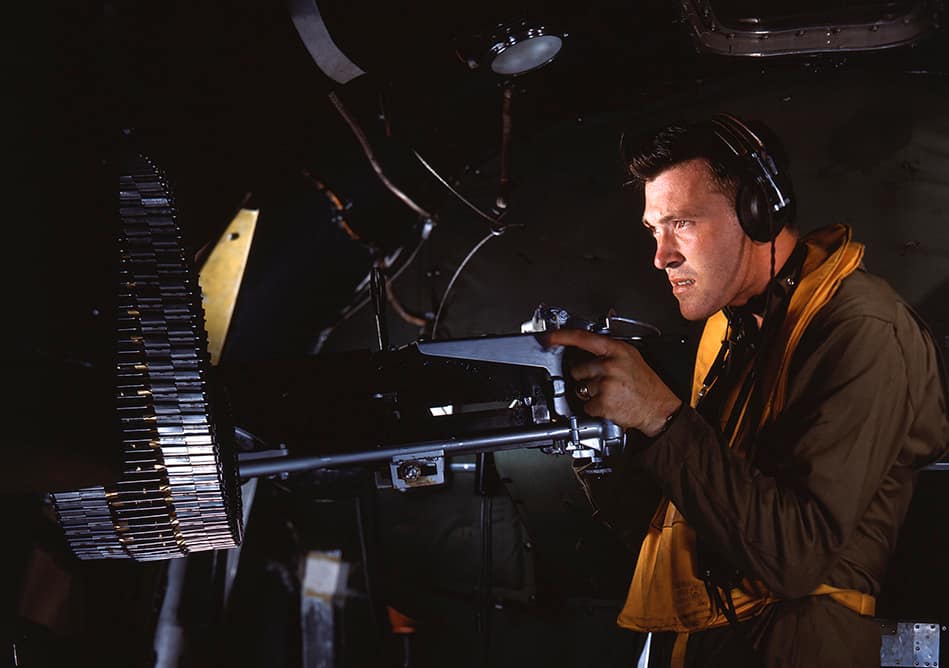
From early 1945, Pinballs flew out of bases in Florida, Texas, Arizona and Nevada. A pilot would climb up, meet a formation of B-17s or B-24s, and then roll into curving firing passes exactly as a German fighter would. In the bomber's waist stood a dozen student gunners, 2,000 rounds apiece, taking turns to track the orange fighter as it dived through. Over the life of the programme, gunners flew more than 11,000 such missions and fired something like 12 million frangible rounds.
The pilots, remarkably, loved it. Many were combat veterans who found being shot at by their own side deeply unnerving at first — and then oddly addictive. One of them, Horace Ashenfelter, flew Pinballs in 1945 and went on to win Olympic steeplechase gold in 1952.
It was not entirely safe. The frangible rounds usually broke apart as designed, but at close range they could punch through. The RP-63's real weak spot was the air ducts in the wing roots that fed the engine's cooling system; a lucky hit there could send fragments into the coolant, overheat the Allison V-1710 engine, and force the pilot into a bailout or a dead-stick landing on a desert lake bed. It happened more than once.
Inside the cockpit of a surviving P-63 Kingcobra.
The training device of the future
Ivan Hickman, a Pinball pilot who later wrote the definitive book on the programme, recorded that most of the pilots he knew believed the Pinball was "the training device of the future." They were half right. The war ended, a handful of Pinballs stayed on to train B-29 gunners, and by the end of 1947 the whole fleet had been mothballed.
The future they imagined arrived, just not in the shape they expected. Remote-controlled turrets, then target drones, then guided missiles made the manned flying target obsolete. But for two years, the surest way to teach a teenager to defend a bomber was to send up a real fighter, paint it orange, and dare him to hit it.
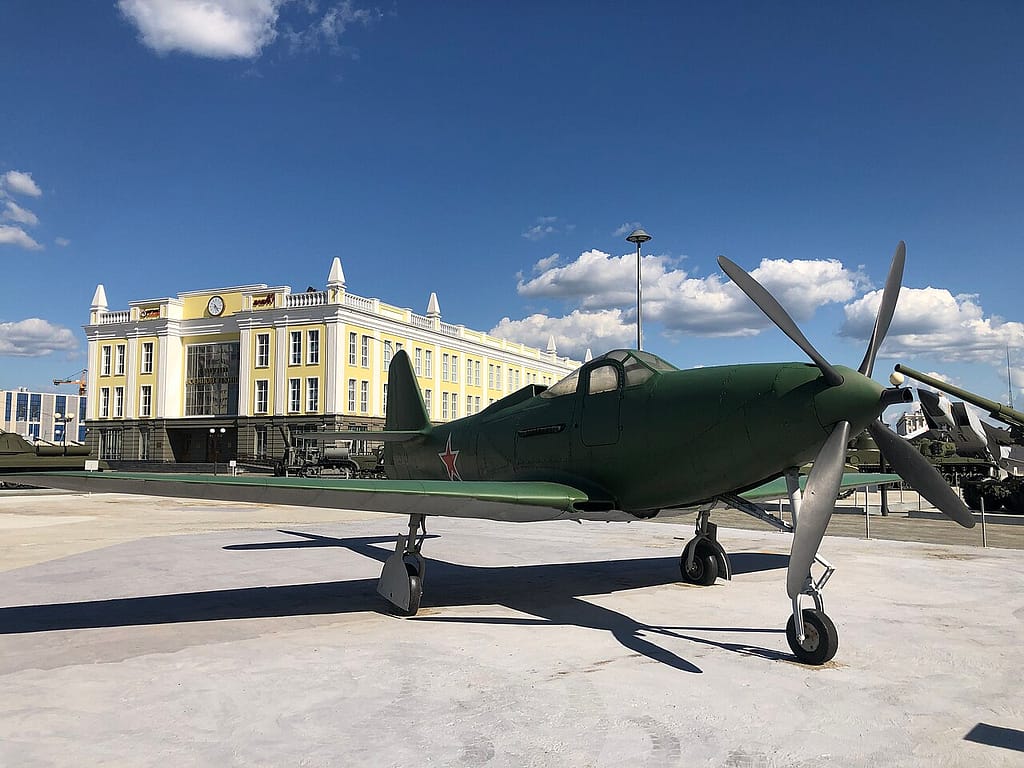
A P-63 in target-plane markings — the Flying Pinball Machine.
Sources: "Just Shoot Me," Air & Space/Smithsonian (James Dunaway, 2010); Ivan L. Hickman, Operation Pinball (1990); Wings Museum "Operation Pinball" archive; National Museum of the U.S. Air Force.
Publicaciones relacionadas
0 Comentarios