
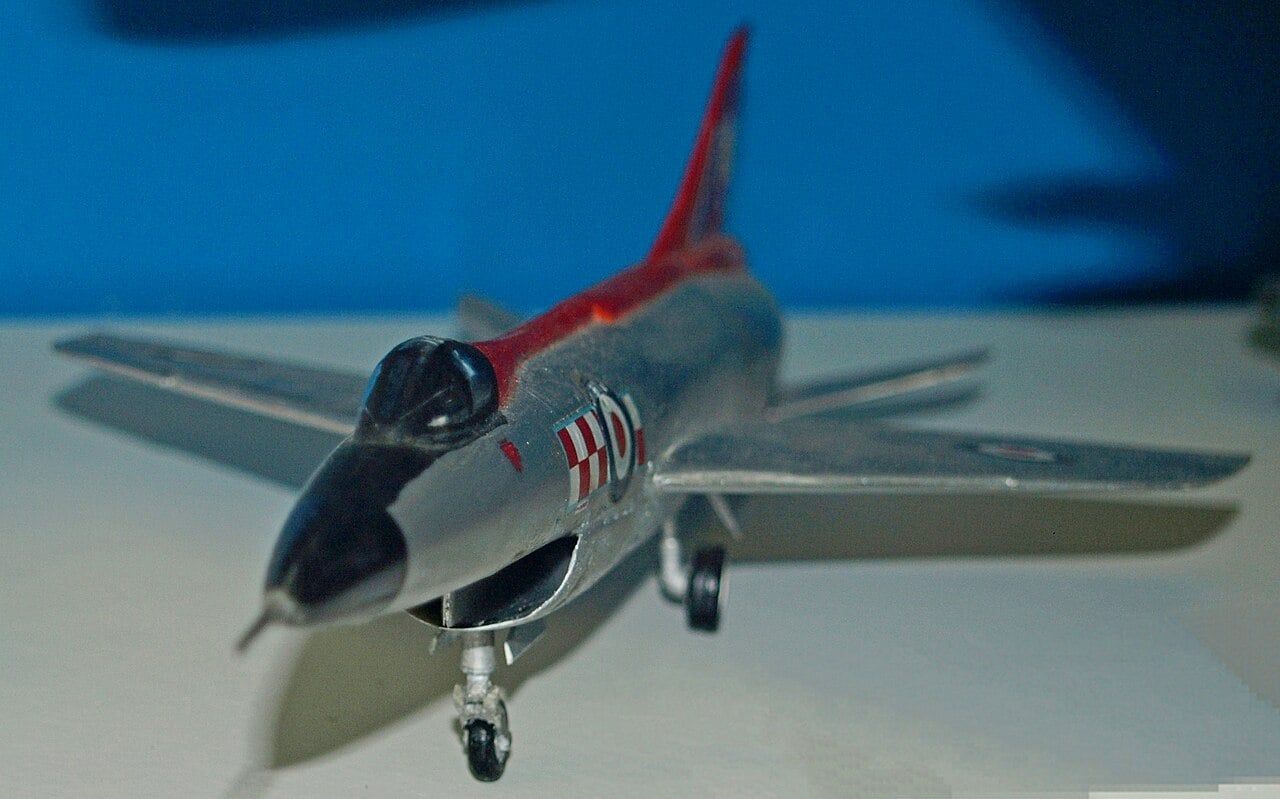
By the summer of 1958 the experimental shop at Hawker’s Kingston works held something very close to a complete aeroplane. The wing was built. The fuselage frames were joined. The undercarriage had been tested, the systems rigged, the wind-tunnel programme all but finished. What the Hawker P.1121 did not have was a customer, a funded engine, or a government that still believed manned fighters had a future.
It was designed around a single enormous turbojet and a projected speed of roughly Mach 2.5 — broadly the class of the McDonnell F-4 Phantom II that would reach US Navy squadrons a few years later. It was Sir Sydney Camm’s answer to the question of what came after the Hunter. It never flew. It was never finished. And the reason had almost nothing to do with engineering.
Datos rápidos
| Aeronave | Hawker P.1121 |
| Origen | Hawker Aircraft, Kingston-upon-Thames, United Kingdom |
| Equipo de diseño | Sir Sydney Camm and the Hawker project office |
| Central eléctrica | One de Havilland Gyron turbojet |
| Velocidad de diseño | Around Mach 2.5 |
| Estado | Private venture — never completed, never flown |
| Killed by | The 1957 Defence White Paper, then the OR.339 award of January 1959 |
| Sobrevivientes | Forward fuselage sections, Brooklands Museum, Surrey |
A fighter nobody had ordered
The P.1121 was not a government programme. There was no Air Ministry specification behind it, no development contract, no committee. Hawker paid for it out of its own money, on the calculation that a company with the Hunter in mass production could afford to build the next thing speculatively and sell it afterwards — to the RAF, to NATO air forces, to anyone who wanted a Mach 2 strike fighter in the early 1960s.
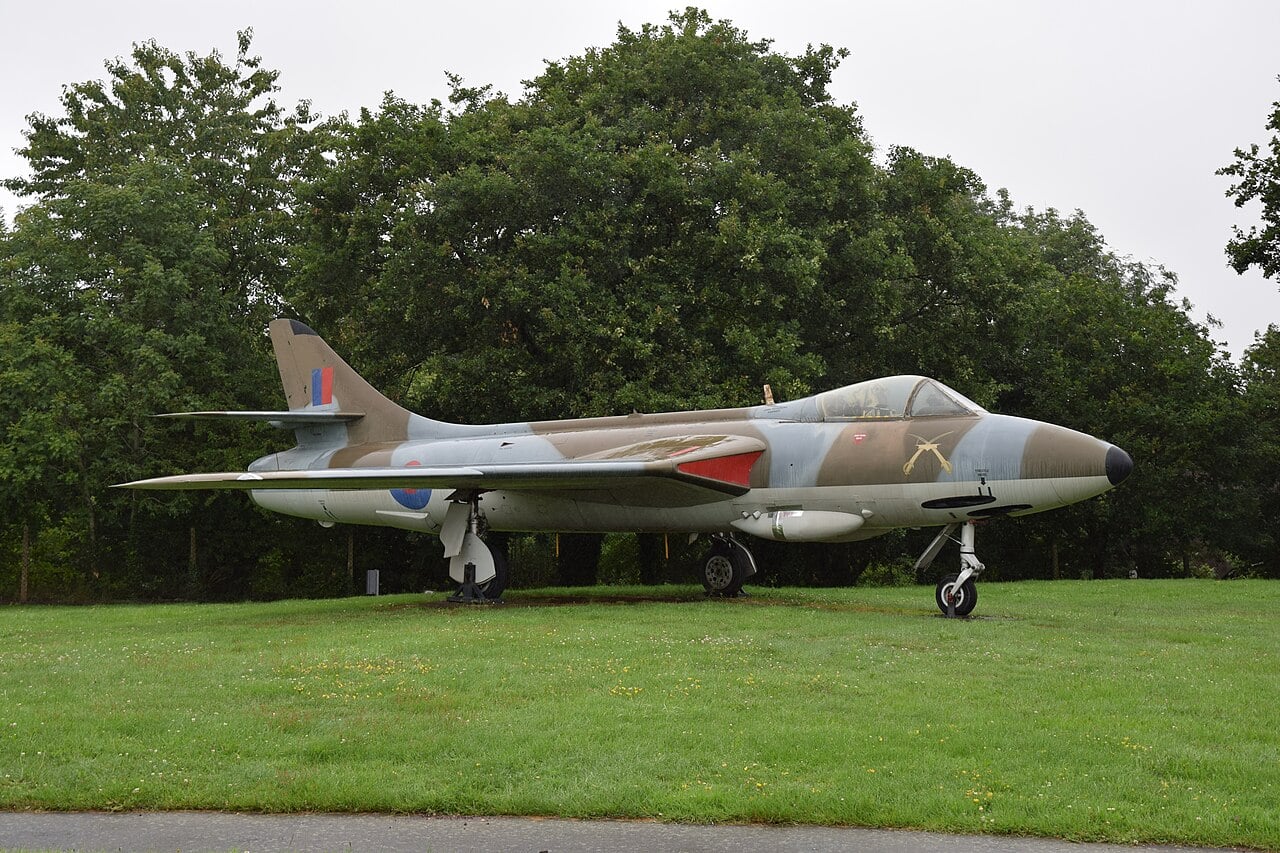
That calculation had worked before. It was the logic that produced the Hurricane and, later, the Hunter itself. What Camm’s team could not price in was a Minister of Defence who had decided that the whole category was obsolete.
One very large engine
Where most of its contemporaries used two engines, the P.1121 used one: the de Havilland Gyron, the most powerful British turbojet then under development. A single Gyron in a large airframe promised Mach 2.5 with a useful weapons load and the fuel to go somewhere with it — a strike fighter rather than the short-legged point interceptors the RAF had been buying.
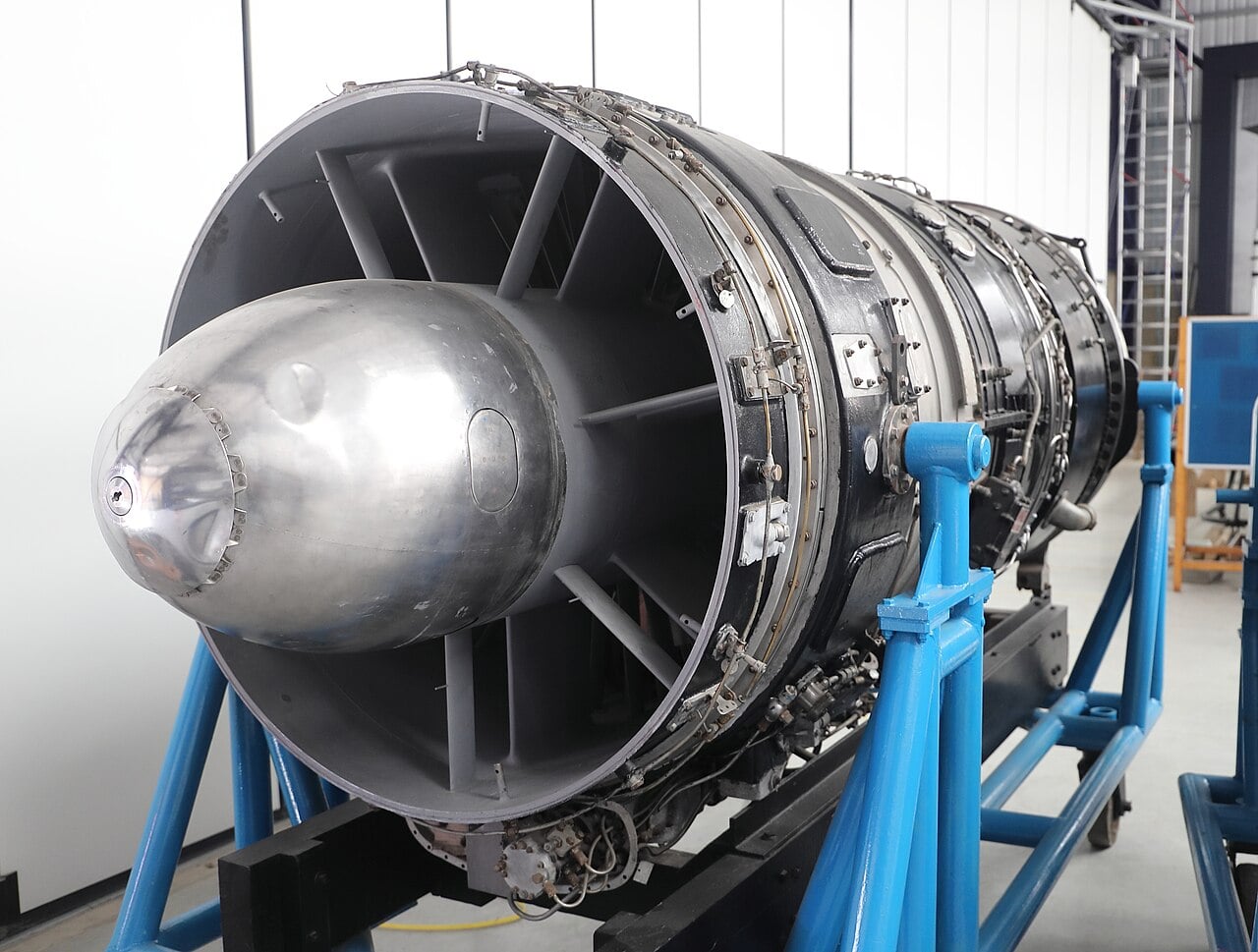
The single-engine choice is also what made the aircraft fragile as a business proposition. Tie an airframe to one engine and you have tied its fate to that engine’s funding. When Gyron development was terminated, there was no second option to fall back on.
The White Paper that ate British aviation
In March 1957 the Minister of Defence, Duncan Sandys, published Defence: Outline of Future Policy — Command Paper 124, remembered ever since simply as the 1957 Defence White Paper. Its central judgement was that the coming generation of ballistic missiles made manned interceptors, and the radar and gun networks built to support them, largely pointless. Deterrence, not defence, would keep Britain safe.
The consequences arrived fast. The F.155 interceptor requirement was killed. So were the Saunders-Roe SR.53 and SR.177, the Avro 730 supersonic reconnaissance bomber, and the Blue Envoy surface-to-air missile. Only the English Electric P.1 — which became the Lightning — was reprieved, and only after the RAF pointed out that new Soviet supersonic bombers would arrive before the Bloodhound missile was fully deployed. The paper also instructed the aircraft industry to consolidate, and made clear that new contracts would go to the merged firms.
January 1959: the day it died
Hawker kept going anyway. By mid-1958 the major assemblies were complete and most of the wind-tunnel and systems work was done. Then the board did the arithmetic. Financing a first flight, and the flight-test programme behind it, with no customer and no engine contract was a bill the company would not sign. The decision was deferred, pending the outcome of Operational Requirement OR.339 — the RAF’s new tactical strike and reconnaissance aircraft.
In January 1959 OR.339 went to the Vickers and English Electric partnership. That aircraft became the TSR-2, and it took the last of the money with it. Gyron development was terminated. The P.1121 stopped where it stood.
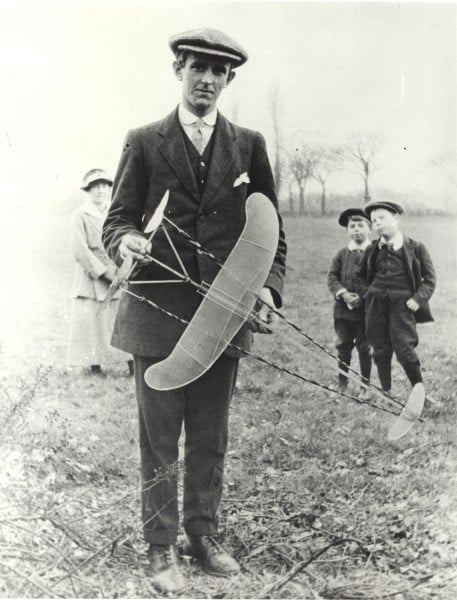
Camm was talking about somebody else’s aeroplane. He had already watched his own die the same way.
What Camm did next
The interesting part of the story is what the failure freed him to do. With the conventional supersonic fighter route closed off by policy, Camm’s office turned to a much stranger idea: vertical take-off using a single vectored-thrust engine. That became the P.1127, then the Kestrel, then the Aguilucho — the one British combat aircraft of that era that nobody else could copy, and the one that sold to the United States Marine Corps.
What survives
Because the aircraft was never completed, there is no P.1121 in a museum hall to walk around. There are, however, real pieces of it. Sections of the forward fuselage survived in storage for decades, latterly in the RAF Museum’s reserve collection at Cosford, and in 2025 they were transferred to Brooklands Museum in Surrey — a few miles from the Kingston works where they were built.
The P.1121 is usually filed under “British aviation’s wasted decade”, alongside the Martin-Baker MB5 and the TSR-2. The more precise reading is narrower and more uncomfortable: this was a company betting its own money on a product line the customer had publicly announced it no longer wanted.
Preguntas frecuentes
What was the Hawker P.1121?
Did the Hawker P.1121 ever fly?
How fast would the Hawker P.1121 have been?
What engine did the Hawker P.1121 use?
Why was the Hawker P.1121 cancelled?
Was the Hawker P.1121 a government project?
Does anything of the Hawker P.1121 survive?
What did Sydney Camm design after the Hawker P.1121?
Sources: Wikipedia (Hawker P.1121; 1957 Defence White Paper); Key.Aero, “Hawker P.1121 breaks cover at Brooklands”; Howard Wheeldon FRAeS, “Of Sydney Camm, TSR-2 and Politics”, BATTLESPACE, 3 June 2015.
0 Comentarios