
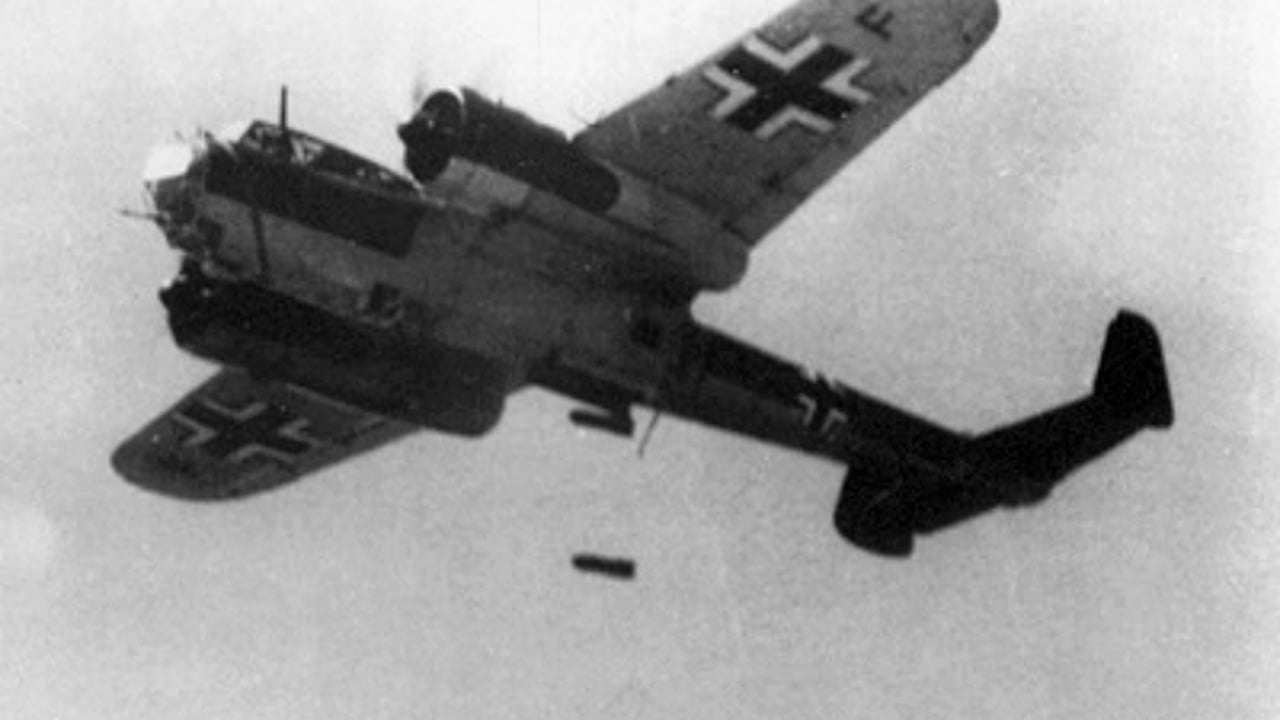
On 10 June 2013, after three weeks of wind, swell and false starts, a salvage barge off the Kent coast slowly lifted a battered, barnacle-crusted aircraft out of the English Channel. It had lain upside down on the Goodwin Sands since 26 August 1940. It was the only known surviving example of a bomber that had once been one of the most important aircraft in the Luftwaffe: the Dornier Do 17.
Slim, twin-tailed and fast for its day, the Do 17 earned the nickname Fliegender Bleistift, the “flying pencil”. In 1939 it was, with the Heinkel He 111, the backbone of Germany’s bomber force. By the end of 1941 it was fading from front-line service. In between, it fought in Spain, Poland, France, the Battle of Britain and the opening of the war against the Soviet Union.
Datos rápidos
- Tipo: Dornier Do 17, twin-engined light bomber and reconnaissance aircraft
- Apodo: Fliegender Bleistift, the “flying pencil”
- Primer vuelo: 23 November 1934 (Do 17 V1)
- Combat debut: 1937, Condor Legion, Spanish Civil War
- Do 17Z: Crew of four; usually two Bramo 323P radial engines
- Construido: 2,139 on German production lines (official figures); production ended mid-1940
- Successors: Ju 88 and Dornier Do 217
- Sobreviviente: Do 17Z-2 Werknummer 1160 (5K+AR), shot down 26 August 1940, raised from the Goodwin Sands on 10 June 2013
A mail plane with a secret
Dornier began work on the design on 1 August 1932, officially in response to requirements for a freight aircraft for the German state railways and a high-speed mail plane for the airline Luft Hansa. When the Nazis came to power in 1933, the new aviation ministry gave it the designation Do 17, and at the end of that year ordered a “high speed aircraft with double tail” and a “freight aircraft with special equipment”. The special equipment, in other words, was bombs.
The first prototype, the Do 17 V1, flew on 23 November 1934 with a single fin and two BMW VI engines. It proved only marginally stable, and the twin tail that became the type’s signature was adopted from the V2 onwards. The cramped fuselage was a poor fit for passengers, and it has been suggested that Luft Hansa turned it down for exactly that reason. As a fast bomber, though, it had promise.
Rex’s Hangar on the design and career of the Dornier Do 17 flying pencil.
In 1937 the Do 17 made a high-profile public appearance at the International Military Aircraft Competition in Zürich. By then the first production models, the Do 17E bomber and the Do 17F reconnaissance aircraft, were already reaching Luftwaffe units. Yugoslavia liked what it saw and bought a licence to build its own.
Spain and the Schnellbomber idea
The Do 17 went to war in 1937 with the Condor Legion in the Spanish Civil War, where it flew as a bomber and reconnaissance aircraft. Like the early Ju 88, it was a Schnellbomber, a fast bomber meant to escape fighters by speed rather than to fight them off. In Spain, against older opposition, that worked.
The lessons from Spain changed its shape. The cockpit roof was raised and a ventral gun position, the Bola, was added under the nose, extending back towards the wing. The definitive Do 17Z carried a crew of four, pilot, bomb aimer and two gunners, packed together in the glazed nose, and was usually powered by two Bramo 323P radial engines.
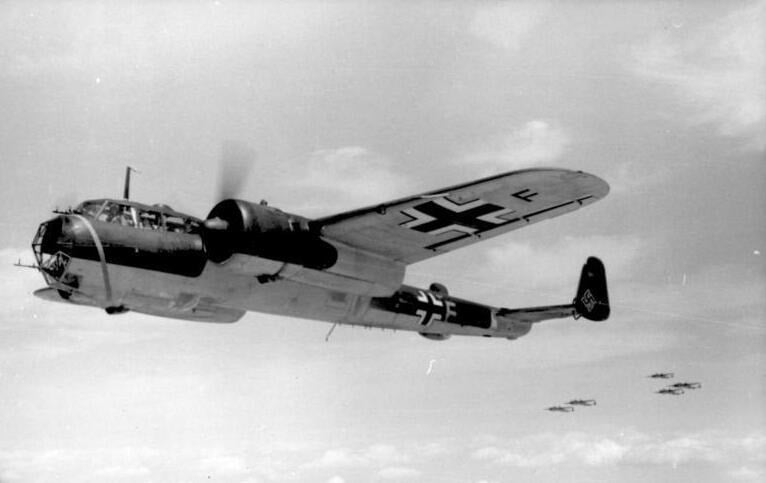
Crews liked it. It handled well, especially at low level, which made it harder to hit than other German bombers of its era. The trade-off was a small bomb load and limited range, the same limitations that would end its front-line career.
From Poland to the Battle of Britain
When Germany invaded Poland in September 1939, the Do 17 and He 111 were the Luftwaffe’s main bombers. The Do 17 followed in Norway, France and the Low Countries, and in the summer of 1940 it was one of the three main German bombers over Britain, alongside the He 111 and Ju 88.
It was also used for some of the most daring raids of the battle. On 18 August 1940, nine Do 17s of 9. Staffel, KG 76 attacked RAF Kenley at very low level, part of the day described on Afterburner in The Hardest Day: 18 August 1940 Cost More Than Battle of Britain Day.
Eight days later came the aircraft that survives today. On 26 August 1940, Do 17Z-2 Werknummer 1160, code 5K+AR of 7./KG 3, took part in a raid on the RAF stations at Debden and Hornchurch. Separated from its formation above cloud and lost, it was attacked by Boulton Paul Defiants of No. 264 Squadron. With one engine out and the other damaged, the wounded pilot, Feldwebel Willi Effmert, put it down on the Goodwin Sands. He and one other crew member were captured; two were killed.
The National WWII Museum with the RAF Museum on recovering and restoring lost Second World War aircraft.
Replaced, not retired
Production of the Do 17 ended in mid-1940 in favour of the more capable Ju 88. Official figures give 2,139 built on German production lines. An export derivative was designated Do 215, a name allotted to the Do 17Z sent to Yugoslavia for demonstration, and its much larger successor, the Do 217, appeared in quantity from 1942.
The Do 17 was not thrown away. It flew on the Eastern Front in 1941, then served as a glider tug, trainer and research aircraft. Others went to Germany’s allies: Finland’s 46 Squadron received 15 in January 1942, and Bulgaria, Croatia and Spain also operated it. Very few survived the war, and for decades no complete example was thought to exist.
Out of the sand
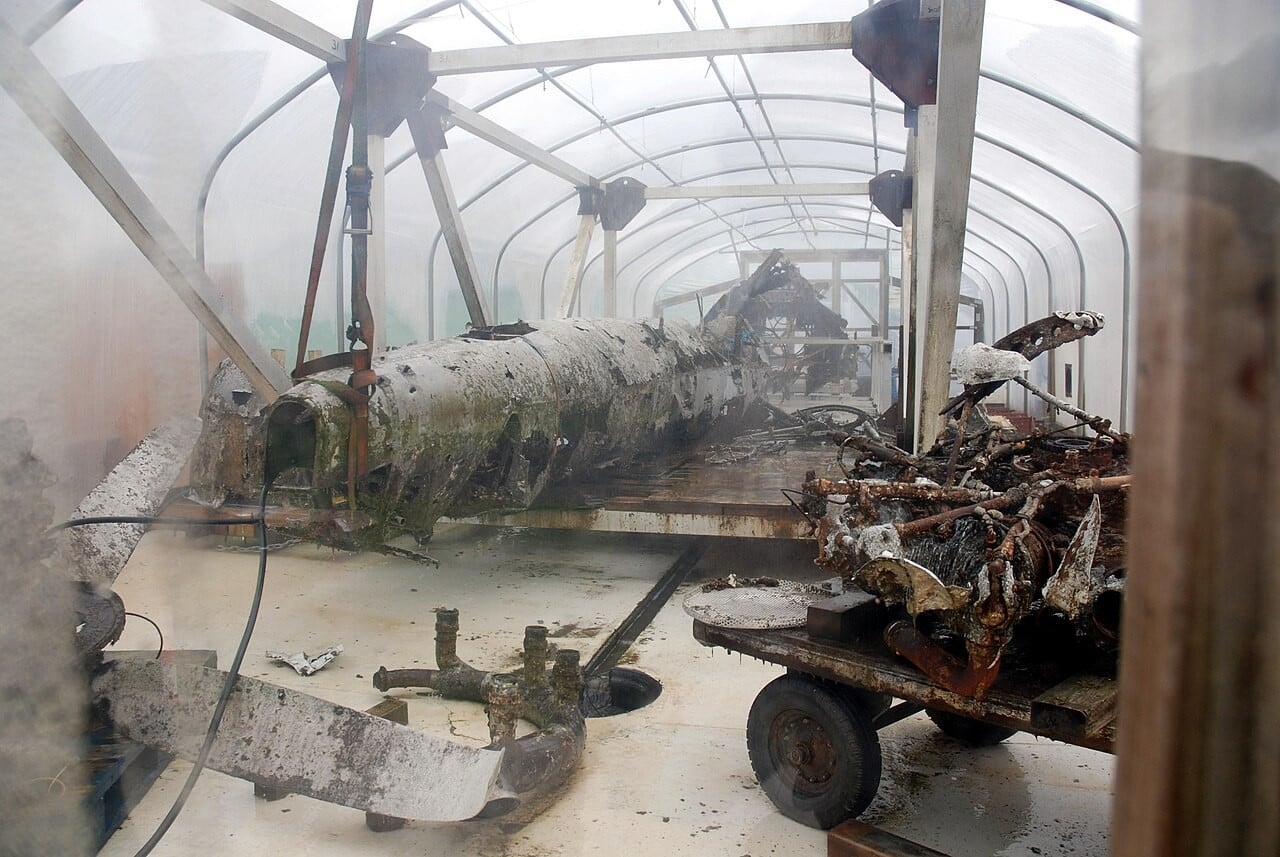
That is why 5K+AR matters. Divers spotted it on the Goodwin Sands in 2008, about 15 metres (50 ft) down, and the RAF Museum announced the find in September 2010. Sonar surveys confirmed its identity. With a grant of more than £345,000 from the National Heritage Memorial Fund, the museum and the salvage company SeaTech began the lift in May 2013.
Bad weather forced the team back to port several times, and the original plan to build a lifting cage around the wreck was abandoned in favour of attaching lifting gear to the strongest points of the airframe. On 10 June 2013 the aircraft came up in one piece. It went by road to the Michael Beetham Conservation Centre at Cosford, where it was placed in hydration tunnels and treated with citric acid as the first stage of a long conservation process.
BFBS Forces News on how the RAF Museum set about preserving the Do 17 raised from the Goodwin Sands.
The flying pencil was outclassed within a year of the war beginning. But it had been there at the start of almost everything, and thanks to a crash-landing on a sandbank in 1940, one of them is still here to show what that looked like.
Sources: Wikipedia (Dornier Do 17), RAF Museum and National Heritage Memorial Fund press releases (May and June 2013), UK Ministry of Defence / GOV.UK (June 2013), Bundesarchiv

0 Comments