
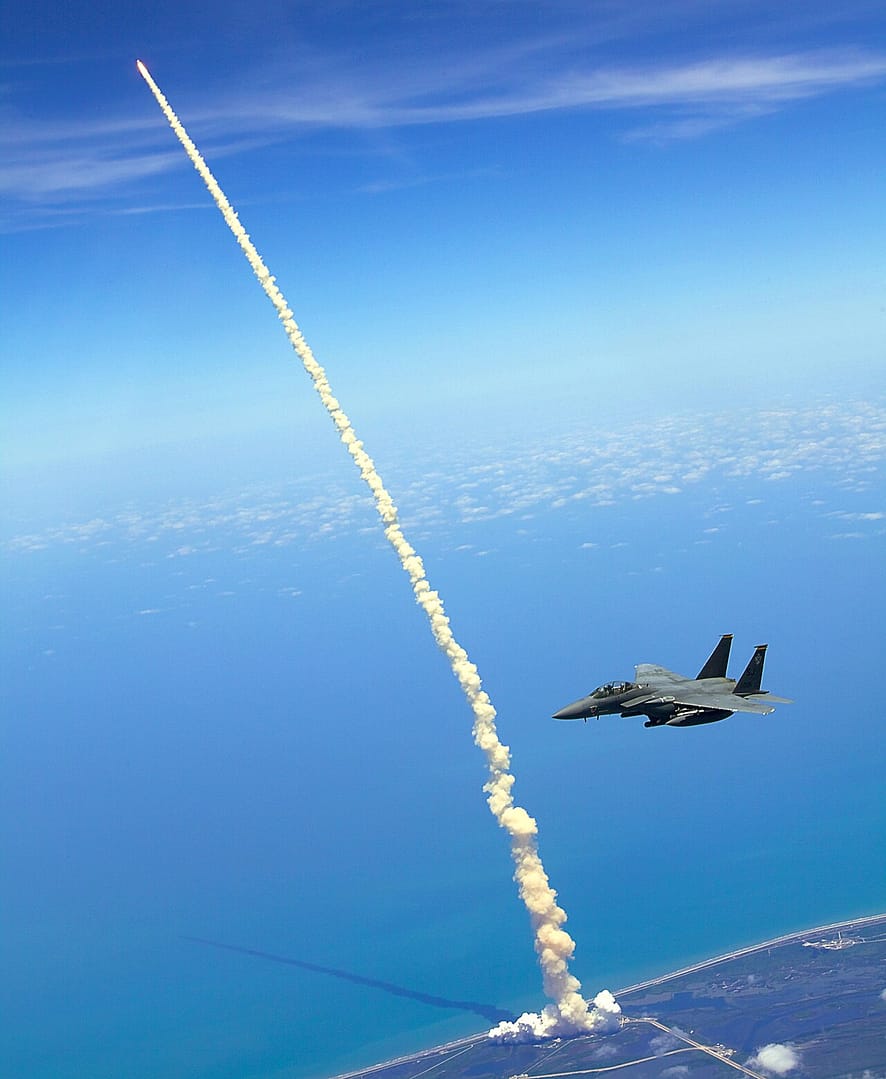
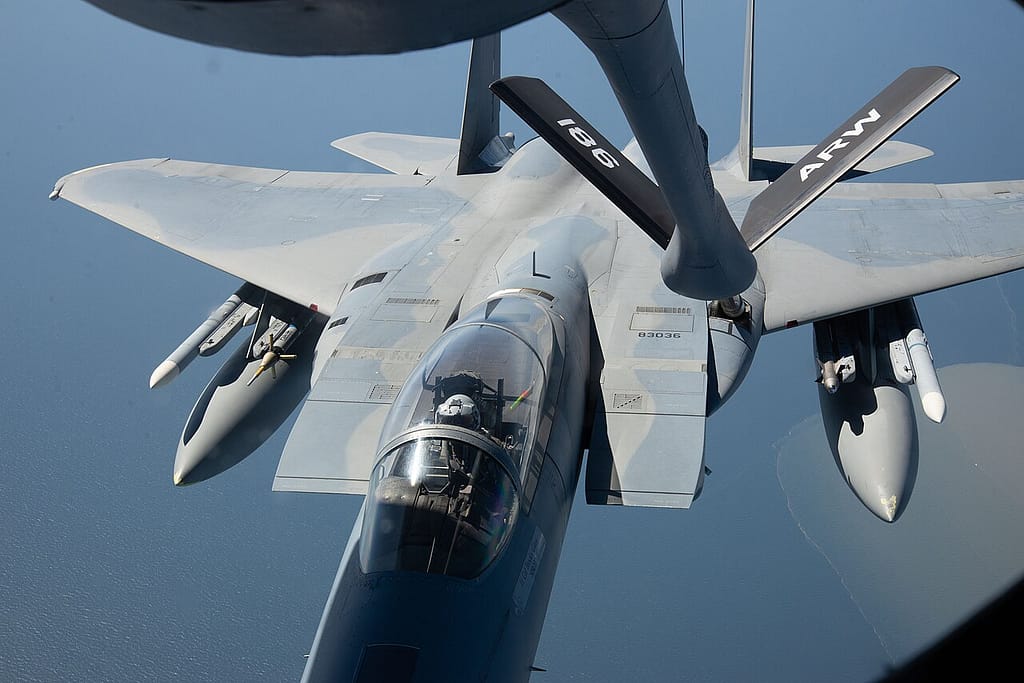
It was a little before nine on the night of 18 April 1995, and Captain Brian Udell was flying his F-15E Strike Eagle out over the black Atlantic off North Carolina. Beside him sat his weapons systems officer, Captain Dennis White. It was routine training — four jets pairing off in the dark, running at each other on radar like a high-speed jousting match, then turning to do it again.
A few minutes later, Udell would make a decision with about half a second to spare, and become one of the only human beings ever to survive ejecting at supersonic speed. Dennis White would not.
Datos rápidos
| Fecha | 18 April 1995 |
| Aeronave | F-15E Strike Eagle (4th Fighter Wing, Seymour Johnson AFB) |
| Multitud | Capt. Brian Udell (pilot), Capt. Dennis White (WSO) |
| Qué pasó | Instrument/control failure, dive toward the ocean at night |
| Ejection | ~780 mph (Mach 1.2), low altitude |
| Udell | Survived with severe injuries; 4 hours in 60F water |
| White | Killed by the ejection forces |
A night intercept over the ocean
The four F-15Es took off around 8:45 p.m., split into two pairs, and used radar to run simulated intercepts far out over the water. At night, over the sea, there is no horizon — nothing but instruments to tell a pilot which way is up. Udell and White were in a 60-degree banked turn when Udell's heads-up display told him everything was fine: nose 10 degrees down, 400 knots, 24,000 feet.
Then he heard it — a rushing-wind sound that only comes when a jet is accelerating hard. The HUD still read normal. But it was lying.
The instruments that disagreed
Udell switched on a second attitude instrument. It told a very different story: the aircraft was pointed almost straight at the ocean, doing nearly 700 mph. Unsure which display was telling the truth, he moved the stick and watched which instrument responded. The second one did. The Strike Eagle was a giant lawn dart, and the water was coming up fast.
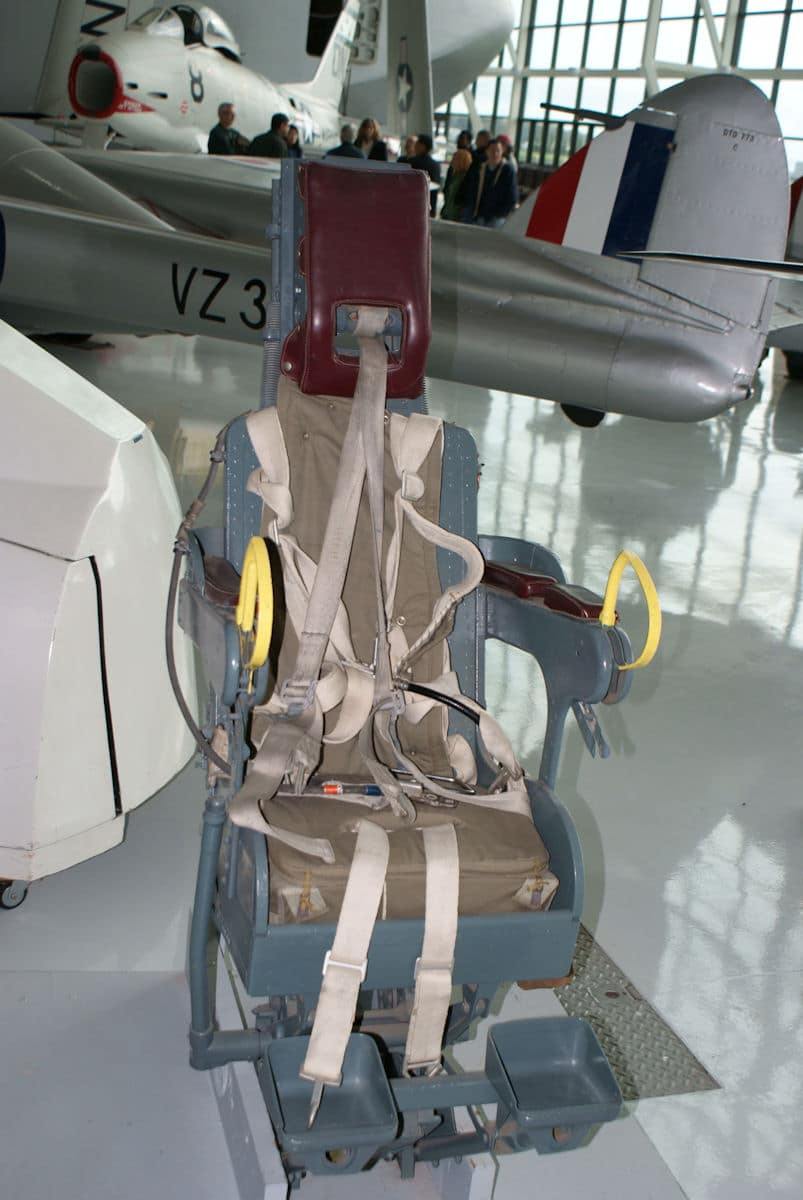
The crew's briefed rules were clear: 10,000 feet was the minimum altitude to eject from an out-of-control jet, and 600 knots the maximum safe speed for the ACES II seat. They were about to blow through both. In pitch darkness, Udell gave the order — "Bail out! Bail out! Bail out!" — and pulled the handles.
780 miles per hour of wind
White ejected first, at 4,500 feet; Udell followed at 3,000, with the aircraft now exceeding 780 mph. At that speed, the air is a wall. Being fired into it with an unarmored body is like hitting solid granite. Udell's helmet, oxygen mask, gloves and watch were torn off. His wallet and a water bottle blasted straight through his zipped-shut g-suit pockets. The blood vessels in his face burst under the pressure.
Mercifully, he remembers none of the ejection itself. He came to under his parachute, feeling as though he'd been hit by a train — which, aerodynamically, he had. Only later, in the raft, did he learn what the slipstream had done to his face.
Four hours in the water
His right knee was dislocated, his left ankle broken, his left arm useless. His life preserver was shredded. With one working arm and his teeth, he hauled in the emergency raft that had deployed with his seat kit, and — after several failed attempts and a great deal of prayer — dragged himself aboard, straightening his shattered legs by hand. For four hours he floated in 60-degree water, 65 miles offshore, five-foot seas breaking over him, calling out for Dennis into the dark.
The other three crews had pinpointed the crash site to within two miles from the last radio calls. A Coast Guard helicopter found him, and a rescue swimmer pulled him into a litter. He was rushed to a hospital in Wilmington, where he learned that Dennis White had been killed instantly by the ejection. White left a wife and two children.
Back in the saddle
What followed was four surgeries, a dozen screws in his legs, titanium rods in one knee, and months of brutal rehabilitation that Udell attacked eight to ten hours a day. He took his first step on his birthday, six weeks after the accident. By February 1996 — ten months after being torn out of a disintegrating jet at the speed of sound — he was flying F-15Es again, and on his second flight he went back over the very patch of ocean where it happened.
Udell survived because of training, a tough airframe of a body, and, by his own account, more than a little grace. But he never talks about the flight as a triumph. He talks about Dennis. The fastest survived ejection in history cost the life of the man in the other seat, and the survivor has spent the decades since making sure nobody forgets him.
Sources: Airman Magazine (April 1997), via the Ejection Site; U.S. Air Force; PHOENIX magazine.
Publicaciones relacionadas
0 Comentarios