
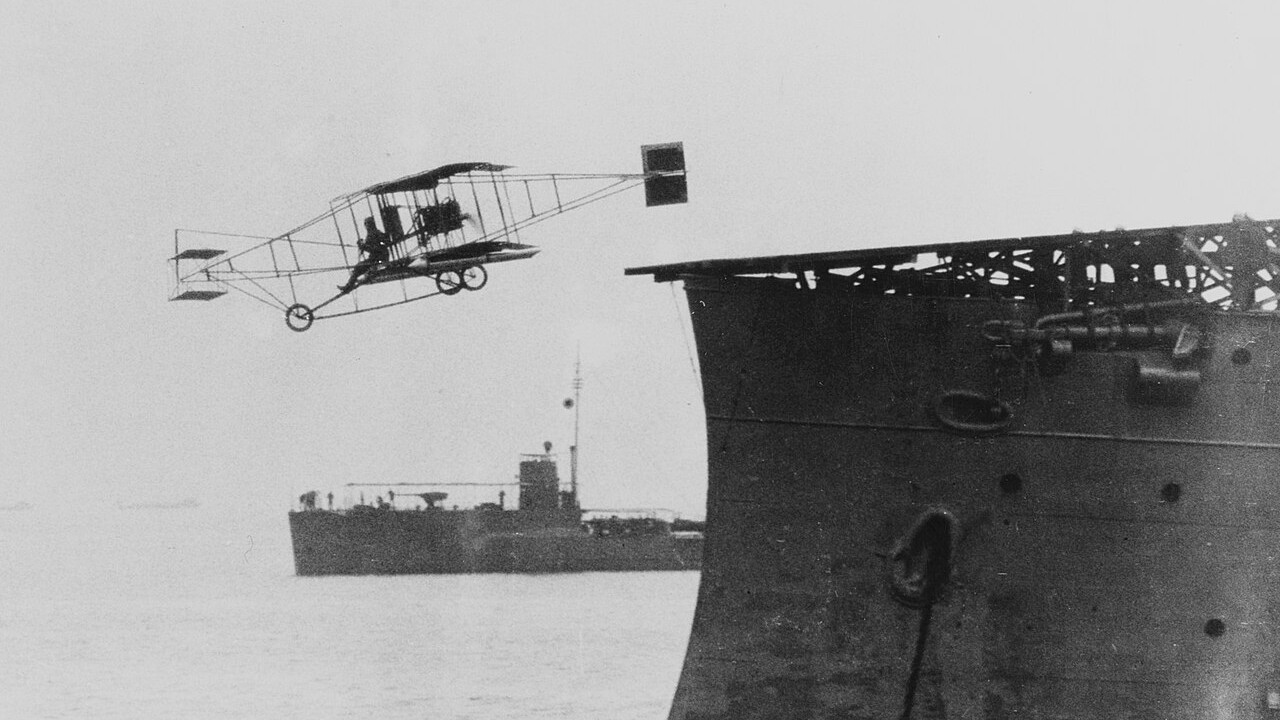
The aeroplane did exactly what everyone feared it would. It rolled off the end of a wooden ramp on the bow of a US Navy cruiser, dropped like a stone towards the grey water of Hampton Roads, and touched the surface hard enough to soak the pilot’s goggles in spray. Then, somehow, it climbed.
That was the afternoon of 14 November 1910, and the pilot was Eugene Ely, a 24-year-old former car salesman who had taught himself to fly only months earlier. Two months later he did something even harder: he landed on a ship. Between them, those two short hops are the first chapter of every aircraft carrier story ever written.
Datos rápidos
- Piloto: Eugene Burton Ely (21 October 1886 to 19 October 1911), civilian exhibition pilot for Glenn Curtiss
- Aeronave: Curtiss pusher biplane (Curtiss Model D)
- First take-off from a ship: 14 November 1910, USS Birmingham, Hampton Roads, Virginia
- Take-off platform: 83 ft (25.3 m) wooden ramp over the bow
- First landing on a ship: 18 January 1911, USS Pennsylvania, at anchor in San Francisco Bay
- Landing platform: About 130 by 32 ft (39.6 by 9.8 m) over the stern
- Stopping system: Hook and lines weighted with sandbags, devised by Hugh Robinson
- Honores: Distinguished Flying Cross (posthumous, 1933); National Aviation Hall of Fame (1965)
A car salesman with a wrecked biplane
Ely was born in Williamsburg, Iowa, on 21 October 1886. He grew up loving speed, set a driving record between Iowa City and Davenport as a priest’s chauffeur, and drifted west selling and racing cars. In early 1910 he was working as an auto salesman in Portland, Oregon, for E. Henry Wemme, who had just bought one of Glenn Curtiss’s first four-cylinder biplanes.
Wemme could not fly it. Ely, convinced that flying could not be much harder than driving, offered to try, and promptly crashed it. Feeling responsible, he bought the wreck, rebuilt it and taught himself to fly. By the summer he was flying exhibitions for Curtiss himself, and on 5 October 1910 he received Aero Club of America pilot’s licence No. 17.
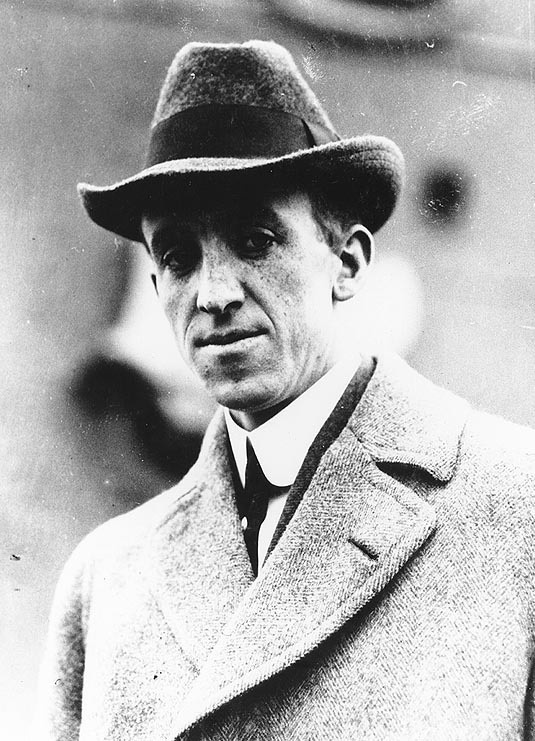
That same autumn, the Navy was cautiously wondering whether aeroplanes had any use at sea. Captain Washington Irving Chambers had been told by the Secretary of the Navy to find out. In October, Chambers met Curtiss and Ely. The meeting led to two experiments that would prove the idea in the most direct way possible.
Off the bow of USS Birmingham
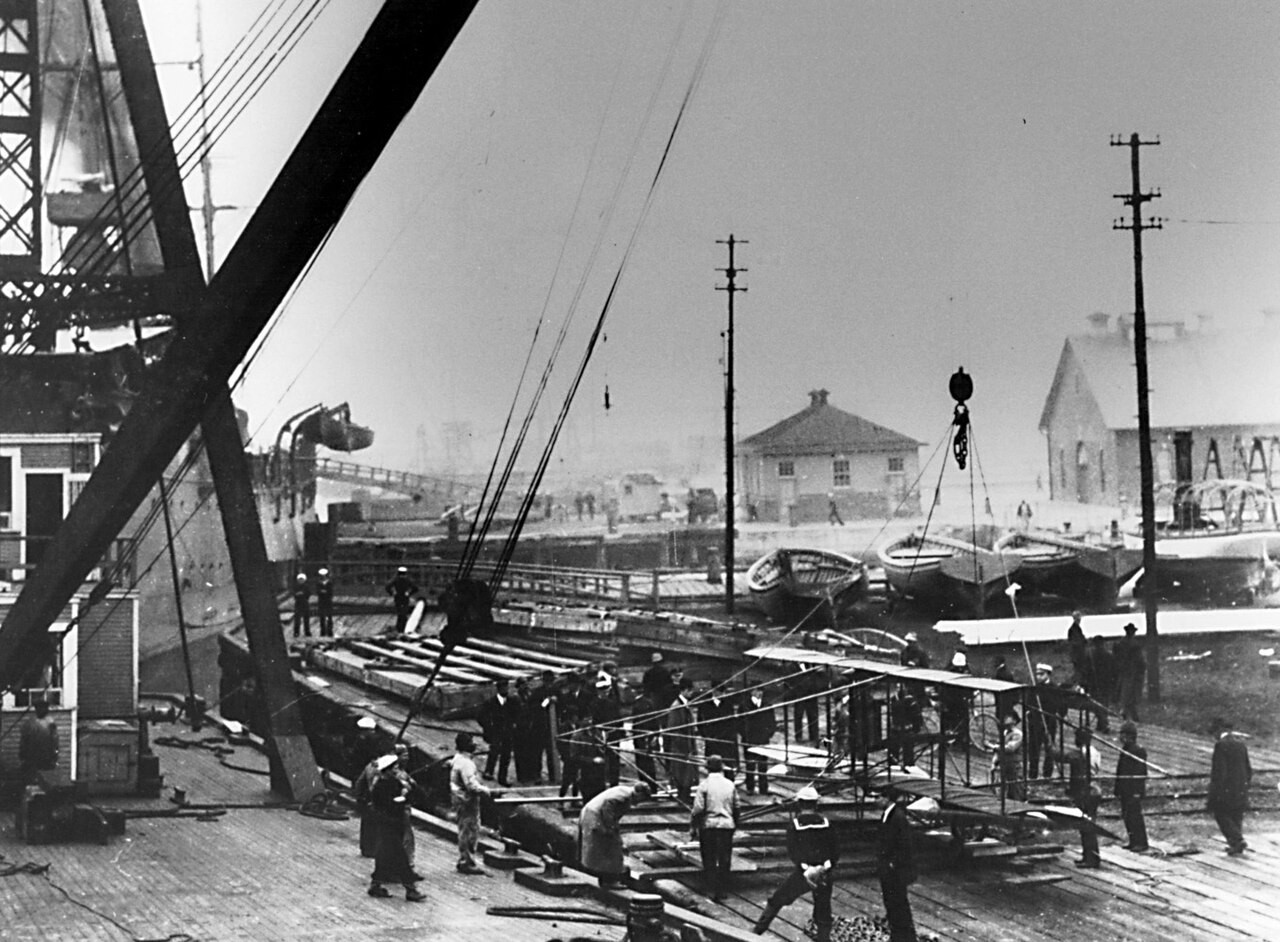
The Navy lent the light cruiser USS Birmingham. A sloping wooden platform, 83 feet (25.3 metres) long, was built over her bow, and a floating crane from Norfolk Naval Shipyard lifted Ely’s Curtiss pusher aboard. John Barry Ryan of the US Aeronautical Reserve put up $500 towards the platform and another $500 as a prize for a flight from ship to shore. The destroyer USS Roe stood by as plane guard.
On 14 November, Ely opened the throttle and rolled down the ramp. As soon as the biplane cleared the edge, it sank. Its wheels dipped into the water before it began to rise, and spray covered his goggles. Rather than circling the harbour and landing at the Norfolk Navy Yard as planned, Ely put down on the nearest beach. Nobody minded. The first aeroplane had taken off from a warship.
The Hampton Roads Naval Museum on Eugene Ely and his 1910 flight from USS Birmingham.
Landing on USS Pennsylvania
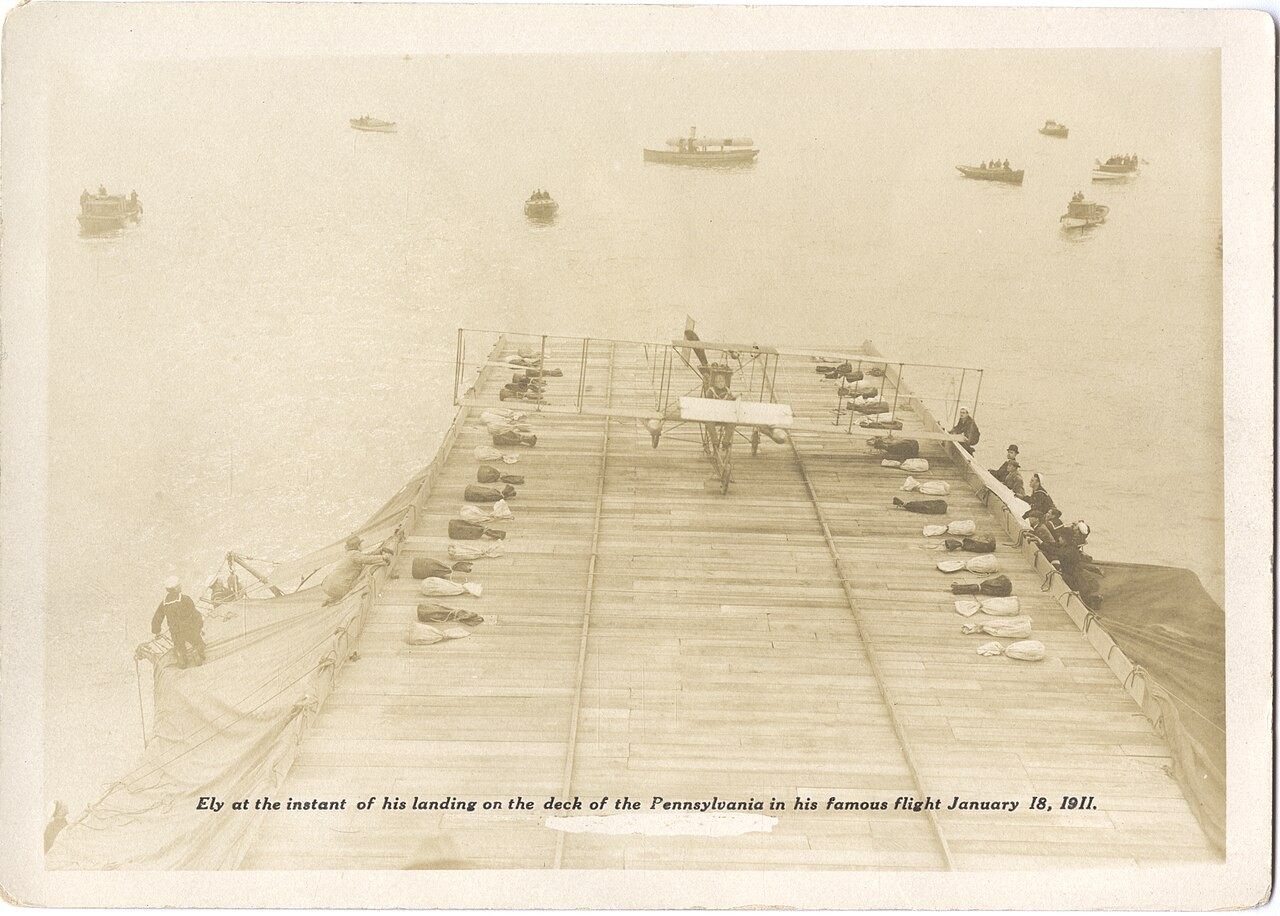
Taking off was the easy half. Bringing an aeroplane with no brakes to a stop on a ship was a different problem, and the Navy chose to try it on the West Coast. The armoured cruiser USS Pennsylvania was fitted with a wooden platform over her stern, about 130 feet long and 32 feet wide (39.6 by 9.8 metres), while she lay at anchor in San Francisco Bay.
The solution to stopping was crude and clever. Lines were stretched across the deck, run through pulleys and tied to dead weights, such as sandbags, an arresting system devised by the aviator and former circus performer Hugh Robinson. Hooks under Ely’s aircraft would catch the lines, and the weight of the sandbags would drag the biplane to a halt.
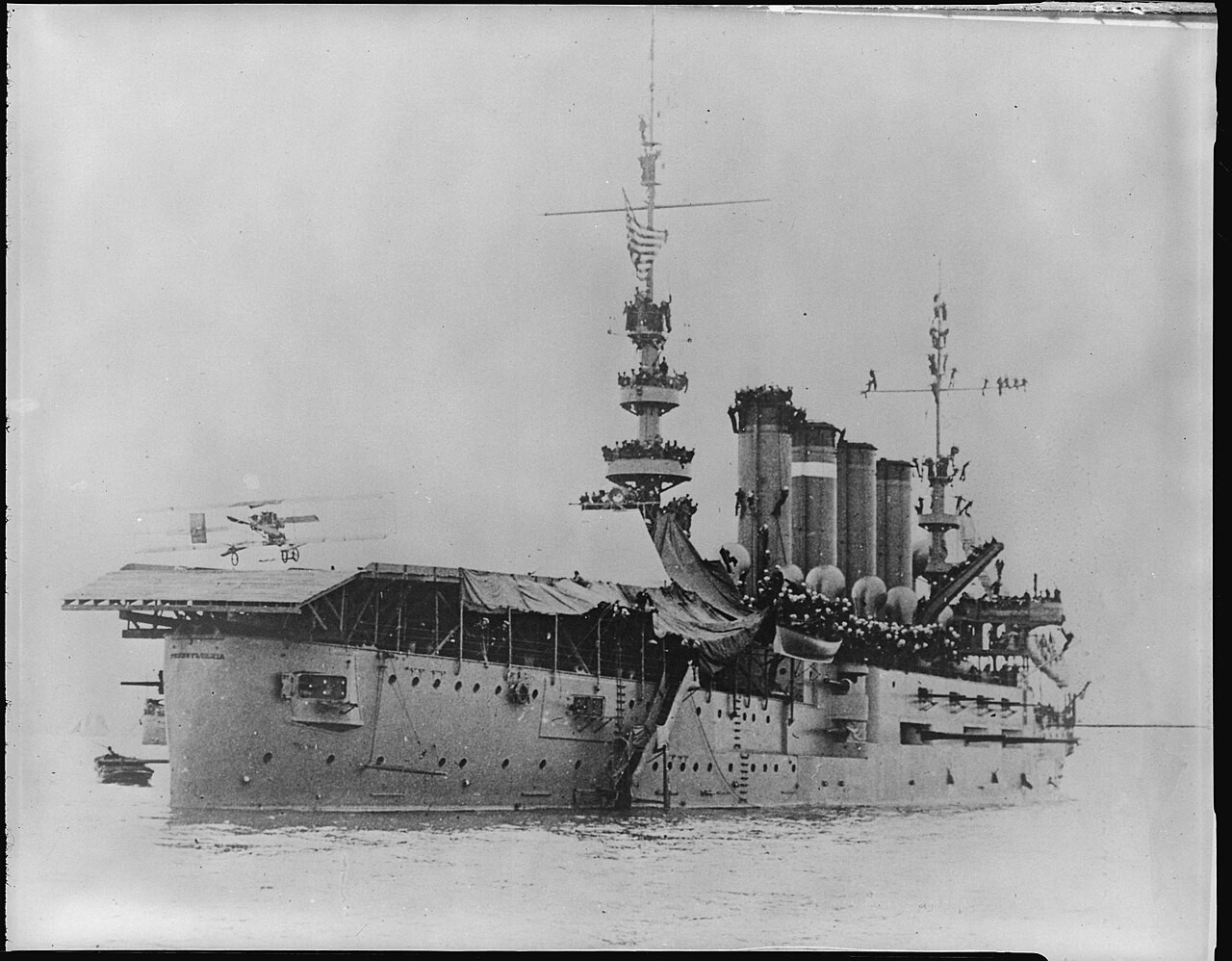
On the morning of 18 January 1911, Ely took off from the Tanforan Racetrack in San Bruno, flew out over the bay and lined up on the cruiser from astern. He touched down, the hooks caught, the sandbags dragged and the Curtiss stopped on the deck. It was the first time an aeroplane had landed on a ship, and the first landing using a tailhook. Less than an hour later he took off again from the same platform and flew back to shore.
Archival film of Ely’s landing on and take-off from USS Pennsylvania in January 1911.
A hero the Navy could not hire
Ely had proved that aeroplanes could operate from ships in both directions. What he could not get was a job. He wrote to the Navy asking for employment, but there was no naval aviation organisation yet to employ him. Chambers promised to keep him in mind and advised him to cut the sensational stunts out of his exhibitions, for his own safety and for the sake of aviation.
Ely went back to the exhibition circuit. Asked about retiring, he gave the Des Moines Register an answer that reads like a premonition: “I guess I will be like the rest of them, keep at it until I am killed.” On 19 October 1911, flying at an exhibition in Macon, Georgia, his aircraft was late pulling out of a dive. He was killed two days before his 25th birthday.
Recognition came slowly. On 16 February 1933, Congress awarded him the Distinguished Flying Cross posthumously. In 1965 he was inducted into the National Aviation Hall of Fame, and an exhibit of retired naval aircraft at Naval Air Station Norfolk bears his name.
From sandbags to steel cables
Ely’s ships were not carriers, and his landing ship was at anchor. Other pioneers, including Britain’s Charles Rumney Samson and Edwin Harris Dunning, would be the first to take off from and land on moving ships. But the basic recipe he demonstrated in 1910 and 1911 is still recognisable on every carrier deck today.
Modern US carriers stop jets with steel arresting cables and arresting engines rather than ropes and sandbags. The idea is the same one Hugh Robinson rigged on Pennsylvania: a hook on the aircraft, a line across the deck, and something heavy on the other end. To mark the centenary in November 2010, Navy Commander Bob Coolbaugh flew a replica of Ely’s Curtiss, which he had built himself, from NAS Norfolk.
Not bad for a car salesman who first got into a cockpit because his boss could not fly the aeroplane he had bought.
Sources: Wikipedia (Eugene Burton Ely; USS Birmingham (CL-2); USS Pennsylvania (ACR-4); Arresting gear), US Naval History and Heritage Command photo captions (NH 77545, NH 77555), US National Archives, US Navy, Hampton Roads Naval Museum
0 Comments