
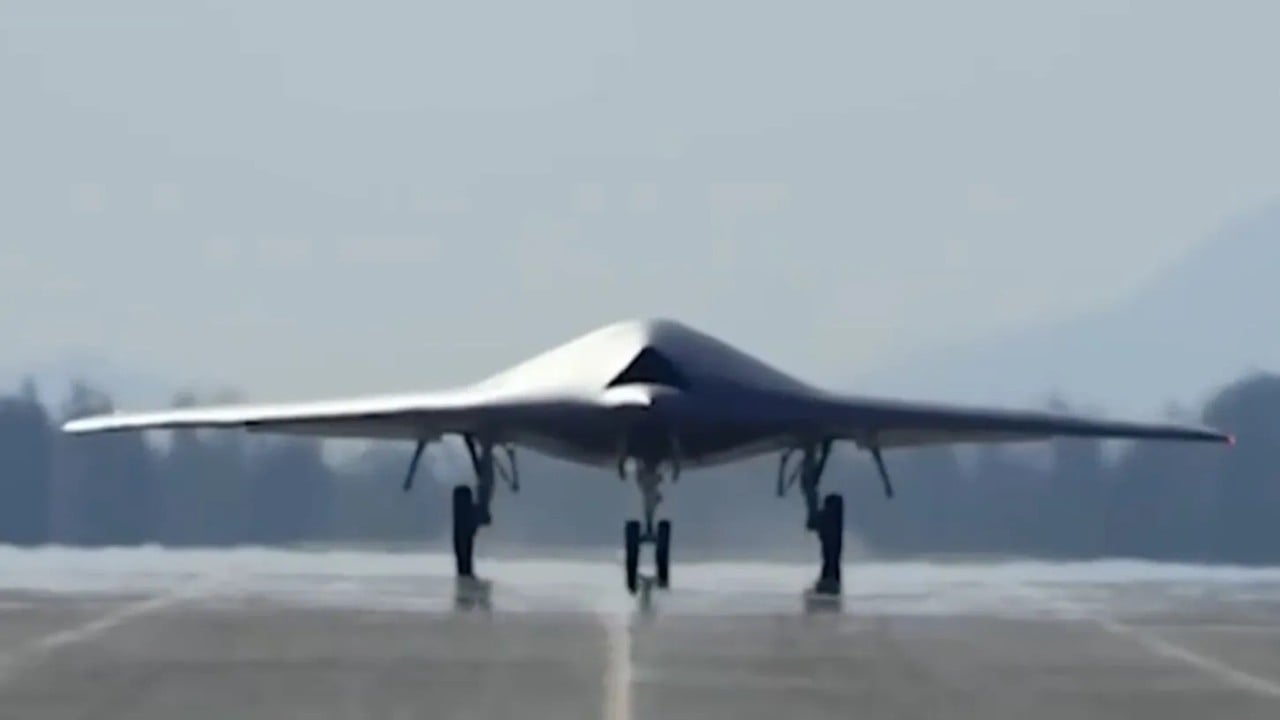
The hangar doors slide open, a grey flying wing is towed into the light, and for the first time the camera lingers where it matters: underneath. On Monday 9 November 2026, Chinese state television aired new close-up footage of the GJ-11 stealth drone, China’s first stealth unmanned combat aircraft in air force service, including the clearest public look yet at its internal weapon bays.
The clips ran on the CCTV military channel two days before the 77th anniversary of the People’s Liberation Army Air Force on 11 November. They came with a bolder claim attached: according to CCTV, the GJ-11 has completed its first live-fire strike mission and hit its target.
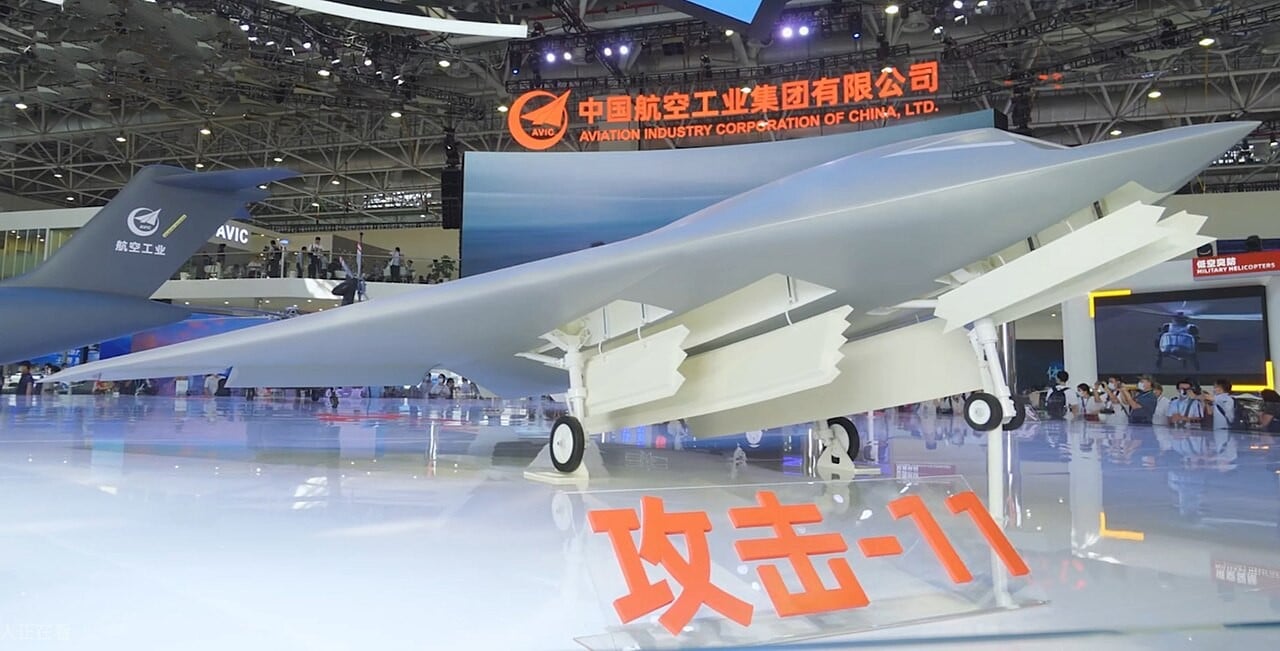
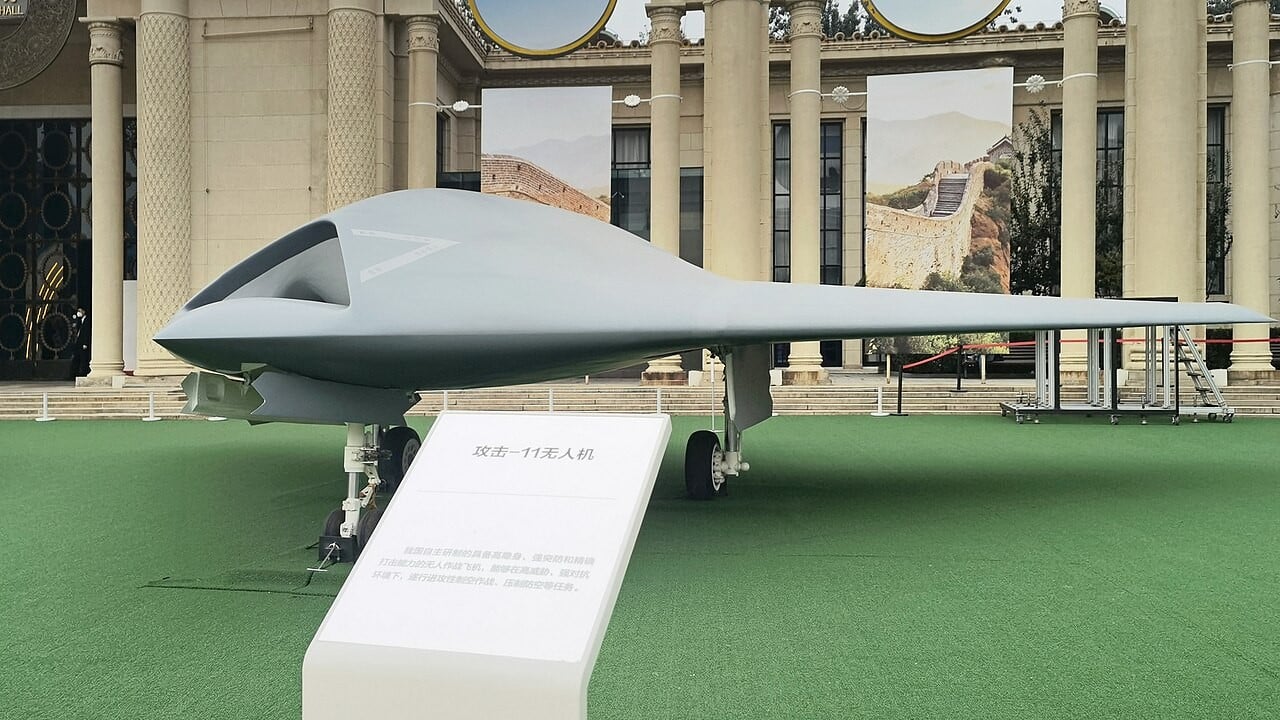
The aircraft itself is not new. The GJ-11 was shown publicly at the October 2019 National Day parade in Beijing, and in November 2025 the PLAAF released its first footage of one flying alongside a J-20 and a J-16D. What is new is the detail, and the claim that it has now struck a target with a live weapon.
Datos rápidos
- Aeronave: GJ-11 (Gongji-11, “Attack-11”) stealth unmanned combat aerial vehicle, service name Xuanlong
- Operador: People’s Liberation Army Air Force
- New footage: Aired by CCTV’s military channel on Monday 9 November 2026
- Occasion: Run-up to the PLAAF’s 77th anniversary on 11 November 2026
- New details: Two internal weapon bays with serrated doors, shielded exhaust, chin-mounted sensor, gear retraction on takeoff
- Strike claim: First live-fire strike, hit after a second pass through cloud (date, place and weapon not disclosed)
- First public show: National Day parade, Beijing, October 2019
- Naval version: GJ-21, flown from Type 076 Sichuan (reported 30 October 2026)
What the new footage shows
The most telling detail is on the belly. Two internal weapon bays sit between the main landing gear, each closed by its own set of doors with serrated edges, a standard low-observable treatment that steers radar reflections away from their source rather than straight back. The South China Morning Post said the design suggests the drone can carry relatively large missiles without giving up its stealth.
At the back, the exhaust is flattened, shielded and buried in the upper rear of the wing, with no external nozzle. Up front, the air intake sits on top of the fuselage, hidden from ground-based radars below. A faceted window under the nose appears to house an electro-optical sensor; the Post compared it with the targeting system on China’s J-20 caza furtivo.
Chinese military commentator Song Zhongping told the Global Times that the aircraft uses radar-absorbing coatings and that its nozzle had received special treatment to improve stealth. Neither claim can be checked from video alone, and how well the shaping actually works has not been disclosed.
Old clips, new angles
Not every frame is fresh. Analysts comparing the release with the November 2025 anniversary film found that the sequence of the hangar doors opening and the aircraft being towed out appears to have been reused. The new material is the close-ups inside the hangar, a top view of the aircraft leaving it, and a takeoff in which the landing gear is seen retracting. In the 2025 film the gear stayed down.
One screenshot circulating on Chinese social media seems to show further flying-wing aircraft parked behind the featured GJ-11. Their identity cannot be confirmed from the image. Multiple airframes are not in doubt, though: satellite imagery published in 2025 showed three GJ-11s at Shigatse in Tibet, and earlier images placed several at the Malan test base in Xinjiang.
A strike, after a second pass
The most significant claim in the broadcast was the live-fire test. CCTV said the GJ-11 went through a series of trials at a desert facility in north-western China. On its first run in the strike test, operator Shi Xiaoran said, the drone could not find its target through thick cloud. The crew brought it round for another pass, found the target and scored a hit with the first weapon released.
Shi and her colleague Fu Ting belong to the first group of female drone operators trained by the PLAAF itself. Neither CCTV nor the Global Times said when or where the strike took place, what the target was or which weapon was used, and the released footage does not show a weapon leaving the aircraft. For now, the hit rests on state media’s word.
CCTV also said the GJ-11 has worked with another drone and with crewed aircraft, scouting air defences, acting as a decoy or launching guided weapons at a crewed fighter’s direction. Its control station and operators, the broadcaster said, can be loaded onto a military transport aircraft and moved where they are needed.
Past the demo stage
The timing fits a pattern. On 30 October, Chinese state media reported that the GJ-21, the naval version of the same drone, had taken off from and landed aboard Sichuan, China’s first Type 076 amphibious assault ship, a story covered on Afterburner in GJ-21 Stealth Drone: China Says It Flew From Type 076 Sichuan.
The closest American comparison is the Collaborative Combat Aircraft programme. In July 2026 the US Air Force said an Anduril YFQ-44A had fired an AIM-120 at a digital target over California. The GJ-11, though, is a large, stealth-first flying wing, closer in concept to a high-end penetrating drone than to the cheaper, affordability-focused CCAs of the USAF’s first increment.
The new footage does not answer the questions that matter most: range, payload, weapons and how the drone really teams with crewed fighters. But a weapon bay shown on purpose, a gear leg retracting on camera and a strike story that admits a missed first pass all point the same way. Beijing is no longer presenting the GJ-11 as a prototype. It is presenting it as a weapon in service.
Sources: CCTV, Global Times, South China Morning Post, DroneXL, Defence Security Asia, The Aviationist, Wikipedia (Hongdu GJ-11)


0 Comments