
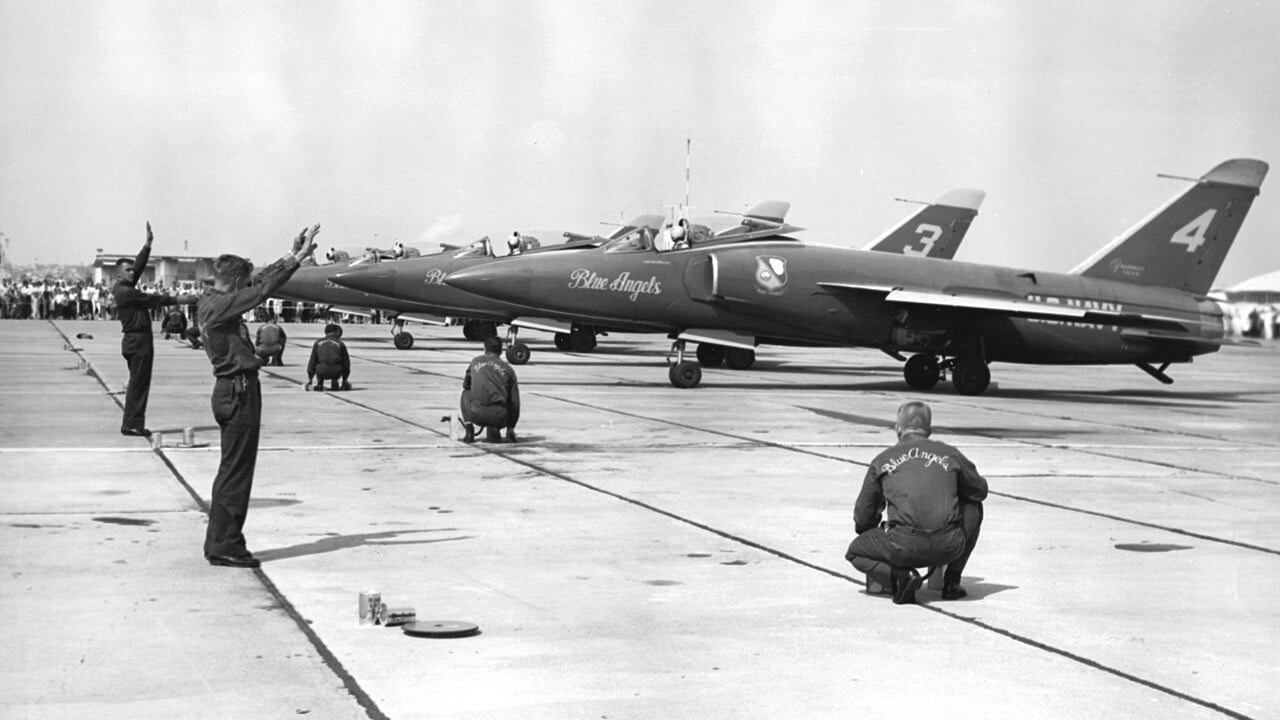
For the 1957 show season, the Blue Angels rolled out something new: a small, sleek Grumman jet with a pinched waist and a needle nose that could go supersonic.
The jet was the Grumman F11F Tiger. As a fleet fighter it was a disappointment, gone from carrier decks within about four years. As a show plane it was a star. The Blue Angels flew it for 12 seasons.
Datos rápidos
- Tipo: Single-seat, single-engine carrier-based supersonic day fighter
- Fabricante: Grumman (company designation G-98)
- Primer vuelo: 30 July 1954
- Motor: One Wright J65 turbojet, 10,500 lb thrust with afterburner
- Construido: 199 F11F-1 (F-11A) fighters plus two F11F-1F Super Tigers
- Fleet service: Late 1950s; off carriers by 1961, then supersonic trainer in South Texas
- Blue Angels: 1957 to 1968 seasons; replaced by the F-4J Phantom II in 1969
- Registro: Super Tiger world altitude record, April 1958 (more than 76,800 ft)
- Lo primero que cabe destacar: First jet to shoot itself down, 21 September 1956
A Cougar that became something else
The Tiger started in 1952 as a private Grumman study to modernise the F9F-6/7 Cougar, the swept-wing version of the F9F Panther. By the time the design team finished, almost nothing of the Cougar was left. The new jet had thin swept wings, spoilers instead of ailerons, an all-moving tailplane and, most important, an area-ruled “Coke-bottle” fuselage, pinched at the waist to cut drag near the speed of sound.
It was also small. The Tiger was built as a lightweight day fighter around a single Wright J65 turbojet, a licence-built version of Britain’s Armstrong Siddeley Sapphire, producing 10,500 lb of thrust in afterburner. The wings were so short that only the tips needed to fold for carrier storage, and they were folded by hand.
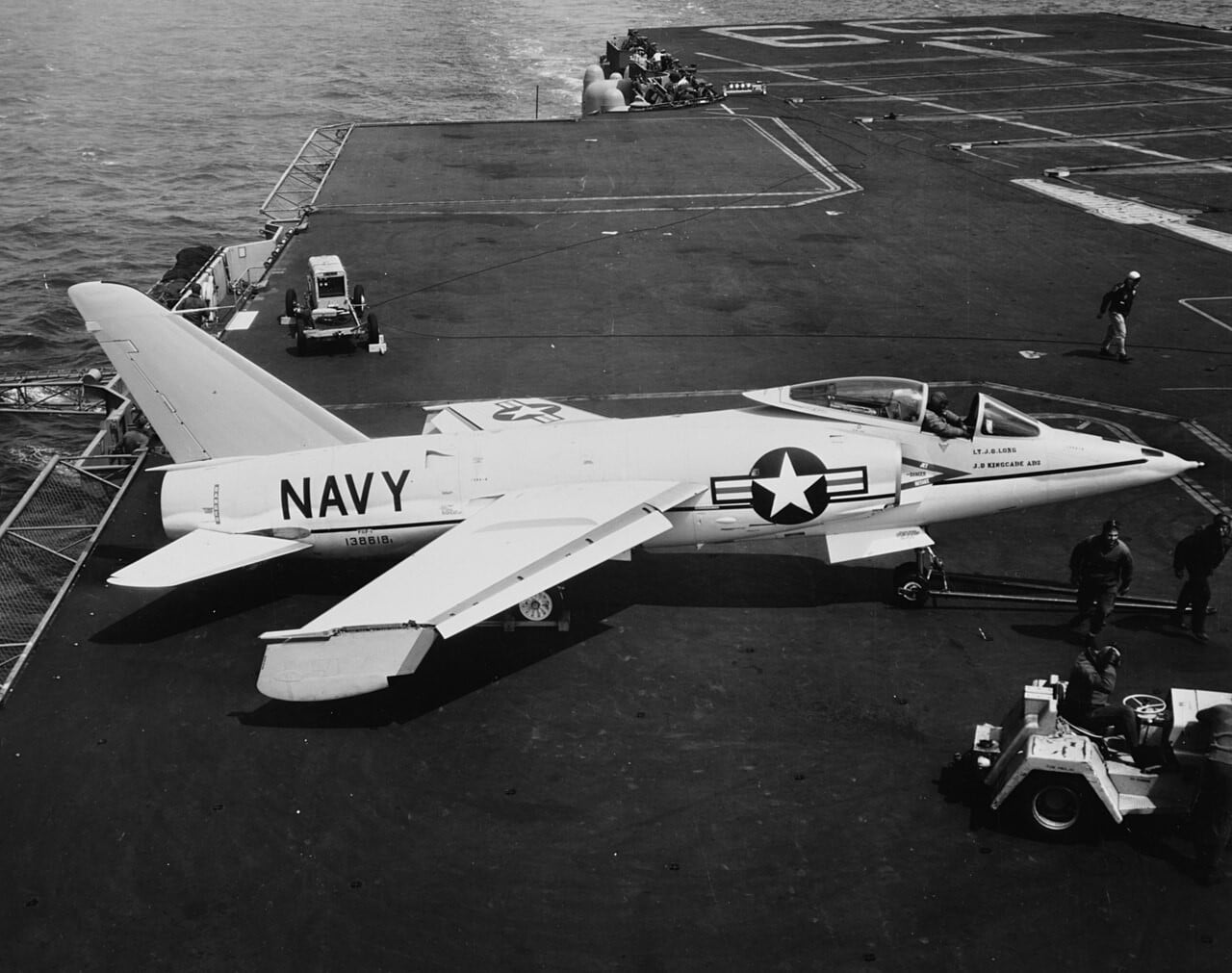
The first prototype flew on 30 July 1954, before the afterburning version of the J65 was ready; the second prototype, with afterburner, went supersonic. In April 1955 the Navy designated the production jet F11F-1, and on 4 April 1956 a Tiger went to sea for carrier trials aboard the new supercarrier USS Forrestal.
Testing also produced the Tiger’s most famous moment. On 21 September 1956, Grumman test pilot Tom Attridge fired his cannon in a dive, flew into his own shells and had to crash-land. He survived, and the Tiger went into the record books as the jet that shot itself down. We have told that story in full in El caza que se disparó a sí mismo.
The Intrepid Museum’s “Aircraft of the Month” on the F11F Tiger, a type that once flew from USS Intrepid.
A short frontline career
Production Tigers joined a handful of Navy fighter squadrons in the late 1950s, among them VF-21 in the Atlantic Fleet and VF-191 in the Pacific, and flew from carriers such as Forrestal, Ranger y Bon Homme Richard.
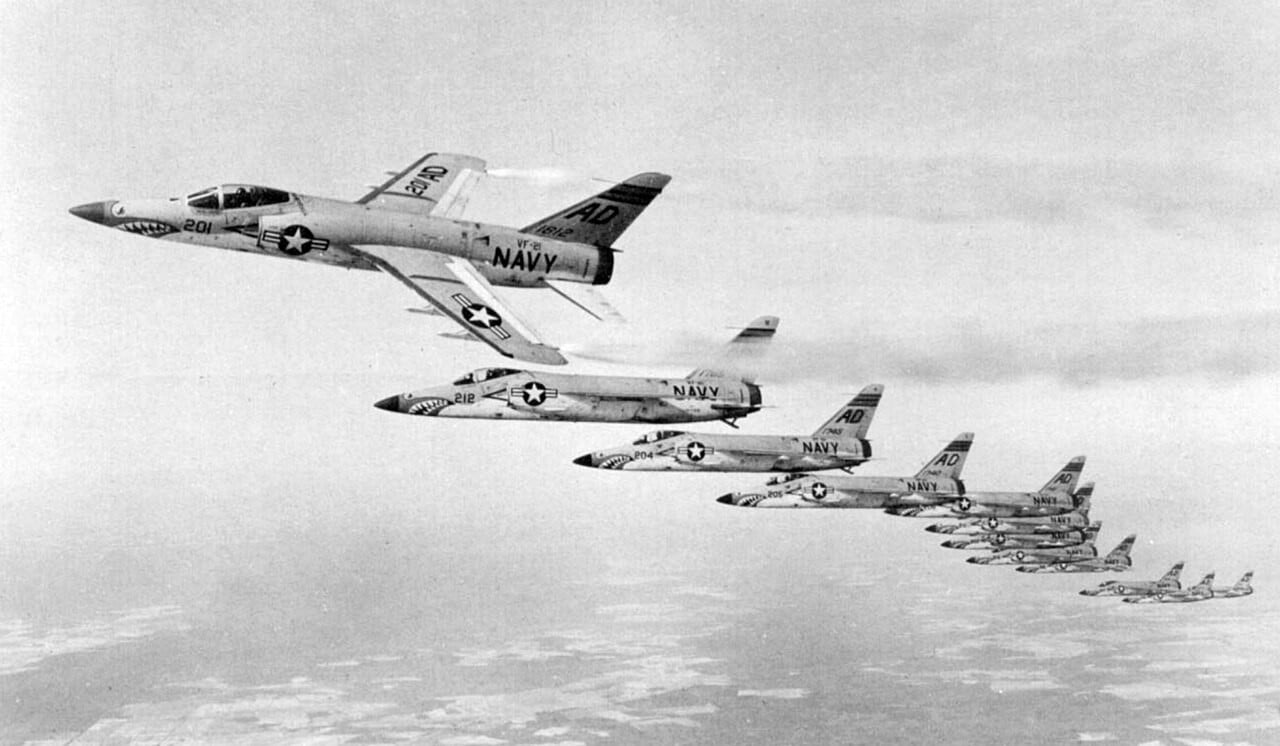
The problem was timing. The Tiger arrived alongside the much faster Vought F8U Crusader, with the F4H Phantom II close behind. Its range and endurance were short and its J65 engine was unreliable. Production stopped at 199 fighters.
By 1961 the Tiger had left carrier service. It found a second career in the Naval Air Training Command in South Texas, at NAS Chase Field and NAS Kingsville. Student pilots who had finished advanced jet training in the TF-9J Cougar got their first taste of supersonic flight in a Tiger before moving on to fleet fighters.
The Blue Angels’ Tiger years
El Ángeles Azules took the Tiger in 1957, flying first the original short-nosed version and later the long-nosed production jets. In January 1957 the team also moved its winter training base from El Centro, California, to NAS Key West, Florida, where it would train for the next decade.
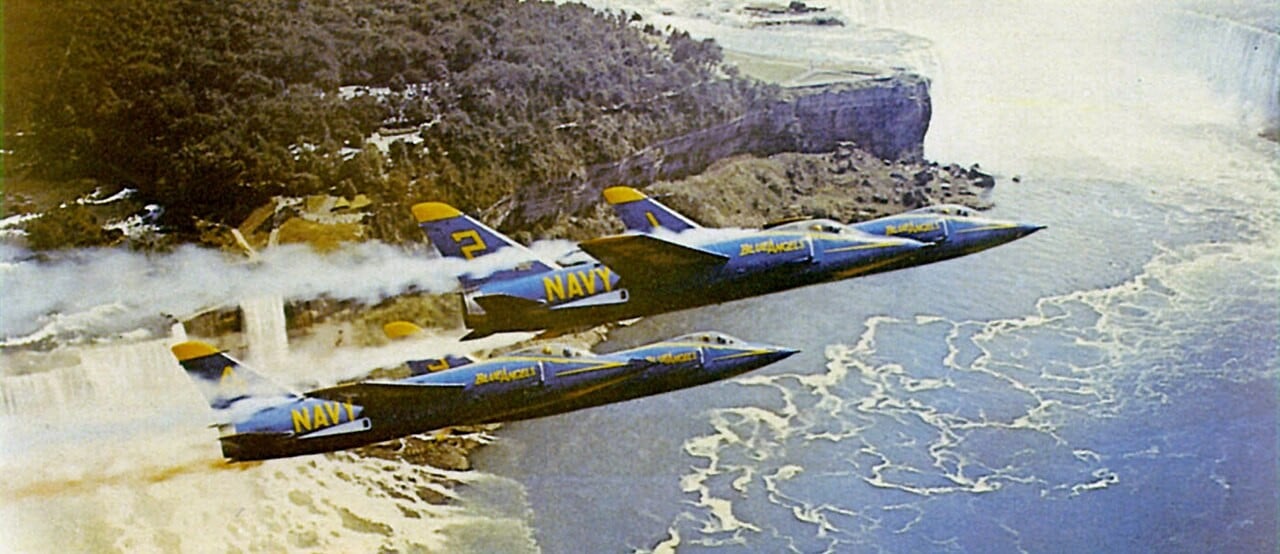
The small, agile Tiger suited formation aerobatics, and the team made the most of it. The six-plane Delta formation that remains a Blue Angels signature first appeared in the Tiger era. So did international fame: according to Flight Journal, a 1964 show over Mexico City drew an estimated 1.5 million people, and at the 1965 Paris Air Show the Blue Angels were the only team to receive a standing ovation.
Archival film of the Navy’s Blue Angels flying the Grumman F11F Tiger.
The Tigers flew their last Blue Angels seasons in 1968, and in 1969 the team moved to the much bigger and heavier two-seat F-4J Phantom II. One of the final Blue Angels Tigers, Bureau Number 141828, which flew with the team from 1967 to 1969, is preserved at the National Naval Aviation Museum at NAS Pensacola.
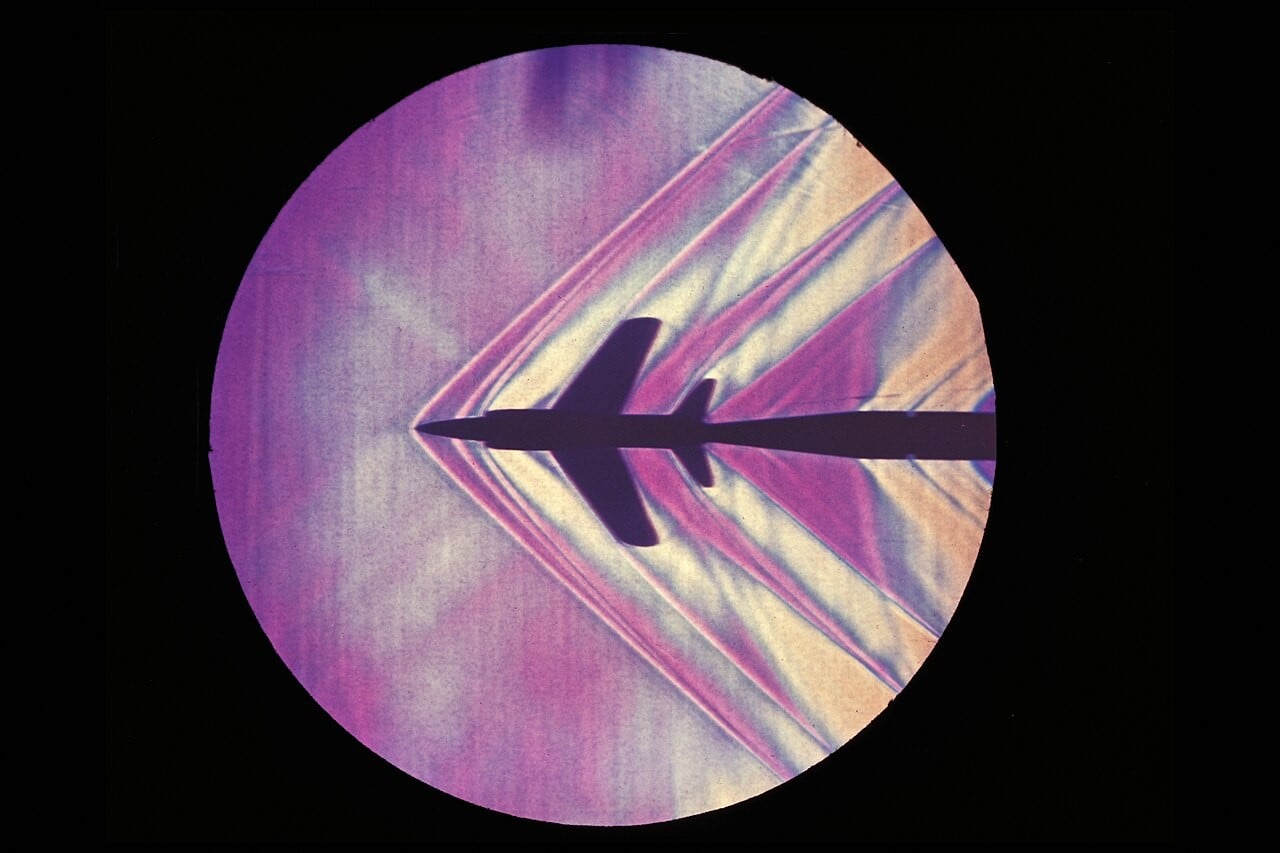
The Super Tiger that set a record
Grumman knew the Tiger could do more with more power. In 1955 it studied fitting the new General Electric J79, and the Navy agreed to convert two production F11F-1s with enlarged intakes and the new engine. Designated F11F-1F and nicknamed Super Tiger, the converted jet first flew in 1956 and later went faster than Mach 2, far beyond the standard Tiger.
In April 1958, Lieutenant Commander George Watkins zoom-climbed the second Super Tiger from Edwards Air Force Base to more than 76,800 feet, a world altitude record. Of the deep blue sky he saw at the top, Watkins said simply: “I hardly had time to look.”
The Navy judged the Super Tiger too heavy for its carriers and never ordered it. The Tiger family ended with 199 standard fighters and two record-setting prototypes.
Carrier landings and take-offs by FJ Furies and F11F Tigers, from the San Diego Air and Space Museum archives.
That leaves the Tiger with an odd legacy: a fighter that never fired a shot in anger, famous for shooting itself down, and remembered most fondly for the 12 years it spent painted blue and gold. For a generation of airshow crowds, it was the jet that made the Blue Angels supersonic.
Sources: Naval History and Heritage Command (National Naval Aviation Museum F11F Tiger; Blue Angels aircraft history), Flight Journal, Encyclopaedia Britannica, This Day in Aviation (citing the Valley Times, April 1958), Grissom Air Museum
Header photo: U.S. Navy / Wikimedia Commons, public domain
0 Comments