

NASA has a new X-plane, and it is not the Blackbird. On Wednesday, 4 November 2026, the agency unveiled the X-70 Fractal, a crewed, high-performance research jet built around flight controls that can be reconfigured quickly from one experiment to the next.
The reveal came at the UP.Summit at NASA’s Kennedy Space Center in Florida, days before the agency’s Max Power airshow on the same site. Administrator Jared Isaacman had promised a new X-plane there, adding that it was “not the one you’re thinking of”. Everybody had been thinking of the SR-71 that quietly disappeared from Edwards. Instead, NASA showed a shadowy, twin-tailed shape wrapped in cloud.
Datos rápidos
- Aeronave: NASA X-70 Fractal, crewed experimental research aircraft
- Anunciado: 4 November 2026, UP.Summit, Kennedy Space Center, Florida
- Objetivo: Testing rapidly reconfigurable flight controls, manoeuvrability and other new aviation technologies
- Takeoff weight: 10,000 lb (about 4,540 kg)
- Carga útil: Up to 2,000 lb of experiments, internal and external
- Performance (NASA figures): Cruise Mach 0.75, ceiling 45,000 ft, range about 1,500 nautical miles
- First flight under NASA: Expected within two years
- Constructor: Not disclosed
What NASA Actually Announced
NASA calls the X-70 a high-performance, highly adaptable research platform. The headline feature is its “advanced, rapidly reconfigurable flight-control technology”, which the agency says will let it explore aircraft manoeuvrability in ways never before demonstrated in crewed flight.
The numbers are modest on paper and that is the point. A takeoff weight of 10,000 lb, a cruise speed of Mach 0.75, a ceiling of 45,000 ft and a range of around 1,500 nautical miles describe a workhorse, not a record-breaker. Up to 2,000 lb of that weight can be experimental payload, carried inside the aircraft or on external stations.
That modularity is what NASA is selling. Rather than building one exotic airframe per idea, the X-70 is meant to swap equipment and keep flying, test after test.
NASA expects the aircraft’s first flight “under the NASA banner” within the next two years. That wording is interesting. It could simply mean the day NASA takes delivery from a manufacturer. TWZ noted it could also hint that an existing aircraft is moving across from another programme. NASA has not said who is building the X-70, and it has not said how many engines it has.
A Picture That Shows Almost Nothing
The single image NASA released carries a “Generated Content” label in its corner, so treat it as an impression, not a photograph. Most of the aircraft is hidden in smoke. What you can make out is a bubble canopy, outward-canted twin tails and a broad, fighter-like wing, seen head-on against a starry sky.
Observers were quick to point out that the slightly drooping wings and the cloud-shrouded reveal echo the first public rendering of the US Air Force’s F-47. TWZ saw a resemblance to recent Scaled Composites testbeds. Nobody outside the programme had any confirmation of the design, and neither do we. Inlets, engine count, wing planform and any thrust vectoring all remain unknown.
What “Reconfigurable Flight Controls” Could Mean
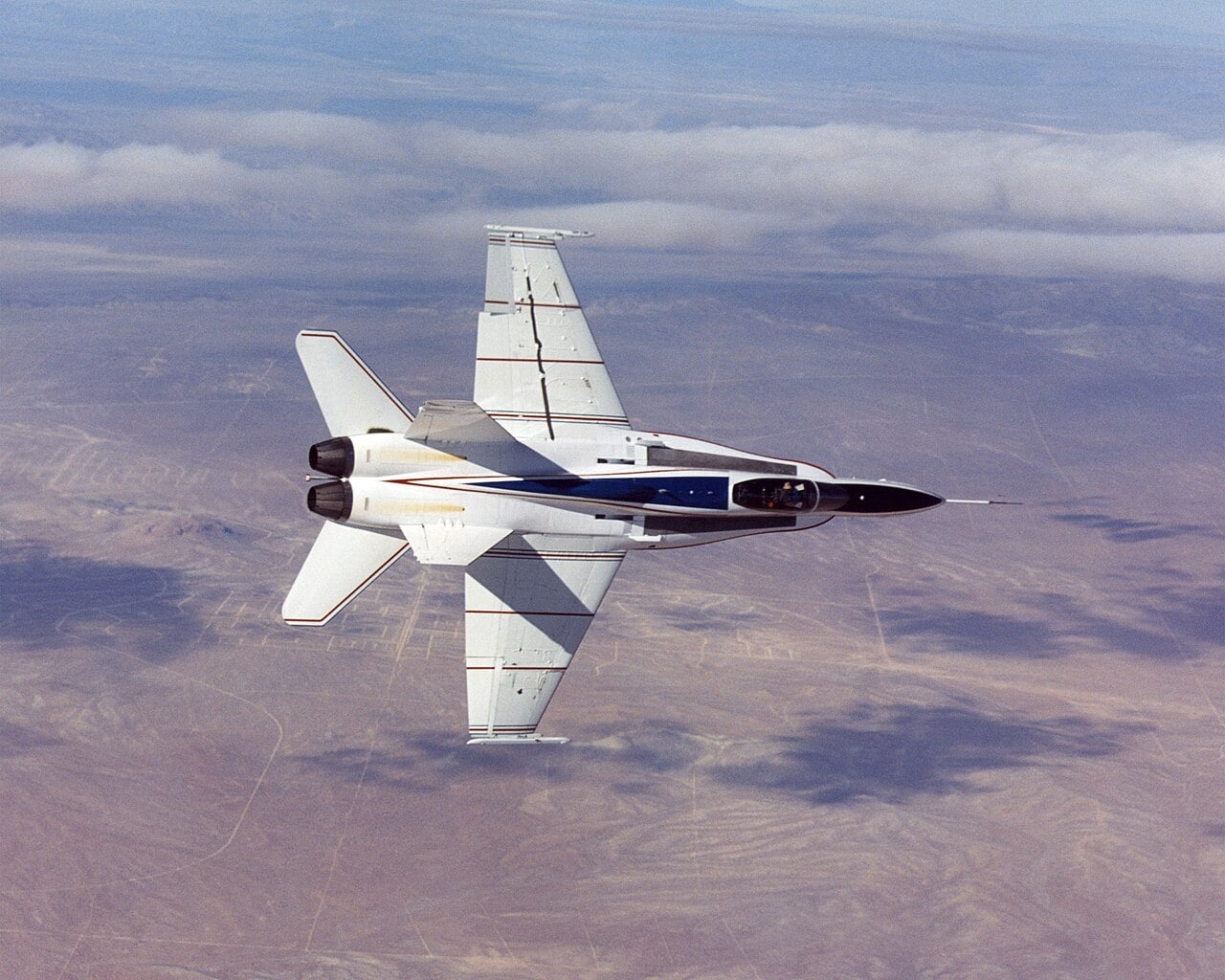
NASA has not named the experiments. But it has a long track record in this field, and two lines of research stand out. The first is shape change: wings that twist or morph instead of relying on hinged ailerons and flaps. NASA flew that idea on the X-53 Active Aeroelastic Wing, a modified F/A-18 Hornet that first flew on 15 November 2002 and used aerodynamic loads to twist its flexible wings, a modern take on the Wright brothers’ wing-warping.
The second is active flow control: steering an aircraft with jets of air that change the pressure over its surfaces, with no moving control surfaces at all. DARPA is pursuing that on the uncrewed X-65 CRANE. A crewed testbed that can carry such hardware, and change it quickly, would let NASA put a pilot in the loop.
Not the Blackbird, After All
The tease had sent the aviation internet into a spin. NASA’s SR-71A, NASA 844, vanished from its spot at the Armstrong Flight Research Center in September, and speculation ran wild that it might return to the air. Asked about it on NASASpaceFlight’s podcast, Isaacman joked that NASA was “just cleaning it” because it had become dusty in the desert.
Isaacman himself is no desk-bound administrator. He flies a privately owned MiG-29 and once owned a contract aggressor company, and he has made new X-planes a priority for the agency. In his own post on X, he promised there would be more.
Where to See More
NASA’s Max Power airshow runs at Kennedy Space Center from 6 to 8 November, with the agency’s research aircraft on display, including the X-59 quiet supersonic jet, which flew in from Armstrong last week. Whether NASA shows anything more of the X-70 there is anyone’s guess.
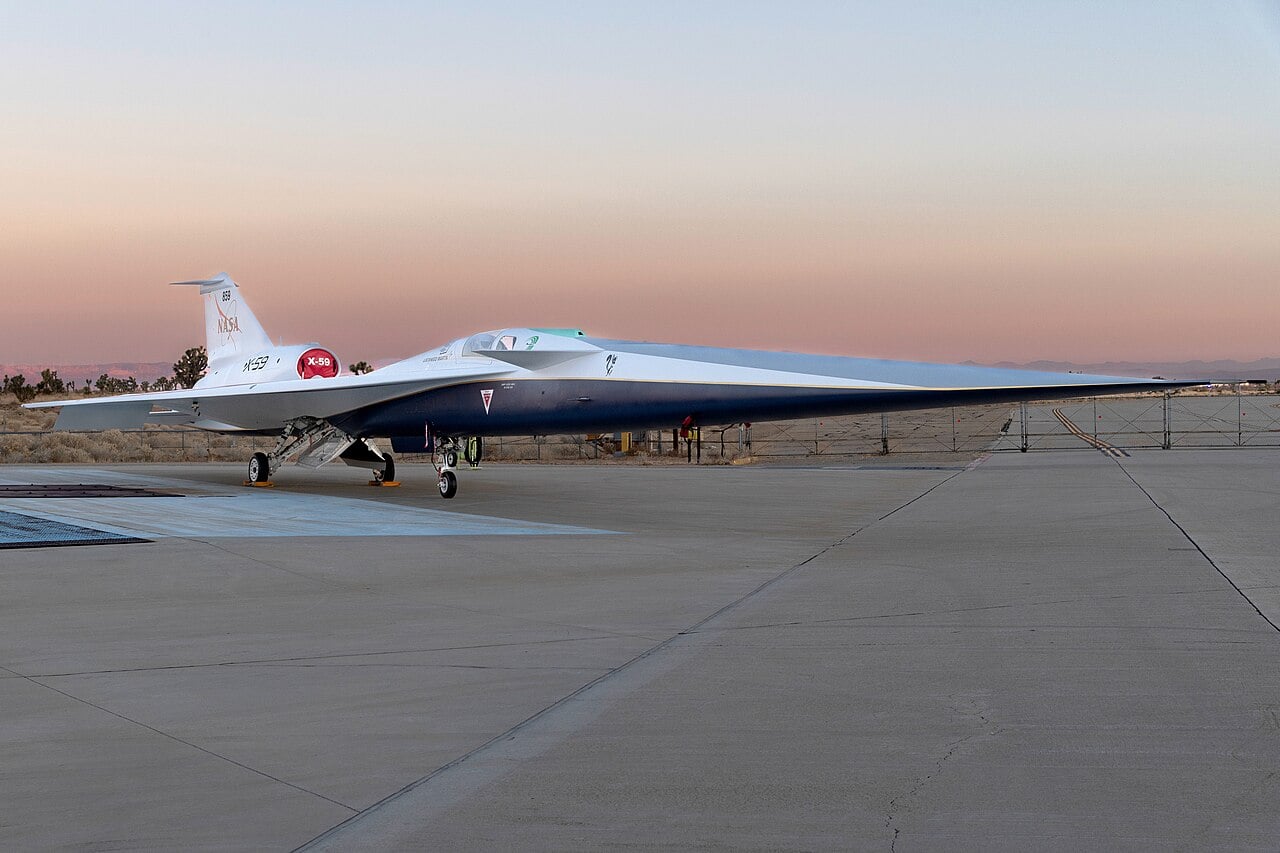
For now the X-70 Fractal is a name, a spec sheet and a silhouette in the fog. But a crewed jet designed to have its controls rewired between flights is exactly the kind of tool that turns paper aerodynamics into flying hardware. Two years is not long to wait.
Sources: NASA, TWZ, The Aviationist, NASASpaceFlight


0 Comments