
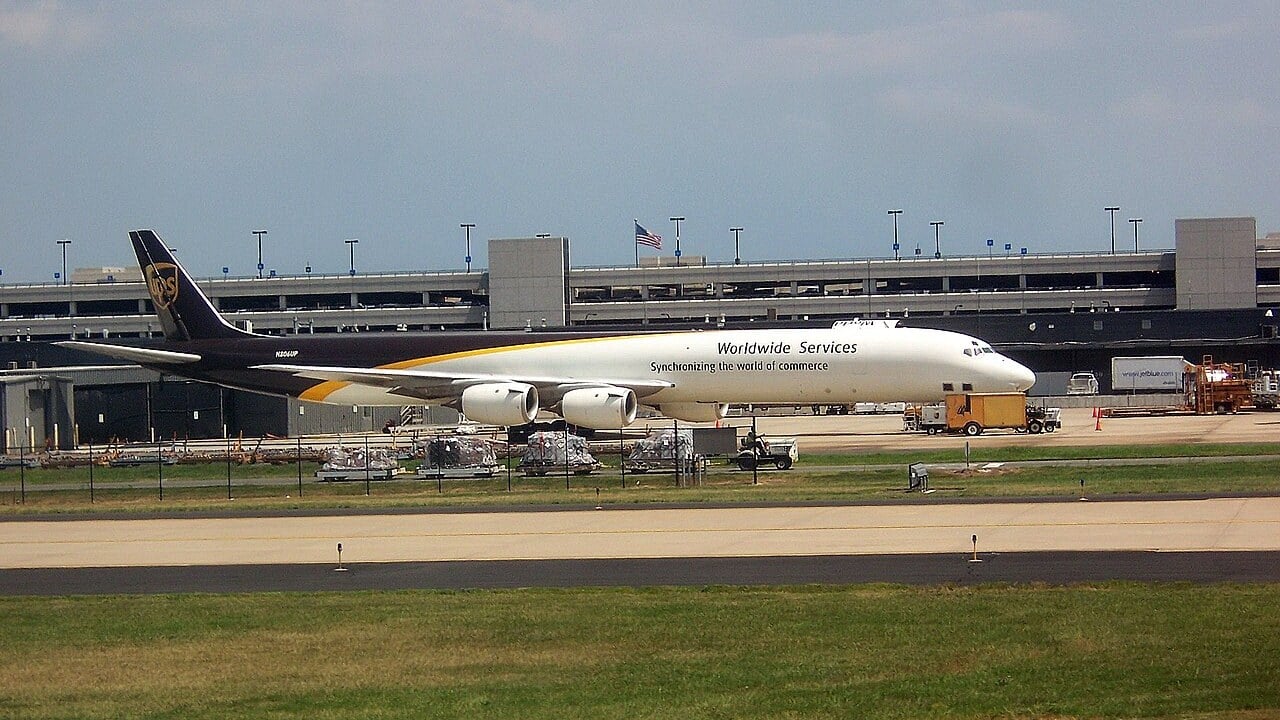
In the spring of 1979, one of the most important engines of the jet age was two weeks from being shelved. GE and France’s Snecma had spent five years and, according to GE, more than 500 million dollars on the CFM56 without winning a single airline order. Then United Airlines ordered new engines for its old Douglas DC-8s.
That order, and the ones that followed from Delta and Flying Tiger Line, did not buy a single new aeroplane. It bought a second life for old ones. It was re-engining, the most expensive way to make a first-generation jet quiet enough to keep flying, and the route that most operators of noisy jets could never afford.
Our story on hush kits showed how bolt-on mufflers got thousands of Boeing 727s, DC-9s and 737-200s past the 1999 Stage 3 deadline for about a million dollars an aircraft. It also noted that Europe’s hush-kit rule exempted aircraft that had been completely re-engined. This is the story of that exempt route: who could pay for it, and why.
Datos rápidos
- Qué es: Replacing an old jet’s engines with modern, quieter, more efficient ones
- Por qué: Meets noise rules and cuts fuel burn, unlike a hush kit
- DC-8 Super 70: 110 DC-8-60s converted with CFM56 engines in the 1980s; up to 23% less fuel
- KC-135R: More than 400 US Air Force tankers re-engined with the CFM56 (F108)
- UPS 727-100QF: 51 freighters re-engined with Rolls-Royce Tays; more than 500 million dollars
- Super 27: 727-200 conversion listed at 8.6 million dollars in 1999, against about 2.8 million for a hush kit
- EU rule: Regulation 925/1999 exempted aircraft fully re-engined with bypass ratio of three or more
Why a new engine beats a muffler
A hush kit attacks noise at the tailpipe. It mixes the fast, hot exhaust of a low-bypass engine with cooler air before it reaches the outside world, and lines the tailpipe with sound-absorbing material. The engine underneath stays the same, and so does its fuel burn. Usually it gets slightly worse, because the extra hardware adds weight and drag.
A new high-bypass turbofan solves the problem at the source. Its big fan pushes a large mass of slower air around the core, so the exhaust is quieter by design, and the same physics that makes it quiet also makes it more efficient. That is the whole case for re-engining in one sentence: you pay for noise, and you get fuel savings thrown in.
The catch is the price. New engines, new pylons, new nacelles, rewired systems and a fresh certification campaign cost many times more than a hush kit. Someone has to fly the aircraft long enough, and hard enough, to earn that money back.
The DC-8 Super Seventies
The first big civil programme was the DC-8 Series 70. Cammacorp was set up in 1979 to manage it, with CFM International, McDonnell Douglas and Grumman Aerospace as partners. Grumman built the new engine pods, cowlings and pylons, and the DC-8-61, -62 and -63 became the DC-8-71, -72 and -73.
The results were dramatic. The CFM56-2 burned up to 23 per cent less fuel than the Pratt & Whitney JT3D it replaced, according to Flight International, and improved take-off, climb and range. United was the biggest customer, converting 29 of its DC-8-61s. In all, 110 aircraft were converted, and Cammacorp was wound up once the last one was finished.
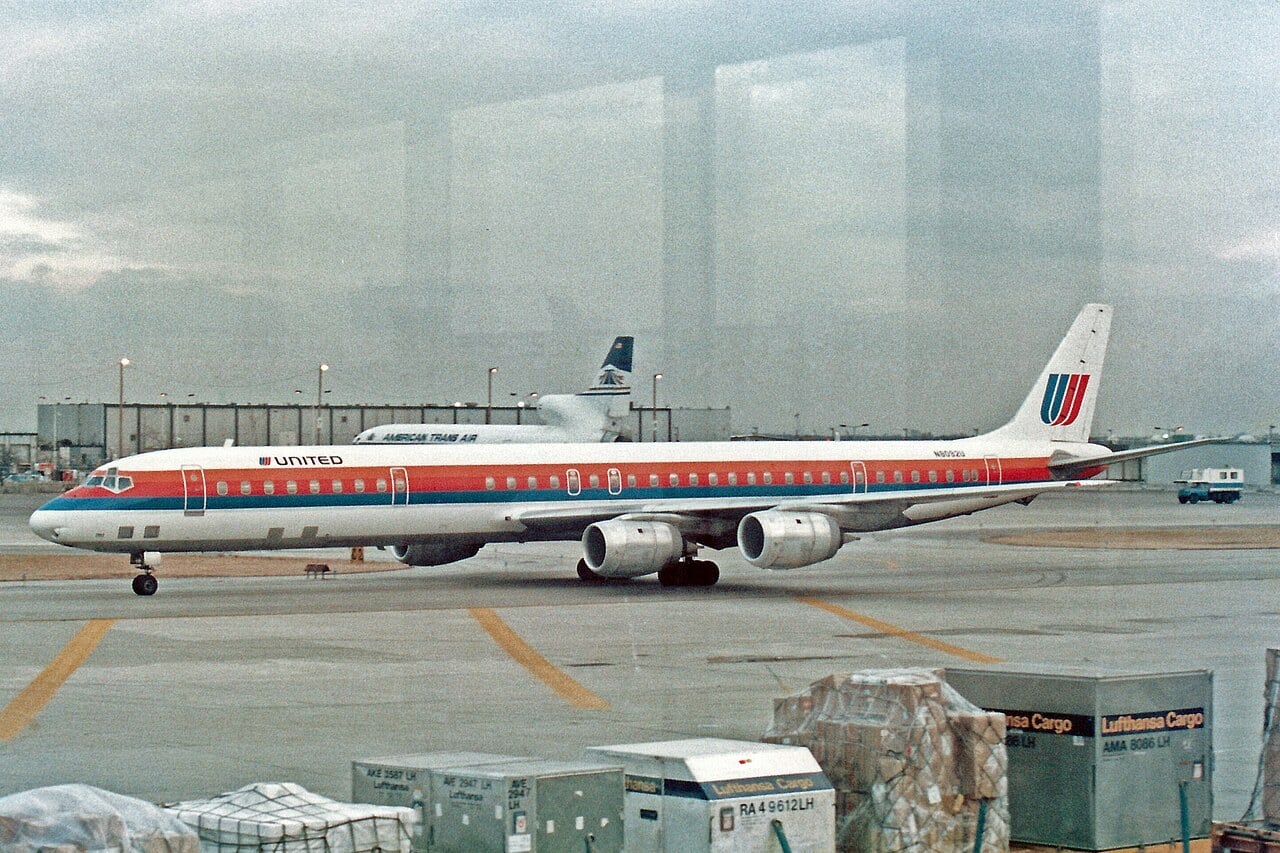
The Super Seventies proved their worth for decades, mostly as freighters. UPS operated 49 of them in early 1997, and only decided to retire its last 44 DC-8s in 2009, four decades after many of the airframes were built.
A CFM56-powered DC-8-73 taking off from Shannon, one of the Super Seventies that flew on for decades after conversion.
The tanker that saved the engine
The airliner programme was only half the story. Boeing offered a CFM56-powered 707, the 707-700, from 1978, but no airline bought it and the programme was dropped in 1980. Then the US Air Force picked the same engine for its KC-135 Stratotanker fleet in January 1980.
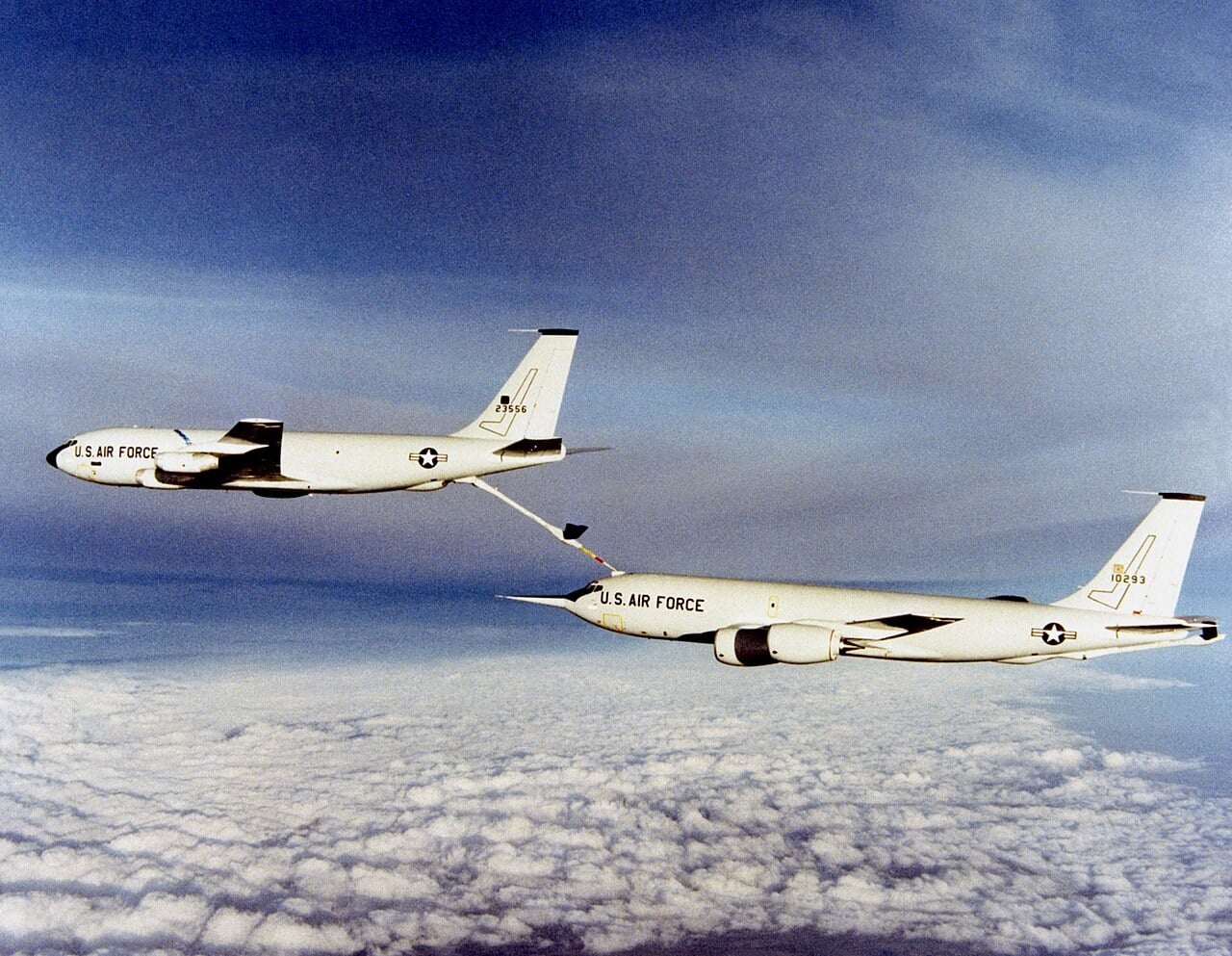
The KC-135R, whose CFM56 engines carry the military designation F108, became by far the largest re-engining programme of all, with more than 400 aircraft converted. The new engines cut fuel use by about 25 per cent and allowed tankers to offload considerably more fuel on long sorties. They also cut take-off noise sharply, a welcome change for anyone living near a tanker base.
El US Air Force could do what airlines could not. It planned to keep its tankers for decades, it flew them hard, and its budget did not depend on next year’s ticket sales. That pattern would repeat itself again and again.
UPS and the Quiet Freighter
The most famous re-engined trijet was the Boeing 727-100QF, the Quiet Freighter, developed for UPS by Dee Howard. Its Pratt & Whitney JT8Ds were replaced with Rolls-Royce Tay turbofans. In January 1997, Flight International reported that UPS had re-engined the last of its 51 727-100QFs and had become the first major North American carrier with an all-Stage 3 fleet, three years ahead of the deadline.
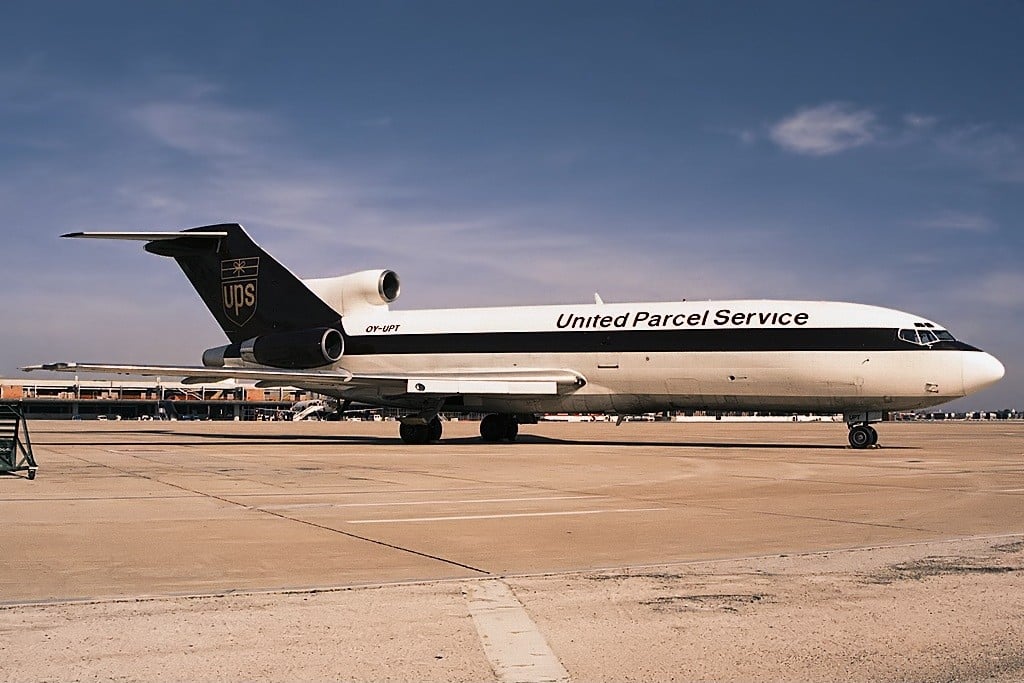
The bill came to more than 500 million dollars, according to Flight International, and the reason UPS paid it was the shape of its business. The 727s flew mostly at night, when airport noise limits bite hardest. A hush-kitted jet that just scraped through Stage 3 was a liability on a night network. A Tay-powered one was not.
UPS Airlines’ film of its 1997 to 2001 passenger charter operation. Flight International reported in 1997 that four Tay-powered Quiet Freighters were being fitted with convertible interiors for it.
Dee Howard later used the same conversion on a corporate 727-100, but the Quiet Freighter stayed a niche. When UPS announced in 2007 that it would retire its last 727s, local reporting recalled that the original aircraft had been among the noisiest in the United States until UPS fitted them with Rolls-Royce engines.
The 727 and 707 hold-outs
For the 727-200 there was a halfway house. Valsan Partners certificated a conversion in 1988 that replaced the two outer engines with more efficient JT8D-217 or -219 engines and hush-kitted the centre one. Rohr relaunched it in 1996 as the Super 27, and BFGoodrich took it over. The list price was 8.6 million dollars, against about 2.8 million for a comparable hush kit.
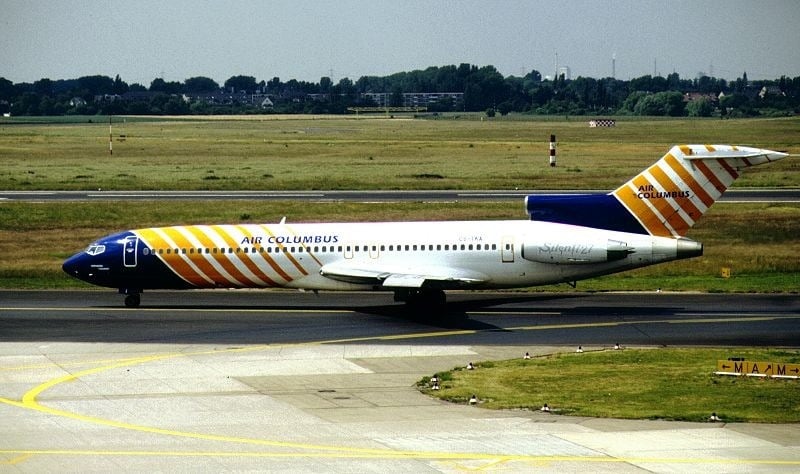
BFGoodrich argued the numbers worked once you subtracted the hush kit an operator would otherwise buy, and the resale value of the two old engines. That left about 4 million dollars, which the company said was paid back by fuel savings of 10 to 12 per cent and extra range and payload.
By mid-1999 Super 27 sales stood at 63 aircraft. That was a respectable figure for a modification, and a tiny one next to the thousands of hush kits sold. For the 707, Flight International observed in 1997 that only military customers had so far had the money for large-scale re-engining. Omega Air planned a civil 707 conversion with JT8D-219s that year. Its Seven Q Seven venture with Pratt & Whitney later won a contract to re-engine the Air Force’s E-8C Joint STARS fleet. The first re-engined E-8C flew in December 2008. Once again, the customer with deep pockets was military.
Safran tells the story of the CFM56, the engine that re-engining programmes rescued and that went on to become the world’s best-selling jet engine.
The exemption Europe wrote
When the European Union adopted its hush-kit rule, Regulation 925/1999, it targeted aircraft with engines of bypass ratio below three that had been modified to pass Chapter 3. Aircraft completely re-engined with engines of bypass ratio three or more were exempt. The logic was the one GE had seen two decades earlier: a new engine cuts noise and fuel burn together, while a muffler only moves the noise numbers.
The rule was later repealed after a long dispute with the United States, but the economics never changed. Re-engining worked when one owner kept a large fleet for a long time and flew it hard: an air force with tankers, a parcel carrier with a night network, an airline with dozens of DC-8s. Everyone else bought a hush kit, or a new aeroplane, and the quiet old jets that survive today are mostly the ones somebody could afford to give a new heart.
Sources: Flight International (Cammacorp, December 1996; UPS all-Stage 3 fleet, January 1997; “Quiet life”, July 1997; Super 27, July 1999; Dee Howard corporate Tay 727, 1995), GE Aerospace (CFM56 launch history, 2019), Pratt & Whitney (Joint STARS re-engining release, January 2009), Post & Parcel (UPS 727 retirement, March 2007), Council Regulation (EC) No 925/1999
Header photo: Charles from Port Chester, New York / Wikimedia Commons, CC BY 2.0
0 Comments