
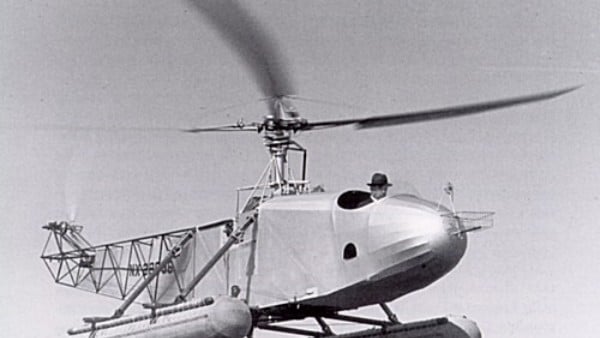
On 14 September 1939, two weeks after war broke out in Europe, a 50-year-old engineer in a business suit and a felt hat climbed into an open frame of steel tubes in Stratford, Connecticut. Ropes tied the machine to the ground. When Igor Sikorsky opened the throttle, it lifted a few feet, shook, and hung there.
It did not look like much. But the Vought-Sikorsky VS-300 was about to settle an argument that had defeated inventors for decades: what a practical helicopter should look like. The answer it found, one big main rotor and a small rotor at the tail, is the layout that most helicopters still use today.
Datos rápidos
Aeronave: Vought-Sikorsky VS-300
Diseñador: Igor Sikorsky
First tethered flight: 14 September 1939
First free flight: 13 May 1940
Motor: Franklin piston engine, 75 hp at first, later 90 hp and 150 hp versions
Main rotor: Three blades, 30 ft (9.1 m) diameter
Registro: 1 hr 32 min 26.1 s endurance on 6 May 1941, beating the Focke-Wulf Fw 61
Hoy: Retired in 1943 to the Henry Ford Museum, Dearborn, Michigan
A designer who had already changed aviation once
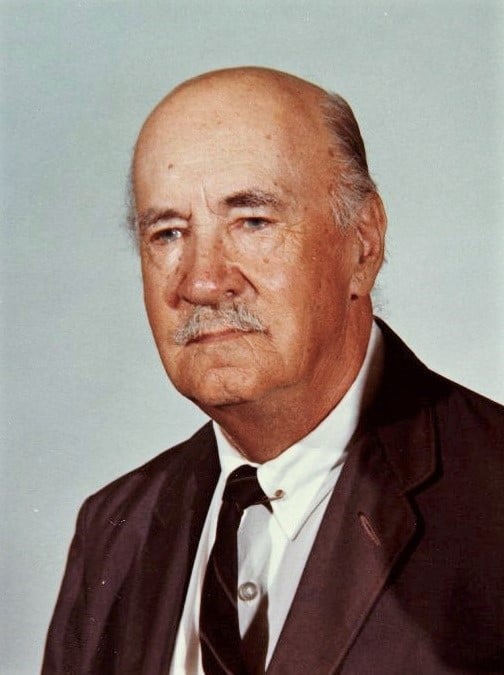
Sikorsky had built some of the world’s first four-engine aircraft in Russia before the First World War, including the giant Ilya Muromets bomber, and had then emigrated to the United States, where his company made its name with big flying boats. He had tried to build helicopters as a young man in Kyiv and failed. Now, with the flying-boat business winding down, he went back to his first dream.
He was under no illusion that it would be easy, and he did his own test flying.
Getting it to fly in the right direction
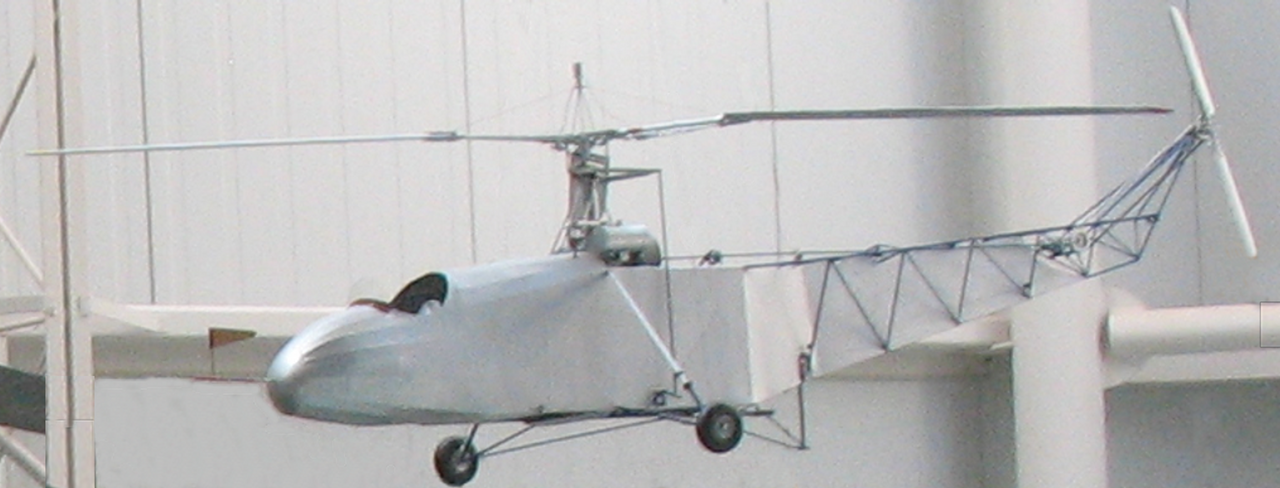
The early VS-300 could rise and hover, but controlling it was another matter. Sikorsky experimented constantly. He added a vertical tail fin, then removed it because it did nothing useful. For a time he locked the cyclic control and fitted two small rotors on outriggers behind the tailboom to handle pitch and roll.
The first untethered flight came on 13 May 1940. In 1941 a new cyclic control system arrived, the two extra tail rotors went away, and the classic single main rotor plus anti-torque tail rotor was in place. On 17 April 1941 Sikorsky took off from and landed on water using floats, and on 6 May 1941 he kept the VS-300 in the air for 1 hour, 32 minutes and 26.1 seconds, beating the endurance record of Germany’s Focke-Wulf Fw 61.
The VS-300 demonstrated in 1943 (Vertical Flight Society).
From test rig to lifesaver
The VS-300 was never a production aircraft; it was a flying laboratory. But it led directly to the Sikorsky R-4, the first helicopter built in quantity, delivered to the U.S. military during the Second World War, and from there to a long family of Sikorsky helicopters that includes today’s UH-60 Black Hawk. Sikorsky himself always saw the helicopter’s purpose in one particular job.
Igor Sikorsky’s first successful helicopter, from The Henry Ford’s Innovation Nation.
Where to see it
Sikorsky retired the VS-300 in 1943 and it went to the Henry Ford Museum in Dearborn, Michigan, where it still sits with other machines that changed how people travel. It is a strange-looking thing next to a modern helicopter: no cabin, no doors, a tangle of tubes and a seat in the open air. Look at the rotor and the little propeller on the tail, though, and you are looking at the shape of almost every helicopter that has flown since.
Igor Sikorsky, father of the helicopter (Sigma Documentaries).
Sources: Wikipedia (Vought-Sikorsky VS-300), Igor I. Sikorsky Historical Archives, Igor Sikorsky, The Story of the Winged-S, The Henry Ford
0 Comments