
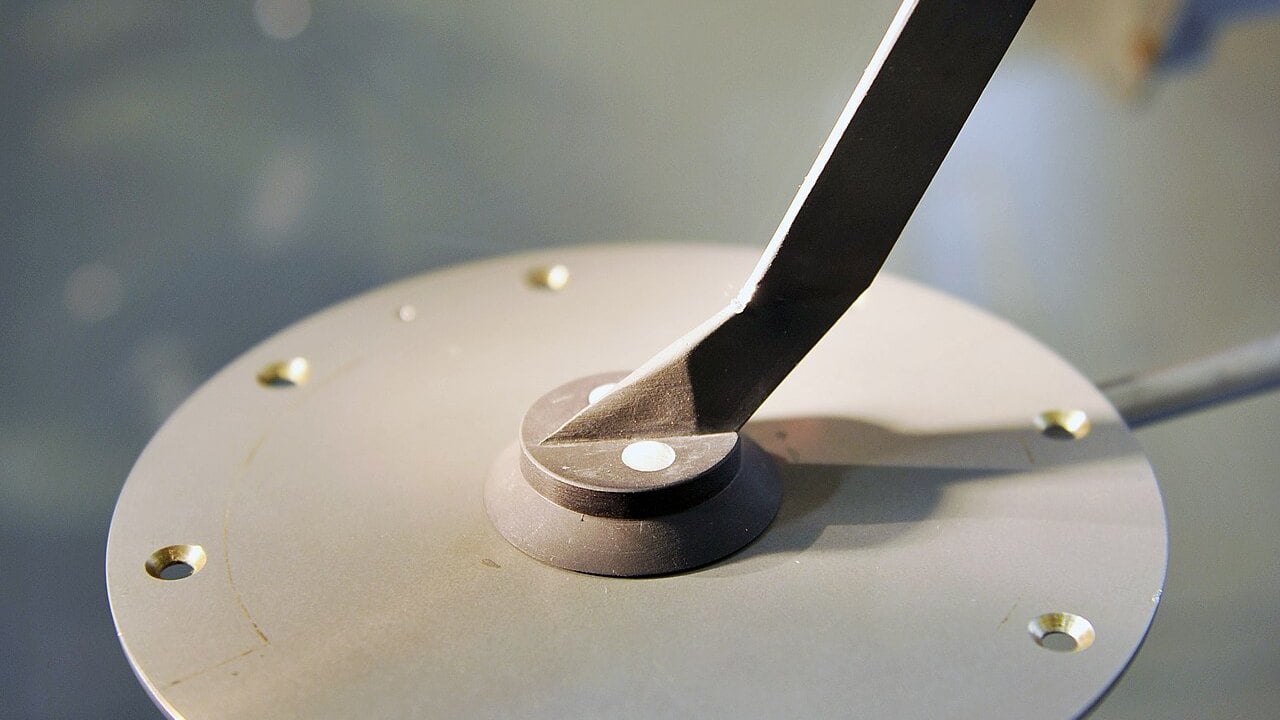
A wing does not stall because the aircraft is slow. It stalls because the angle between the wing and the oncoming air, the angle of attack, has passed a critical value. Speed is only a rough proxy. That is why every certified aeroplane has to warn its pilot before the wing gives up, and why the hardware that does it ranges from a small metal tab on a trainer’s wing to flight computers that, in normal law, simply refuse to let an Airbus stall.
This is how stall warning systems work: what they sense, how they shout, and what happens when a pilot does not listen.
Datos rápidos
- Stall: Occurs when the wing exceeds its critical angle of attack, not at a fixed speed
- Transport rule: 14 CFR 25.207: warning must begin at least 5 knots or 5% above the stall identification speed, whichever is greater
- Sensores: Angle of attack vanes on large aircraft; leading-edge tab or pressure sensor on light aircraft
- Stall horn: Aural warning triggered by a tab or pressure switch on the wing
- Stick shaker: Vibrates the control column to imitate natural pre-stall buffet
- Stick pusher: Pushes the column forward automatically at a set angle of attack
- Airbus normal law: Alpha prot, alpha max limit and alpha floor thrust protection
What the rules demand
Certification rules require a warning that comes early enough to matter. For large transport aircraft, the US rule is 14 CFR 25.207. It says stall warning must begin at a speed exceeding the speed at which the stall is identified by at least five knots or five percent, whichever is greater, when the aircraft is slowed at no more than one knot per second. Once it starts, the warning has to keep going until the angle of attack is reduced again.
Note the two options. Some aircraft warn naturally: as the airflow starts to separate from the wing, the turbulent wake shakes the tail and the pilot feels buffeting through the controls. Many others need a device. And a warning light alone does not count, because a pilot busy looking outside would miss it.
Not every aircraft has a device at all. The FAA’s Airplane Flying Handbook points out that stall warning devices may include an aural alert, lights or a stick shaker, but that most vintage aircraft and many light-sport and experimental types have none, relying on aerodynamic buffet instead.
Sensing the angle of attack
The heart of most stall warning systems is a sensor that measures angle of attack directly. On airliners and military transports this is usually a vane: a small fin mounted on the side of the nose that swings into line with the local airflow like a weathervane. Its angle is converted into an electrical signal and fed to a computer.
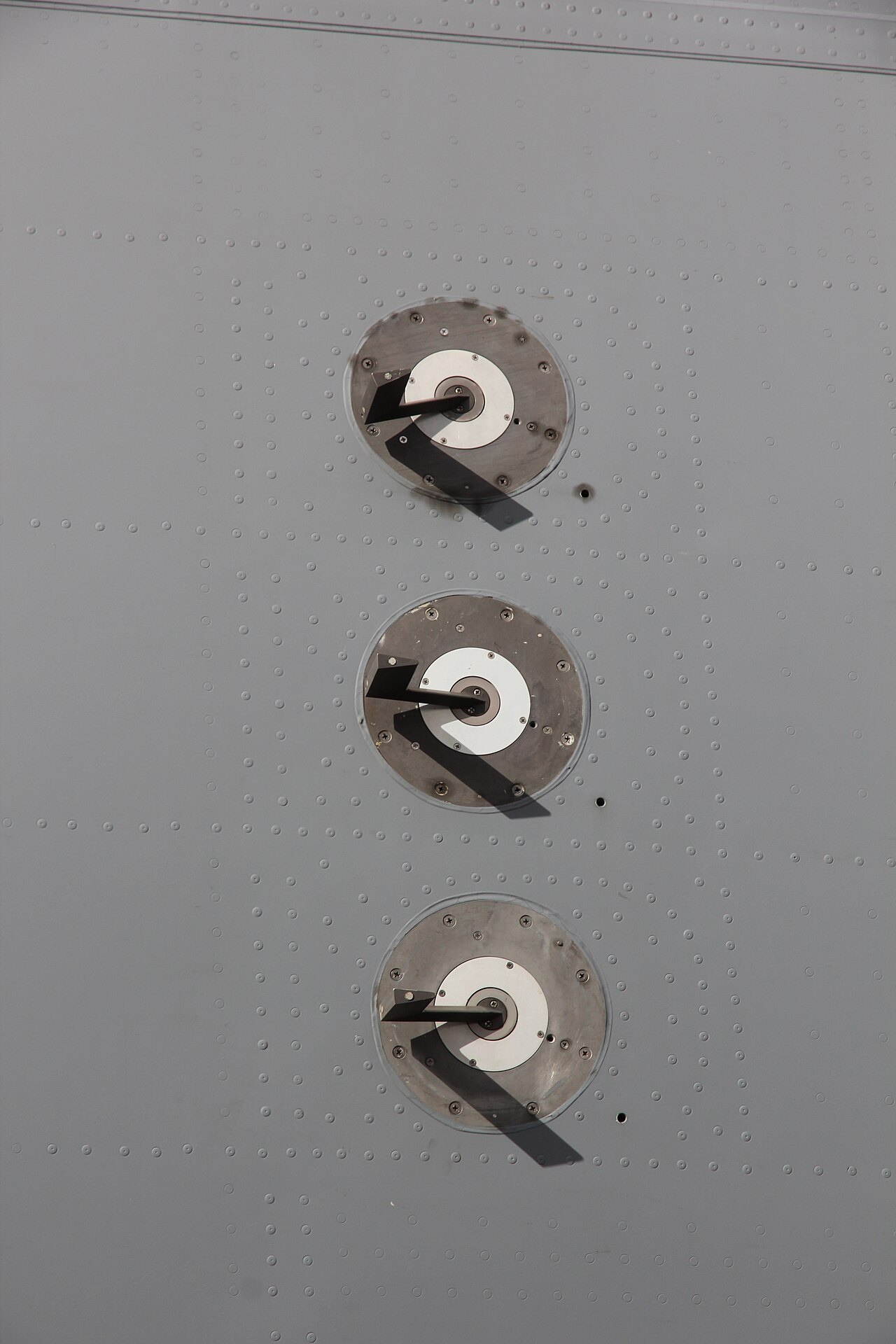
Large aircraft carry several of them for redundancy. The C-17 Globemaster III, for example, has a stack of three vanes on the side of its forward fuselage. Their data is only as good as their condition: the FAA lists unheated probes and vanes, poor calibration and wing contamination among the things that can make angle of attack information unreliable, and a blocked or damaged sensor can make the whole stall warning system misbehave.
The computer does not work from the vane alone. Stall warning systems often take inputs from a broad range of sensors and systems; a stick pusher system, for example, continuously checks airspeed, load factor and flap setting against angle of attack. The output then drives the warnings in the cockpit.
The light aircraft stall horn
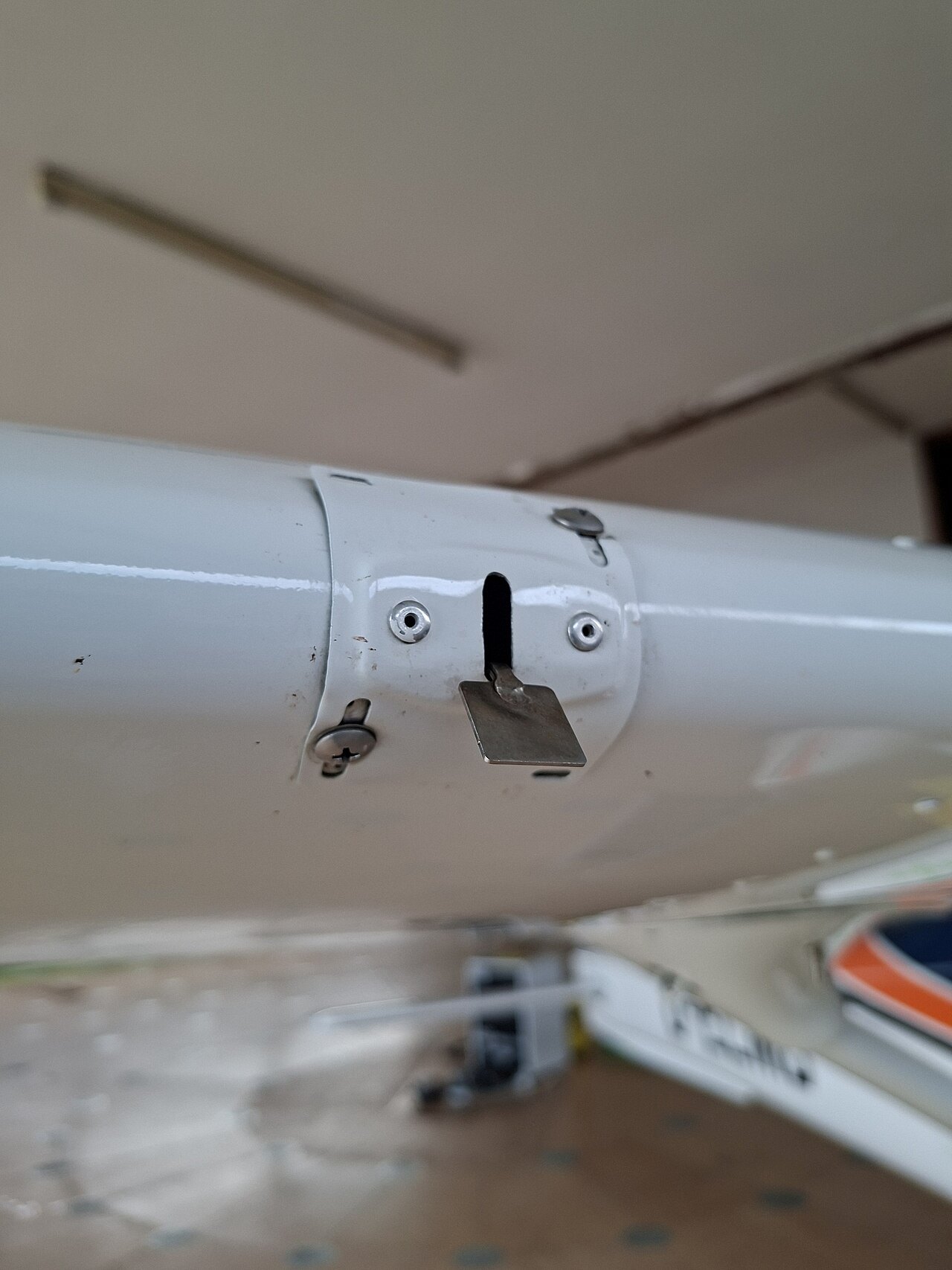
In a light aircraft, the system can be beautifully simple. The most basic stall warning horn uses either a pressure sensor or a movable metal tab on the wing’s leading edge that operates a switch. As the angle of attack rises towards the stall, the airflow at the leading edge changes, the tab is deflected, the switch closes, and a horn sounds in the cockpit.
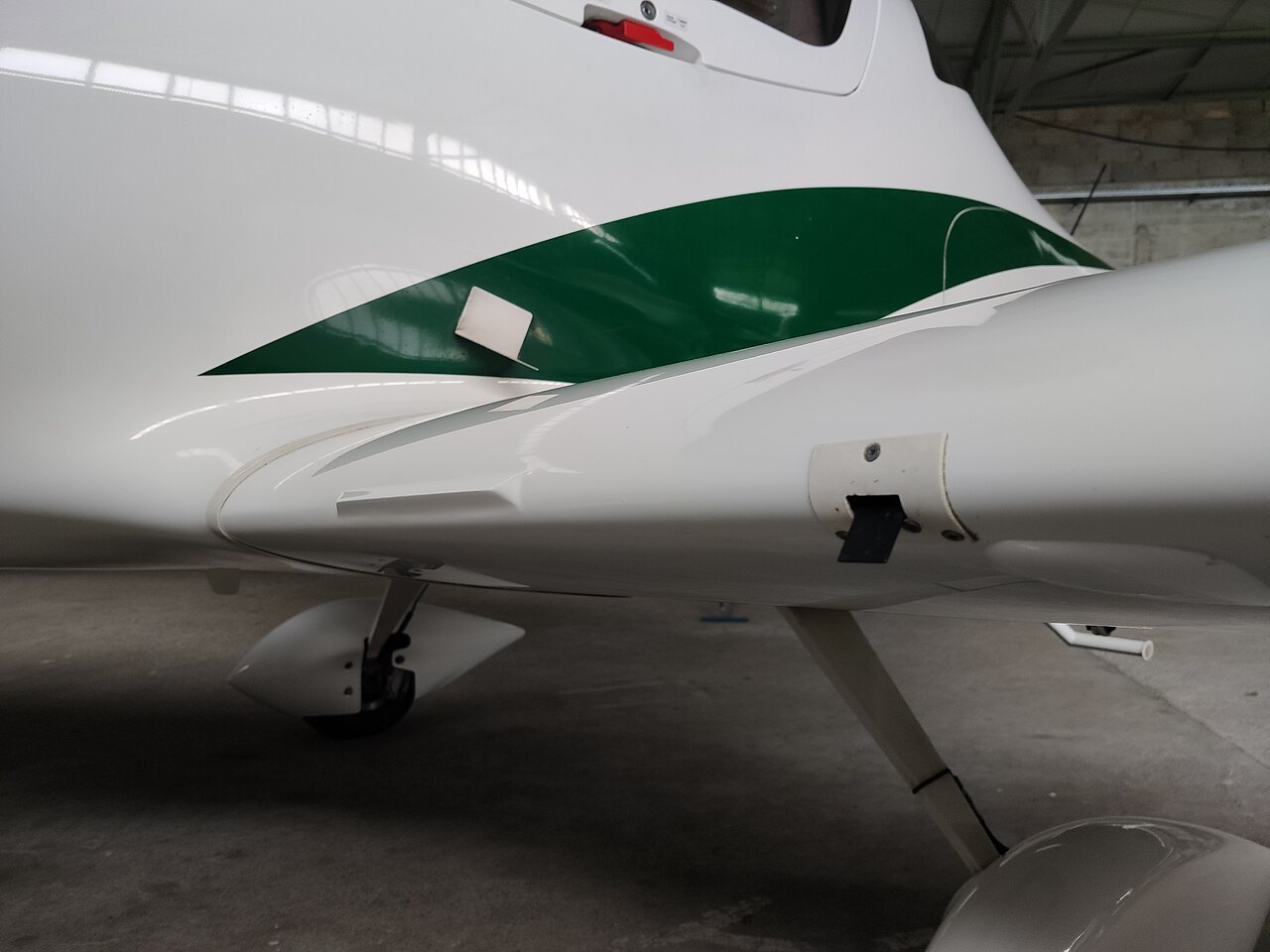
Because the tab responds to the airflow rather than to airspeed, the horn works at any weight and in any manoeuvre. That matters, because a published stall speed is valid only in unaccelerated, coordinated 1G flight at one particular weight and centre of gravity. In a steep turn, the wing can stall well above the number on the airspeed indicator, but the tab still responds to the angle of attack.
A tutorial on the stall warning system of the Diamond DA40 NG light aircraft.
In flight training, the stall warning is part of the lesson. FAA guidance for slow flight has student pilots fly about five to ten knots above the stall speed, just fast enough to keep the warning silent, and to react at once if it sounds. Newer light aircraft increasingly add a dedicated angle of attack indicator, which the FAA has been promoting to reduce loss-of-control accidents.
The stick shaker
Big aircraft created a problem. On very large jets, on fly-by-wire aircraft and on some aircraft with complex tail designs, the natural buffet never reaches the pilot’s hands, either because the turbulent air misses the elevator or because the control system does not feed the vibration back. Pilots lost one of their most reliable cues.
Boeing’s designers were the first to solve it with a stick shaker, a device that rapidly and noisily vibrates the control column, imitating the buffet a smaller aircraft would produce. Stick shakers were being developed as early as 1949. Today they are found on the Boeing 737 and 767, the Embraer E-Jet E2 family and business jets such as the Pilatus PC-24, usually triggered by the same computer that sounds an aural alert.
Testing the stick shaker and stick pusher of an Embraer 145 regional jet’s stall protection system.
The stick pusher
Some aircraft go one step further. A stick pusher, sometimes called a stall identification system, physically pushes the control column forward when the angle of attack reaches a set value, lowering the nose without waiting for the pilot. It normally acts after the stick shaker has given the crew a chance to recover on their own.
Pushers exist because some designs cannot meet stall-handling requirements through aerodynamics alone, or are vulnerable to a deep stall. That danger became clear in 1963, when the prototype BAC One-Eleven was lost during stall testing: the wake of the stalled wing blanked the T-tail’s elevator. Production One-Elevens received a combined stick shaker and pusher. The Short Belfast freighter, accepted by the RAF with a marginal nose drop at the stall, needed a pusher before it could fly with a civil operator.
A pusher firing when it should not would be dangerous too. SKYbrary notes that pushers are typically inhibited during take-off rotation and the landing flare, and that pilots can override them, either by overpowering the push or with a cutout switch, usually on the control column.
Airbus: the aircraft that will not stall
Fly-by-wire Airbus airliners take a different approach. In normal law, the flight control computers protect the aircraft directly. When the angle of attack rises past a threshold called alpha prot, the protection engages and limits the angle of attack the sidestick can command, up to a hard limit called alpha max. Airbus tells crews that in an emergency manoeuvre they can rely on it and apply full back stick as necessary.
A separate function, alpha floor, sits in the autothrust system. If the angle of attack approaches the maximum, it commands take-off/go-around thrust regardless of where the thrust levers are, giving the aircraft energy to climb away. Airbus tunes alpha prot, alpha max and the alpha floor trigger in flight testing after first establishing the real stall angle of the aircraft.
The catch is that these protections depend on valid air data. If sensors fail or disagree, the aircraft can drop into alternate law, where high angle of attack protection may be lost. Airbus is explicit: should any stall indication appear, and particularly a stall warning, the crew must immediately apply the stall recovery procedure, because it may mean the aircraft has reverted to a law without protection.
A simulator walk-through of the Airbus A320’s normal law protections, including high angle of attack protection.
Hardware is only half of it
No stall warning system flies the aircraft. SKYbrary’s list of accidents involving stall protection systems includes several in which crews did not recognise the stall or overpowered the stick pusher. The recovery is the same whatever the warning: reduce the angle of attack first, then level the wings and add power.
From a fluttering tab on a trainer’s wing to a computer that will not let an A320 exceed alpha max, every one of these systems answers the same question. How close is this wing to giving up? The pilot’s job is to listen the first time it speaks.
Sources: FAA Airplane Flying Handbook (FAA-H-8083-3C), 14 CFR 25.207 (eCFR), SKYbrary (Stick Pusher), Airbus (Tuning of Low Speed Protections), Wikipedia (Stick shaker; Stall (fluid dynamics); Flight control modes; Flight envelope protection)


0 Comments