
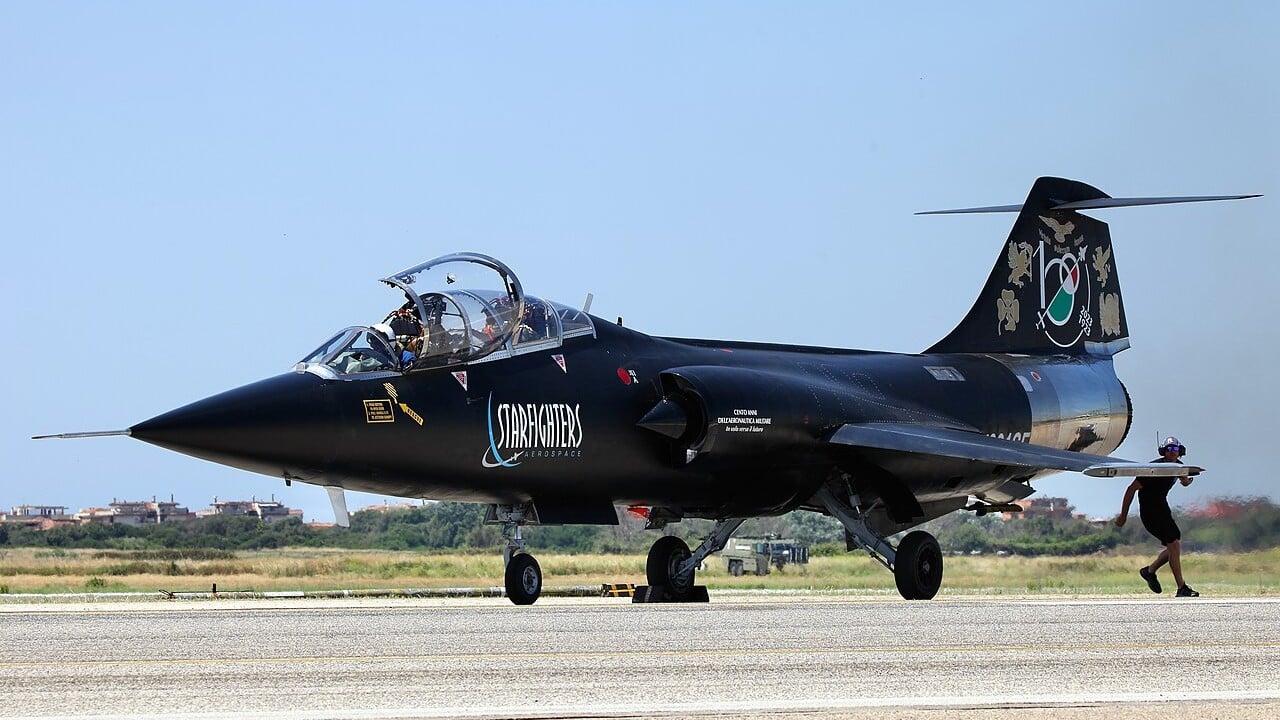
Somewhere between Midland, Texas, and the Jornada del Muerto desert in New Mexico lies some of the emptiest sky in the United States. Four organisations now want to turn it into a racetrack for aircraft flying faster than sound.
On Wednesday 18 November 2026, Midland Development Corporation, Midland International Air & Space Port, the New Mexico Spaceport Authority, which runs Spaceport America, and the F-104 operator Starfighters Space signed a letter of intent to “jointly define, advocate for, and develop a dedicated high-speed flight test corridor” between the two spaceports. The announcement went out on Business Wire at 9:00 a.m. Eastern time.
Datos rápidos
- Qué: Letter of intent to develop a high-speed flight test corridor and inland space launch range
- Firmado: Wednesday 18 November 2026
- Fogonadura: Midland Development Corporation, Midland International Air & Space Port, New Mexico Spaceport Authority (Spaceport America), Starfighters Space
- Ruta: Midland, Texas, to Spaceport America, New Mexico
- Longitud: Roughly 250 nautical miles (about 460 km), per the press release
- Objetivo: Repeatable supersonic and hypersonic test flights, sonic boom measurement, later launch and re-entry
- First user: Starfighters Space and its F-104s, which intend to fly the corridor first
- Estado: Non-binding; no funds committed; would need FAA approval
A speed lane across the desert
The proposed corridor would link two FAA-licensed spaceports across roughly 250 nautical miles (about 460 km) of what the partners describe as sparsely populated West Texas and southern New Mexico airspace. Some outlets, including AeroTime and KRQE, reported the distance as 250 miles; the press release itself gives nautical miles.
The idea is to give supersonic and hypersonic programmes a place where they can fly repeatedly and at high cadence: measuring sonic boom overpressure on the ground, developing procedures for fitting fast aircraft into normal air traffic, and generating real flight data for regulators who are still writing the rules.
The letter of intent is a first step, not a funded project. According to the release, it does not commit or transfer any money. The partners plan to work out a memorandum of understanding to define their roles, and any exchange of funds, services or facility access would need separate written agreements. The corridor itself would also need the FAA’s approval.
Why now: the overland supersonic ban is wobbling
Timing is everything here. Since 1973, US federal rule 14 CFR 91.817 has banned civil flight faster than Mach 1 over the United States. On 2 July 2026 the FAA published a proposal to replace that blanket ban with a measurable limit on how loud a boom may be at ground level. As we explained in our guide to the overland supersonic rule, that proposal is not yet law.
The partners say their letter of intent responds to that rulemaking and to a separate FAA request for public input on priority airspace for launch and re-entry and on expanding US spaceport capacity. Their pitch is that one well-placed corridor can serve both.
A boom limit only works if someone can measure booms reliably over real terrain, under real weather, with real aircraft. That is the gap a dedicated corridor would fill, and it is the same problem NASA’s quiet supersonic X-59 was built to study.
First in line: the Starfighters
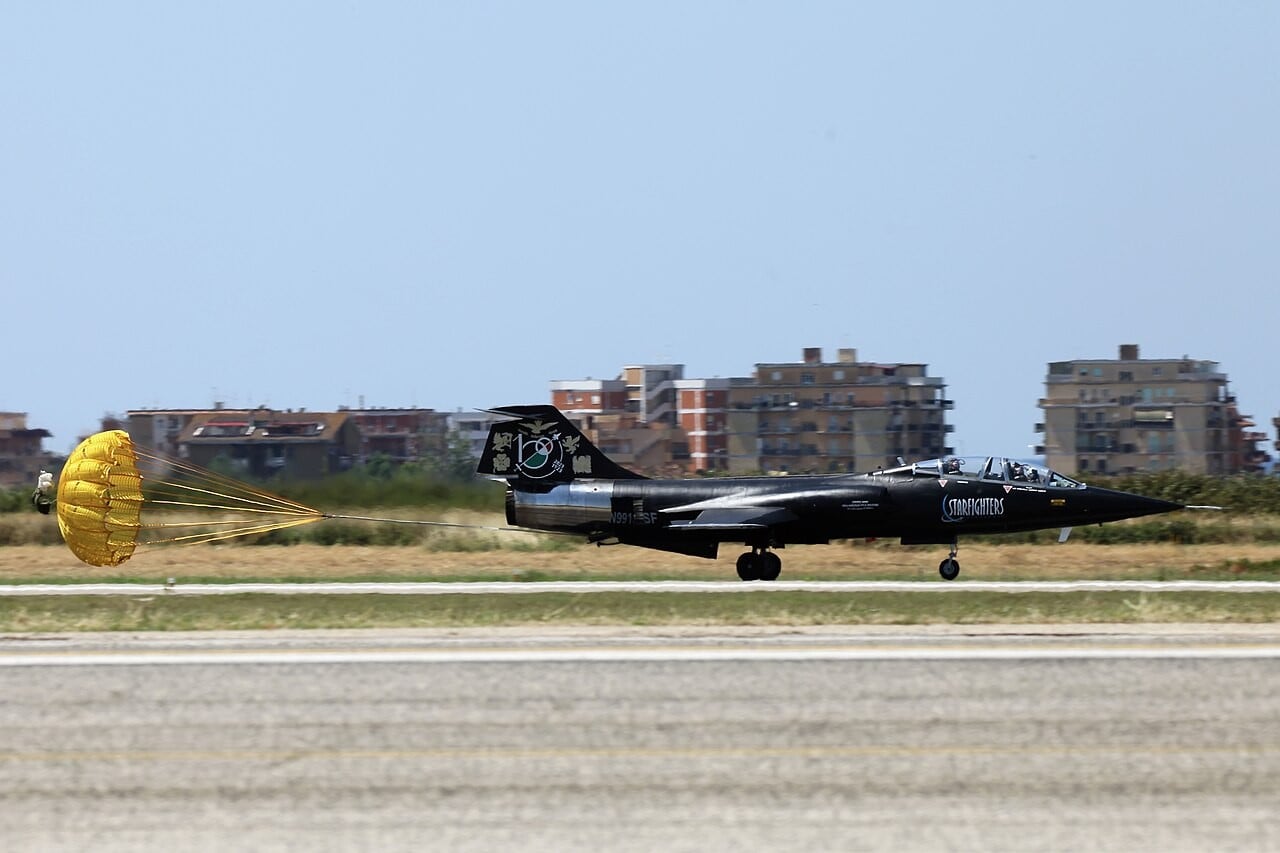
Starfighters Space operates a civil fleet of Mach 2-capable F-104 Starfighters from Kennedy Space Center in Florida and from Midland. According to the announcement, the company intends to fly the corridor first and hand the flight data to the FAA.
It is also developing an air-launch system, in which an F-104 carries a small rocket aloft before releasing it. In October we reported on its plan to captive-carry test the STARLAUNCH 1 vehicle under an F-104 in December. The partners say the corridor could eventually host that kind of launch work too.
Starfighters Space CEO Tim Franta put the case bluntly: regulators are moving, but there is nowhere obvious to fly.
Two spaceports, one sky
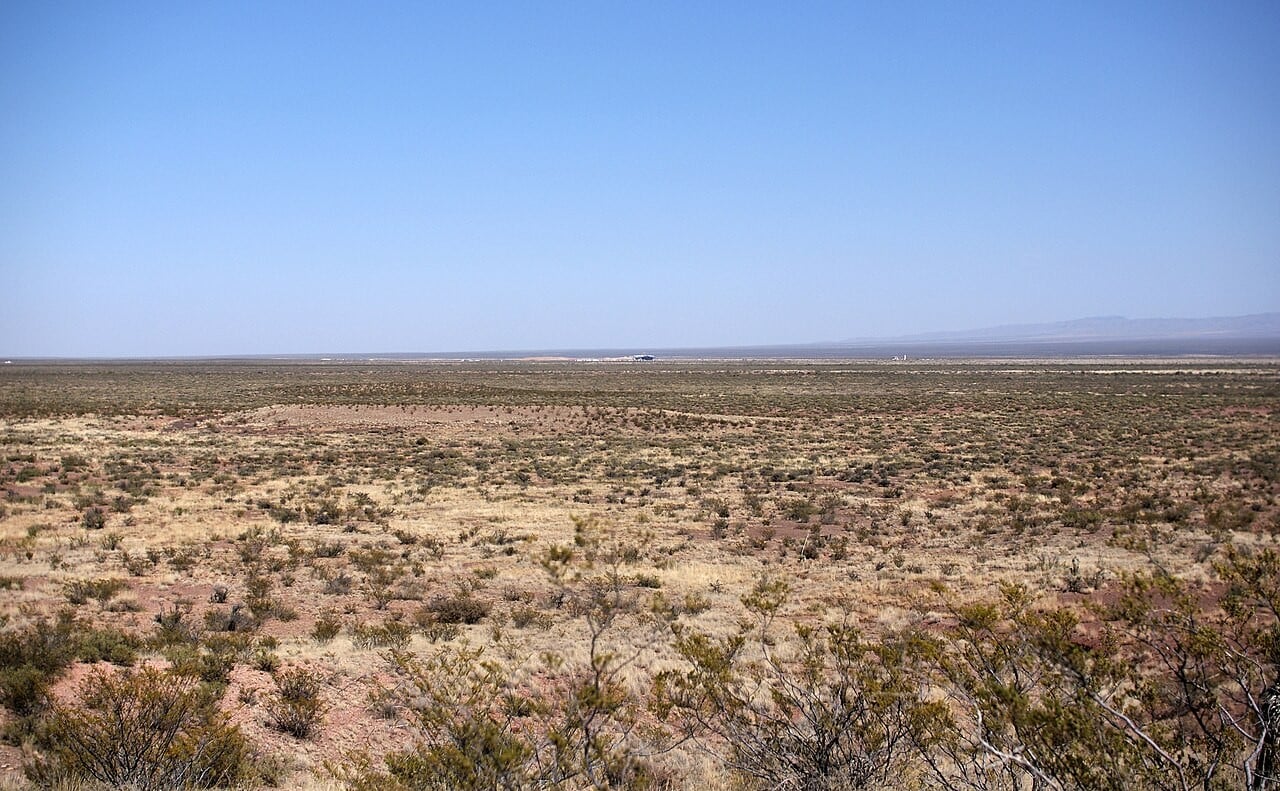
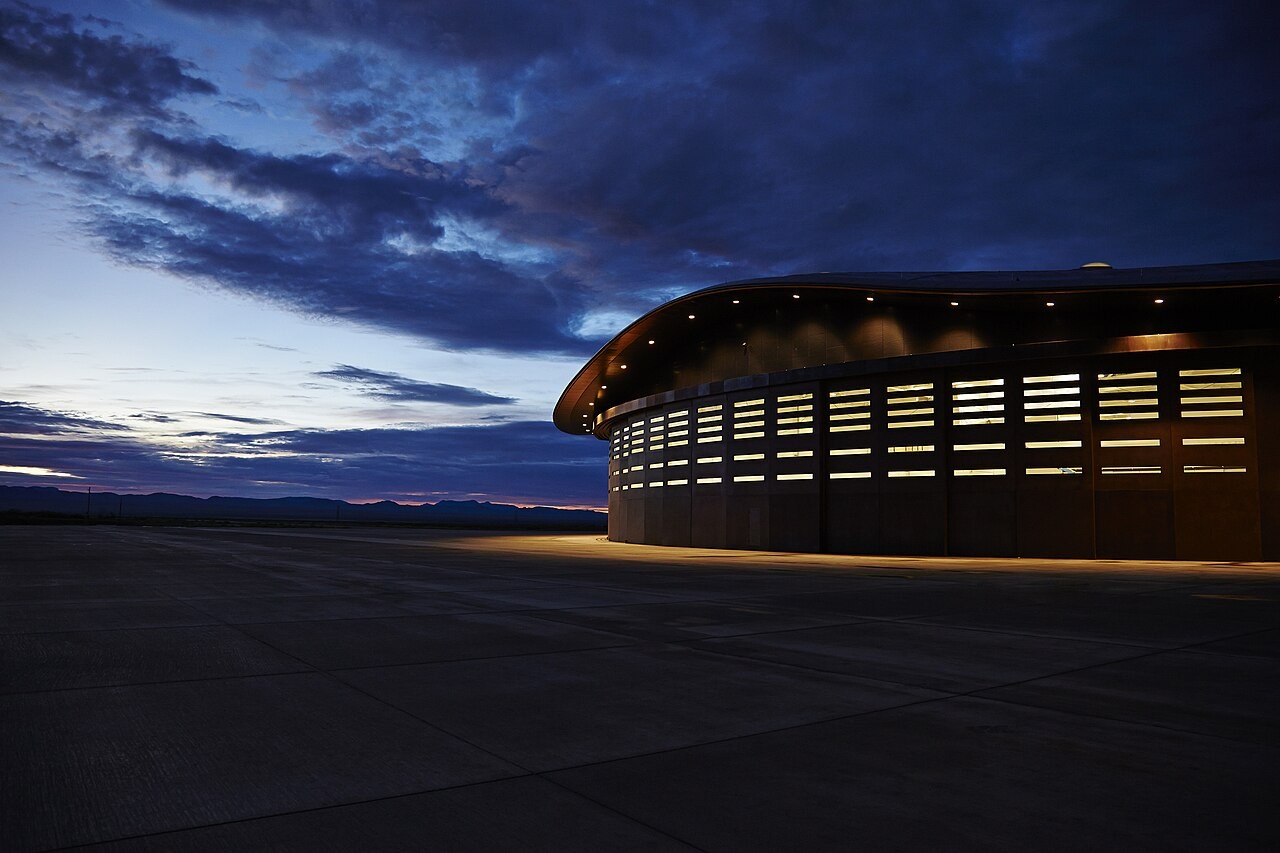
Midland International Air & Space Port, the airline airport midway between Midland and Odessa, was licensed by the FAA for commercial spaceflight in September 2014. Spaceport America sits on 18,000 acres of state land in the Jornada del Muerto basin, about 45 miles north of Las Cruces, and bills itself as the world’s first purpose-built commercial spaceport. It is the base Virgin Galactic flew from.
The partners’ longer-term ambition goes well beyond sonic booms. They say they hope the corridor will one day support operations to and above the Kármán line, including suborbital and orbital launch, air launch, point-to-point spaceflight and the re-entry and recovery of spacecraft.
Vintage Aviation News visits Starfighters at Kennedy Space Center, home of the company’s F-104 fleet.
For now it is a signature on a letter and a line drawn across a map of the desert. But if the FAA does replace the overland ban with a boom standard, somebody will have to prove what a legal boom sounds like. A pair of spaceports and a fleet of 1950s Starfighters have just volunteered.
Sources: Business Wire press release (18 Nov 2026, via Stock Titan), AeroTime, FLYING Magazine, KRQE, Wikipedia (Spaceport America; Midland International Air and Space Port)
Header photo: Colin Cooke Photo / Wikimedia Commons, CC BY-SA 2.0

0 Comments