
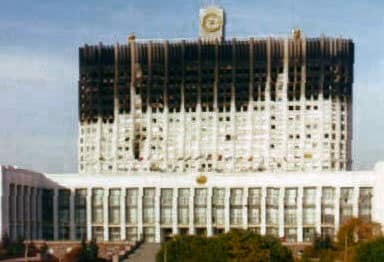
On the night of 21 September 1993, a decorated Soviet combat pilot climbed onto the podium of the Russian parliament and, at twenty-five minutes past midnight, swore himself in as President of Russia.
Five years earlier, the same man had been hanging in a parachute over the mountains of Pakistan, watching his burning attack jet fall away beneath him, having just been shot down by an American-built fighter.
Alexander Rutskoy had one of the strangest careers in modern military history. He was shot down twice in Afghanistan, made a Hero of the Soviet Union, elected Vice President of Russia, and then arrested for leading an armed revolt against the president who picked him.
Informations clés
Nom et prénom: Alexander Vladimirovich Rutskoy
Né: 16 September 1947, Proskuriv, Ukrainian SSR (now Khmelnytskyi, Ukraine)
Aircraft flown: Sukhoi Su-25 Frogfoot
Combat missions: 428 in Afghanistan
Abattu : 6 April 1986 by Mujahideen; 4 August 1988 by a Pakistan Air Force F-16A
Highest honour: Hero of the Soviet Union, 1988
Office: Vice President of Russia, 10 July 1991 to 4 October 1993, the only person ever to hold it
The regiment commander who kept flying
Rutskoy trained at the air force school in Barnaul and graduated from the Gagarin Air Force Academy in 1980. He spent four years with a fighter-bomber regiment in East Germany and rose to be its chief of staff.
In October 1985 he arrived in Afghanistan as a lieutenant colonel, commanding the 378th Independent Attack Aviation Regiment, which flew the Sukhoi Su-25. The Frogfoot was the Soviet answer to close air support: a single-seat, twin-engine attack jet whose pilot sits inside a welded titanium bath, built on the assumption that it would be shot at every day.
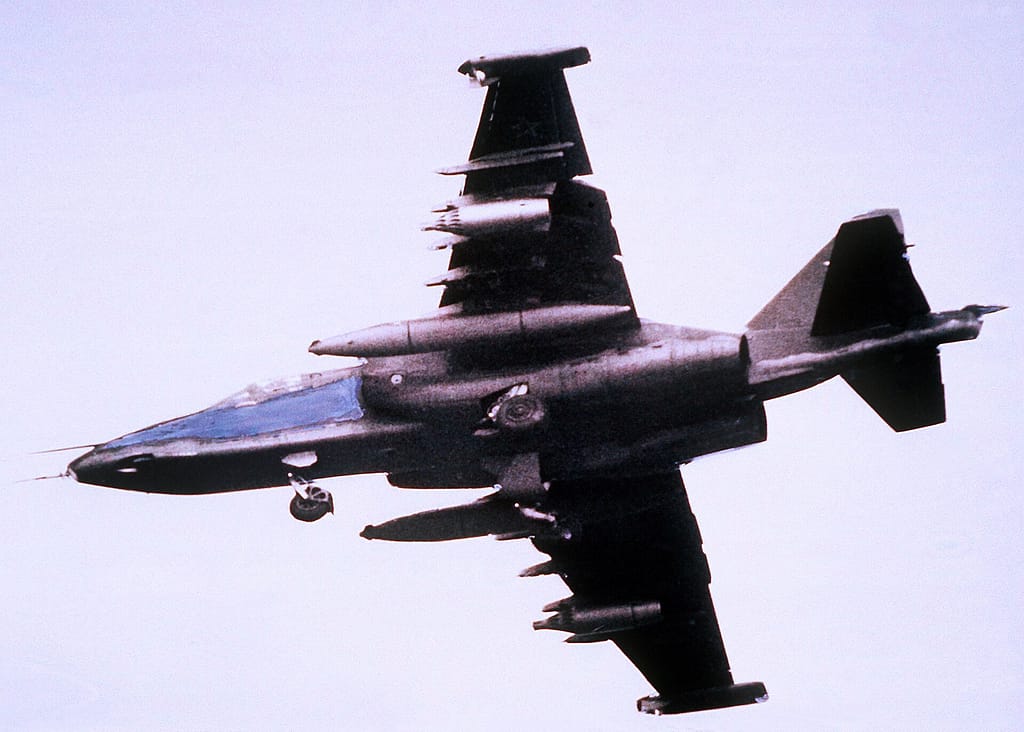
Its chief designer never pretended it was anything other than a low-level weapon.
Low altitude is where the shooting is. On 6 April 1986, during an attack near Zhawar, Rutskoy was shot down by Mujahideen fire. He ejected, but broke an arm and badly injured his back. He was grounded on medical orders, though he held on to command of the regiment until December.
Most officers would have taken the desk. Rutskoy passed a medical board, got his flying status back, and in April 1988 returned to Afghanistan as a colonel, now deputy commander for aviation of the entire 40th Army. He carried on flying combat missions anyway.
Six miles into Pakistan
On 4 August 1988 he was attacking a Mujahideen training camp roughly six miles inside Pakistani territory. A Pakistan Air Force F-16A of No. 14 Squadron, flown by Squadron Leader Athar Bukhari, shot him down.
Rutskoy ejected safely and came down among local villagers, who captured him and handed him to the Pakistani army. He was held briefly as a prisoner of war in Islamabad. According to Steve Coll in his history of the CIA in Afghanistan, the agency pushed for his release rather than let a captured Soviet colonel complicate the Geneva Accords and the Soviet withdrawal then under way.
He went home, and for 428 combat missions he was made a Hero of the Soviet Union.
Yeltsin picks a war hero
In May 1991, on the last day candidates could file, Boris Yeltsin named Rutskoy as his vice-presidential running mate. A decorated combat pilot balanced the ticket nicely. They won, and Rutskoy took office on 10 July 1991.
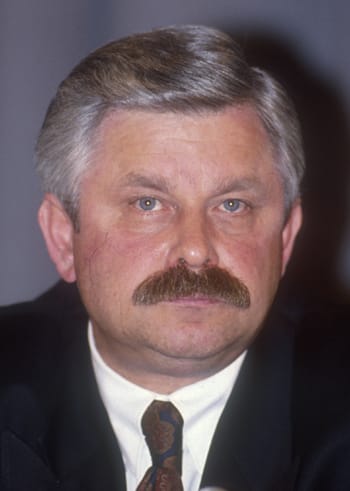
The alliance did not last. From late 1992 Rutskoy was attacking Yeltsin's economic programme in public and accusing officials around him of corruption. In September 1993 Yeltsin suspended him over corruption allegations of his own, which were never substantiated. Parliament rejected the suspension.
Twelve days as acting president
On 21 September 1993 Yeltsin dissolved the Supreme Soviet, which the 1978 constitution did not allow him to do. Article 121-6 was explicit: a president who used his powers to dissolve elected organs of state power lost those powers immediately.
Parliament took the article at its word, impeached Yeltsin, and swore in his deputy.
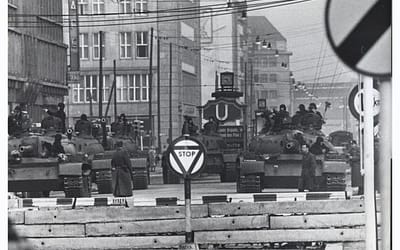
His presidency was constitutional on paper and recognised by nobody abroad. What followed was a two-week siege of the parliament building, street fighting in Moscow, and on 4 October the army shelling the White House with tank fire while the world watched on television. Rutskoy was arrested and charged with organising mass disorder. Yeltsin had dismissed him as vice president the day before and thrown him out of the armed forces.
He was held in Lefortovo prison until 26 February 1994, when the State Duma granted an amnesty covering participants in both the 1991 coup attempt and the October 1993 crisis.
Governor, and then quiet
Rutskoy founded a nationalist party that failed at the 1995 elections, then ran for governor of Kursk Oblast in 1996. He was initially barred from the ballot, reinstated by the Supreme Court days before the vote, and won with around 76 per cent.
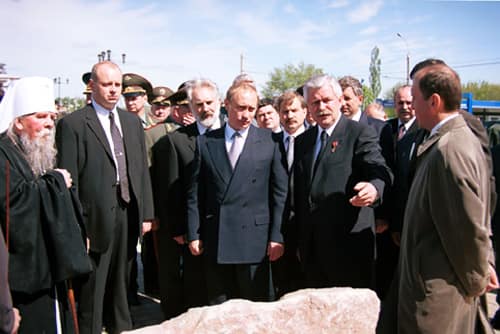
He served one term. Hours before the 2000 election a regional court struck him from the ballot over abuse of office and inaccurate property declarations. Later attempts at the Duma and at the Kursk governorship in 2014 and 2016 all failed on technicalities or at the polls.
He has since apologised for the armed rebellion, saying he would not have gone through with it had he known people would die.
The office of Vice President of Russia was abolished after 1993 and never restored. Alexander Rutskoy remains the only person who ever held it, and very probably the only holder of any national office anywhere who got there by way of two ejections, a Pakistani prison cell and a Hero of the Soviet Union star.
Sources: Alexander Rutskoy and 1993 Russian constitutional crisis entries, English Wikipedia, cross-checked against Russian primary records cited there; Alexander Mladenov, Sukhoi Su-25 Frogfoot Units in Combat (Osprey, 2015); Steve Coll, Ghost Wars (Penguin, 2004); Pakistan Air Force, PAF Over the Years (2007); UNIAN interview with Vladimir Babak, 11 March 2015; BBC News coverage of the October 1993 siege.
0 commentaire