
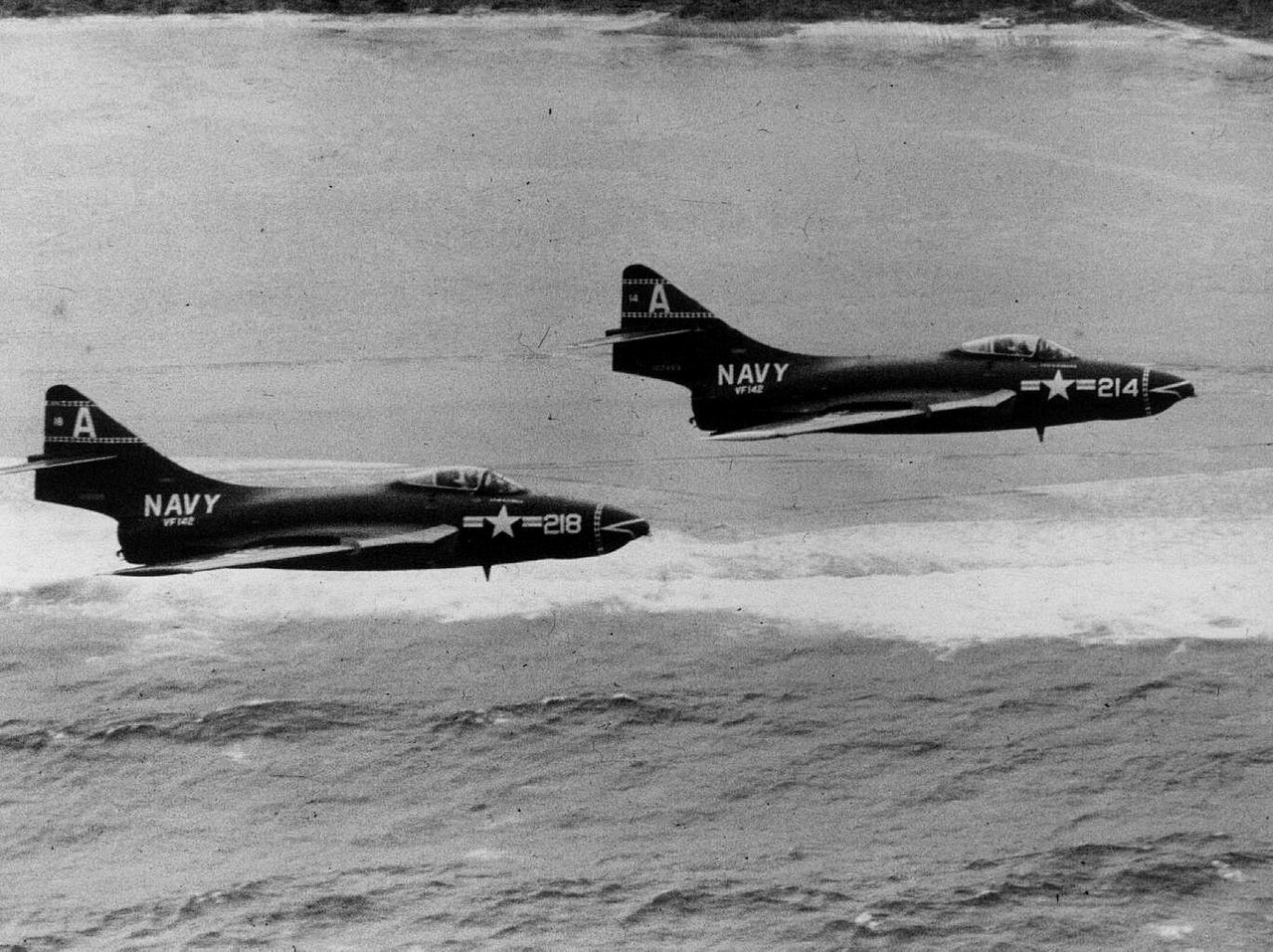
When Soviet-built MiG-15s came screaming over Korea in late 1950 with their swept wings and steep climb, the United States Navy had a problem. Its best carrier jet, the Grumman F9F Panther, was a fine, sturdy machine — but its straight wing meant it simply could not keep up. Grumman's answer was fast, pragmatic and quietly clever: take the Panther, sweep its wings back 35 degrees, and turn it into the F9F Cougar — the Navy's first swept-wing carrier fighter.
Informations clés
- Taper: Grumman F9F Cougar, swept-wing carrier fighter
- Basé sur: the straight-wing F9F Panther
- Premier vol : 20 September 1951
- Distinction: the U.S. Navy's first swept-wing carrier jet
- Construit: 1,988, from 1951 to 1960
- Notable users: the Blue Angels (1954-57) and, as a trainer, into the 1960s
The Panther that had to catch a MiG
The idea of a swept-wing Panther was old — the original 1946 contract even asked for design data on one — but Grumman had resisted, wary of the tricky low-speed handling that swept wings brought to a carrier deck. Korea changed the calculation overnight. Once MiG-15s started out-climbing and out-running American jets, the Navy needed a swept wing at sea, and it needed it fast.
Grumman kept it simple. The Cougar reused the Panther's fuselage, tail, engine and landing gear, but married them to new wings and tail surfaces swept back 35 degrees, with fences, spoilers and bigger flaps to tame the handling. It first flew in September 1951, barely months after the contract was signed.
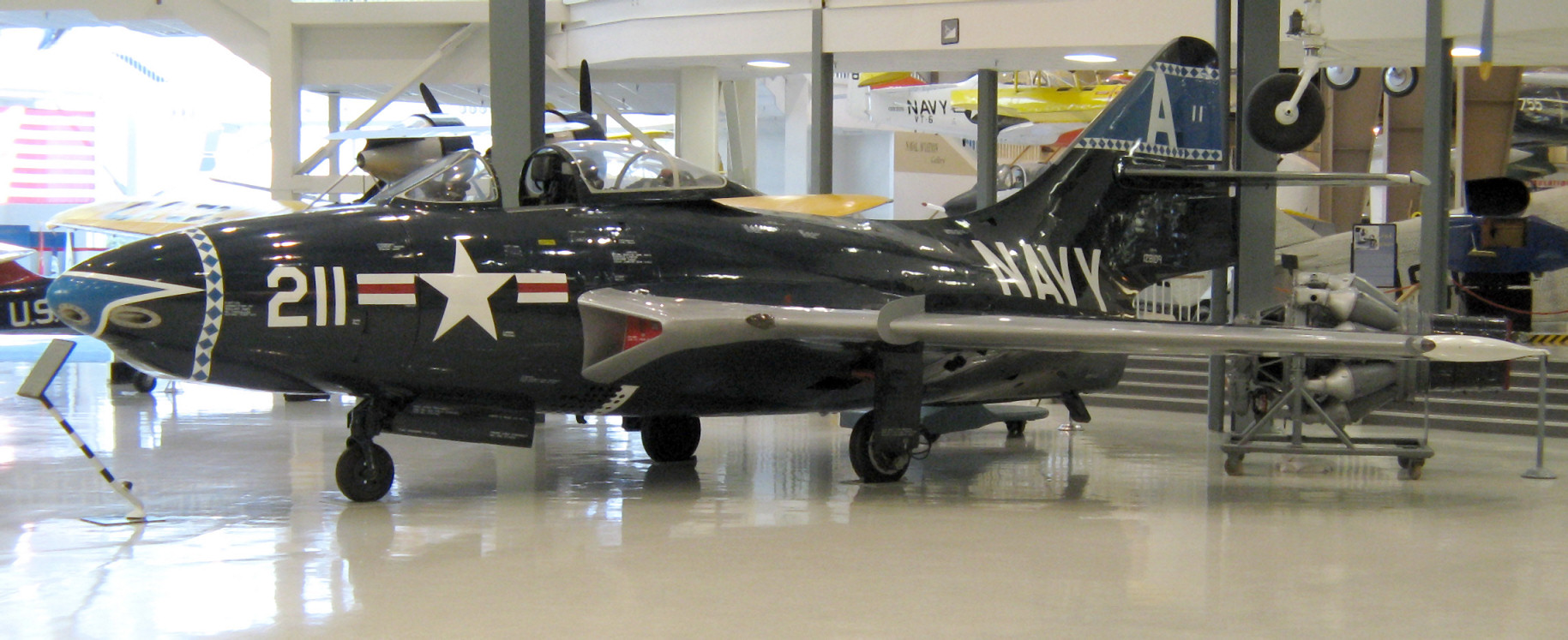
Aircraft of the Month: the F9F-8 Cougar.
The same name, a different aircraft
One quirk of the Cougar tells you how quickly it was rushed into being: the Navy kept the Panther's designation. Officially it was still the "F9F," even though the swept wing made it, in every way that mattered, a new fighter. Grumman and the Navy were more interested in getting a competitive jet onto carrier decks than in paperwork.
The Cougar arrived too late for air-to-air combat in Korea, but it became a mainstay of the fleet through the 1950s, flying with dozens of squadrons. The Blue Angels adopted it for their displays from 1954 to 1957, showing off the swept-wing lines to crowds across America.
A long second career
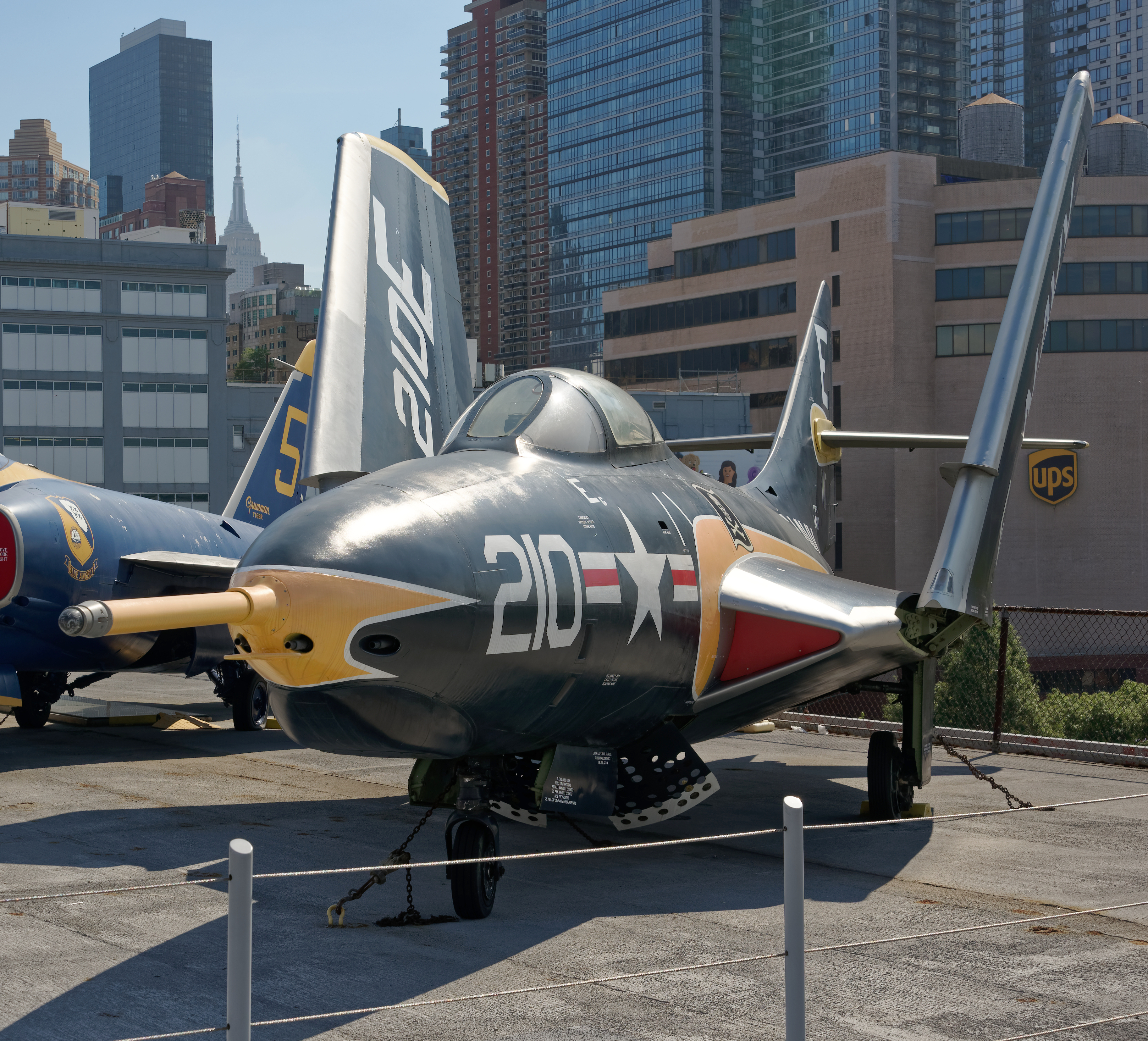
The Cougar's most surprising trick was its longevity. A two-seat trainer version, the F9F-8T, kept the type in service long after the single-seat fighters had gone, teaching Navy pilots the jet trade well into the 1960s. Some even served as fast forward-air-control aircraft over Vietnam — a swept-wing Korea-era design still earning its keep in a new war.
Nearly 2,000 Cougars were built. It was never the most glamorous jet of its generation, and it is often forgotten between the Panther that fought in Korea and the supersonic fighters that followed. But it did exactly what the Navy needed at exactly the right moment: it gave the fleet a swept wing, in a hurry, by being clever with what it already had.
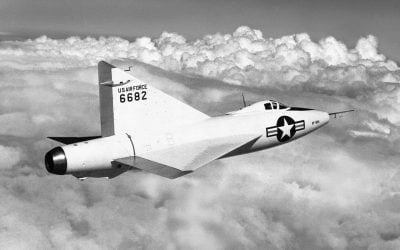
The Grumman F9F-8 Cougar in the air.
A closer look at the Navy's first swept-wing carrier fighter.
Sources: Wikipedia (Grumman F-9 Cougar, F9F Panther); Smithsonian National Air and Space Museum; Vintage Aviation News.
0 Comments