
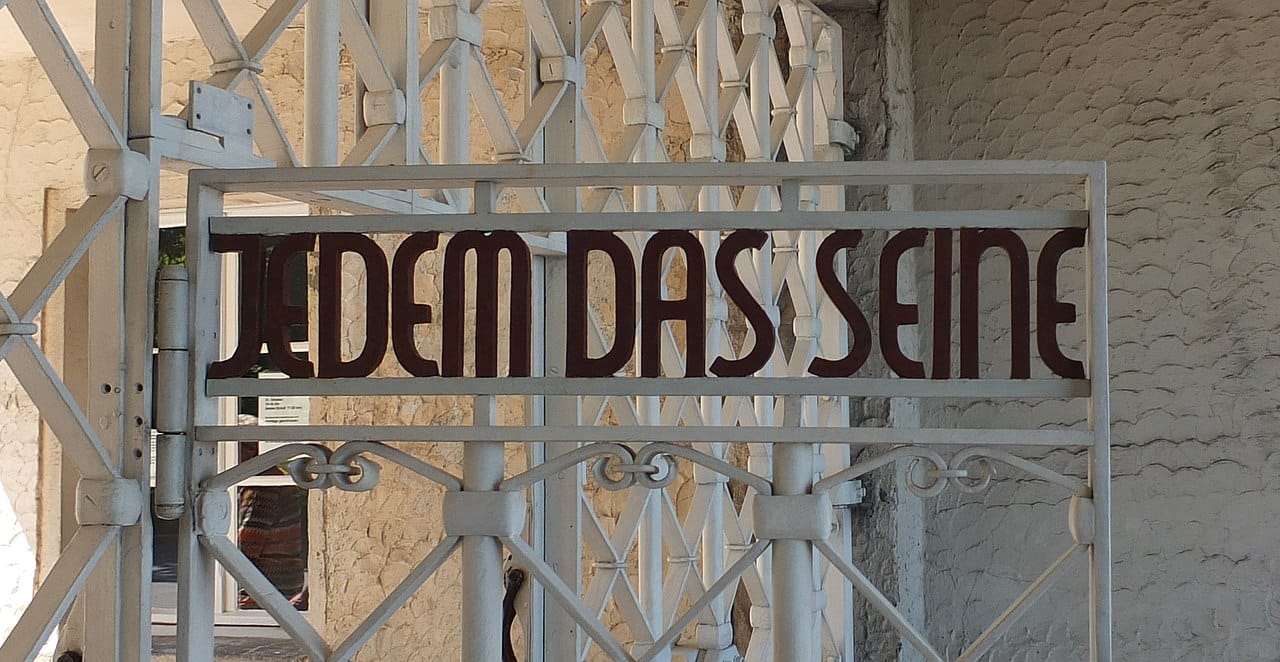
In August 1944, 168 Allied airmen — American, British, Canadian, Australian and New Zealander — arrived at Buchenwald concentration camp. They were not spies or saboteurs. They were downed aircrew, men who should by every law of war have been sent to a prisoner-of-war camp. Instead they were dumped inside one of the Nazi regime’s most notorious camps, and an execution order was quietly scheduled.
That they nearly all survived is down to discipline, luck, and one New Zealand bomber pilot who refused to let the group fall apart.
Informations clés
| OMS | 168 Allied airmen (US, UK, Canada, Australia, New Zealand and others) |
| Où | Buchenwald concentration camp, near Weimar, Germany |
| Quand | Roughly 20 August to 19 October 1944 |
| Pourquoi | Captured out of uniform / linked to the Resistance and branded “terror-fliers” |
| Leader | Squadron Leader Phil Lamason, Royal New Zealand Air Force |
| Rescue | Transferred to a POW camp after the Luftwaffe learned of them |
| Died at Buchenwald | Two of the 168 |
Airmen branded as terrorists
The men had one thing in common: they had been shot down over occupied France and, in most cases, sheltered by the Resistance or captured in civilian clothes. The SS chose to treat them not as soldiers but as Terrorflieger — “terror-fliers” — and spies, outside the protection of the Geneva Convention. That legal fiction is how uniformed aircrew ended up behind the wire at Buchenwald.

Conditions were brutal. The airmen had their heads shaved and their boots taken, and for roughly three weeks they slept outdoors in the camp’s notorious “Little Camp” on starvation rations. American P-38 pilot Joe Moser, shot down on 13 August 1944, would later describe it all in his memoir, A Fighter Pilot in Buchenwald.
The man who took command
The senior officer among them, New Zealand Squadron Leader Phil Lamason, refused to let the group become a leaderless mass of prisoners. He organised the men, imposed military discipline, and insisted they conduct themselves as airmen, not victims. His address to them has become the defining line of the whole episode.

For the survivors, the memory of the place never softened.

Saved by the Luftwaffe
Their salvation came from an unlikely quarter. A message smuggled out of the camp reached the Luftwaffe, whose officers were appalled that captured Allied aircrew were being held as terrorists in an SS camp. Under pressure, the SS relented. On the night of 19 October 1944, 156 of the airmen were transferred to the POW camp Stalag Luft III; the ten too sick to move followed over the coming weeks. An execution order for the group had reportedly been set for 26 October — days away. Lamason kept that detail secret for nearly forty years.
Two of the 168 did not survive Buchenwald. The rest owed their lives to a rare crack of decency inside the German war machine — and to the men among them who chose, in the worst place on earth, to keep behaving like soldiers.
Sources: Joe Moser, “A Fighter Pilot in Buchenwald”; accounts of Phil Lamason; CBC; Wikipedia.


0 commentaire