
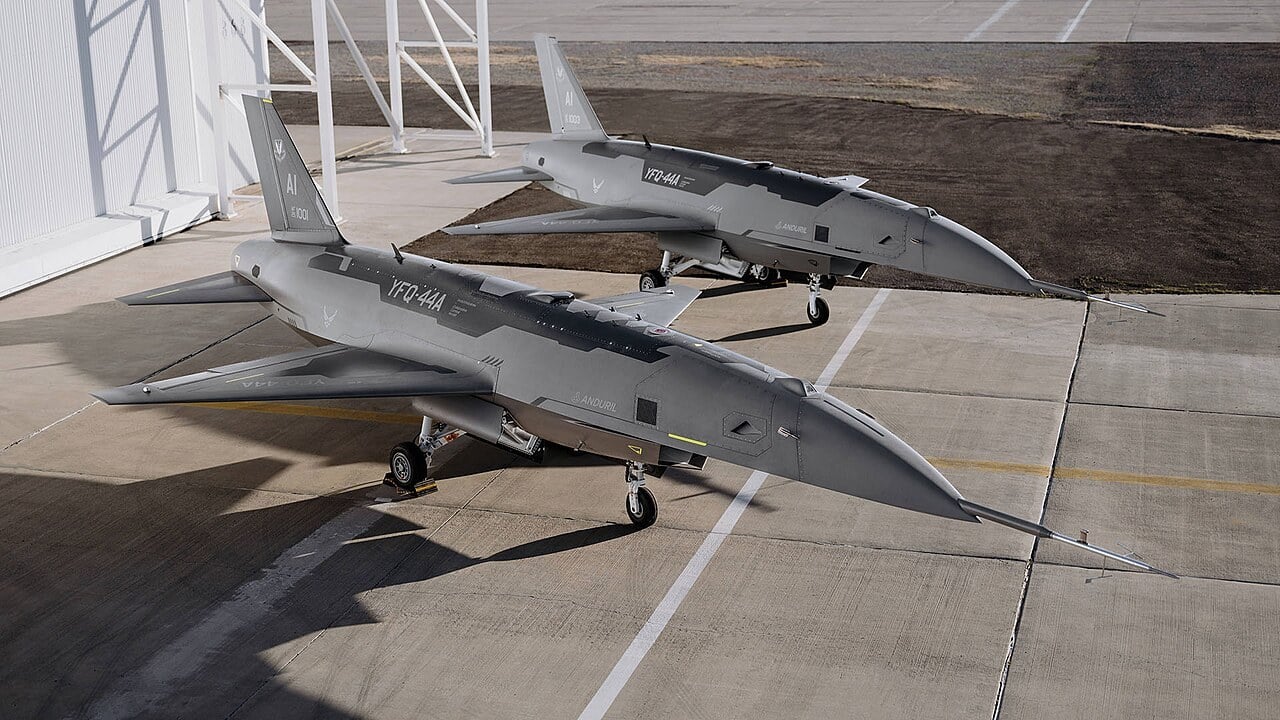
Two robot fighters went hunting over Nevada, and nobody was in the sky to tell them where to turn. On Monday 26 October 2026, a pair of Anduril FQ-44A Fury drones flew in formation and carried out beyond-visual-range air combat maneuvers against a virtual threat, steered by an “AI pilot” rather than a human hand on a stick.
The flight was kept quiet for two weeks. Shield AI, whose Hivemind mission autonomy software flew the jets, announced it on Monday 9 November, and Air & Space Forces Magazine called it a first for the US Air Force’s Collaborative Combat Aircraft (CCA) program: the first time two CCAs flew coordinated air combat maneuvers using autonomy software.
Informations clés
- Quoi: First coordinated air combat maneuvers by two USAF Collaborative Combat Aircraft using autonomy software
- Flight date: Monday 26 October 2026
- Annoncé : Monday 9 November 2026, by Shield AI
- Aéronef: Two Anduril FQ-44A Fury drones
- Software: Shield AI Hivemind mission autonomy
- Où: Nevada Test and Training Range (per Shield AI)
- Human role: An operator on the ground gave high-level directions; no pilot in the air
- Earlier first: 8 October 2026: an F-22 pilot directed a single Fury in flight over Edwards AFB
A pair, not a puppet
According to Todd Wesley, Shield AI’s vice president of Hivemind engineering, the test took place on the Nevada Test and Training Range. The two Furies flew together and executed beyond-visual-range tactics that Hivemind directed. An operator on the ground gave only high-level directions to the pair as they engaged the simulated enemy.
In Shield AI’s own words, quoted by Defense Daily, the software enabled “multiple CCAs to fly in formation and execute collaborative beyond-visual-range counter-air tactics.” Translation for anyone who did not grow up on fighter-pilot jargon: the drones worked as a team to fight enemy aircraft from long range, the way a two-ship of crewed fighters would.
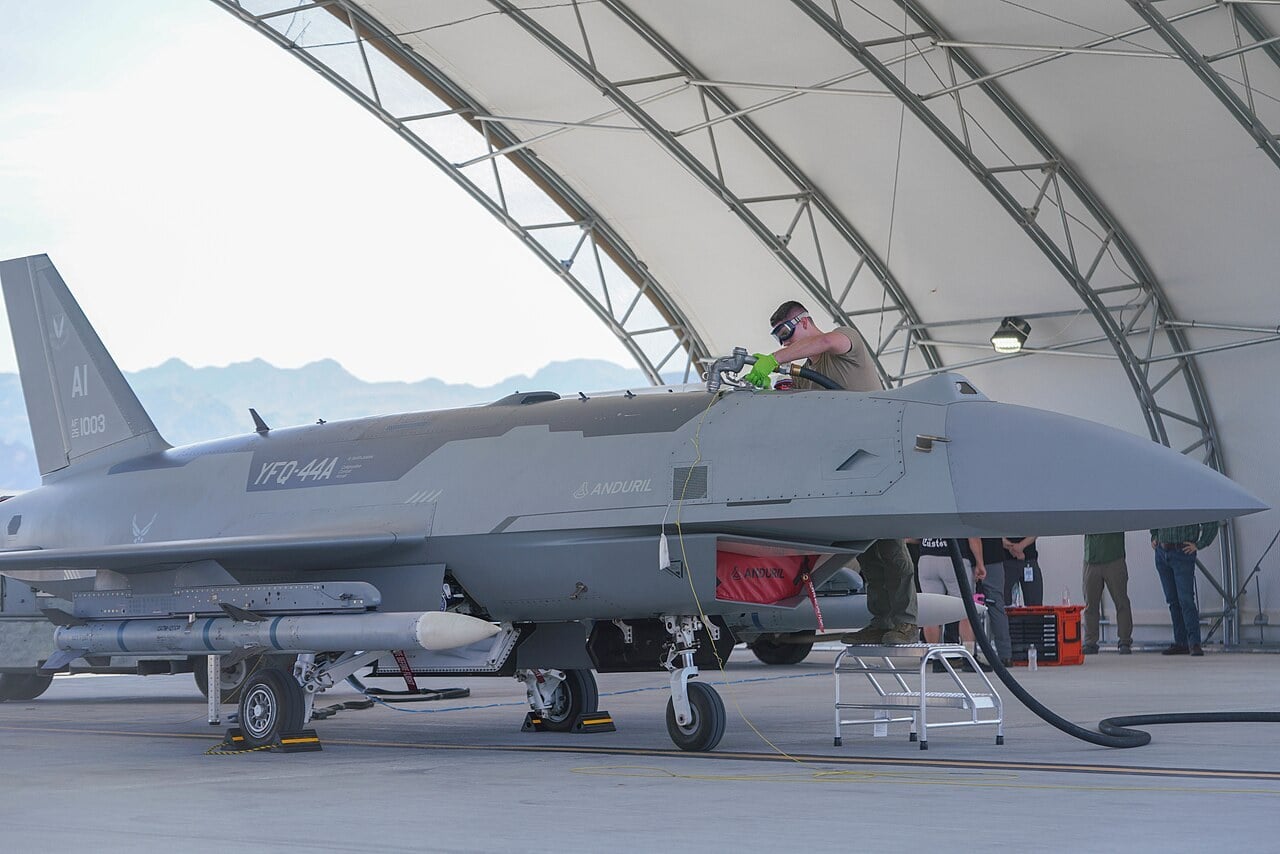
Wesley told the magazine the test was a success. He also made clear what it was a step beyond.
Eighteen days after the F-22 test
That “stepping stone” was the flight of 8 October 2026 over Edwards Air Force Base, California, when an airborne F-22 Raptor pilot gave high-level instructions to a single Fury and Hivemind turned them into maneuvers in real time. Afterburner covered that one in F-22 Commands a YFQ-44A Fury Drone in Flight for the First Time.
The 26 October flight went further in one important way. Unlike the Raptor test, there was no human pilot in the air at all. Two drones, one software brain, one person on the ground setting the intent. Shield AI says it has now achieved two CCA firsts in three weeks.
Shield AI’s September 2026 video on the YFQ-44A Fury flying with its Hivemind autonomy software.
The Fury itself is Anduril’s entry in the CCA program’s first increment, a single-engine jet roughly half the size of an F-16. It flew for the first time on 31 October 2025, and it shares the first increment with General Atomics’ FQ-42 Vengeance.
Fly, patch, fly again
The software side may matter as much as the flying. The Air Force uses what it calls the Autonomy Government Reference Architecture, which separates the mission software from each aircraft’s own flight software through standard interfaces. Shield AI says that makes it easier to add capabilities without redesigning the aircraft’s code and keeps suppliers competing.
Shield AI also says the Furies ran the same core Hivemind software that it has integrated into more than 40 uncrewed systems across air, land, sea and space. For the Air Force, that is the point of the exercise: the brain is meant to be portable, and the airframe underneath it replaceable.
Wesley added a line that sounds small and is not. He told Air & Space Forces Magazine the next challenge is designing the human-machine interface so that pilots in the cockpit can manage this level of complexity, and learning where it needs to be simplified. A drone that fights well but confuses its human boss is not much of a wingman.
Next, Wesley says, come bigger teams and teams of teams, including swapping aircraft between teams in flight. Flights in which CCAs carry and fire live munitions will come later, but he would not say when.
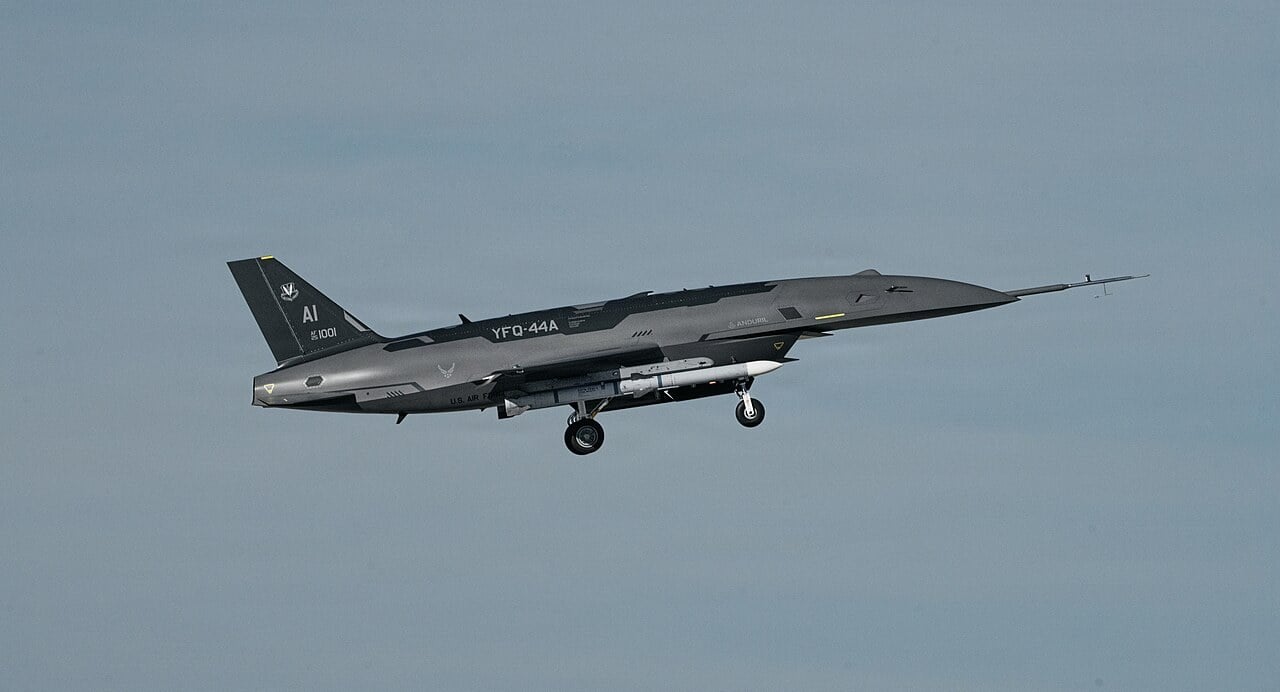
The scale of the ambition explains the urgency. Air Force officials have talked about one crewed fighter controlling between two and five CCAs, and more recently some have floated a ratio of one to eight, according to Air & Space Forces Magazine. No pilot can hand-fly eight wingmen. That job falls to software like Hivemind, and on 26 October two Furies showed it can at least run a two-ship.
Sources: Air & Space Forces Magazine, Defence Industry Europe, Defense Daily, Shield AI, Wikipedia (Anduril FQ-44)
0 Comments