
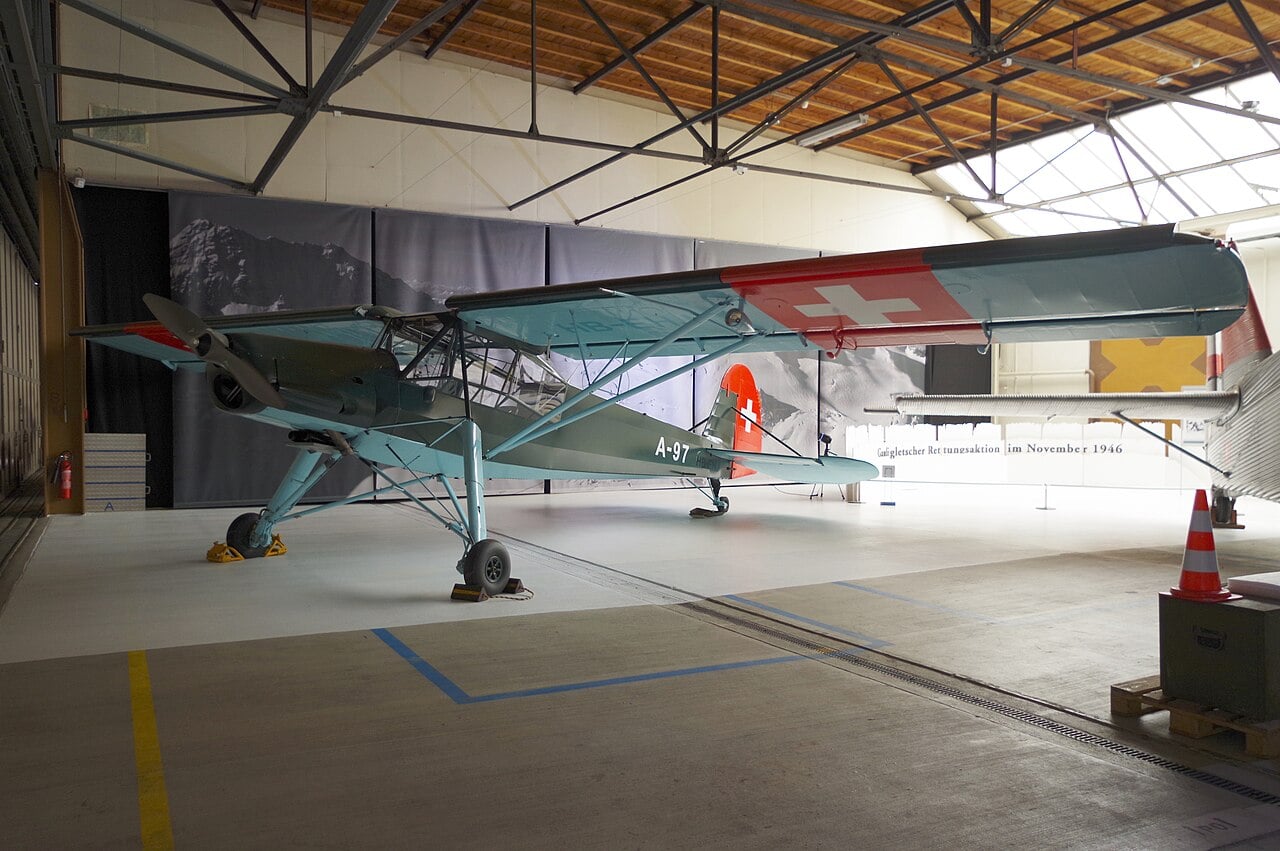
Eighty years ago this week, a US military transport lost in cloud over the Alps slid to a halt on a glacier at more than 3,000 metres. Everyone on board survived the crash. Getting them off the ice was another matter, and the way a Swiss air force captain solved it became one of the founding stories of mountain rescue: a Fieseler Storch on skis, landing and taking off on the snow, again and again.
Informations clés
- Aéronef: Douglas C-53 Skytrooper (Dakota) of the US Army Air Forces’ European Air Transport Service
- Accident: 19 November 1946, 14:25, Gauli glacier, Bernese Oberland, about 3,350 m
- À bord : 12: four crew and eight passengers, including a brigadier general and an 11-year-old girl
- Victimes: None killed; several injured
- Rescue: 24 November 1946, by Captain Viktor Hug and Pista Hitz in two Fieseler Storchs on skis
- Héritage: Hug proposed an alpine air rescue unit in 1947; Rega was founded in 1952
Lost Over the Alps
The C-53, the paratroop version of the C-47, had left Munich for Marseille on 19 November 1946, flying blind in thick cloud and gusty winds. Its crew believed they were over France. Instead the aircraft hit the Gauli glacier in the Bernese Oberland at about 280 km/h and slid for some 80 metres before stopping just short of two crevasses. Deep powder snow saved everyone aboard. The twelve people inside, four crew under pilot Captain Ralph Tate and eight passengers including Brigadier General Loyal Haynes, several officers’ wives and an eleven-year-old girl, had no winter clothing and no idea where they were.
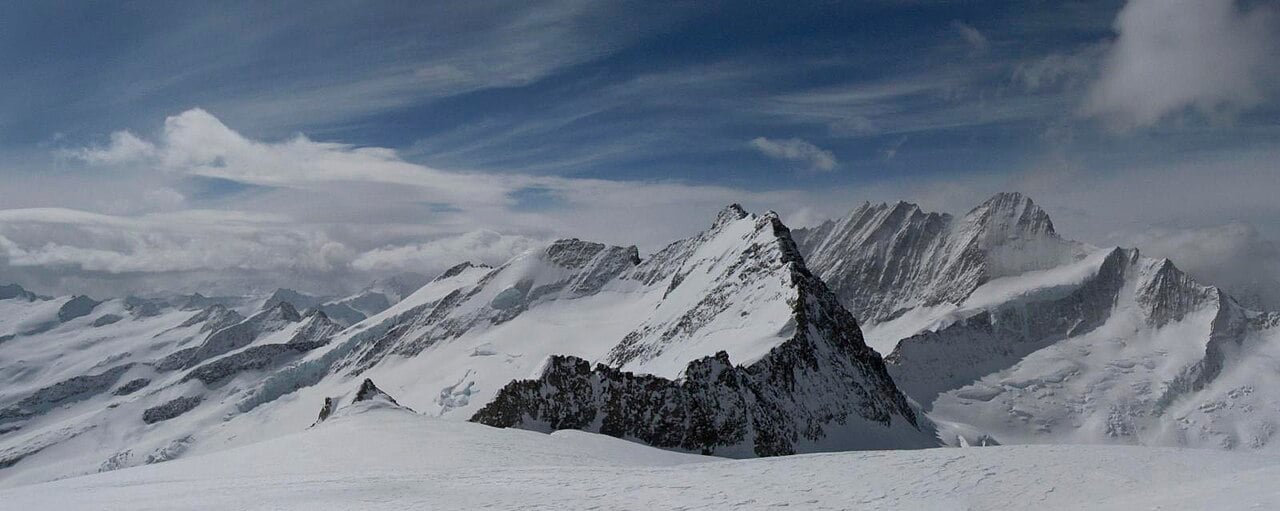
The search began in the wrong country, in the French Alps, because the crew’s position report was wrong. Only after radio signals were picked up did attention turn to the Bernese Oberland. The United States sent a special train with about 150 mountain troops and tracked snow vehicles, which bogged down in the valley. Supply drops from American aircraft rained around the wreck; one parcel hit its wing. The survivors, still convinced they were in France, stamped the word “fini” into the snow.
Newsreel footage of the Gauli glacier wreck and rescue, 1946. Video: British Pathé.
Captain Hug’s Skis
For Switzerland the crash came at a delicate moment. Relations with the United States were frosty after the war, and the government in Bern ordered its military not to embarrass itself. Captain Viktor Hug, commander of Meiringen air base, the closest to the crash site, was told to support the Americans without taking over. He was sure from the radio bearings that the Dakota lay nearby, won permission for a search flight and found it on the Gauli glacier.
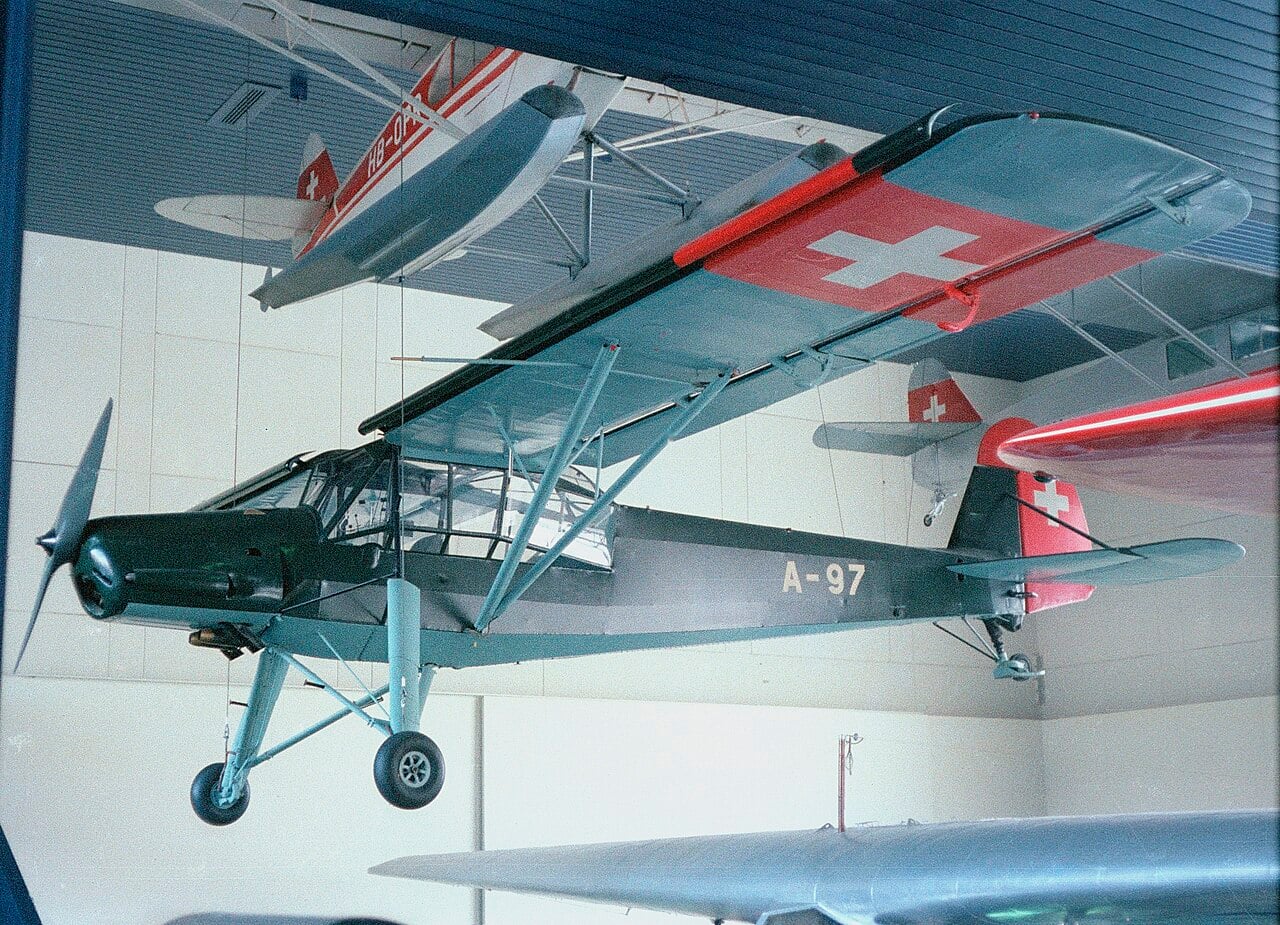
A Swiss column of 83 soldiers and mountain guides climbed to the wreck, but carrying injured people down over the crevassed ice would have taken at least 36 hours. The rescue had to come from the air, and taking off from deep snow at around 2,800 metres with passengers looked impossible. According to the Tages-Anzeiger’s account, Hug and his mechanics worked at night in the hangar on a solution: wooden auxiliary skis slid under the Storch’s own skis before each take-off to double the surface area, which dropped away automatically as the aircraft lifted off and could be collected for the next run.
24 November 1946
On the morning of 24 November a föhn window opened. Hug and Pista Hitz landed their two Storchs on the glacier and, in eight flights, brought all twelve survivors down to the valley; a ninth flight collected the luggage. Sixteen hours later a three-day snowstorm buried the wreck. More than 150 journalists had gathered in Meiringen, and the rescue made headlines around the world.
The diplomatic effect was immediate. US General Mark Clark received Hug and Hitz in Vienna with military honours on 3 December 1946, and in 1947 the United States offered the wreck to Switzerland as a gift. In 1947 Hug also submitted a formal proposal for an alpine air rescue unit; when the Swiss Air Rescue Guard, today’s Rega, was founded in 1952 by Rudolf Bucher, it built on that idea.
The Gauli crash and the birth of Swiss air rescue. Video: SWI swissinfo.ch.
The Glacier Gives the Dakota Back
The Gauli glacier has retreated sharply since 1946, and it keeps releasing pieces of the aircraft. Three young men found a propeller in 2012; in 2018 an engine and wing parts appeared and the Swiss Army recovered about 2.4 tonnes by helicopter, with further recoveries since. The Storch A-97 survives: after decades in the Swiss Museum of Transport it was restored to fly in 2016 and is now displayed at the Flieger Flab Museum in Dübendorf. A feature film about the rescue is being prepared.
Sources: Tages-Anzeiger, Moritz Marthaler, “Ein veritabler Geniestreich” (18 November 2026); Rega, “The beginnings of air rescue”; Swiss Armed Forces (VTG), “Dakota C-53: a new chapter to an old story”; Armeemuseum, Gauligletscher dossier; swissinfo.ch; aerotelegraph; Stiftung HAM; Blue News (November 2026).


0 Comments