
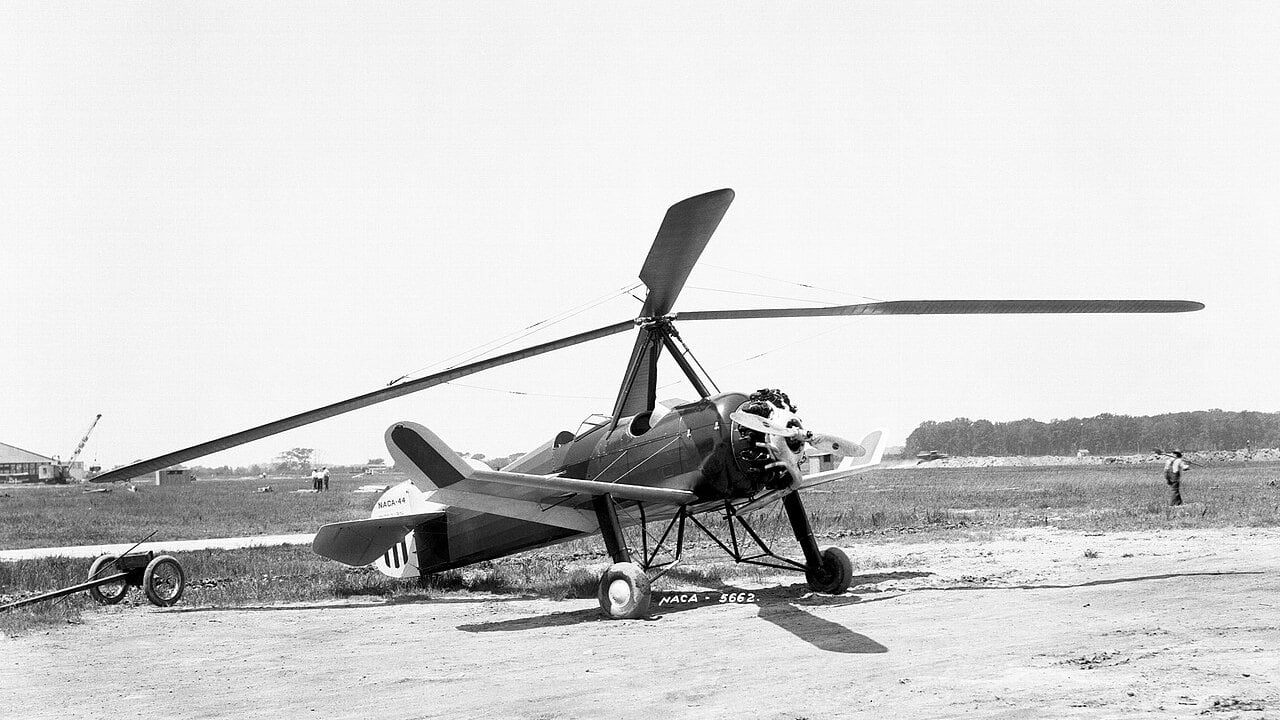
At noon on 22 April 1931, a strange machine came down out of the Washington sky and settled onto the White House grounds almost vertically. It had a propeller on the nose, stubby little wings, and a giant four-bladed windmill spinning lazily on top. President Herbert Hoover was there to see it.
The machine was a Pitcairn autogiro, flown by company pilot James G. “Jim” Ray. The man Hoover had come to honour was Harold F. Pitcairn, the Pennsylvania businessman who had bet his fortune on the idea that ordinary Americans would one day fly windmills to work. Hoover handed him the Collier Trophy, the top prize in American aeronautics. Ray then took off again from the President’s lawn.
It was the high point of the American autogiro craze. It was also, if you squint, the first day of the helicopter age in the United States.
Informations clés
- Man: Harold F. Pitcairn, airmail pioneer and American licensee of Juan de la Cierva’s autogiro patents
- Événement: Collier Trophy ceremony on the White House grounds, 12 noon, 22 April 1931
- Pilote: James G. “Jim” Ray, who landed and took off again on the White House grounds
- Prix: Collier Trophy for 1930, presented by President Herbert Hoover
- Aéronef: Pitcairn PCA-2, the first autogiro sold commercially in the Western Hemisphere
- Price: $15,000; 21 PCA-2s sold in two years
- Rooftop mail: 6 July 1939: Eastern Air Lines Kellett autogiro, Philadelphia Post Office roof to Camden, New Jersey
The airmail man who wanted a windmill
Pitcairn did not need the autogiro to be famous. By the late 1920s his company built the PA-5 Mailwing, a trim little biplane, and flew the night airmail between New York and Atlanta. According to the Smithsonian’s National Air and Space Museum, the Mailwings covered that 760-mile route in seven hours, a third of the time by rail, and the airline built on it grew into Eastern Air Lines.
But Pitcairn had been fascinated by rotary-wing flight since his youth, and he had watched the Spanish engineer Juan de la Cierva crack the problem that had defeated every early helicopter. Cierva’s hinged rotor blades let an unpowered rotor turn in the airflow and produce lift without flipping the aircraft over. Afterburner told that story in Juan de la Cierva’s Autogiro: The Windmill That Refused to Stall.
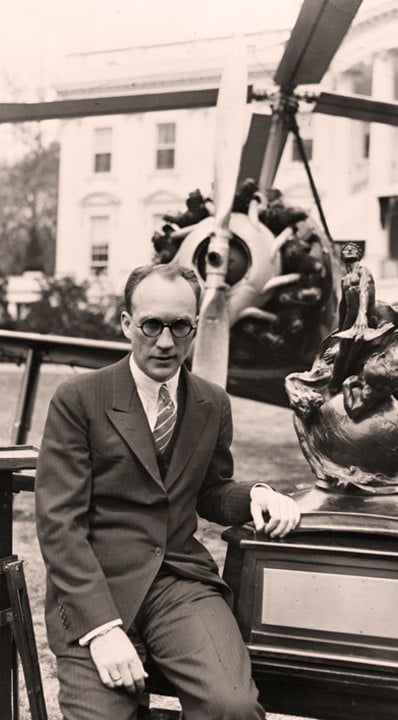
In 1928 Pitcairn decided to risk everything. He bought a Cierva C.8W in England, shipped it to his airfield at Bryn Athyn, Pennsylvania, where it flew in December 1928. The Smithsonian calls it the first successful rotary-wing aircraft to fly in America. In February 1929 he bought the American rights to Cierva’s patents and set up the Pitcairn-Cierva Autogiro Company.
From prototype to PCA-2
His engineers, led by Agnew Larsen, built three prototypes in 1929, the first autogiros made in the United States. The start was rough. Cierva himself flew the first PCA-1 in October 1929 and crashed it within a week; a factory fire then destroyed the airframe. The second prototype flew less than a month later.
The production model that followed was the PCA-2: a three-seat open-cockpit machine with a radial engine, stubby wings carrying the controls, and a big rotor on a pylon above the front cockpit. The Smithsonian describes it as the first autogiro sold commercially in the Western Hemisphere. It cost $15,000, a fortune in the Depression, and Pitcairn still sold 21 of them in two years.
EAA looks back at the restored Pitcairn PCA-2 “Miss Champion” taking to the air.
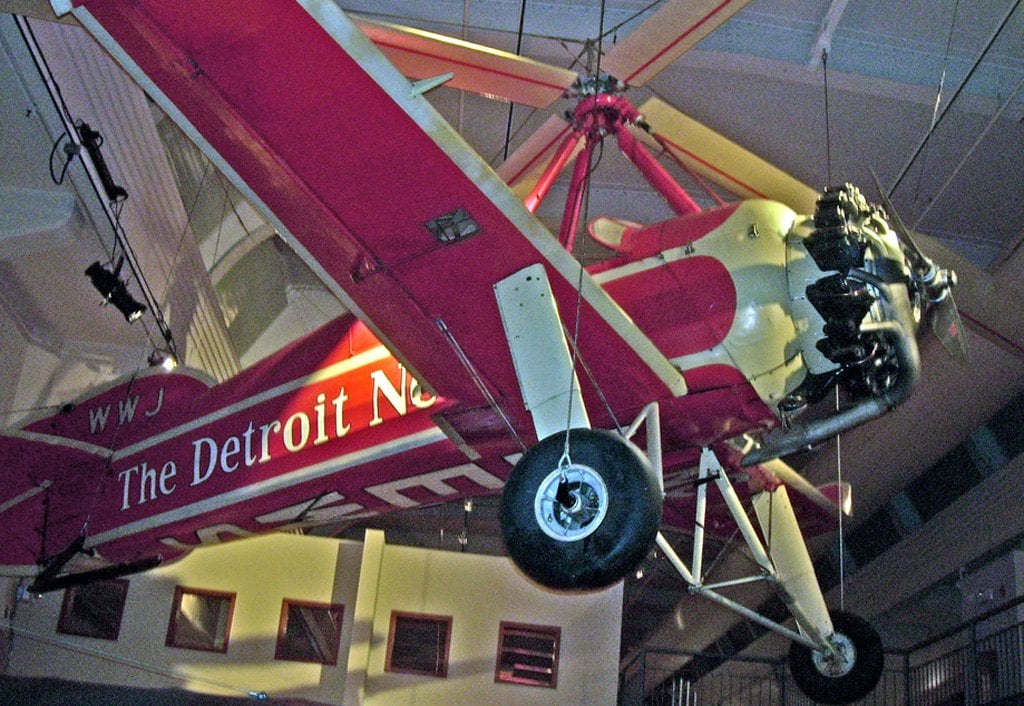
Buyers were a colourful bunch. On 12 February 1931, the Detroit News placed the first order for a commercial autogiro in the United States. On 8 April 1931, Amelia Earhart set a world altitude record for autogiros at 18,415 feet (5,615 m). Many owners paid for their machines by painting sponsors’ names down the side.
Noon on the White House lawn
Then came Washington. The National Aeronautic Association had awarded Pitcairn the Collier Trophy for 1930, and the President would present it in person. The American Presidency Project’s record of the day notes that Hoover spoke at 12 noon on the White House grounds, and that during the ceremony Jim Ray demonstrated the autogiro in a vertical descent and take-off.
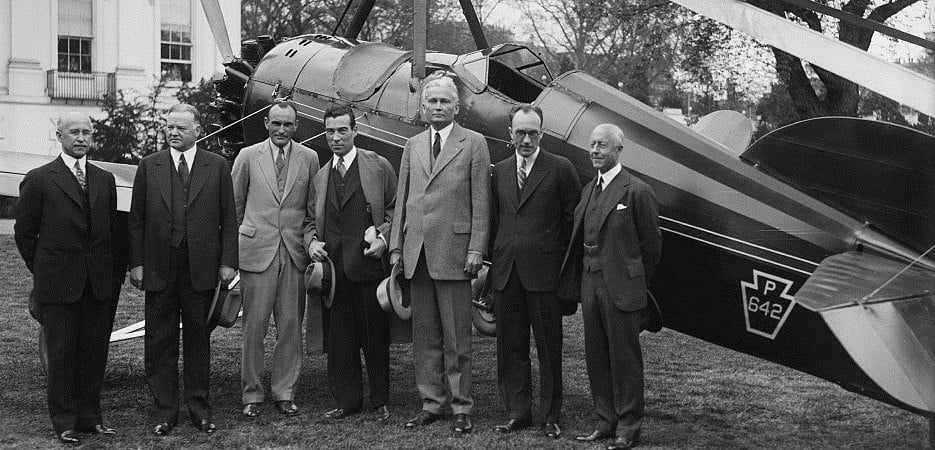
This was the whole sales pitch in one stunt. An aeroplane needs a field. An autogiro, in theory, needs a back garden. Hoover’s short speech said exactly what Pitcairn wanted the country to hear.
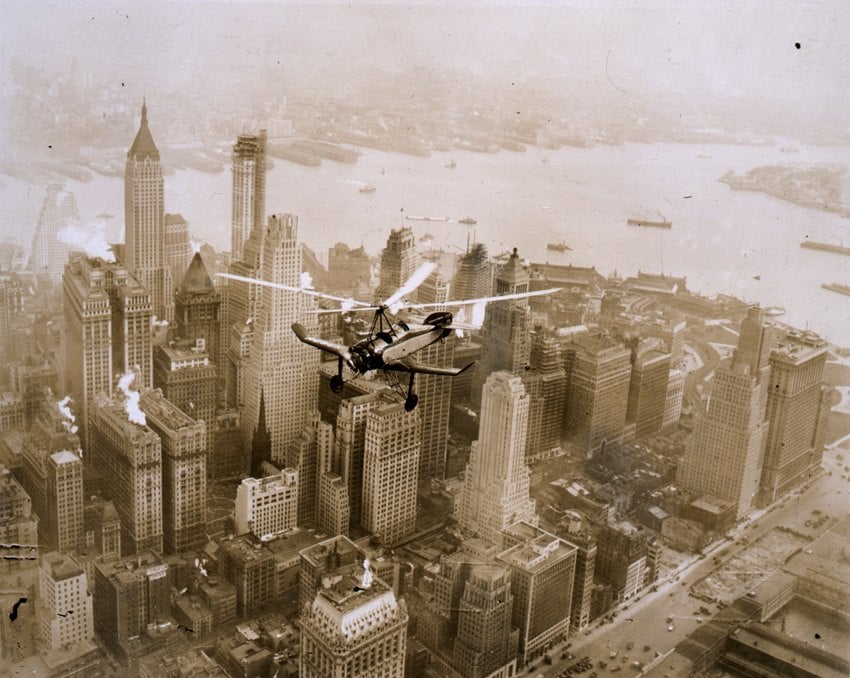
The newsreel cameras loved it. Pitcairn autogiros soon turned up over Manhattan, at air races and airshows, and the company built 51 autogiros in 1931 alone, including models for the US Navy.
1931 newsreel footage of the “flying windmill” calling at the White House.
The newspaper that bought a windmill
Le Detroit News machine shows both the magic and the problem. The paper fitted it with a large swivelling camera for aerial news photos and used it to rush reporters to breaking stories. It flew more than 700 times between 1931 and 1933 before being given to Henry Ford’s museum in Dearborn, where it still hangs today.
The catch was physics. An autogiro’s rotor is not driven in flight, so it could land almost vertically but could not take off vertically or truly hover. Against a conventional aeroplane it was slower, carried less and cost more to buy and run. As the Smithsonian puts it, outside advertising and exhibitions only a few autogiros found real work.
The mail from the post office roof
The most famous working job came later, and not with a Pitcairn. On 6 July 1939, Eastern Air Lines, the airline that had grown out of Pitcairn’s old mail routes, began the world’s first scheduled air mail service by a rotary-wing aircraft. It used a Kellett autogiro, built under licence from Cierva and Pitcairn, to shuttle mail between the roof of the Philadelphia Post Office and the airport at Camden, New Jersey.
According to the Smithsonian’s National Postal Museum, pilot John Miller flew the rehearsal flights, and 52,128 first-flight covers were carried on opening day. The experimental service ran for about a year.
Archive footage of the 1939 autogiro mail service from the roof of the Philadelphia post office.
Pitcairn’s long revenge
By then the true helicopter was arriving, and with it the end of the autogiro. But the rotor patents Pitcairn held still mattered. The Smithsonian notes that a number of helicopter manufacturers used them and, Sikorsky excepted, paid him no royalties. Pitcairn sued. He died in 1960, and the case was only settled in his favour years after his death.
The President’s lawn never became a landing pad for commuters. But in 1931 a windmill came down on it, almost vertically, and took off again. In a sense, every helicopter that has landed at the White House since has been following Jim Ray’s approach.
Sources: The American Presidency Project (Remarks on the Presentation of the Collier Trophy to Harold F. Pitcairn, 22 April 1931), Smithsonian National Air and Space Museum, Smithsonian National Postal Museum, The Henry Ford, US Centennial of Flight Commission, American Heritage, HistoryNet
0 Comments