
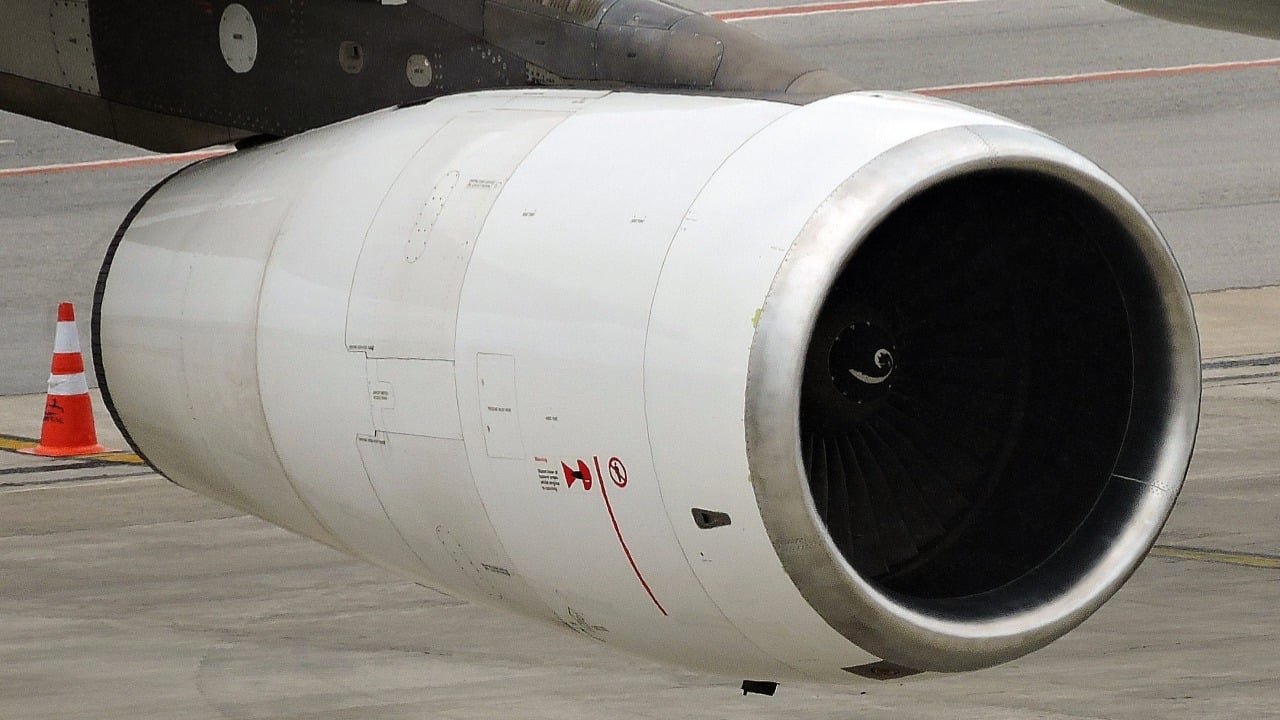
Open the American aircraft certification rules and search them for the word the whole replacement-parts industry argues about. Type OEM into 14 CFR Part 21, the part that governs how every aircraft, engine and component in the United States is approved. You get nothing. Try Part 45, which decides what has to be stamped on a part before it may be fitted. Nothing there either. We checked both, in full, against the current text.
That absence is not sloppiness. It is the clearest thing the FAA has ever said about replacement parts: the agency does not recognise a privileged category of company called the original equipment manufacturer. It recognises approvals. A firm either holds the right approval for the part in its hand or it does not, and whose name is painted on the aircraft nose has no bearing on the question.
The approval most passengers have never heard of is a Parts Manufacturer Approval, universally shortened to PMA. It is how a company that did not design your aircraft, does not own its type certificate and has never spoken to its manufacturer can legally build a part that goes inside it. Roughly three quarters of the world’s airlines use them. The thing that stops the rest is not a safety rule.
Informations clés
What a PMA is: An FAA approval to produce a replacement or modification article for a product someone else type-certificated
Where it lives: 14 CFR Part 21, Subpart K — sections 21.301 to 21.320
Design routes: Identicality under a licence, identicality without one, or test and computation
Marking: Holder’s identification, the part number, and the letters FAA-PMA (14 CFR 45.15)
Transferable: No. “The holder of a PMA may not transfer the PMA” (14 CFR 21.314)
Airline uptake: 74 per cent of the 46 airlines in IATA’s 2025 alternative-parts survey
The Rule Is a Ban, and the Manufacturer Is One Line Inside It
Section 21.9 of Part 21 is titled “Replacement and modification articles”, and it opens as a prohibition rather than a permission. If a person knows, or should know, that a replacement or modification article is reasonably likely to be installed on a type-certificated product, that person may not produce the article at all — unless it falls into one of seven listed categories.
The seven are worth reading slowly, because almost every argument about aftermarket parts is really an argument about which line applies. An article is legal if it is produced under a type certificate; produced under an FAA production approval; a standard part such as a nut or bolt made to a government or established industry specification; a commercial part as defined in 21.1; produced by an owner or operator for maintaining or altering that owner or operator’s own product; fabricated by an appropriately rated certificate holder with a quality system and consumed in a repair or alteration under Part 43; or produced in any other manner approved by the FAA.
Now look at where the aircraft manufacturer sits. It is in entries one and two. A PMA holder is also in entry two, because a PMA est an FAA production approval. They are not ranked. They are not separated. They occupy the same line of the same list, and the regulation never pauses to note that one of them built the aeroplane.
The commercial teeth are in 21.9(b). Outside those first two entries, a person who produces a replacement or modification article for sale may not represent that part as suitable for installation on a type-certificated product. That single sentence is why the distinction between an approved part and an unapproved one is not a matter of reputation. It is a matter of what you are permitted to say in a sales catalogue.
Three Ways to Prove a Part You Did Not Design
An application for a PMA, set out in 21.303(a), is short in form and brutal in substance. The applicant must identify the product the article will be installed on, give the addresses of the manufacturing facilities, and submit the design — drawings and specifications showing the configuration, plus the information on dimensions, materials and processes that defines the article’s structural strength. Then come the test reports and computations.
That last requirement is the hinge of the entire industry. The reports and computations must be applicable to the product the article is going into, unless the applicant shows the design is identical to the design of an article already covered by a type certificate. Everything else follows from that word “unless”, and it produces three practical routes.
Identicality under a licence. The same paragraph adds that where the design was obtained through a licensing agreement, the applicant must provide evidence of it. This is the amicable route: a type-certificate holder decides a part is no longer core to its business, licenses the design, and tells the FAA. There is no new design approval to grind through, because the design was approved years ago.
Identicality without one. The applicant asserts the part is identical in every respect, with no agreement and no licensed drawings. It is legal and it is rare, for the obvious reason that proving identicality without the original data is close to impossible, and attempting it with data you were not given invites a lawsuit rather than an approval.
Test and computation. The applicant proves, by analysis and by physical test, that the article meets the airworthiness requirements that apply to the product it goes into. This is reverse engineering, and it is how most complex PMA parts reach the market. An applicant going this way must also certify, under 21.303(a)(5), that it has complied with those airworthiness requirements.
Whichever route, 21.303(b) then demands that the applicant make every inspection and test needed to determine compliance with the applicable airworthiness requirements, that materials conform to the design specifications, that the article conforms to its approved design, and that the manufacturing processes, construction and assembly conform to the design too. The airworthiness standard being met is not a lesser PMA standard. It is the standard the original product was certificated against.
The stray “a article” is in the regulation as published, not in our transcription.
The Letters on the Part, and the One Thing a PMA Cannot Do
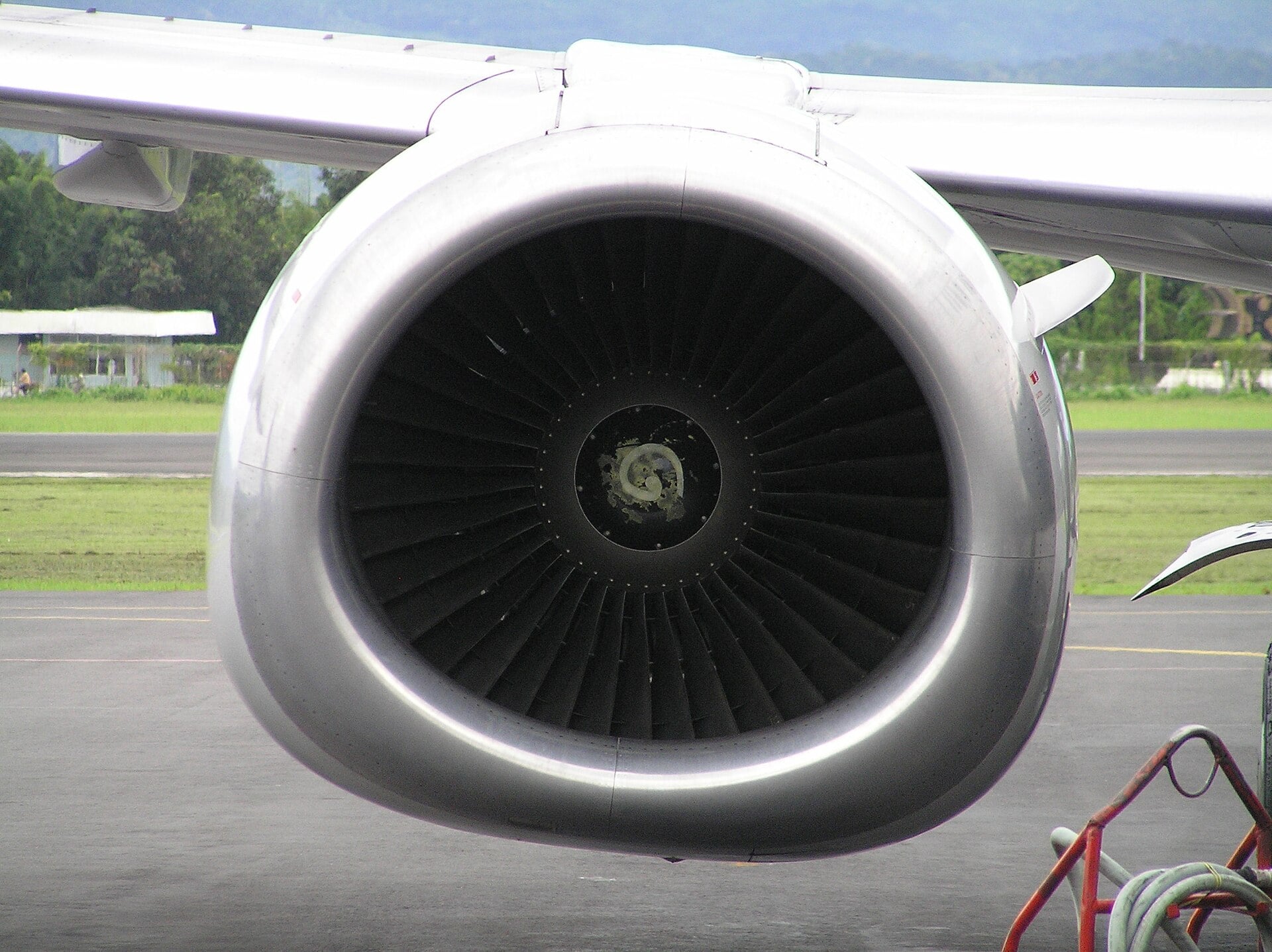
Part 45 settles what the finished article has to say about itself. Under 45.15(a) the manufacturer of a PMA article must permanently and legibly mark it with the holder’s name, trademark, symbol or other FAA-approved identification, with the part number, and with the letters FAA-PMA. If the article is too small or otherwise impractical to mark, the information is attached to the part or its container instead. A part bearing those letters is traceable to a named approval holder and a named quality system. A part bearing nothing is traceable to nobody.
And then there is the clause that separates a PMA from the approval we covered yesterday. Section 21.314 reads, in its entirety: the holder of a PMA may not transfer the PMA. One sentence, no exceptions.
Compare that with a Supplemental Type Certificate, where 21.120 requires the holder to give written permission acceptable to the FAA before anybody else may use it. That permission requirement is precisely what makes an STC a licensable, saleable asset — a document a company can build a business on and sell to another company. A PMA is not that. It is welded to the holder and to the quality system the FAA approved. You can buy the company. You cannot buy the approval off the shelf.
What a PMA does share with every other production approval is open-ended life. Under 21.313 it stays effective until it is surrendered, withdrawn, or the FAA terminates it. Nobody renews a PMA. The FAA simply keeps the right to take it away.
A short industry explainer on the practical difference between a PMA part and a part bought from the type-certificate holder.
What Actually Stops Airlines Using Them Is Not the FAA
In November 2025 IATA ran a webinar on what it calls approved alternative parts, and published the results of a survey of 46 airlines. The headline number is that roughly three quarters of them — 74 per cent — already use PMA parts somewhere in their fleet. The more interesting number is the one underneath.
Asked what was stopping them using more, the airlines did not point at airworthiness, reliability or the regulator. The single most-cited obstacle, named by 82 per cent, was leasing agreements. Second, at 50 per cent, came OEM contracts. Warranty concerns came third at 32 per cent. Reliability of PMA parts appeared near the bottom of the list.
IATA followed the survey with a workshop of 25 participants drawn from lessors, airlines and other organisations, and the workshop was blunt about why the restrictions exist: they come from the effect on transferability and on asset value. A lessor’s concern is what the aircraft looks like when it comes back, not how it is operated in the meantime — the term used in the room was the lease lawyer’s phrase, quiet enjoyment. Consumables, expendables and non-serialised interior items were marked as having no impact at all. Licensed PMA, where the part is listed in the illustrated parts catalogue, was treated as acceptable.
Read that again, because it is the whole commercial story in one line. A part can be fully approved by the regulator, demonstrably airworthy and cheaper, and still be excluded — by a contract, over a residual-value argument, between two parties who are not the aviation authority.
What 46 airlines told IATA in 2025
74% use PMA parts somewhere in their fleet
82% named leasing agreements as the obstacle to using more — the single biggest answer
50% named OEM contracts; 32 per cent named warranty concerns
91% said wider acceptance by airlines and lessors would change how their company views the parts
Source IATA alternative-parts survey and lessor workshop, presented at the IATA webinar of 19 November 2025
Counterfeit Parts Are a Different Problem Entirely
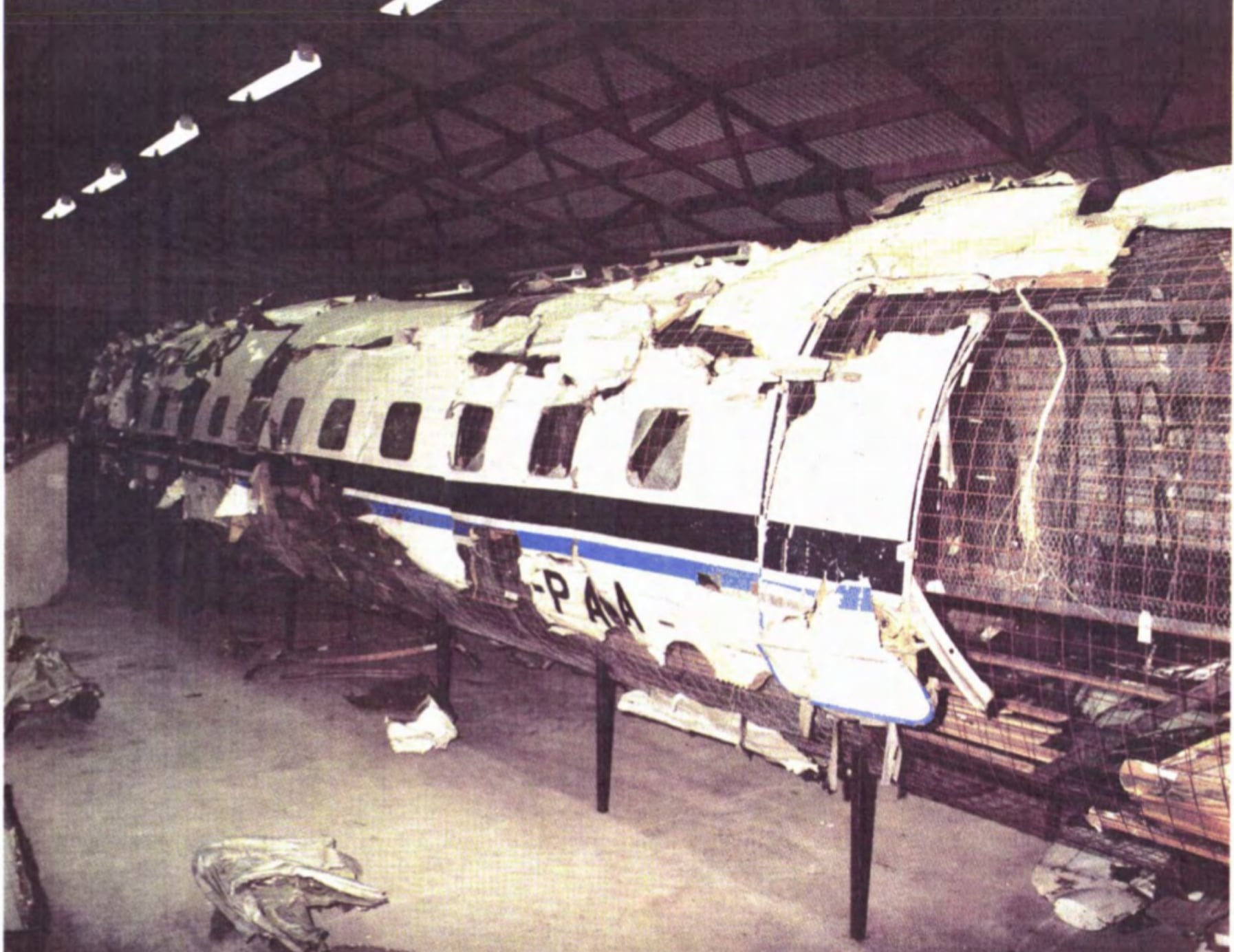
On 8 September 1989 a Convair CV-580 registered LN-PAA, operated by the Norwegian charter airline Partnair, broke up in cruise and fell into the sea roughly ten nautical miles north of Hirtshals, off the Danish coast. All 55 people on board were killed. The aircraft was 36 years old and had passed through a long list of owners and registrations.
The investigation recovered all four bolts, sleeves and pins from the joint where the vertical fin attaches to the fuselage. One of them had been replaced during an overhaul in Canada shortly before the accident, and it was properly approved equipment. The other three, with their associated parts, were counterfeit and had been incorrectly heat-treated during manufacture. Each could carry only around 60 per cent of its intended breaking strength.
The fin worked loose. An auxiliary power unit mount had already failed, and the investigators concluded that the two vibrating structures converged on the same frequency and went into resonance, the amplitude building until the fin separated. It is a close cousin of the subject we covered yesterday, though not the classical aircraft case: aeroelastic flutter couples two structural modes of the same surface, while Partnair was two separate components finding each other.
The aftermath reshaped how the United States polices parts. Mary Schiavo, the Department of Transportation’s Inspector General from 1990 to 1996, oversaw investigations that produced more than 150 criminal convictions and over 47 million dollars in fines and restitution under the Suspected Unapproved Parts programme. That programme was cancelled in 2007.
Here is the part that matters, and it is the reason this section exists at all. Not one of those bolts was a PMA part. They were the opposite of a PMA part. A counterfeit article has no design approval, no production approval, no approved quality system and no marking that means anything — which is exactly why nobody could tell by looking. A PMA article is the fully documented inverse: an FAA-approved design, an FAA-approved production system, an inspection and test regime written into 21.303(b), and letters stamped into the metal that lead an investigator back to a named holder.
Conflating the two is the single most common error in this subject, and it cost the aftermarket two decades of arguing about legitimacy. The fear is real; it is simply pointed at the wrong target. When counterfeit components surface today — as they did in the case of the F-16 identification-friend-or-foe parts fraud prosecuted in Korea this year — the problem is never that somebody held the wrong approval. It is that nobody held one.
Inside a large engine shop. Every component that comes off a module on a bench like this has to be replaced by something that holds an approval — and the choice of which approval is a commercial decision as much as a technical one.
Why the List Has Seven Entries, and What Keeps Old Jets Flying
The seven routes in 21.9 look like bureaucratic padding until you own something that is no longer made. A 1970s L-39 Albatros, a de Havilland Vampire, a T-33: the production lines closed decades ago, and in several cases the state that ran them no longer exists. There is no manufacturer to telephone.
The list is what keeps those aircraft legal. Entry three covers standard parts made to a recognised specification, which is a great deal of what holds any airframe together. Entry five is the owner-produced part, made by the owner or operator for maintaining or altering their own aircraft. Entry six covers a part fabricated by an appropriately rated certificate holder and consumed in a repair under Part 43. And where a component is needed in enough quantity to justify the paperwork, somebody takes out a PMA for it.
This is the quiet achievement of Subpart K. The framework that lets a supplier compete with an engine manufacturer on a current airliner is the same framework that lets a fifty-year-old trainer keep flying with parts nobody has tooled since the Cold War. It was never designed as a discount scheme. It was designed so that a replacement part would always have a traceable approval behind it, whoever made it and whenever it was made.
A piston-engine overhaul, filmed start to finish. The approval questions in this article apply at every stage, from the standard hardware to the serialised components.
What the Rule Book Actually Says
Strip away the trade-press noise and the regulator’s position is almost boring in its consistency. A part is approved or it is not. If it is approved, the approval has a number, a holder and a quality system behind it, and the metal says so. If it is not approved, no amount of provenance, packaging or familiar branding rescues it.
Everything else — who is permitted to be annoyed about which part, what a lessor will accept at redelivery, which catalogue a part appears in — is layered on top by contract. That is a legitimate commercial argument, and lessors are not being unreasonable in worrying about residual value. But it is not an airworthiness argument, and it is worth being clear about which one is being had.
Which is why the biggest obstacle 46 airlines could name was a lease clause, and the word their regulator never wrote down was OEM.
Sources: 14 CFR 21.9, 21.301–21.320 and 45.15, as published in the Electronic Code of Federal Regulations; IATA alternative-parts survey of 46 airlines and lessor workshop, presented at the IATA webinar of 19 November 2025; The Airline Guide to PMA by David Doll and Clara Greceanu, Modification and Replacement Parts Association; published accident reporting and archival material on Partnair Flight 394.
Foire aux questions
What are PMA parts in aviation?
What is the difference between OEM and PMA parts?
How do you get an FAA PMA approval?
Are PMA parts as safe as the original parts?
Where can I find the FAA PMA database?
Why do aircraft leases restrict PMA parts?
Are counterfeit aircraft parts the same as PMA parts?
Can I fly in an L-39 Albatros?
Articles similaires
Supplemental Type Certificate: Why Boeing Doesn’t Own Its Winglets
Airworthiness Directives: The Four Types That Do Not Exist
KF-16 Counterfeit Parts: Korea Charges Five Over 12.8 Billion Won Fraud
GA Telesis Parts Out Its First Boeing 737 MAX 8 for Spares
A380 superjumbos disparus : une mine d’or cachée de l’aviation


0 Comments