
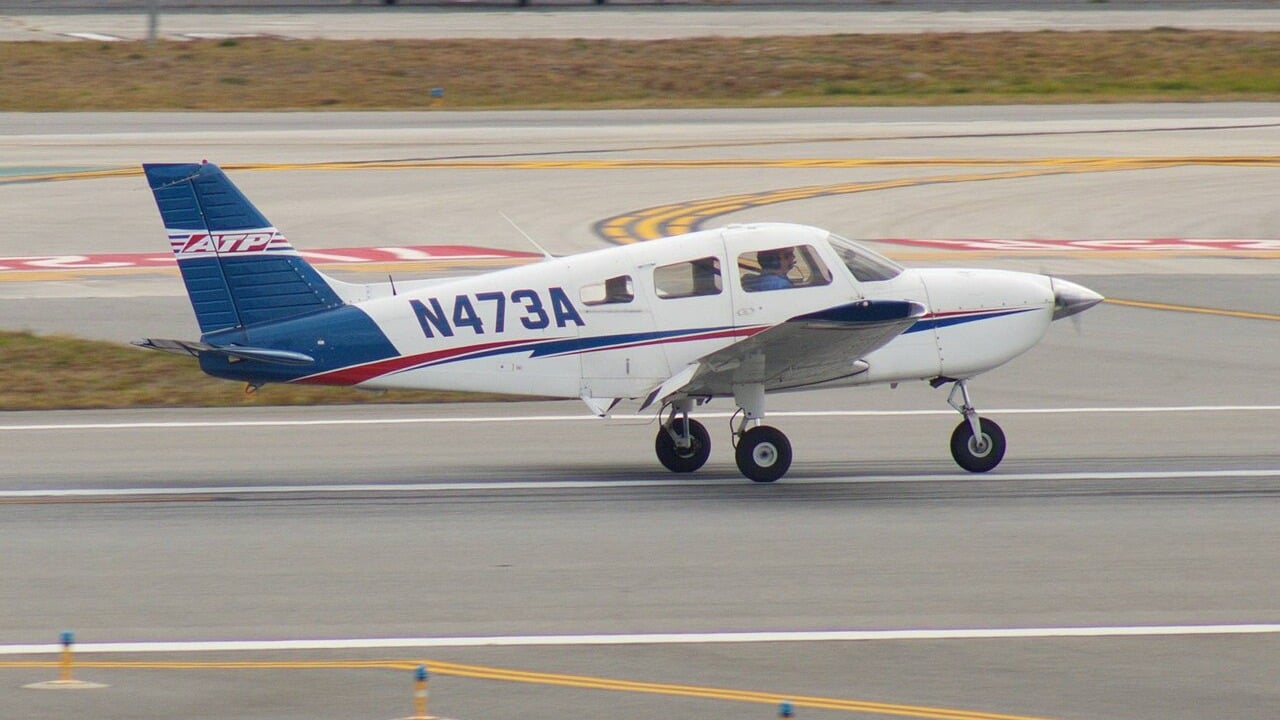
The certificate that makes a pilot legally employable arrives at 250 flight hours. The certificate a United States airline is required to hire arrives at 1,500. Between those two numbers sits a gap of 1,250 hours that nobody teaches you, nobody examines you on, and nobody pays for.
The mechanics of that gap have been covered here before, in FAA 1,500-Hour Rule: How US Airline Pilots Actually Get Hired. This piece is about what it costs. Not the rule. The bill, and the calendar.
Start with the arithmetic that decides everything else, because once you have done it, every strange feature of the American pilot pipeline stops looking strange.
Quick Facts
Commercial certificate: 250 hours (14 CFR 61.129)
Unrestricted ATP: 1,500 hours (14 CFR 61.159)
The gap: 1,250 hours, or 750 with a qualifying bachelor’s degree
Instructor daily limit: 8 hours of flight training per 24 hours (14 CFR 61.195(a))
Published academy price: $123,995 from zero at ATP Flight School, plus about $12,000 in test fees
Published university flight fees: $23,000 to $33,000 a year at Embry-Riddle Daytona Beach, 2026-27
Time to 1,500: one to two years after school, per GAO-18-403
Median pay, May 2025: $123,220 commercial pilots, $232,140 airline pilots (BLS)
The Arithmetic That Rules Out Simply Renting
The obvious way to close a 1,250-hour gap is to rent an aeroplane and fly it. Flight schools publish their rates, so this is not a matter of opinion. Wisconsin Aviation’s posted list, effective 1 January 2025, prices a Cessna 152 at $105 an hour wet and its Cessna 172s between $139 and $159. St. Charles Flying Service, posting rates effective 1 April 2026, lists a 152 at $168.20 and its 172s between $199.30 and $231.30, all wet. Embry-Riddle’s own 2026-27 schedule puts a Cessna 172 Nav 3 at $215.63 an hour solo with fuel.
Multiply any of those by 1,250 and the problem announces itself.
| Published wet rate | Per hour | 1,250 hours | 750 hours (degree route) |
|---|---|---|---|
| Cessna 152, Wisconsin Aviation, eff. 1 Jan 2025 | $105.00 | $131,250 | $78,750 |
| Cessna 172, Wisconsin Aviation, eff. 1 Jan 2025 | $139.00 | $173,750 | $104,250 |
| Cessna 172 (180 hp), St. Charles, eff. 1 Apr 2026 | $212.00 | $265,000 | $159,000 |
| Cessna 172 TAA, St. Charles, eff. 1 Apr 2026 | $231.30 | $289,125 | $173,475 |
Published wet rates at named schools, multiplied out. Solo time only, no instructor, no landing fees, no checkrides.
The cheapest honest figure in that table is $131,250, and it assumes flying a two-seat Cessna 152 at a Wisconsin rate that is now two years old, solo, with no instructor and no incidental costs whatever. The realistic figures sit between $170,000 and $290,000.
Compare that with what the training itself costs. ATP Flight School publishes a fixed price of $123,995 to take a student from no experience to commercial pilot with instructor and instrument instructor ratings. In other words, buying the hour gap on the open market costs more than the entire professional training that precedes it, and in the worst case more than twice as much.
That single comparison explains the whole structure of the American pilot career. Nobody buys the gap. Everybody finds a way to be paid for it.
Why Almost Everyone Instructs
Flight instructing is the default not because it is the best preparation for an airline, but because it is the only common job that pays a 250-hour pilot to fly a lot of hours. The instructor logs the same flight the student logs. The student pays for the aircraft. That is the entire economic trick.
There is a hard ceiling on how fast it can be done. 14 CFR 61.195(a) is one sentence long: “In any 24-consecutive-hour period, a flight instructor may not conduct more than 8 hours of flight training.” Nobody sustains that. Weather, maintenance, cancellations and daylight see to it.
ATP publishes a timeline that lets you do the sum. The company says a student reaches the private certificate in about three months and the commercial and instructor certificates in six, and reaches 1,500 hours in about two and a half years. Take thirty months, subtract the nine spent training, and roughly 1,200 hours have to be flown in the remaining twenty-one. That is a shade under sixty flight hours a month, every month, as an instructor. The Government Accountability Office reached the same place from the other direction in GAO-18-403, reporting that it could take an additional one to two years for pilots coming out of school to meet the 1,500-hour requirement.
Swayne Martin runs through the ten jobs low-time pilots actually use to build flight time, instructing among them.
What the Front End Costs Before Any of That
The 1,250-hour gap is the back half of the bill. The front half is the training itself, and here too there are published numbers rather than forum folklore.
The academy route is the easiest to price because it is sold as a fixed figure. ATP Flight School lists $123,995 from zero experience, $100,995 for a student with solo experience and $90,995 for one who already holds a private pilot certificate. Examiner and knowledge-test fees are extra, at about $12,000 from zero, as are roughly $2,200 of iPad, headset and flight bag, and a training-centre premium of up to $5,000 at some locations.
The university route is priced differently and usually costs more, because the flight fees sit on top of tuition. Embry-Riddle’s Daytona Beach college of aviation publishes 2026-27 rates of $302.63 an hour for a dual Cessna 172 Nav 3 with fuel and $510.90 for a dual Diamond DA-42, with instruction at $87 an hour, and advises students to budget $23,000 to $33,000 a year in flight fees for the first two years and $10,000 to $15,000 for the third. That is $56,000 to $81,000 of flying alone, and it buys a commercial certificate, a multi-engine instrument rating and a little over 190 hours.
The Degree Buys Time, Not Money
This is the part most prospective pilots get backwards. A qualifying aviation bachelor’s degree lowers the airline entry requirement from 1,500 hours to 1,000 under the restricted-privileges ATP; an associate’s degree, or a partial bachelor’s, lowers it to 1,250. The degree does not make the training cheaper. It makes the gap shorter.
Priced at the sixty-hours-a-month rate implied by ATP’s own timeline, five hundred saved hours is roughly eight months. Eight months earlier into an airline seat, and eight months better on a seniority list, which then compounds across an entire career. Against that, the GAO found collegiate students facing flight-training fees that “often exceed $50,000” and a combined bill with tuition that “often exceeds $100,000”.
Whether eight months of seniority is worth a six-figure degree is a judgment rather than a calculation. But it is worth being precise about what is being bought. It is not a cheaper licence. It is a shorter wait, paid for in advance.
The Other Jobs, and Why Fastest and Cheapest Point in Different Directions
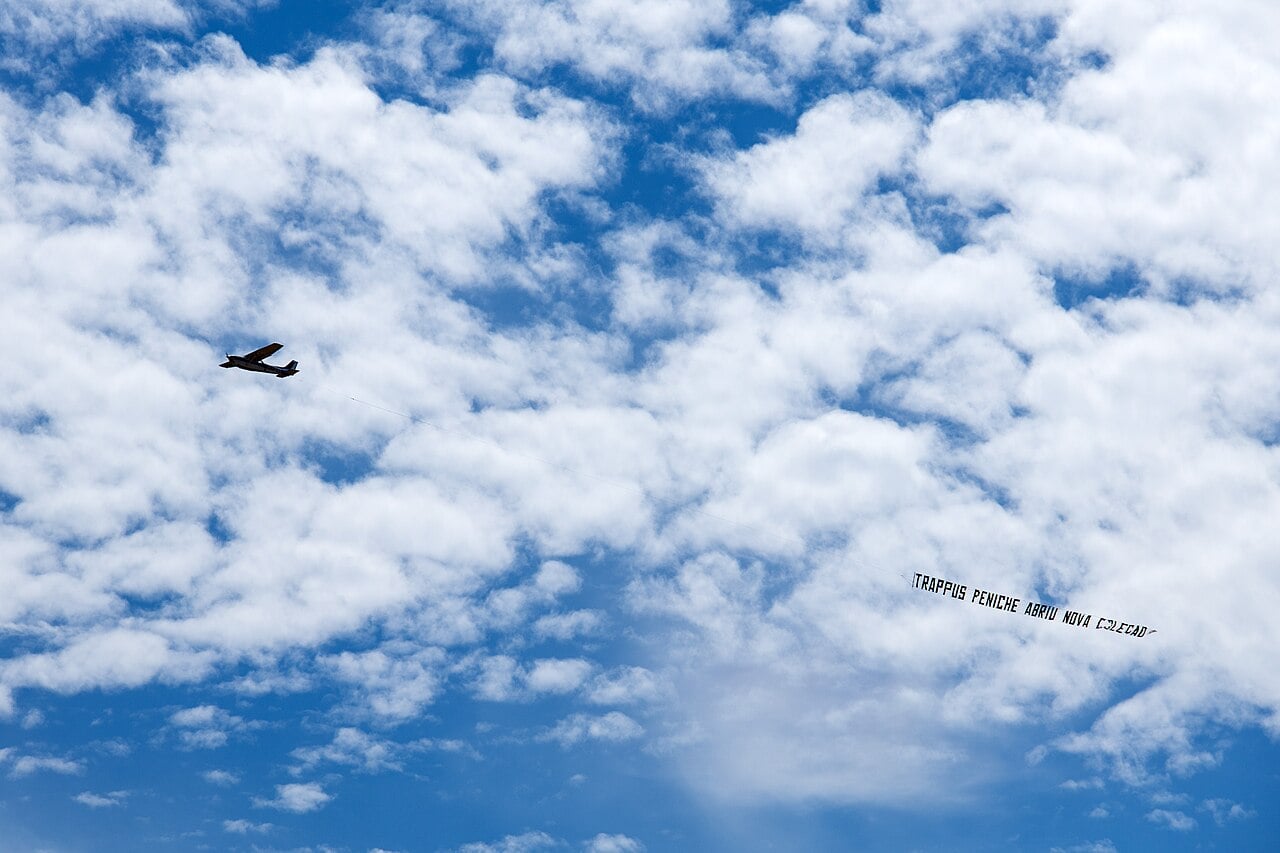
Instructing is not the only route. Banner towing, pipeline and powerline patrol, skydive dropping, traffic watch and night freight in light twins all exist, and all of them are chosen for the same reason: somebody else pays for the aircraft.
They are not interchangeable, though, and the difference is not mainly money. Instructing produces mostly short flights with many takeoffs and landings and, for a pilot who will eventually need 500 hours of cross-country time under 14 CFR 61.159, surprisingly little useful cross-country. Banner towing and skydive flying generate hours in very short circuits. Pipeline patrol and night freight generate exactly the cross-country and night time the ATP requirements actually specify. A pilot who optimises purely for total hours can arrive at 1,500 with the wrong hours.
That is the real content of the question “what is the fastest way”. Fastest in total time is usually full-time instructing at a busy school. Cheapest, in the sense of least cash out of pocket, is whichever of these jobs you can get hired into soonest. The two rarely point at the same employer, and neither of them is renting a 172.
Two years and 1,500 hours as a full-time flight instructor, from the inside.
What It Pays, and the Number Nobody Publishes
At the far end of the gap the money is real. The Bureau of Labor Statistics put the median annual wage for airline pilots, copilots and flight engineers at $232,140 in May 2025, with the lowest tenth under $106,710 and the top tenth above $463,830. Commercial pilots, the bucket that covers charter, corporate, survey and most instructing work, had a median of $123,220, a bottom decile under $58,850 and a top decile above $266,620.
Read those two lines together and the pipeline makes sense. The airline number is roughly double the commercial number, which is why people spend six figures and several years to cross from one to the other.
What does not exist is a trustworthy published figure for what a flight instructor actually earns. The BLS does not break instructors out as an occupation; they are folded into commercial pilots, whose bottom decile is the nearest honest marker. What is published is what schools charge for instruction, which is not the same thing: Wisconsin Aviation lists $65 to $85 an hour depending on the aircraft and the rating, Embry-Riddle $87. The instructor sees a fraction of it, the fraction varies by employer, and anyone quoting you a national average for CFI pay is quoting a survey of volunteers.
That gap in the data is not a detail. The 1,250 hours between employability and hireability is the most expensive stretch of an American pilot’s career, it is financed almost entirely by the pilot, and the wage that is supposed to carry them through it is the one number in the whole chain that nobody measures.
A survey of the jobs open to a low-time commercial pilot, and what each one does to a logbook.
Sources: ATP Flight School published pricing; Embry-Riddle Aeronautical University Daytona Beach flight course costs 2026-27; Wisconsin Aviation rental and instruction rates; St. Charles Flying Service rental rates; U.S. Bureau of Labor Statistics Occupational Outlook Handbook, May 2025 wage data; GAO-18-403; Regional Airline Association testimony, 4 June 2026; 14 CFR 61.129, 61.159, 61.160 and 61.195.

0 Comments