
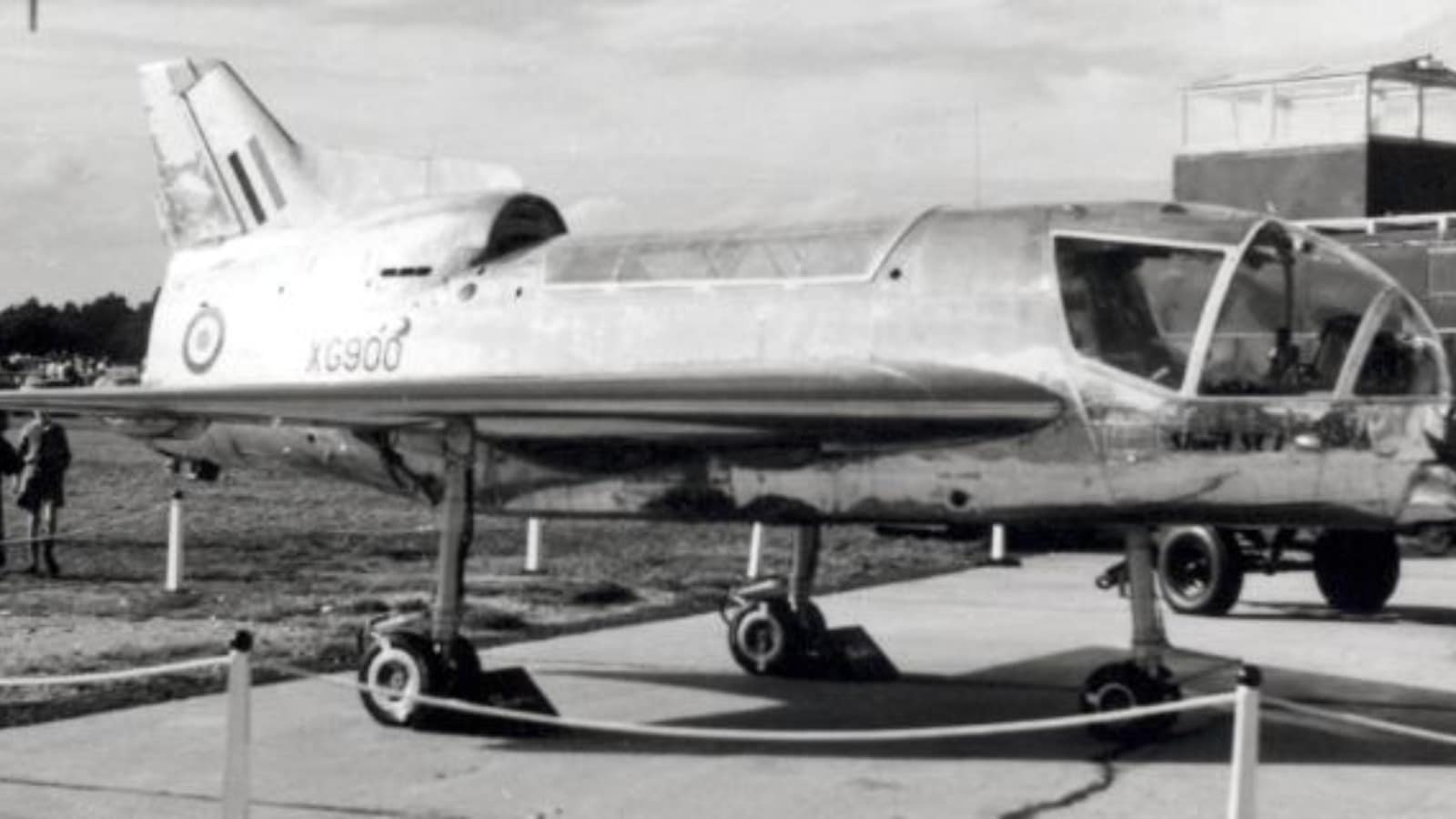
A jet aeroplane hovering ten feet above a runway is doing something aerodynamically absurd. There is no airflow over the wings, so the control surfaces do nothing. The only things keeping it upright are puffs of compressed air from nozzles at the nose, tail and wingtips, and they need adjusting many times a second — faster than a human can think.
The Short SC.1 solved that in 1958 with three independent electronic control channels that voted on what to do. It is one of the first fly-by-wire aircraft in the world, and the first VTOL aircraft to fly that way.
Informazioni rapide
Tipo: Short SC.1, British VTOL research aircraft
Costruito: Two — XG900 and XG905, ordered 15 October 1954
Motori: Five Rolls-Royce RB.108 turbojets: four vertical lift engines plus one conventional propulsion engine in the tail
Lift thrust: Quoted as 8,600 lb from the four lift engines
First conventional flight: 2 April 1957 (XG900, cruise engine only)
First free vertical flight: 25 October 1958 (XG905)
First full transition: 6 April 1960 (XG905)
Sopravvissuti: XG900 at the Science Museum, London; XG905 at the Ulster Folk and Transport Museum, Cultra
Five engines, and only one of them pushes
This is the detail that gets mangled most often, so it is worth being precise. The SC.1 had five Rolls-Royce RB.108 turbojets. Four sat vertically in a central bay in side-by-side pairs, doing nothing but lifting — and they could swivel fore and aft to vector their thrust. The fifth sat conventionally in the tail and pushed the aircraft forward.
Bleed air from the lift engines fed the reaction nozzles at the extremities. In the hover the pilot flew on those alone. As speed built, the wings began to work and the conventional controls took over. Managing the handover was the entire research problem.
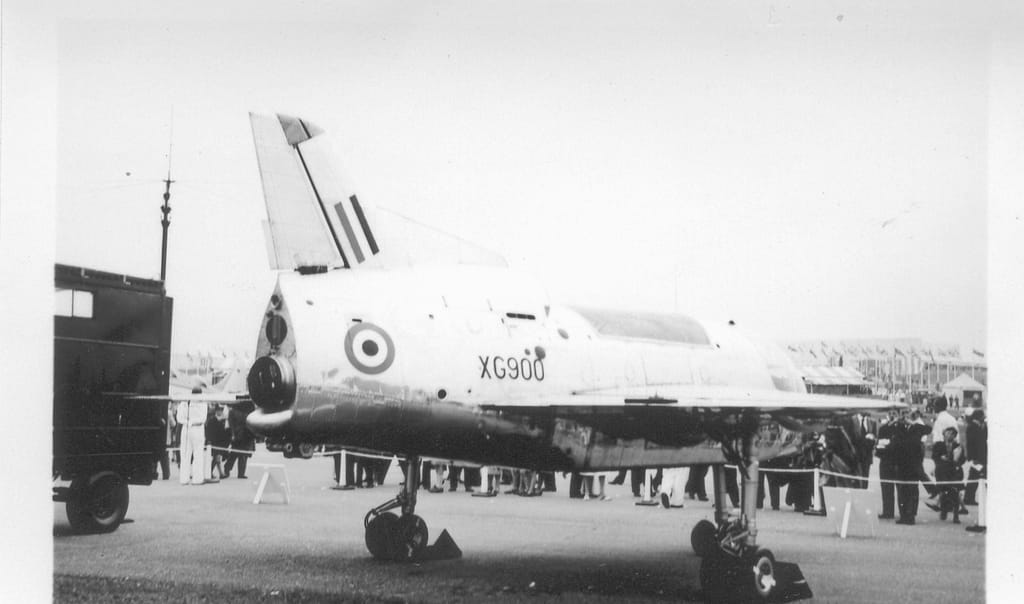
The control system was the aeroplane
The SC.1's flight control system was electrically signalled and triplex: three independent servo channels and three autostabiliser channels, continuously compared, with a majority vote so that a single failed channel was outvoted rather than obeyed. The pilot could also throw a lever and revert to direct mechanical control if all of it went wrong.
Built in 1957, that is a remarkable piece of engineering — the architecture that modern fly-by-wire aircraft still use, in an aeroplane contemporary with the Hunter. It existed because jet-borne flight left no alternative: without an autostabiliser the SC.1 was not flyable at zero airspeed.
British Pathé’s 1960 newsreel of the SC.1 hovering and transitioning — period footage of the real thing.
The milestones, in order
XG900 flew conventionally first, on 2 April 1957, with only the cruise engine installed — a normal aeroplane taking off from a normal runway. XG905 was the one fitted out for vertical work: first tethered hover on the gantry on 26 May 1958, first free vertical take-off and landing on 25 October 1958, and the first complete transition from vertical to wing-borne flight on 6 April 1960.
Watching from a few miles away, the Ministry of Aviation was already backing a different horse. Asked in the Commons in November 1961 whether Britain led the world in this technology, the minister agreed that it did — and then said what was coming next.
The P.1127 became the Kestrel and then the Harrier, which lifted itself on one vectored-thrust engine rather than four dedicated lift jets — lighter, simpler, and able to carry something useful. The SC.1's layout was a research answer, not an operational one.
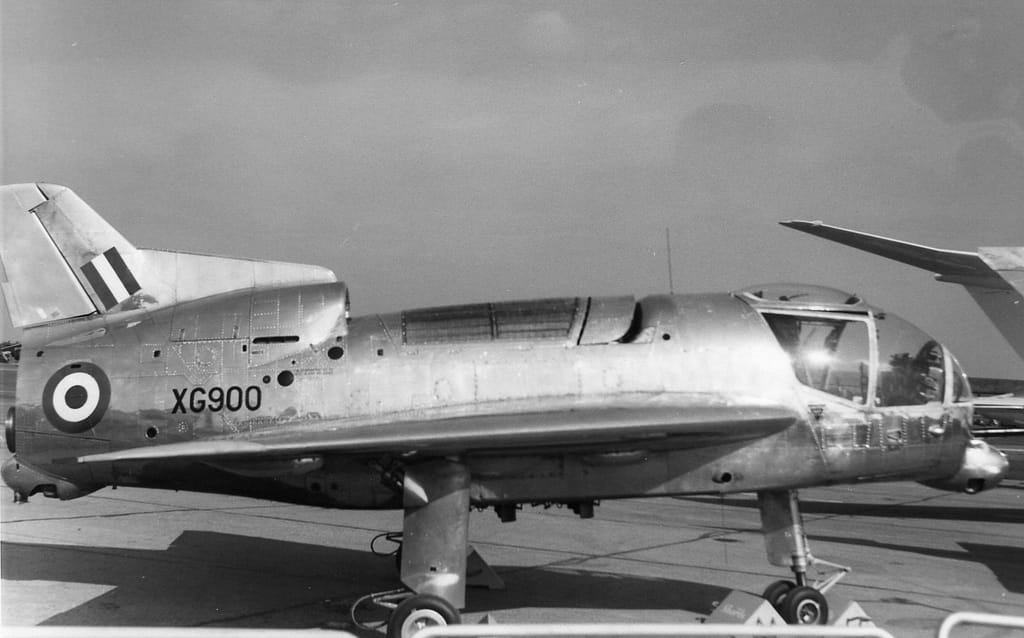
2 October 1963
At Short's Sydenham works in Belfast, XG905 was on approach at about thirty feet when a fault in the autostabiliser's gyro input gave the system a false vertical reference. The aircraft rolled inverted and hit the ground. The pilot, J. R. Green, a former RAE test pilot then flying for Short Brothers and Harland, was killed.
The failure was in exactly the component the whole aircraft depended on. Green had begun reverting toward manual control, but the gyros did not lock in time. XG905 was rebuilt and flew again.
A long, quiet afterlife
Both aircraft went on flying for the Royal Aircraft Establishment far longer than most summaries admit. Records from Bedford put XG900 in use until May 1971 and XG905 until May 1973, and in 1969 a minister was still describing XG905's advanced control system as under active assessment for operations from restricted sites in all weathers.
XG900 is at the Science Museum in South Kensington. XG905 is at the Ulster Folk and Transport Museum at Cultra, a few miles from where it was built and where it crashed.
The Harrier gets the credit, and deserves it. But the reason a Harrier pilot can hover at all is that somebody first worked out how to make a machine hold an aeroplane steady when the aeroplane itself has stopped flying. That was done in Belfast, with five engines and three computers voting.
Sources: Science Museum Group collection record for XG900; Vertical Flight Society Vertipedia; Hansard, 20 November 1961 and 21 May 1969; Aviation Safety Network; Farnborough Air Sciences Trust / Bedford Aeronautical Heritage Group; Wikipedia cross-checks.


0 Commenti