
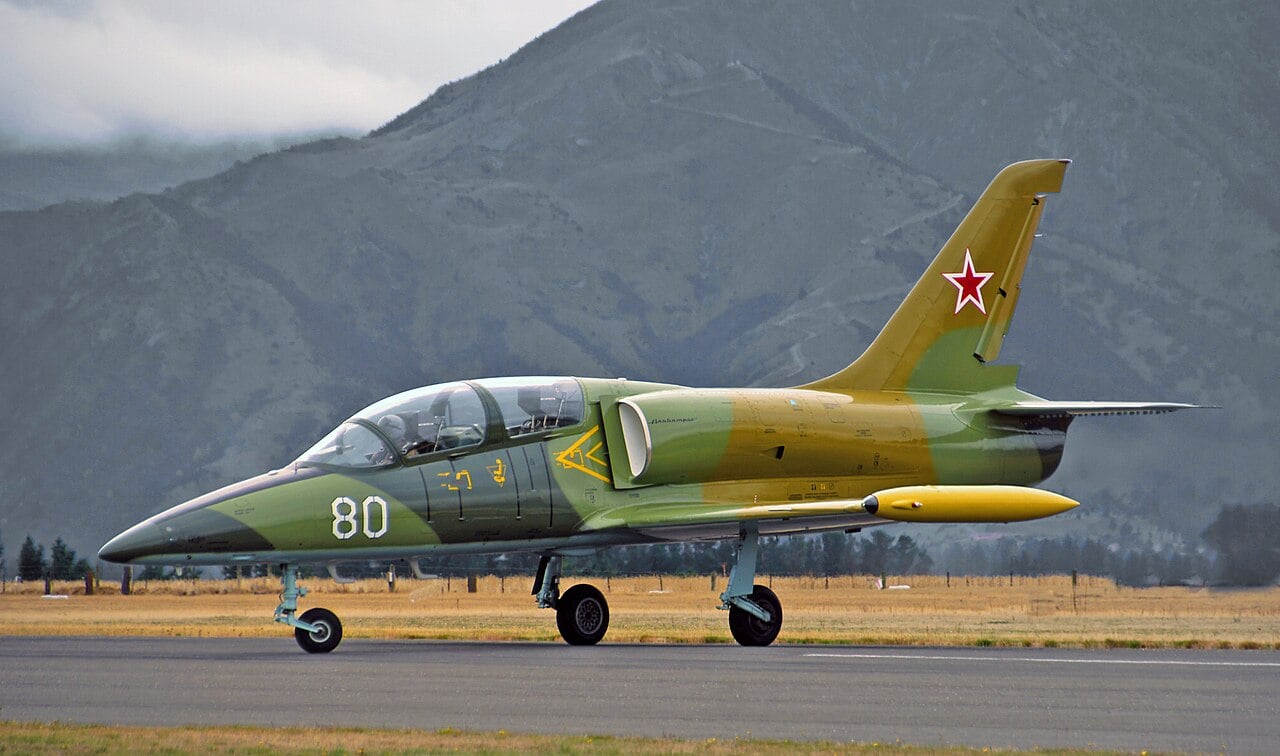
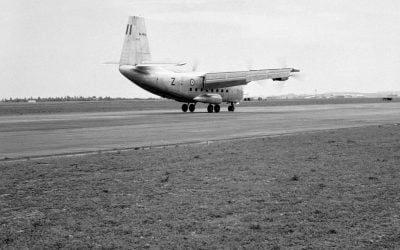
There is a pleasing symmetry in the pictures the Ukrainian presidential office released on Saturday. Twenty-one Ukrainian military pilots are in Canada learning to fly Western fighters. The aircraft they are learning on is a Czechoslovak jet trainer designed in the 1960s: the Aero L-39 Albatros.
Volodymyr Zelensky visited them on 12 September at the International Test Pilots School, based at Jack Garland Airport in North Bay, Ontario. The photographs show Ukrainians walking out to L-39s and sitting in simulators for aircraft they do not yet have.
It is the least glamorous and most important part of building an air force.
Informazioni rapide
Dove: International Test Pilots School, Jack Garland Airport, North Bay, Ontario
Chi: 21 Ukrainian service members, pilots plus aviation maintenance and technical specialists
Training aircraft: Aero L-39 Albatros, flying the third and fourth phases of flight training
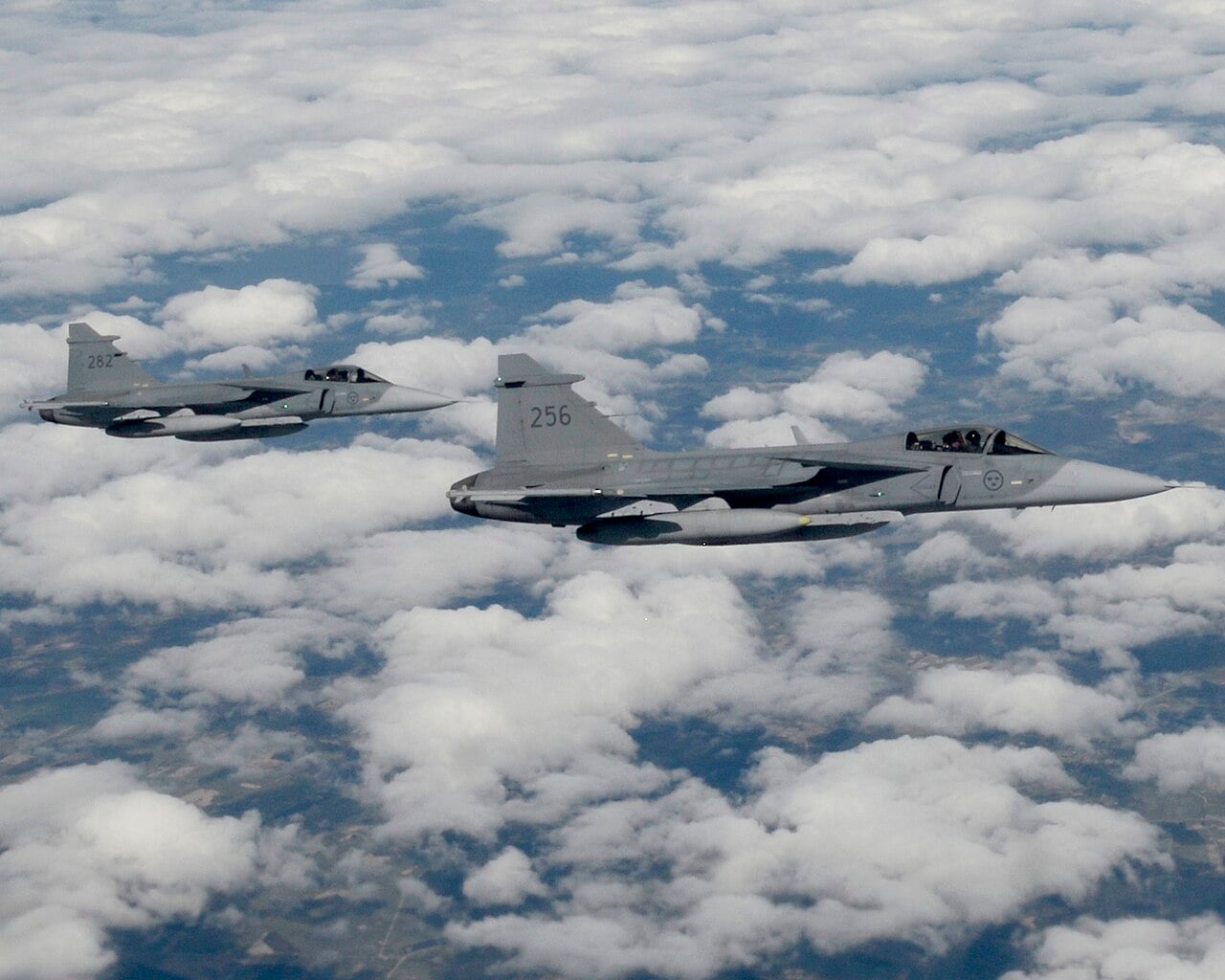
Target types: F-16 Fighting Falcon E Saab JAS 39 Gripen
Canadian funding: Up to CAD 389 million for training Ukrainian aviation personnel, 2024 to 2029
Visit date: 12 September 2026
Why a 1960s Trainer Is the Right Aircraft
This is not a compromise or a shortage measure. The phase the Ukrainians are flying is Fighter Lead-In Training, and the whole point of it is to teach Western procedures, tactics and habits in an aircraft that costs a fraction of a fighter to operate.
An L-39 is a twin-seat, single-engine subsonic jet. It is fast enough to teach jet handling, formation and tactical flying, docile enough to survive a student’s mistakes, and cheap enough that an air force can afford the hours it takes to build judgement. Pushing a pilot straight into an F-16 without that groundwork does not save time; it wastes airframes.
That is why the L-39 became the most widely used jet trainer ever built, and why it is still doing this job in 2026 for pilots headed to fourth-generation fighters.
Two Types, One Pipeline
The unusual part is that this pipeline feeds two different fighters at once. Ukraine already operates the F-16. The Gripen is the newer commitment, and training pilots for both simultaneously is a genuine complication: different cockpits, different logic, different logistics, different maintenance cultures. It is also a hedge, and given how fitfully Western aircraft deliveries have arrived, a sensible one.
The Ukrainians in Canada are not only pilots. The cohort includes specialists in maintaining and operating aviation equipment — the people without whom a donated fighter becomes an expensive ornament. Alongside the L-39 flying, the trainees are using F-16 simulators to work through flight and tactical scenarios without burning airframe hours.
The Timing Question
On the aircraft themselves, there is a discrepancy worth flagging rather than smoothing over. During the visit Zelensky said Gripens would arrive in Ukraine this year. Sweden’s own timeline, as published, points to donated jets arriving in early 2027. Both statements are on the record; they do not agree, and nobody outside the two governments can currently say which will prove right.
Canada’s contribution is the part that is not in doubt. Ottawa has committed up to 389 million Canadian dollars to training Ukrainian aviation personnel across 2024 to 2029 — a five-year horizon that tells you how the people running the programme expect this to go. You do not budget to 2029 for a war you expect to end next spring.
Footage from the visit, showing the trainees and the aircraft they are flying:
Domande frequenti
Where are Ukrainian pilots training in Canada?
What aircraft are the Ukrainian pilots flying in Canada?
Why train on an old L-39 instead of the actual fighter?
Which fighters are the Ukrainian pilots being prepared for?
When will Ukraine receive its Gripen fighters?
How much is Canada spending on training Ukrainian pilots?
Sources: Office of the President of Ukraine, Militarnyi, Interfax-Ukraine, The Defence Blog, 112.ua.
0 Comments