
In February 1962, Mao Zedong received an unexpected letter from Nikita Khrushchev. Two years after the Sino-Soviet split had led Moscow to withdraw its advisers from China, the Soviet leader was offering Beijing the technology for the most modern fighter in his inventory, the MiG-21. On 30 March 1962 the deal was signed.
What arrived in Shenyang a few months later was not quite what had been promised. The kits, parts and paperwork were incomplete, and some components could not be used. China’s engineers would have to work out the rest themselves. The aircraft they produced, the Chengdu J-7, became one of the longest-lived fighters in history and, as the export F-7, flew for air forces from Pakistan to Namibia.
Informazioni rapide
- Tipo: Single-seat, single-engine supersonic fighter (two-seat trainers: JJ-7/FT-7)
- Origine: Licence-built and reverse-engineered derivative of the Soviet MiG-21F
- Technology deal: 30 March 1962
- Primo volo: 17 January 1966
- Velocità massima: Mach 2
- Costruito: About 2,400 between 1965 and 2013
- Last version built: F-7BGI for Bangladesh, deliveries completed 2013
- Chinese service: Retirement began 2018; CCTV said remaining PLAAF jets would leave combat service in 2023
- Largest export user: Pakistan Air Force (F-7P, F-7PG)
Rebuilding a fighter from incomplete plans
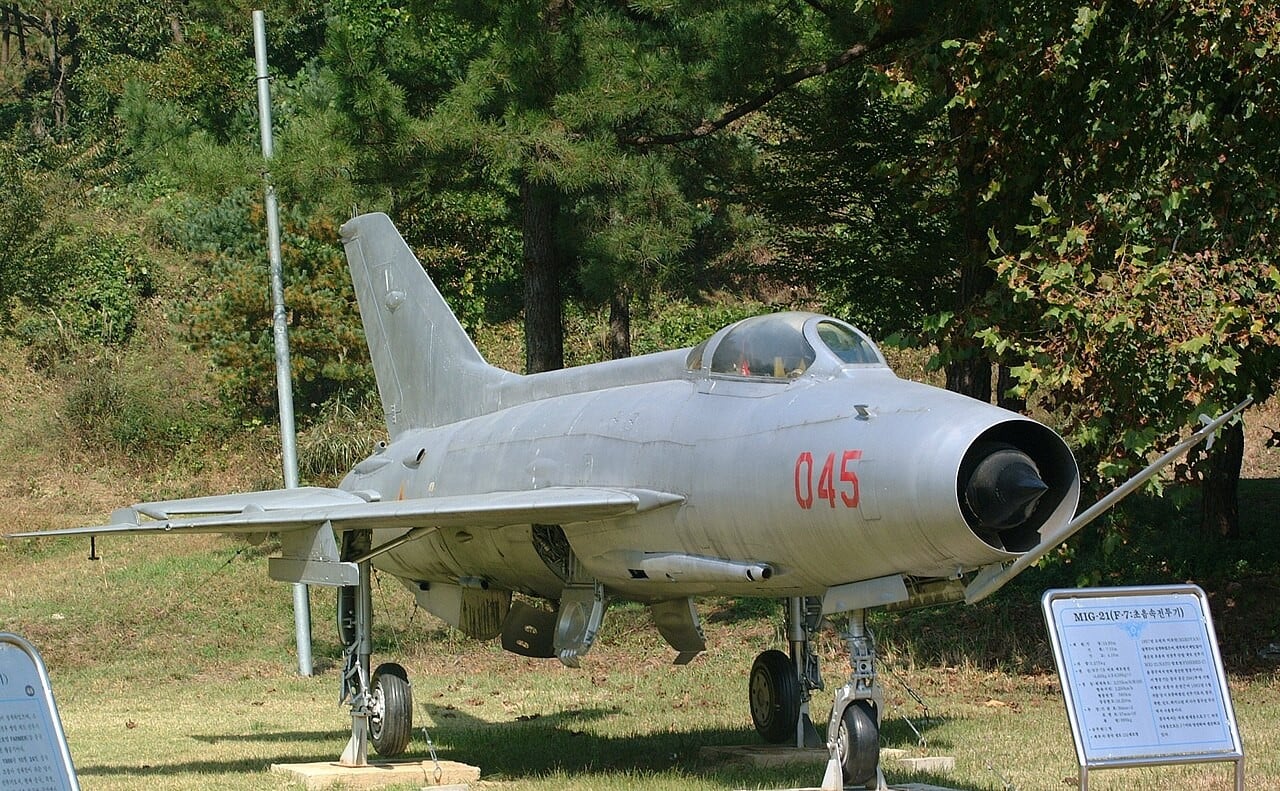
The Chinese had expected trouble and prepared for it. Working from early MiG-21F airframes, kits and partial documents, they reverse-engineered what was missing, resolving 249 major technical problems and recreating eight major sets of technical documents the Soviets had not supplied. The engine, built as the WP-7, was its own battle: GlobalSecurity records a turbine-blade rejection rate of up to 50 percent until Chinese metallurgists developed a better alloy.
Production started at Shenyang in March 1964, and the government soon spread the work to factories at Chengdu and in Guizhou. The first J-7 flew on 17 January 1966 and reached Mach 2.02 in testing. The type was certified for production in June 1967. Outside China, nobody was quite sure what was happening.
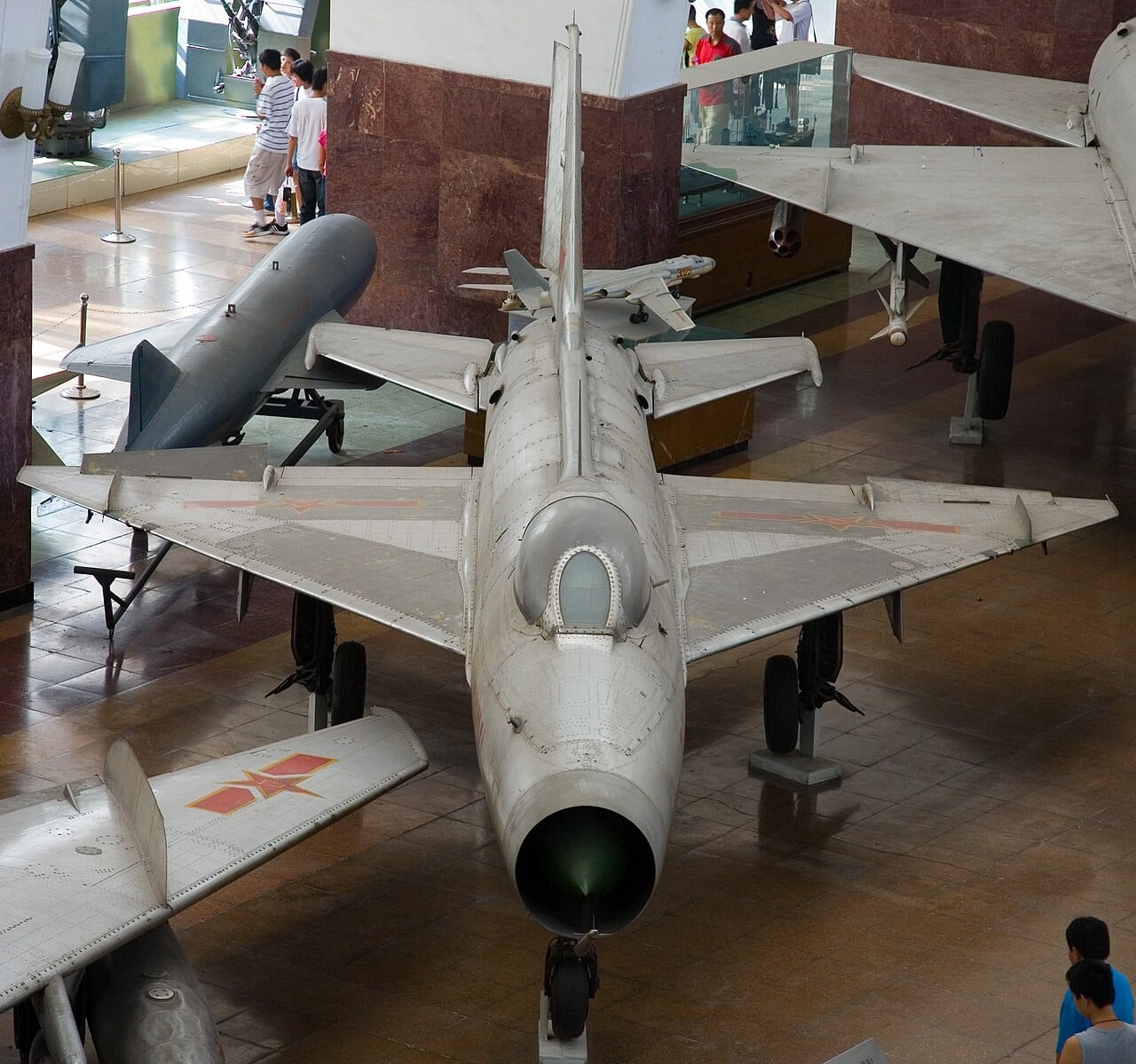
The answer was the Cultural Revolution. The political upheaval that swept China from 1966 badly damaged quality and slowed the programme to a crawl. Mass production was only truly achieved in the 1980s, by which time the basic design was already showing its age against fighters such as the F-16.
Fixing the MiG-21’s weak points
The early J-7s were troubled. The J-7I that entered service in 1976 suffered such serious hydraulic problems that at times up to 70 percent of a unit’s aircraft were grounded. Chinese engineers also redesigned the fuel system, because the MiG-21 carried most of its fuel forward and its centre of gravity shifted as the tanks emptied. They replaced the Soviet ejection seat, which they judged unacceptable, as well.
Even so, the J-7 was a clear step up from the Shenyang J-6, China’s copy of the MiG-19. Its WP-7 engine was roughly half as powerful again as the J-6’s WP-6, according to GlobalSecurity. The weaknesses were the classic MiG-21 ones: a radar with a short search range, limited fuel and modest short-range firepower.
Over the following decades the J-7 evolved well beyond its Soviet parent. A brief thaw with the West in the early 1980s brought British-made head-up displays into the cockpit. The J-7E introduced a new double-delta wing with a kinked leading edge, more fuel and better take-off and landing performance, along with a helmet-mounted sight and hands-on-throttle-and-stick controls.
Weapon Detective on the Chengdu J-7 and how it differs from the Soviet MiG-21.
The final Chinese version, the J-7G, entered service with the People’s Liberation Army Air Force in 2003. The J-7 also became the basis for the JL-9 trainer, and its design experience fed into later Chinese fighters. By the time production ended, about 2,400 J-7s and F-7s had been built between 1965 and 2013.
The F-7 goes abroad
Cheap, simple and fast, the F-7 sold where Western fighters were too expensive or politically unavailable. Export versions often carried Western equipment, from British avionics to French Magic air-to-air missiles. Customers included Iraq, Iran, Myanmar, North Korea, Albania, Sri Lanka, Sudan, Tanzania, Zimbabwe, Nigeria and Namibia.
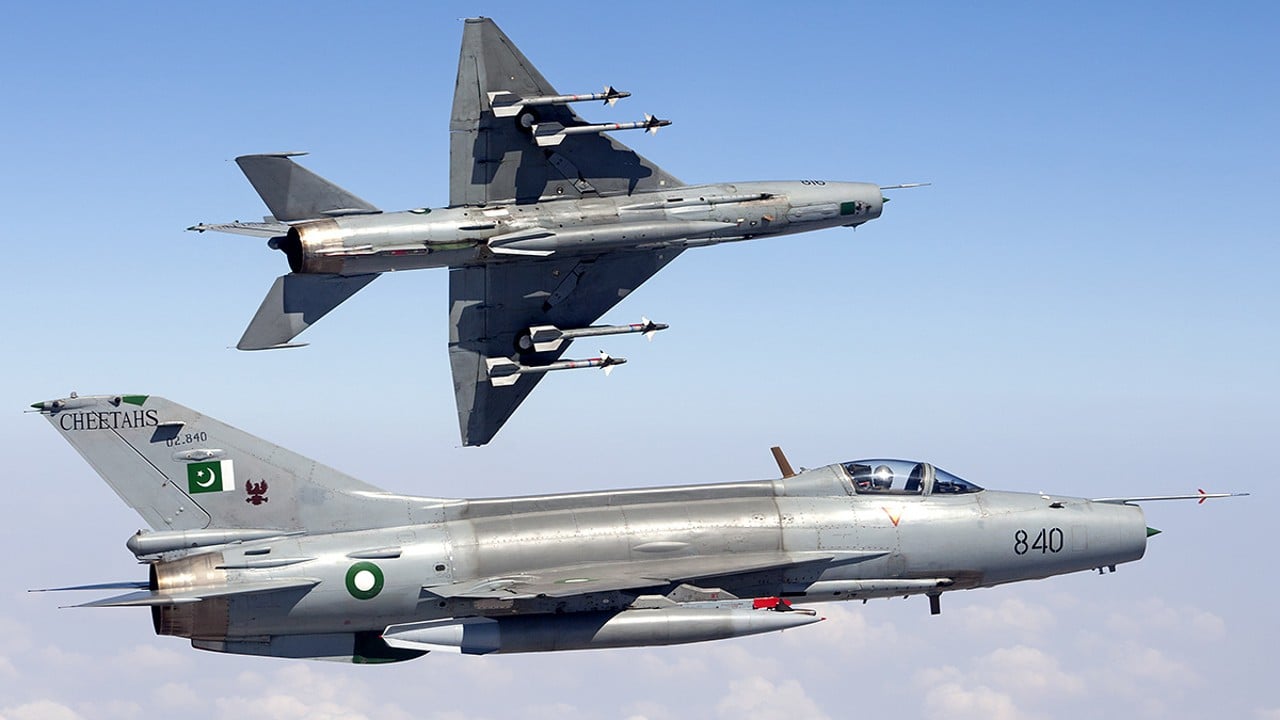
The biggest customer outside China was the Aeronautica militare pakistana, which flew the F-7P and the later F-7PG with the double-delta wing. Pakistani F-7s served as air-defence fighters for decades; No. 2 Squadron, for example, flew F-7Ps from August 1990 until August 2015, when it began converting to the JF-17 Thunder.
The induction of the F-7PG into Pakistan Air Force service.
The JF-17 itself grew partly out of the F-7 story. In the 1980s Pakistan and China worked with Grumman on a redesigned F-7 known as Sabre II, but the project collapsed under sanctions. A later effort became the JF-17, which Pakistan is using to replace its whole F-7 fleet.
Bangladesh and the last F-7s
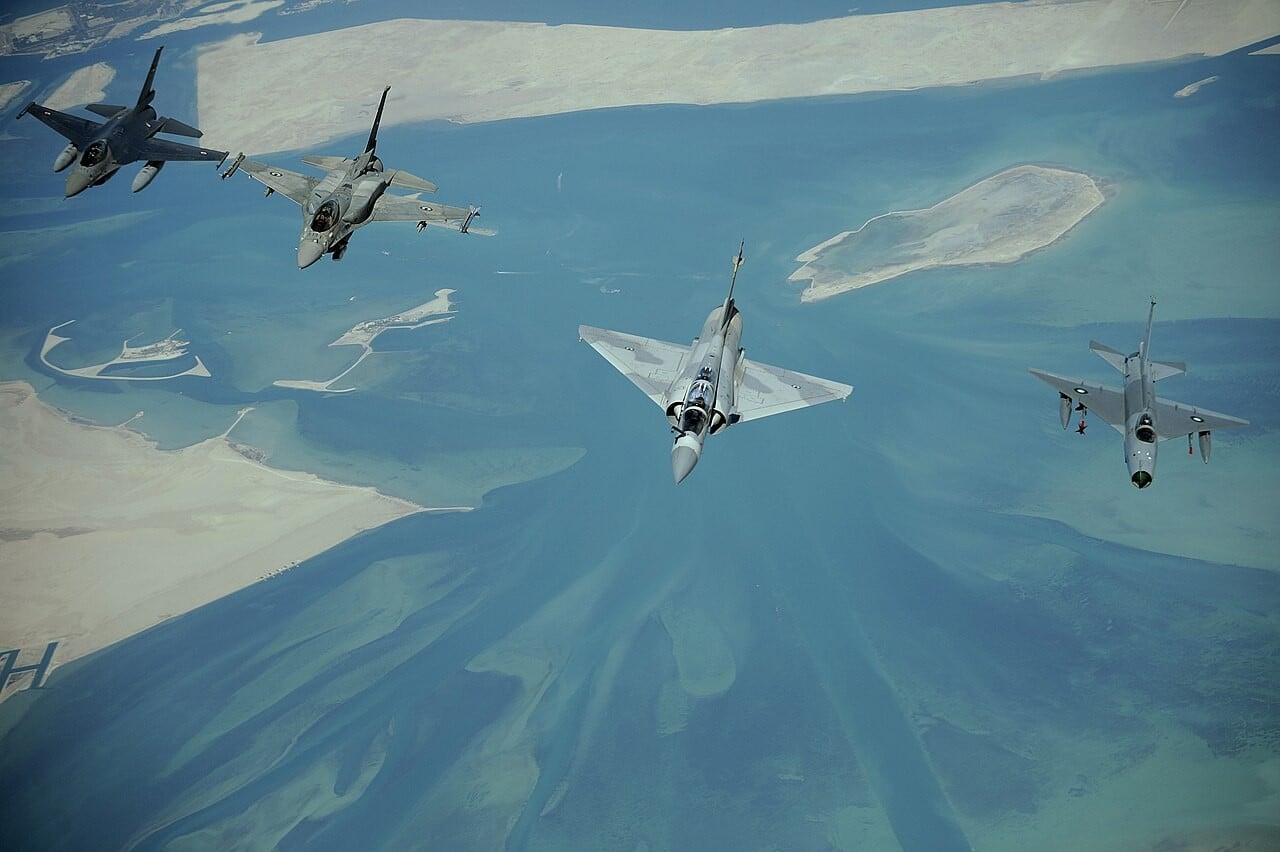
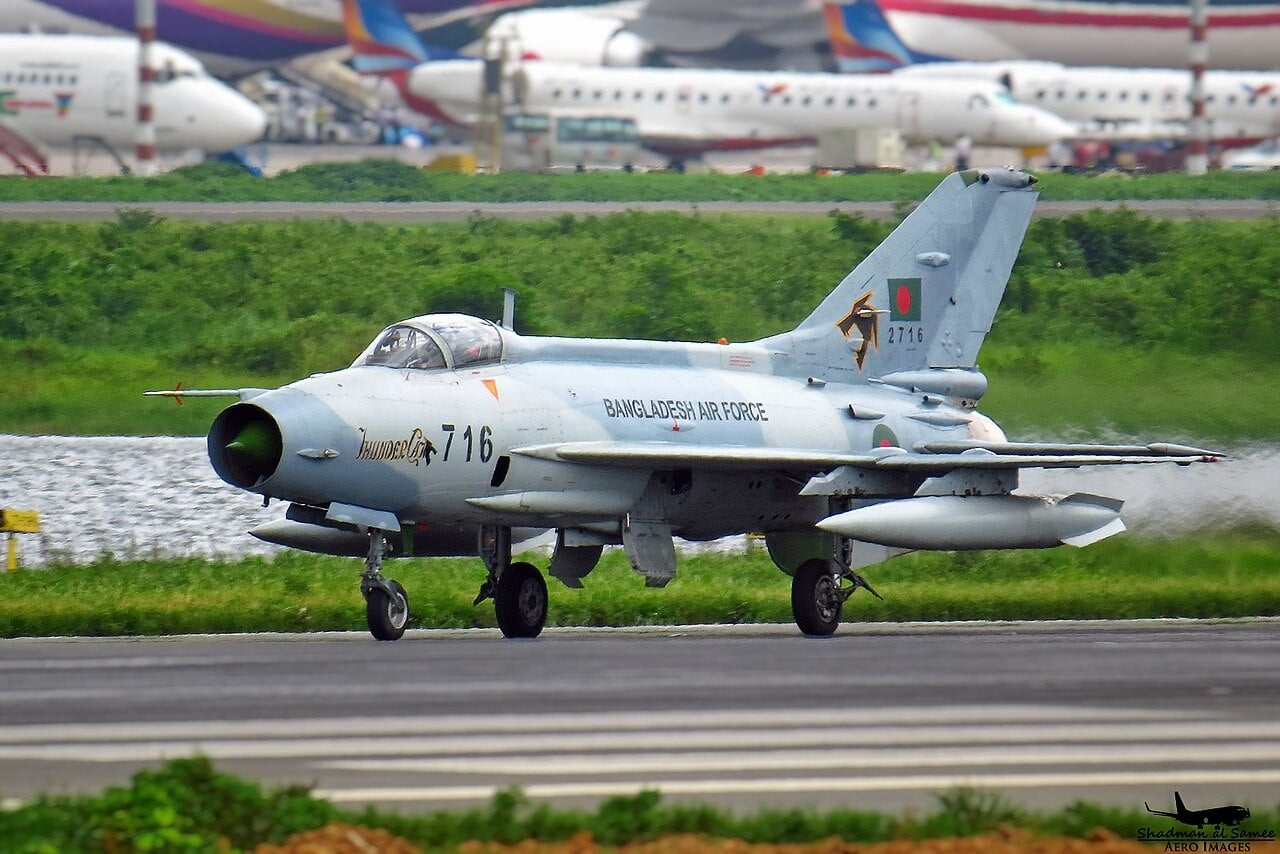
IL Bangladesh Air Force has flown F-7 variants since the late 1980s. In 2011 it ordered the F-7BGI, the most advanced member of the family, with multi-function displays, hands-on-throttle-and-stick controls and a modern head-up display. The last were delivered in 2013, and with them the J-7 production line closed after almost half a century.
In China, the end came a decade later. The PLAAF began retiring the J-7 in 2018, and in early 2023 state broadcaster CCTV said the remaining jets would leave combat service that year, replaced by the J-10, J-16 and J-20. Chinese commentators suggested the old fighters could be kept for training and testing or turned into drones.
How many were still flying was never clear. The reference work World Air Forces 2023 listed more than 320 J-7s with the PLAAF and about 30 more with the navy, figures Air Data News cautioned could be inaccurate. In June 2021 J-7s even appeared in an exercise near Taiwan, where the island’s defence authorities said the aircraft were not drones.
A Bangladesh Air Force F-7BGI, the last production version of the J-7 family, taking off.
Abroad, the J-7 is still flying. Pakistan, Bangladesh and several African and Asian air forces continue to operate it, more than six decades after Khrushchev’s letter. To understand what made the original so fast, read our explainer on the MiG-21 nose cone, the shock cone the J-7 inherited and kept to the very last F-7BGI.
Sources: GlobalSecurity.org (J-7, citing CIA assessments of 1968 and 1970), WarHistory.org, Air Data News, Global Times, Alert 5, Dawn, The Daily Star, AeroCorner
Header photo: Asuspine / Wikimedia Commons, GFDL 1.2
0 Comments