
Henry Ford had already put America on wheels with the Model T, and by the mid-1920s the man who built it was looking up. If a farmer could own a car, Ford reasoned, why not an aeroplane?
The answer was the Ford Flivver, a tiny single-seat monoplane unveiled in 1926 and pitched as the “Model T of the air”. It was small enough to fit inside Henry Ford’s office, and it was flown by a young test pilot who became one of Ford’s closest friends. Within two years, both the dream and the pilot were gone.
Informazioni rapide
- Aeromobili: Ford Flivver, single-seat light monoplane
- Costruttore: Ford Motor Company, Dearborn, Michigan
- Designer: Otto Koppen
- Svelato: 1926, on Henry Ford’s 63rd birthday
- First Flivver: Length 15 ft 4 in; span 22 ft 10 in; empty weight 350 lb (The Henry Ford)
- Motore: Anzani three-cylinder radial, 35 hp; top speed about 85 mph
- Costruito: Three or four, several modified
- Pilots: Only Harry Brooks and Charles Lindbergh flew it
- Documentazione: 972 miles (1,564 km) light-plane distance record, February 1928
- End: Development halted after Brooks was lost off Melbourne, Florida, 25 February 1928
A plane that had to fit in the boss’s office
Ford was no stranger to aviation. His company had bought the Stout Metal Airplane business and was building the all-metal Ford Trimotor airliner. But when he asked the men running his aircraft division, William Bushnell Stout and William Benson Mayo, for a single-seat everyman’s plane, neither wanted anything to do with it. Ford moved the project to a building in his laboratory complex in Dearborn and handed it to a young engineer named Otto Koppen.
Koppen’s brief was unusual. According to The Henry Ford museum, Koppen said the dimensions of the aircraft were set when Ford told him he wanted a plane that would fit inside his office. The EAA Aviation Museum adds that Koppen obliged by first measuring the office.
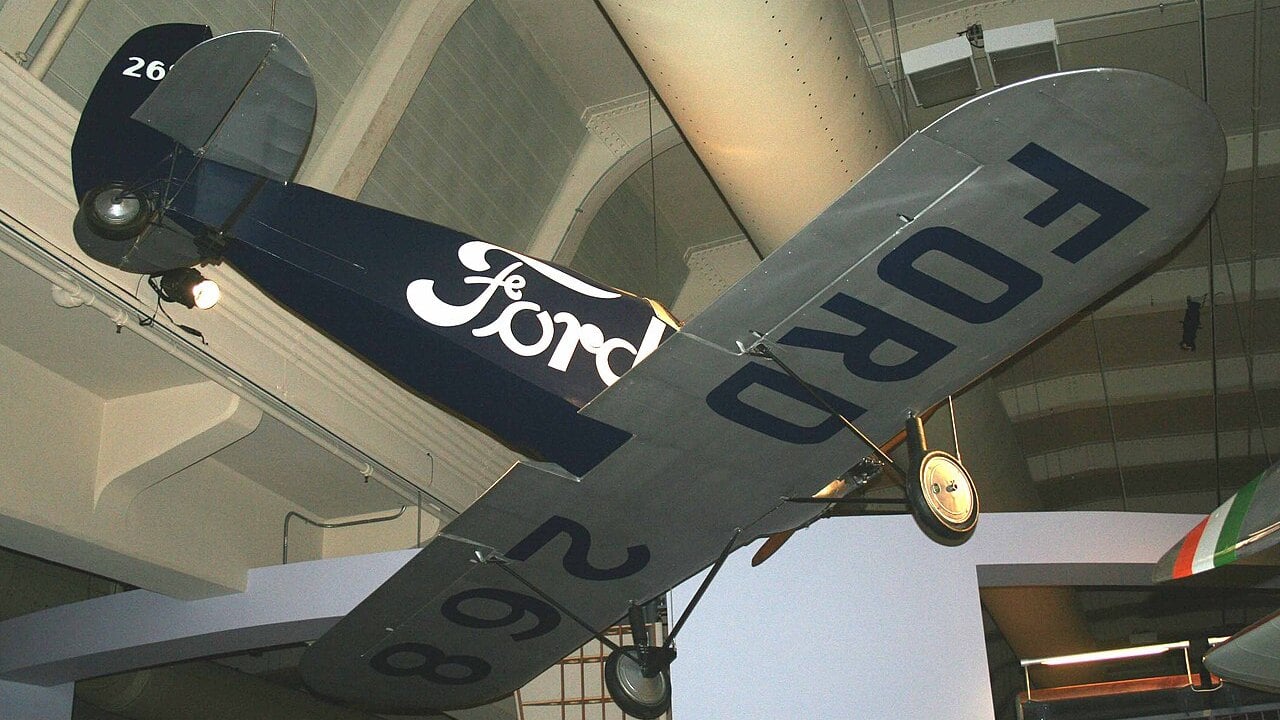
The result was a little tractor monoplane of wood, steel tube and fabric. The museum lists the first Flivver at 15 ft 4 in (4.67 m) long, with a 22 ft 10 in (6.96 m) wingspan, an empty weight of just 350 lb (159 kg), and a three-cylinder, 35-horsepower Anzani radial engine built in France. Top speed was about 85 mph (137 km/h).
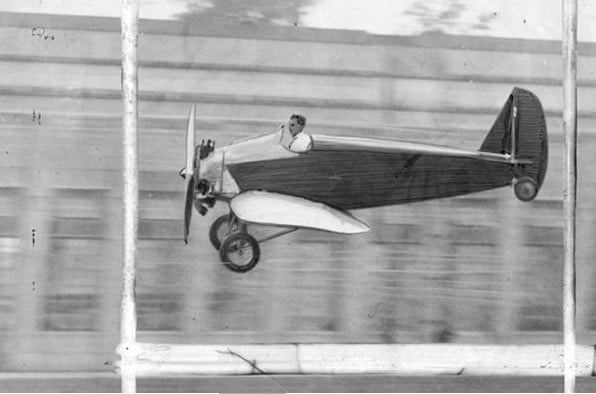
It was full of Ford touches. The tailwheel was mounted on the rudder, so the aircraft could be steered on the ground, and it carried the plane’s only brake. The exhaust ran into a stock Model T muffler. The steel landing gear was fixed to the wing and used rubber doughnuts in compression to soak up landings.
“Ford’s Flying Car”
Ford showed the Flivver to the public on his 63rd birthday in the summer of 1926. The press loved it. Reporters called it “Ford’s Flying Car”, and the humorist Will Rogers posed in it for photographers, although he never flew it.
Only two men ever did. One was Charles Lindbergh, who tried it during a visit to Ford Airport in August 1927, a few months after his transatlantic flight made him the most famous pilot alive. The other was the man who flew it almost every day.
The original 1926 Ford Flivver on display at the Henry Ford Museum in Dearborn, Michigan.
Harry Brooks, Ford’s favourite pilot
Harry J. Brooks grew up in Southfield, Michigan, and caught the flying bug at the age of nine, when he saw the Wright brothers and one of their aircraft at a state fair. He took flying lessons at a local airstrip, where Henry Ford noticed him more than once.
The EAA tells the rest like a fable. Brooks’ father played the violin at dances at a local inn; Ford asked who was playing, the two men met, and the elder Brooks invited Ford home for dinner. There Ford discovered that the violinist’s son was the young pilot he had been watching. He hired Harry for one of his car plants, then, a few months later, made him a test pilot. Brooks became Ford’s top pilot and a close friend.
Brooks put the Flivver to work exactly as Ford imagined. He used the first one to commute between his home and the Ford laboratories, keeping it in his garage overnight. He used the second to hop around the Ford properties, and once raced it against Gar Wood’s speedboat Miss America V on the Detroit River during the Harmsworth Trophy races.
Dearborn to Miami
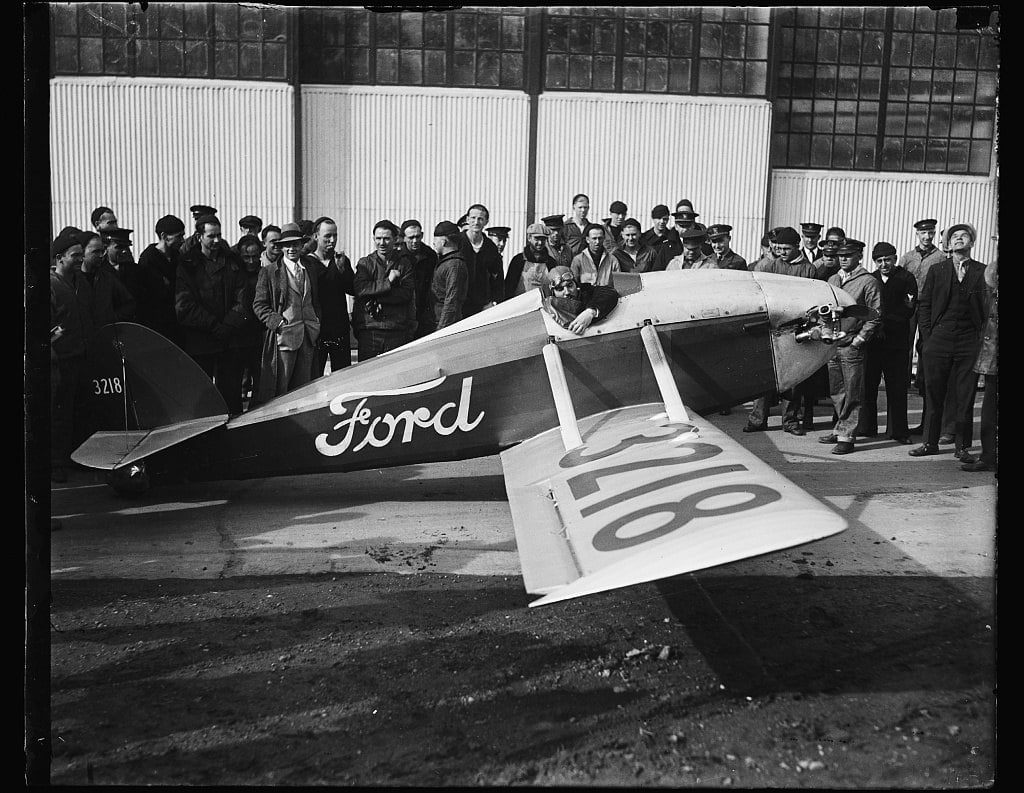
To prove that a light plane could be a serious machine, Ford built longer-winged versions to chase the distance record for light aircraft. A first non-stop attempt from Dearborn to Miami in January 1928 ended early with a landing in Asheville, North Carolina.
In February 1928, Brooks tried again in the improved second Flivver. He came down on the beach near Titusville, Florida, about 200 miles (320 km) short of Miami, but the 972 miles (1,564 km) he had covered set a new world distance record for light planes.
On 25 February 1928, Brooks took off from Titusville to finish the trip. Off Melbourne, Florida, the engine stopped and the Flivver went into the Atlantic. Wreckage washed ashore; Brooks was never found.
The cause, as later accounts tell it, was painfully small. To keep moist sea air out of his fuel overnight, Brooks had reportedly plugged the vent holes in the fuel cap with wooden toothpicks. Examination of the wreckage is said to have found them still in place, which would have starved the engine of fuel.
The end of Ford’s everyman’s airplane
Henry Ford took the loss hard. The EAA records that he was so discouraged that he halted development of the Flivver, and The Henry Ford notes that he abandoned the project after Brooks died. Three or four Flivvers had been built, some of them modified several times. The first prototype went into the Ford Museum in Dearborn later in 1928, and it still hangs there today.
The Birmingham Museum’s talk on Harry Brooks, the Michigan pilot who championed the Flivver.
Ford did not give up on light aircraft entirely. In 1936 his company built the two-seat Model 15-P, but its prototype crashed in testing and it never entered production. Otto Koppen returned to MIT and went on to design the Helio Courier, a celebrated short take-off and landing aircraft.
The Flivver lives on in replicas too. EAA Chapter 159 in Midland, Michigan, built one from careful study of the original and donated it to the EAA Aviation Museum in Oshkosh, and another is displayed at the Florida Air Museum.
The plane in every garage never came. Light aircraft stayed expensive, weather stayed unpredictable, and flying stayed harder than driving. But for two years in the 1920s, a young man really did fly to work in a Ford, and the dream of the personal aeroplane has never quite gone away.
Sources: The Henry Ford (museum collections and Heroes of the Sky exhibit), EAA Aviation Museum, The Truth About Cars (Ronnie Schreiber, 2014), Library of Congress
0 Comments