
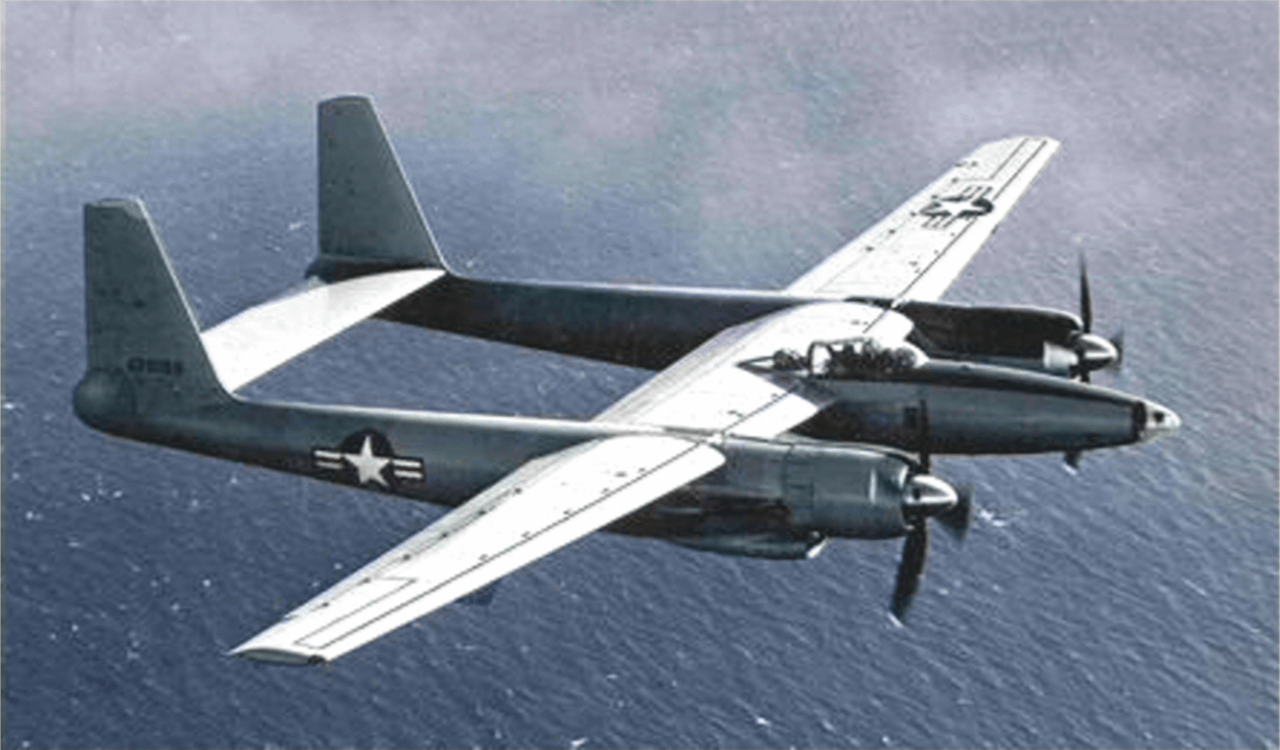
On the afternoon of 7 July 1946, Howard Hughes was seventy-five minutes into the first official flight of his new reconnaissance aircraft when the right side of it stopped cooperating.
Every instrument said the engine was fine. It was. What had failed was one half of the propeller: the rear blades of a contra-rotating pair had gone into reverse pitch while the front blades still pulled. Half the disc was dragging the aircraft backwards.
He aimed for a golf course and missed it by three hundred yards.
Informazioni rapide
| Aeromobili | Hughes XF-11, serial 44-70155 — the first of two prototypes |
| What it was | A photo-reconnaissance aircraft, not a fighter. The pre-1948 “F” prefix stood for Foto |
| Motori | Two Pratt & Whitney R-4360-31 Wasp Major radials, 28 cylinders each, 3,000 hp for takeoff |
| Propellers | The first prototype had dual four-bladed contra-rotating props — eight blades per side |
| Performance | 450 mph at 33,000 ft, ceiling 42,000 ft, 101 ft span |
| The crash | 7 July 1946, Culver City. Hughes flying solo, airborne 1 hr 15 min. He clipped three houses in Beverly Hills |
| The cause | A leak disabled the right propeller’s pitch control and the rear propeller of the pair reversed |
| Il verdetto | USAAF investigators blamed pilot error. Hughes rejected that and successfully sued the propeller manufacturer |
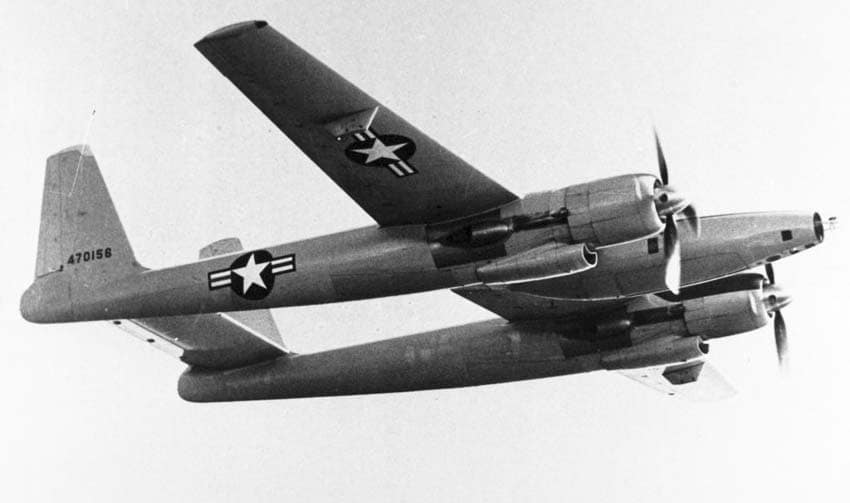
| The second prototype | 44-70156, with conventional single four-bladed props, flew uneventfully on 5 April 1947 |
The warnings he flew past
Two details from that morning are hard to read charitably.
During pre-flight engine runs, hydraulic fluid for the right propeller had to be topped up repeatedly. No leak was ever found. Hughes flew anyway.
He also loaded 1,200 gallons of fuel where the USAAF flight plan specified 600, and retracted the landing gear against the agreed protocol for a first flight. Both decisions made an emergency landing harder: more weight, and a gear system that would need to work again.
None of which changes the fact that the propeller failed. But it explains why the board of inquiry reached for pilot error.

Why he could not diagnose it
This is the part that makes the accident genuinely interesting rather than simply careless.
On a contra-rotating installation, one engine drives two propellers turning in opposite directions on the same shaft. When the hydraulic pitch mechanism failed on the right side, only the rear propeller reversed. The front one kept producing thrust. The engine kept running normally, at normal RPM, showing normal readings on every gauge in the cockpit.
So Hughes had an aircraft yawing violently right, losing altitude, with nothing on his instrument panel to tell him why. He initially assumed he had a right-engine problem and worked the wrong drills.
By the time he understood, he was two miles from the field at 5,000 feet, sinking. He turned for the Los Angeles Country Club golf course, the largest open ground within reach.
Beverly Hills
He came down three hundred yards short of the fairway, into a residential street. The XF-11 clipped three houses. The third and the aircraft were destroyed by the impact and the fire that followed.
Hughes was pulled out alive. Contemporary press reports gave him roughly a fifty-fifty chance of surviving the night. He later disputed the injury tally that circulated afterwards, insisting that X-rays showed he had broken every rib he had rather than the eleven usually reported — though that figure comes from Hughes himself, in a document where he was actively managing his own story, and no neutral source itemises it.
He never accepted the official finding.
The aircraft was fine. The programme was not.
The second prototype settled the engineering question. With conventional single four-bladed propellers — the same units fitted to the P-61 Black Widow — Hughes flew 44-70156 from Muroc Dry Lake on 5 April 1947 without incident. The USAAF had initially refused to let him near it, and relented only after a personal appeal to Generals Ira Eaker and Carl Spaatz and five million dollars in posted security.
It did not matter. The war the XF-11 was designed for had ended two years earlier. The type was redesignated XR-11 in 1948, scrapped, and dropped from the USAF inventory in November 1949. Total cost to the government: $14,155,235.
The programme also became a centrepiece of the Truman Committee hearings, which established among other things that a Hughes employee had spent $169,661 entertaining Army Air Forces officers.
Hughes was flying his own prototype because he believed a designer should be the one to take the risk. On 7 July 1946 he very nearly paid the price he had described — for a fault that was not his design at all.
Universal Newsreel coverage of the crash and its aftermath.
A closer look at the engineering behind the failure.
Sources: UNLV Libraries Howard Hughes Digital Collection; René Francillon, McDonnell Douglas Aircraft since 1920; Bartlett & Steele, Howard Hughes: His Life and Madness; Jane’s All the World’s Aircraft 1947; Wikipedia.
0 Commenti